How to Find Social Media Trends: Tools and Strategies to Keep Your Brand in the Now
Learn how to find social media trends to boost your brand on social. Discover tools and strategies that will help keep your content impactful.


Have you ever wondered how some brands always seem to ride the wave of what’s trending online? As someone who spends a lot of time exploring the ever-changing world of social media, I’ve realized that keeping up with social media trends isn’t just about staying current—it’s about truly understanding the bigger picture.
Navigating trend analysis on social media has helped me spot opportunities early, adapt my strategy, and connect more authentically with audiences. In this article, I’ll share my approach and some tips from Eve Gaciarz, assistant director of communication at Yale MacMillan Center, on how to find social media trends, so you can make your mark in the digital conversation.
Key takeaways
-
What’s the difference between viral moments, micro-trends, and lasting trends? Viral moments give you a quick spike, micro-trends give you room to experiment, but lasting trends are the ones that should actually influence how you plan content long term.
-
How can trend identification give you a competitive advantage? When you spot trends early, you’re not scrambling to keep up — you’re making smarter content decisions while competitors are still reacting.
-
What types of social media trends should you be paying attention to? The trends that matter most aren’t just viral sounds, but shifts in formats, topics, and audience behavior that consistently affect performance.
-
5 methods to discover social media trends early: The fastest way to spot real trends is by combining your own performance data with competitor insights, social conversations, and platform signals.
-
What tools to use to track social media trends? Trend tracking works best when you pair native platform insights with analytics and listening tools that show how trends perform beyond your own feed.
-
How to validate if a trend is worth following? If a trend doesn’t make sense for your audience, your brand voice, and your goals, it’s probably not worth chasing — no matter how popular it looks.
-
How to act on social media trends strategically? Winning with trends is less about copying what’s popular and more about timing it well, adding your own angle, and measuring whether it actually worked.
-
Common mistakes to avoid when tracking trends: Most brands don’t fail at trends because they miss them, but because they chase too many, show up too late, or never check if the effort paid off.
What's the difference between viral moments, micro-trends, and lasting trends?
To capture trends that make sense for your brand, you first need to understand the differences between types of shifts:
- Viral moments make the biggest impact, but are short-lived. Think of a specific meme format or a bit that dominates everyone's feed for 48-72 hours, like the “Roman Empire” TikTok question or the “Barbenheimer” meme wave. The window to participate is narrow, and jumping in late often feels forced or out of touch.
- Micro-trends typically last a few weeks to months. These might be specific audio clips on TikTok, a particular aesthetic style, or a content format that creators are experimenting with, like “Get Ready With Me (GRWM)” or micro-phases (“office siren,” “girl dinner”). There’s more time to participate, but you still have to move fast.
Here's how Eve describes them:
Micro-trends are more participation-based and often rooted in aesthetics, formats, or hype. People join micro-trends to feel part of a community or shared experience (think Labubu unboxings). These can come with high engagement especially if a creator of a specific niche builds a following or online identity around that specific micro-trend.
- Lasting trends go beyond the now. They reflect shifts in how people consume content, what they expect from brands, and which formats perform well over six months or longer. For example, short-form video didn't disappear after a few weeks, but it fundamentally changed social media content.
Each trend type requires a different response. For viral moments, you need a system that lets you react within hours. For micro-trends, you need consistent monitoring. Understanding TikTok trends specifically can help you catch these while they're still rising rather than peaking.
For lasting trends, you need solid social media analysis that shows you patterns over time. This is where looking at your own performance data alongside industry benchmarks tells you what's actually working versus what just seems popular.
How can trend identification give you a competitive advantage?
Trend identification isn't just about being, well, trendy. It's about having better information than your competitors and using it to make smart content decisions.
There’s one obvious advantage to adopting trends strategically, and a few more subtle ones:
- You get visibility fast. This one is clear. When you're among the first to jump on a trend, you're not competing for attention but setting the tone. Algorithms and audiences reward early adopters and reach soars.
- You create better content. Instead of guessing what your audience wants, you're working with real-time signals about what's resonating.
- You spot opportunities to stand out. Consistent competitive monitoring shows you not just what others are doing, but what they're not doing. When you notice a trending format that’s being ignored by competitors, that's your opening.
- You allocate resources more effectively. Not every trend deserves your attention. When you understand which trends are gaining real traction versus which are already fading, you can focus on what's actually going to move the needle for your social media engagement.
- You remain relevant. Audiences notice when a brand consistently delivers content that feels current. It shows that you're paying attention, understand the platform's culture, and are worth following because you won't bore them.
The more consistently you identify and act on trends, the better you get at it. Your data-driven marketing approach becomes sharper over time.
The brands that struggle are usually those that treat trend identification as an occasional activity rather than an ongoing practice. So, let’s look at the types of social media trends you should be paying attention to and the methods to discover them early.
When I asked Eve about her opinion on trend usage, she told me:
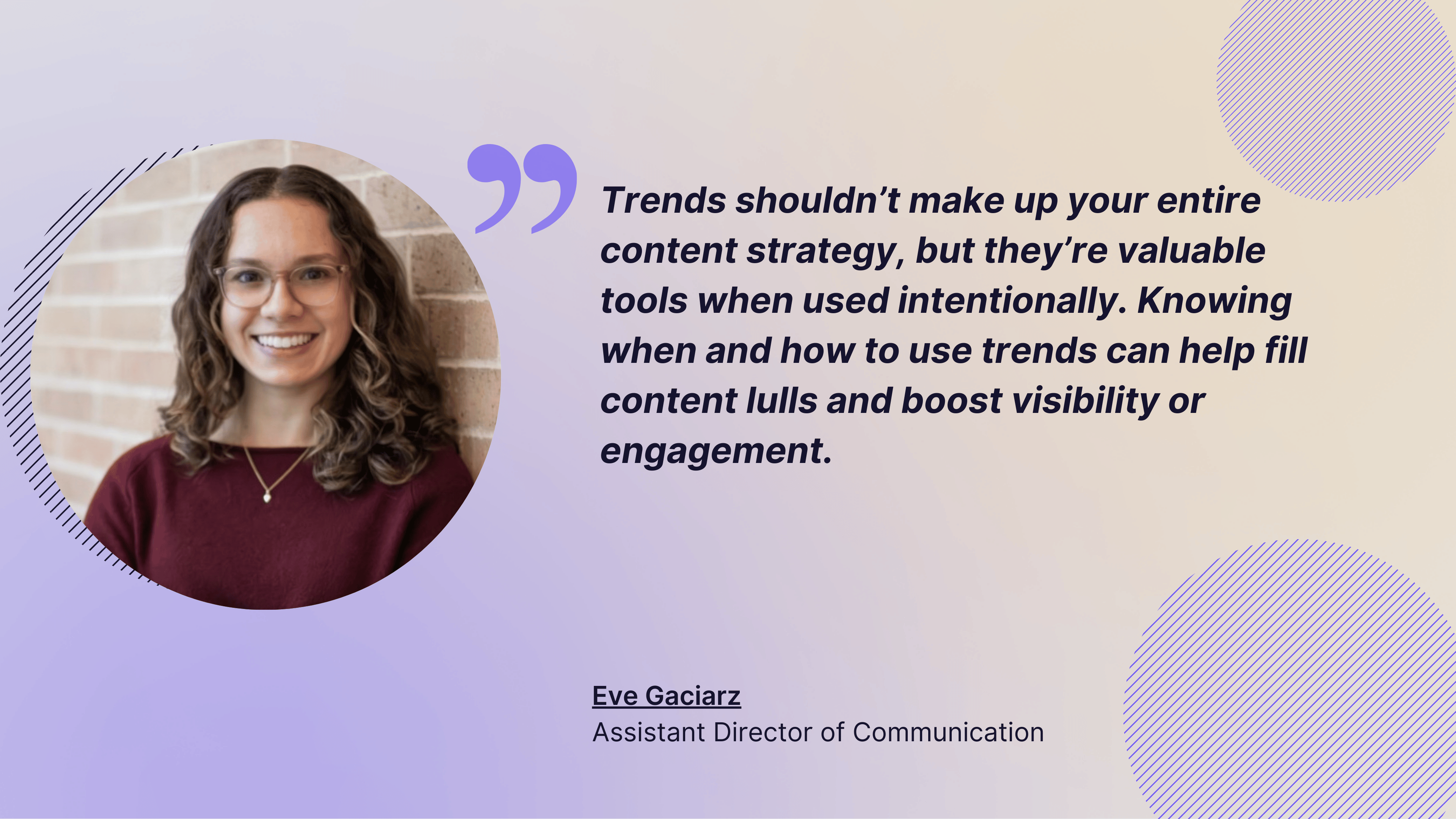
Trends shouldn’t make up your entire content strategy, but they’re valuable tools when used intentionally. Knowing when and how to use trends can help fill content lulls (especially in industries like higher education where you can have a lot of content, and then very little) and boost visibility or engagement. That said, trends are better for reach than for long-term community building.
What types of social media trends should you be paying attention to?
When we talk about "trends," it's easy to think only about viral sounds or meme formats. But the trends that should shape your strategy are more varied, and some of them far more valuable than whatever everyone’s paying attention to this week.
Content format trends
Every platform has formats that consistently outperform others. And these preferences change consistently.
Take Instagram, for example. While Reels get a lot of attention, the data tells an interesting story. Looking at Socialinsider’s Instagram benchmarks report, it gets clearer where every format stands in terms of engagement, with carousels actually generating higher engagement rates compared to Reels and static images.
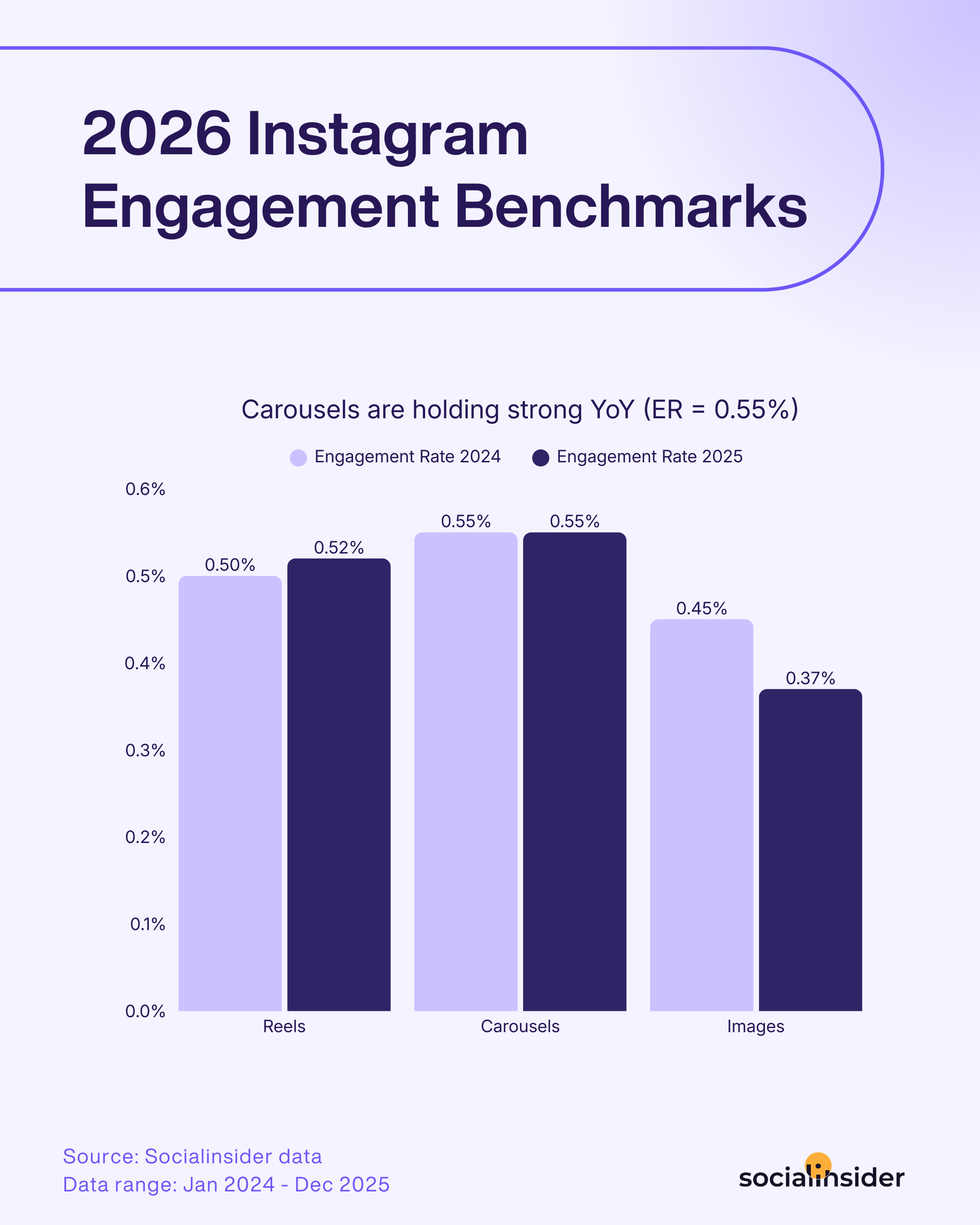
This doesn't mean you should abandon Reels in favor of carousels. It means your format mix should be based on your goals: reach, engagement, or conversions?
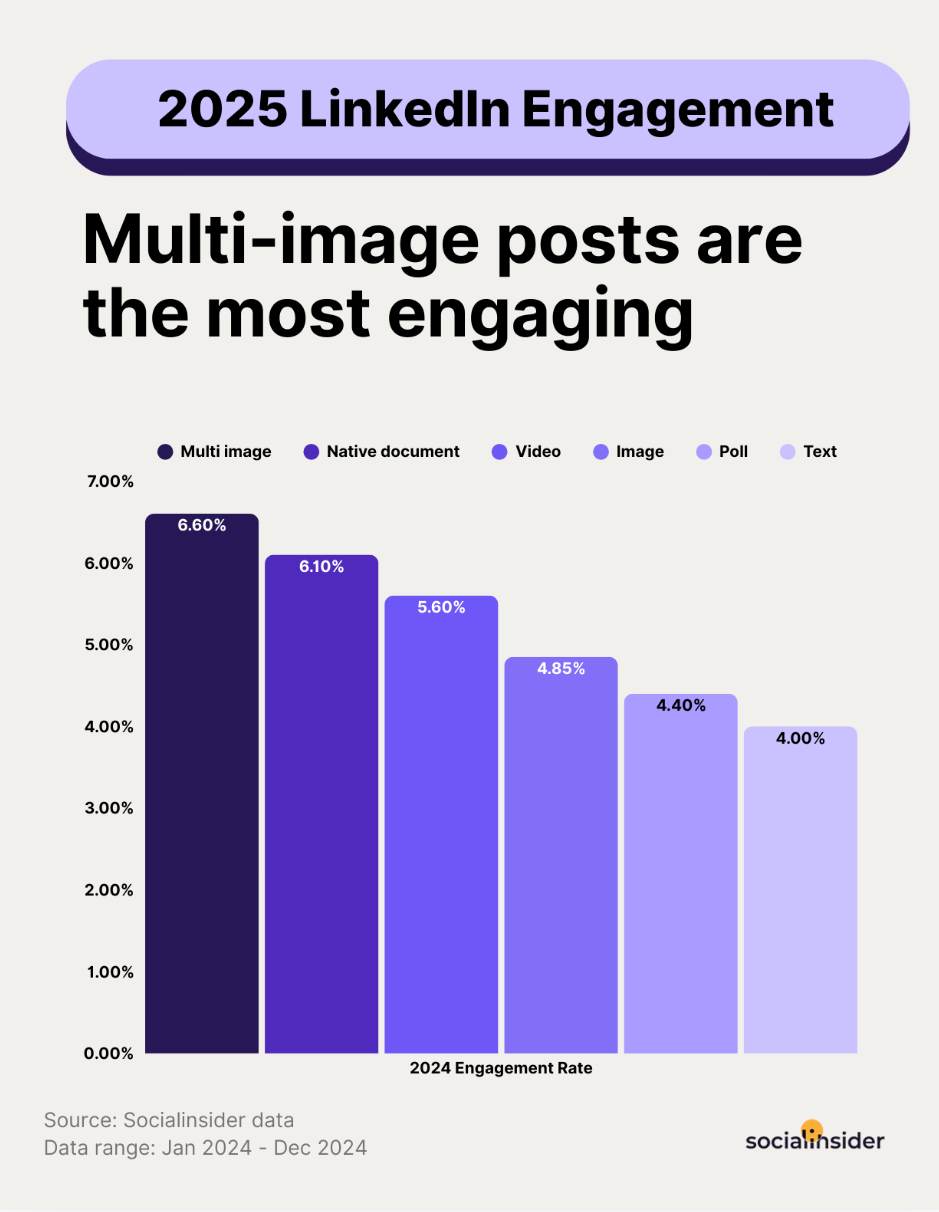
LinkedIn shows a similar pattern where format choice matters significantly. Socialinsider's LinkedIn benchmarks report shows that multi-image posts and native documents lead in engagement, outperforming single images, videos, polls, and text posts.
Understanding these format preferences and how they evolve helps you make better decisions about how to create content for social media that resonates on each platform.
Industry and niche trends
A trending topic in the beauty industry might be completely irrelevant if you're in B2B software. And even within industries, trends hit differently across audience segments. What resonates with enterprise customers sometimes falls flat with small business owners. This is why generic "trending now" lists only get you so far.
Pay attention to what's happening in your industry:
- Which topics are generating more discussion than usual?
- What questions keep coming up?
- Which content formats are your industry peers experimenting with (and with what results)?
Conduct regular social media market research to identify these patterns before they become obvious to everyone.
Your social media audience analysis also plays a role here. Demographics, interests, and platform preferences all influence which trends your audience will care about.
Filter trends through a simple question: Does this matter to our prospects and clients?
Lastly, here's Eve's takeaway:
Focus on trends that are relevant to your niche and audience. Jumping on every trend can dilute your message, but when a trend aligns with your industry and amplifies your perspective, it’s worth participating.
5 methods to discover social media trends early
Knowing what to look for is one thing. Knowing how to find it before everyone else is another.
Here are five methods I’ve seen work to consistently surface relevant trends.
Analyze audience behavior and engagement patterns
Your social media data is one of the most underused trend-spotting resources. The signals are there, you just have to know where to look.
Identify shifts in what your audience engages with
Sometimes there's a disconnect between what brands publish most and what actually performs best. That gap is where trend insights hide.
Let me give you an example. Let's analyze together Lowe's Instgaram strategy. Looking at their content mix, we can see that the majority of their posts are Reels, with carousels and static images accounting for a much smaller share.
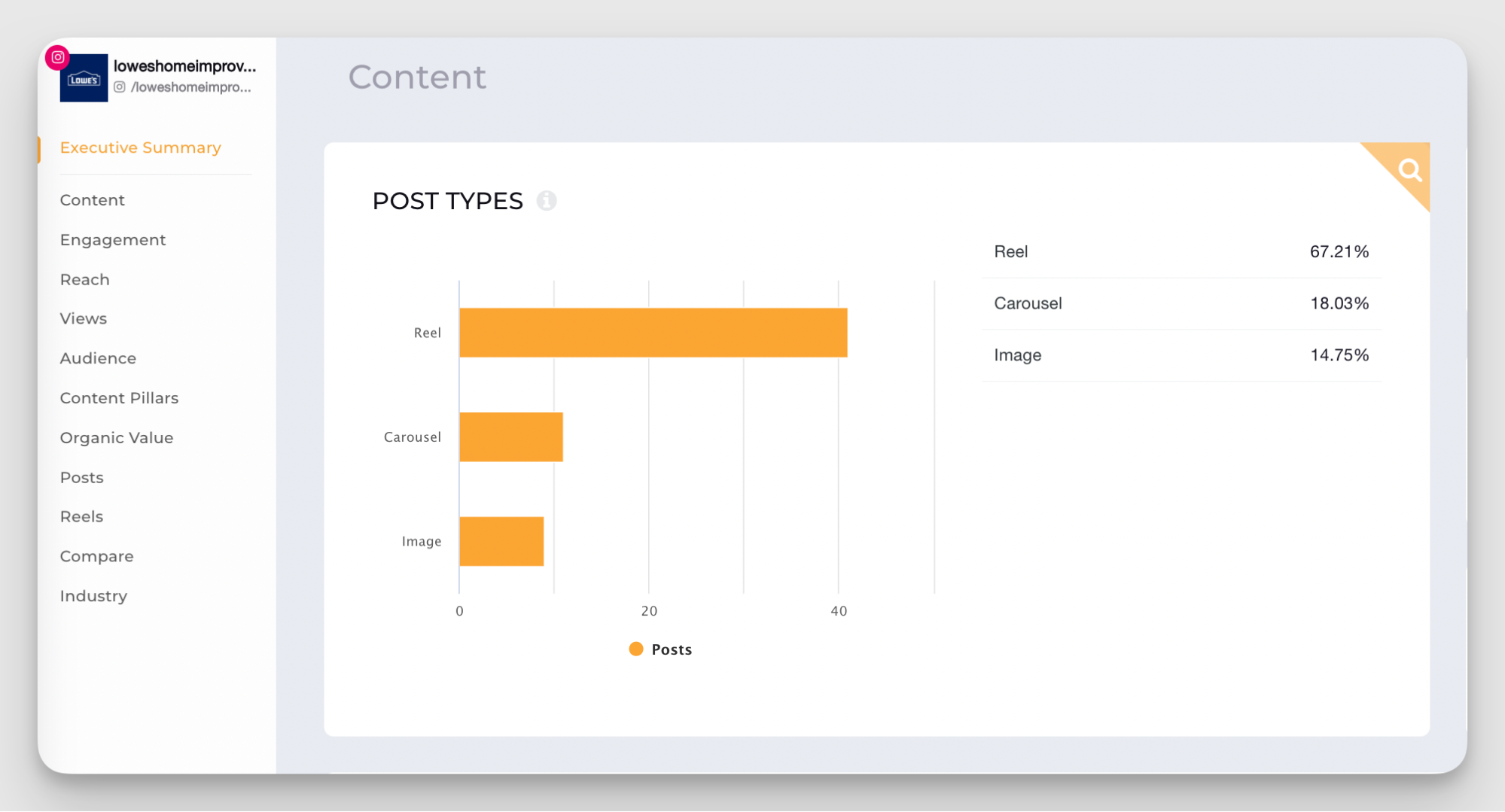
However, when sorting their content by engagement, carousels seem to pull ahead significantly. This pattern, where a less-used format outperforms the dominant one, is exactly the kind of signal you should be looking for in your own data.
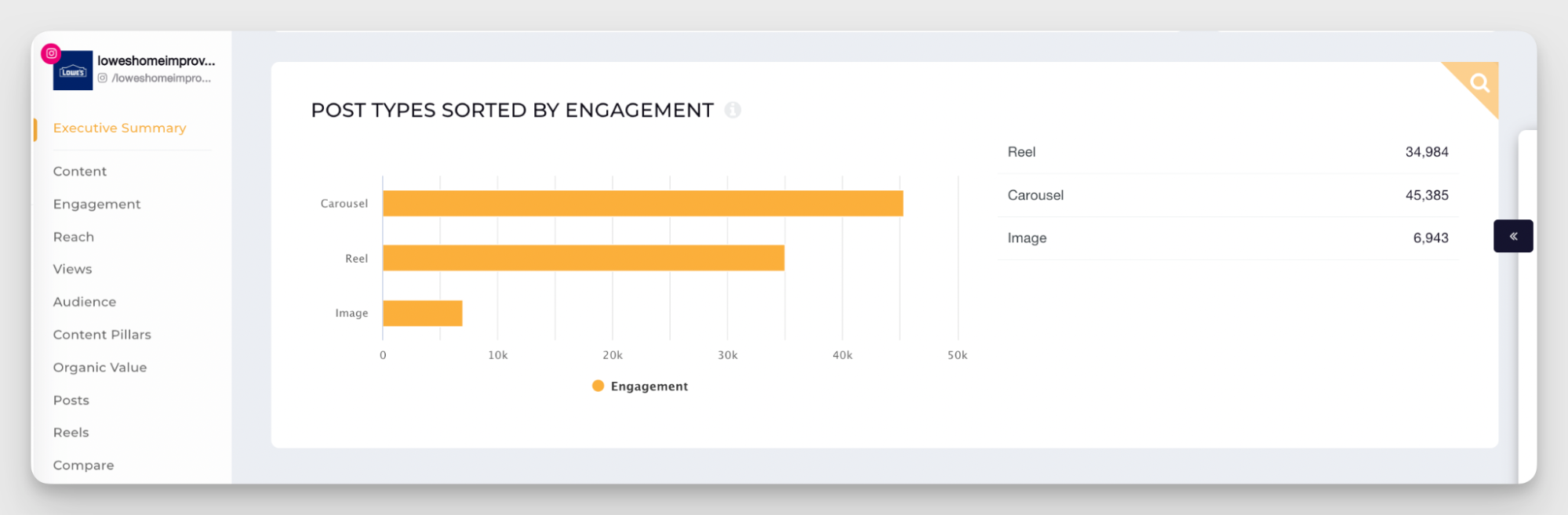
This doesn't necessarily mean Lowe's should flip their entire strategy to carousels. But it does suggest there's untapped potential in a format they're currently underusing. And if you're in the same industry, this kind of insight tells you something about what home improvement audiences respond to on Instagram right now.
Use engagement data to predict what's gaining momentum
Beyond formats, the topics and themes reveal trends in your niche.
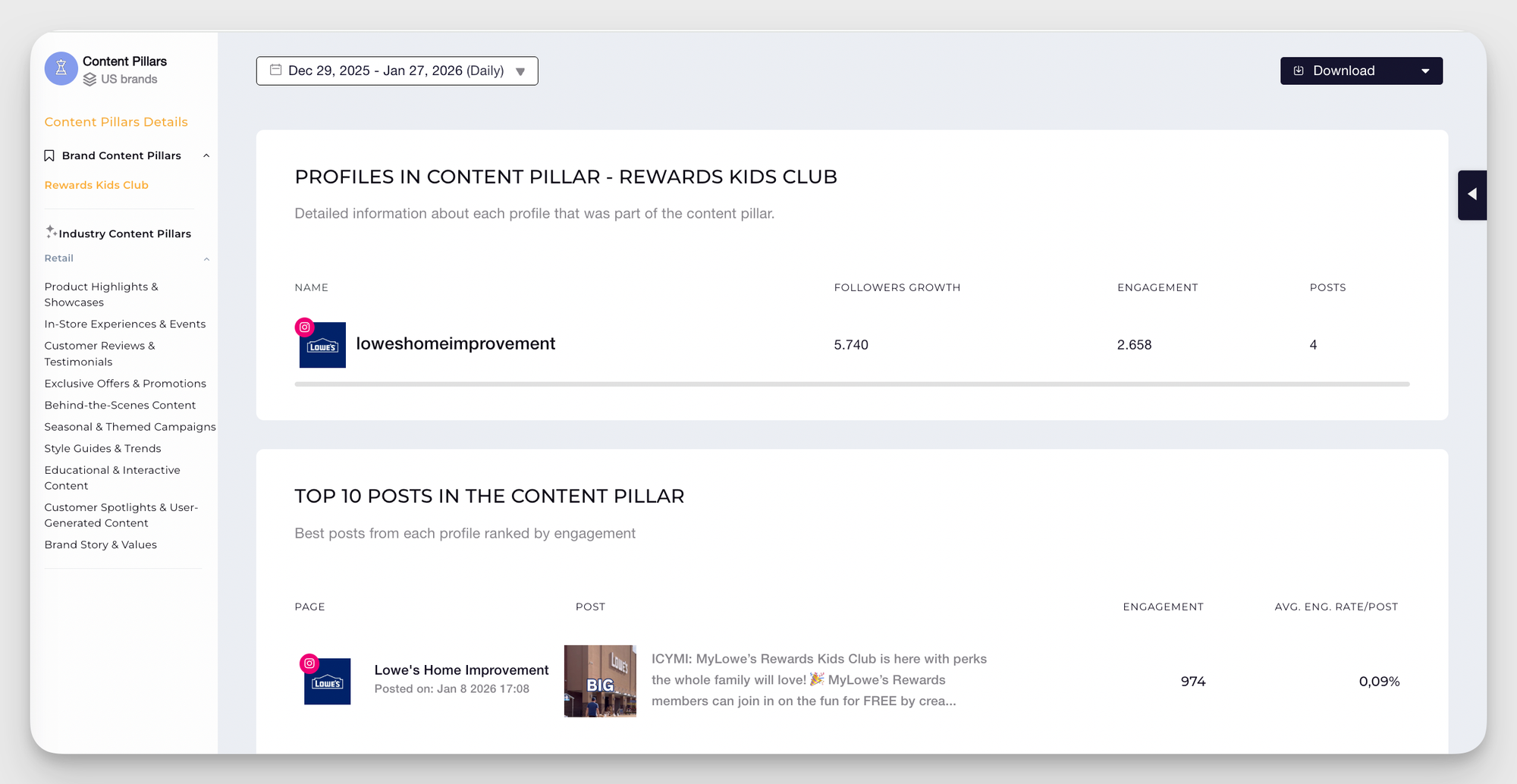
When I broke down performance by content pillars for social media for Lowe's, I could see that customer reviews & testimonials stand out with a significantly higher engagement rate compared to other themes.

And I got to say: there’re more here than just 'testimonials work for Lowe's' over here, if you ask me. I think this data suggests that in retail and home improvement, audiences are increasingly valuing social proof and real customer experiences over polished promotional content.
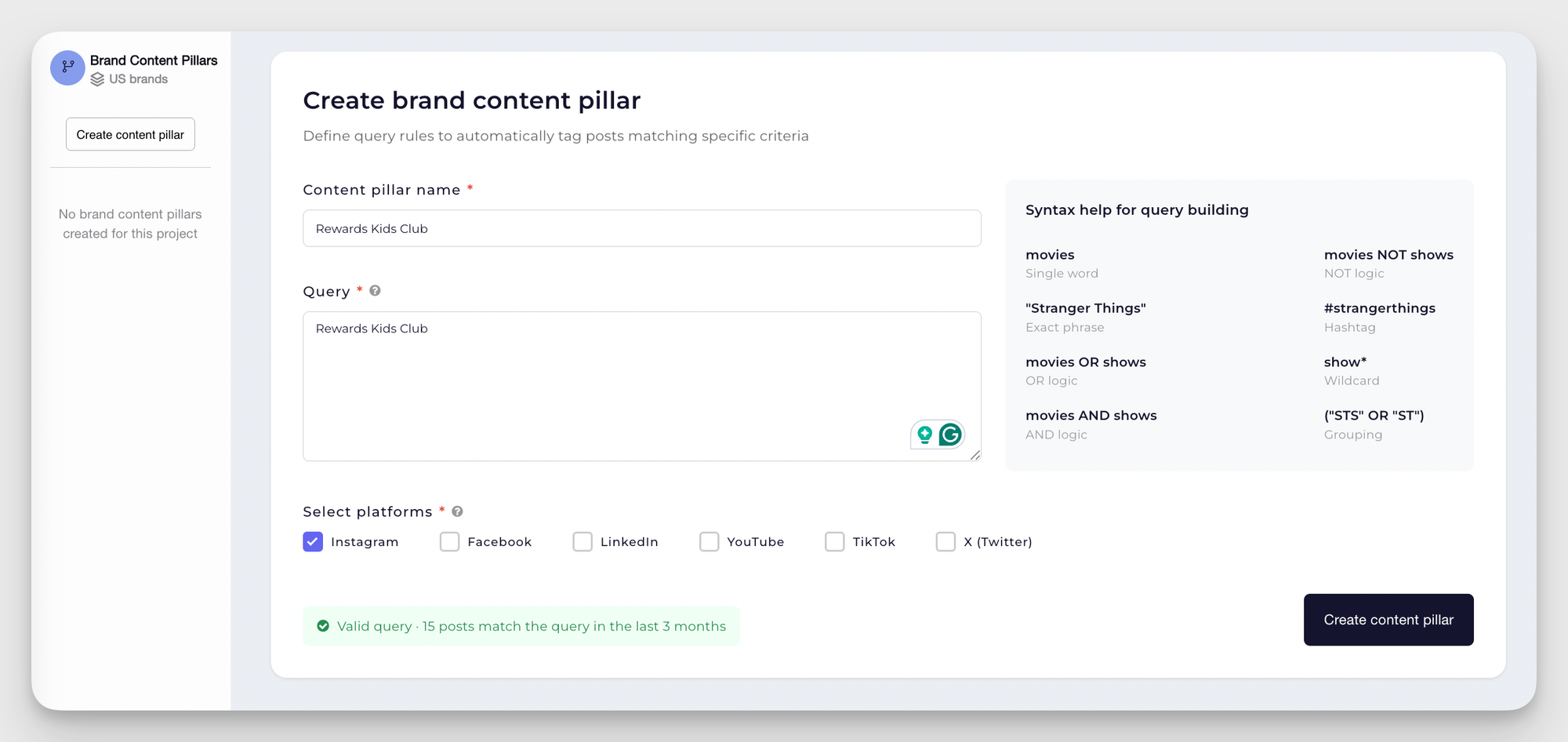
With this, you can oversee performance for a specific, branded content pillar.
Run a competitive analysis
Your competitors are essentially running experiments for you. Are you paying attention to the results?
Compare posting frequency against engagement generated
One of the fastest ways to spot what's working in your industry is to look at how competitors' strategies are performing side by side. A thorough competitive analysis report reveals what others are doing and what's paying off.
When you compare brands in the same space — say, Costco, Home Depot, and Lowe's — you get insights. One brand might have the largest following, but another could be generating higher engagement per post. One might be posting more frequently, but that might not be translating into better results.
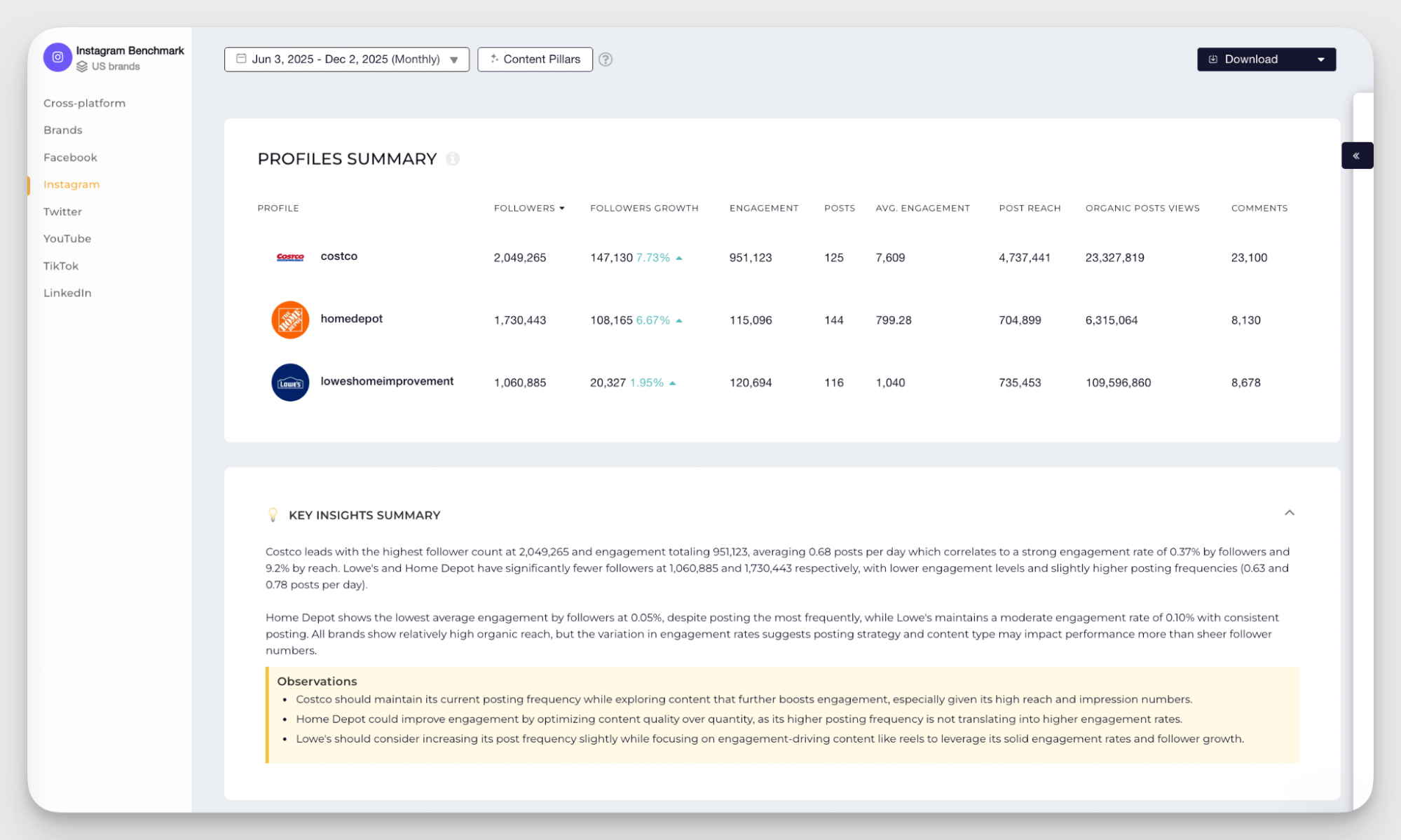
The good news is that tools like Socialinsider's Key Insights Summary can simplify this discovery process, automatically making observations about what each competitor could do differently based on their performance data.
Identify patterns in competitors' top posts
When you drill down to what's actually driving results for Costco, for example, you might notice their top posts share common characteristics. In this case, posts featuring customer experiences and store-specific information consistently rank among their best performers, similar to what we saw with Lowe's.
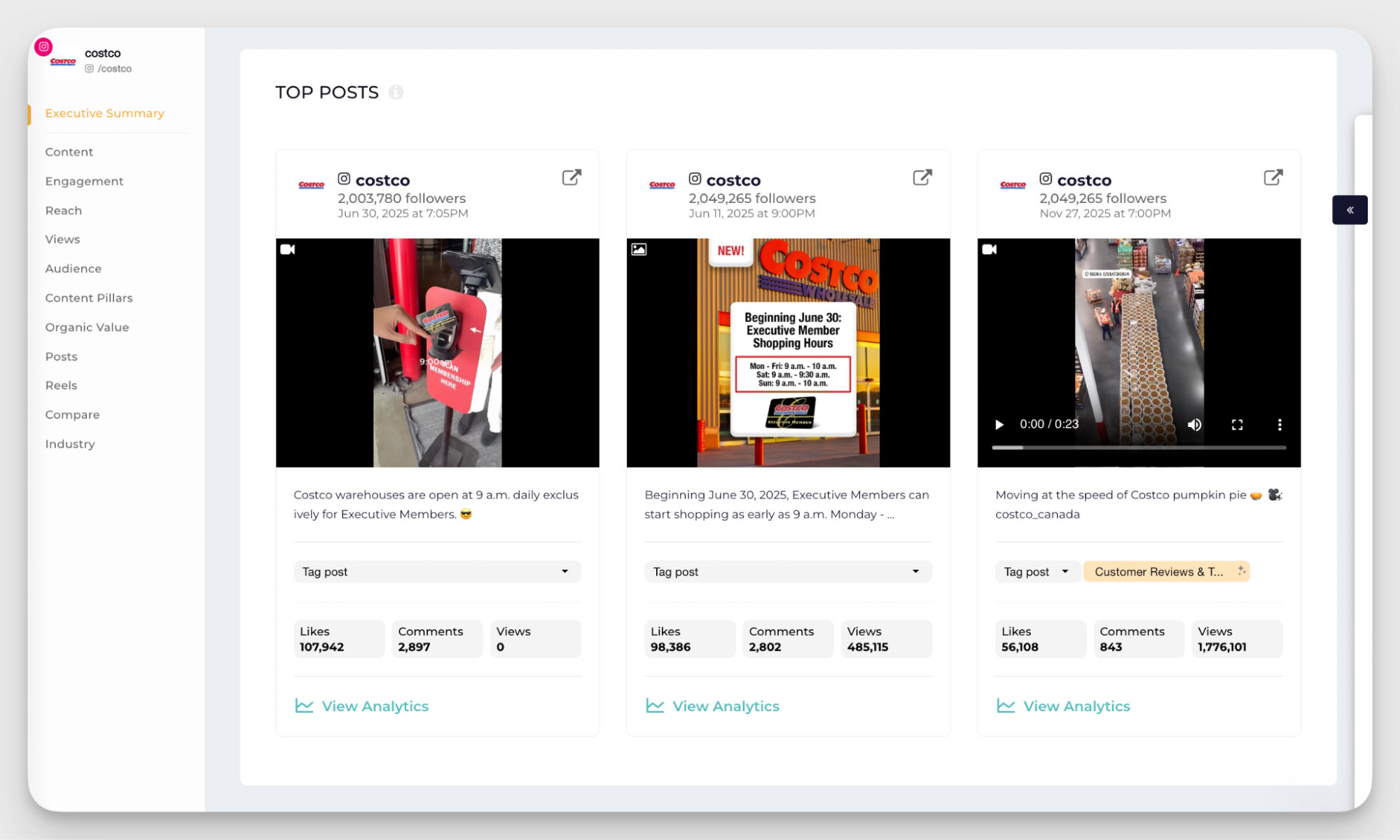
When multiple competitors in the same space see success with similar themes, that's a strong signal of an industry-wide trend.
This kind of competitive benchmarking helps you distinguish between what's working for one brand versus what's working for your entire category.
And here's a special tip I have for you: don't just look at your direct competitors. From experience, I can tell you that sometimes, the most useful trend signals come from adjacent industries or brands targeting a similar audience.
Use social listening and mention tracking
Social listening is useful to find out what people are talking about, even when it’s not about you directly.
Set up keyword alerts
Start with the obvious: your brand name, products, and key executives. Then expand to industry terms, competitor names, and topics central to your niche.
The goal is to notice when conversation volume around certain topics starts changing. A sudden spike in discussions about a specific problem or idea often precedes a broader trend.
Track sentiment shifts around topics
Volume doesn't tell the whole story. How people talk about something matters just as much.
A topic might be generating lots of conversation, but if sentiment is turning negative, jumping on that trend could backfire. Conversely, if sentiment around a previously neutral topic is becoming increasingly positive, that's a signal the topic is gaining genuine enthusiasm.
For me, this nuanced social media data collection method helps me make smarter decisions about which trends are worth my investment and which might be more trouble than they're worth.
Study platform algorithm updates and changes
Platforms don't usually announce trends, but they do signal what they're prioritizing. And what platforms prioritize tends to become what performs.
When a platform launches a new feature, early adoption often comes with visibility advantages. This window doesn't last forever, but it's worth leveraging when you spot it.
Staying informed about these changes through official announcements, relevant media outlets, and your own observations helps you anticipate where each platform is heading rather than just reacting after the fact.
Follow trend forecasters and industry influencers
Trend forecasters, industry analysts, and niche influencers often have their finger on the pulse of shifts before they hit mainstream awareness.
Be selective about who you follow. Look for people with a track record of accurate predictions, not just hot takes.
Industry-specific newsletters, podcasts, and communities can also reveal trends relevant to your niche faster than general social media news sources.
This is the approach Eve has adopted as well. Here's what she said:
I follow social media blogs and LinkedIn top voices to stay informed, but I also prioritize consuming content directly. Putting yourself in the shoes of the consumer is essential and the best way to do that is by actively scrolling, watching, and engaging.
What tools to use to track social media trends?
Having the right trend identification methods is just the start. You also need the right tools to put those methods into practice efficiently.
You need the right combination of native platform insights, cross-platform analytics, and listening capabilities. Let’s look at each.
Platform-native analytics
Every major social platform offers built-in analytics, and while they vary in depth, each provides important trend signals.
- TikTok Analytics is valuable for discovering popular sounds, effects, and hashtags. The "Trending" section in the Creative Center shows you what's gaining momentum and whether a trend is still rising or already peaking.
- Instagram Insights lets you see which content types resonate most, when your audience is active, and how your reach is trending over time.
- LinkedIn Analytics provides detailed breakdowns of post performance, follower demographics, and visitor insights.
- YouTube Studio goes deep on audience retention and traffic sources. The "Research" tab is particularly useful as it shows you what your audience is searching for, which can surface trending topics.
- X (Twitter) Analytics gives you engagement metrics alongside impression data. You can also explore trending topics and news.
The limitation of native analytics is that they only show you your own performance. To see how competitors are doing and how your results compare to industry benchmarks, you need dedicated analytics platforms.
Social media analytics platforms
Social media analytics platforms aggregate data from multiple sources into a single view, making it easier to identify trends across accounts, brands, or industries.
Socialinsider's social media analytics capabilities, for example, include several benefits that directly support trend identification:
- Account, brand, and industry-level content pillars analysis. Rather than manually categorizing every post to see what themes perform best, you can tag content into pillars and instantly see which topics drive the highest engagement across your own accounts or competitors. This makes it much faster to identify which themes are gaining traction.
- Competitive benchmarking. Trends don’t live in isolation. Competitive insights help you distinguish between brand-specific wins and broader industry shifts. More importantly, they ensure you’re not missing growth opportunities.
- AI-driven insights. Manually analyzing data for patterns is time-consuming and error-prone. Speed is of the essence when it comes to trends. AI social media analytics can automatically give you insights and catch trends that human analysis might overlook.
- Historical data. Access to historical performance data lets you discern between viral moments, micro-trends, and lasting changes. It also helps you understand seasonality, so you're not mistaking predictable cycles for trends. It supports strategic trend adoption, leading to more efficient social media optimization.
The combination of these features means you can move from "I wonder what's trending" to "Here's what's gaining traction in my industry and why" — complete with action points.
Social listening tools
Social listening tools such as Brandwatch, Sprout Social, Mention, and Talkwalker monitor conversations across social platforms, forums, news sites, and blogs. They help you:
- Track sentiment shifts around topics.
- Monitor brand and competitor mentions.
- Identify emerging conversations.
- Spot influencer and media coverage patterns.
How to validate if a trend is worth following?
Not every trend is right for every brand, and jumping on the wrong one can feel forced — or worse, damage your credibility. Here's a simple framework for filtering trends before you commit resources.
Assess trend relevance
Ask these three questions:
- Does it align with your brand voice and values?
- Will your audience care about this trend?
- Can you add unique value to the conversation?
Measure trend performance potential
Relevance alone isn't enough. You also want to assess whether a trend is likely to deliver results.
- Check the past performance of similar trends. Historical data and competitive benchmarking can tell you whether your audience typically responds to this type of trend.
- Look at views vs engagement. High views with minimal engagement often signal a trend that's more noise than substance.
- Analyze the trend's saturation. A trend in its early rise has more potential than one that's already everywhere. If your feed is already flooded with brands participating, you might want to sit this one out.
Evaluate the authenticity fit for your brand
This one's harder to quantify but just as important.
Ask: If we participate in this trend, will it feel natural or forced? Audiences are perceptive. They can tell when a brand genuinely connects with a moment versus when they're awkwardly chasing relevance.
The best trend participation feels like a natural extension of what your brand already does.
How to act on social media trends strategically?
Once you've identified a trend worth pursuing, execution matters. Your participation can fall flat or perform brilliantly depending on how you approach it. Here are some social media best practices to keep in mind.
Time your trend participation
Timing is essential.
Getting in early means less competition and more algorithmic favor. But there's a catch: if you're too early, your audience might not recognize the reference yet, and the content falls flat. The sweet spot is usually when a trend is clearly rising but hasn't yet saturated feeds.
Beyond trend timing, consider when your audience is most active. Posting trend content when your followers are online increases the chance of engagement. Your social media analytics tool can show you these peak windows.
Adapt trends to your brand
Copying is a poor social media tactic. Instead, aim to:
- Put your unique spin on trending formats. Take the core concept and filter it through your lens. What does this trend look like when applied to your industry, products, or brand personality?
- Maintain authenticity while participating. Your audience should still recognize your brand voice even when adapting popular formats. If you have to completely abandon your usual style to make it work, it's probably not the right trend for you.
Measure trend campaign performance
Compare your trend content performance against your typical averages. Did the trend-driven post outperform your standard content in terms of reach, engagement, or follower growth? Or did it underperform despite the extra effort?
This comparison tells you whether trend participation is adding value or just adding work.
Common mistakes to avoid when tracking trends
Here are a few mistakes I see all the time in trend strategy (that you can avoid):
- Chasing every trend. Not every meme or jingle deserves your attention. Be selective, as a few well-executed trend pieces outperform a dozen rushed ones.
- Ignoring your audience's preferences. A trend might be huge on TikTok, but if your audience lives on LinkedIn, it's irrelevant to your strategy. Always filter trends through what your audience cares about.
- Being late or generic. Jumping on a trend after it's peaked or participating with content that looks identical to everyone else's is boring and annoying. If you can't get there early or bring something unique, skip it.
- Failing to measure trend ROI. Without measurement, you're just guessing, and likely wasting resources on trends that don't move the needle for your brand.
When I asked her, Eve told me:
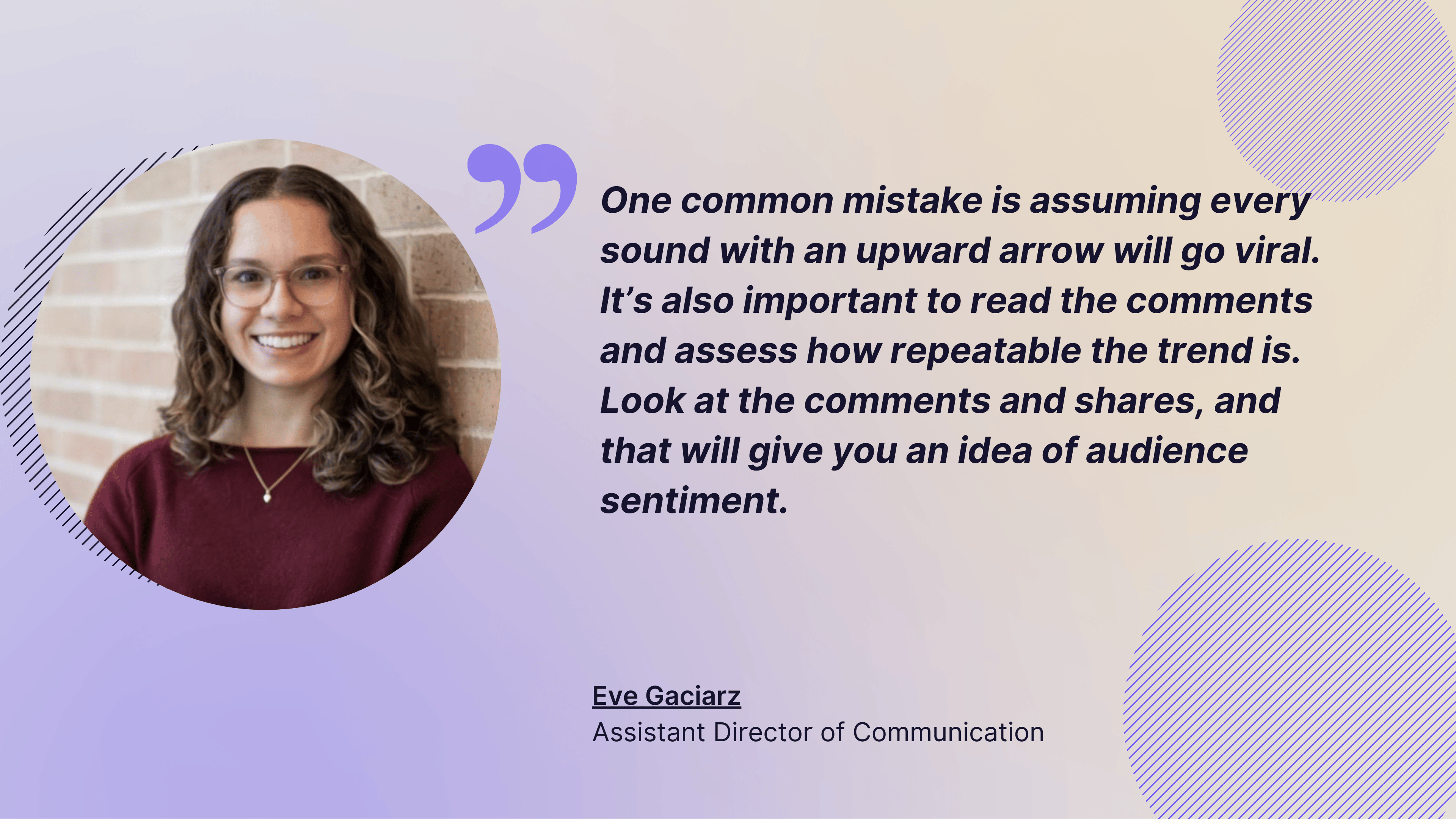
One common mistake is assuming every sound with an upward arrow will go viral. It’s also important to read the comments and assess how repeatable the trend is. Look at the comments and shares, and that will give you an idea of audience sentiment. If people genuinely enjoy the content and it’s easy to recreate (like the owl impersonation trend happening right now), it’s worth monitoring.
Another major mistake is hyperfixating on trends as your primary content strategy. That time is often better spent creating higher-quality, community-building, or value-driven content that actually supports engagement and sales.
Final thoughts
Tracking trends effectively comes down to three things: knowing where to look, filtering what’s relevant, and acting before it’s too late.
The brands that are great at trend identification and implementation are systematic about it — and you should be too.
Start your free Socialinsider trial to spot trends in real-time data and act based on comprehensive competitive intelligence.
Sabina Varga
Content marketing expert with 15 years of experience in digital marketing. I dream of beach life but love the city as a multitasking mom juggling playgrounds, books, brunches, and travels.

Analyze your competitors in seconds
Track & analyze your competitors and get top social media metrics and more!
You might also like



Improve your social media strategy with Socialinsider!
Use in-depth data to measure your social accounts’ performance, analyze competitors, and gain insights to improve your strategy.