AI Social Media Analytics: How AI Is Transforming Performance Measurement
From reactive reporting to predictive decisions — here's how AI social media analytics changes the way social teams operate.

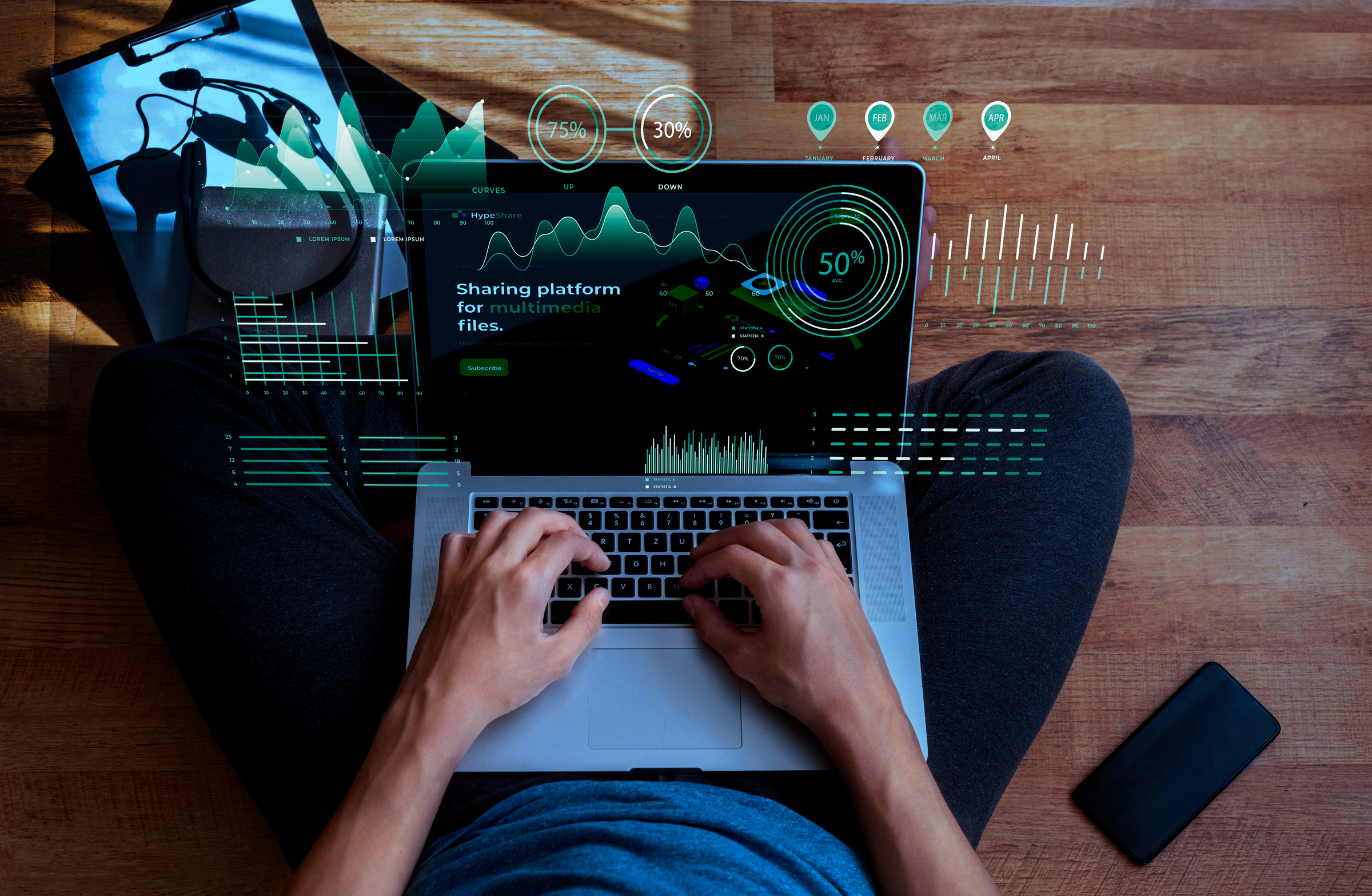
AI social media analytics helps teams turn post data, comments, and platform metrics into faster decisions about what to publish, what to stop, and where to invest more time. This is incredibly helpful, as manual reporting can show what happened, but it often misses the pattern behind the numbers. And for social teams under pressure, that difference is huge.
In this guide, I'll show you how to use AI to highlight themes, compare formats, flag unusual shifts, and make reporting easier to trust, instead of stitching together spreadsheets and native exports.
Key takeaways
- AI transforms social analytics from manual reporting into continuous, predictive intelligence by automating data analysis and uncovering patterns, insights, and opportunities across platforms.
- AI can continuously track complex signals like sentiment shifts, content pillar performance, audience behavior patterns, competitive movements, and trend velocity across massive datasets that are impossible to analyze manually.
- AI strengthens social media ROI measurement by identifying correlations between social activity and business outcomes such as brand awareness, website engagement, pipeline growth, and revenue impact.
Why traditional social media analytics falls short?
Social media moves fast. The way most teams analyze it doesn't.
Traditional social media analytics was built around a simple premise: collect data, display it in a dashboard, let the human figure out what it means. That worked reasonably well when brands were managing one or two platforms, posting a few times a week, and competing in categories where the pace of change was slow enough to absorb a weekly report.
That's not the environment most social media teams are operating in anymore. Posting volumes are higher, platform algorithms shift faster, audience behavior is more fragmented, and the competitive landscape updates in real time. Against that backdrop, traditional analytics has three problems that compound each other:
- It's backward-looking by default. Most analytics dashboards tell you what happened last week. By the time you've pulled the data, built the report, and presented the findings, the window to act on them has often already closed.
- It doesn't scale with content volume. Manual analysis works when you're reviewing twenty posts a month. It breaks down when you're managing hundreds of pieces of content across multiple platforms, trying to identify which variables are actually driving performance differences.
- It keeps platforms siloed. Logging into separate dashboards for Instagram, TikTok, LinkedIn, and Facebook and trying to construct a unified picture of your brand's performance is time-consuming, inconsistent, and almost always incomplete. The connections between platforms — where the most useful strategic insights tend to live — never get made.
AI in social media analytics doesn't just solve these problems incrementally. It changes the underlying logic of how analysis works — from a periodic, manual, backward-looking process to a continuous, automated, forward-looking one.
What AI adds to social media analytics?
I think the best way to understand what AI brings to social media analytics is to understand what it removes — the manual steps that slow everything down without adding strategic value.
AI-driven social media analytics automates the collecting, cleaning, categorizing, and summarizing of data so that by the time a human looks at it, the groundwork is already done. But I'd mention that beyond speed, AI also unlocks capabilities that weren't possible at all with traditional analytics. Here's what that looks like in practice.
Natural language processing (NLP)
NLP is how AI reads and understands text — captions, comments, replies, hashtags — at a scale no human team could match. In a social media context, this means being able to analyze thousands of comments across multiple platforms to understand how your audience is actually responding to your content, not just whether they engaged with it.
For social media teams, NLP surfaces the qualitative layer that raw engagement metrics miss entirely. A post can have strong engagement numbers and deeply negative sentiment in the comments. NLP catches that. It also identifies recurring themes, questions, and pain points in your audience's language — inputs that are genuinely useful for content planning, not just performance reporting.
Predictive analytics
AI-powered social media analytics doesn't just describe what has happened — it anticipates what's likely to happen next. Predictive analytics uses your historical performance data to forecast future outcomes: which content formats are likely to perform best next quarter, when your audience is most likely to be receptive to a specific type of post, which trends are gaining momentum before they peak.
For social media leaders managing content calendars and campaign budgets, this shift from reactive to predictive is one of the most valuable things AI for social media analytics delivers. It means planning with evidence rather than instinct, and catching opportunities before competitors do.
Automated anomaly detection
AI monitors your performance data continuously and flags when something falls outside your normal range — without you having to check. A sudden drop in reach on a platform that's been stable for months. An unusual spike in negative sentiment following a specific post. A competitor gaining followers at three times their usual rate.
The difference between AI anomaly detection and basic threshold alerts is that AI adapts to your own historical baseline. It knows what normal looks like for your brand specifically, which means it produces far fewer false positives and surfaces the signals that genuinely warrant your attention rather than firing every time a metric moves.
Cross-platform data unification
I think one of the most underrated capabilities of AI-powered social media analytics for marketers is what it does for cross-platform analysis. Rather than treating each platform as a separate reporting environment, AI unifies your data across channels — normalizing metric definitions, aligning time periods, and making your entire social presence analyzable as one dataset.
And honestly, based on my experience, I can vouch that the most useful strategic insights in social media analytics rarely live within a single platform. They emerge from the relationships between platforms — which content types transfer across channels, where your audience is most active at different points in the week, how your cross-platform share of voice compares to competitors. AI makes those connections automatically, rather than leaving them to be discovered manually if there's ever enough time.
Key metrics AI can now measure that humans can't — at scale
It's not that these metrics didn't exist before AI. It's that measuring them consistently, across high content volumes and multiple platforms, was pretty time-consuming without automation. These are the metrics that AI social media analytics makes genuinely actionable rather than theoretically interesting.
- Sentiment trends over time: Knowing your engagement rate is useful. Knowing whether the sentiment behind that engagement is shifting — and in which direction — is significantly more useful. AI tracks sentiment across comments, replies, and mentions continuously, so you can see not just how much your audience is engaging but how they feel about what you're putting out. Tracked over time, sentiment trends are one of the earliest indicators of brand perception shifts — often visible in the data weeks before they show up in harder business metrics.
- Content pillar performance: Understanding which themes and topics are actually driving your results requires every piece of content to be categorized consistently. Manually, that's a tagging problem that most teams never fully solve. AI handles categorization automatically — scanning content at the caption, format, and visual level and grouping it by theme — so pillar-level performance analysis is always available, including for historical content that was never tagged at the time of publishing.

- Competitive analysis: Tracking your own performance is table stakes. Understanding your performance relative to competitors — how your engagement rate, content volume, audience growth, and reach compare to the brands you're competing with — is where social media analytics becomes genuinely strategic.

- Audience behavior patterns: When is your audience most active? Which segments engage most with which content types? How does audience behavior differ across platforms? These questions require analyzing patterns across large datasets over extended time periods — exactly the kind of work AI handles well and manual analysis handles poorly. The output isn't just better posting time recommendations. It's a deeper understanding of how different audience segments relate to different parts of your content mix, which informs everything from content planning to paid amplification decisions.
- Trend velocity: Identifying a trend is one thing. Knowing how fast it's moving — and therefore how urgently to act on it — is another. AI tracks the rate of change across topics, formats, and competitor behaviors, not just their current state. A topic that's growing slowly gives you time to plan. One that's accelerating rapidly is a signal to move now. Trend velocity is the metric that separates teams who consistently get ahead of what's happening from teams who consistently react to it after the fact.
ROI attribution: connecting social data to business outcomes
Proving the value of social media to stakeholders has always been one of the hardest parts of the job, I know. Not because the value isn't there, but because the connection between what happens on social and what matters to the business has historically been difficult to demonstrate clearly and consistently.
AI social media analytics doesn't solve the attribution problem completely — no tool does, because social media's influence on business outcomes is genuinely complex and often indirect. But it makes the case significantly stronger, and significantly easier to make on a regular basis rather than only when the numbers happen to look good.
Why traditional attribution falls short?
From what I've seen, traditional social media attribution tends to default to last-click logic — crediting the final touchpoint before a conversion and ignoring everything that contributed to the decision before it. For social media, which operates primarily at the awareness and consideration stages of the funnel, last-click attribution systematically undervalues what the channel is actually doing.
The result is that social media teams end up defending their work with engagement metrics that leadership doesn't find convincing, while the genuine contribution of social to pipeline and revenue goes unmeasured and therefore unrecognized. It's a credibility problem as much as a measurement problem.
What AI attribution makes possible?
AI-powered social media analytics approaches attribution differently — looking for correlations and patterns across datasets rather than applying a fixed attribution model that was designed for direct response channels.
In practice, this means being able to surface relationships like:
- Social engagement and brand search volume — periods of high social engagement correlating with spikes in branded search, indicating that social content is driving awareness that shows up in other channels.
- Content pillar performance and website behavior — which content themes drive the highest quality website traffic, measured by time on site, pages per session, or conversion rate, not just click volume.
- Campaign timing and business metrics — the lag effect between social campaign activity and downstream outcomes like trial signups, demo requests, or product page visits.
- Audience segment behavior — which audience segments on social show the strongest signals of purchase intent, based on the types of content they engage with and how that engagement pattern correlates with conversion data.
None of these connections are visible in a standard social media dashboard. They emerge from AI analyzing across datasets simultaneously — social performance data, website analytics, campaign data — and identifying the patterns that link them.
Making the business case to leadership
The practical output of better attribution isn't just more accurate measurement. It's more confident, more credible reporting to stakeholders who don't live in social media dashboards and need to understand social's contribution in business terms.
AI-generated executive summaries that connect social performance to business outcomes — framed around metrics leadership already cares about rather than platform-specific KPIs — change the conversation social media teams are able to have internally. Instead of defending engagement rates, you're presenting evidence of contribution to awareness, pipeline, and revenue. That shift in framing changes how social media is perceived as a function, and how seriously its strategic recommendations are taken.
And this can be easily done by connecting your AI assistant to Socialinsider's MCP, gain access to your live performance data from Socialinsider directly into your favorite AI.

Setting realistic expectations
Now, I want to emphasize it's worth being direct about what AI attribution can and can't do. Because it surfaces correlations and patterns, but it doesn't necessarily establish causation with certainty. Social media's influence on business outcomes involves too many variables, and too many of them are unmeasurable, for any analytics tool to produce a definitive ROI number that accounts for everything.
What AI social media analytics does is make the evidence base significantly stronger than it was before — moving from anecdote and engagement metrics to data-backed patterns that connect social activity to outcomes leadership recognizes as meaningful. I know that's not a complete answer to the attribution problem, but it's a far more credible one than most social media teams have been able to make historically.
Final Thoughts
AI social media analytics is most useful when it saves time, improves context, and gives a team a clearer next step. If you are still pulling screenshots, comparing channels by hand, or explaining the same metrics every month, start with one question and one dashboard. That is usually enough to see where AI can remove friction first.
FAQs on AI social media analytics
How can businesses leverage AI for more effective social media analytics?
Businesses can leverage AI by using it to replace repetitive reporting tasks, spot content trends earlier, and segment audiences more intelligently. The most effective teams start with one workflow, such as benchmarking or content analysis, then expand once the team trusts the output. That keeps adoption practical and reduces noise.
Nidhi Parikh
Nidhi Parikh is SaaS writer that believes scrolling through social media is research for work. When not working, find her binge watching the latest series or reading anything she can get her hands on.

Know what your competitors do — before your manager asks
Get instant social benchmarks & reports without manual work.