Social Media Trend Analysis: How to Evaluate and Act on Trends
Learn how to analyze social media trends: from evaluating relevance, tracking the right metrics, and reporting performance to leadership.

Spotting a trend is the easy part. Knowing whether it's actually worth your time, your creative resources, and your brand's credibility — that's where most teams get stuck.
Personally, I've watched plenty of brands jumping on trending topics only to realize weeks later it had no significant impact in helping them achieve their goals. That's the gap this guide closes. Through it, I'll show you exactly how to conduct an effective social media trend analysis: evaluating relevance, tracking the metrics that actually matter, how to speed up the process with a tool, and reporting the results in a way leadership can understand.
Key takeaways
- Tracking finds what's out there; analysis tells you whether a specific trend is worth your brand's resources.
- Evaluating a trend comes down to three questions: does your audience actually care, has it already peaked, and what are competitors doing with it.
- Four metrics separate a trend that's working from one that just looks busy: engagement velocity, reach growth rate, share rate and saves, and conversion attribution.
- Socialinsider speeds up trend analysis across a competitive set by automating content categorization, letting you compare content pillar performance across every account you track at once.
- The brands that nail trend participation treat it as a systematic evaluation process, not an instinct — and they can prove the impact when leadership asks.
What is social media trend analysis, and why it's different from trend tracking
Trend tracking and trend analysis get used interchangeably, but they're two different jobs. Tracking is about discovery — noticing that something is gaining traction across platforms, competitors, or your industry. Analysis starts after that: it's the process of deciding whether a trend you've already spotted deserves your investment, and then measuring whether it actually paid off once you've participated.
Put simply, analyzing social media trends means asking "is this worth it, and did it work" — not "what's out there right now." If tracking gives you a list of candidates, analysis is the filter and the scorecard.
Why trend analysis is critical for competitive positioning
Before anything, let me set one clear straight: tracking competitors' social media isn't just data collection; it's mapping where your industry is heading and uncovering trends you can use to shape your strategy. Here's why the analysis step specifically matters for competitive positioning:
- Spot opportunities early, and prove they're worth acting on. The most successful brands aren't always the biggest; they're the fastest to act on emerging topics, often doubling engagement by doing so, and they can show why the trend was worth chasing.
- Learn what resonates with your shared audience. Competitors' top-performing posts offer free insight into your shared audience, but only if you're analyzing the pattern, not just the post.
- Allocate resources wisely. Data helps you distinguish short-lived fads from meaningful shifts in content consumption, so you're not spending creative time on something that's already fading.
- Adapt faster with confidence. Platforms evolve quickly, and trend analysis gives you the evidence to move fast without moving blind.
With consistent trend analysis, you focus on what truly moves your brand metrics, investing in trends that fit your strategy instead of chasing every new format. That's how you stay ahead, not just keep up.
How to evaluate a trend's relevance for your brand
Seeing a trend and jumping on it immediately feels productive, but it isn't necessarily the right move. Successful trend adoption starts with evaluating relevance against three questions.
Does your audience care? Signals to look for
Before you invest any creative resources, ask: does my audience actually care about this? Look for:
- Are your followers already engaging with this trend?
- Does the trend align with your audience's interests and pain points?
- Have similar brands in your space participated successfully?
- Does the trend topic connect to your existing content pillars?
If the answer to most of these is no, the trend probably isn't for you — no matter how big it looks on your feed.
Is it already peaked? How to read trend velocity
Not all trends are created equal. Some peak fast, generate massive engagement, and fade just as quickly (think the Ice Bucket Challenge). Others build slowly and sustain for months or years (think short-form video's rise). Your participation strategy should match where the trend actually sits in its lifecycle:
- Early stage: Low volume but rapidly accelerating; high risk, high reward.
- Peak stage: Maximum visibility, but also maximum competition.
- Plateau stage: Sustained interest with less competition, often the sweet spot.
- Decline stage: Fading relevance; probably too late unless you have a genuinely unique angle.
Reading velocity correctly is what separates a brand that catches a trend mid-rise from one that shows up during the decline stage looking behind the curve.
What are competitors doing with it?
Your competitors are running live experiments with the same trends you're considering; learn from their results before you commit resources. When you review competitor participation in a trend, look for:
- How many competitors have already participated?
- What's their engagement compared to their own baseline?
- Which creative approaches performed best?
- What mistakes should you avoid based on what didn't land?
This competitive benchmarking reveals whether there's still room for your voice. If ten competitors have already covered the trend with similar approaches, you need a differentiated angle. If only one or two have participated, there's likely still an opportunity.
What metrics to track to evaluate trend effectiveness
Evaluating relevance tells you whether to participate. These four metrics tell you whether participation actually worked.
Engagement velocity
When you participate in a trend, you should see faster-than-usual engagement in the first few hours. If a post is getting the same slow trickle of likes as your regular content, the trend isn't resonating. Track:
- Engagement rate in the first hour vs. your typical first-hour performance
- Comment-to-like ratio (higher comments often signal trend relevance)
- Save rate for educational or valuable trending content
Velocity matters because trends have short windows. Content that gains momentum quickly benefits from algorithmic promotion while the trend is still hot; lagging engagement usually means you've missed the peak.
Reach growth rate
A successful trend post might deliver two to three times your average reach. Pay attention to:
- Follower growth during trend participation

- Non-follower reach percentage
- Profile visits from trend content
These metrics tell you whether the trend helped you access new audiences, or just activated your existing community a little differently.
Share rate and saves
Shares are the ultimate signal that content resonates. Watch for:
- Share rate vs. your baseline
- Where shares are happening (Stories, DMs, external shares)
High share rates often correlate with nailing a trend. If people are still sharing your trend post days or weeks after you published it, you've created something that transcends the immediate trend cycle, which is a much stronger signal than a short spike.
Conversion attribution
Engagement is great, but does trend participation actually support your business goals? Connect trend content to outcomes that matter:
- Click-through rate to your website or landing pages
- Conversion rate from trend traffic
- Attribution to sales or sign-ups
- Cost-per-acquisition compared to other content types
I've seen brands celebrate viral trend posts that generated almost no business value, while quieter trend participation that aligned closely with their product drove meaningful conversions with a fraction of the reach. Volume isn't the same as value.
How to use Socialinsider for trend analysis across your competitive set
If you've tried it, you know: manually evaluating trends across multiple competitors is exhausting. Lately, I've talked to a couple of social media managers who spent hours each week just trying to keep tabs on what competitors are posting, let alone analyzing whether any of it is actually working.
And for anyone being in that same spot, I need to tell you that I know how this can be fixed: with Socialinsider, you can automate the parts of trend analysis that consume the most time: data collection, content categorization, and performance tracking, and focus on the strategic call of whether a trend is worth your brand's investment.
It's AI-powered content pillar analysis is the feature that does most of the heavy lifting here. Rather than manually categorizing hundreds of posts to see what's trending, the tool sorts content into thematic categories automatically. Set your analysis timeframe to around three months — long enough to see genuine patterns, recent enough to stay actionable — and you can immediately see which content pillars are generating the strongest response across every competitor you track, not just one account at a time.

This is exactly the workflow Riley Genua from Think Jam described when she started using it:
Using those content pillars, I was able to pretty quickly figure out what people are gravitating towards in the last three months.
When multiple competitors succeed with similar content pillars, that confirms a genuine trend rather than a one-off post doing well. When you spot a gap — a content type performing well for one competitor but ignored by others — that's often your opening. Riley's take on why this level of automated analysis matters:
I've been working with at least 10 different social analytics tools... and Socialinsider is really the only tool that does this level of automated content analysis.
Beyond content pillars, Socialinsider also lets you manually tag posts for specific campaign or trend analysis — useful when you want to track how competitors handled a particular trend moment specifically, rather than relying on automated categorization alone. Riley summed up the overall experience simply:
I think the tool is really smart. And I love the way that everything is displayed, even the micro details, like the post thumbnails. I'm probably in the tool at least every other day.

If you're evaluating trend analysis software, this combination — automated categorization plus manual tagging, applied across your whole competitive set instead of one account at a time — is the difference between spending hours compiling data and spending that time on the actual strategic decision.
How to implement trend adoption into your strategy
Once you've evaluated relevance and know which metrics you'll track, three steps stand between analysis and execution.
Set the approval workflow and speed expectations upfront
This is the piece that decides whether your team can actually act on a trend once you've greenlit it. If every trend needs to route through three rounds of leadership sign-off, you'll evaluate trends perfectly and still miss the window every time.
Before your team needs it in the moment, define:
- Who signs off, and on what. A low-risk trend that clearly fits an existing content pillar might need only the social lead's approval. Anything touching brand voice, a sensitive topic, or paid amplification should route further up. Match the approval depth to the risk, not a blanket rule for every trend.
- How fast "fast" needs to be. Breaking, fast-moving trends need a same-day green light or they're not worth pursuing at all. Slower-building trends can tolerate a next-day check-in. Set the expected turnaround by trend type so your team isn't guessing how urgently to escalate.
- What "good judgment" looks like when you're not making the call yourself. As a lead, you won't personally evaluate every trend your team spots. Give them the same three relevance questions from earlier in this guide — audience fit, velocity, competitive context — as their own decision checklist, and reserve your sign-off for the trends that clear that bar but carry brand risk. That's what lets a team move at trend speed without every decision bottlenecking on you.
A team with a clear workflow can move on a trend within hours. A team without one is still waiting on an email thread by the time the trend has peaked.
Assess brand fit and creative adaptation potential
This step separates forced trend participation from authentic brand moments. Can you adapt this trend in a way that feels natural for your brand voice and visual identity? Ask:
- Can we add unique value to this conversation?
- Does participation align with our brand values and voice?
- Do we have the creative resources to execute this well?
- Will our audience see this as authentic or opportunistic?
Brands damage their credibility by jumping on trends that clearly don't fit their identity. The ones that consistently find their own angle build a reputation for being both current and authentic.
Calculate potential reach and engagement impact
Estimate whether the effort is worth the potential return before committing:
- Expected reach based on similar trend content performance
- Estimated engagement using your baseline rates and trend multipliers
- Resource requirements (time, budget, talent)
- Opportunity cost of other content you could create instead
Sometimes the highest-reach trends aren't the best investment. A smaller, more targeted trend that deeply resonates with your core audience can deliver better business results than a massive trend with only superficial engagement.
How to report trend performance to leadership
Analysis that stays in your own dashboard doesn't build a case for continued investment in trend-driven content. Reporting it well is what does.
Keep the report outcome-first: which trend you evaluated, why you chose to participate (or not), and what happened against the four metrics above: engagement velocity, reach growth, share rate, and conversion attribution. Skip a post-by-post breakdown; lead with whether the trend delivered against the goal you set before participating.
Translate the numbers into language leadership already cares about. "Engagement velocity was 3x our baseline in the first hour" is useful context, but "this trend drove profile visits that fed our lead pipeline the same week" is what actually justifies the time spent chasing it.
Where a trend didn't pay off, be just as direct — a documented miss with a clear reason ("audience overlap was weak," "we were three weeks late") builds more credibility than only reporting wins, and it sharpens the criteria for the next trend that comes along.
Trend analysis mistakes to avoid
I've already touched on a few of these in passing, but let's outline the common mistakes clearly so you can avoid them.
Chasing every trend without a strategy
Trend participation isn't a volume game. Brands that jump on every trending topic just look desperate for attention, and abandoning your core content strategy to chase every viral moment confuses your audience. The fix requires discipline: set clear criteria for participation, tied to your content pillars, and consider capping trend content at a fixed share of your posting schedule.
Missing the optimal timing window
Timing is everything with trends. Too early, and no one recognizes what you're referencing. Too late, and you look out of touch. A few rules that hold up in practice:
- Breaking news trends: participate within hours or skip entirely.
- Platform features: jump in during the first weeks for algorithmic favor.
- Seasonal trends: start about a week before peak interest.
- Industry movements: contribute throughout the lifecycle with fresh angles.
Measuring only engagement, never business impact
Even brands that analyze trends carefully sometimes stop at the engagement layer. A trend that generated a huge spike in likes but no movement on conversion attribution isn't a proven win; it's an open question your leadership report shouldn't gloss over.
Examples of brands that nail trend participation
The reason I chose entertainment brands as examples throughout this article is that they pretty much nail social media trend participation.
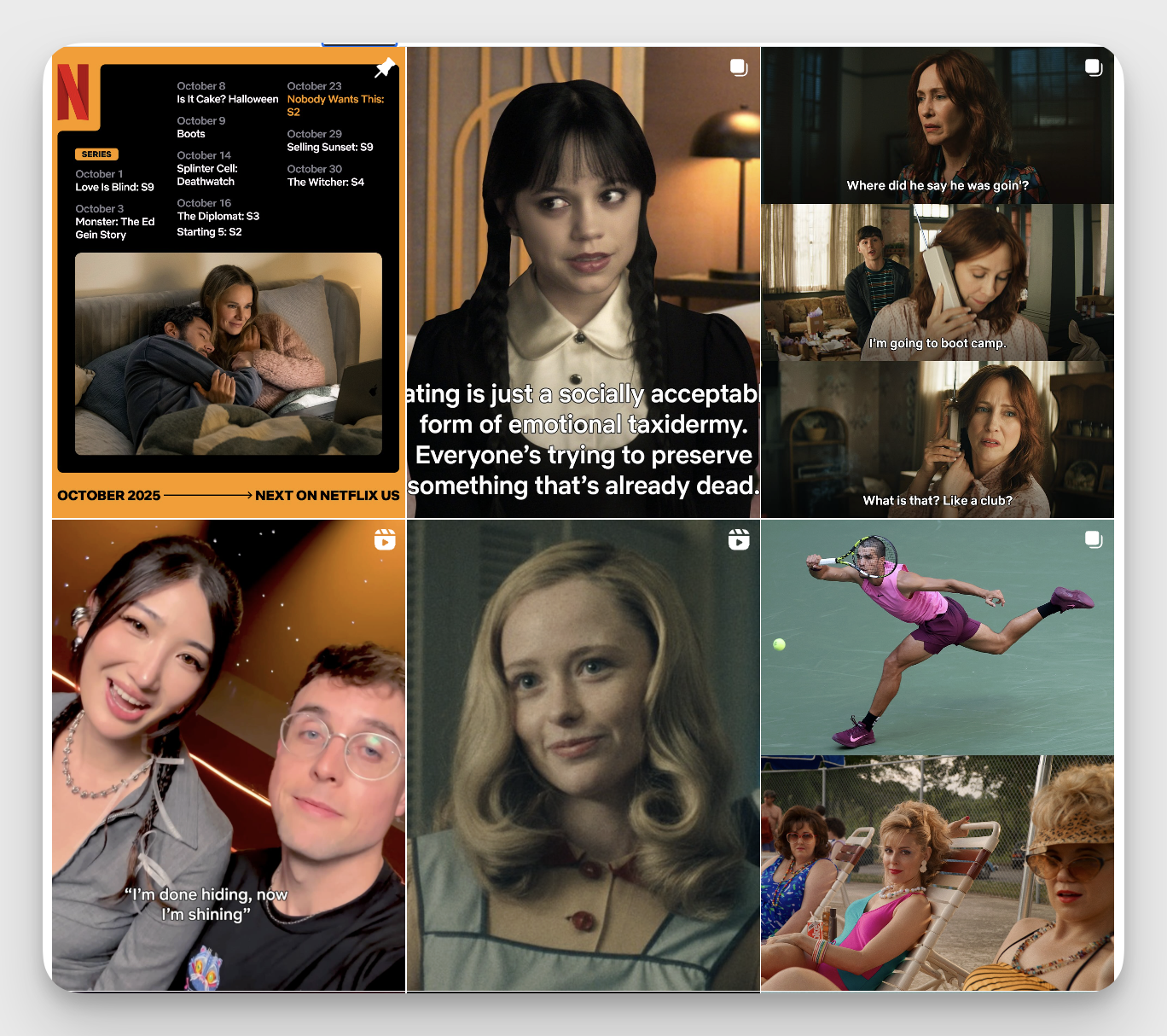
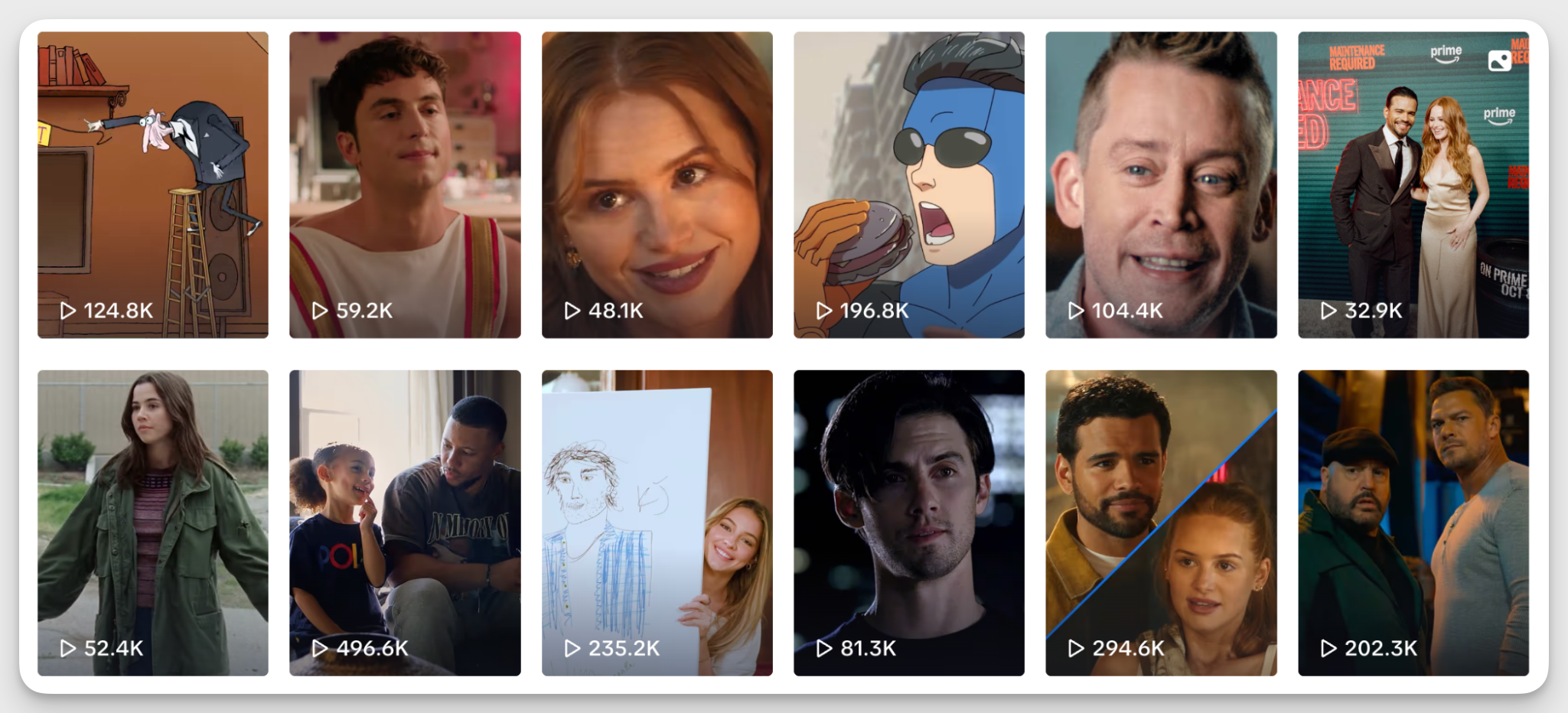
My analysis shows that brands like Netflix, Prime Video, and HBO are keen observers of trends. They participate when it makes sense, analyze what works for their audience, and test new approaches smartly.
- Netflix posts with high volume and variety, testing multiple trend formats to see what resonates. They embrace experimentation and are not afraid to try dance trends, meme formats, behind-the-scenes content, and interactive challenges. This strategy helps them catch trend waves early and often.
- Prime Video takes a more selective approach, focusing on fan engagement and interactive content that encourages participation. They excel at adapting trends to showcase their talent and properties in ways that feel native to TikTok's culture.
- HBO demonstrates that you don't need the highest posting frequency to succeed with trends. Their strategy emphasizes quality and strong engagement rates through carefully selected trend participation. They lean into nostalgia and exclusive content, formats that align naturally with their premium brand positioning.

What you can learn from their approach:
- Find your trend voice and stick to it. Each of these brands has a distinct personality in how they approach trends. Netflix is playful and experimental. Prime Video is interactive and fan-focused. HBO is selective and premium.
- Balance promotional and pure entertainment content. Yes, they're using trends to market shows and movies. But they don't make every trend post a hard sell. Much of their top-performing content entertains first, promotes second.
- Adapt trends to showcase your unique assets. These brands adapt trends to highlight their unique assets rather than forcing themselves into formats that don't play to their strengths.
- Use data to refine your approach. They're clearly tracking trends and adjusting based on results. You can see evolution in their strategies based on performance patterns.
Final thoughts
Trend analysis is the opposite of chasing every viral moment. It's a systematic approach to deciding which trends deserve your brand's resources, tracking whether they delivered, and reporting the results in language that earns you the budget to keep doing it well.
If you want to speed up how you evaluate trends across your competitive set, try Socialinsider free for 14 days and see how automated content pillar analysis turns hours of manual comparison into minutes of strategic decision-making.
FAQs about social media trend analysis
What's the difference between trend monitoring and trend analysis?
Trend monitoring is the ongoing watch for what's emerging across platforms and competitors. Trend analysis is the evaluation step that follows — deciding whether a specific trend is worth your brand's resources, and measuring whether participation actually worked.
What's the best social media trend analysis tool?
The right trend analysis tool depends on whether you need single-account insight or competitive-set analysis. For evaluating trends across multiple competitors at once, look for a tool with AI-powered content pillar analysis, cross-account benchmarking, and historical data — Socialinsider covers all three in one dashboard.
Can AI help with analyzing social media trends?
Yes, social media trend analysis with AI mainly speeds up categorization and pattern detection: automatically sorting hundreds of posts into content themes and surfacing which ones are gaining engagement, work that would otherwise take hours to do manually across a full competitive set.

Elena Cucu
As Content & SEO Manager at Socialinsider, Elena Cucu helps social media leaders make sense of the numbers behind their performance. Featured in TechCrunch, TNW, and ReadWrite.

Know what your competitors do — before your manager asks
Get instant social benchmarks & reports without manual work.