13 Social Media Tactics That Actually Drive Results (2026 Edition)
Discover here 13 social media tactics grouped by content creation, engagement, and analysis, plus how to know which ones are actually working.


Social media tactics are the specific, repeatable actions, such as a live Q&A, a repurposed carousel, or a competitive benchmarking check, that put your broader strategy into motion.
We all know that posting consistently isn't the hard part anymore. The hard part is knowing which tactics are actually earning attention right now, and telling one that's working from one that just feels like it is.
To ground this in more than my own experience, I pulled in insights from three social media leaders:
- Sharon Brand: Founder, Brand's Media Group
- Thom Gibson: Social media & YouTube strategist, Kit
- Robbie Schneider: Director of US Communications, Health Tech Without Borders
Below I'll cover 13 social media marketing tactics grouped by category, plus how to judge whether each one is moving the needle, not just generating activity.
Key takeaways
- Content creation tactics span leveraging employee content, sharing BTS footage, using more short-form video, incorporating memes and interactive content, leading with value-first posts, matching formats to each platform, and repurposing content across channels, and should be evaluated by reach and pillar-level performance.
- Audience engagement tactics cover starting outbound engagement with your audience, tagging influencers and brands with genuine intent, and going live with real-time video, and the right way to judge them is engagement rate and response activity.
- Analysis tactics bring together pairing creativity with real data, tracking your own social media analytics consistently, and benchmarking your performance against competitors, and their real test is whether the insight actually changes a decision.
What makes social media tactics different from strategy?
Your social media strategy is the big picture, the "why" and "where" behind your brand's presence online. Tactics are the practical, day-to-day moves that put that strategy into motion.
Say your strategy for the quarter is boosting engagement. The tactics underneath that might be running a contest, sharing behind-the-scenes content, or jumping on a relevant trend. The strategy sets the direction; the tactics are what your team actually executes to get there.
Because platforms and audience behavior shift quickly, a strategy alone isn't enough. You need a working set of tactics your team can test, swap, and adjust without having to revisit the strategy itself every time something changes.
Why do businesses need both reactive and proactive tactics?
Standing out on social in 2026 takes a balance of reactive and proactive tactics. News breaks, trends explode, and audience mood shifts overnight, and reactive tactics are what let your team respond in the moment: joining a viral conversation, adapting content on the fly, engaging with a relevant event as it happens.
Proactive tactics are the other half: scheduling value-driven content in advance, launching planned campaigns, lining up influencer partnerships ahead of time.
Neither is sufficient alone. A team running only reactive tactics is constantly scrambling with no consistent presence to fall back on. A team running only proactive tactics can feel a step behind the moment, publishing a planned post while a real-time conversation passes it by. Building both into your plan, and knowing which one a given situation calls for, is what keeps a brand both consistent and current.
How to know if a tactic is actually working
Before diving into the 13 tactics, it's worth setting up how you'll judge them, since each category below needs a different measurement lens. Applying the same metric across all three will give you a misleading read on at least two of them.
- For content creation tactics, judge by reach, impressions, and performance by content pillar or format. The question is whether the content is actually being seen and whether specific formats or themes are outperforming others.
- For audience engagement tactics, judge by engagement rate, response time, and the ratio of comments/DMs to passive likes. The question is whether people are interacting with you, not just scrolling past.
- For analysis tactics, judge by whether the insight actually changed a decision. Tracking analytics or benchmarking competitors that never leads to an adjusted content calendar or reallocated effort isn't producing value, regardless of how much data you're collecting.
A quick scope note: the 13 tactics below are organic. If you're layering social media advertising tactics on top, like boosting a top-performing organic post or running a lookalike audience off your engaged followers, apply the same logic: match the ad spend to whichever organic tactic already has proven pull, rather than promoting content that hasn't earned attention on its own yet.
Content creation tactics
#1. Leverage employee content
Your team has stories worth telling, and encouraging them to share their own experiences, wins, or daily work moments builds trust in a way brand-only content can't. People trust people, not logos.
If you're leading a team, this works best as a standing practice rather than an occasional ask: give employees room to shine, offer light guidance where needed, and celebrate their contributions publicly so the habit sticks.
At Socialinsider, we're now making employee content a bigger part of our social media strategy. When employees share their perspectives and expertise, it helps build trust, humanize the brand, expand organic reach, and even attract new talent.

We're not alone in this approach. Here's what Thom Gibson, Social media & YouTube strategist at Kit, recently shared with us in an interview:
We're leaning into employee content a lot at Kit as well. I made a video interviewing creators at a conference. Posted it on our brand page on all platforms but LinkedIn, where I posted from my page (and reposted from the company page).
#2. Share BTS content
Behind-the-scenes content works, that's not really in question anymore. The harder question is whether it's earning its slot in your calendar relative to your other pillars, or just running because it's easy to produce and nobody's revisited the decision.
Treat it as a pillar with the same scrutiny as any other: check its engagement against your account average over a full quarter, not against gut feeling. If it's underperforming your product or thought-leadership content but still eating a fixed weekly slot, that's worth reallocating, regardless of how "on brand" it feels. If it's genuinely one of your stronger pillars, that's the signal to formalize it (a monthly series, a named format) rather than leave it ad hoc.
#3. Integrate more short-form video content
Everyone already knows short-form video matters. The real decision for a team with fixed bandwidth is how much production investment each video actually needs, and that answer isn't the same across formats.
A rough way to think about it: reactive, personality-driven clips (a quick take, a team moment) earn very little from added polish, and often perform worse when they look too produced.
On the other hand, I advise that anything meant to demonstrate expertise or product value to earn real production investment, since credibility is riding on it.
#4. Incorporate GIFs, memes, and interactive content
Most teams already know memes and lighter formats build personality. The part worth deciding deliberately is how much calendar share this pillar deserves, since it's easy to either under-invest (staying too polished) or over-invest (leaning on memes because they're fast to produce, regardless of whether they're actually converting attention into anything beyond a laugh).
At Socialinsider, we guide our decisions based on the data, obviously. For example, here are our LinkedIn top-performing posts over Q2 2026:

The conclusion? Memes work, but in a balanced mix.
A few ways to apply this once you've sized the pillar appropriately:
- Meme-ify your brand messaging. Take existing content themes and repackage them as memes speaking to your target audience, think Monday blues, marketing struggles, or industry-specific quirks.
- Use GIFs in comments and replies. It lightens the tone and reminds people there's an actual person behind the brand's communications.
- Run polls and playful prompts. Combine memes or GIFs with polls, "this or that" sliders, or quick quizzes in Stories to boost participation.
#5. Have a value-first content approach
Content built to genuinely help, educate, or inspire consistently outperforms content built to promote. Tips, answers to real questions, and unique insights build trust that pays off well beyond the post itself.
The test worth applying before publishing: would this post still be useful to someone if your brand name were removed from it? If the answer is no, it's probably promotional content wearing a value-first disguise, and audiences tend to notice the difference even when they can't articulate why.
#6. Focus on platform-specific content formats
Nobody needs convincing that platform-native content beats a copy-pasted post anymore. The real question I keep running into is where to actually draw the line: full native production for every platform sounds great until your team's output quietly collapses trying to do it.
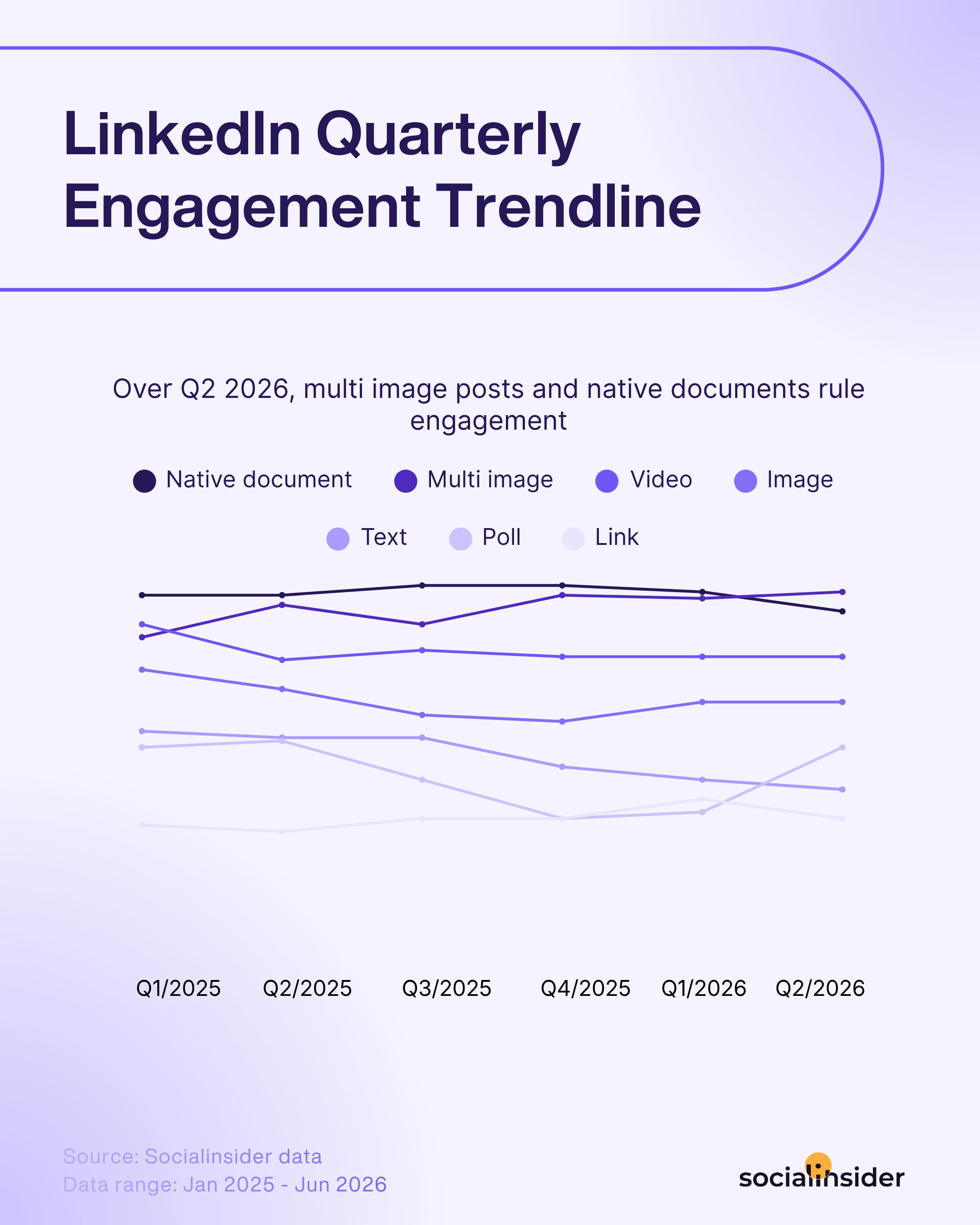
My advice? Use your performance data to decide where the native version is worth the extra effort. For example, on LinkedIn, the top 3 best-performing content types are multi-image posts, native carousels, and video.
And if we look at Socialinsider's Instagram benchmarks data, we can see similarities across these platforms.
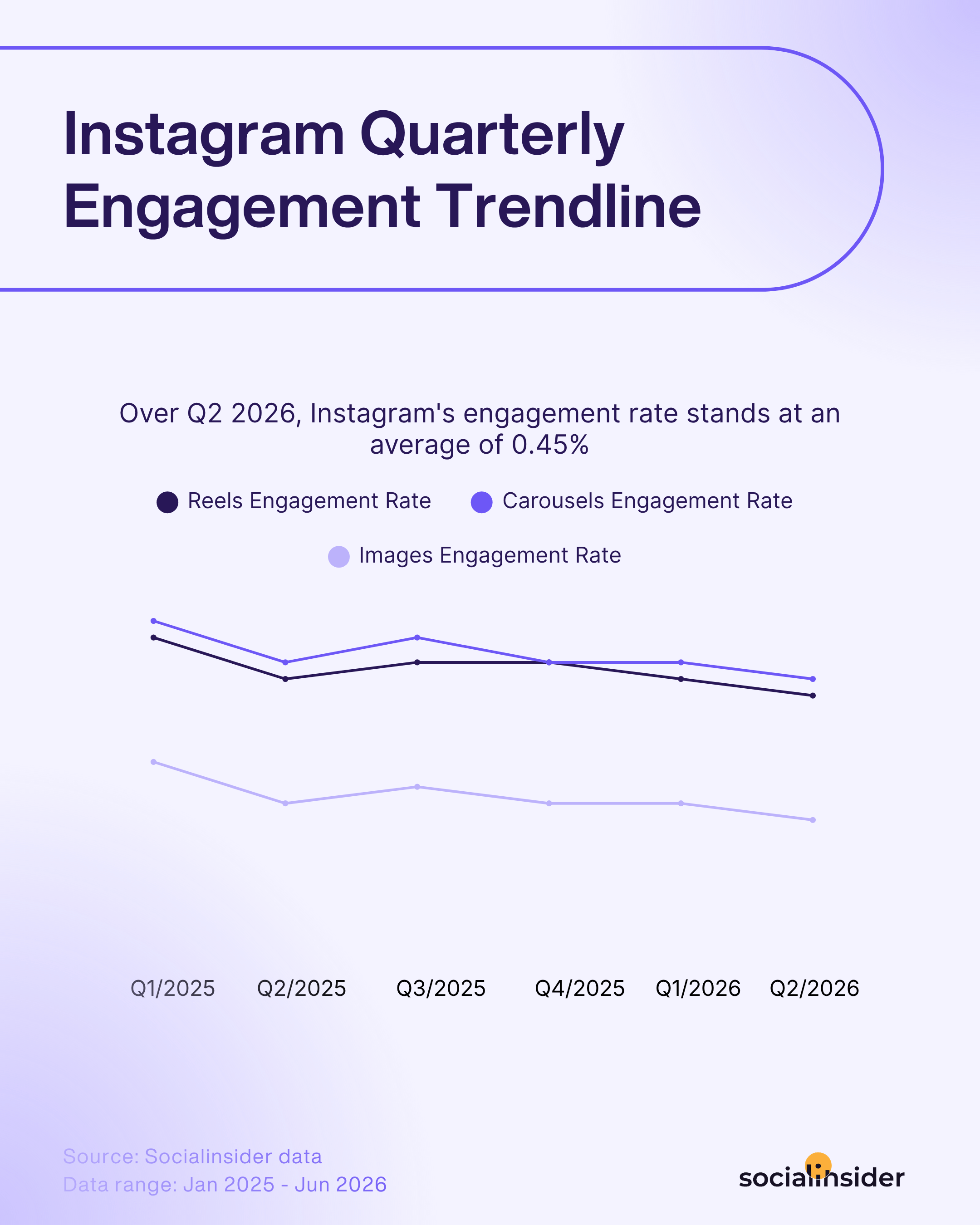
So, the takeaway? If a platform's top format is meaningfully outperforming a repurposed asset, that's where the native production time is worth spending. Where the gap is small, adapting a shared asset is a reasonable trade-off, not a shortcut you should feel bad about.
#7. Repurpose and cross-post content
Repurposing content is standard practice at this point, so the useful question isn't whether to do it; it's how to tell repackaging from lazy duplication before it shows up in your engagement data as a slow decline.
A quick check: if a repurposed piece requires zero adjustment to fit the new platform's format, audience, or algorithm, it's probably duplication, not repurposing, and from what I've seen, I would say the chances of underperforming are higher. However, when rethinking the hook, pacing, or format for the new context, it's more likely to perform.
Audience engagement tactics
Community engagement tactics for social media are what turn a passive following into an actual relationship. The three below are consistently effective and don't need a big production budget to run.
#8. Get started with outbound engagement
Waiting for people to come to you leaves engagement on the table. Outbound engagement, proactively commenting, replying to Stories, congratulating a peer on a win, builds real connection at a low cost.
If you're managing this across a team, it works best as a defined, recurring task (a set number of outbound interactions per day or week) rather than something left to whoever has spare time, since it's the first thing that gets dropped under deadline pressure otherwise.
Here's how Sharon Brand, Founder at Brand's Media Group, approaches this:
I really love to send out personalized messages to all of the new followers. This really drives them in and retains their loyalty to following the account.
#9. Tag influencers and brands
A genuine, specific note about why you're tagging someone, what you love about their work, how they've inspired you, lands very differently than a robotic tag-for-visibility move. It also tends to open the door to real collaboration rather than a one-off interaction.
The distinction worth training a team on: tagging for a real reason opens conversations; tagging purely for algorithmic visibility rarely does, and audiences can usually tell the difference.
#10. Go live with real-time videos
Live video creates a level of authenticity and instant engagement that pre-recorded content can't fully replicate, and platforms like Instagram, Facebook, YouTube, and TikTok tend to prioritize live content with more visibility.
A few reliable formats to start with:
- Product demos and launches
- Live Q&A sessions
- Behind-the-scenes moments
- Live events or pop-ups
- Customer testimonials and success stories
Analysis tactics
#11. Rely on data-driven creativity
I would say this whenever I have the chance: combining creativity with solid data, rather than guessing what your audience wants, is one of the more consistently effective tactics available. Digging into which posts perform best, which formats spark conversation, and when your community is most active gives your team a much sharper starting point for the next idea.
#12. Track social media analytics
Reviewing your data regularly, not just posting and moving on, is what tells you whether your effort is actually landing. Engagement rates and top-performing posts show you which tactics are genuinely working versus which ones just feel productive.

Now, I need to emphasize that native analytics are a bit restrictive, because there's so much data they fall short of. And that's why you probably end up switching between platforms and spreadsheets, taking forever to gather data across campaigns, and having so little visibility into how your competitors are performing. Luckily, Socialinsider helps make this whole process easier to manage. By pulling everything into one place, it takes you beyond surface-level metrics and shows what's genuinely working across all your brand channels.
#13. Benchmark performance against competitors
Comparing your results to industry peers gives you real perspective on where you actually stand, not just whether your own numbers went up or down this month.
My recommendation for you? Use analytics tools to track competitor engagement rates, posting habits, and top-performing content, then look for patterns worth adapting, not copying outright.
Here's an example of the type of data you can get with Socialinsider.

I strongly reccomend you to consistenly run a competitive analysis because routinely benchmarking against your niche helps set smarter, more realistic goals and spot shifts early, before they show up as a decline in your own numbers.
Here's how Robbie Schneider, Director of US Communications at Health Tech Without Borders, put it:
We've also found social listening and being aware of what the online chatter and headlines are to be essential. We've been more mindful about taking a step back when bigger issues are worrying our audiences and being ready to offer public health education when measles came back into our state.
Final thoughts
The best social media marketing tactics hold up over time and get judged against the right lens for what they're actually supposed to do. Treat the examples here as a menu to pull from, not a checklist to power through in one go. Platforms will keep changing, but staying intentional and actually looking at your data is what keeps a brand's presence working, not just busy.
FAQs on social media tactics
How do we know if a content creation tactic has stopped working?
Look at trend over several posts, not a single one. If a format or pillar underperforms its own historical average for three or more consecutive posts, that's a signal to revisit it rather than assume it was one weak post.
Elena Cucu
As Content & SEO Manager at Socialinsider, Elena Cucu helps social media leaders make sense of the numbers behind their performance. Featured in TechCrunch, TNW, and ReadWrite.

Know what your competitors do — before your manager asks
Get instant social benchmarks & reports without manual work.


