How to Use LinkedIn for B2B Marketing: Expert's Insights
Master LinkedIn B2B marketing with our comprehensive guide. Learn how to grow your business through strategic networking.


So, you’re a B2B marketer staring at your LinkedIn page and wondering what to do next.
Should you post more? Run ads? Invest in influencers? How do you get the most out of your LinkedIn B2B marketing strategy?
At this point, the question isn’t whether LinkedIn matters to B2B social media marketing. The real question is how to approach it in a way that drives visibility, trust, and actual business results.
The rest of the questions stand, and this article is a guide to answering them. From visibility and content strategy to lead generation, measurement, and competitive insights, here’s how to build a LinkedIn B2B marketing strategy that works.
Key takeaways
-
How to approach LinkedIn B2B marketing to drive business success? Treat LinkedIn as a long-term trust and brand-building channel where consistency, credibility, and human presence drive business results.
-
How to leverage LinkedIn for lead generation in B2B? Combine native tools like Lead Gen Forms, Events, and Sales Navigator with strong targeting and timely follow-up to turn attention into pipeline.
-
How to measure LinkedIn’s effectiveness in B2B marketing? Track visibility, engagement quality, and competitive benchmarks to understand not just reach, but real business impact and trust-building performance.
-
How to handle B2B influencer partnerships? Build long-term collaborations based on creative freedom, credibility, and shared distribution rather than one-off promotional placements.
Why LinkedIn dominates B2B marketing?
Usually, I’m all up for challenging established best practices, but LinkedIn’s case is pretty bulletproof.
According to LinkedIn itself, it was rated the #1 platform for B2B lead generation. That might sound like bragging, but the data backs it up.
So let the stats speak for themselves:
- Everyone loves LinkedIn in B2B. According to Statista, 44% of B2B professionals crowned LinkedIn the most important social media platform.
- Decision-makers live on LinkedIn. LinkedIn’s own data says 4 out of 5 members drive business decisions.
- Conversion performance is strong. LinkedIn reports that marketers see up to 2x higher conversion rates in LinkedIn ads.
- Lead Gen Forms rule conversion. LinkedIn’s own guidance notes Lead Gen Form campaigns can increase conversions by 2–3x compared to standard Sponsored Content campaigns.
This data makes LinkedIn “the” B2B channel you can’t overlook when you’re building a B2B marketing strategy,
How to approach LinkedIn B2B marketing to drive business success?
LinkedIn plays by different rules than most social media platforms.
Even though LinkedIn became much more “human” and relaxed over the past couple of years, it has always been a business-first space. People come here to find a job, build personal brands, and find solutions to their professional inquiries.
That difference alone shapes how social media managers think about LinkedIn B2B marketing.
TikTok, Instagram, even X to a certain point — these platforms prioritize speed, trends, and short bursts of attention. When I think about social media marketing on these platforms, I think of a more immediate “I want this” feeling rather than a thought-through decision.
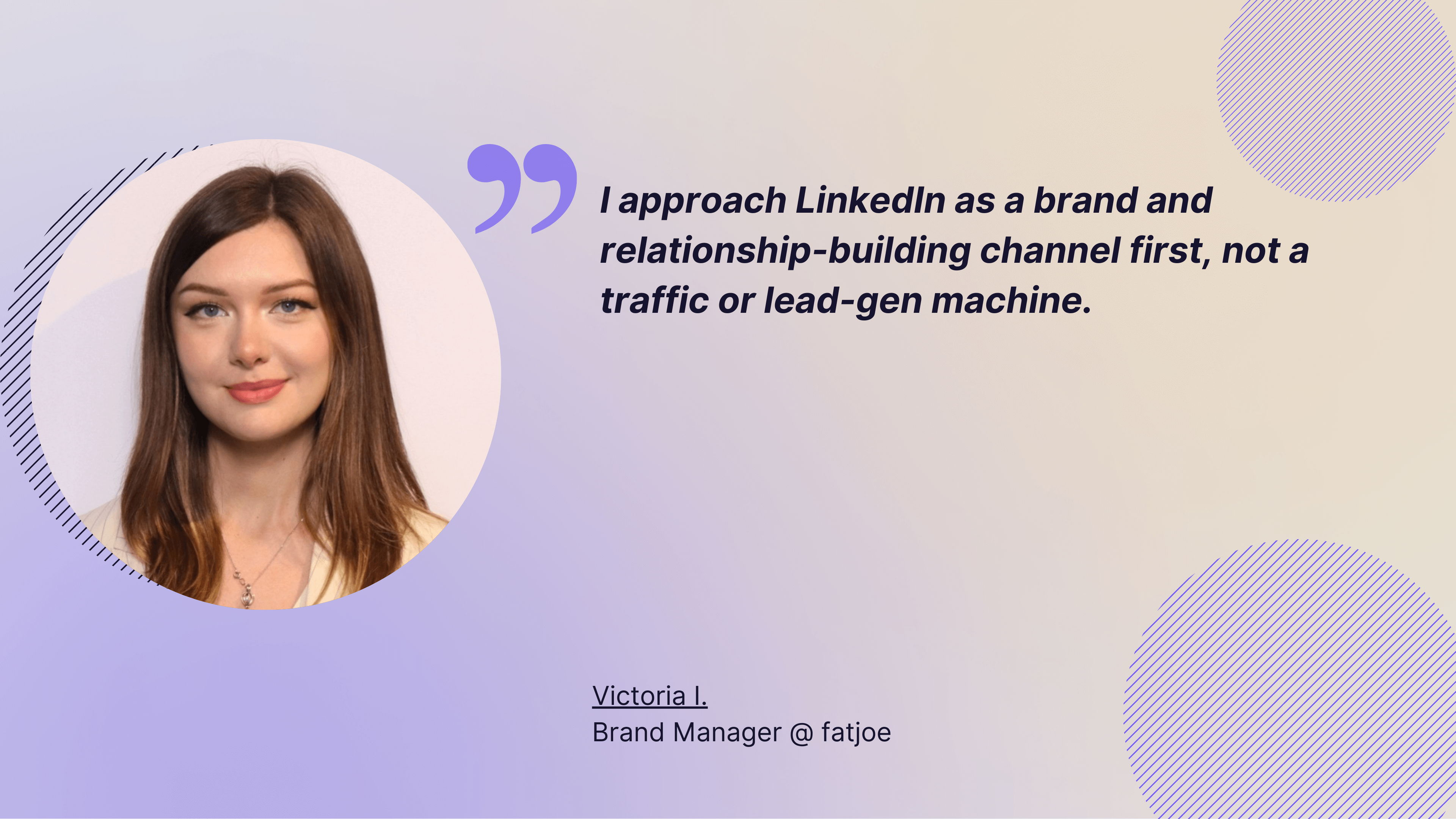
LinkedIn’s different. In a recent chat I've had with Victoria I., Brand Manager at fatjoe, she told me:
I approach LinkedIn as a brand and relationship-building channel first, not a traffic or lead-gen machine.
And I can fully get behind this framing.
Most B2B buying journeys are slower than those in B2C. Deals involve higher budgets, more stakeholders, and longer evaluation cycles. People rarely convert after seeing one viral post. Unlike B2C, you’re not selling impulse buys or trending products that trigger instant action.
Instead, B2B LinkedIn marketing is about brand recognition and trust. Your ultimate goal here is to make your brand feel so familiar that it pops up in the head of your potential customer as soon as the need arises.
With enough trust and recognition, the results tend to follow naturally, be it inbound leads, partnership conversations, or being the first thing on customers’ minds.
How to use LinkedIn B2B strategies for more visibility?
Once you accept LinkedIn as a trust-building channel rather than a viral-first platform, your entire social media strategy shifts.
Visibility on the platform comes from choosing the right formats and tactics that support consistency, credibility, and repeat exposure. Might sound boring, but it definitely doesn't have to be.
Here are some tips to fuel your LinkedIn B2B marketing strategy:
Effective content formats and tactics on LinkedIn based on data
Mix different formats in your strategy
According to Socialinsider’s LinkedIn benchmarks report, multi-image posts, native document carousels, and videos consistently drive higher engagement than plain text updates.
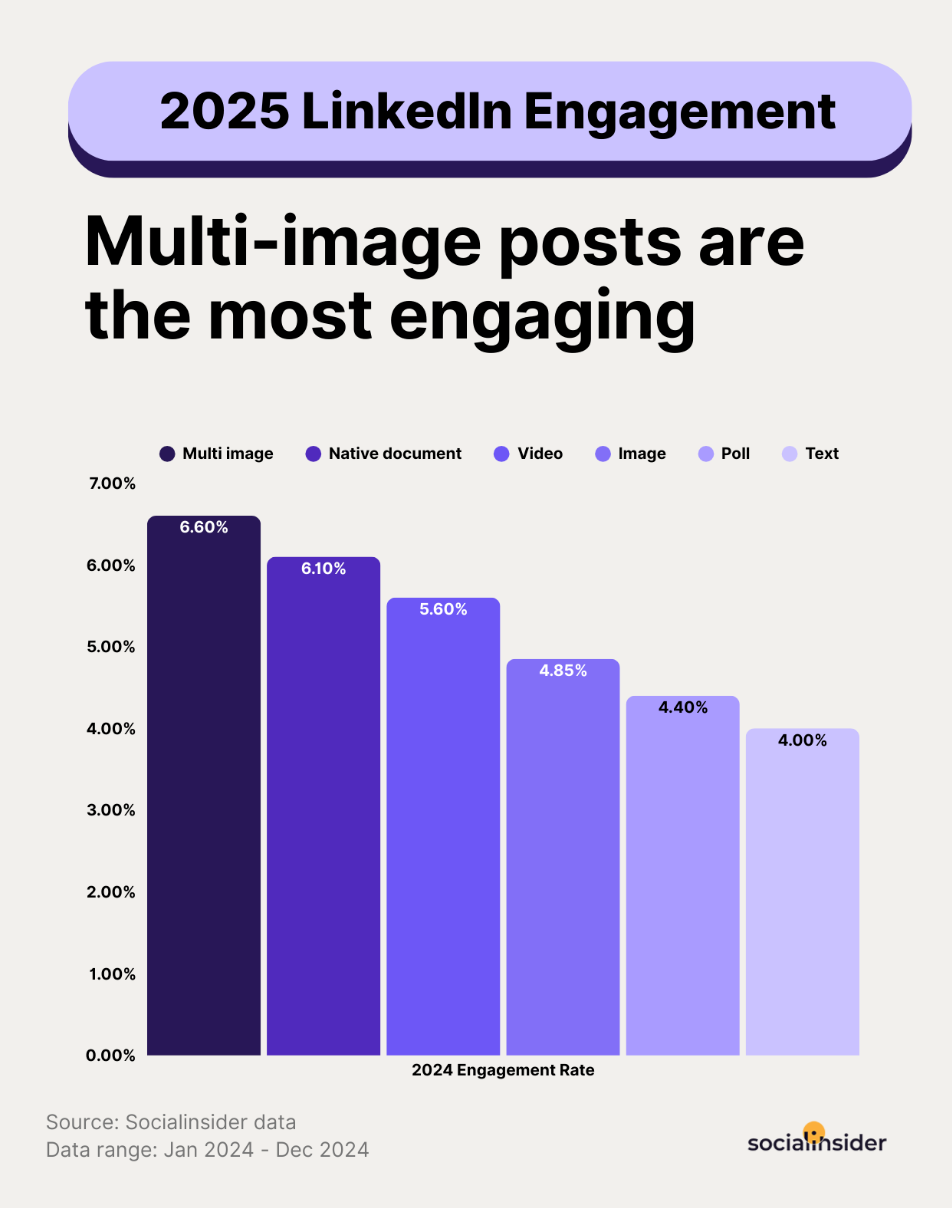
But that doesn’t mean you should only invest in one most engaging format. Best practices often crown a single “winning” format, but I’ve rarely seen that hold up long term.
A balanced mix lets you test what resonates with your audience and keep your feed fresh. Try different things, mix the formats together, and track your best performers to see what works for your LinkedIn page (you can do that with Socialinsider, by the way — just saying).
Post videos between 2–3 minutes
Short-form video dominates most platforms, but LinkedIn sits in an interesting middle ground.
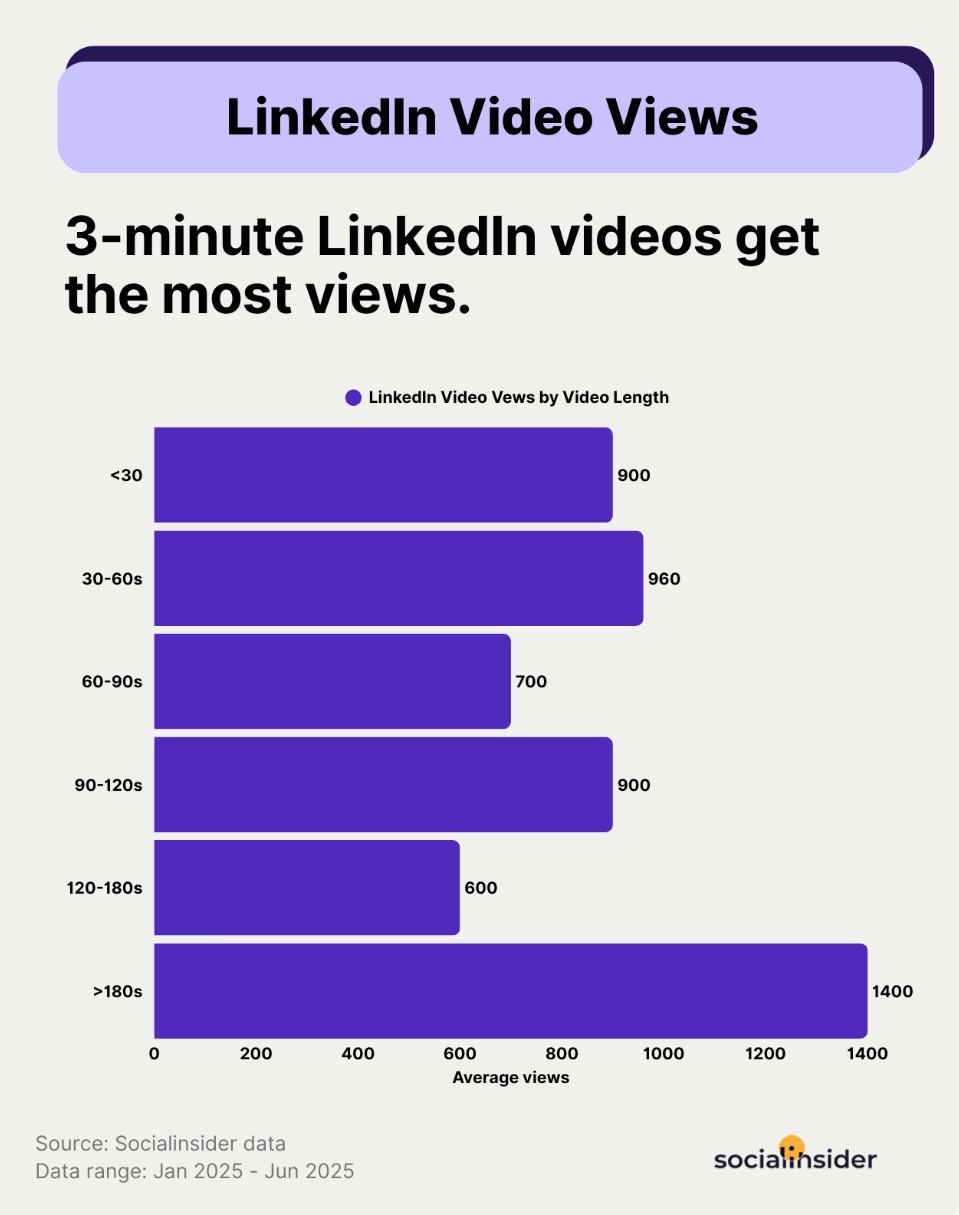
According to Socialinsider’s social media video data, 2-minute videos perform best for engagement, while 3-minute videos perform best for views. That puts LinkedIn somewhere between TikTok-style snackable content and YouTube-length deep dives.
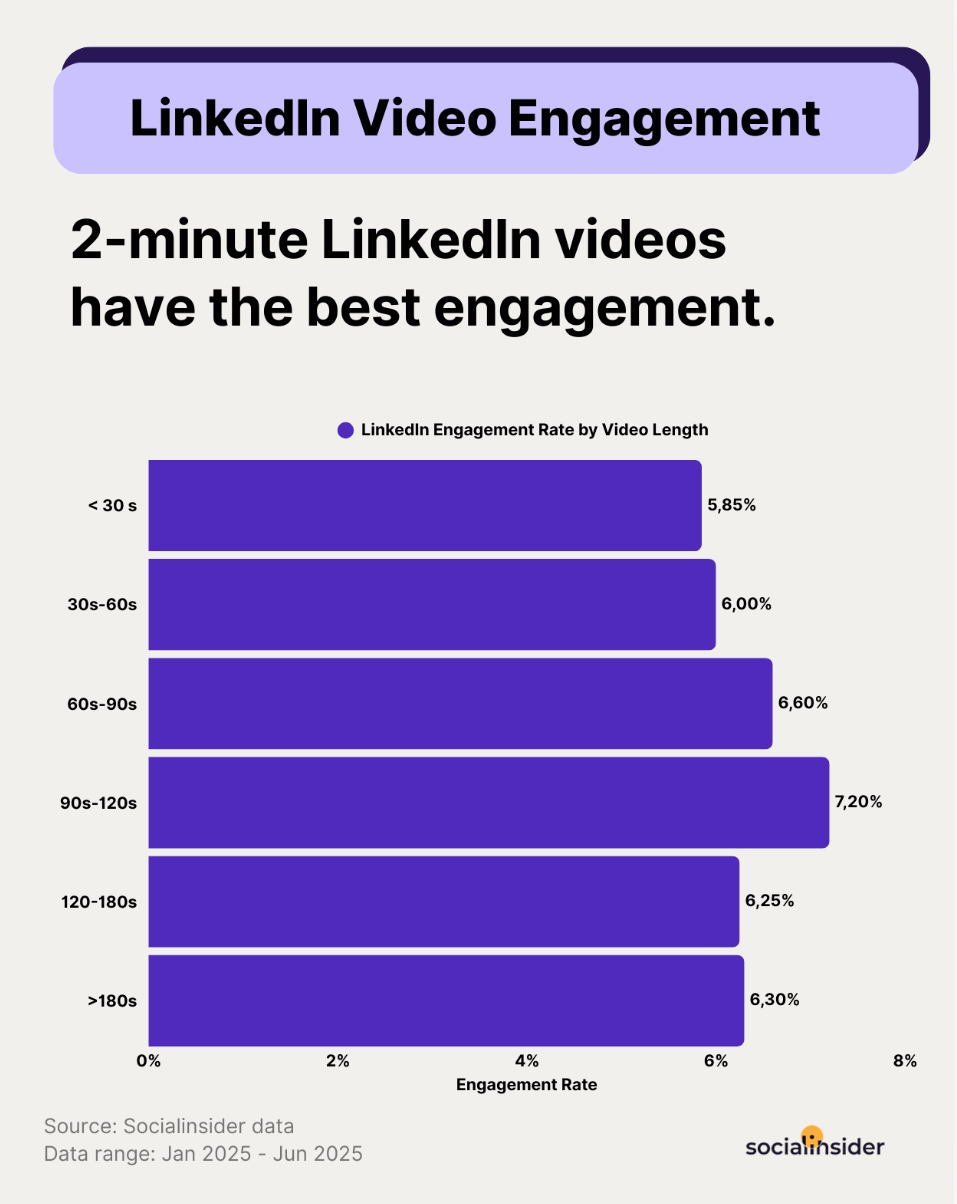
In practice, 2–3 minutes is a sweet spot. It’s long enough to share a clear idea, a real example, or a useful takeaway without asking for full, undivided attention.
At the same time, it demands stronger storytelling. Holding someone for two minutes is harder than holding them for fifteen seconds, so your hook and structure matter more.
Run polls for more impressions
Polls are one of the easiest ways to earn visibility on LinkedIn, and they don’t need to be complicated. They are quick to engage with, which helps distribution. They’re also quietly useful. Over time, they tell you how your audience thinks, what they care about, and where opinions split.
If you run them regularly, they can turn into a recognizable series — like Monzo’s mundane poll — which contributes to your overall brand awareness.
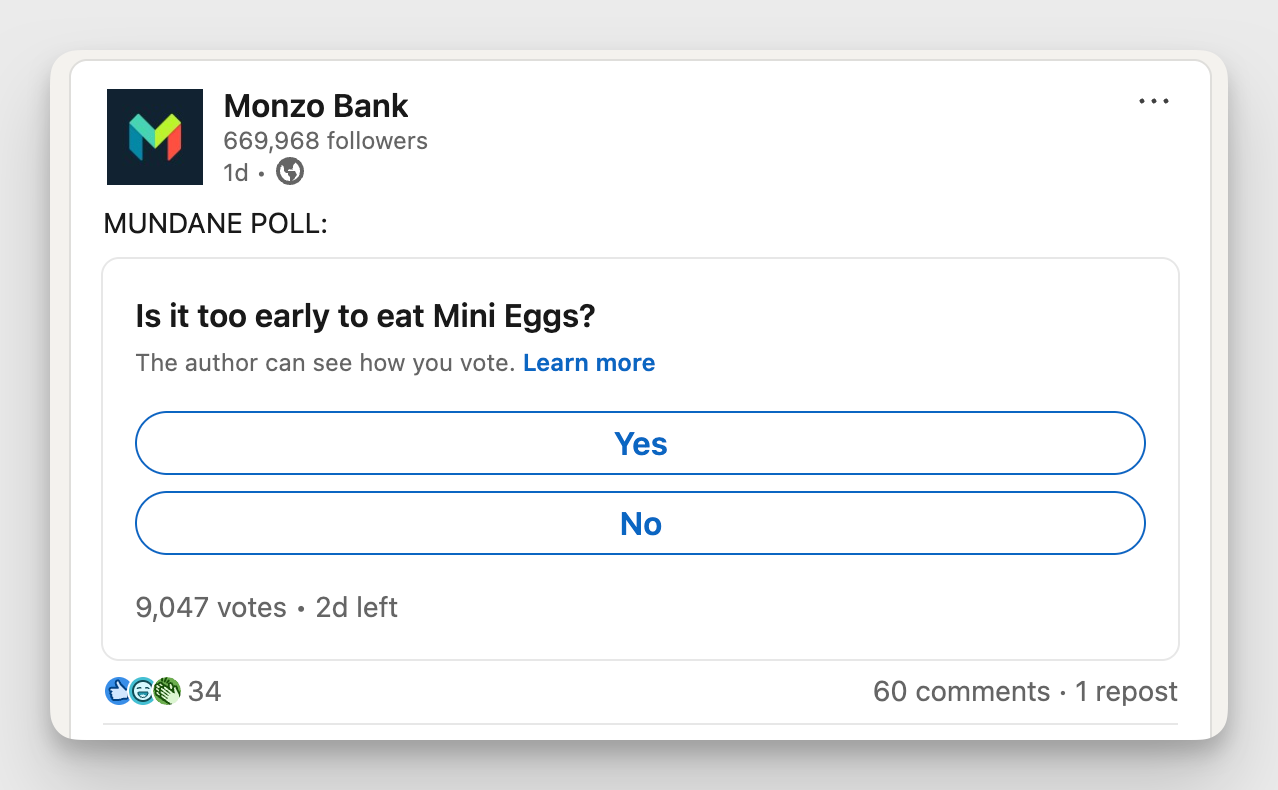
Polls are effective, reactive, and, honestly, fun to make. That combination alone makes them worth a place in a B2B LinkedIn strategy.
Content topics that work exceptionally well for b2b LinkedIn marketing
Employee advocacy
Employee advocacy is one of the strongest visibility levers in B2B.
LinkedIn itself says that one of the core insights for 2026 is that in B2B, people increasingly buy from people, not companies.
According to Refine Labs, content shared from personal profiles drives 2.75x more impressions and 5x more engagement than the same social media content shared from a company page. My own experiments back this data up: the company pages are slightly losing reach over the years.
That gap exists because LinkedIn prioritizes personal connections. The platform keeps pulling focus away from logos and back to people and personal expertise.
The algorithm follows human behavior, and people trust people more than brands. This works for the same reason influencer marketing works. A product mention or an opinion shared by someone inside the company feels more credible than a polished brand update.
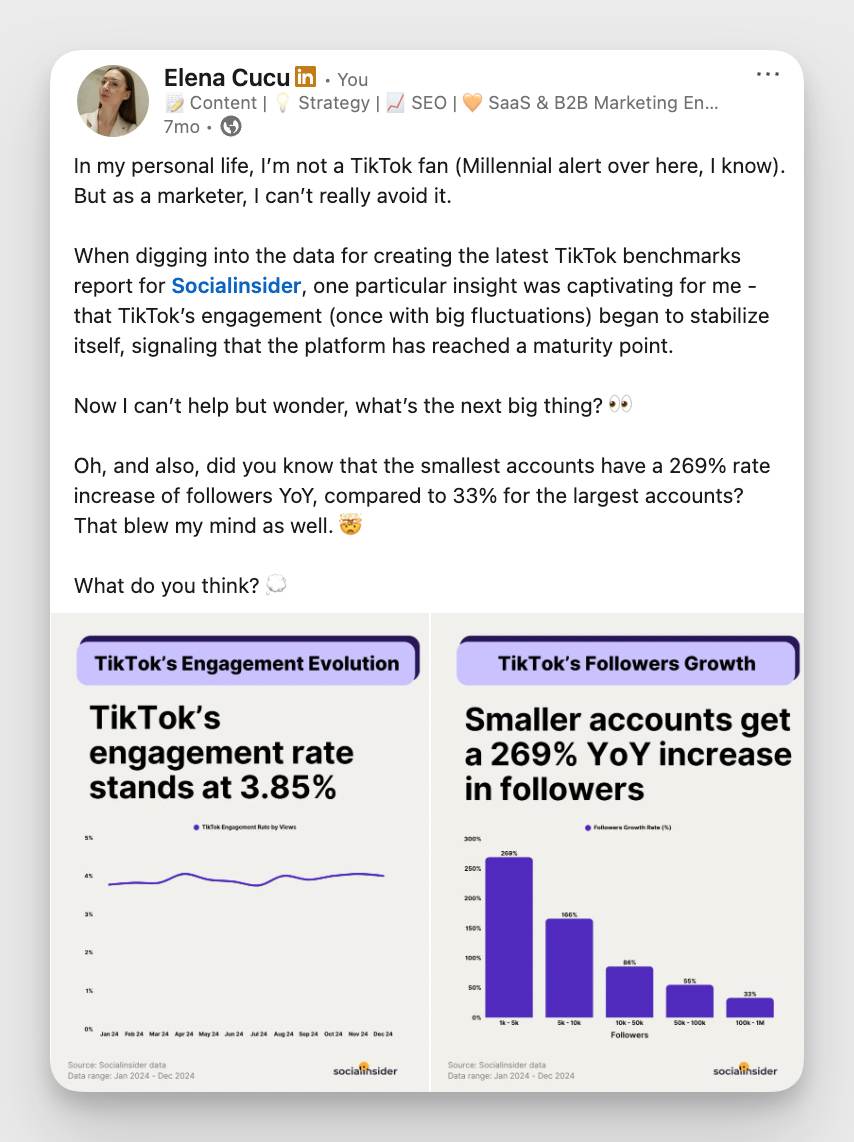
A few employees talking about their work and their expertise will often travel further than a brand saying the exact same thing.
Don’t get me wrong: company pages still play a role in credibility and consistency. But they just work better with employee advocacy. Treat them as a home base to house and support what employees are already sharing.
Founder and executive presence
This sits close to employee advocacy, but it deserves its own lane.
When people leading a company show up on LinkedIn, it puts a face to the business. Deals are signed between people, not brands. Seeing the people behind the company helps shorten the trust gap.
LinkedIn’s data supports that thought leadership (I know, but bear with me, ok?) makes a big difference in people’s buying decisions. 55% of hidden decision-makers use thought leadership as a part of their vetting process.
This means that if your execs or someone influential from your company is actively present on LinkedIn, your deal is less likely to get stalled because an internal stakeholder is not convinced by a sales pitch.
This presence doesn’t need to be polished or motivational. In fact, it works better when it isn’t. Sharing real lessons, opinions on industry shifts, or even mistakes builds trust faster than carefully worded announcements.
Your role in this as a marketer? Support the execs, but don’t override them. Give executives space, guardrails, and feedback, but don’t turn their profiles into another brand channel.
Educational content
In B2B, expertise is non-negotiable. If you don’t show that you know your deal, there’s little reason for anyone to trust your solution.
Here's Victoria's opinion as well.
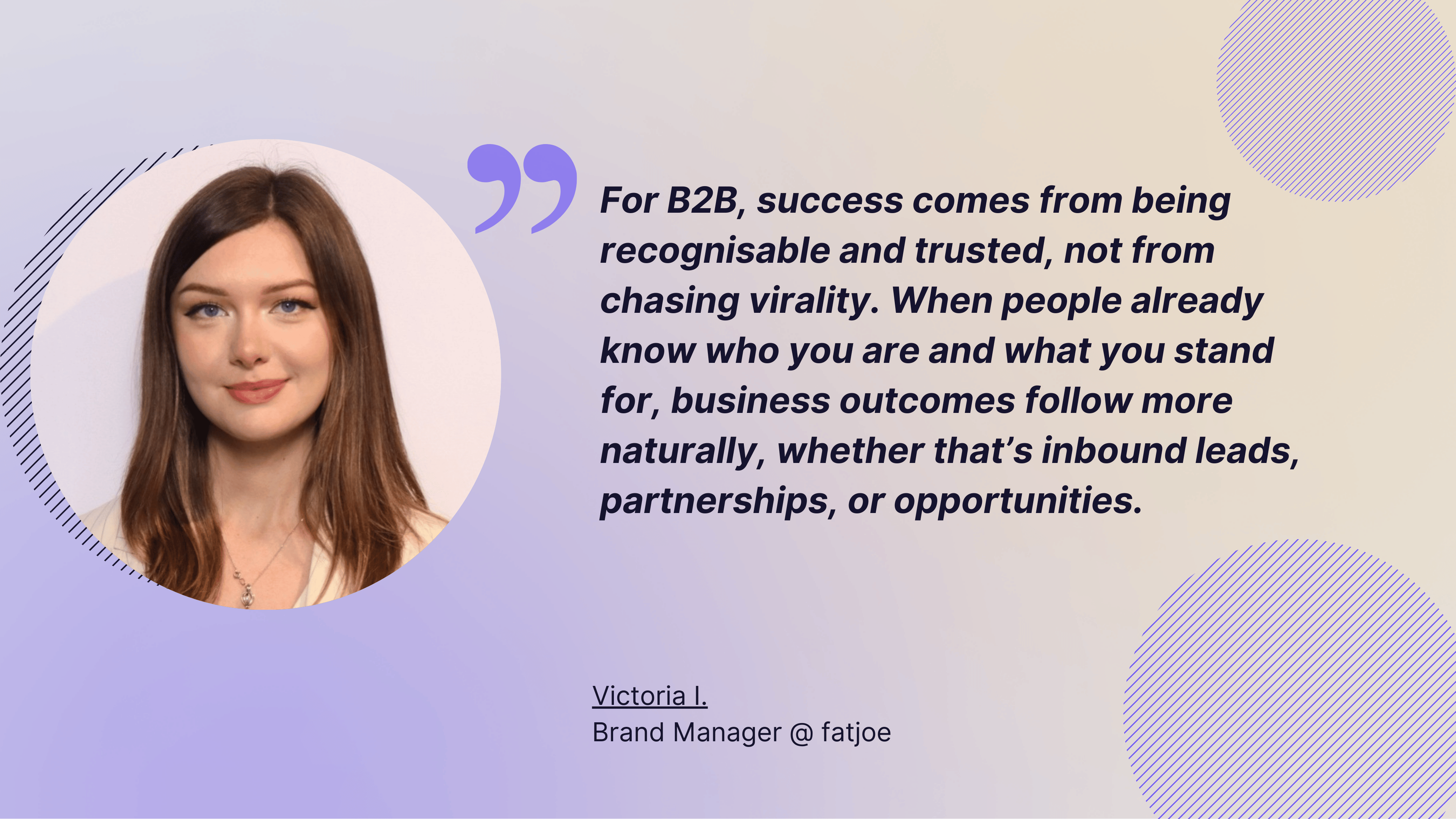
For B2B, success comes from being recognisable and trusted, not from chasing virality. When people already know who you are and what you stand for, business outcomes follow more naturally, whether that’s inbound leads, partnerships, or opportunities.
Educational content gives value before asking for anything in return. It helps people do their jobs better, even if they’re not customers yet. Over time, that builds authority. The kind that makes people think, “They know what they’re talking about.”
Data can guide what kind of education to focus on. With Socialinsider, you can see which content pillars perform best within specific industries:
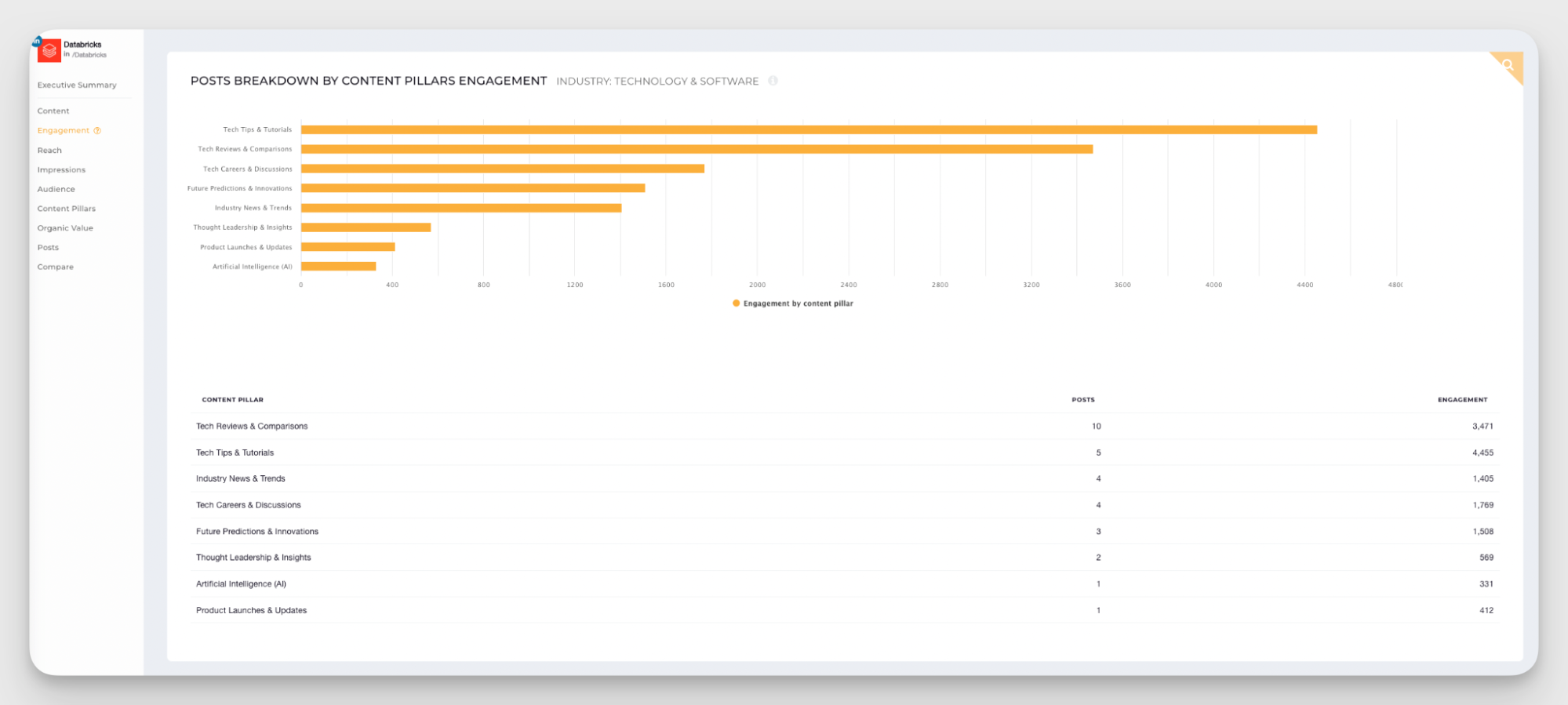
For example, for tech and software, analytics show that tips and tutorials lead in engagement, followed closely by reviews and comparisons.
That doesn’t mean you have to only post about one leading thing. However, this direction gives you a better understanding of where your audience leans and which expert angle might bring you more impact.
How to leverage LinkedIn for lead generation in B2B?
LinkedIn is the star of B2B lead generation. But even there, leads don’t flow in by themselves.
Here’s what you can do to get more leads and build a stable pipeline on LinkedIn:
Use LinkedIn Lead Gen Forms
LinkedIn Lead Gen Forms are simple and elegant. They help you turn attention into leads without sending people off-platform (which is a big advantage for the algorithm).
These forms attach directly to your LinkedIn ads and auto-populate with a member’s LinkedIn profile data (email, name, company, job title), which makes it much faster for people to submit.
Conversion rates for LinkedIn Lead Gen Forms are significantly higher than from traditional landing pages — some benchmarks show Lead Gen Forms converting at around a 13% rate. That’s five times the average for a typical external landing page.
Guess we should underestimate the power of autofill for a strong lower-funnel tactic!
Quick setup and optimisation tips:
- In Campaign Manager, pick the “Lead generation” objective so LinkedIn optimises your ads for form completions
- Keep your form short. LinkedIn recommends 3-4 fields for better conversions versus the maximum allowed
- Match your offer to the audience’s needs. It can be some gated content, webinar sign-ups, or whitepapers
- Sync form leads straight to your CRM or automation platform, so you can follow up faster and nurture them
Master LinkedIn Events for pipeline generation
LinkedIn Events acts as a “foot in the door” lead gen channel. It lets you invite people to join a useful, topic-specific webinar or Q&A session instead of immediately asking for a purchase.
When you create an event from a Page, you can add a LinkedIn registration form that captures a visitor’s name, email, job title, and company as they sign up.
Besides getting the leads themselves, you also gain contextual information up front. I always check who registered for the event to try to tie it to their interests. This allows me to start warming them up with organic content that’s relevant to the event theme on my Company page.
Here are a couple of ideas for what to do on LinkedIn Events:
- Host workshops or product Q&A sessions
- Run expert panels or industry deep dives
- Launch new services with a live demo or live walkthrough
Test Sales Navigator
Sales Navigator helps you be more intentional about who you reach out to, instead of guessing based on job titles and company names. It uses AI in the background to surface people and signals that are harder to catch with ads alone.
What Sales Navigator adds on top of basic LinkedIn targeting:
- Intent and timing signals. Sales Navigator highlights job changes, company growth, and increased activity. This helps you reach out at the right time, when something actually changed for the prospect.
- Saved leads and accounts. You can save people and companies and track them over time. This matters in B2B, where deals don’t happen in one touch, and you need to nurture your leads.
- Account-level view. Instead of focusing only on single profiles, you can follow entire companies and see who’s joining, getting promoted, or becoming active. That’s useful when buying decisions involve multiple people.
- Relationship and warm-path insights. Sales Navigator shows how you’re connected to someone and who in your network might already know them.
Sales Navigator doesn’t replace ads or targeting. It complements them by helping you decide who to contact directly, and when, especially in longer B2B buying cycles.
It’s a little costly ($150/month for a team plan), but it has a trial month where you can test it out and see if it helps your targeting.
How to handle B2B influencer partnerships?
B2B influencer partnerships have become a part of how buyers make decisions. And for this reason alone, you can’t overlook it in your LinkedIn marketing strategy in 2026.
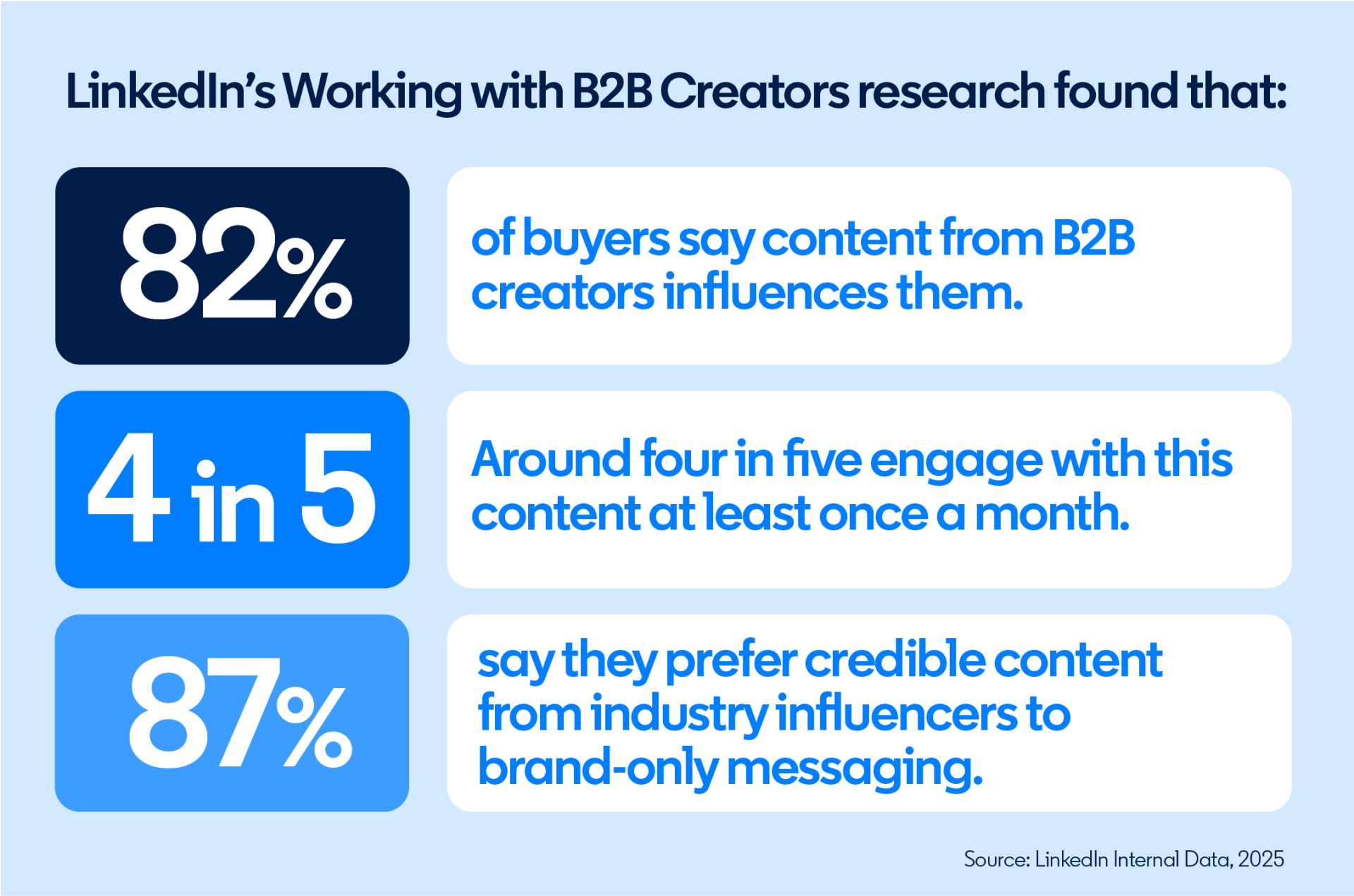
LinkedIn’s own research shows that 82% of B2B buyers say creator content influenced their buying decisions. Despite being much less viral than B2C influencer marketing, in B2B, influencers work for the same reason: trust.
Buyers are tired of polished brand messages and vague promises. They listen to people who work in the space, talk openly about what works, and don’t sound like they’re reading from a landing page.
Creators are now the B2B word of mouth, and their influence shows up across the whole buying journey. But harnessing this power needs the right approach.
Here are five ground rules for handling B2B influencer partnerships on LinkedIn:
The main rule: collaborate, don’t override
You’ll see this rule seeping into every following one. The biggest mistake I see brands make is treating B2B creators and influencers like yet another media placement.
That’s not how it works.
The reason influencer marketing works is that it feels less guided and agenda-driven. If you’re coming to a creator and imposing a ready-made script with endless praise for your product, you’re wasting your budget and undermining the trust of the creator and their audience.
Not to mention, most creators probably won’t agree to that.
Give creators enough freedom to build the narrative the way their audience is used to. Agree on general directions, guidelines, and off-limits areas, but let them speak to their audience the way they usually do.
Think relationships, not placements
The most successful B2B influencer marketing campaigns are ongoing relationships.
The creators who move opinion on LinkedIn are people their audience has been following for years. You don’t borrow that trust in a single post. You earn it by working together over time, giving creators room to speak in their own voice.
If you’re evaluating partners, focus less on follower count and more on subject-matter credibility, how they talk about their work, and how their audience stacks with your desired one.
Approach B2B influencer or creator campaigns as gathering ambassadors instead of doing one-time paid posts.
Plan distribution upfront
Influencer content is pretty valuable, so plan how it will live beyond one post.
Before you publish, think about how it will be shared from the creator’s profile and your brand page. Will you repost? Collaborate? Comment? Agree on shore what is expected from you and the creator in terms of amplifying and engaging with the post.
Measure the right things
Views alone won’t tell you much. Likes will probably tell you even less.
Some of the real impact shows up weeks after the post goes live, not the same day. For influencer partnerships, pay attention to:
- Watch time and completion rate for videos
- Quality of comments and follow-up questions
- Profile visits, website visits, or sales conversations sparked later
How to measure LinkedIn’s effectiveness in B2B marketing?
If you don’t measure what you’re doing on LinkedIn, it’s hard to say whether it’s working or just keeping you busy. Social media metrics give you direction, but not every number fits neatly into a dashboard.
Victoria I., Brand Manager @fatjoe, puts it well:
Vanity metrics are nice, and I track reach, engagement, and follower growth, but the real indicators can’t always be measured in numbers.
Essential KPIs you should track
To get a clear picture of your LinkedIn performance, you need a mix of growth, visibility, and engagement metrics.
Analytics tools like Socialinsider make this easier by pulling everything into one place and showing trends over time, not just isolated numbers.
Follower growth
Follower growth shows whether your content and positioning attract the right audience over time.
Slow, steady growth is often healthier in B2B than sudden spikes. Look at how growth correlates with content types, campaigns, or increased posting consistency rather than chasing raw numbers.
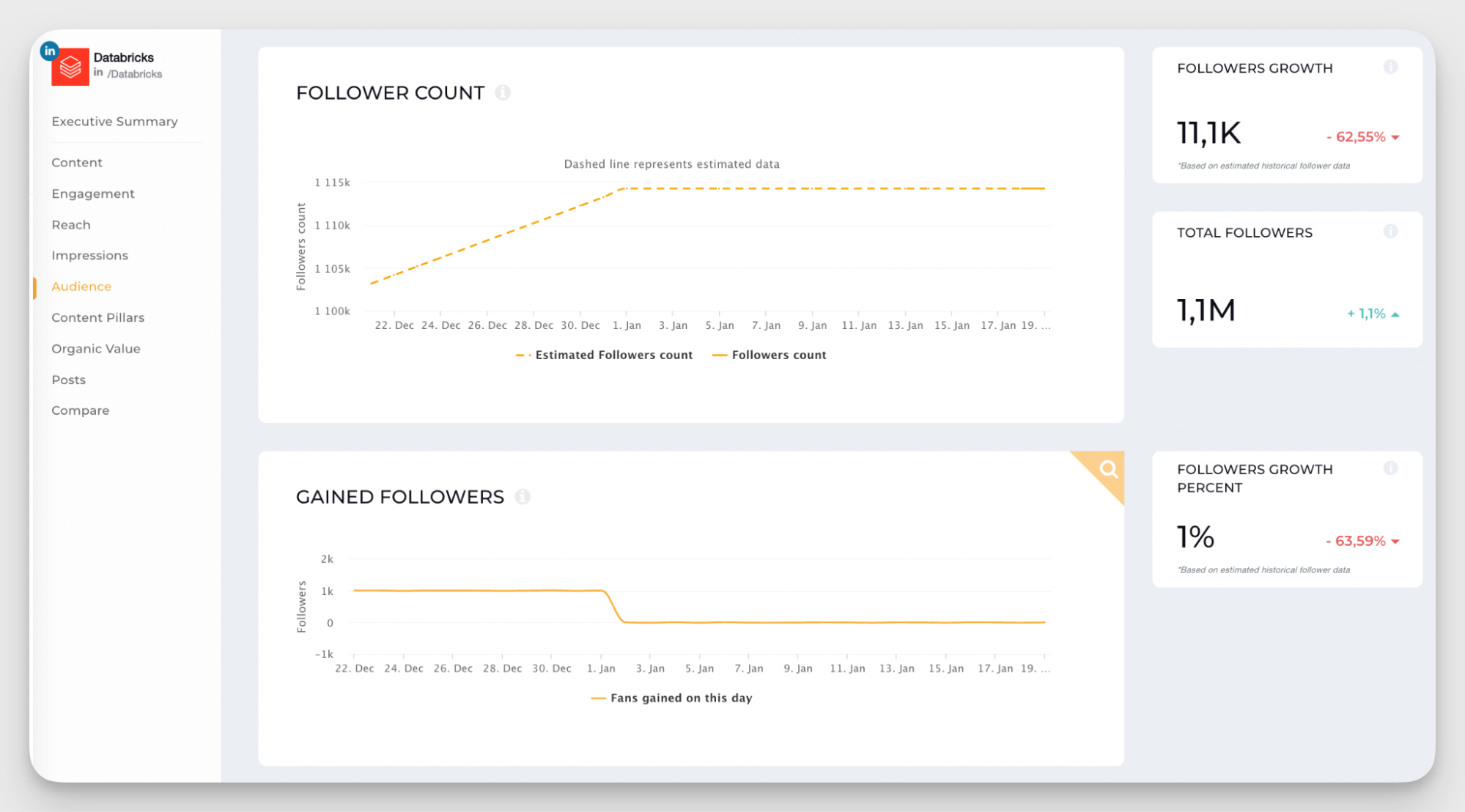
Socialinsider shows you the follower growth trend in a neat graph. You can see how your follower count grows and also check how your competitors are growing to benchmark the performance.
Impressions
Impressions tell you how often your content shows up in feeds. This is your visibility baseline.
A drop here can signal issues with consistency, format choice, or relevance. A rise usually means your content aligns better with what LinkedIn wants to distribute and what your audience reacts to.
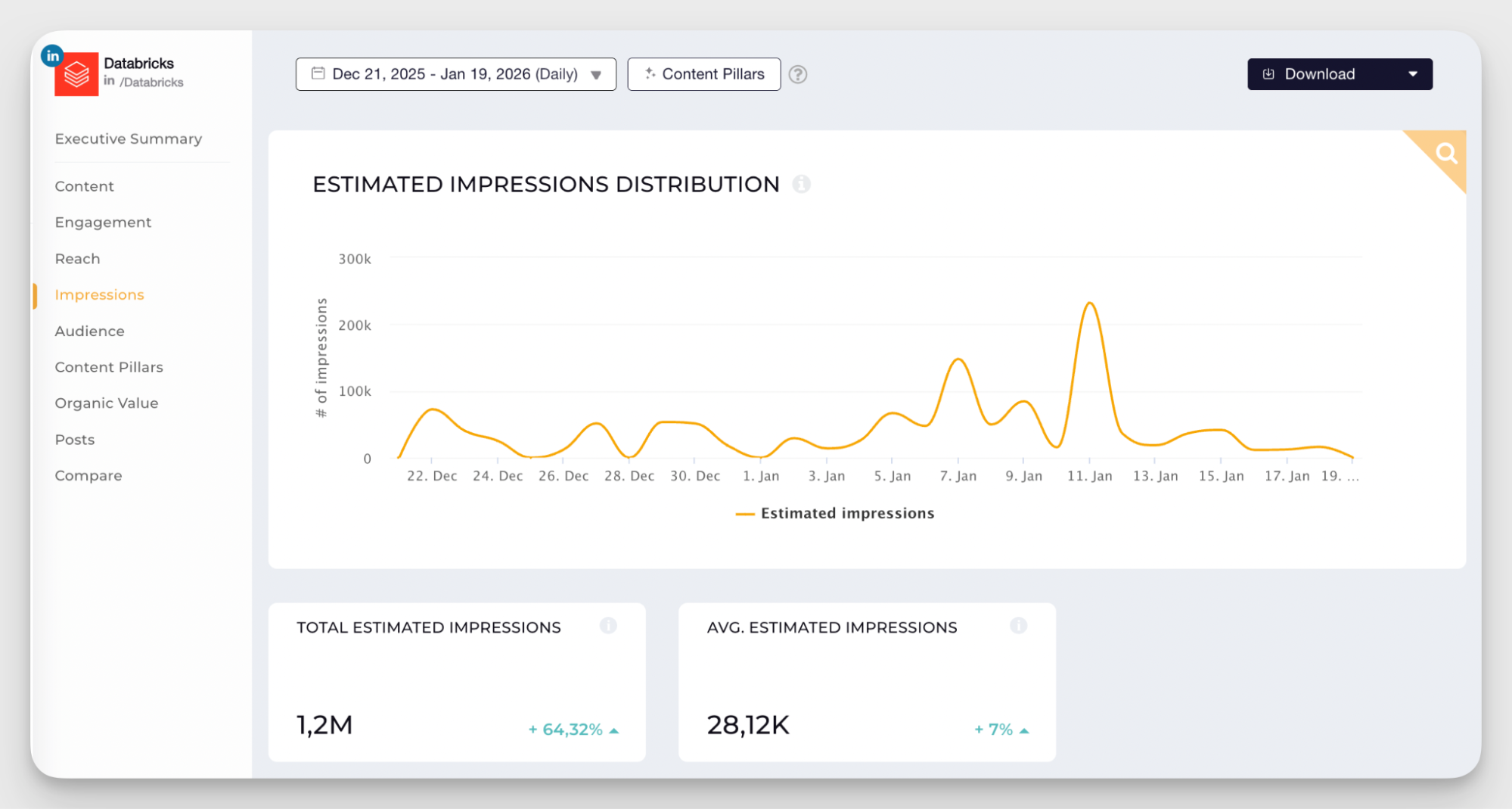
In the example above, you can see that the spikes signal more visibility on particular days. This is a good reason to check what content was published during this time. This can be something you posted or a rise in visibility due to creators’ campaign.
Engagement rates
Engagement rate is the pulse line of your account. It helps you understand how your content resonates relative to how many people see it.
Engagement rate is useful for comparing formats, topics, and posting styles. High impressions with low engagement usually mean the content is visible but not compelling.
Lower reach with strong engagement can signal content that really connects with a smaller audience.
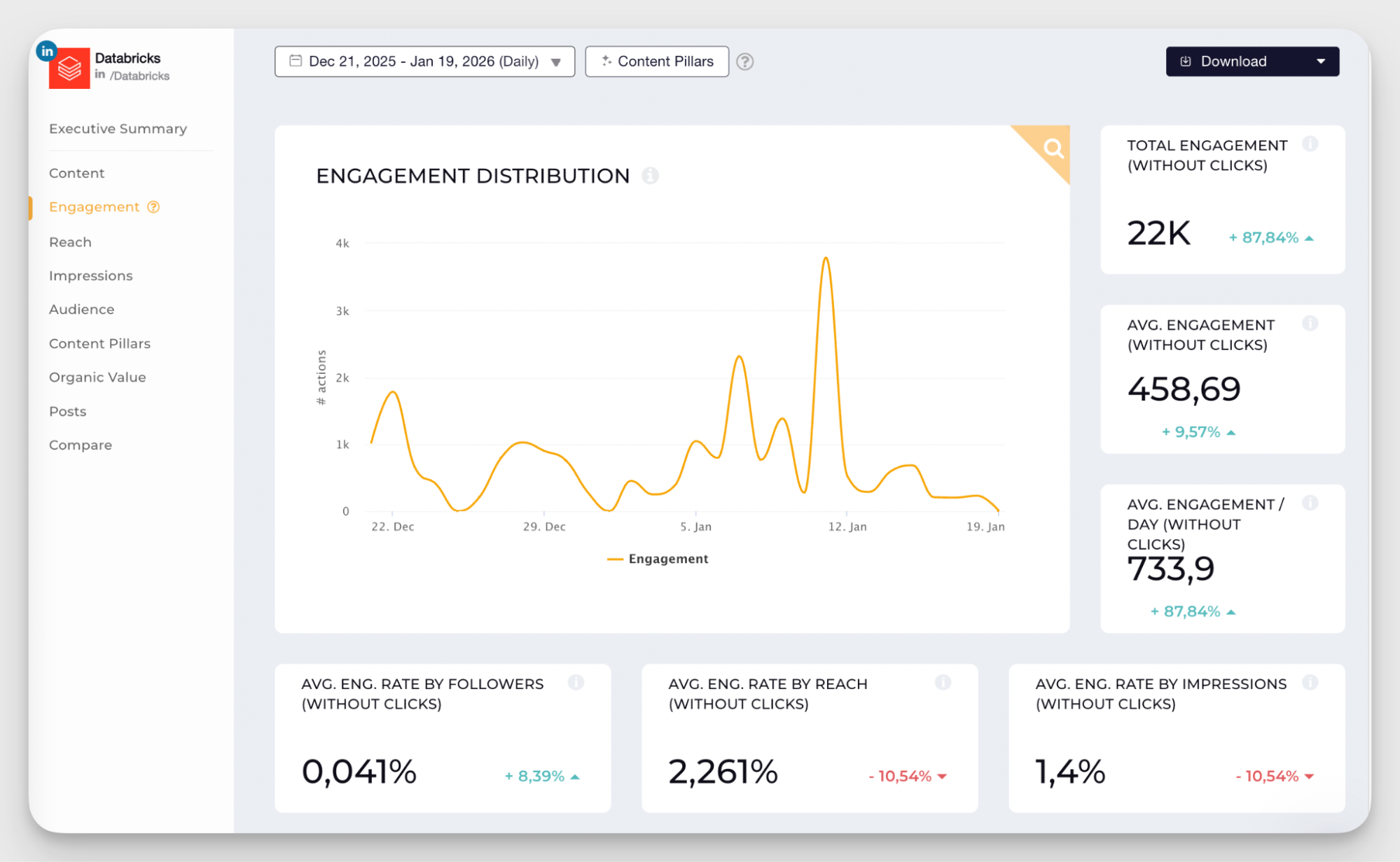
Multiple types of engagement rates tracked in Socialinsider help you understand how involved your audience is and how it changes over time.
Comments and shares
With social media becoming more passive and less generous with likes, comments, and shares are my go-to metric for evaluating the success of a B2B content strategy on LinkedIn.
These two metrics often matter more than likes because they reflect deeper interest and peer-to-peer distribution.
Comments show that your content was engaging enough to start a conversation. Shares show that the piece was so valuable, the conversation is taken somewhere else — to chats, DMs, and channels.
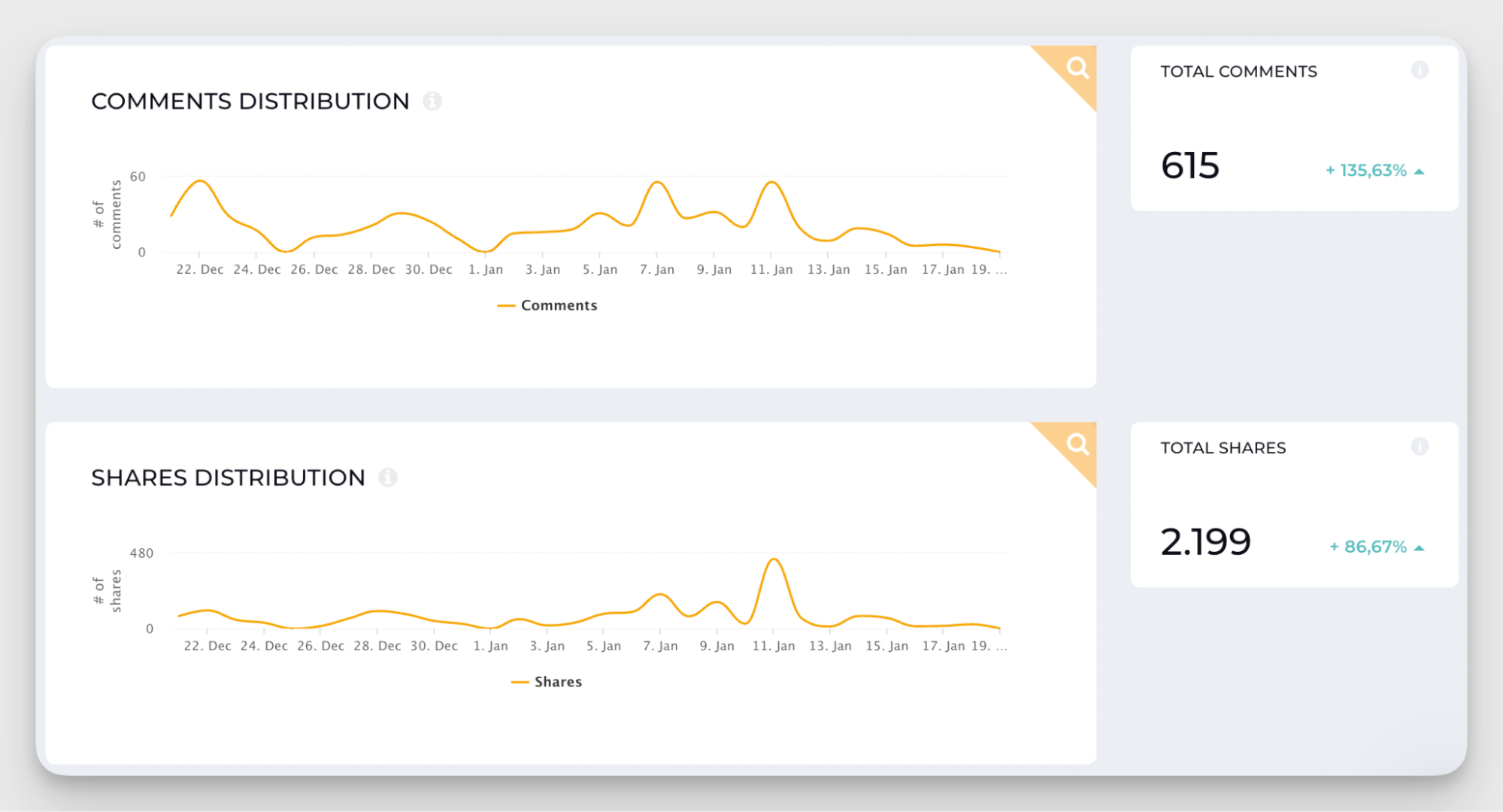
With Socialinsider’s graphs, you can see the total of shares and comments in a selected period and also the distribution. This helps you identify the top-performing posts and topics that make people talk.
Advanced data points
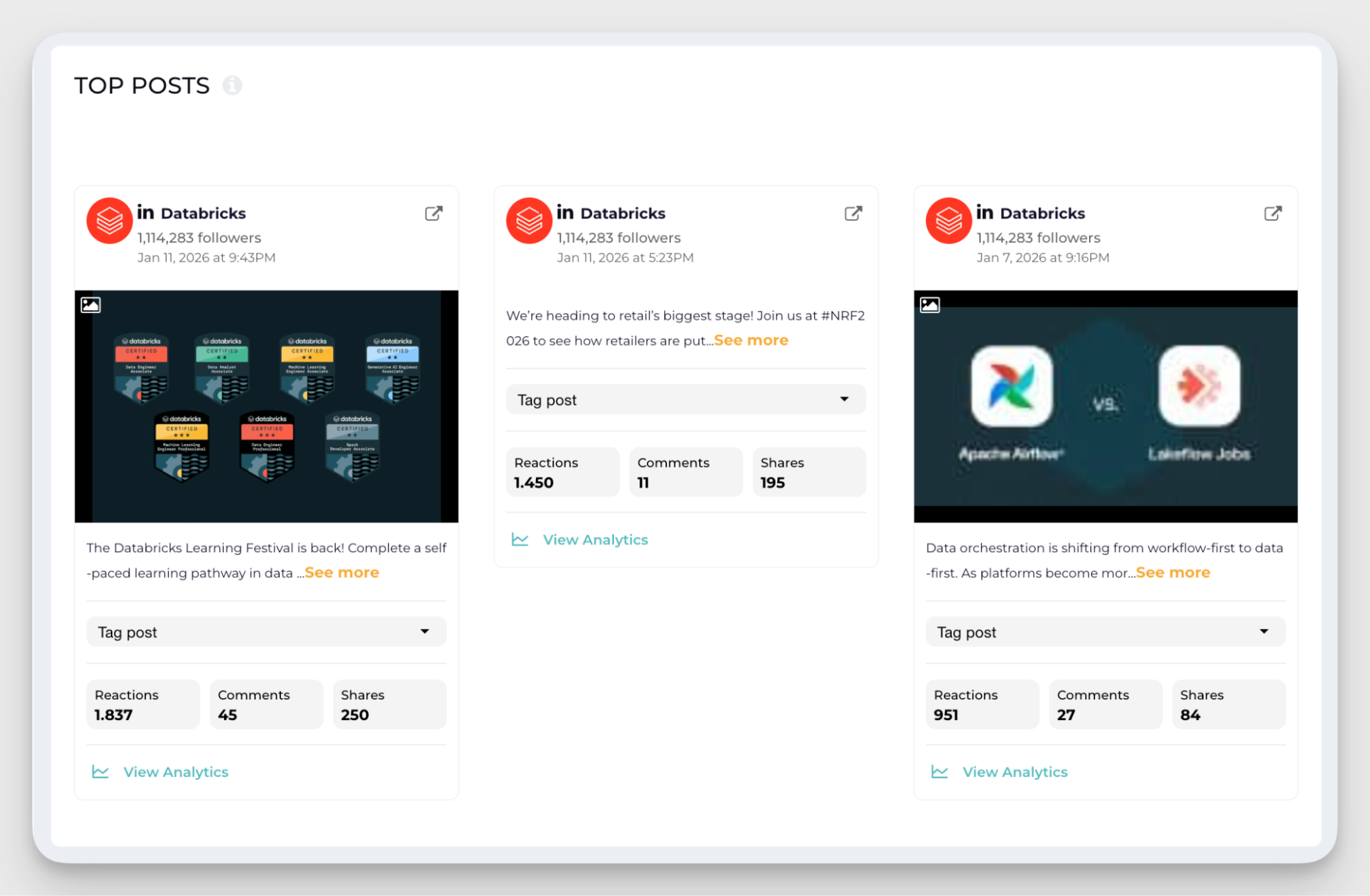
Besides classic B2B performance metrics, there are two Socialinsider-specific metrics I like to add to the mix for LinkedIn.
First is top performing posts. In Socialinsider, you can see the top-three posts in a selected period for your accounts and your competitors. This helps you spot patterns: recurring topics, formats, or tones that consistently work.
Another useful metric is Organic Value. This is a Socialinsider-native metric that estimates how much it would cost in ad money to get the results you’re getting organically.
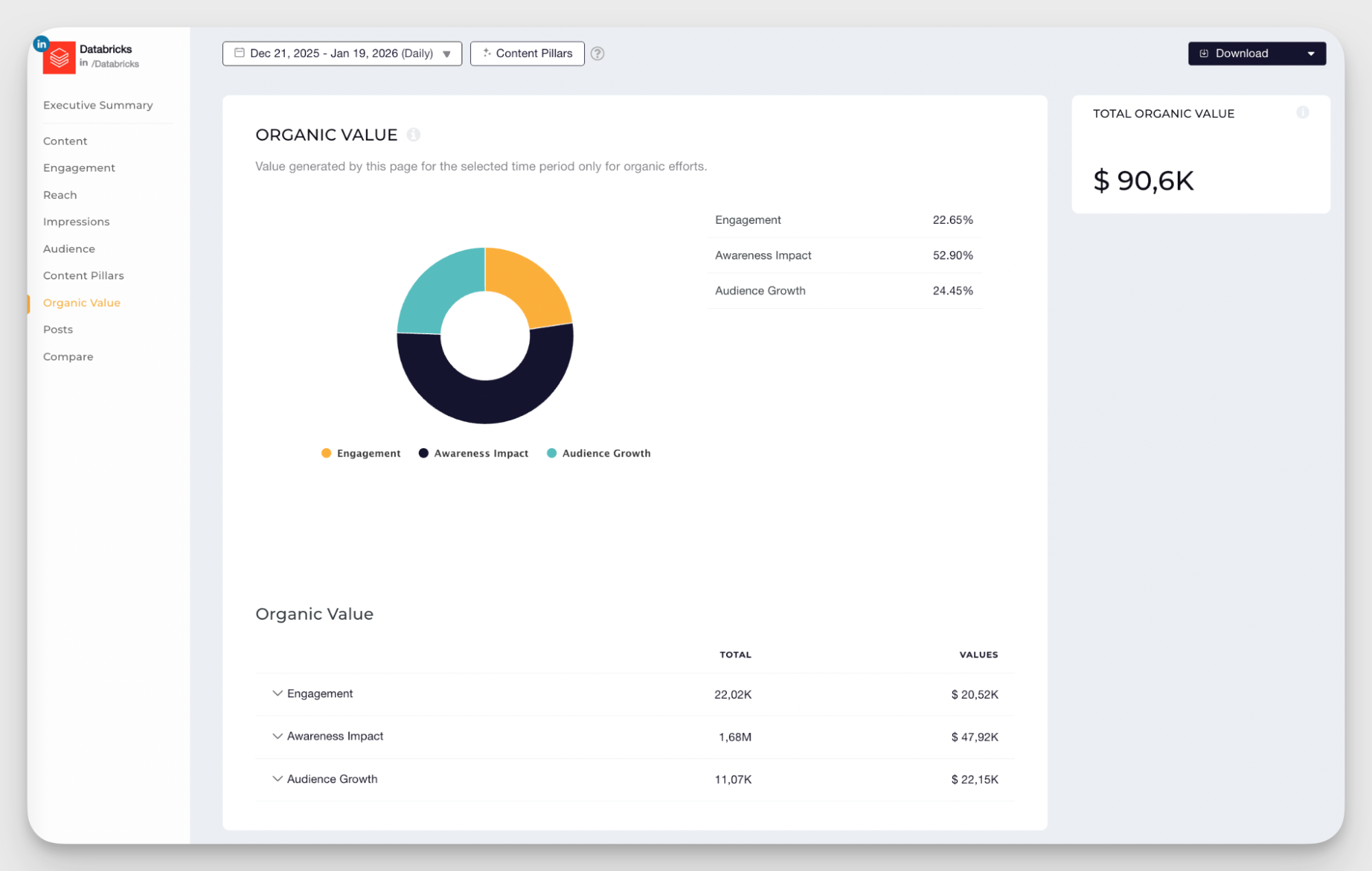
Organic Value is calculated based on the industry benchmarks for each engagement action. You insert your own values for even more accurate prediction.
This is a very helpful metric to calculate your B2B social media ROI and put a price tag on your organic performance. It also gives you a lot of context as part of the competitors’ research.
Cross-channel performance benchmarking
Looking at LinkedIn (or any other channel) in isolation only tells you part of the story.
Cross-channel benchmarking helps you understand LinkedIn’s role in your mix. Is LinkedIn your top engagement driver? Is it growing faster than Instagram or X? Is it bringing deeper conversations, even if reach is lower?
To answer those questions and act accordingly, you need to compare the data across channels.
With Socialinsider, you can view aggregated performance data across multiple platforms. This includes post volume, overall brand engagement, total follower count, and more.
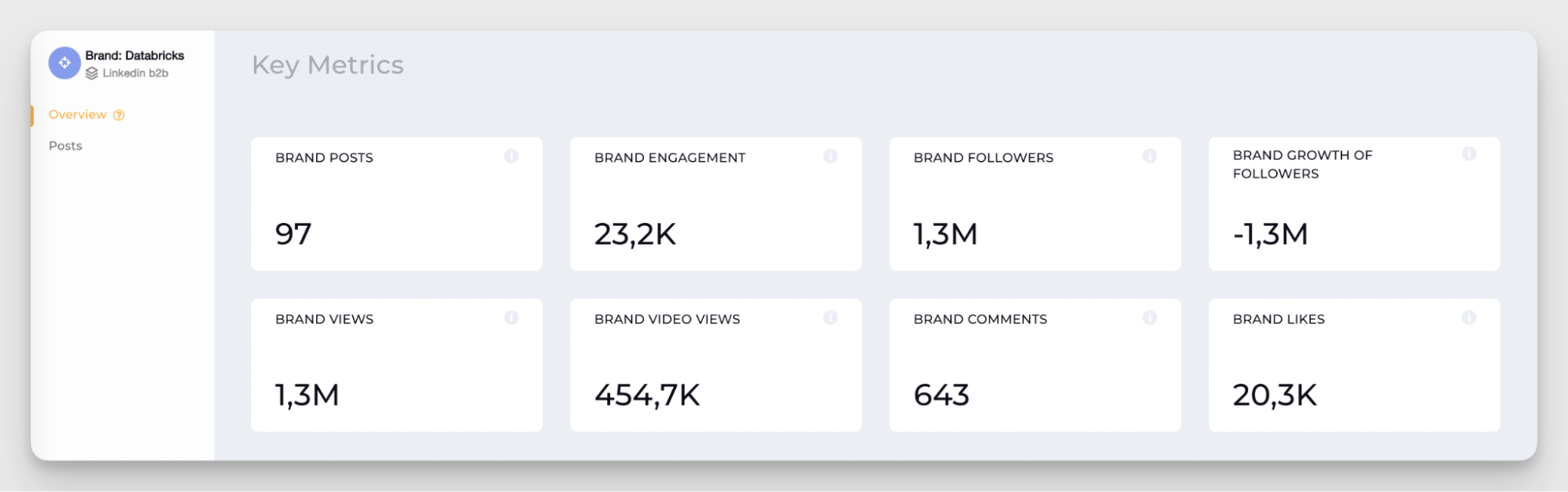
Or you can split the results by channel to compare how each one contributes to overall strategy performance.
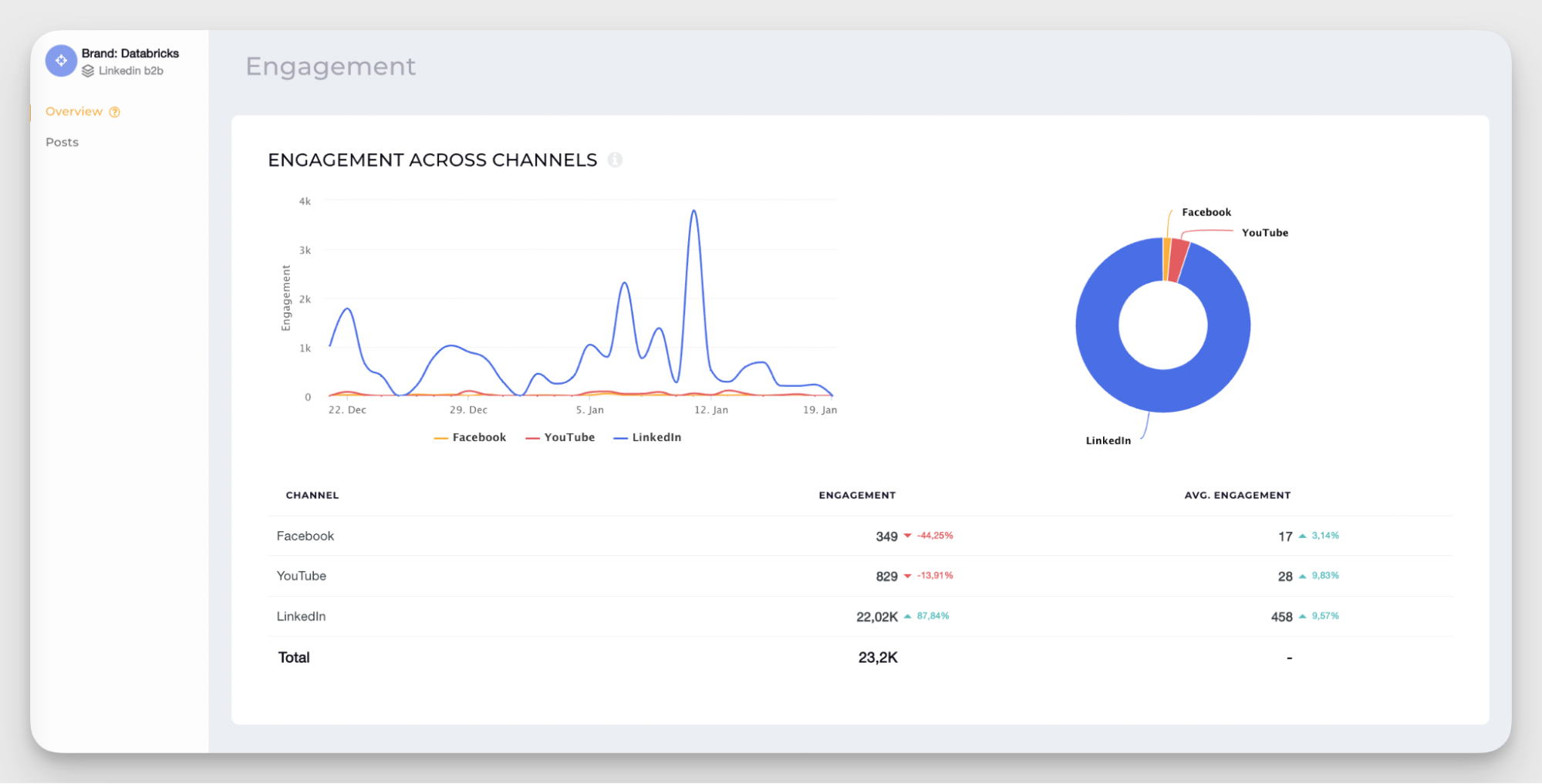
I like to use the channel breakdown to see how engagement rates stack within my own brand strategy. LinkedIn may generate fewer impressions than other platforms, but if the engagement rate is higher, it could be my strongest trust-building channel.
Cross-channel data also helps with competitor research. If my competitors see stronger engagement on LinkedIn than on other platforms, that signals where their audience is most responsive. It gives me context before adjusting my own strategy.
Competitive intelligence insights
If you want to understand whether your LinkedIn strategy is strong, you need context. And context usually means competitors.
Competitor analysis helps you understand how others are performing in your industry. Besides benchmarking your performance with numbers like follower growth, engagement rate, and impressions, competitors give answers to more practical, content-related questions.
How often do they post, what topics resonate the most, what formats perform the best — the answers shape your content strategy.
With Socialinsider, you can analyze competitor performance both on a single channel and across multiple platforms.
One feature I find particularly useful is content pillar analysis. It helps you break down competitors’ posts by content pillars and see which topics drive the most engagement on LinkedIn.
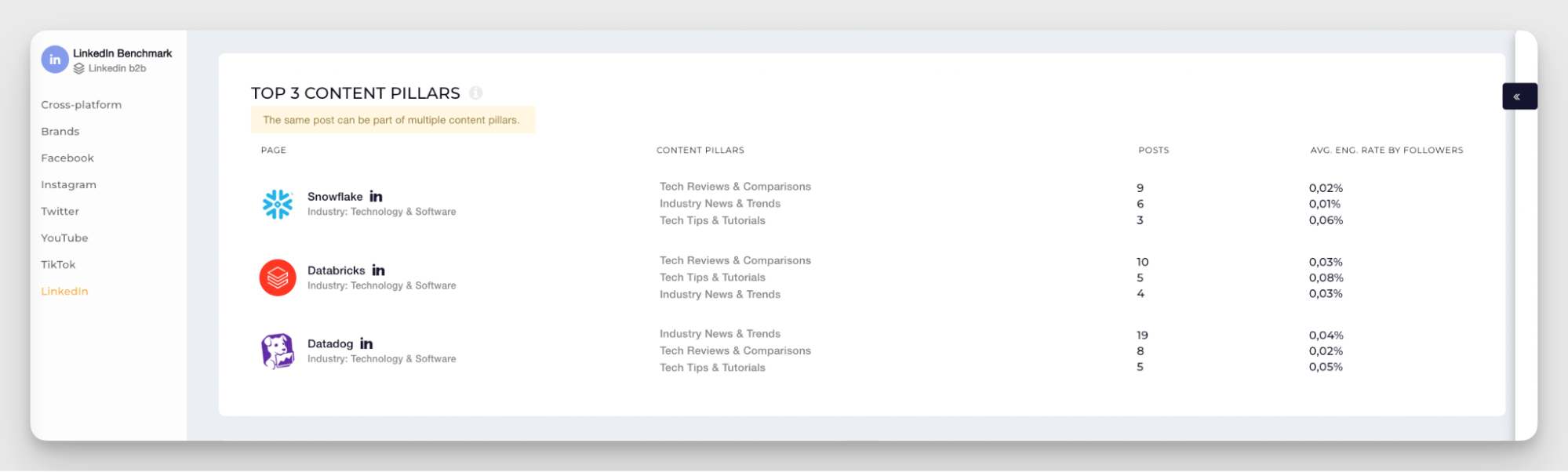
For example, based on the number of posts, Snowflake, Databricks, and Datadog all lean heavily into Tech Reviews & Comparisons. However, the most engaging content pillar for them is Tech Tips & Tutorials — something you could use in your strategy, too.
Posting frequency is another important benchmark. If your competitors publish three times a week and you post once every two weeks, performance gaps may have less to do with creativity and more to do with consistency. Seeing that comparison side by side makes the gap obvious.
Socialinsider also allows you to compare multiple competitors in one dashboard and export the analysis into a ready-to-use report. You can view follower growth, engagement rates, content mix, and posting frequency across accounts without jumping between tabs.
As Chris from Axel Springer puts it:
Socialinsider is great for us as it deals with LinkedIn, which is fantastic. We can do a quick kind of import of the channels that we're looking at and then get a nice deck out that we can immediately work with.
What are some common LinkedIn B2B marketing mistakes and how to avoid them?
There’s a common thread behind most LinkedIn mistakes.
Most brands don’t fail because they lack ideas, but because they approach LinkedIn as a boring, corporate social media that, unlike TikTok or Instagram, can survive without any personality.
Let’s warn you about the most common mistakes B2B LinkedIn pages face:
- Treating LinkedIn like a billboard. If your feed reads like a press room, people will scroll past it. LinkedIn is built around people and perspective, not corporate announcements. Instead of “we’re excited to announce,” share insights, context, lessons, and real stories from inside your company.
- Over-promoting and hard selling. No one logs in hoping to see another sales pitch. Constant CTAs, gated links, and demo pushes create fatigue fast. Focus on being useful first, so when you do promote something, it doesn’t feel forced.
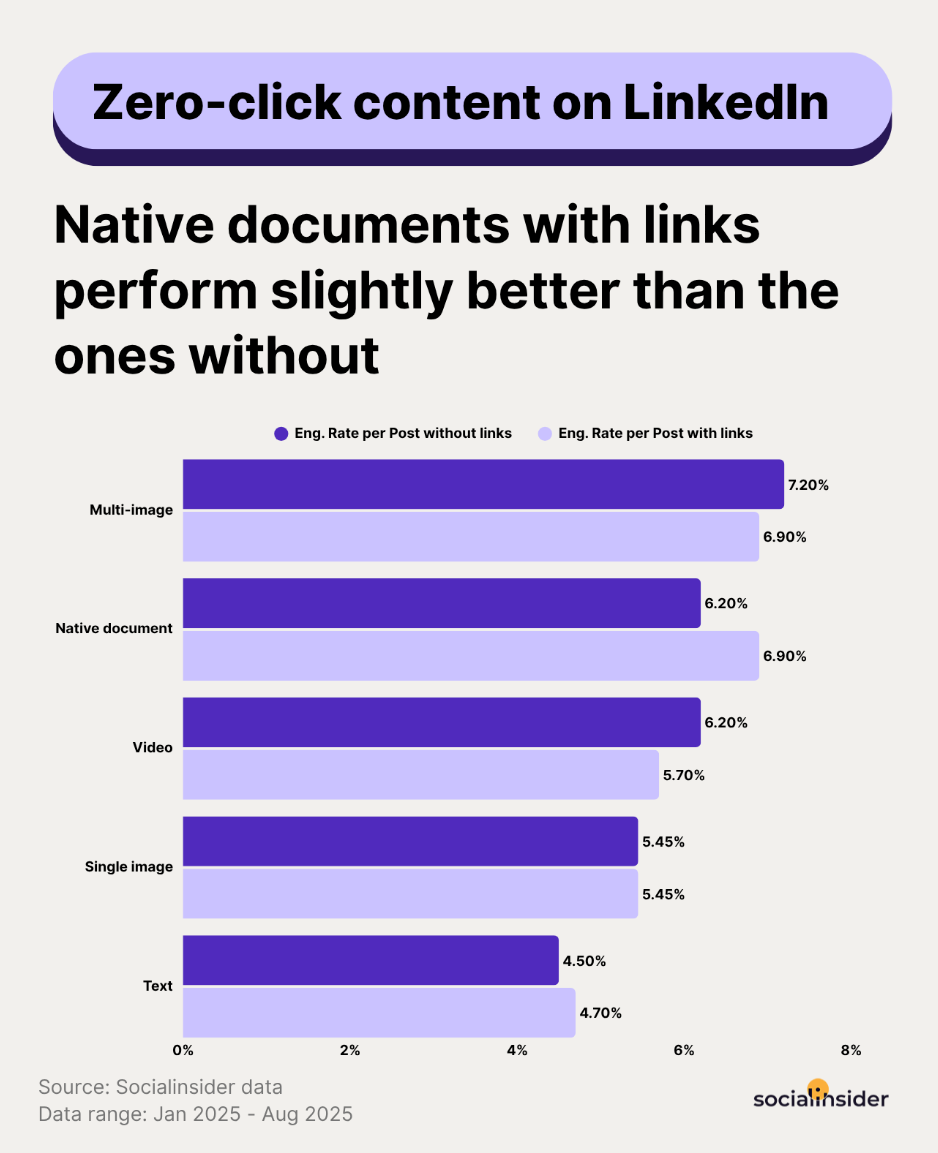
- Ignoring native content. Dropping links and hoping for clicks rarely works. LinkedIn favors content that lives on the platform. Break down your insights directly in the post, turn reports into carousels, and make the content consumable without leaving the feed. (Find more on this approach in Socialinsider’s Zero-click content guide)
- Forgetting employees exist. Your team often has more reach and credibility than your company page. Encourage them to share insights and participate in discussions. LinkedIn rewards human voices.
- Posting without engaging. Publishing content isn’t the same as being present. The real deal is the comments section — yours and others’. Reply to comments, join conversations, and show up outside your own posts. This amplifies your visibility, authority, and relational capital.
- Ignoring negative comments. Negative feedback isn’t the end of the world. In fact, handled well, it’s an opportunity to show transparency and care. Deleting criticism or pretending it didn’t happen makes brands look defensive. Thoughtful responses, though, create trust, even with critics.
- Never A/B testing your content. Posting the same format every week and expecting to see different results won’t fly. Try new structures, tones, or content types, then look at the data and adjust.
- Not adapting the strategy based on performance data. Make time to review and reflect: Which posts drew the most engagement? What formats flopped? Assumptions slow you down, but data speeds you up.
Lastly, here's one final takeaway from Victoria:
The fix for most of these mistakes is rather simple: be human and stay consistent. Brands don’t have to be boring or overly corporate, and they also don't have to be unhinged or funny. They just have to be authentic.
Final thoughts
LinkedIn B2B marketing works when you balance business goals with human presence.
Yes, you want leads and pipeline. But people don’t follow brands for product updates. They follow brands that are useful, consistent, and clear about what they stand for.
A strong LinkedIn strategy builds trust and invests in relationships, employee voices, creator partnerships, and conversations that feel real. Over time, that consistency turns visibility into recognition, and recognition into opportunities.
If you want to build that kind of strategy with clarity, Socialinsider supports you with LinkedIn analytics, competitor benchmarking, and content pillar analysis — try it free for 14 days.
FAQs on LinkedIn for B2B marketing
What LinkedIn B2B marketing tools and resources can help you work smarter?
- Socialinsider – for clear LinkedIn performance analytics. If you’re serious about LinkedIn, you need to see what’s actually working. Socialinsider helps you track LinkedIn performance in depth, analyze content pillars, benchmark competitors, and compare cross-channel results. Instead of guessing why something worked, you can look at the data and adjust with confidence.
- CRM and lead management tools – to turn attention into pipeline. Tools like HubSpot, Salesforce, or LinkedIn Sales Navigator help you manage conversations once they move beyond comments and DMs. Syncing LinkedIn with your CRM keeps your outreach organized and makes sure warm leads don’t get lost between marketing and sales.
Kseniia Volodina
Content marketer with a background in journalism; digital nomad, and tech geek. In love with blogs, storytelling, strategies, and old-school Instagram. If it can be written, I probably wrote it.
Analyze your competitors in seconds
Track & analyze your competitors and get top social media metrics and more!
You might also like



Improve your social media strategy with Socialinsider!
Use in-depth data to measure your social accounts’ performance, analyze competitors, and gain insights to improve your strategy.