How Effective Is Social Media Marketing? What the Data Actually Shows
Is social media marketing actually effective? See the real ROI numbers, platform conversion benchmarks, B2B vs. B2C data, and how to prove it.
Does social media really work? That's the question I hear most often from marketers who've spent months posting, testing, and optimizing without a clear sense of whether any of it is paying off.
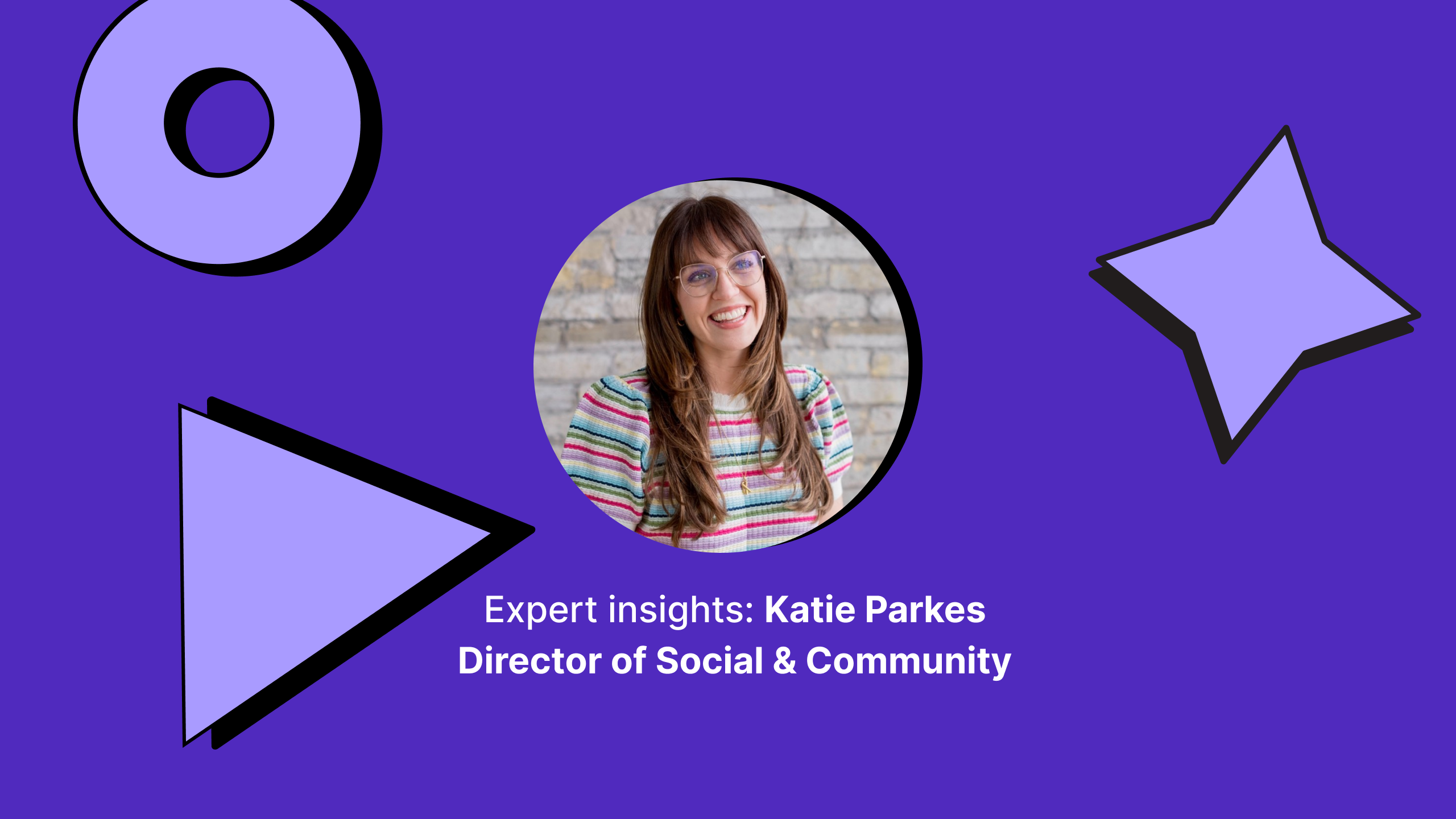
The internet is full of data proving that social media marketing works in general. But the real question is: does it work for you? To find out what social media marketing effectiveness really looks like, I spoke with Katie Parkes, Director of Social & Community at Apollo.io, who shared how she thinks about ROI, attribution, and proving impact to stakeholders. Let's dive in!
Key takeaways
-
"Effective" is a different question than "successful" or "measured well." This guide is specifically about the ROI case — does social media marketing pay off financially, and how do you prove it — distinct from defining what success looks like for your goal or running a full evaluation process.
-
B2B and B2C effectiveness look completely different, not just in which platforms work, but in what "cost effective" even means — B2B's higher acquisition cost reflects longer sales cycles and bigger deals, not weaker performance.
-
Tailor the platform to the audience, not the business category. Even B2B brands can find real traction on consumer-first platforms if the content and targeting are right, and vice versa.
-
Lead volume alone can be misleading. A channel that brings in fewer leads can still outperform a higher-volume one once Customer Lifetime Value enters the picture.
-
Proving financial impact requires attribution and CLV work, not just engagement metrics — this is where most measurement efforts stop short of the boardroom conversation.
What "effective" means here
Three related questions get asked about social media, and they're not the same question:
- "Is our social media successful?" — this is about hitting the specific goal you defined for a campaign or channel. Our guide on measuring social media success covers how to define that goal and pick the 2-3 metrics tied to it.
- "How do we evaluate our social media performance?" — this is the structured, ongoing process of auditing your baseline, tracking KPIs, and turning data into action. Our social media evaluation guide walks through that 6-step framework.
- "Is social media marketing actually effective — does it work, and is it worth the money?" — this is the question this guide answers. It's the ROI case: the data on whether social media marketing pays off financially, broken down by platform, business type, and how to prove it when someone asks for the numbers.
If you're trying to decide whether to invest in a platform, defend budget, or answer "does social media really work" with actual data instead of a hunch, you're in the right place.
How effective is social media marketing today, according to the data?
With over 5 billion people on social platforms worldwide, social media marketing has shifted from optional to essential. Sprout Social's Index found that social media is responsible for 81% of consumers making spontaneous purchases multiple times a year, with Gen Z and Millennials — who now control the majority of purchasing power — relying heavily on social media to discover products and make decisions.
Reach and buzz alone won't satisfy leadership, though. Here's what the ROI numbers actually show:
- Social media marketing delivers an average ROI of 250% — that's $2.50 earned for every dollar spent.
- Short-form video delivers the highest ROI, with only 22% of marketers reporting similar success with long-form video.
- According to HubSpot, YouTube had the highest ROI in 2024, and 54% of marketers planned to increase investment there in 2025 — the combination of short-form success and Google Ads' reach makes the platform a strong bet.
- Per Sprout Social's 2024 Influencer Marketing report, 49% of consumers say influencer posts inspire monthly purchases.
So is social media advertising effective? The averages say yes — but averages hide a lot of variation, which is exactly what the conversion data below breaks down.
Effectiveness benchmarks by platform: conversion rates
Social media conversion rates vary considerably depending on the source, which is itself a useful reminder to treat any single benchmark with some caution. First Page Sage's data puts organic social conversion at 2.4% for B2C and 1.7% for B2B — slightly lower than email, but higher than paid social. Ruler Analytics puts the broader social media average at 2.9%.
The more useful breakdown is by platform. Here's how average conversion rates looked in 2025:
- Facebook leads at 9.21%, making it one of the most effective platforms for driving conversions specifically.
- LinkedIn is the strongest B2B channel at 5-15% — hitting above 5% is generally considered excellent.
- Instagram sits at a more modest 1-3%.
- TikTok, being a discovery-first channel, converts lowest at 0.46% — a reminder that strong engagement doesn't automatically translate to strong conversion, since the two measure different things entirely.
The takeaway: how effective social media advertising is for you depends enormously on which platform you're asking about, not social media as a category. A campaign that looks disappointing on TikTok by conversion-rate standards might be doing exactly its job if the goal was discovery, not direct conversion.
Effectiveness of social media marketing for B2B vs. B2C
Social media works for both B2B and B2C brands, but not in the same way, and how effective marketing on social media is for your business depends heavily on which category you fall into.
B2C marketers use social to build emotion and drive impulse decisions, focusing on platforms that support faster customer journeys and visual storytelling. According to Soax's research, 91% of B2C marketers use Facebook, versus 83% in B2B.
B2B purchases are more rational, involve multiple decision-makers, and span longer cycles. 86% of B2B marketers use LinkedIn as their core lead source, building credibility and long-term relationships over quick conversions. This also makes B2B social media marketing less immediately cost effective on paper — average customer acquisition cost in B2B sits at $600-$900, against roughly $400 in B2C. That gap isn't a sign B2B social doesn't work; it reflects longer sales cycles and higher deal values that justify the higher acquisition cost.
This doesn't mean a B2B brand can never use TikTok, or a B2C brand can never succeed on LinkedIn. As Katie Parkes put it in our conversation:
If you're selling Coca-Cola, you'll get more traction by investing in TikTok or Instagram than on LinkedIn. But even for B2B, the people you want to reach are still there. You just have to tailor your content to the platform and to the audience you're trying to reach.
Proving the financial impact: attribution and CLV
Averages and platform benchmarks tell you what's typical. Proving your own social media marketing effectiveness to stakeholders requires connecting your specific results to revenue — which is where most measurement efforts stall.
Sales attribution in practice
Attribution is one of the most powerful ways to prove the value of your work, and also one of the hardest to execute well, especially for organic channels. With platforms increasingly hiding link visibility and pushing in-app content, tracing a customer's path back to a specific post gets harder every year.
A few things that still work in practice:
- UTM parameters on every link you share — the baseline requirement for tracing website traffic and conversions back to specific campaigns.
- Self-reported attribution for B2B — using your onboarding flow to ask new leads where they first heard about your brand, then pairing that with CRM data to see which social interactions influenced the deal.
- Multi-touch thinking over last-click — social media often drives discovery and awareness long before a purchase happens, so attribution models that credit only the final touchpoint will consistently undervalue social's actual contribution.
Customer Lifetime Value from social channels
Customer Lifetime Value (CLV) — average purchase value × purchase frequency × average customer lifespan — shows how much revenue a customer generates over their full relationship with your brand, not just at the moment of conversion.
This matters because lead volume alone can be misleading. Katie shared an example from her own experience: a campaign where Facebook brought in several times more leads than LinkedIn, but every single LinkedIn lead turned out to have a higher lifetime value — easily outweighing Facebook's volume advantage once profitability entered the picture.
Tracking CLV by channel tells you which platforms bring in your most valuable customers, not just the most leads — a distinction that matters most for B2B brands, where a single long-term contract can outweigh hundreds of smaller transactions.
Common mistakes when judging social media marketing effectiveness
- Applying industry-wide benchmarks without adjusting for your niche. A 2.9% average conversion rate means little if your specific industry or platform mix typically runs well above or below that number.
- Relying on last-touch attribution only. This systematically undervalues social media's role in awareness and discovery, since it only credits whichever touchpoint happened right before conversion.
- Ignoring the B2B/B2C gap. Judging a B2B LinkedIn strategy by B2C Instagram conversion benchmarks — or vice versa — sets an unfair and misleading bar.
- Confusing engagement with conversion effectiveness. TikTok's strong engagement and weak conversion rate aren't contradictory — they reflect a platform built for discovery, not direct response. Judging it purely on conversion misses what it's actually good at.
- Measuring once instead of tracking CLV over time. A channel that looks like the clear winner on lead volume can lose badly on lifetime value once enough time has passed to see the full picture.
Final thoughts
Is social media marketing effective? The data says it can be — a 250% average ROI is nothing to dismiss — but "effective" only means something once you've broken it down by platform, business type, and how you're proving the financial impact. Facebook's conversion strength, LinkedIn's B2B pull, and TikTok's discovery-first economics aren't competing signals; they're proof that "does social media work" was always the wrong question. The right one is "does it work for what I'm specifically trying to achieve, on the platform I'm actually using."
If you want to track your own effectiveness data — conversions, content performance, competitive context — instead of relying on industry averages alone, try Socialinsider's 14-day free trial.
FAQs on social media marketing effectiveness
How is social media marketing cost-effective for smaller budgets?
Organic social media requires no media spend to reach your existing audience, and even paid campaigns generally cost less per impression than traditional advertising channels. The cost-effectiveness case gets stronger the more a brand can prove attribution and CLV, since it shifts the conversation from "how much did this cost" to "how much did this actually return."

Elena Cucu
As Content & SEO Manager at Socialinsider, Elena Cucu helps social media leaders make sense of the numbers behind their performance. Featured in TechCrunch, TNW, and ReadWrite.

Know what your competitors do — before your manager asks
Get instant social benchmarks & reports without manual work.


