Social Media Growth Strategies To Elevate Your Brand in 2026
Discover effective social media growth strategies to boost brand visibility and engagement. Elevate your brand and achieve lasting success!

You already know that growing on social media is about more than just showing up—it’s about making an impact.
Maybe you’ve tried sharing your best ideas, tweaking your content, or following the latest trends, but the results aren’t quite what you hoped. The good news is, there are strategies that can genuinely move the needle for you.
In this article, I'll share with you practical steps, real examples, easy-to-follow tips, and some insights I got from Jenn Crim, designed to help you break through the noise, build a community that cares, and see your growth turn into lasting engagement.
From setting realistic benchmarks based on social media best practices to analyzing competitor tactics, here's how to build a growth plan that delivers measurable results for your brand.
Key takeaways
-
What defines effective social media growth? Effective social media growth happens when multiple performance metrics — not just follower count — trend upward together, showing that your audience is expanding, engaging, and taking meaningful action.
-
How to set realistic social media growth goals? Realistic social media growth goals are built on industry benchmarks and competitive insights, ensuring your targets are data-driven, achievable, and aligned with your market context.
-
What social media growth strategies that will help you put your brand on the map? Successful growth strategies include focus on high-performing content formats, reverse-engineer what works, repurpose content strategically, boost top organic posts, leverage UGC, launch co-creation initiatives, use competitive intelligence, and continuously A/B test to refine and optimize your strategy.
What defines effective social media growth?
As you might already know by now, in many companies, executives usually focus most on follower growth when talking about social media results. And I get it, watching that follower count climb feels good, and it's the metric most people see first. But you know firsthand that there’s much more to real success than just how many people follow your account.
For me, an important lesson I've learnt from working with clients and analyzing many social media accounts over time is that effective social media growth is about so much more than follower count.
Truth be told, real social media growth happens across multiple dimensions:
- Follower growth tells you whether your brand is reaching new audiences.
- Engagement metrics reveal whether your content resonates.
- Reach and impressions show how far your content travels.
- Video views help you understand what format works best for your audience.
- Profile visits and website clicks indicate intent.
A successful social media growth strategy balances all these metrics. At the end of the day, you should be building a community that actively engages with your content, shares it with others, and takes action.
When multiple metrics trend upward together, that's when you know your social media growth plan is working.
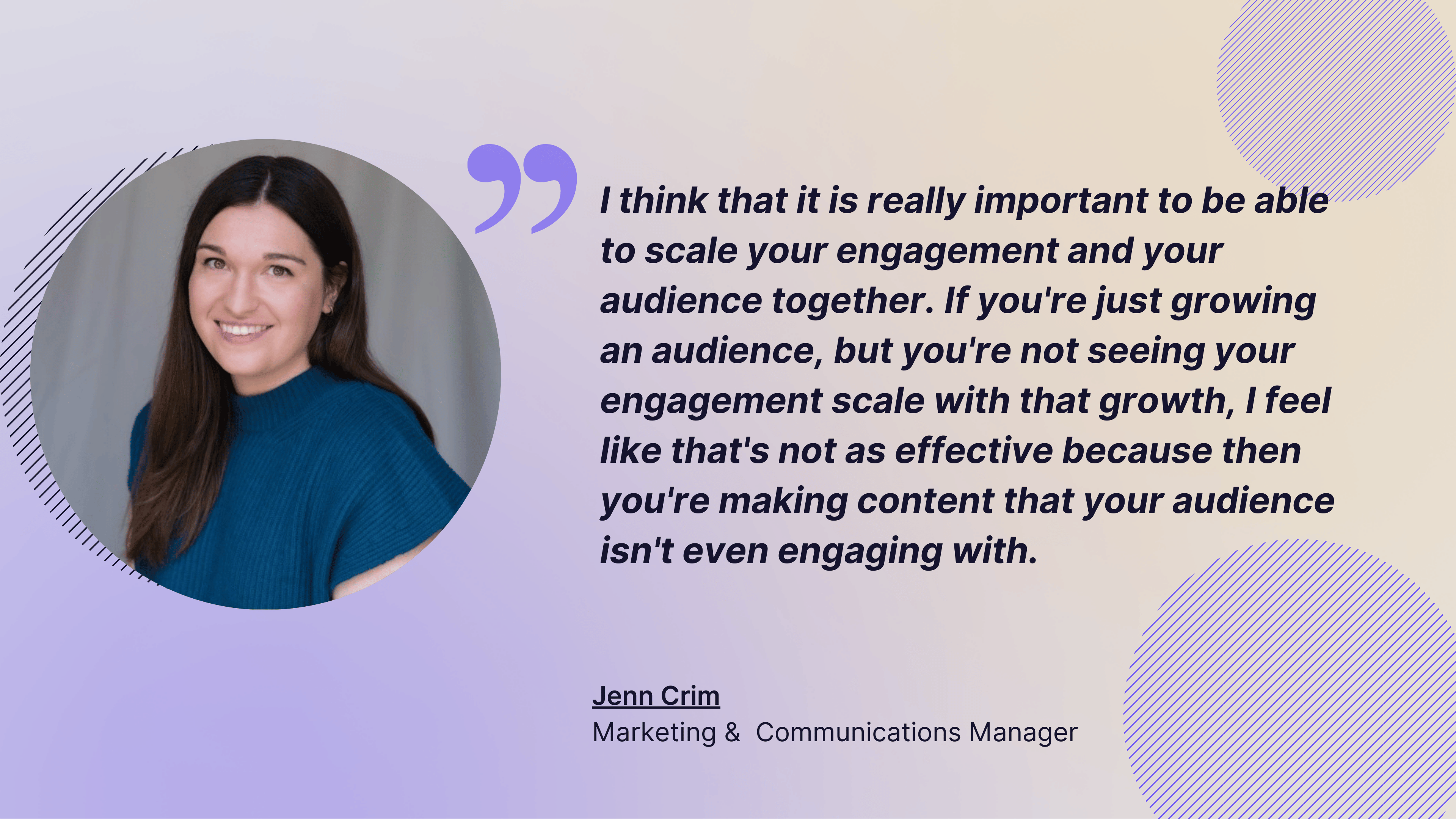
Here's also what Jenn Crim, marketing & communications specialist at South Bend International Airport, told me during a short chat:
I think that it is really important to be able to scale your engagement and your audience together. So if you're just growing an audience, but you're not seeing your engagement scale with that growth, I feel like sometimes that's not as effective because then you're making content that your audience isn't even engaging with.
How to set realistic social media growth goals?
Setting realistic goals for social media growth isn't about picking an arbitrary number just to sound impressive. It's about understanding where you stand, what's achievable in your niche, and what your competitors are doing.
When you're creating a social media growth plan, you need benchmarks. Without them, you're basically throwing darts in the dark.
Research industry standards
Before you commit to any growth targets, you need to know what "good" looks like in your specific space. Keep in mind that what works for a fashion brand won't necessarily work for a B2B software company.
This is where social media benchmarks become your best friend. Looking at data across thousands of accounts gives you a realistic picture of what's achievable.
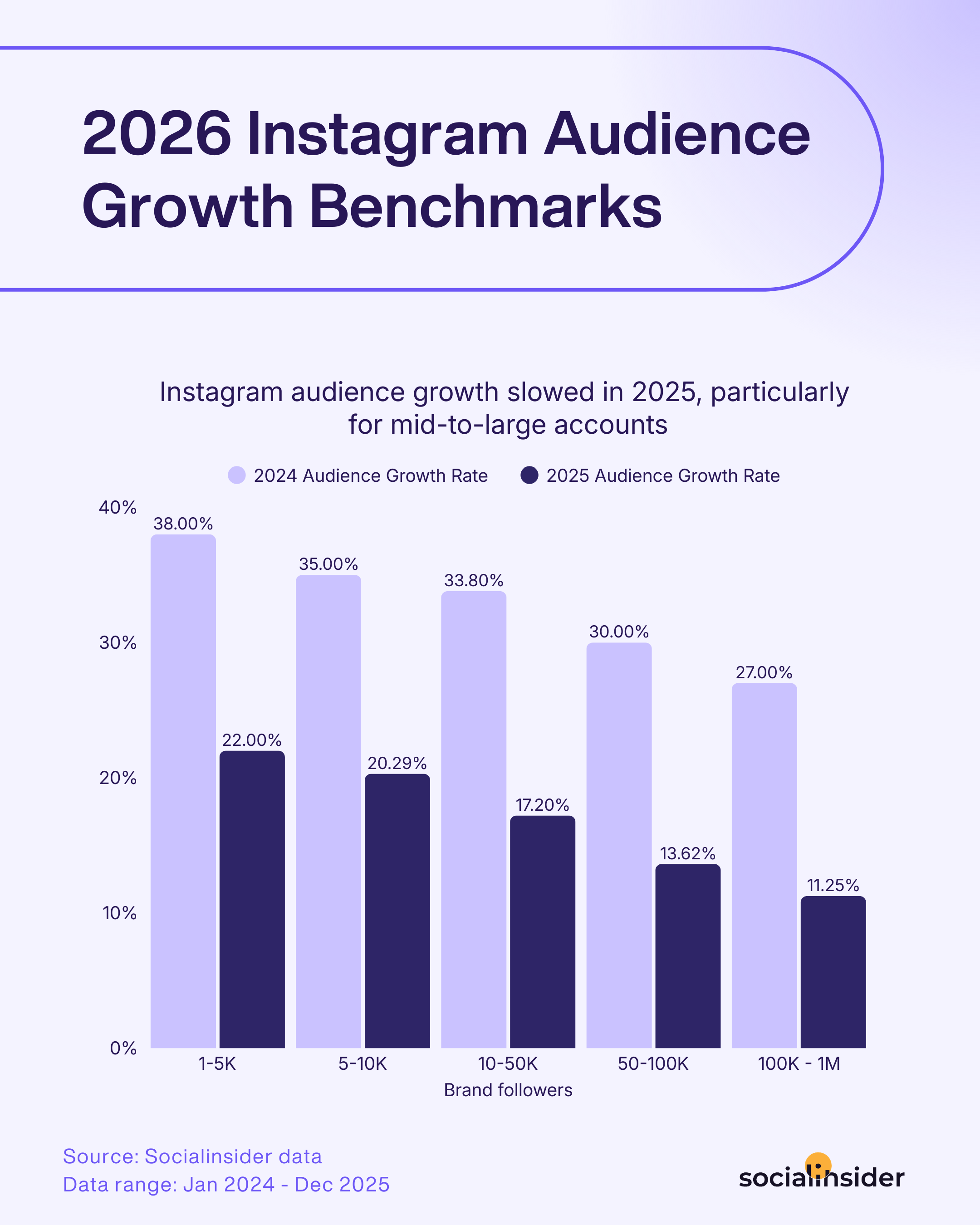
For example, Socialinsider’s Instagram benchmarks show something interesting: smaller brands tend to see higher follower growth rates than their larger counterparts. If you're starting out or working with a smaller account, this is encouraging news, as growth can happen faster.
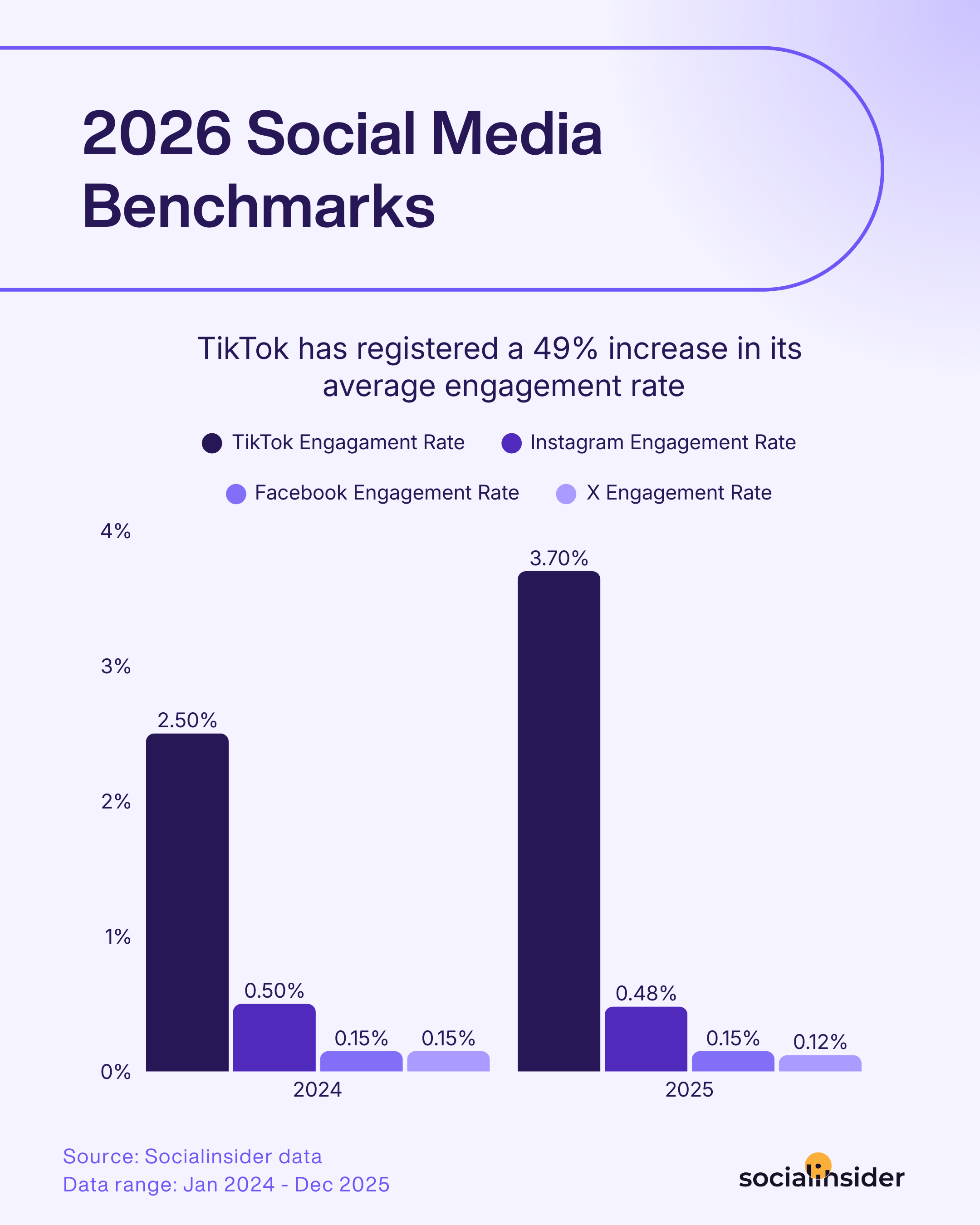
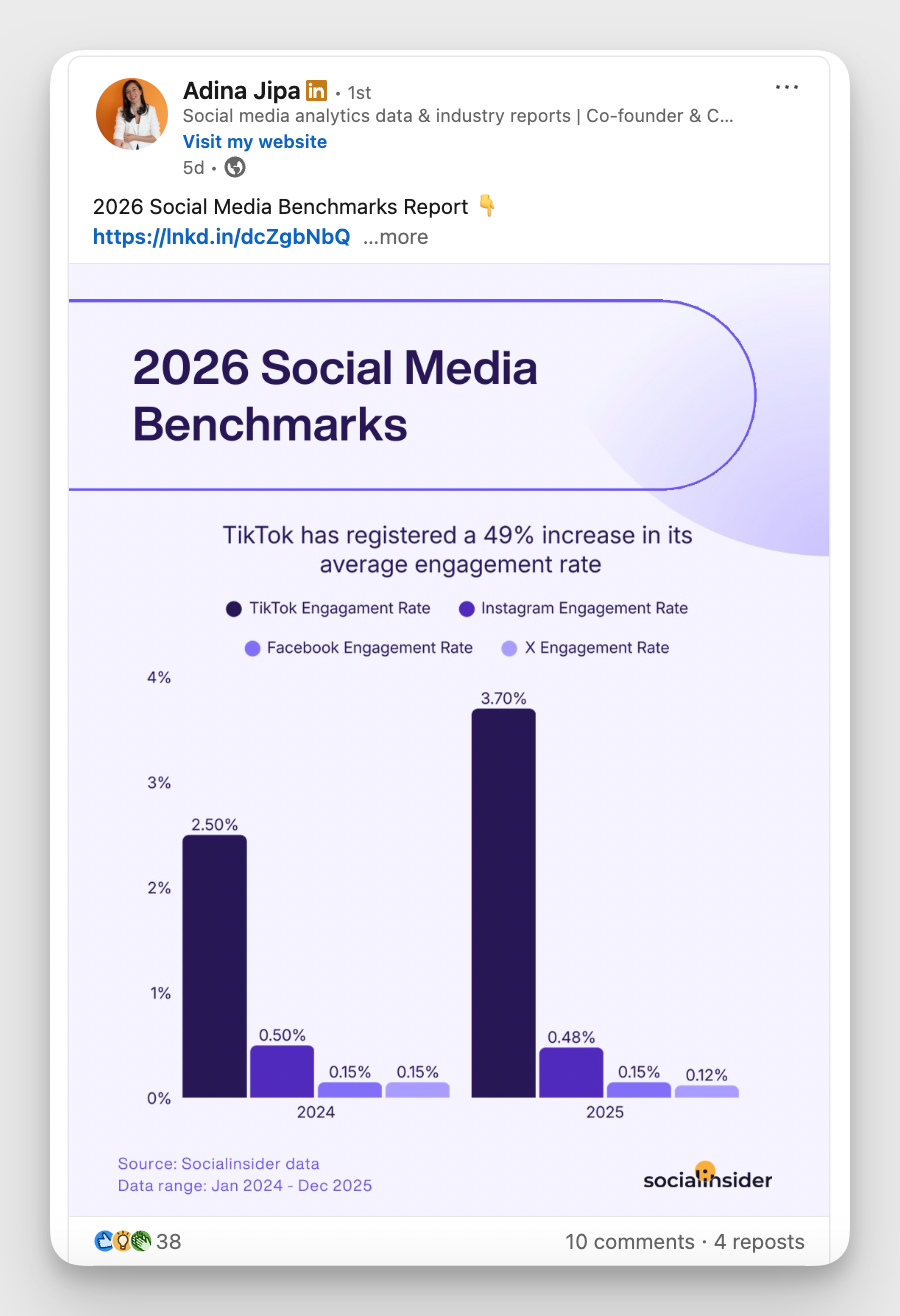
2026's social media benchmarks study by Socialinsider also reveals significant differences in engagement rates across platforms. You'll notice that TikTok consistently shows higher engagement than other platforms, which suggests where you might want to focus your efforts if engagement is your primary goal — and it also helps to adjust your expectations regarding the other platforms.
Here's Jenn's approach as well:
One thing I’ve seen a lot of success with is moving away from annual growth goals. Social media changes too quickly — new features roll out constantly, algorithms shift, and audience behavior evolves — so setting a rigid yearly target just isn’t realistic anymore. Instead, I break growth goals down by quarter.
In my case, at the beginning of the year, I define what we want to achieve, and then each quarter we benchmark our progress, analyze what’s working, and adjust the strategy where needed. That way, we’re driving intentional growth — not just growth for the sake of it.
This helps me understand what’s actually driving spikes — whether it’s a major campaign, a specific activation, or a content shift. By identifying those patterns and tracking where growth comes from, I can benchmark smarter and make more strategic decisions moving forward. It ensures our growth is backed by data, not assumptions.
Run a competitive analysis
Benchmarks tell you what's typical, but your competitors tell you what's going on in your specific market. When I'm helping brands develop their social media growth strategies, we always start with a thorough look at what the competition is doing.
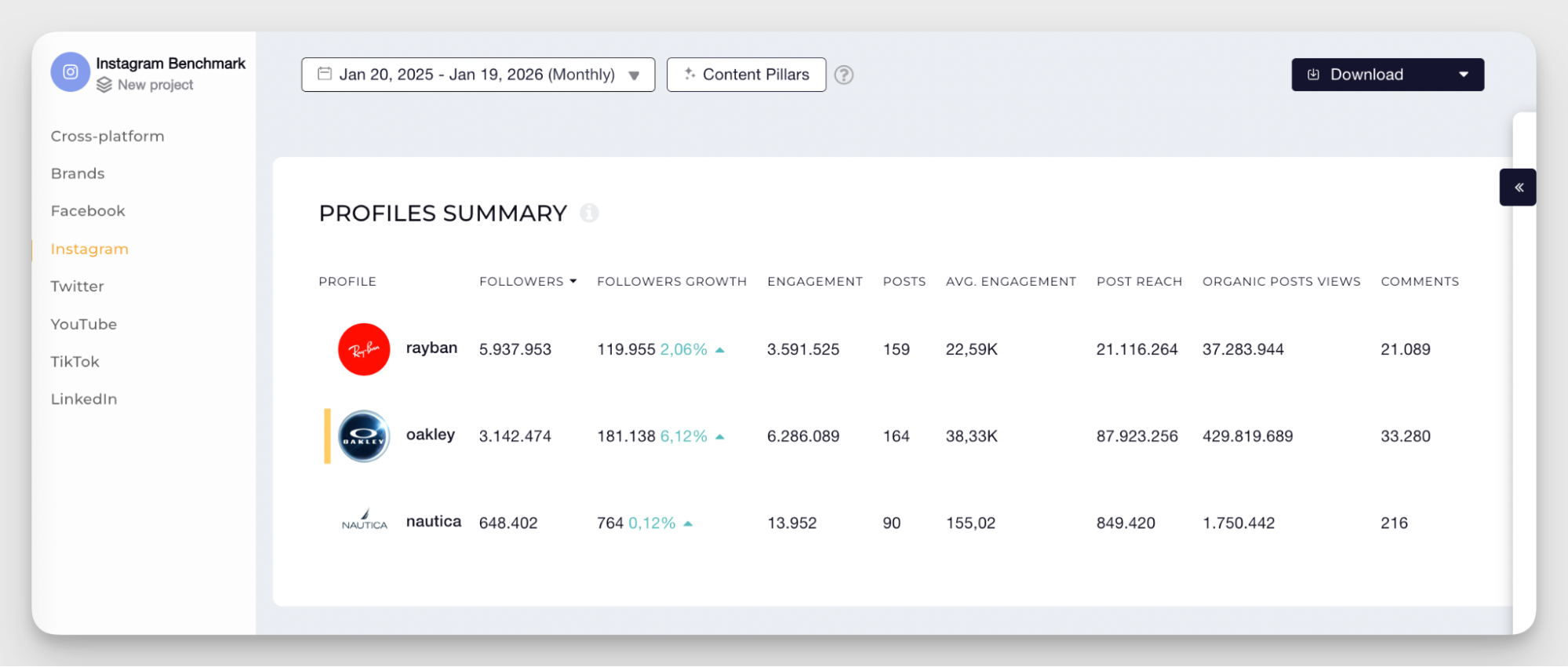
A competitive analysis shows you the actual performance of brands fighting for the same audience you are. You'll see their follower growth trends, which types of content drive the most engagement, and how their overall presence compares to yours.
Pay attention to follower counts, engagement levels, post frequency, content reach, and even comment volumes.
As in the example below from the Socialinsider dashboard, you might discover that a competitor with fewer followers is experiencing rapid growth and getting more reach and engagement, suggesting they've found a content strategy that really resonates.
To this, Jenn added:
What’s really working right now is finding a unique angle for your brand on social media. I always start by analyzing the competitive landscape to see whether there’s an opportunity for us to show up differently. From there, I revisit that positioning regularly to take a temperature check and make sure we’re still standing out.
I’d also highlight the importance of strategic creativity. Brands need to be intentional about how they approach content — especially in everyday or highly competitive categories. Strong hooks in videos, fresh creative concepts, and thoughtful storytelling make a huge difference. When you combine differentiation with compelling content, that’s what ultimately drives authentic, sustainable growth.
8 Social media growth strategies that will help you put your brand on the map
Growing on social media is about optimization: testing, analyzing, and refining. I've seen brands waste months (sometimes years) posting content that looks good but doesn't perform, while their competitors build engaged audiences by following data-driven strategies.
Here are eight strategies that consistently deliver results.
1. Double down on the best-performing content formats across platforms
When you're developing your social media content strategy, you need to know which formats your audience engages with.
For example, recent Socialinsider LinkedIn data shows that native documents consistently drive the highest engagement, followed by multi image posts and video content. If you're spending all your time creating single-image posts or external links, you're missing out on formats that naturally perform better.
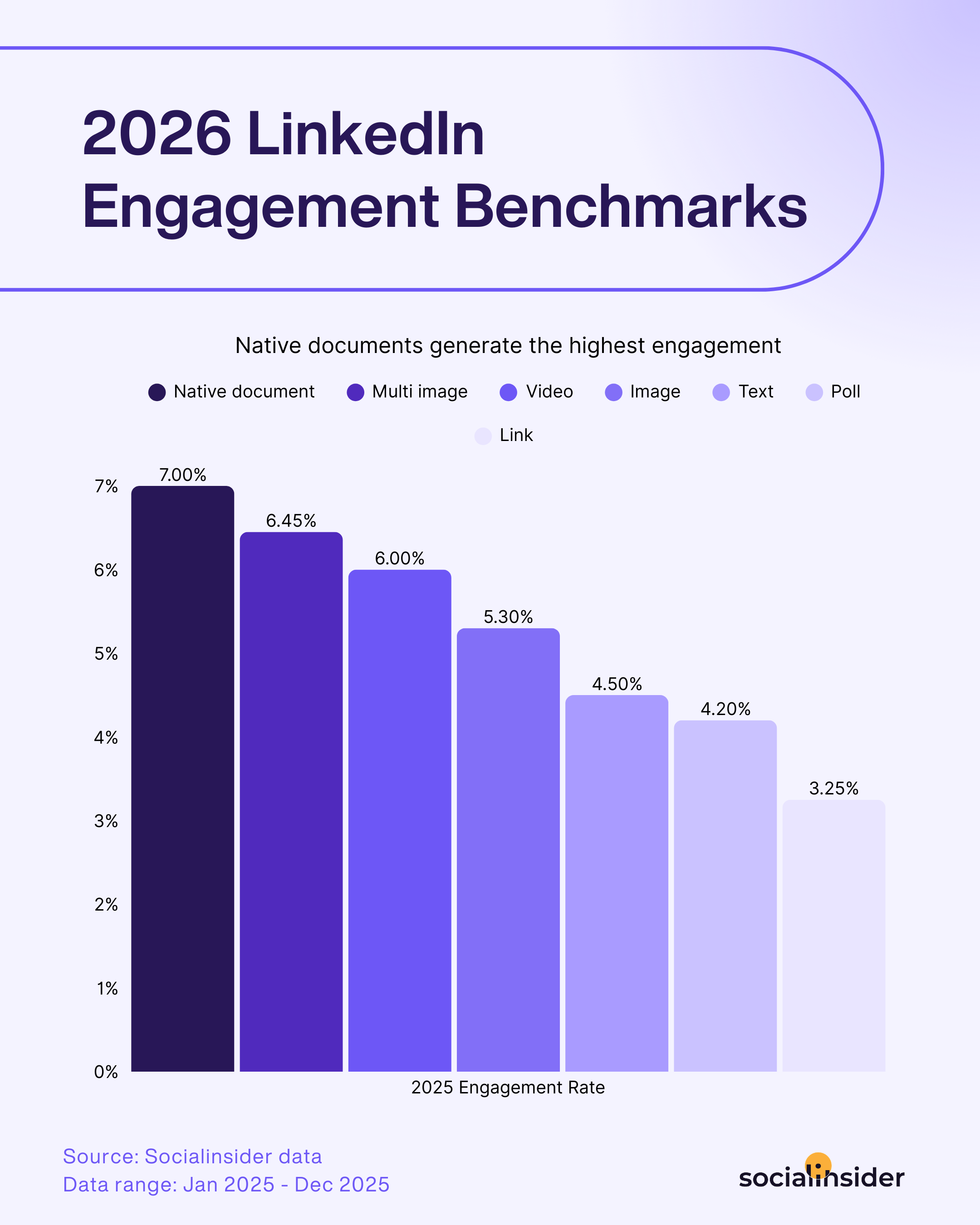
Each platform has content formats that the algorithm favors and that audiences respond to. Identify these formats and create your best work within them.
My takeaway? Look at your own performance data, spot patterns, and make them the foundation of your content calendar.
2. Reverse-engineer what works
Looking at engagement across multiple platforms can reveal striking disparities. You might notice one channel consistently outperforming others by a considerable margin. This tells you something important: there's a winning formula somewhere in your content mix.
In the example below, you can see that for Nautica, TikTok shows significantly higher engagement than Instagram. Why? What's different about the content they're posting there? Is it the format, the tone, or the topics?
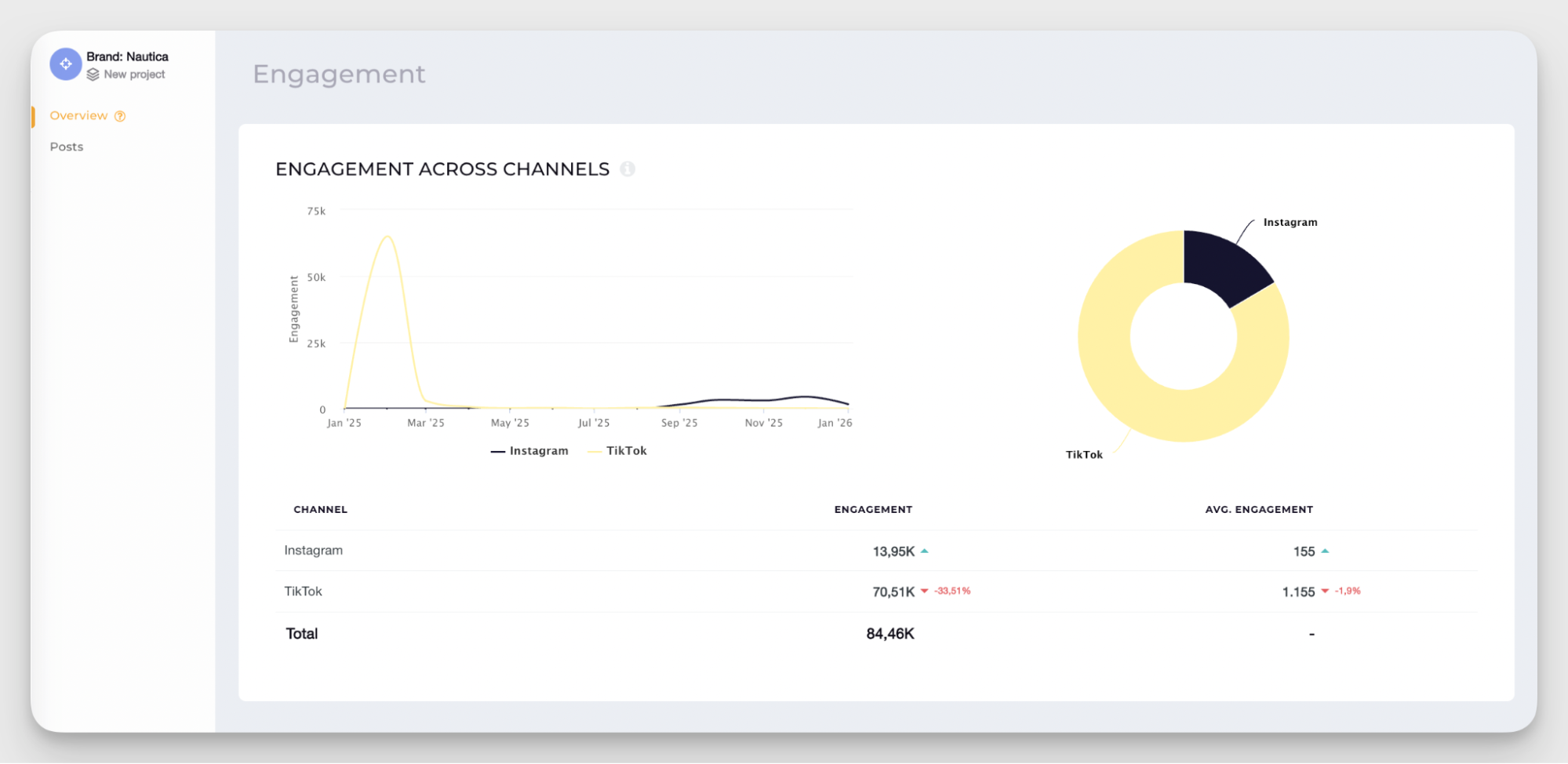
This is where detailed social media analytics becomes indispensable. The next step is to drill down into the platform that works to see exactly which types of content resonate most and why.
Here’s what that drill-down looks like in the Socialinsider dashboard. Look at posting frequency, content themes, captions, hashtags, and timing. Spot patterns, then adapt those successful elements to your struggling platforms.
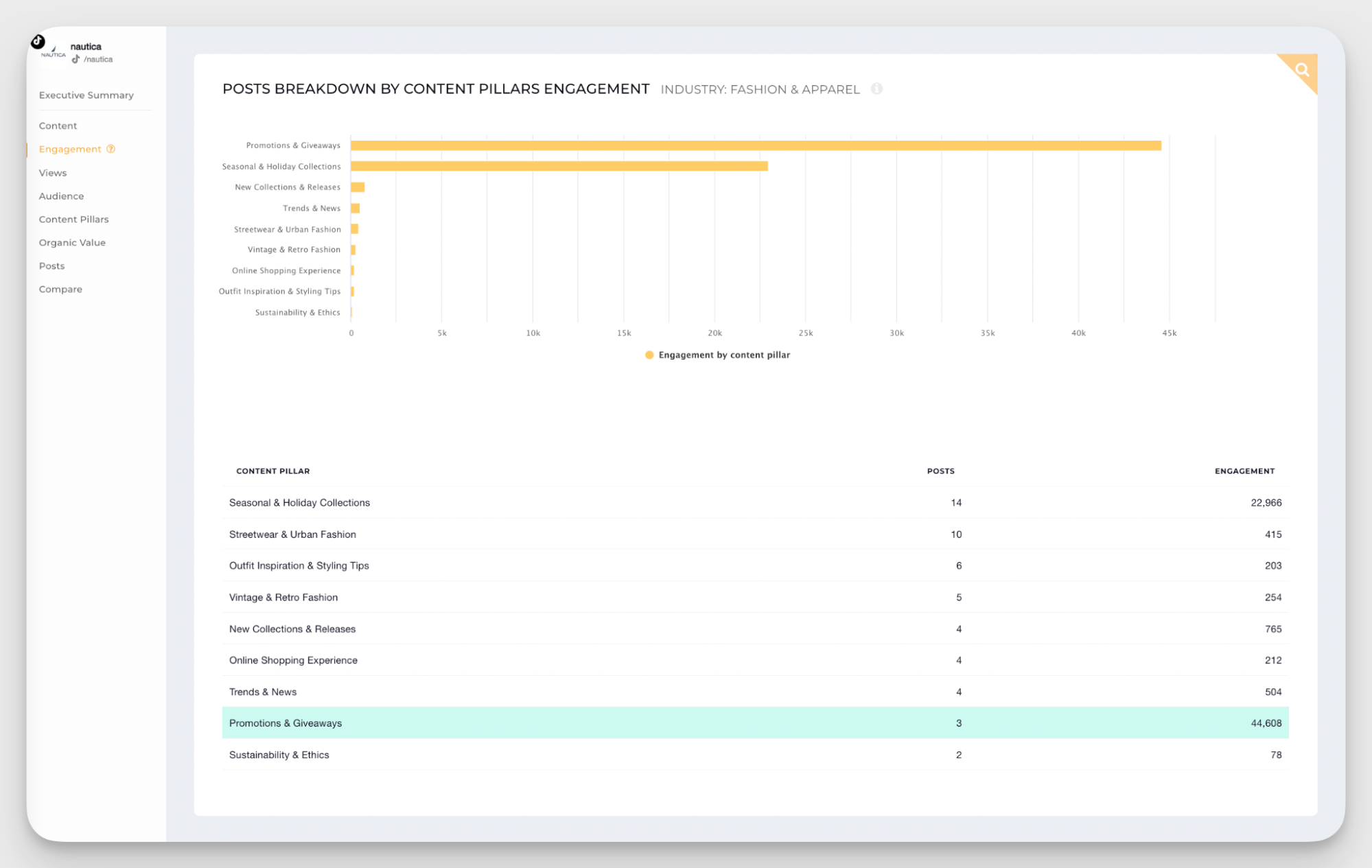
For example, an interesting observation is that, although rare, promotions and giveaway posts generate high engagement on TikTok. Could Nautica leverage this insight to improve its engagement on Instagram as well?
3. Repurpose content effectively across platforms
When you look at individual posts that drive strong engagement, you can identify specific elements worth adapting.
Continuing the Nautica example, analyzing the best-performing TikTok content in detail can help create more successful Instagram content as well. Beyond the topic, maybe it's the hook, the visual style, or the storytelling approach.
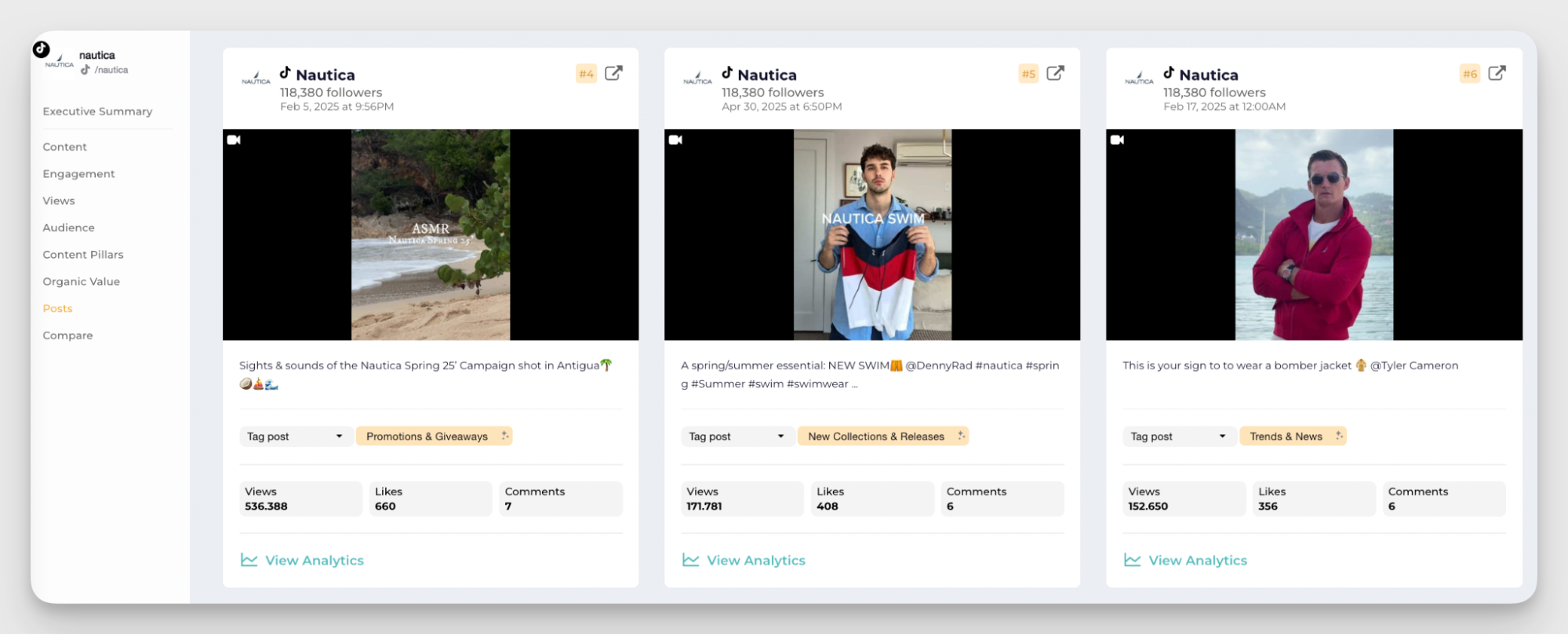
The same core message can be presented differently depending on where you're posting. A successful TikTok video might become a carousel post on Instagram, a text-based LinkedIn post with key takeaways, or a short-form YouTube clip.
This approach to creating content for social media is both efficient and effective because you're not reinventing the wheel with every post. You're taking proven concepts and adapting them strategically.
4. Boost high-performing organic content
One of the most cost-effective ways to accelerate social media growth is to put paid budget behind content that's already performing well organically — it might sound paradoxical, but I’ll explain why that is.
First, this strategy works because you're not gambling on unproven content. You're investing in posts that have already demonstrated they resonate with your target audience.
Second, this approach supports your organic social media growth in the long run. Ads drive more profile visits, which can lead to follows, which in turn increase your organic reach.
5. Make use of UGC
User-generated content is a fantastic growth strategy. When your customers create content featuring your brand, you're getting authentic testimonials, social proof, and fresh content all at once.
If you ask me, I'd say that GoPro has mastered this approach better than almost any brand. They've built their entire content ecosystem around customer footage, reposting user videos and photos daily across Instagram, YouTube, and TikTok. Through the GoPro Awards program, they incentivize UGC submissions, creating a constant pipeline of authentic content.
Just head to their “tagged” tab on Instagram for a glimpse of the great UGC they’re generating.
GoPro is essentially crowdsourcing its marketing while building a passionate community. When someone sees their footage featured on GoPro's channels, they become brand advocates who share that recognition with their own networks.
This creates a virtuous cycle, and the brand gains constant social media traction without the production costs typically associated with video content.
6. Launch co-creation initiatives (with influencers and other brands as well)
Co-creation takes collaboration beyond traditional sponsorships. Instead of just paying influencers to promote your products, you involve them in the creation process. This generates genuine excitement and gives partners real ownership in what they're promoting.
Nike exemplifies this strategy well through collaborations with athletes and creators.
Each collaborator brings their built-in audience to the table. When Travis Scott launches a sneaker collaboration, his millions of followers pay attention. The product feels culturally relevant because it's personality-led design, not just another corporate release.
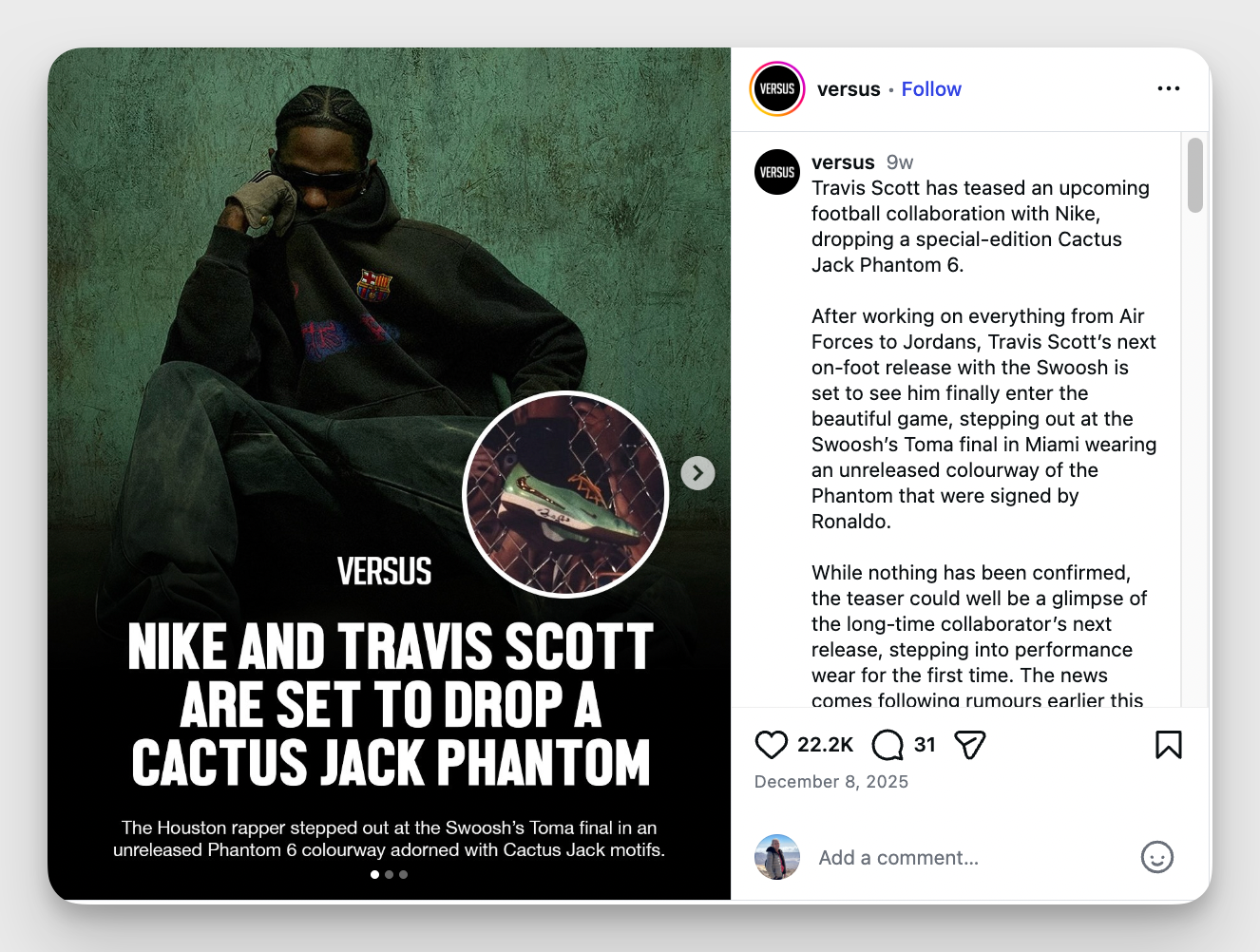
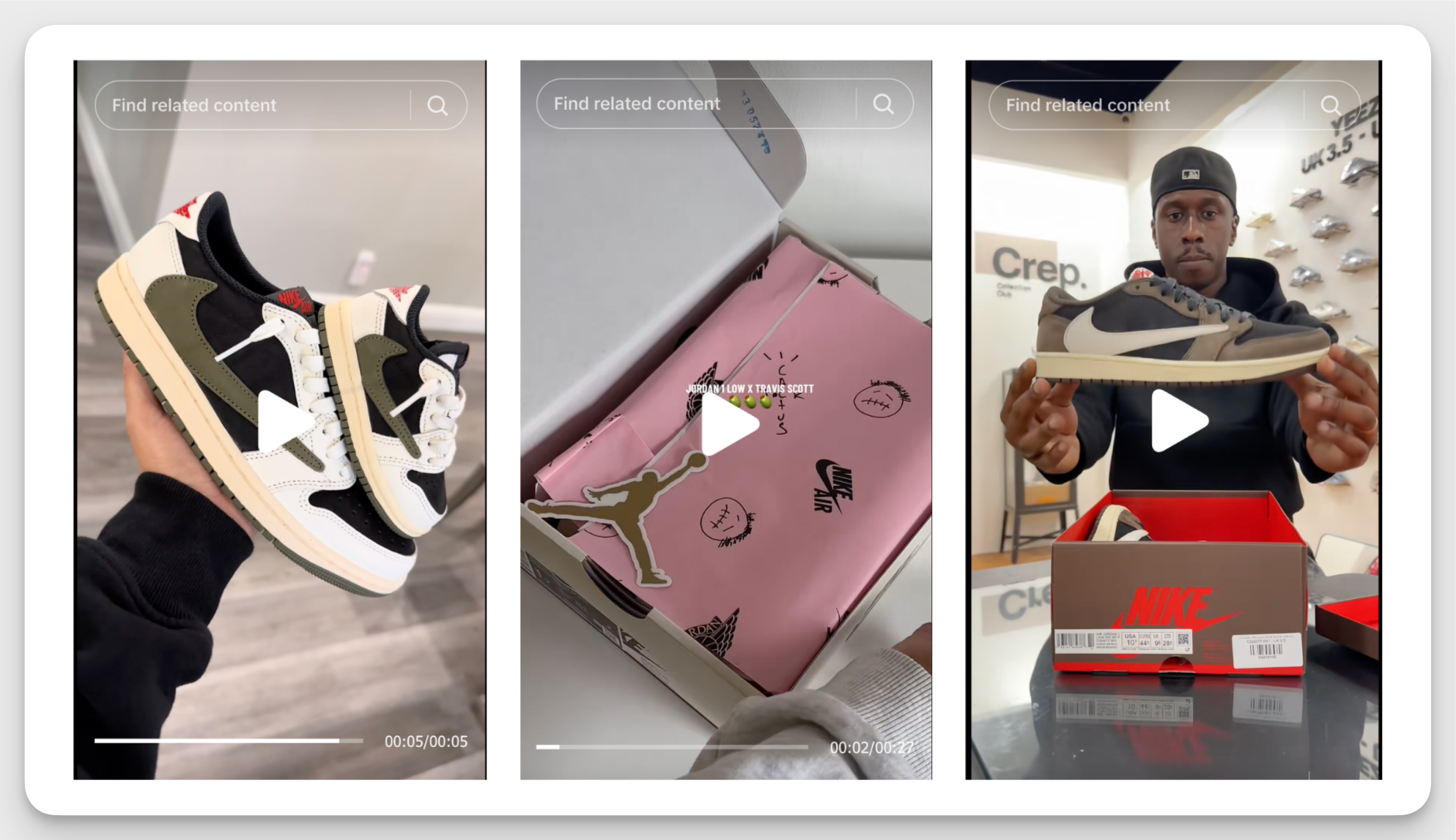
Limited drops fueled by these collaborations create hype that generates massive amounts of UGC. Customers share unboxing videos, styling content, and purchase excitement across their own social channels.
The same principle applies to brand partnerships. When two brands collaborate on a product, campaign, or content series, cross-pollination occurs: both audiences get exposed to the partnership.
7. Leverage competitive intelligence to gather trend insights
Competitive monitoring shows you what's working in your industry right now and what your competitors are doing successfully — or less so. Here’s how to be a smart analyst.
Identify competitor growth patterns
Track when and how your competitors are growing. Use a social media analytics platform, such as Socialinsider, to look at posting frequency, engagement trends, and follower acquisition. Patterns across multiple brands reveal social media trends you might be missing.
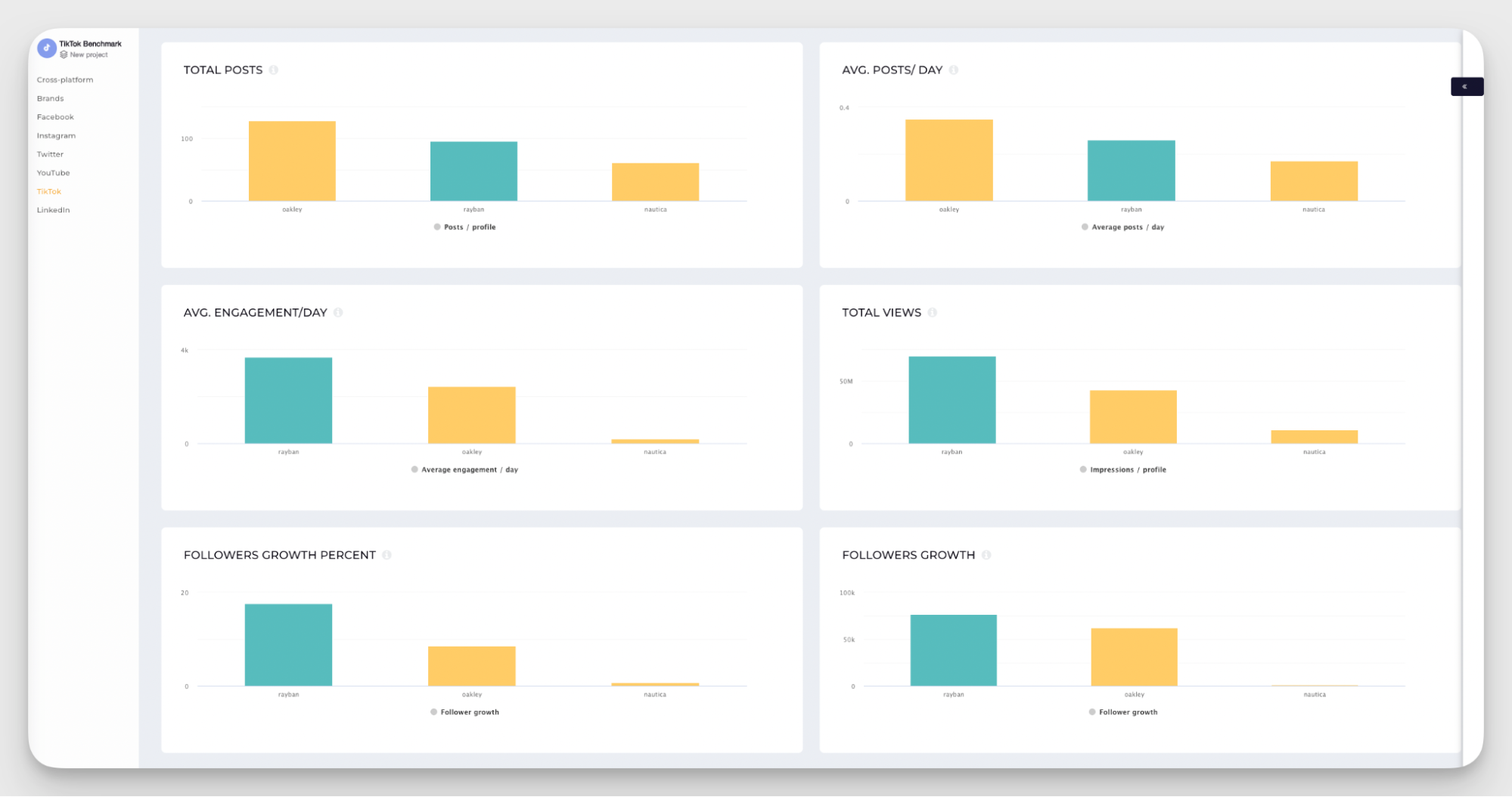
Certain competitors might post more frequently on specific platforms, or their engagement spikes might align with particular content types. These patterns reflect successful social media tactics you can adapt for your own strategy.
Analyze what content drives their engagement
Broad patterns tell you when growth happens, but detailed content analysis shows you why.
When you examine which topics or themes generate the most engagement for competitors, you uncover opportunities for your content calendar.
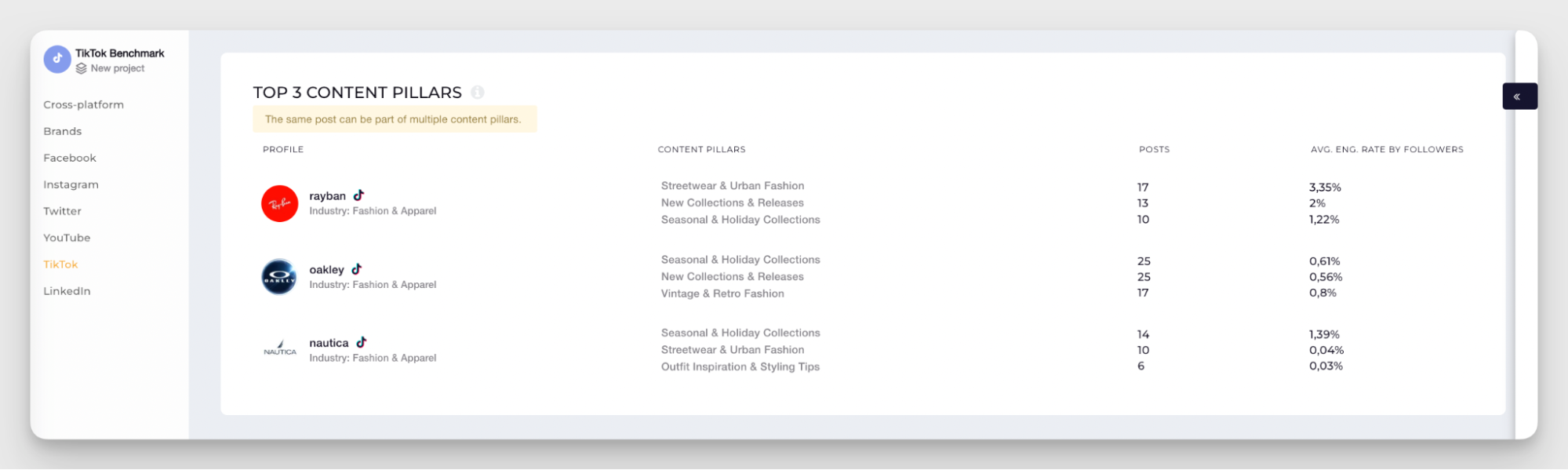
As in the example above, examining content performance across brands reveals patterns. You might see that certain themes, such as new collections and releases, consistently perform well across multiple competitors, while you’re missing out on that pillar.
This level of content competitor analysis helps you make informed decisions about your content strategy. Instead of guessing what might work, you're building on proven concepts while adding your unique perspective.
Find untapped opportunities in your niche
The most valuable competitive insights often come from identifying what your competitors aren't doing. When you spot content themes, platforms, or formats that competitors are neglecting, you've found potential opportunities to differentiate yourself.
Maybe everyone in your industry focuses heavily on Instagram while barely maintaining a presence on TikTok. Or perhaps your competitors are leaning heavily on images, but not using video effectively yet. These gaps are chances to establish yourself as the go-to brand in an underserved area.
8. A/B testing content approaches
Even with all the competitive intelligence and best practices in the world, what works for other brands might not work for another. That's why A/B testing on social media is essential for sustainable growth.
Test one variable at a time so you know what's driving results:
- Caption lengths
- Posting times
- Content formats
- Hashtag strategies
- Visual styles
I personally think that the key is consistency. If you're testing posting times, keep everything else the same. This way, you know the timing is what made the difference, not some other variable you accidentally changed.
Platform-specific effective growth strategies and features that you should consider
While universal principles guide social media growth, each platform has unique features and audience behaviors that require tailored approaches. Let’s look at some growth strategies that work well for specific platforms.
Instagram growth strategies
Instagram offers several built-in features designed to expand your reach organically:
- Collaboration posts. Use the Collab feature to co-author content that appears on both profiles simultaneously, combining engagement and doubling your audience exposure.
- Strategic tagging. Tag relevant accounts, products, and locations to increase discoverability and encourage shares from tagged profiles.
- Story features. Use mentions, location stickers, and product tags in Stories to create multiple engagement touchpoints.
- Reels collaboration. Partner with complementary brands or creators on Reels to tap into trending formats while reaching new audiences.
The Collab feature is particularly powerful because the content appears on both profiles and feeds, with combined engagement counts. As a result, collaboration posts perform better organically.
Look for accounts with complementary (not competing) offerings, whose audience demographics align with yours but aren't identical. Work with customers who have engaged followings, micro-influencers in your niche, or even employees with strong personal brands.
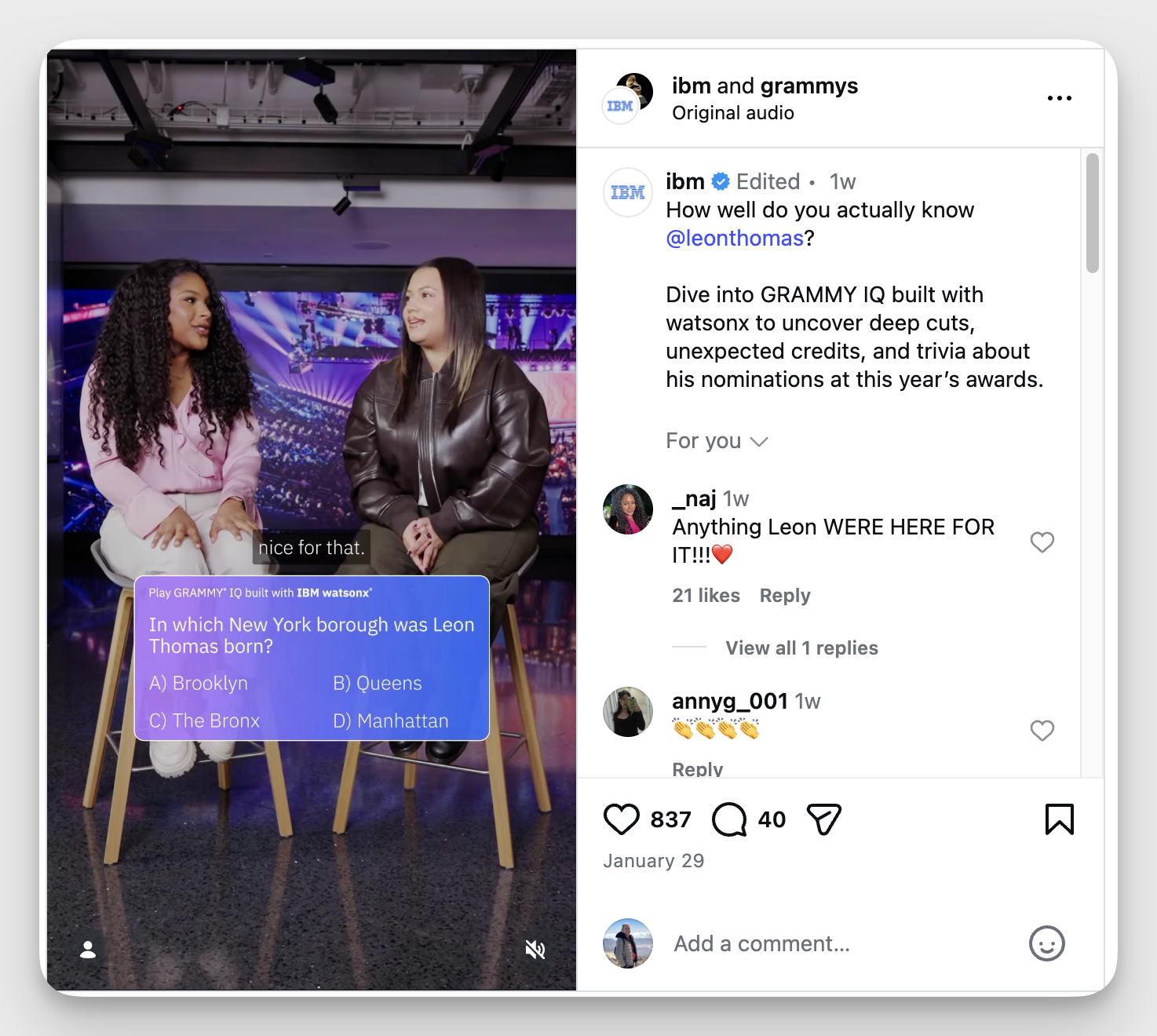
Take a cue from IBM’s collab with the Grammys — not the most expected partnership, but it works well on capitalizing on a big event while highlighting technology.
Lastly, Jenn added:
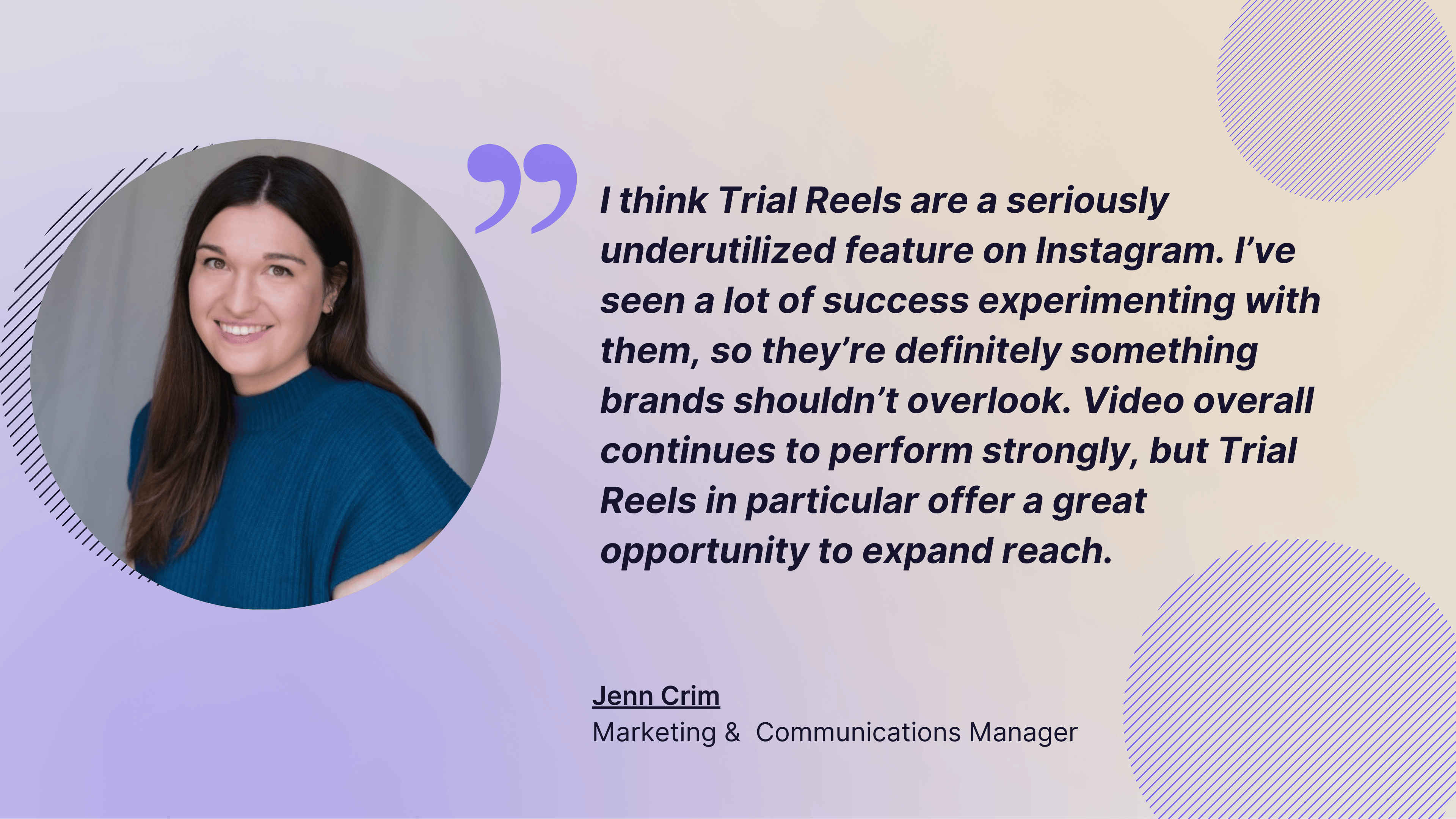
I think Trial Reels are a seriously underutilized feature on Instagram. I’ve seen a lot of success experimenting with them, so they’re definitely something brands shouldn’t overlook. Video overall continues to perform strongly, but Trial Reels in particular offer a great opportunity to test and expand reach.
TikTok strategic expansion
TikTok's algorithm prioritizes individual video performance over follower count, creating unique opportunities:
- Series content. Create multi-part content that gives viewers a reason to follow and return for the next installment.
- Strong hooks. Master the first three seconds for high engagement rates.
- Trend participation. Jump on trending sounds and formats while they're gaining momentum.
- Duets and stitches. Use these features to engage with other creators' content and tap into their audiences.
- Strategic hashtag mixing. Combine trending hashtags with niche-specific ones to balance reach and relevance.
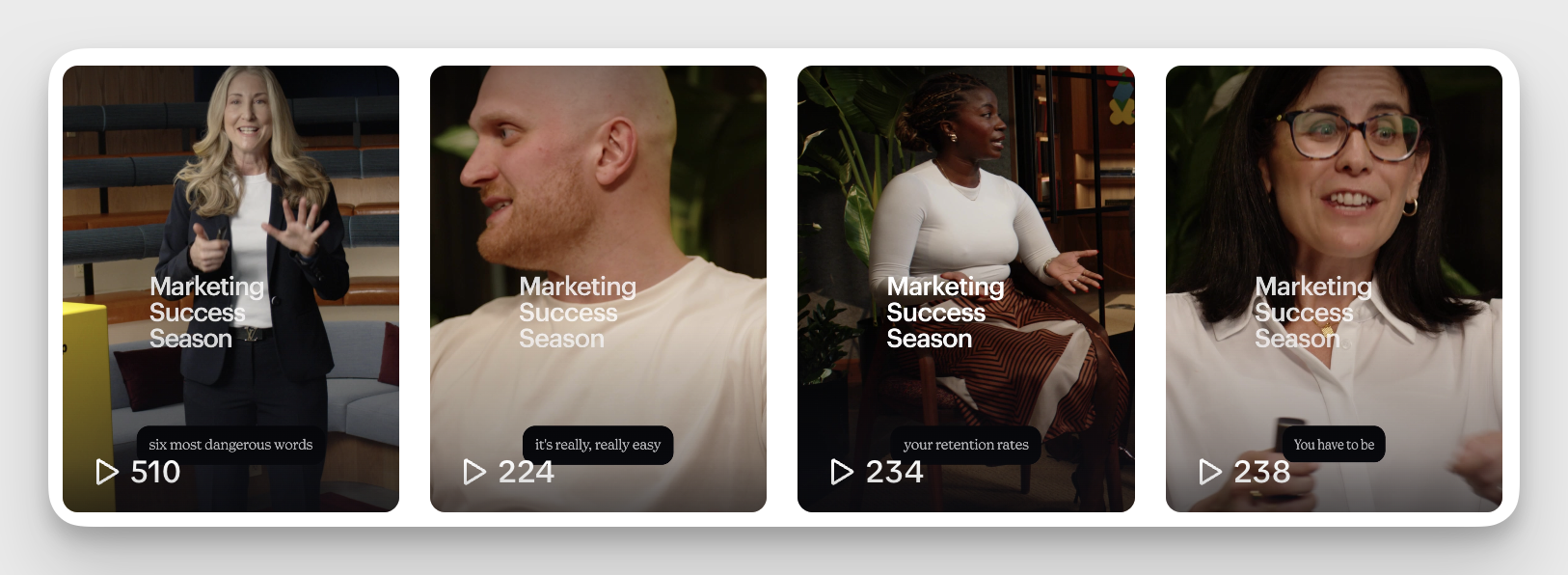
Series content has become one of the most effective strategies for building sustainable growth on TikTok. When you create content that's explicitly part one of a series — "Day 1 of teaching you social media analytics" or "Testing viral marketing trends: Part 1" — you create anticipation that converts viewers into followers.
For example, Mailchimp regularly leverages series on TikTok to build loyalty among its audience.
Watch your average watch time in analytics. If it's under 50%, your hooks or content structure needs work. If most traffic comes from the "For You" page rather than followers, your content is successfully reaching new audiences — exactly what you want.
LinkedIn audience development
LinkedIn's algorithm favors personal profiles over company pages, requiring different growth tactics:
- Employee advocacy programs. Empower team members to share company content and create their own industry insights.
- Thought leadership content. Post in-depth articles and insights that position your brand as an industry authority.
- Native documents. Share PDFs and presentations directly on LinkedIn for higher engagement.
- Poll engagement. Use polls to generate quick engagement and gather audience insights.
- Strategic commenting. Engage meaningfully on relevant posts to increase visibility before posting your own content.
Employee advocacy programs is the standout strategy here, as personal profiles consistently get more reach and engagement than company pages on LinkedIn.
Your company page might have a few thousand followers, but if you have 50 employees with 500 connections each, that's 25,000 potential impressions. Employee networks extend your brand's reach into audiences you couldn't otherwise access.
Effective advocacy isn't about forcing employees to share everything (that can backfire). It's about empowering them to be thought leaders who naturally incorporate company updates.
Leadership involvement is critical here. When executives actively participate, it signals that this matters and provides high-value content for employees to engage with.
Final thoughts
Social media growth is not the mystery it's often said to be. When you understand performance data and the competitive landscape, you can track what works, test new approaches, and refine your tactics based on real metrics.
Want to accelerate your growth in 2026? Try Socialinsider free for 14 days and access the analytics tools you need to make data-driven decisions.
Sabina Varga
Content marketing expert with 15 years of experience in digital marketing. I dream of beach life but love the city as a multitasking mom juggling playgrounds, books, brunches, and travels.

Know what your competitors do — before your manager asks
Get instant social benchmarks & reports without manual work.
Improve your social media strategy with Socialinsider!
Use in-depth data to measure your social accounts’ performance, analyze competitors, and gain insights to improve your strategy.