Semrush Social vs Socialinsider: Why Most Teams Still Need a Benchmarking Partner
Compare Semrush Social and Socialinsider and discover which tool is better for different needs. Learn why benchmarking remains crucial for teams.


Most marketers know Semrush as an SEO tool first. But the line between channels keeps getting blurrier, and the idea of having a well-rounded marketing ecosystem under one brand is tempting.
So they added another product to the mix: Semrush Social for posting content and tracking social media analytics.
For this article, I’ve tried Semrush Social to see what it can do, how deep the analytics go, and why you might still need a helping hand from Socialinsider if you’re relying on competitor analysis in your social strategy.
Let’s dig in!
Key takeaways
-
What Semrush Social offers: Semrush Social covers everyday publishing, basic analytics, and light competitor tracking, making it a solid add-on for teams already working inside the Semrush ecosystem.
-
Where Semrush Social might fall short for social teams? While easy to use, Semrush Social lacks the analytical depth and competitive context social teams need to understand why performance changes, not just that it does.
-
Why competitive intelligence matters for social teams? Without competitive context, social media metrics are just numbers, making it impossible to judge performance or set meaningful goals.
-
How is competitive benchmarking helpful to your strategy? Competitive benchmarking reveals patterns, formats, and tactics that work in your industry, helping you make smarter strategic decisions with less trial and error.
-
How Socialinsider can fill in the gaps for Semrush Social? Socialinsider adds the depth Semrush Social intentionally keeps light, with advanced competitor benchmarking, post-level insights, content pillars, and cross-channel analysis.
-
Why teams use both tools together? Together, Semrush and Socialinsider create a full-funnel view of digital performance, combining strong SEO intelligence with deep, strategy-driven social media analytics.
What does Semrush Social offer?
When I first tried Semrush Social, sometime around 2023, it felt very lightweight. At the time, it worked mostly as a social media poster with some basic analytics for core platforms. It felt like a “let’s give social media managers something usable” move, rather than a tool built specifically for social media needs.
When I checked Semrush Social again for this article, it was clear they’ve put real work into it.
Today, here’s what you can do with Semrush Social:
- Post content to six social media channels: Facebook, Instagram, LinkedIn, TikTok, Google Business Profile, and Pinterest
- Track your own engagement metrics like follower growth, reach, impressions, and engagement rate for Facebook, Instagram, LinkedIn, and TikTok.
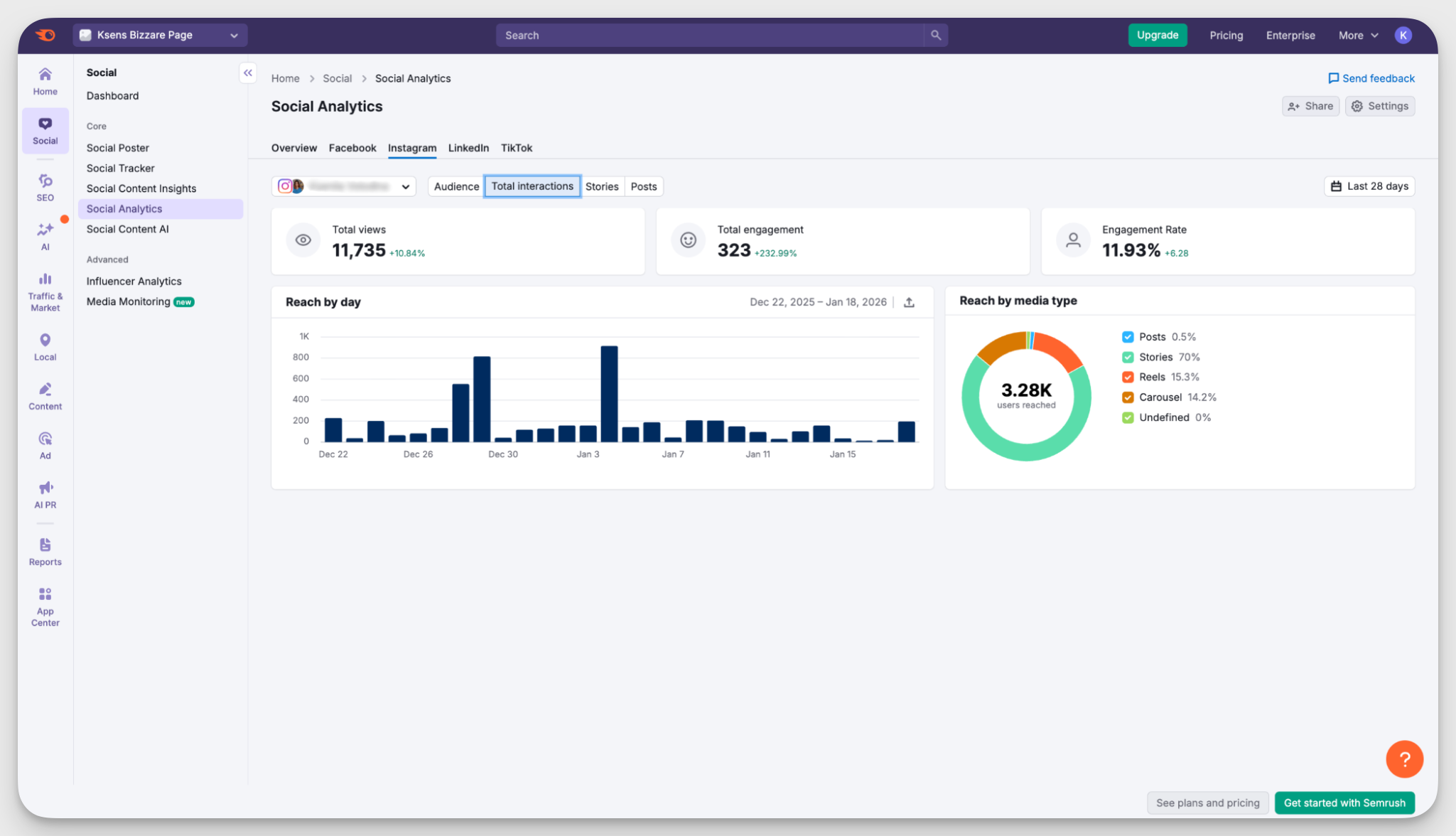
- Separate paid vs. organic performance, which is a nice addition if you run ads alongside organic content
- Track competitors on Facebook, Instagram, YouTube, and Pinterest through Social Tracker and monitor their activity: posting frequency, follower growth, engagement rates, and hashtag usage.
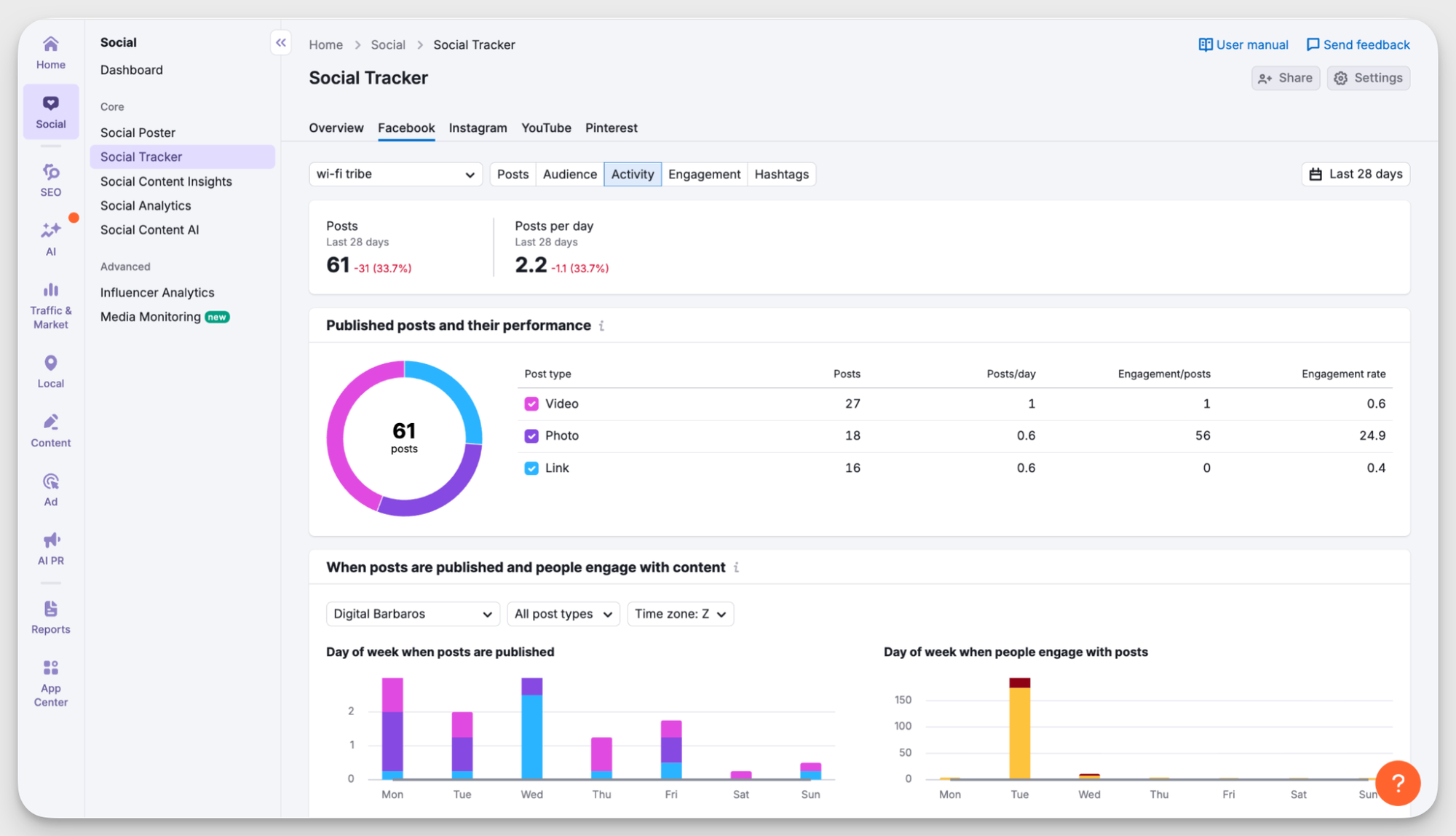
- Build custom inspiration feeds by adding blogs, YouTube channels, or other sources you want to pull ideas from
- Get content ideas from Social Content AI by feeding it information about your business
Semrush also has a social content insights feature. It’s still in beta, but it seems to be aimed at analyzing how your content categories perform based on the tags you give your posts.
All in all, this is a solid setup for teams that already use Semrush daily and want social media included in the same workspace. For everyday publishing, light reporting, and basic competitor tracking, Semrush Social does the job.
Where Semrush Social might fall short for the social teams?
TL;DR: If your team relies on detailed competitor data to shape your social media strategy, Semrush Social won’t fully bridge that gap for you.
Semrush Social is a handy tool if you’re most focused on posting and everyday analytics. Where things start to feel limited is the analytics depth.
The dashboards are clean and easy to read, but the insights themselves are not there. You get the numbers, but not much context around them.
For example, Semrush Social shows your engagement rate for Instagram. But you can’t see which format gives you the most engagement (video, carousels, or single image posts), how your engagement rate compares to the industry benchmark, or how it changes over time.
The same applies to competitor benchmarking. Social Tracker lets you monitor competitors and compare high-level metrics, but you don’t get insights into what’s driving their performance.
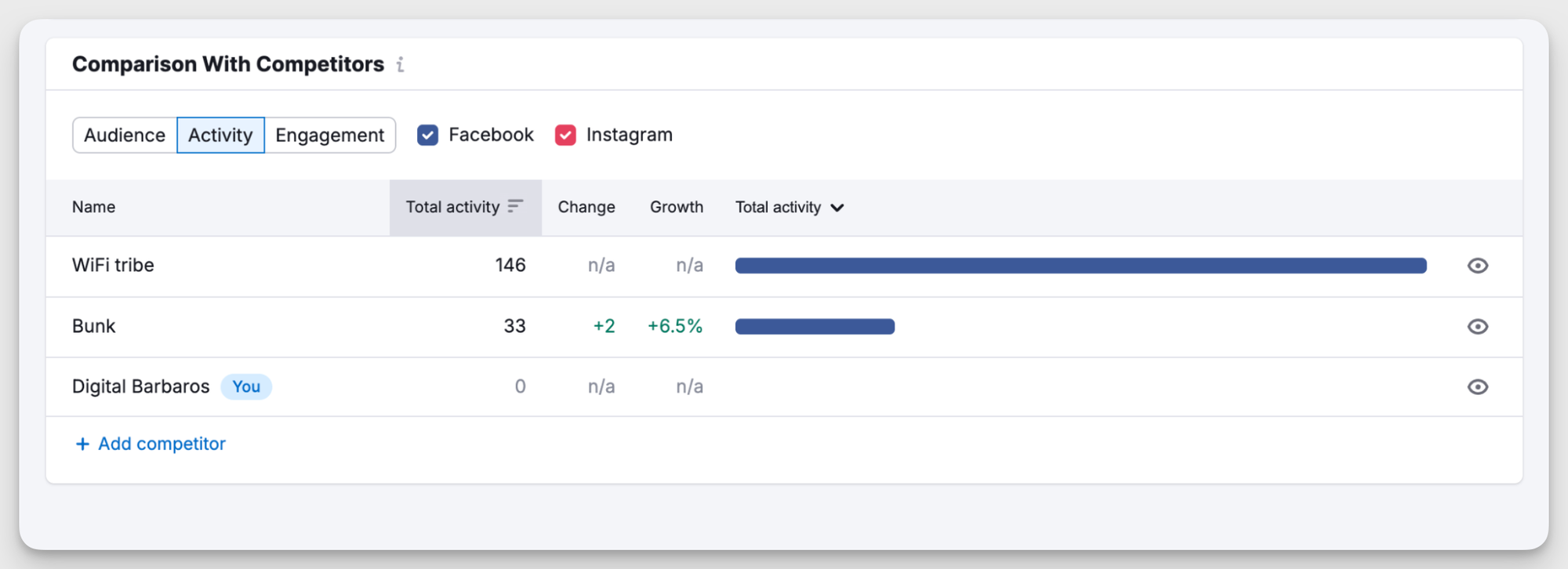
There is no detailed analysis of competitors’ content strategy patterns, formats, or topics they rely on, and no way to benchmark against them.
Eventually, when it comes to competitive analysis, Semrush Social gives you a taste of what’s possible, but it doesn’t fully close the loop.
Why does competitive intelligence matter for social teams?
The short answer is simple: metrics mean very little without context.
Say your TikTok account gains 200 followers in a month. Is that good? Bad? Exactly where it should be? On its own, that number doesn’t tell you much.
To understand what that growth means, you need more context, like:
- How many followers did you have before
- How quickly do people usually follow accounts in your industry
- How many followers do similar accounts gain each month
- How much content do those accounts publish to get those results
Without a background knowledge of where you stand, follower growth is just a number.
This is where competitive intelligence plays a big role. It gives you the reference points you need to evaluate your results properly. If most accounts in your niche gain around 200 followers per month, you’re right on track. If they gain 2000, then something is clearly different.
And that difference matters, because then you also want to gain 2000 followers instead of 200.
Competitive analysis helps you spot what others are doing that you’re not. For social teams that feel stuck or unsure about their results, competitive intelligence is often the fastest way to get unstuck.
How is competitive benchmarking helpful to your strategy?
I prefer to think of competitor analysis like intelligence work. I need to understand the terrain before I decide how to move.
Competitive benchmarking gives you the situational awareness to build on top of. It’s more about looking for patterns and clues rather than ready-made solutions.
So here’s what clues competitive research might give you:
- Content strategy: You get a clearer picture of what others post, how often they post, and what works for them. Some of these insights help you sharpen your own strategy. Others save you time by showing you what clearly didn’t land, so you don’t have to test it yourself.
- Most engaging content formats: Sometimes, what works goes against the usual advice. Video on LinkedIn might perform well for e-learning brands and fall flat for financial services. Competitive benchmarking helps you see the best practices for your space instead of generalized trends.
- Metrics and KPIs: Setting goals without context is way too frustrating. Aim too high, and it feels impossible to get there. Aim too low, and progress barely feels like progress. Knowing what performance looks like across your industry helps you set targets that are ambitious but realistic.
- Platform-specific tactics: Maybe competitors are posting less to Feed and more to Stories on Instagram. Maybe they’ve stopped using hashtags on X altogether. Maybe a weekly live Q&A fuels their YouTube short-form content for weeks. These social media tactics and patterns are easy to miss unless you’re actively looking.
How Socialinsider can fill in the gaps for Semrush Social?
As mentioned earlier, Semrush Social has come a long way from being “something for social media managers” to covering many day-to-day publishing and analytics needs. For a lot of teams, that’s enough.
But some teams need more.
Much like peanut butter complements jelly, Socialinsider works well alongside Semrush Social when you want to take social media analytics and competitor analysis a step further. Not to replace what Semrush does well, but to add depth where Semrush intentionally keeps things lighter.
Let’s look at the areas where Socialinsider acts as a real power-up:
Key performance metrics for your competitors
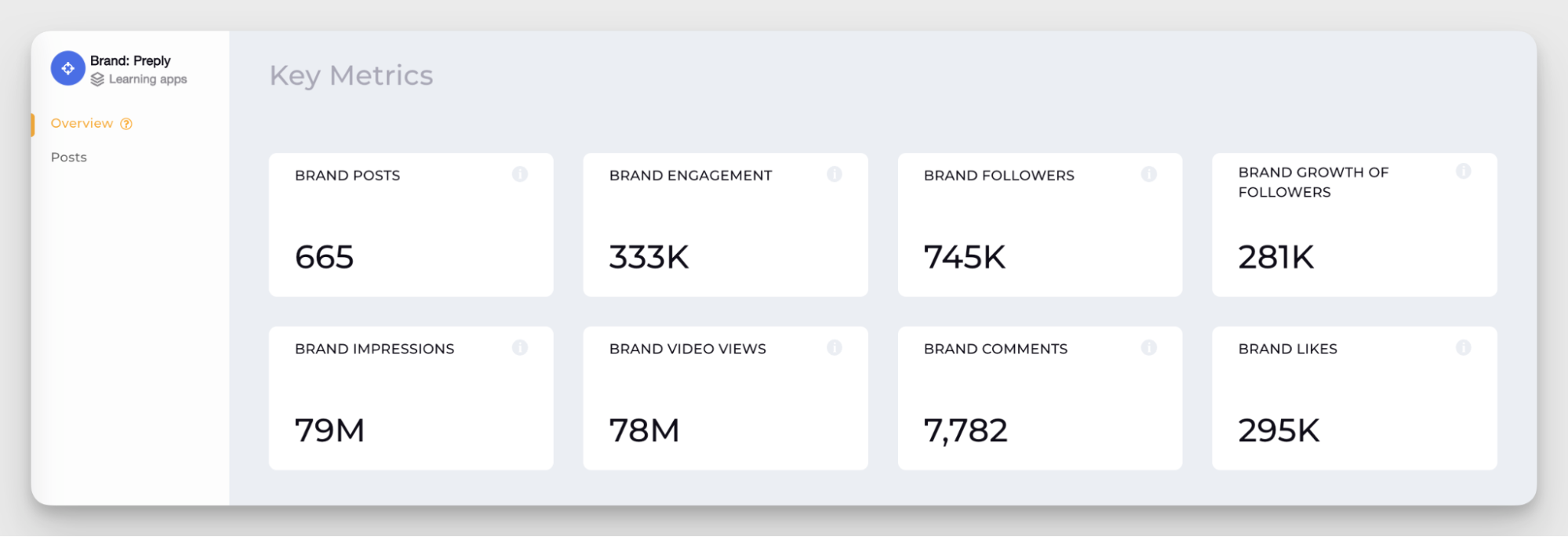
Socialinsider covers all the classic performance metrics you’d expect: follower count, engagement, impressions, reach, number of posts, comments, and more, both at the brand level and channel level.
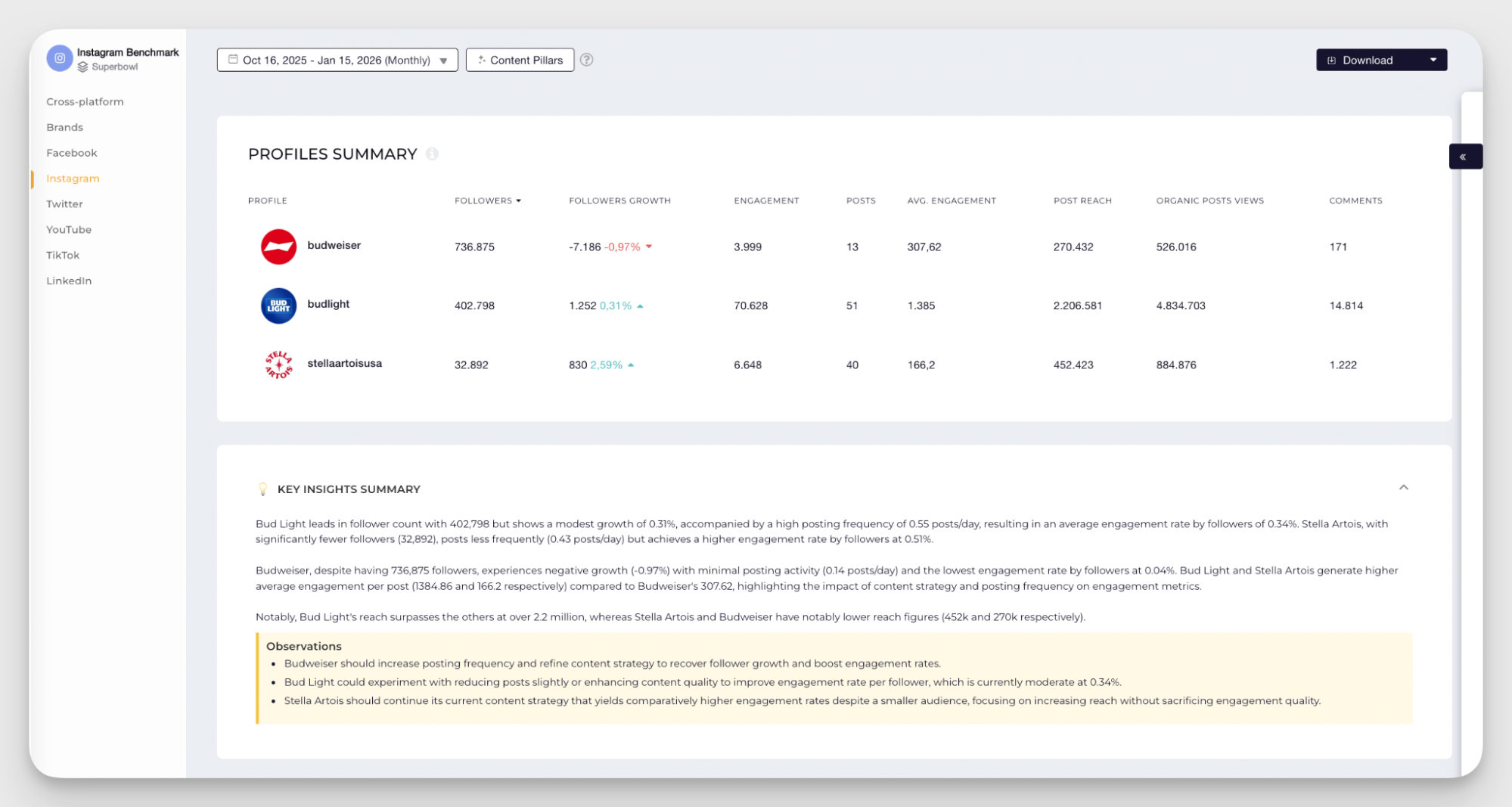
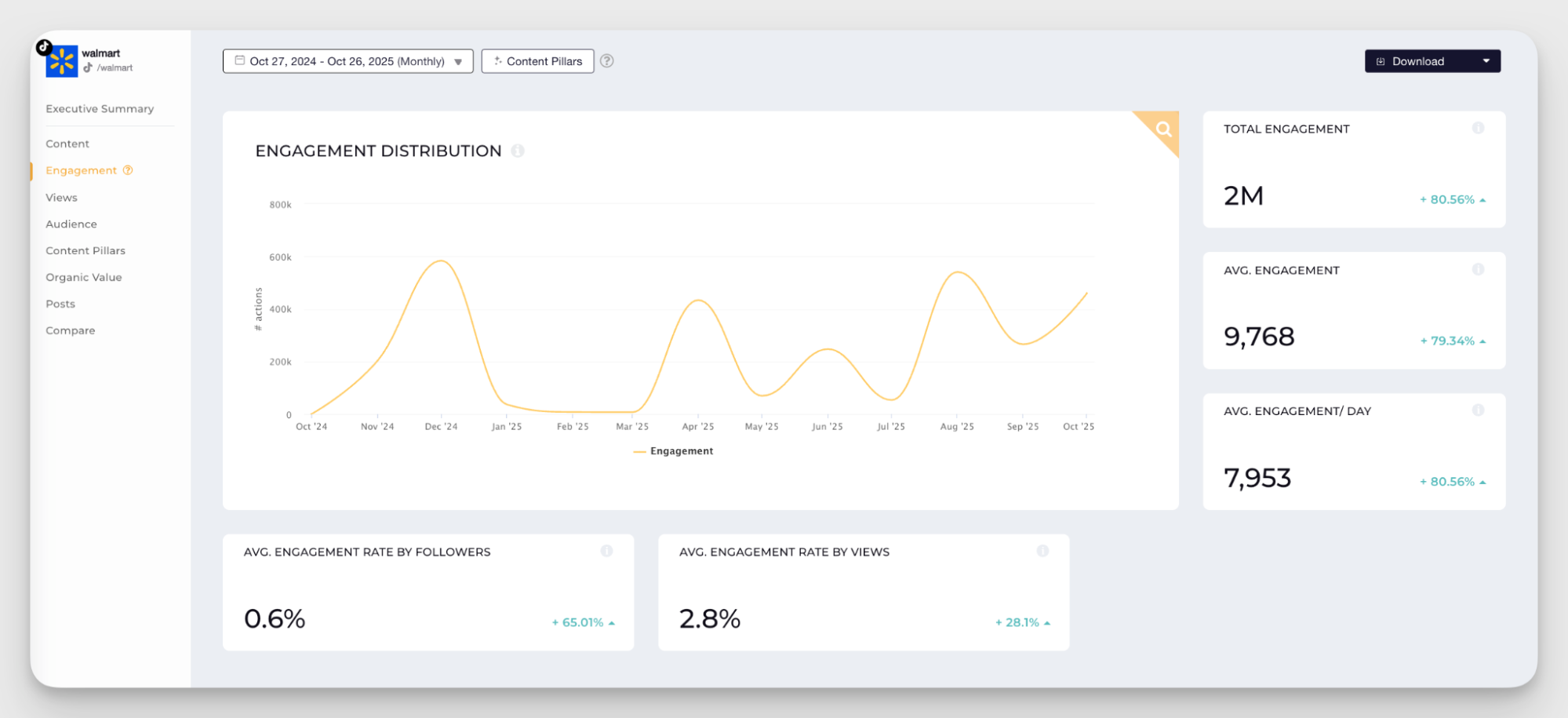
Besides standard metrics, Socialinsider includes in-depth competitor channel and content-specific data. For example, there’s a whole set of metrics regarding the engagement rate: different formulas, engagement distribution, engagement per day, and more.
Another thing that stands out is how unified the reporting feels across platforms, which makes it incredibly easy to look at competitors' performance across channels.
Insights into competitors' post-format performance
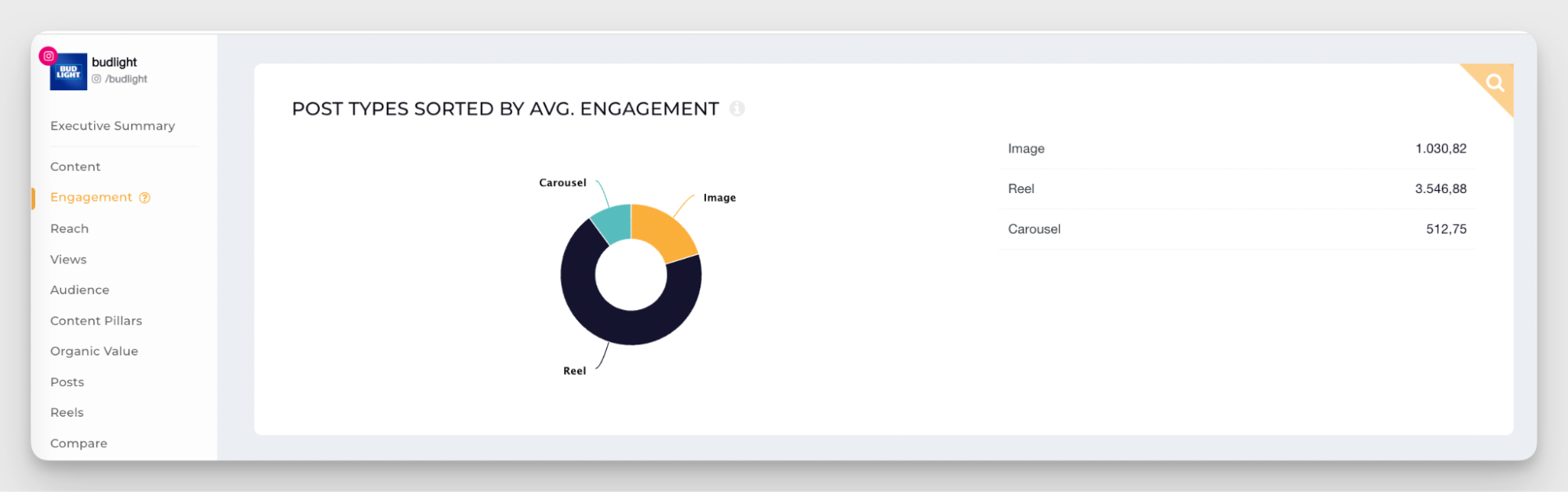
One of the things I truly love about Socialinsider is how it lifts the curtain on your competitors’ content strategies—right down to what post formats actually work for them.
With just a few clicks, I can break down exactly how carousels, videos, stories, or classic image posts are performing for any brand I want to benchmark against.
This makes it super easy to spot trends: maybe a competitor gets lots more engagement on short videos, while their photos hardly get noticed. With those kinds of insights, it’s no longer a guessing game—I can confidently shape my own content plan, knowing exactly what resonates in my industry and what to experiment with next.
Competitor's top posts
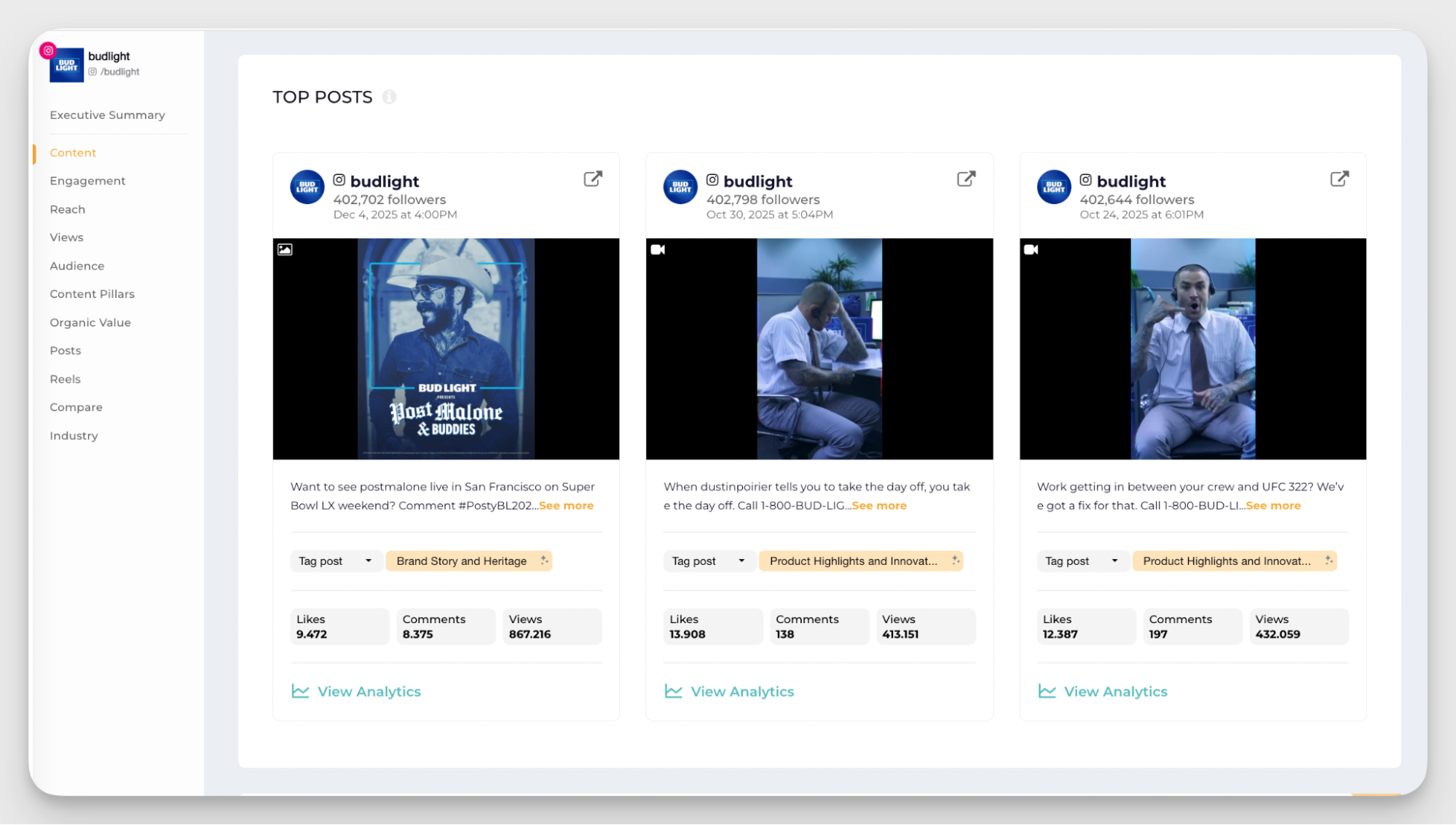
In Semrush Social, you can sort posts by metrics like engagement rate or reach. That’s useful, but it requires manual digging. You don’t really get a clear “here’s what performed best in this time period” overview.
Top-post snapshots are also inconsistent across platforms. For example, they’re available for Facebook, but not for Instagram.
Socialinsider takes a different approach.
Instead of sorting through tables, Socialinsider highlights your competitor's overall best-performing posts in one widget. This helps you get a quick snapshot of what worked best in the selected period, so you can repeat your success.
Competitive cross-channel analysis
Out of all the analytics pieces in Semrush, this is the one that feels the least complete for me.
If you open the social analytics overview in Semrush Social, what you mostly see is follower growth, reach, and engagement rate, broken down by channel. There’s no accumulated follower count at the brand level and no average engagement across platforms.
For day-to-day posting, this might not be a deal-breaker.
But once you’re working on competitor analysis or putting together a high-level report for leadership, manually calculating averages for overall performance seems… excessive.
Socialinsider supports the same core metrics, but it also gives you several ways to look at them. You can zoom out to a brand-level, cross-channel view to see the total numbers.
Or you can descend one level lower to the channel-by-channel overview:
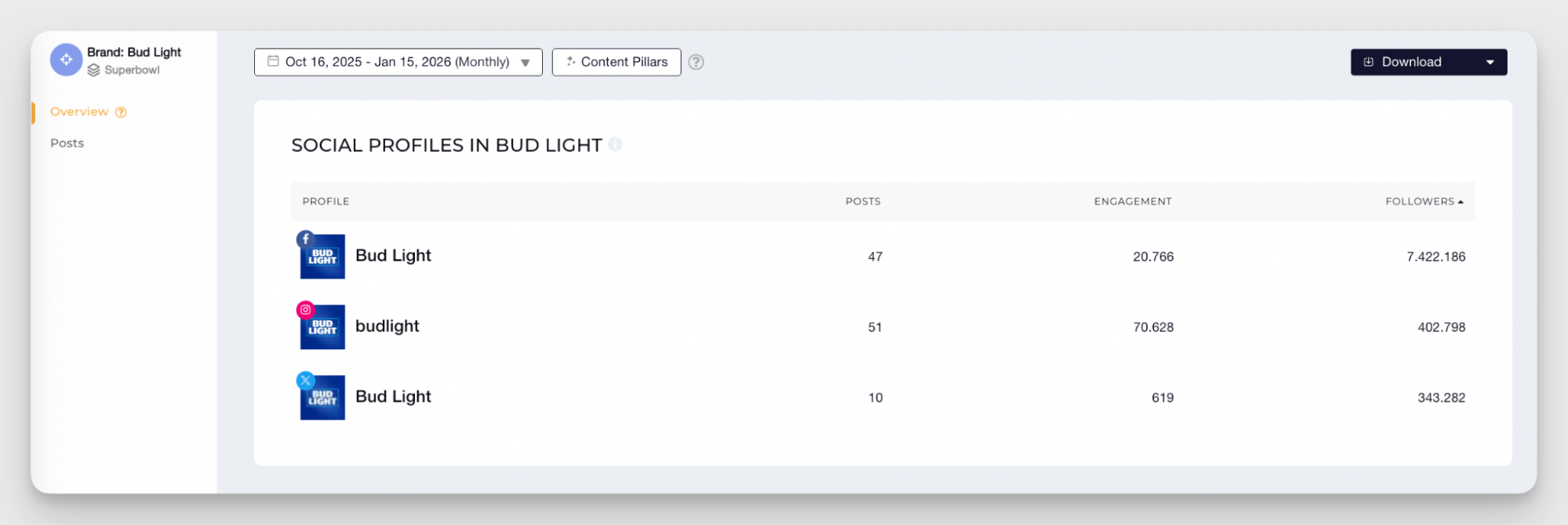
Or you can dive all the way down to post-level performance, without switching tools or spreadsheets in between.
Another important piece here is platform coverage.
When we asked one of our clients about why they switched to Socialinsider, they said:
We were using Semrush for social monitoring as well, but there were some features that didn’t work very well. TikTok was not supported. YouTube was not supported. And then we needed to move on to something else.
Since then, Semrush has added analytics for TikTok. YouTube, however, is still missing from the picture.
Socialinsider covers all major social media platforms, including TikTok and YouTube. That means your cross-channel view includes all the channels your audience uses, and you can get the full picture of your competitor's performance.
Competitor's Organic Value
One feature that doesn’t exist in Semrush Social at all is Organic Value.
Measuring the impact of organic social media has always been tough. And yet, when conversations move to leadership, ROI is usually the first thing C-levels ask about.
Socialinsider’s Organic Value metric helps bridge that gap.
It estimates the value of your organic social media performance by translating results into paid media equivalents. Simply speaking, it shows how much ad money it would take to get the same results you’re now getting organically.
Organic Value can be calculated for both your own social accounts and your competitors’ accounts, which makes it especially useful in competitive analysis and high-level reporting.
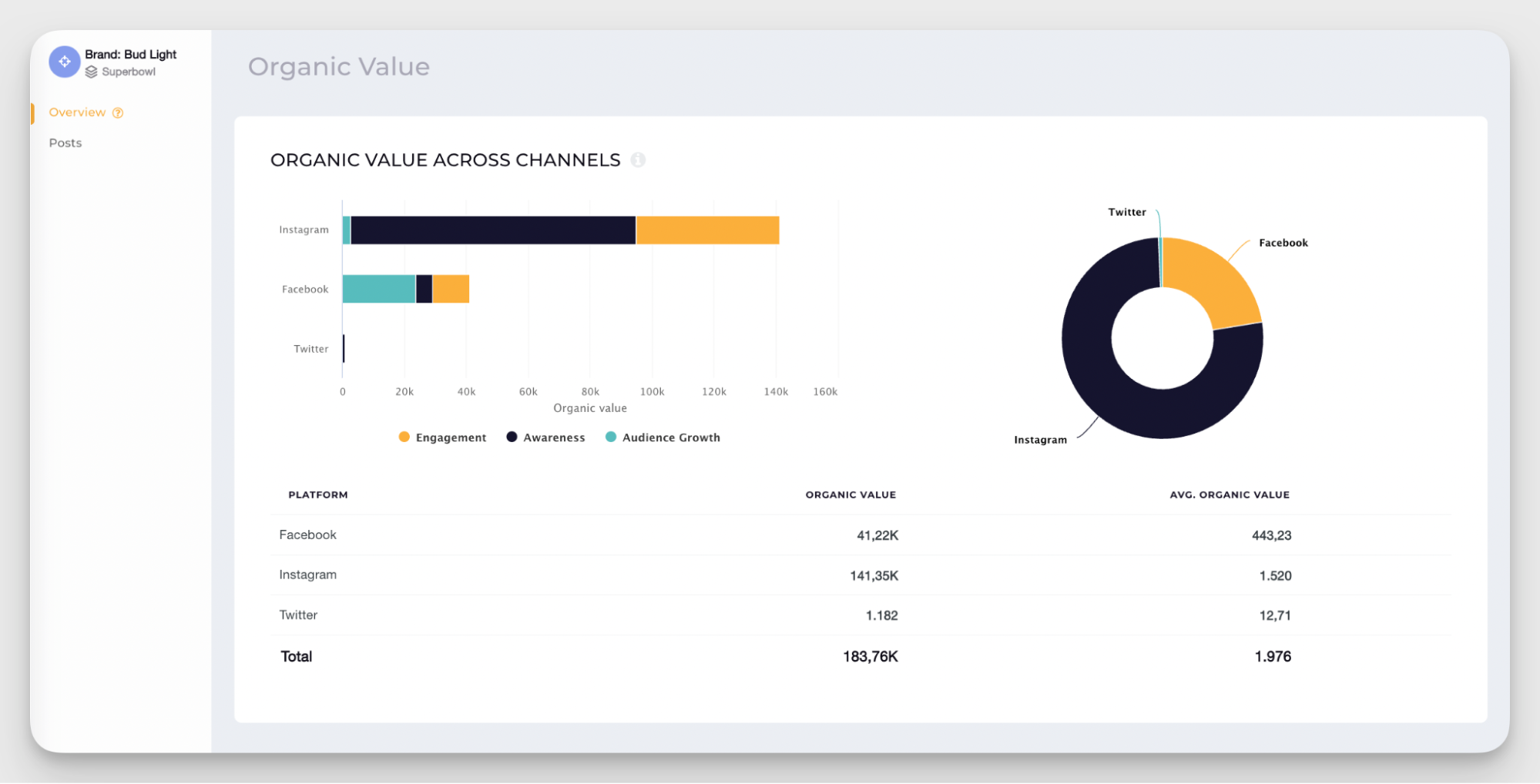
The calculation is based on default values of actions like engagement, followers, and views. Socialinsider researches and estimates these values industry by industry through advertising data and social media marketing benchmarks.
But if you want as precise data as possible, you can enter your own values. This way, your estimate will align with your internal benchmarks or paid media costs.
Organic Value adds a layer that Semrush simply doesn’t cover: a way to translate organic performance into C-level language without custom models or spreadsheets.
Competitor's content pillar analysis
Content pillars are the themes your content consistently revolves around. They help you understand what you talk about most and what overarching topics perform best.
And while Semrush lacks this capability when it comes to running a competitive analysis, Socialinsider, on the other hand, offers two ways to categorize content by content pillar:
- Industry content pillars: Automatically generated using AI based on your selected industry. With this, posts are grouped into themes, so you can immediately see which topics perform best, even if you never tagged your content.
- Brand content pillars: Custom categories you define yourself to match your content strategy, campaigns, or business goals, through Socialinsider's Query Builder.
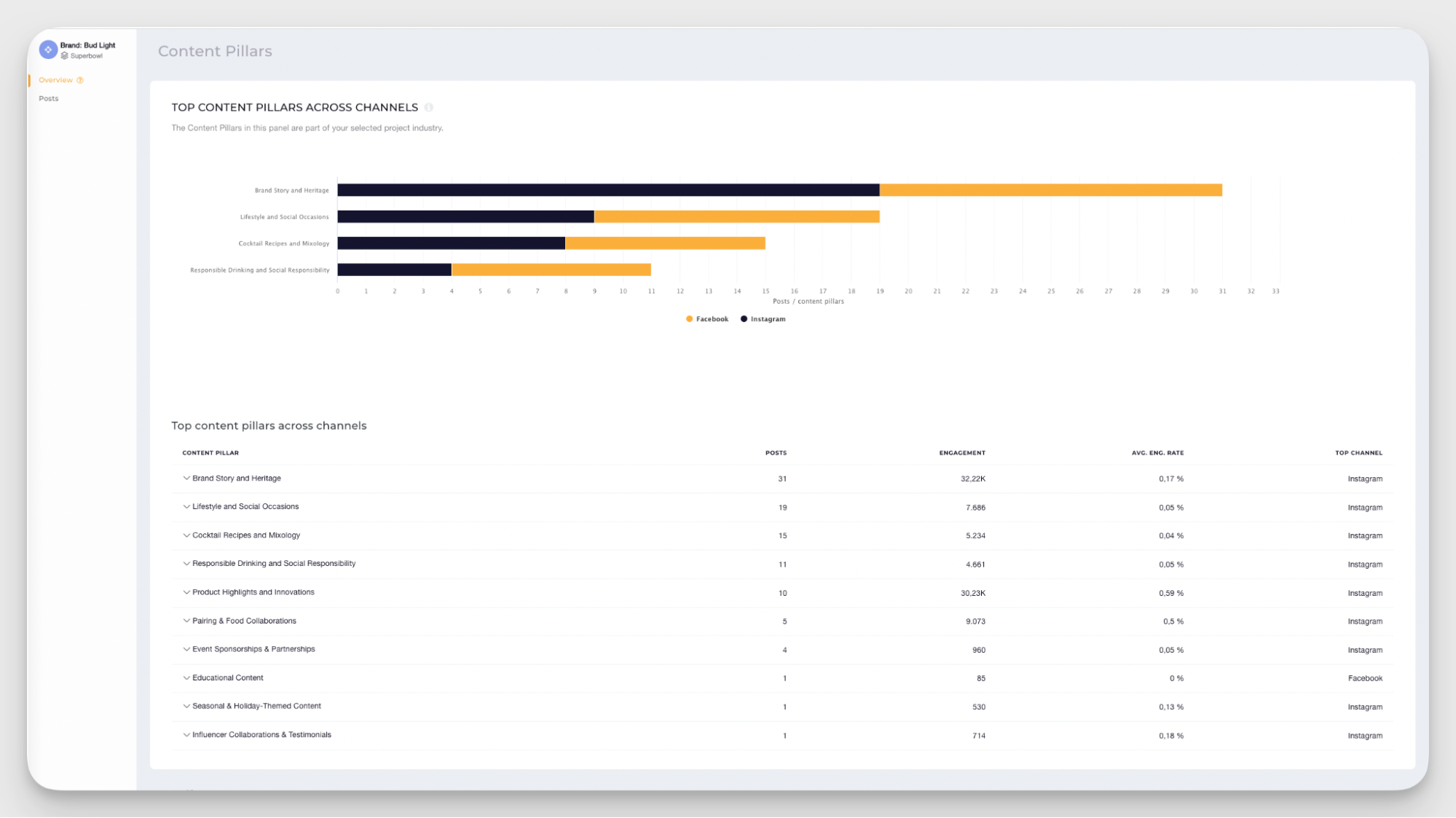
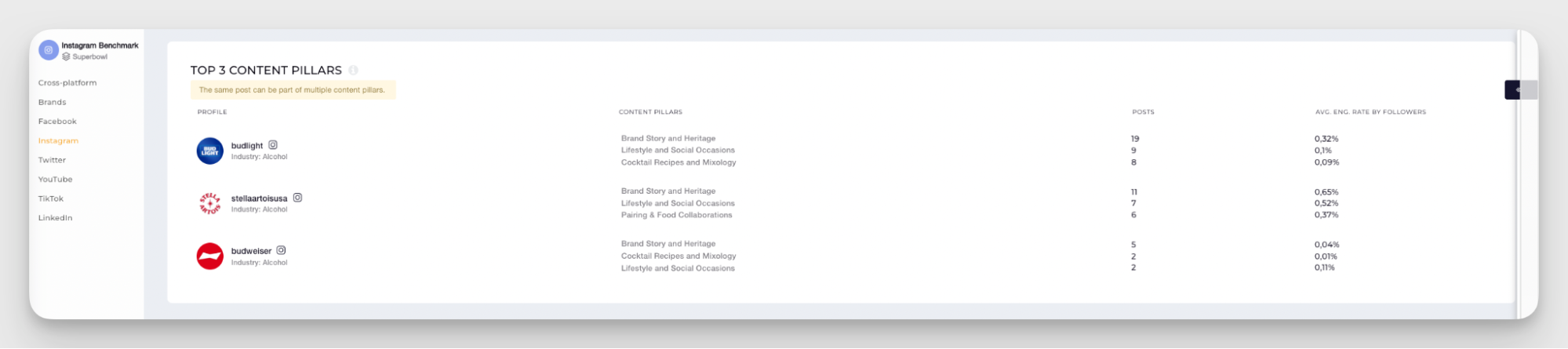
At a higher level, you can also compare the top three performing content pillars across competitors to spot patterns and gaps without manually reviewing posts.
Why do teams use both tools together?
In an ideal setup, marketing, sales, SEO, content, and social media don’t live in separate silos. They’re all part of the same system, supporting the same business goals.
This is where Semrush fits naturally. It’s a strong solution for SEO and content marketing competitive intelligence. It’s easy to use, clear, and reliable. For search-driven insights, it does exactly what teams expect it to do.
Social media, however, is somewhat different.
I’m not going to lie — I am a fan of Semrush as a brand and their SEO tool. But when I was choosing a social media tool for my clients, I didn’t go with their solution.
Semrush Social covers posting and basic analytics, but it stays quite lightweight when it comes to competitive insights and deeper performance analysis. For teams that rely on social data to guide strategy, that often leaves questions, especially in competitors’ research.
And when it comes to competitive research, Socialinsider delivers.
Competitive benchmarking, cross-channel analysis, content pillars, post format performance, more nuanced metrics… Socialinsider fills in the gaps by adding depth to social media analytics.
Used together, the two tools support a more complete view of the digital marketing landscape. Semrush anchors SEO and content intelligence, while Socialinsider brings clarity to social performance and competition.
Final thoughts
If you already use Semrush, using the same platform for social media analysis is incredibly tempting. But then you need to be sure the tool isn’t a compromise in data or level of detail. If your team pays a lot of attention to competitive analytics, Semrush Social alone won’t cut it.
That’s where Socialinsider steps in, giving you the context, benchmarks, and clarity when researching the market. If you’re curious how this looks in practice, try Socialinsider free for 14 days and explore the data yourself.
Kseniia Volodina
Content marketer with a background in journalism; digital nomad, and tech geek. In love with blogs, storytelling, strategies, and old-school Instagram. If it can be written, I probably wrote it.
Analyze your competitors in seconds
Track & analyze your competitors and get top social media metrics and more!
You might also like


Improve your social media strategy with Socialinsider!
Use in-depth data to measure your social accounts’ performance, analyze competitors, and gain insights to improve your strategy.