7 Steps to Creating an Effective Social Media Process: How Effective Teams Operate?
From setting your baseline to mapping competitors and aligning teams, here's how to build a social media process that holds up and gets results.

Most articles about social media marketing skip straight to tactics: which platforms to post on, which trends to try, which hooks convert. But tactics without a process behind them are why so many teams feel busy yet underwhelmed by the results they’re getting.
So before you get to the doing, let's talk about the thinking: the social media marketing steps, metrics, tools, and decisions that turn the social media process into a scalable, reliable system.
Key takeaways
-
What's the difference between a social media strategy, process, and workflow? Strategy defines your goals, process is the repeatable system that executes the strategy, and workflow is the operational layer.
-
What are the key steps in an effective social media marketing process? Establish baselines and goals, audit your platforms and audience, analyze content performance, align with internal teams, map competitors and creators, review governance and risk, then synthesize findings into a clear plan.
-
Which metrics should you track when setting your social media baseline? Track followers and growth rate, average engagement, website traffic from social, and leads or pipeline influenced.
Social media strategy vs. process vs. workflow: what's the difference?
A social media strategy, process, and workflow are three connected but distinct layers of your social media marketing. Strategy is the "why", process is the "how", and workflow is the "who, what, and when". Most teams mix these up, which is why their social media efforts feel chaotic even when everyone is working hard.
Here's the breakdown:
Social media strategy is the high-level thinking that defines where you're going and why. It covers your social media goals (e.g., brand awareness, lead generation, community building), target audience, distribution platforms, brand voice, and content pillars. Strategy answers questions like:
- What do we want to achieve in the next 12 months?
- How can we best support marketing goals through social media?
- What themes sit at the intersection of our brand positioning and our audience’s needs?
Without a strategy, every other layer becomes guesswork.
Social media process is the repeatable, step-by-step system you follow to execute that strategy. A solid social media process covers research, planning, content creation, publishing, engagement, and measurement. Ask questions like:
- What are the stages a piece of content moves through, from idea to published post?
- How often do we audit performance and feed those learnings back into planning?
- What inputs (research, data, briefs) need to be in place before we start creating?
Social media workflow is the operational layer that manages tasks, people, and timing. A workflow is what turns a process from a simple document into something that moves forward week after week. It's the answer to:
- Who owns each task?
- What's the approval chain?
- Which tools are we using?
This is how I visualize it: strategy is the destination, process is the route, and workflow is the vehicle. For things to run smoothly, you need all three, and they need to be coordinated.
Why is having a structured social media marketing process important?
A structured social media marketing process matters because it turns social media from a series of reactive, one-off posts into a predictable system that delivers results. Without a process, every social media effort feels like starting from scratch instead of building on the last one. This leads to frustration and burnout, not to mention wasted resources.
Here’s my experience: most teams don't realize they're missing a process until something breaks. This may look like gaps in the content calendar, a campaign launching without data to back up the creative process, and approvals getting stuck for weeks.
These are the main benefits of having a documented social media process:
- Consistency. A process ensures the same level of execution happens regardless of who's on the team that day. A new hire joins? They shouldn't guess at your brand’s tone or your approval steps. A documented process is the institutional knowledge that doesn't go on vacation. It's also what allows you to scale with predictability across accounts.
- Efficiency. Teams with a clear process waste far less time context-switching, chasing approvals, or reinventing the wheel. Without a process, every new campaign triggers the same questions: Who's writing this? Where are the assets? Who signs off? Multiply those small decisions across a year, and you've lost weeks. A process front-loads those decisions, so your team can spend their energy on sharper creative, better strategy, and deeper social media analysis.
- Strategic continuity. Without a process, when people leave, roles change, or your agency rotates account managers, the strategy goes with them. With a process, the next person in the role can pick up where the last one left off. Your social media content strategy shouldn't reset every time a team member changes.
What are the key steps of an effective social media management process?
The key steps of an effective social media management process are: establish your baseline and goals, audit your platforms and audience, analyze your content performance, align with internal teams, map the competitive and creator landscape, review governance and risk, and synthesize everything into a clear plan.
Let’s walk through each step in detail.
#1. Establish your baseline and future goals
The first step in any social media marketing process is to document where you are and define where you want to be, realistically, based on your current performance.
The metrics worth tracking at this stage depend on what you're trying to accomplish, but most brands need to cover at least these four:
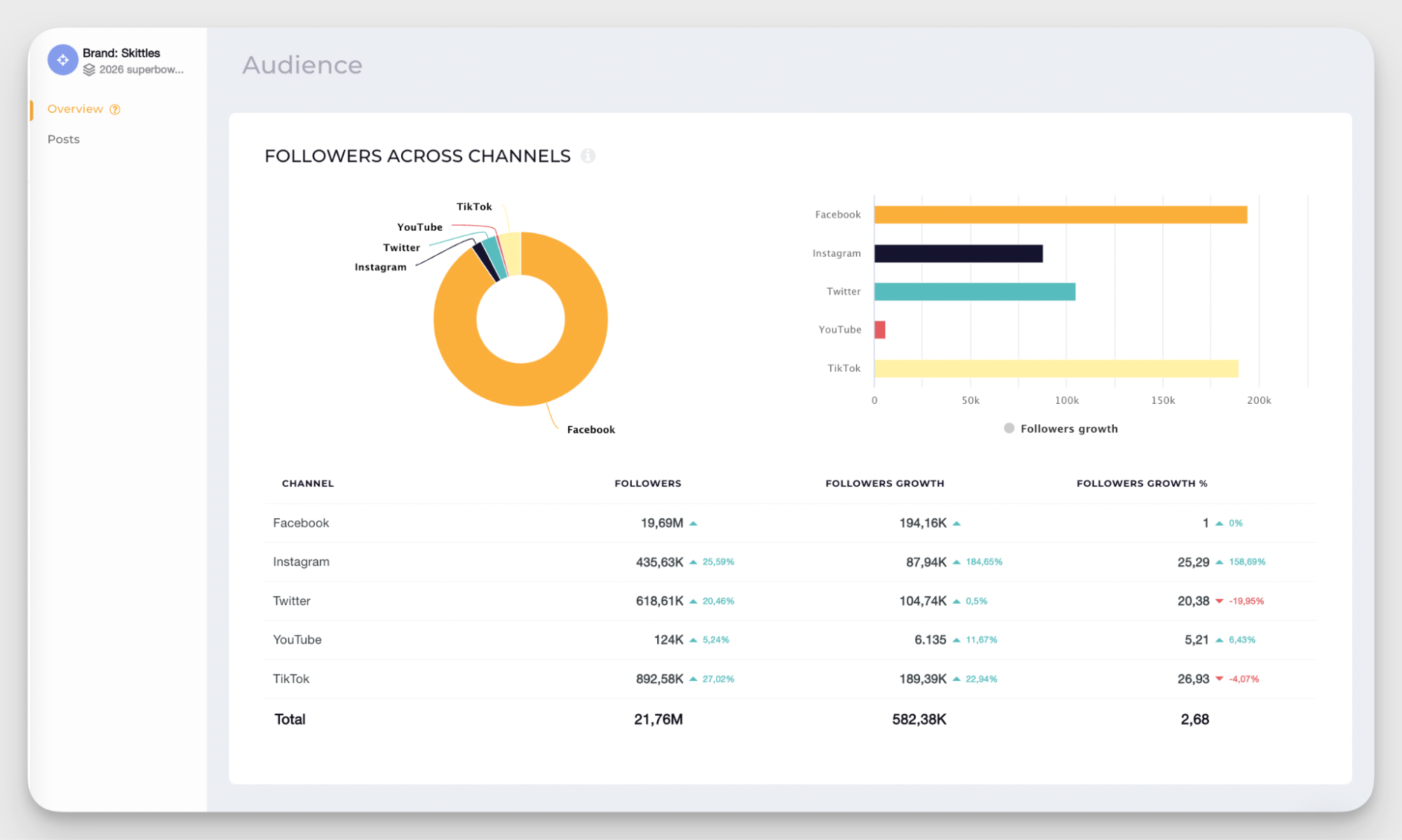
- Followers. Your audience size across each platform, along with the growth rate over time. This tells you whether your brand is gaining traction or losing relevance. In the Socialinsider view below, you can see followers distributed across Facebook, Instagram, Twitter, YouTube, and TikTok. Two channels are showing the strongest percentage growth, while one is mostly flat. This tells you not just how many followers you have, but which channels are actively building an audience for you.
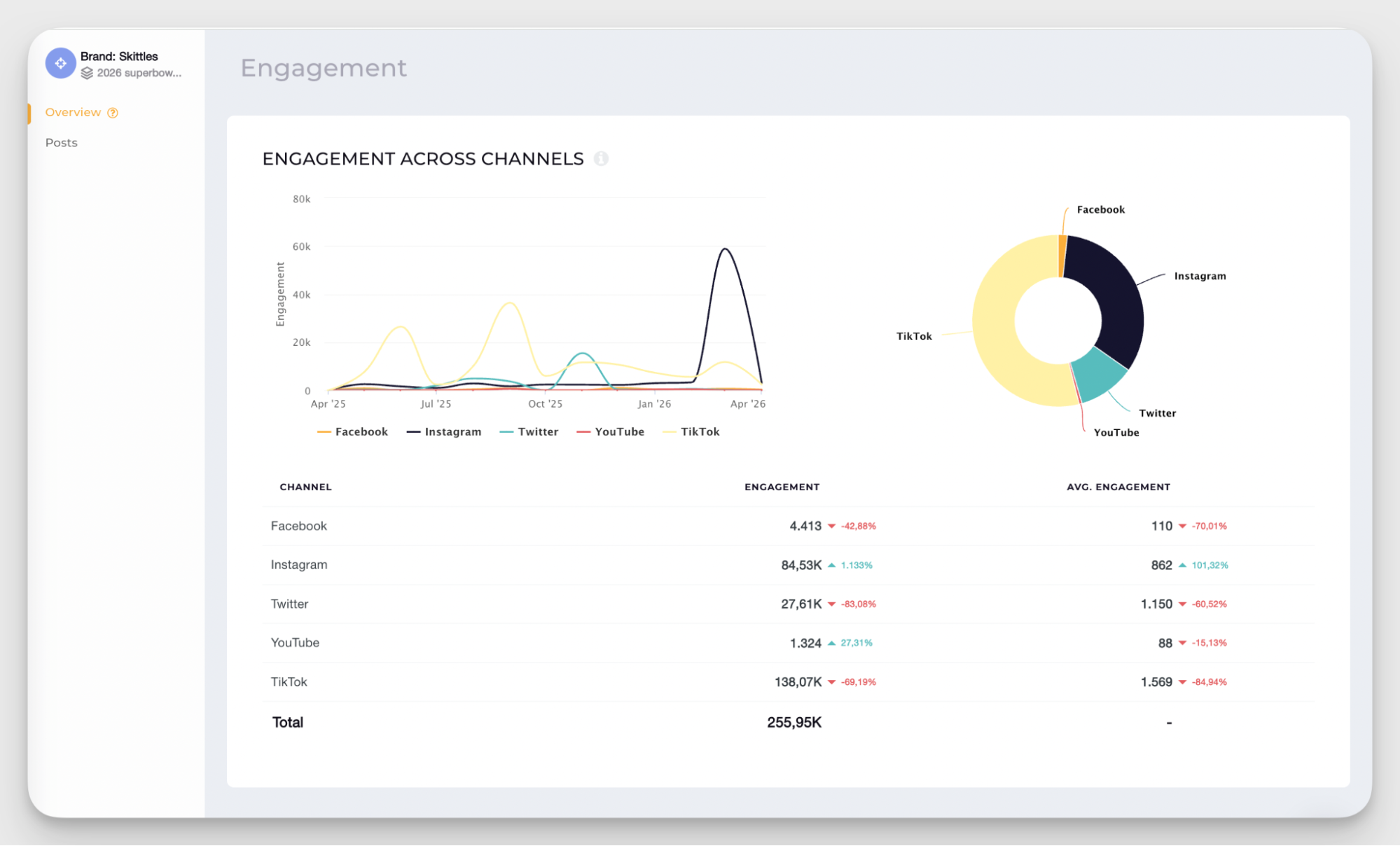
- Average engagement. Looking at the Socialinsider engagement dashboard with channels side by side, you can see how dramatically performance varies by platform. If your Instagram average engagement is sitting at a certain level today, a goal of doubling it in 90 days might be ambitious; a goal of improving it by 15% is more realistic.
- Website traffic from social. How much of your site traffic is social media actually driving? This connects your social efforts to a tangible business outcome.
- Leads and pipeline influenced. For B2B brands especially, this is where social earns its budget. How many leads, opportunities, or closed deals had a social touchpoint somewhere in the journey?
For a deeper breakdown of which numbers matter, Socialinsider’s guide to social media metrics is a good companion read.
#2. Conduct a platform & audience audit
A platform and audience audit means understanding the specific role each platform plays in your mix and who you're reaching on each one.
Not every platform should do the same job for your brand, and treating them as interchangeable is one of the fastest ways to waste budget. Instagram might be your awareness-building engine, while LinkedIn might be your lead-gen channel. Each one needs its own audience profile, content approach, and success criteria.
When you're auditing your platforms, ask yourself:
- What's the demographic and behavioral profile of the audience on each channel? How does that compare to my ideal customer?
- Which platforms have audiences that convert versus audiences that just consume?
- Where am I overinvested relative to results, and where am I underinvested?
A proper social media audience analysis will answer all of these and help you decide where to double down and where to scale back.
#3. Analyze your current content performance metrics
Analyzing your current content performance means looking at what you've already published and finding the patterns in what worked and what didn't.
Specifically, you want to know which topics resonate most, which formats outperform others, which posting times generate the strongest response, and which content pillars are doing the heavy lifting.
Content pillars are usually where I find the most useful insights.
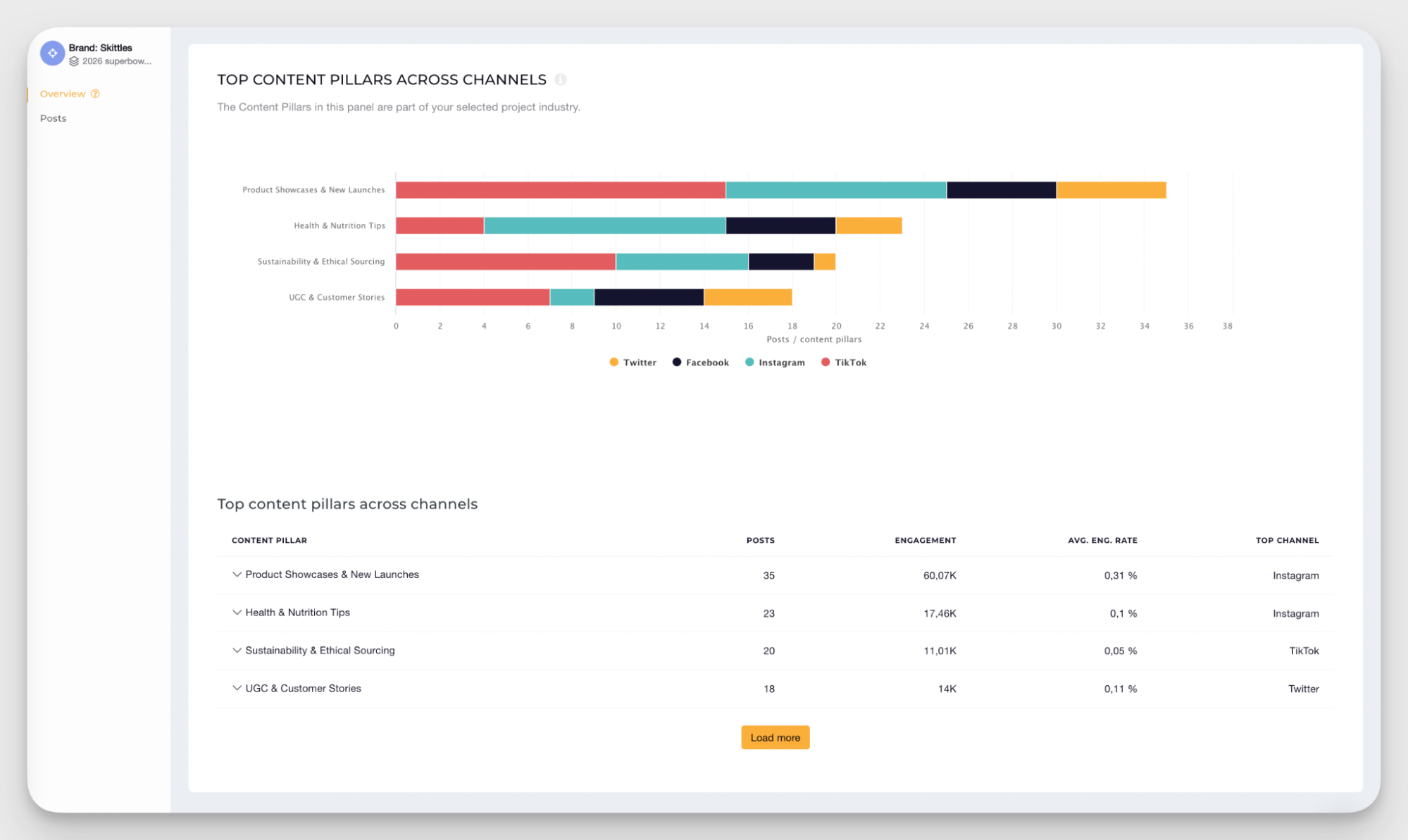
In a content pillar view like the one above, I usually analyze how posts are distributed across themes such as product showcases, health and nutrition tips, sustainability, and user-generated content, along with the engagement each pillar generates.
Personally, I look at engagement rate per pillar to see whether the pillars I'm investing the most effort in are actually returning the most value. Sometimes the answer is yes. But there are times when you can find that one of your smaller pillars is outperforming your flagship category in engagement rate, which means you might need to recalibrate your content strategy.
The other lens to apply is your top-performing posts themselves.
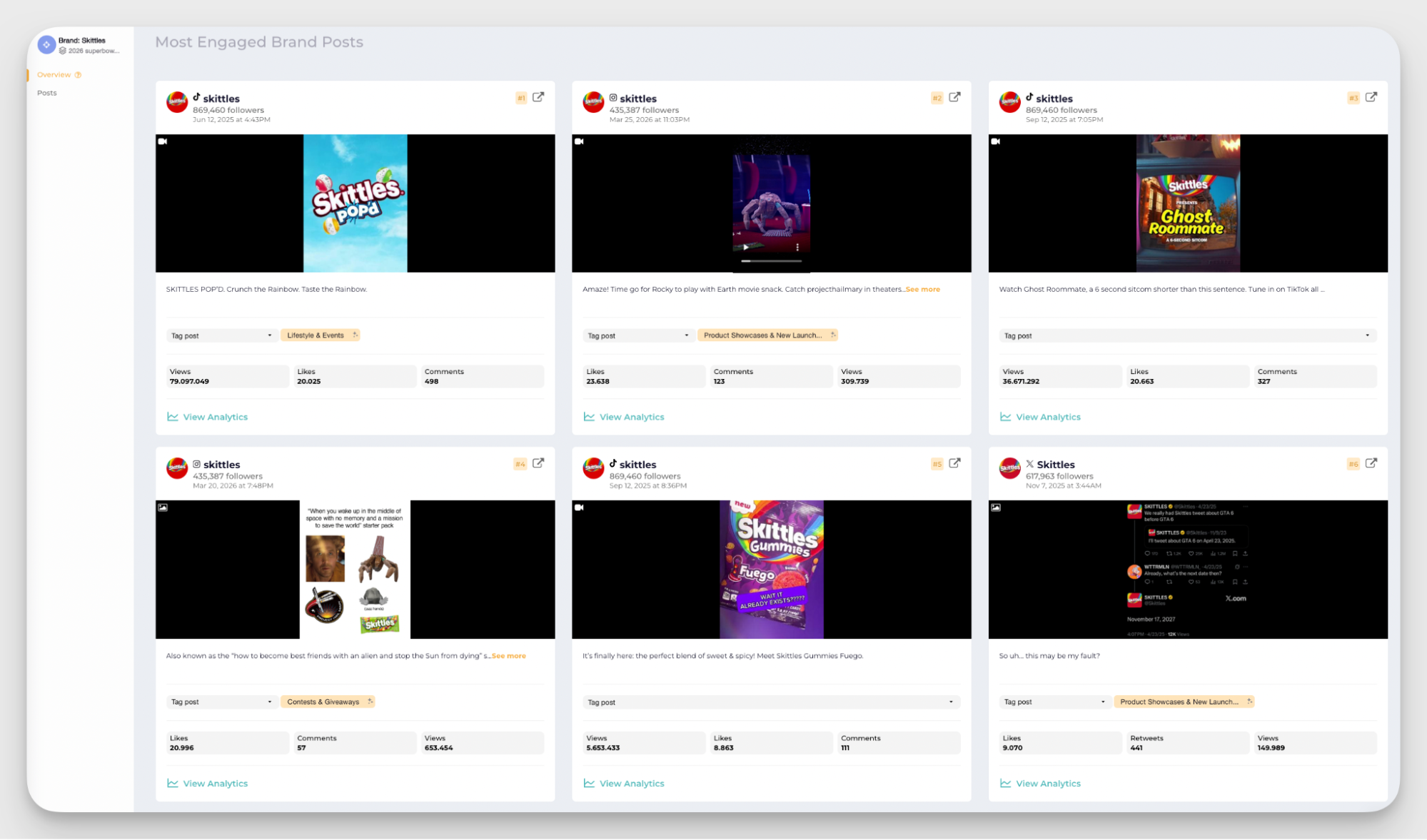
When you look at your highest-performing posts as a group, you'll start to notice what they have in common: a specific tone, a recurring visual style, a particular type of hook, or a format like a short video that consistently outperforms static images.
Social media content analysis turns generic, ineffective goals like "we should post more video" into specific, practical ones like "we should post more 8-15 second product-focused videos with on-screen text".
#4. Align internally with cross-team discovery calls
Some of the best content ideas and customer insights live in other parts of your company. So, talk to the teams outside of marketing who hold information your social strategy needs.
Which teams to meet and what to ask them
- Sales. Sales teams hear the exact language prospects use, the objections that come up repeatedly, and the questions buyers ask before they decide. Ask them:
- What are the top three questions you get on every call?
- What objections come up that we never address in our content?
- Which customer stories close deals?
- Customer support. Support is sitting on a goldmine of recurring questions, pain points, and product confusion. Ask them:
- What issues are we seeing repeatedly?
- What FAQs could be turned into educational content?
- What features do customers value the most?
- PR and communications. PR knows what stories are landing in earned media, what journalists are asking about, and what messaging is being tested externally. Ask them:
- What's in the pipeline that social should amplify?
- Are there sensitive topics we need to handle carefully right now?
- Is there any newsworthy topic we need to address?
Brand-related events and factors to consider
Beyond team interviews, you also need to map the calendar of things that will affect your social work over the next 6-12 months. That includes:
- product launches and feature releases
- major industry conferences or events your brand will attend or sponsor
- customer interviews and case studies in the pipeline
- seasonal moments relevant to your category
- planned announcements or partnerships
#5. Map the competitive & creator landscape
Mapping the competitive and creator landscape means understanding who else is competing for your audience's attention and how they're doing it.
How to audit competitors' social presence and content positioning?
Auditing competitors on social media starts with picking the right ones. Don't just list every brand in your industry. Pick three to five that genuinely compete for your audience's attention and that are active enough on social to give you useful data.
Once you have your list, look at what they're posting, how often, on which platforms, what formats they prefer, and what's working for them.
The fastest way to get a read on the competitive picture is a side-by-side benchmark view.
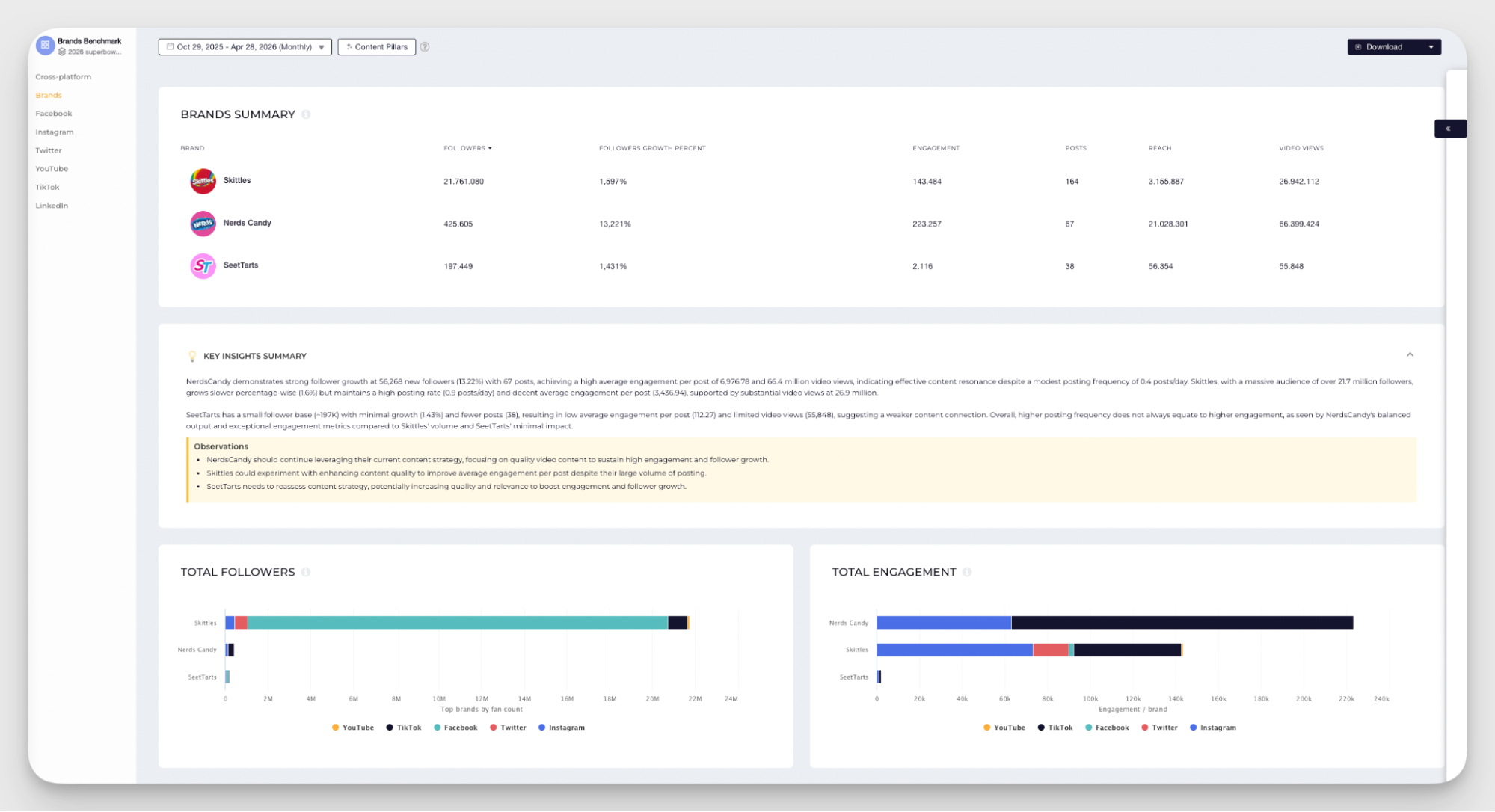
The Socialinsider competitive benchmarking dashboard lets you compare follower counts, growth rates, engagement, posting volume, reach, and video views across your brand and your competitors in one place.
You might notice that a competitor with a smaller audience is generating dramatically higher engagement per post. A competitor with much higher follower growth might be focusing on a single platform you're underinvesting in. These are worth looking into.
Beyond aggregate numbers, you also want to focus on the best-performing posts.
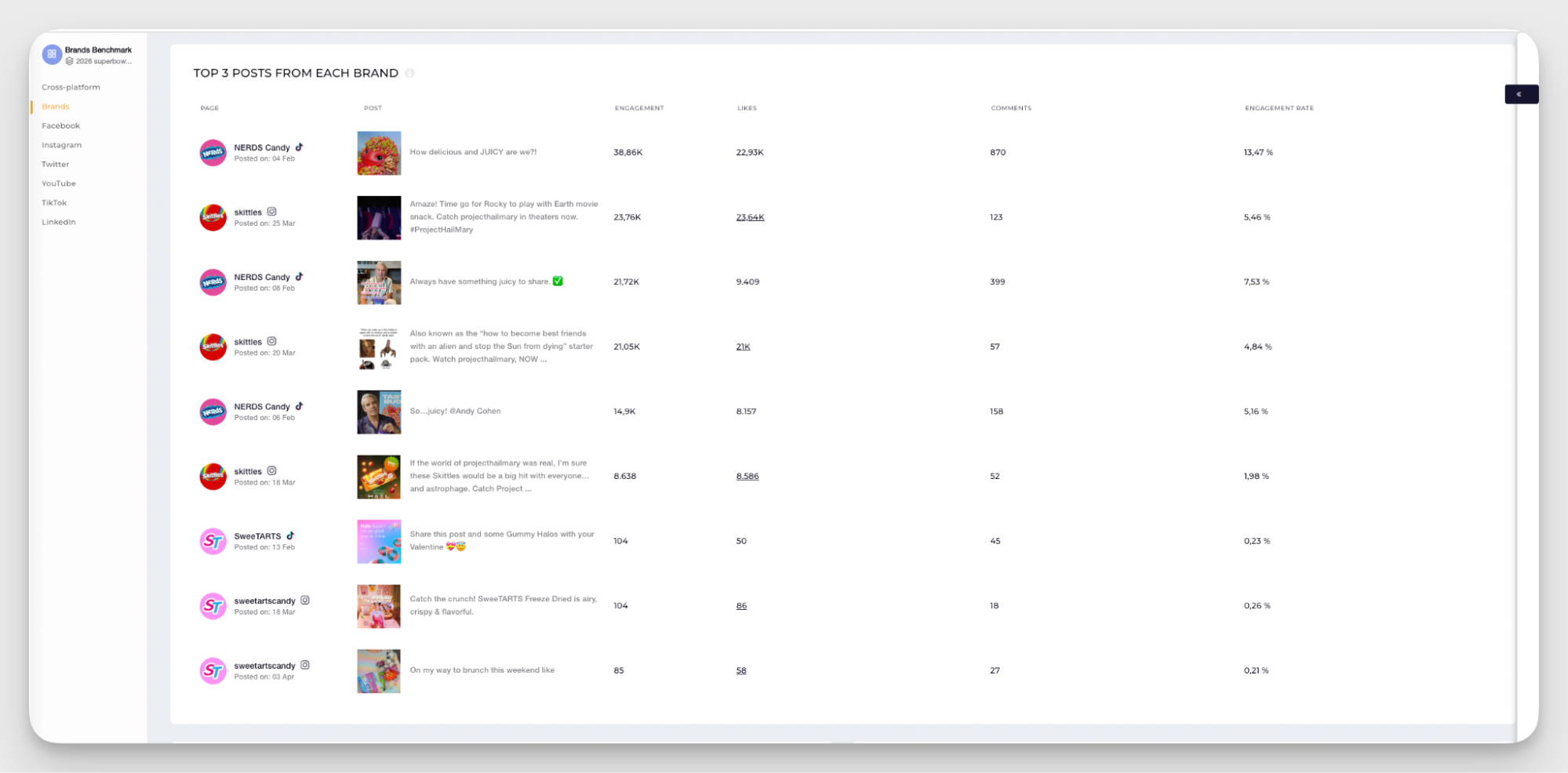
A content competitor analysis of the top-performing posts from each brand side by side shows you what's earning attention in your category. You'll see the formats competitors are using, the topics that perform, and the engagement rates those posts achieve.
How to identify key voices, influencers, and creators active in your category?
Influencers and creators often have more genuine pull with your audience than brands do, and knowing who's active in your category gives you both partnership opportunities and a sense of where attention is flowing.
Look for creators who sit at the intersection of these three criteria:
- They already mention brands like yours
- They have audiences that overlap with your customer profile
- They post content that aligns with your positioning
Pay attention to engagement rates, not just follower counts. A creator with 30K followers and 8% engagement is often more valuable than one with 300K followers and 1% engagement. Use influencer analytics tools to vet creators properly.
#6. Review governance, policies & risk
Make sure you have the right rules, protocols, and safeguards in place before you start publishing at scale. This is the least glamorous step in the social media planning process and the one that saves you the most pain when something goes wrong.
Specifically, you want to review your:
- social media policy — what employees can and can't post, and how the brand handles sensitive topics;
- security protocols — who has access to accounts, how passwords are managed, and what happens if an account is compromised;
- escalation workflows — who gets notified when a comment or DM requires senior attention;
- crisis response guidelines — the playbook for what to do when something goes badly wrong, such as a negative news cycle, a customer complaint going viral, or a botched campaign.
If you don't have these documents, write them as soon as possible. If you have them, check whether they still match how your team operates. Policies written three years ago often don't account for new platforms, risks, or team structures.
#7. Synthesize your findings & define next steps
The final step is pulling everything you've gathered into a clear picture of what social media should be doing for your business over the next planning cycle.
After all the audits, interviews, and competitive analysis, you should be able to define social's specific role across four areas:
- Brand — What story are we telling and reinforcing?
- Demand — How is social contributing to the pipeline and revenue?
- Sales support — How is social enabling the sales team and helping close deals?
- Customer conversations — How are we showing up for existing customers and managing the community?
Write this synthesis down. Make it short (one or two pages, not twenty) and share it with stakeholders.
Final thoughts
Winning on social media might seem like a game of chasing trends and keeping up with algorithm changes. In fact, it comes down to something more boring but reliable: a process you can repeat, refine, and trust over time.
Start with the steps I outlined in the article, then build from there. If you want a clear view of where you stand today and what goals you can realistically set, Socialinsider offers 14 days free to map your baseline, benchmark competitors, and spot improvement opportunities.

Sabina Varga
Sabina Varga is a B2B content strategist with 15 years in digital marketing, helping brands turn social media data into stories that connect and strategies that grow.

Know what your competitors do — before your manager asks
Get instant social benchmarks & reports without manual work.