Top 18 Social Media Marketing Examples
Discover the boldest social media marketing examples to inspire your next move, and learn how to spot similar ones in your niche.

Social media marketing feels a little like trying to grab a moving train while someone yells trend updates in your ear. Every brand—big, tiny, confident, confused—is fighting for that one viral moment. And honestly? Some of them earned them.
But here’s the thing everyone forgets when scrolling through those flashy campaigns: none of these brands are creating in a vacuum. They’re watching each other. Studying each other. Stealing from each other (politely… of course). The smartest teams aren’t just posting good content—they’re running competitive intel like their lives depend on it.
So instead of tossing 18 campaigns into a random listicle soup, I’ll do what actual strategists do: group them by industry. Because fashion brands aren’t competing with donut shops, and entertainment companies don’t care that your moisturizer went viral unless it stars a celebrity they wanted first.
Let’s get into what these brands and industries taught everyone else.
Fashion & apparel
Fashion is always the first industry to run full-speed into a trend with no helmet on, which is why it makes the perfect place to start. This category doesn’t just “follow culture”—it manufactures half of it. Wellness campaigns, raw BTS stories, micro-influencers, real people looking impossibly chic… fashion tries everything once and keeps whatever sticks.
So yes, the competition here is brutal, but it’s also where some of the boldest ideas showed up.
#1. ASICS used #DeskBreak to boost mental health awareness
In September 2024, ASICS launched its DeskBreak campaign in anticipation of World Mental Health Day on October 10.
The initiative encouraged office workers to take short, active breaks during the workday, using social media to spread the message and inspire action.
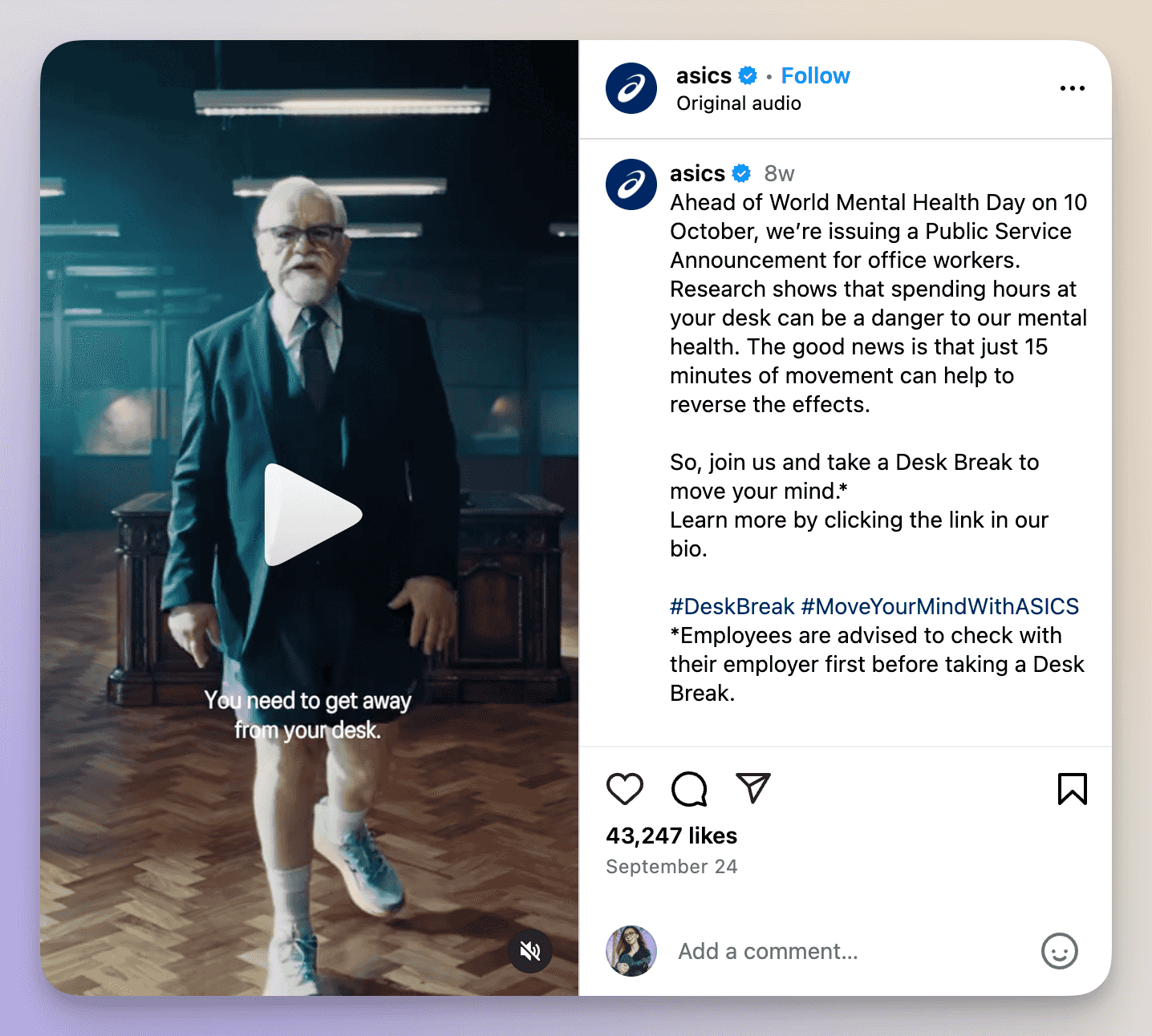
A standout Instagram post from the campaign featured a compelling Public Service Announcement.
By using the Socialinsider app, we can see that the post garnered 43K likes, over 700 comments, and reached an estimated 375K accounts, with 413K impressions in total.
It achieved almost 44K total engagements, resulting in an engagement rate of 3.52% among followers.
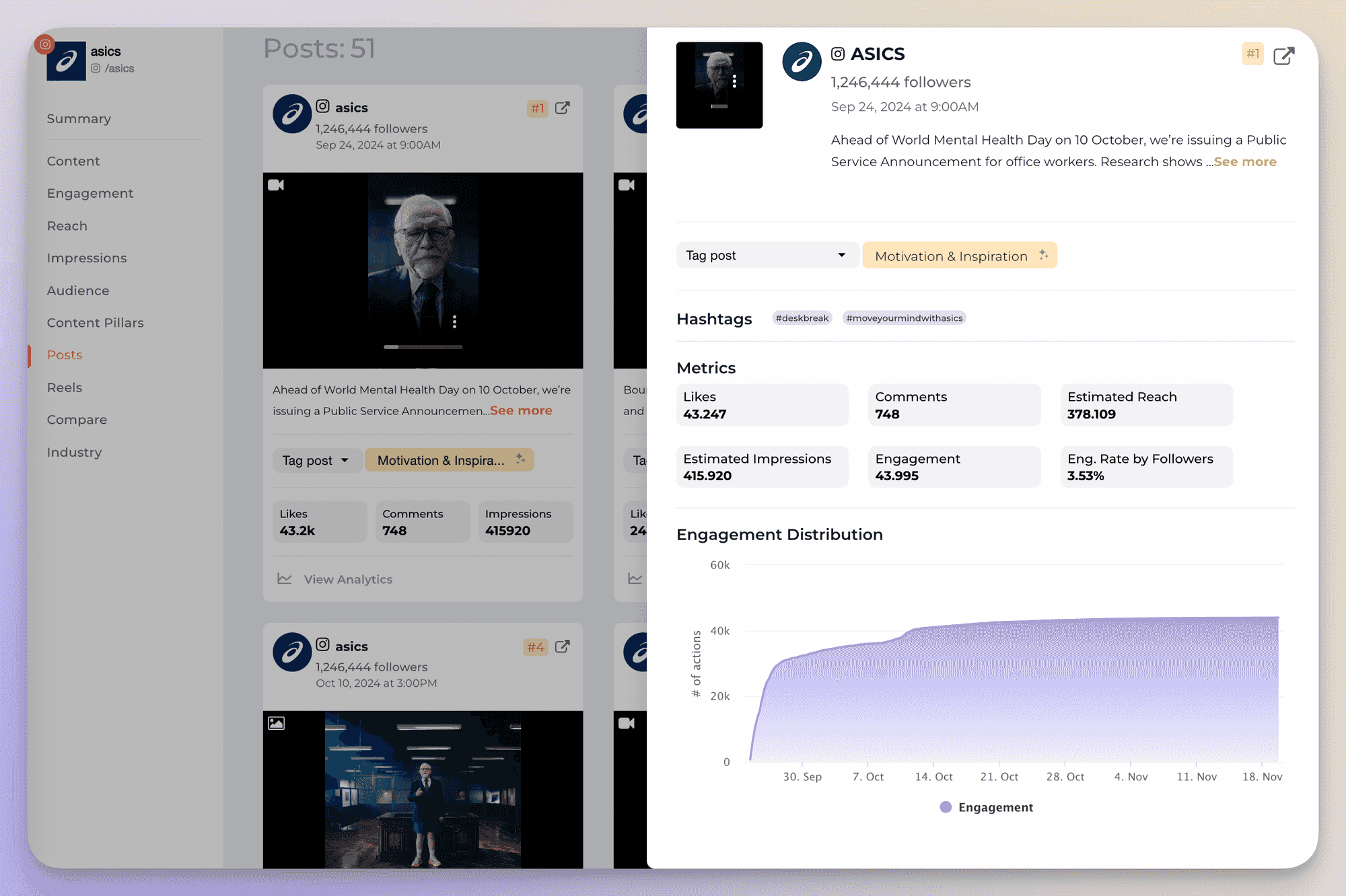
Essentially, the #DeskBreak campaign successfully raised awareness about workplace mental health while showcasing ASICS' commitment to well-being.
Its impressive social media performance highlighted the power of meaningful and relatable marketing.
#2. Odd Muse swapped models for real people to spotlight authenticity
Odd Muse’s campaign for the relaunch of their iconic pearl dress collection stands as one of the top examples of social media marketing.
This April, the brand chose to feature everyday individuals instead of professional models, celebrating authenticity and relatability. This unique approach resonated with audiences, aligning perfectly with the brand’s ethos.
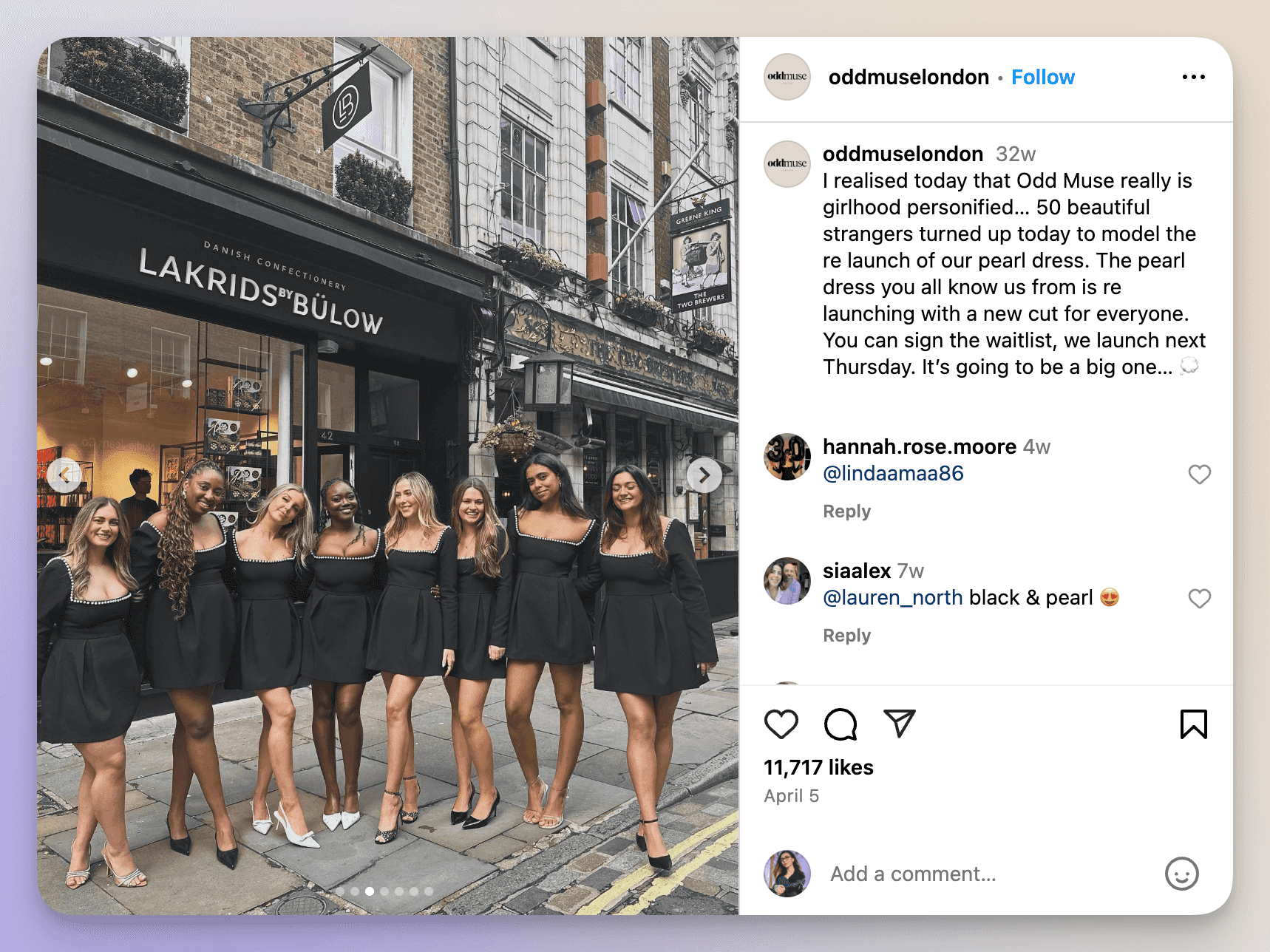
This Instagram post achieved almost 12K likes, 113 comments, and an estimated reach of 181K accounts.
The post garnered a total of 199K impressions and recorded over 11 engagements, with a follower engagement rate of 1.38%.
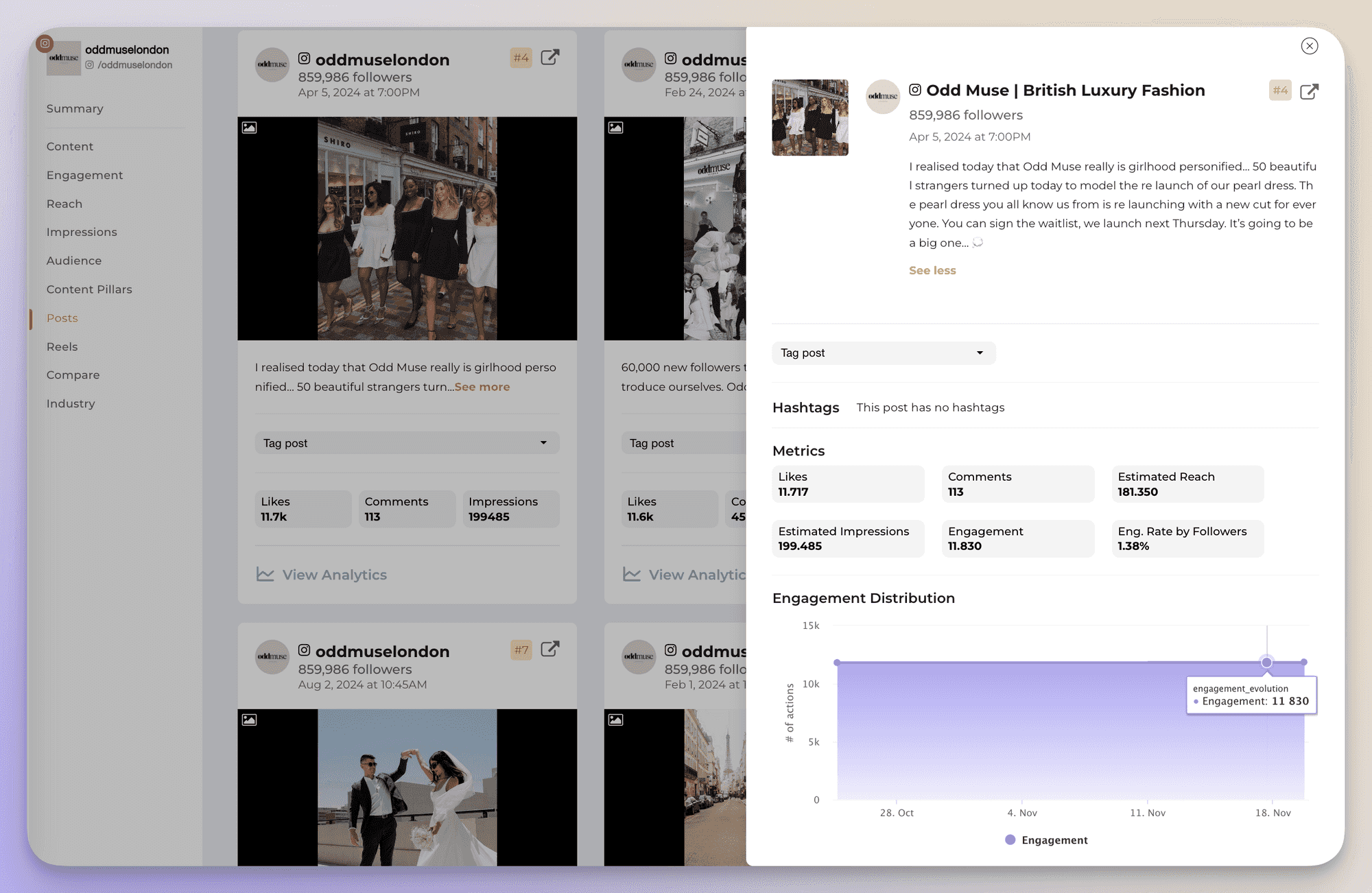
Basically, by incorporating real people into their campaign, Odd Muse created a sense of connection and empowerment among its audience, proving how social media can effectively drive both social media interactions and brand authenticity.
#3. SKIMS teamed up with Olivia Munn to support breast cancer awareness
One of the social media marketing challenges brands face involves remaining relevant.
For that, marketing through social media usually involves partnering with key influencers and staying connected to meaningful moments.
On this note, SKIMS provides us with one of best examples of social media marketing: its collaboration with Olivia Munn for Breast Cancer Awareness Month.
In this heartfelt campaign, SKIMS highlighted Olivia Munn’s journey and pledged to donate 10% of proceeds from bra sales to a leading breast cancer organization.
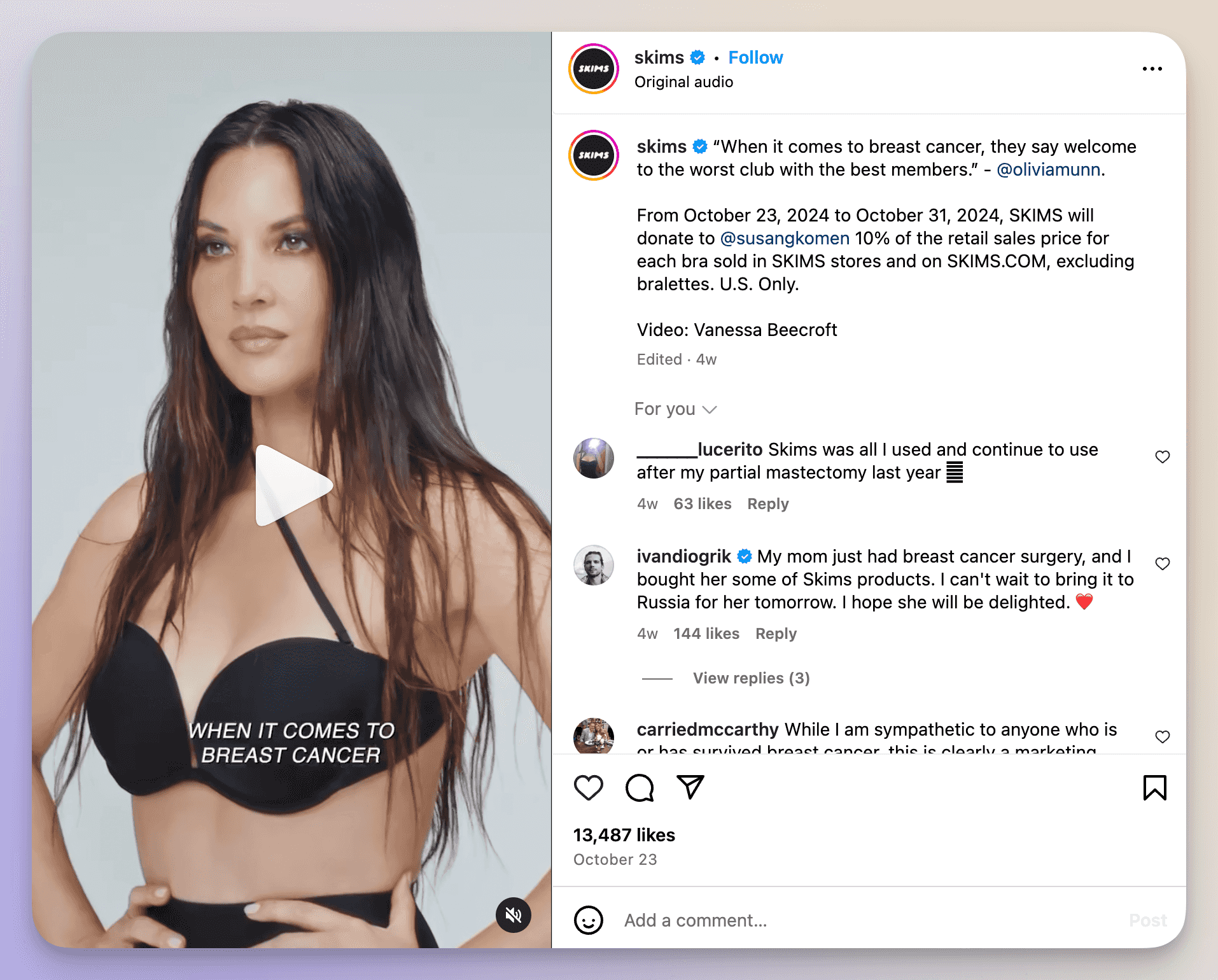
The results of the campaign showcase its effectiveness in resonating with audiences.
A key Instagram post generated 39K likes, 239 comments, an estimated 228K reach, and 251K impressions, with a total engagement of 39K interactions.
This highlights how powerful storytelling and cause-driven messaging can engage communities while promoting meaningful social causes.
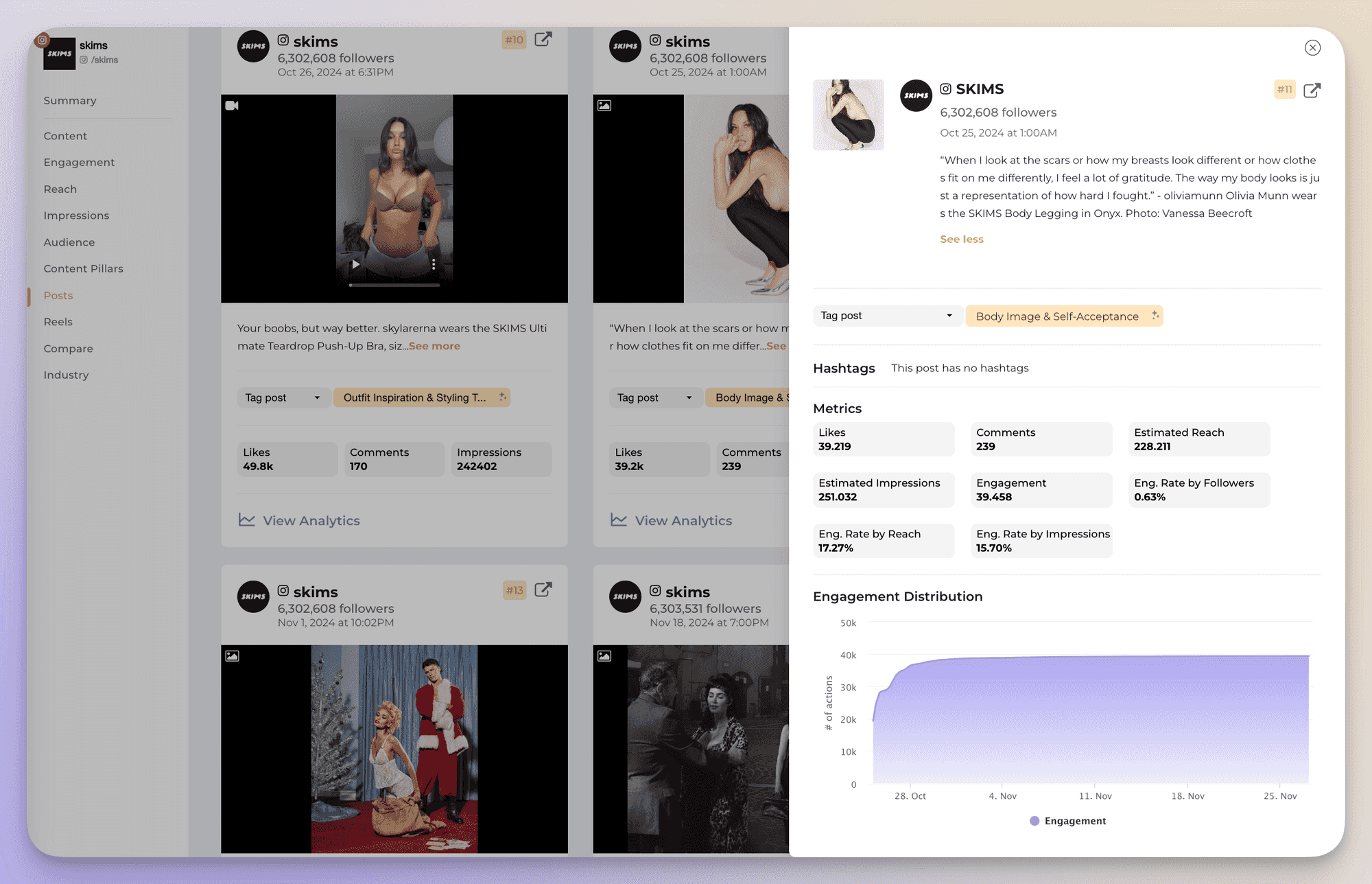
This collaboration not only showcased inclusivity and empowerment but also aligned SKIMS with a cause that resonates deeply with its audience, reinforcing its brand values while driving meaningful impact.
#4. Nude Project went all-in on BTS, and it paid off big
The Nude Project recently delivered one of the most innovative marketing strategies examples of 2024 with their Dreams Money Can Buy campaign.
With no budget to spare for their shoot, they transformed a spur-of-the-moment trip to a French chateau into a full-scale campaign, documenting every step behind the scenes.
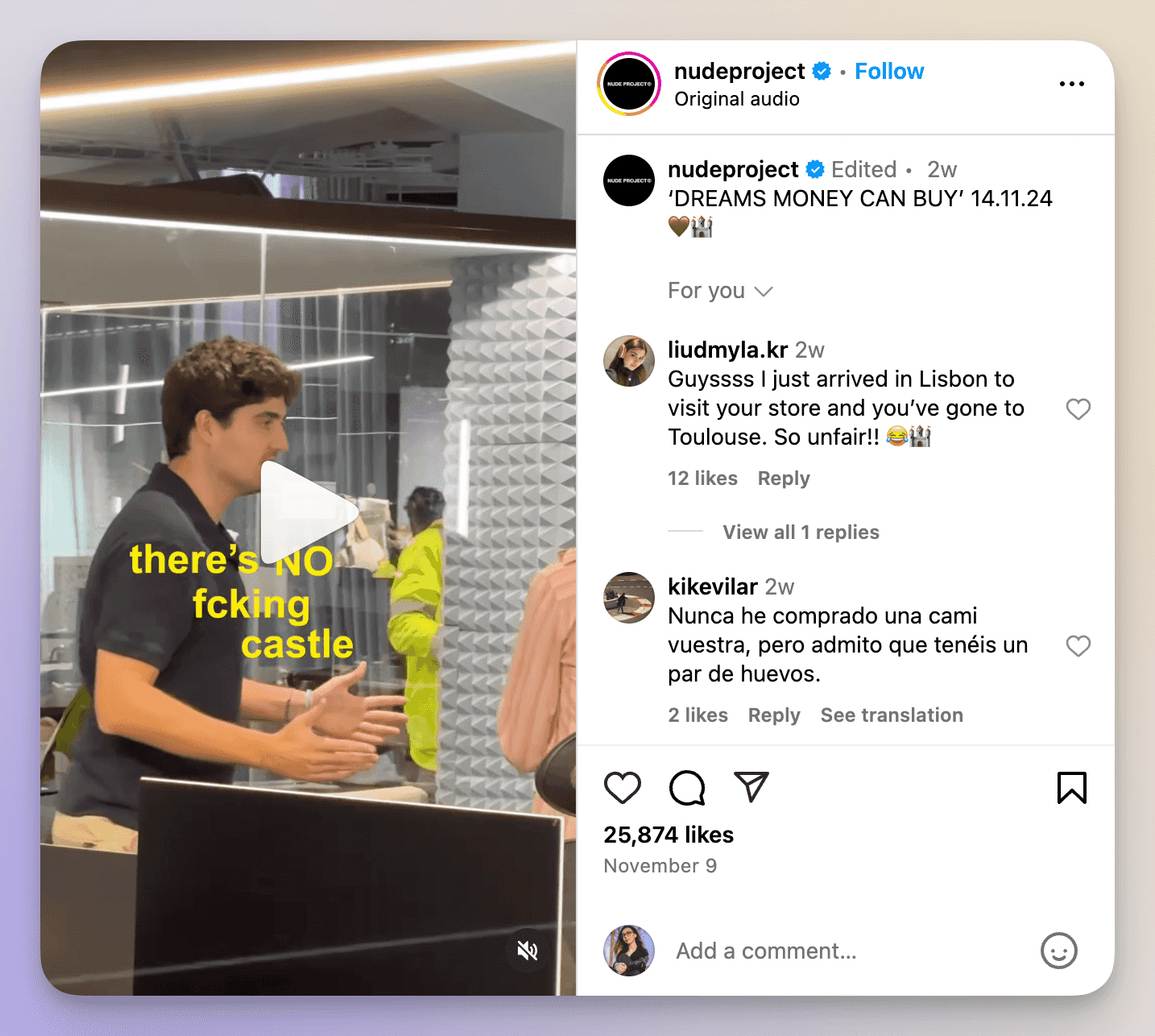
By showing the raw and unfiltered process, Nude Project proved that authentic storytelling and creativity can outperform big-budget productions, making it a standout example of social advertising.
The result?
Over 432K estimated impressions, 393K estimated reach, 24.K likes, 162 comments, and a 2.32% engagement rate by followers, demonstrating how clever, resourceful strategies can drive serious engagement.
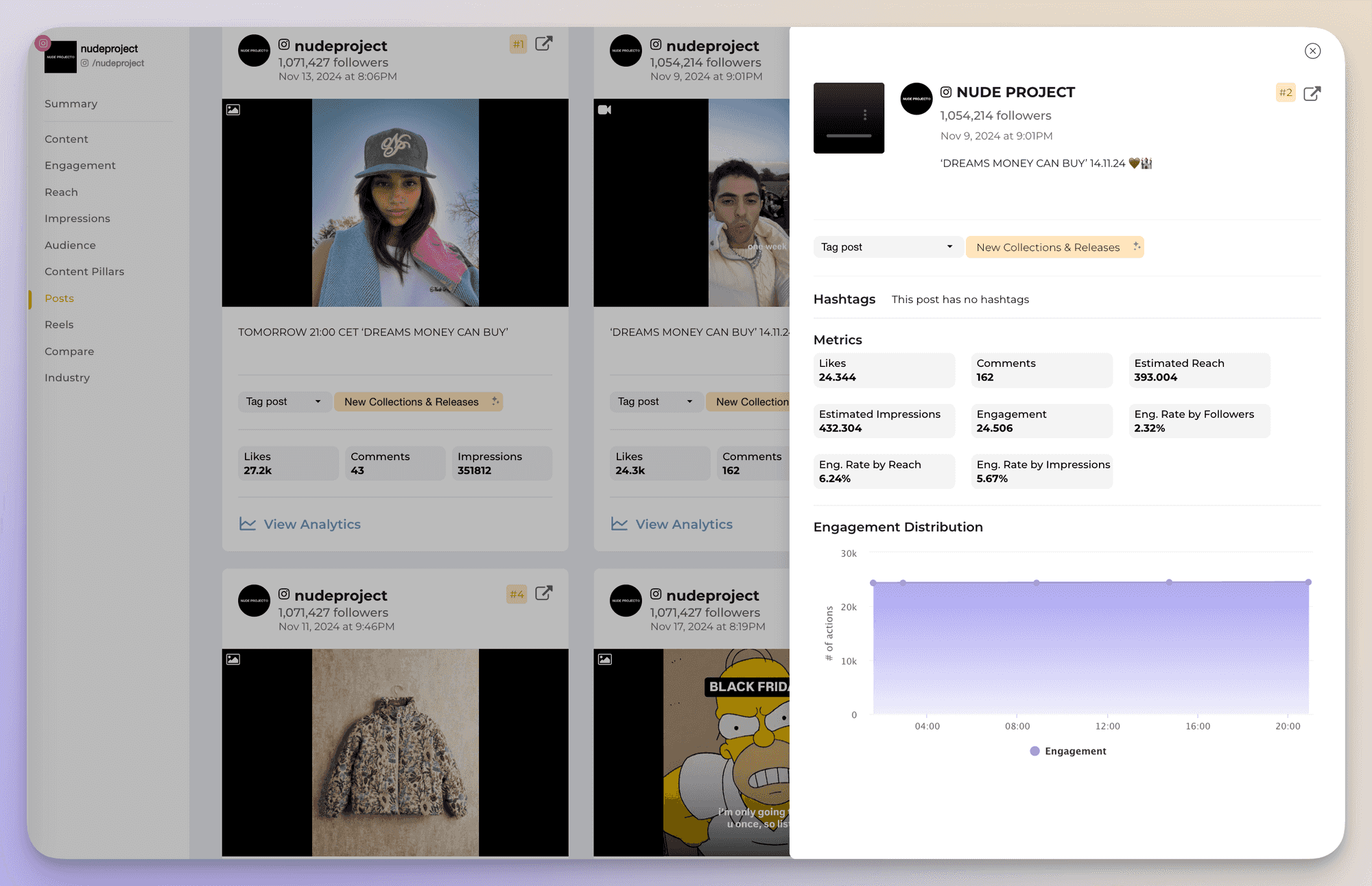
For brands seeking fresh video marketing ideas, the Nude Project campaign is a great example of how you can highlight the power of creative storytelling.
It’s a perfect reminder that even when resources are limited, authenticity and ingenuity are your greatest assets.
Competitive analysis in the fashion & apparel industry
Fashion moves fast. One week everyone’s posting polished studio shots, the next week it’s “quick, film someone crying in a bathroom for authenticity.” If there’s one thing this industry teaches you, it’s that what works changes constantly, which is exactly why competitive intel matters more here than almost anywhere else.
A social media analytics tool like Socialinsider makes this whole process way less chaotic. Instead of juggling spreadsheets, 14 tabs, and three different “analytics” exports that all mysteriously disagree with each other, you finally get a clean view of what’s happening across all social platforms, all in one place. You can instantly see whether your Reels are actually keeping up with your competitors’, or if they’re quietly eating your lunch by posting more consistently.
And the creative patterns? They jump out immediately. You don’t need to guess why Odd Muse popped off (“oh… real people, not models”), or why SKIMS outperformed everyone during Breast Cancer Awareness Month. The posts tell you, because Socialinsider lets you line them up side-by-side and see the spikes. Same with ASICS—suddenly the workplace wellness angle starts to look less like a fluke and more like something half the industry will probably copy next quarter.
Timing becomes a whole different game too. You notice who’s posting daily, who’s barely alive, and who only shows up when they have a product drop. Sometimes you’ll realize your competitor doubled their posting cadence overnight. Sometimes you’ll catch that you missed an entire cultural moment because you were “planning a grid aesthetic.” It happens.
Influencers? Creators? Talent? That chaos becomes readable too. You start to see which brands are leaning on big names, who’s betting on micro-influencers, who’s letting employees or founders take over the feed, and who’s pulling a Nude Project and turning a last-minute chateau trip into a whole cinematic universe. And the best part is, you can finally prove your boss whether those choices worked (Who actually owns the conversation this month? Who’s growing? Who stalled out? Who keeps hijacking trends before anyone else even notices them?), not based on vibes, but on real engagement (which will help you get that extra budget you’ve been asking for forever).
The whole point isn’t just “copy what worked.” It’s more like: know exactly where you stand, know why, and make better moves because you’re not flying blind anymore.
Beauty & personal care
Beauty operates on pure chaos energy, in the best way. If fashion builds culture, beauty hijacks it, remixes it, adds glitter, and sells it for $14. Beauty brands will test an idea in the morning, drop a collab in the afternoon, and launch an AI stunt by evening because why not?
It’s an industry where creativity has zero chill and the audience keeps begging for more. Which makes competitive benchmarking less “nice to have” and more “please help, my team is drowning in content.”
Let’s look at the brands that absolutely refused to stay quiet.
#5. e.l.f. Cosmetics teamed up with a viral favorite
One of the most effective marketing strategies is partnering with viral brands to tap into their popularity.
When Stanley tumblers took social media by storm earlier this year, e.l.f., a cosmetics brand with no obvious connection to drinkware, seized the moment to create a buzzworthy collaboration.
Together, they launched matching Lip Oil Holders that seamlessly clip onto Stanley tumblers, accompanied by coordinating stickers.
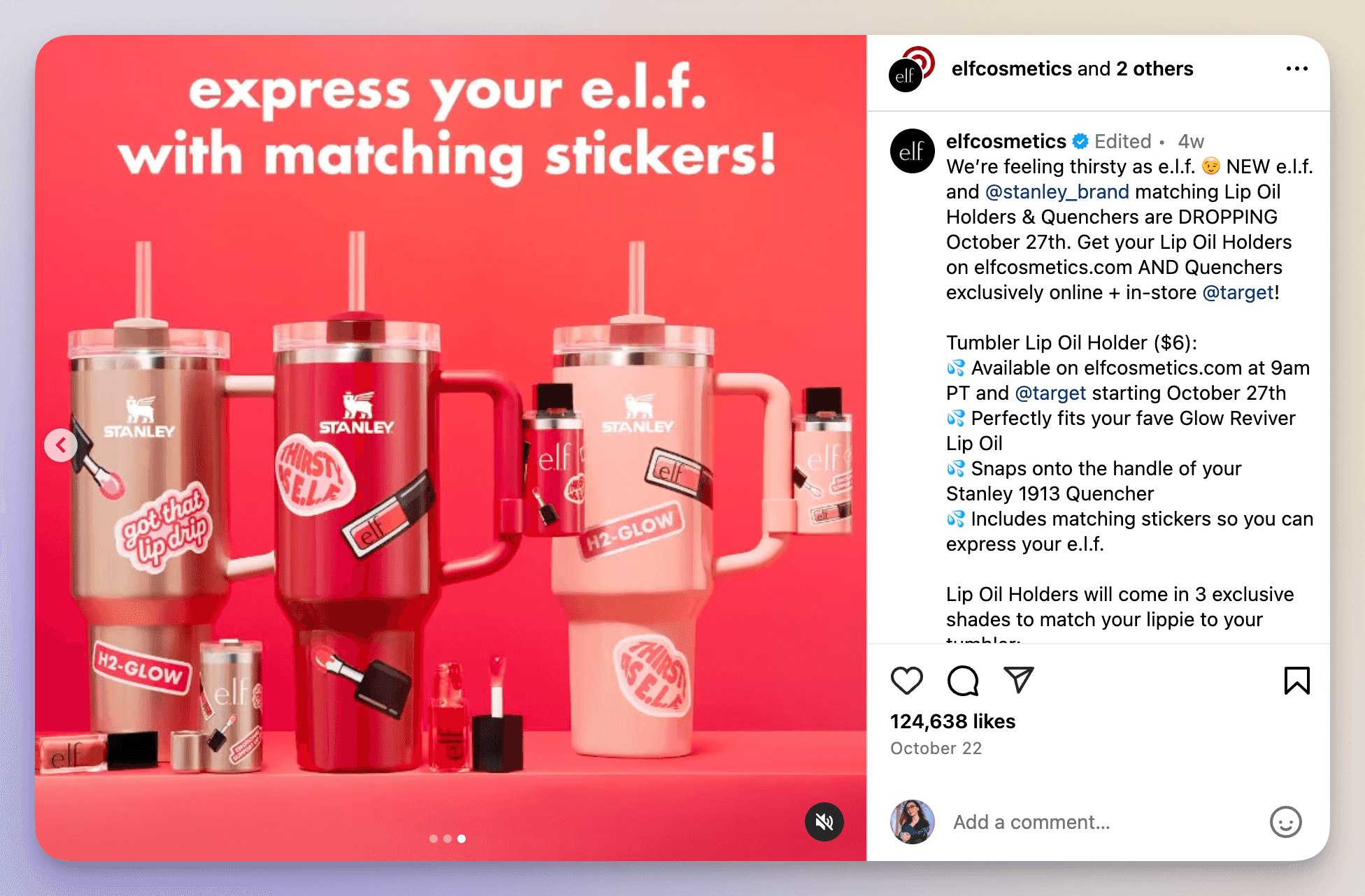
This playful and unexpected partnership bridged two distinct fan bases—Stanley enthusiasts and e.l.f.’s loyal beauty community—resulting in crossover appeal and widespread excitement.
The Instagram post announcing the collab racked up 124K likes, 1.2K comments, and an estimated 2.5M reach, with 2.7M impressions and a total engagement of 125.7K interactions.
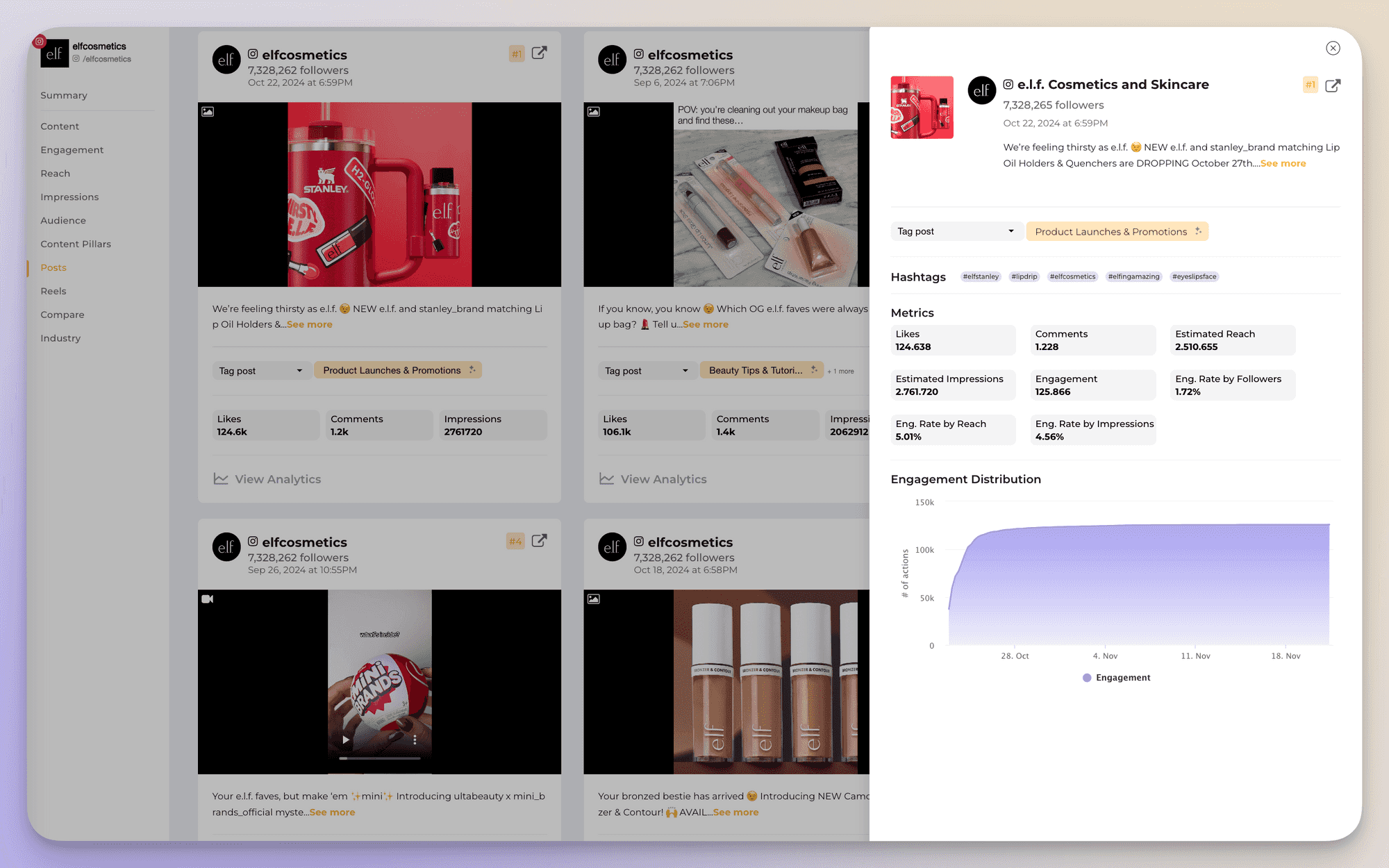
By combining the functionality of Stanley with the style of e.l.f., this launch became one of the prime examples of successful marketing on social media and a perfect showcase of strategic brand collaboration.
#6. e.l.f. Cosmetics went big with AI for their pimple patch launch
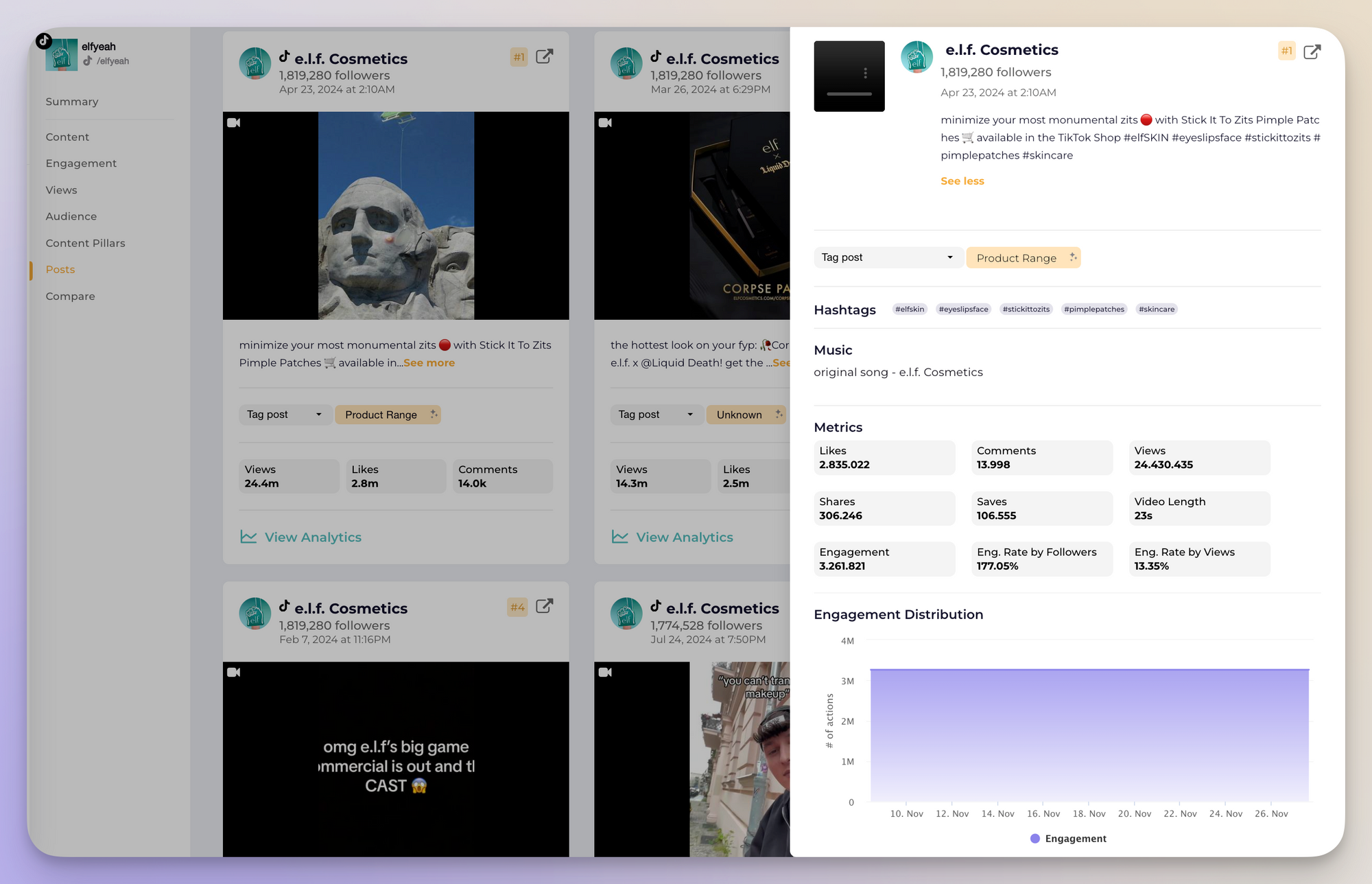
Another brilliant example of social media advertising ideas from e.l.f. is their AI-generated TikTok video, which creatively announced the launch of their new pimple patch.
The campaign featured a humorous and exaggerated video of a helicopter applying the pimple patch to George Washington’s face on Mount Rushmore.
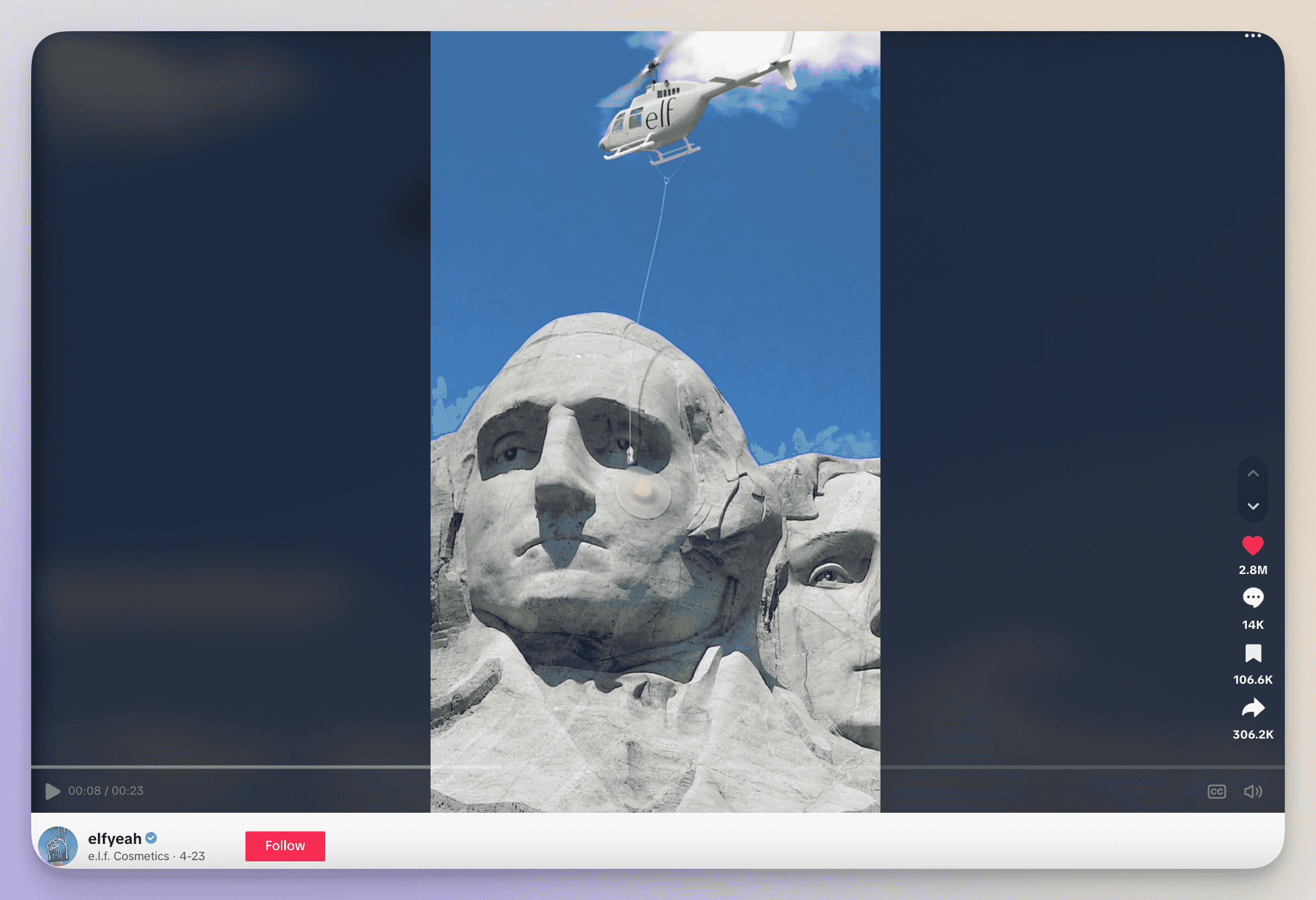
The video resonated with TikTok’s audience, generating 2.8M likes, 14K comments, 106.5K saves, and an impressive 306.2K shares, showcasing the power of combining humor, AI technology, and platform-specific creativity.
This approach highlights how AI can be used to craft visually impactful and shareable types of social media content, making it a perfect example of how brands can innovate to amplify engagement and product awareness.
💡 TREND ALERT
From beauty to tech, brands are integrating AI into their marketing to create larger-than-life campaigns that resonate with the digital-first generation.
These visuals, often exaggerated and humorous, are designed to stand out on crowded feeds, combining AI with bold storytelling.
Here’s Maybelline’s example, which brought a massive blush applicator to Central Park.
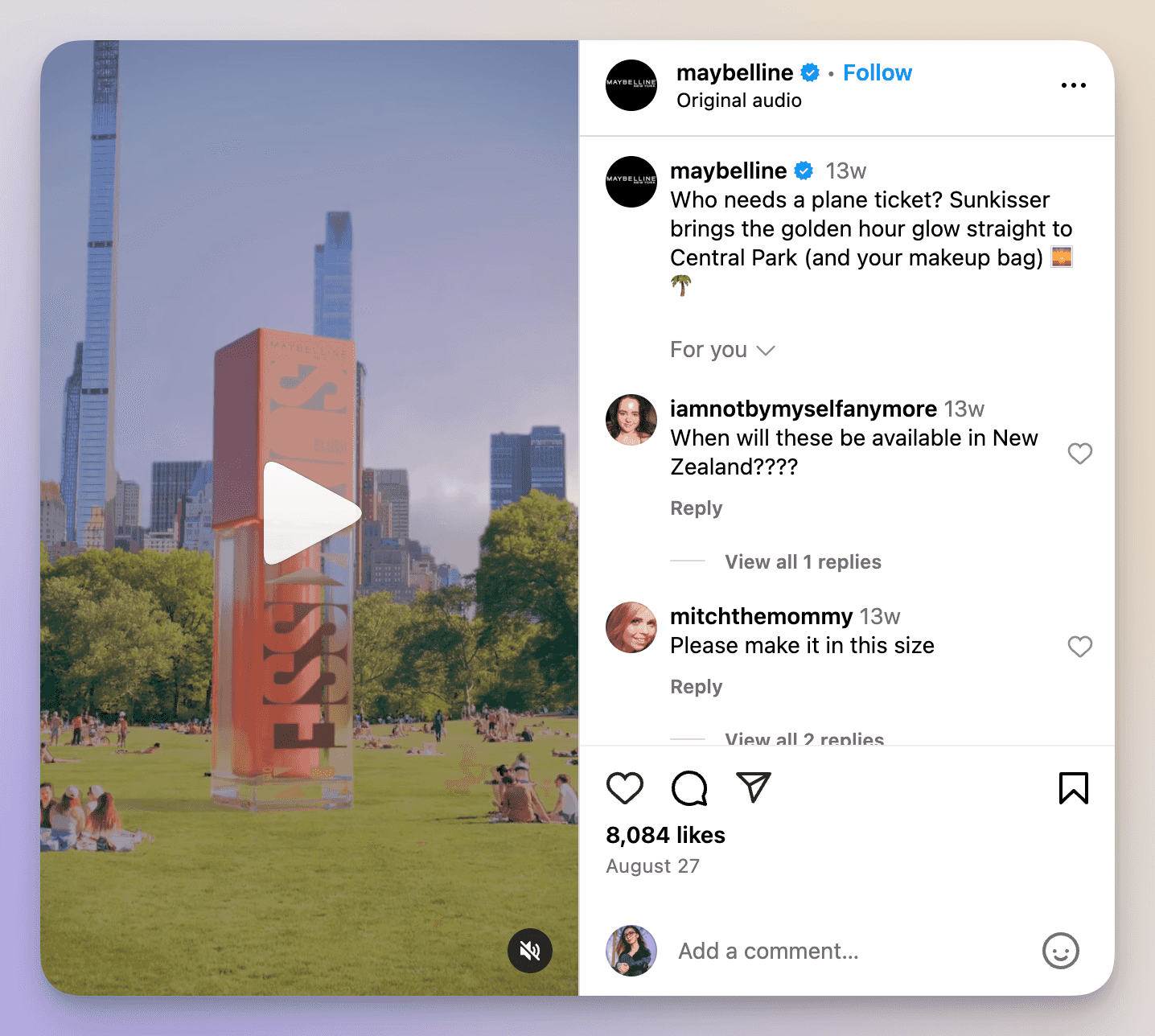
These AI-driven social media branding examples highlight how businesses are using technology to create eye-catching, shareable content, marking a new era of innovative marketing.
#7. Sol de Janeiro used sensory marketing to make you hungry for their products
If you’re wandering for Instagram post ideas, Sol de Janeiro provides a masterclass in sensory marketing.
Their strategy transforms their products into mouthwatering visual experiences, blending food elements with their branding to evoke both indulgence and desire.
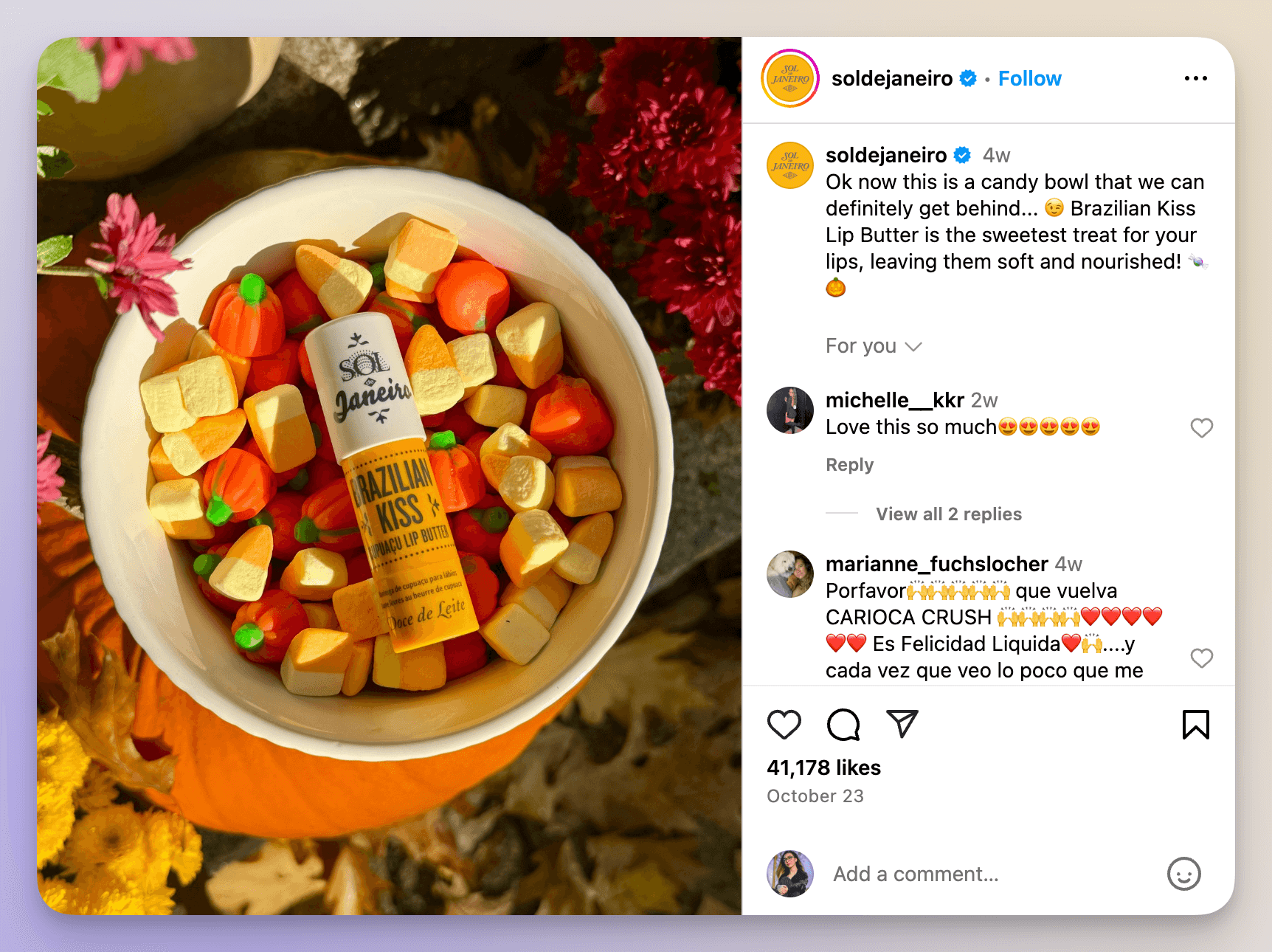
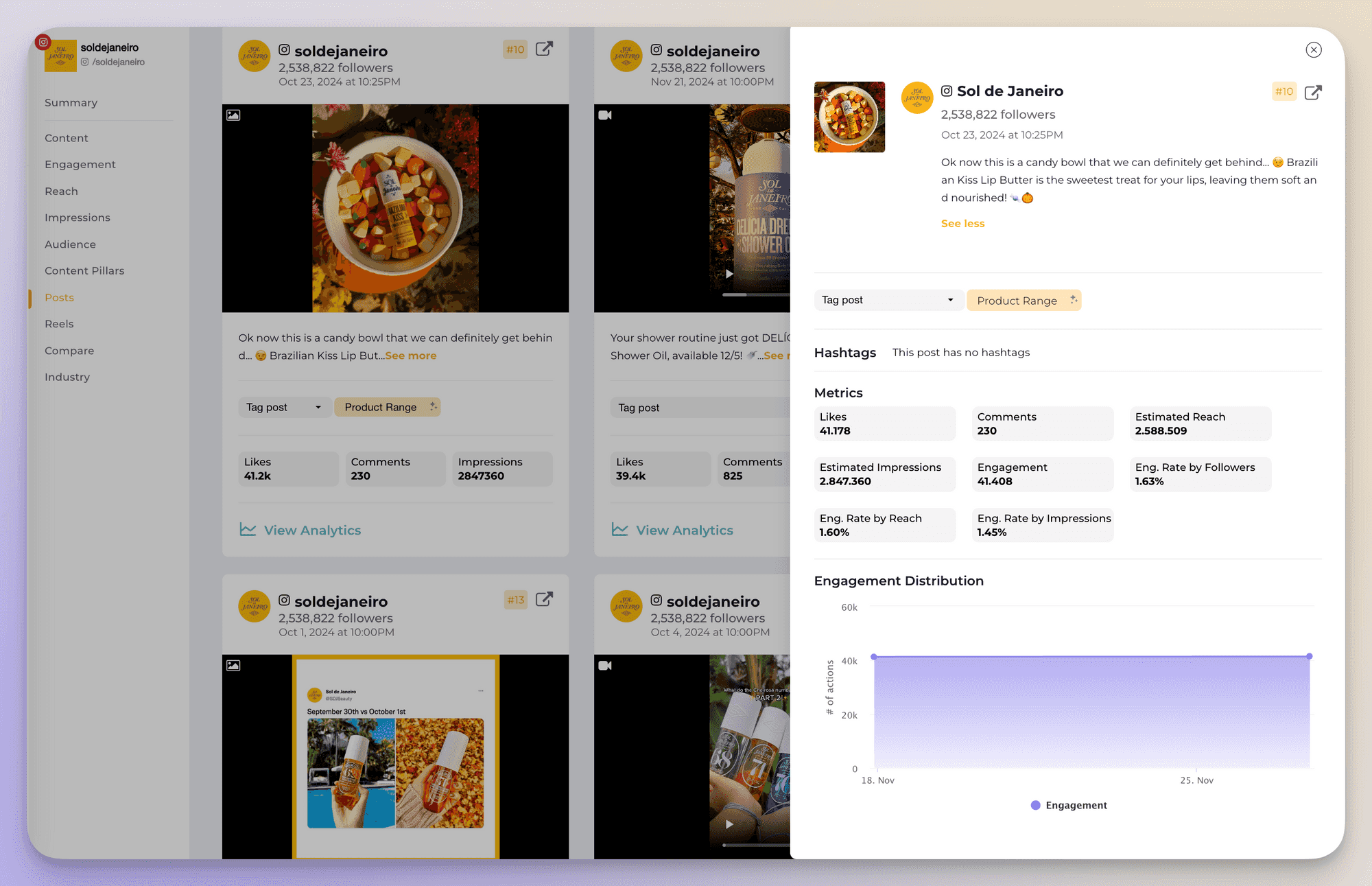
Take their best-performing food-themed post, for instance, featuring their Brazilian Kiss Lip Butter nestled in a bowl of candy.
This post gained 41K likes, 230 comments, an estimated reach of 2.58M, and 2.84M impressions, with a total engagement of 41K.
By visually connecting their products to the appeal of food, Sol de Janeiro taps into a new era of marketing that’s not just about what you see—it’s about what you feel (and crave).
💡 TREND ALERT
More and more brands are hopping on the trend of using food-inspired visuals to market their products, and it’s easy to see why—it’s fun, relatable, and totally crave-worthy.
By blending products with delicious-looking food elements, brands are finding a clever way to grab attention and make us feel all the feels.
Whether it’s Glossier’s cookie butter balm or Rhode’s whipped cream-topped skincare products, these examples of social media advertising are impossible to scroll past.
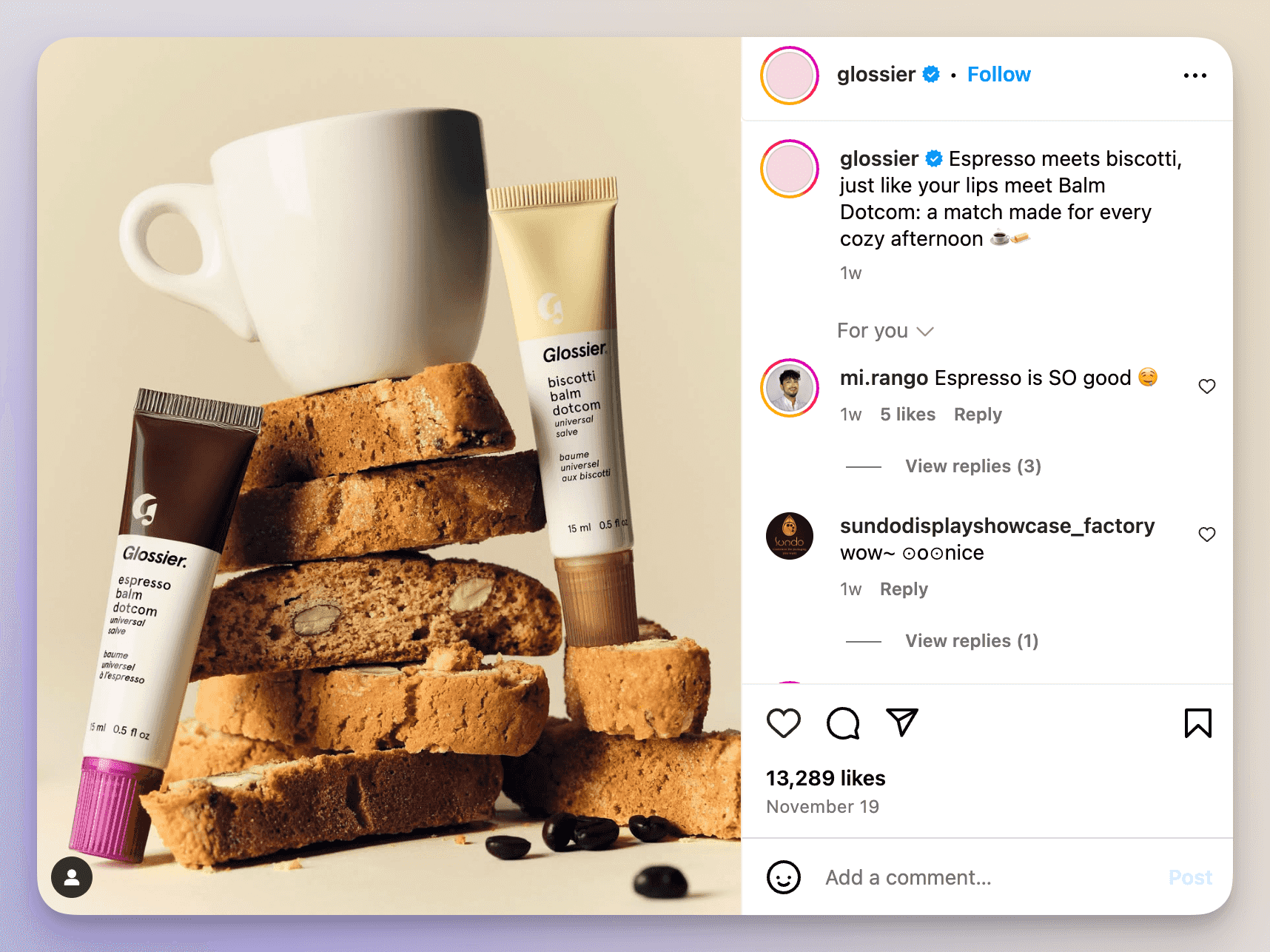
These posts don’t just make products look good—they make us want them.
#8. Kiehl’s uses #DontRebuyJustRefill to address sustainability
With 91% of Gen Z expressing a preference for buying from sustainable companies, Kiehls’ #DontRebuyJustRefill campaign serves as one of the best social media marketing examples of 2024.
Kiehl’s tapped into this mindset by creatively promoting refillable products, reducing plastic waste by 61%, and proving that eco-conscious messaging can drive both engagement and brand loyalty.
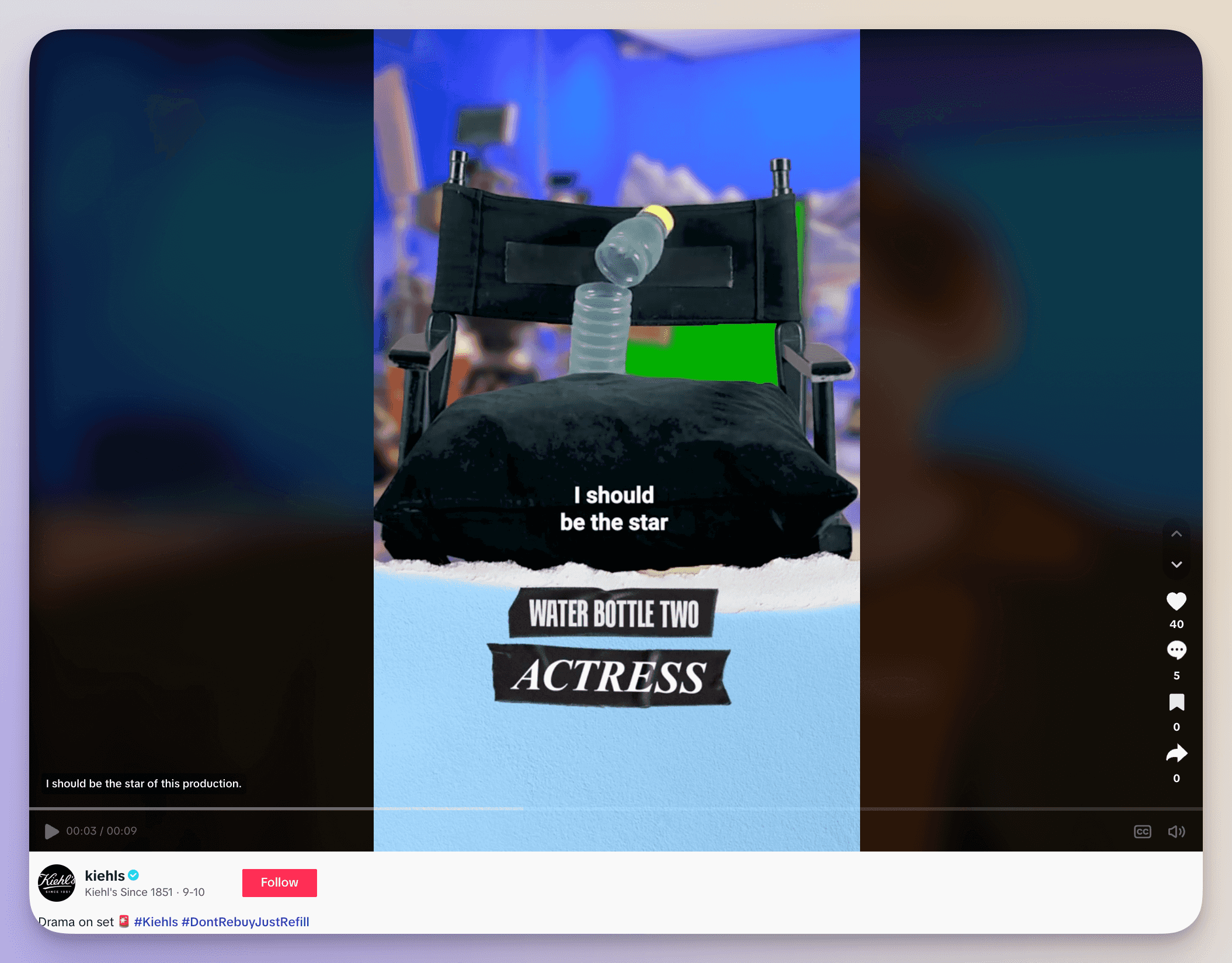
Engaging formats, like the humorous “Drama on set” video, kept the content light and shareable. Meanwhile, practical posts showcased the refill process, educating audiences on reducing waste and inspiring actionable change.
On TikTok, Kiehl’s top-performing post in this campaign garnered more than 1.5K, 40 likes, and 5 comments, with a 2.74% engagement rate per view.
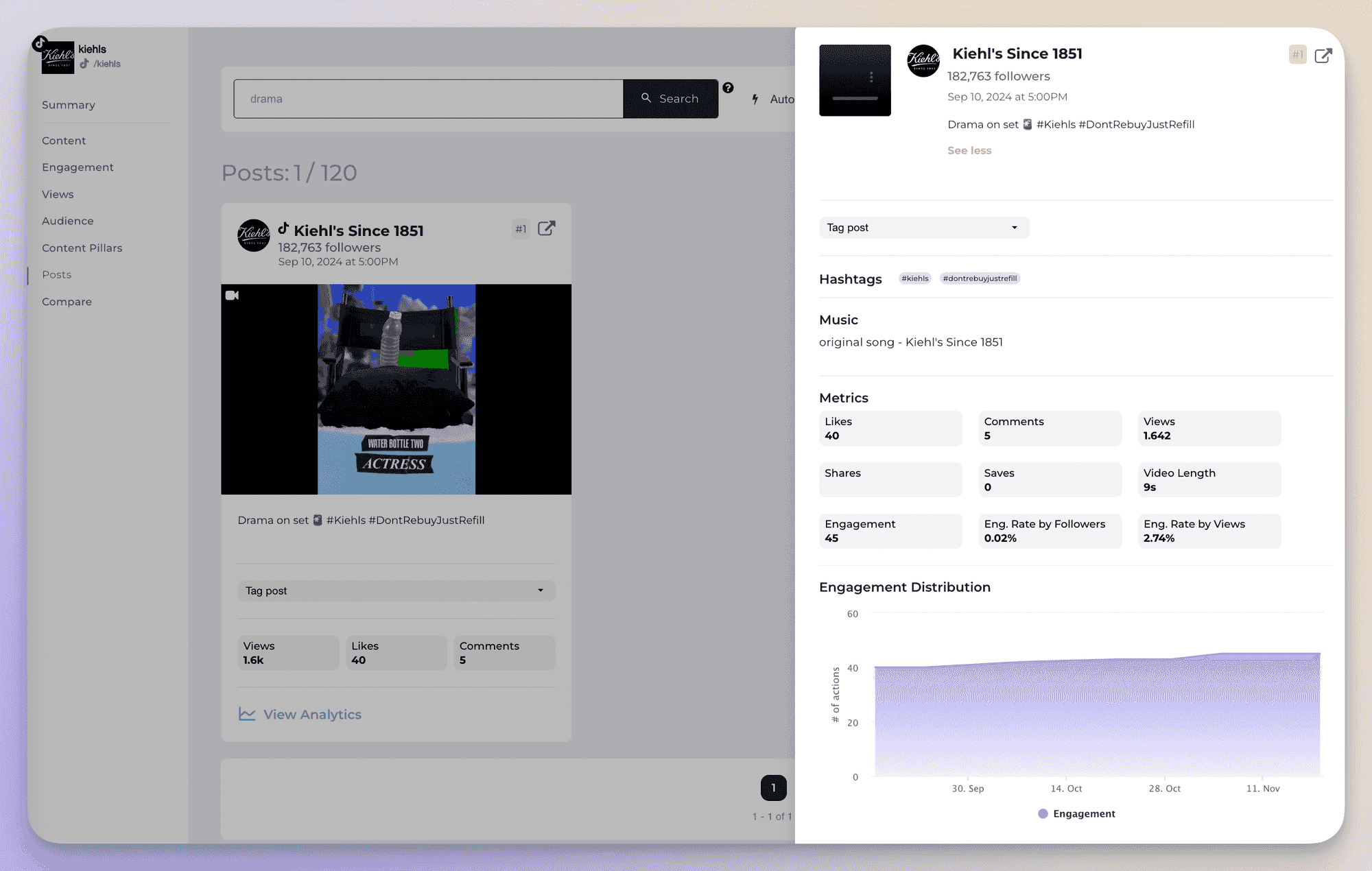
Essentially, the brand’s approach proves its ability to align sustainability with engaging content.
#9. MCoBeauty crashed the Timothée Chalamet lookalike contest
MCoBeauty, an Australian beauty brand celebrated for its affordable luxury product dupes, executed one of the most creative social media marketing ideas of 2024.
When a Timothée Chalamet lookalike contest surfaced in New York, MCoBeauty seized the moment to boost their U.S. visibility—a clever move for a brand still growing recognition stateside.
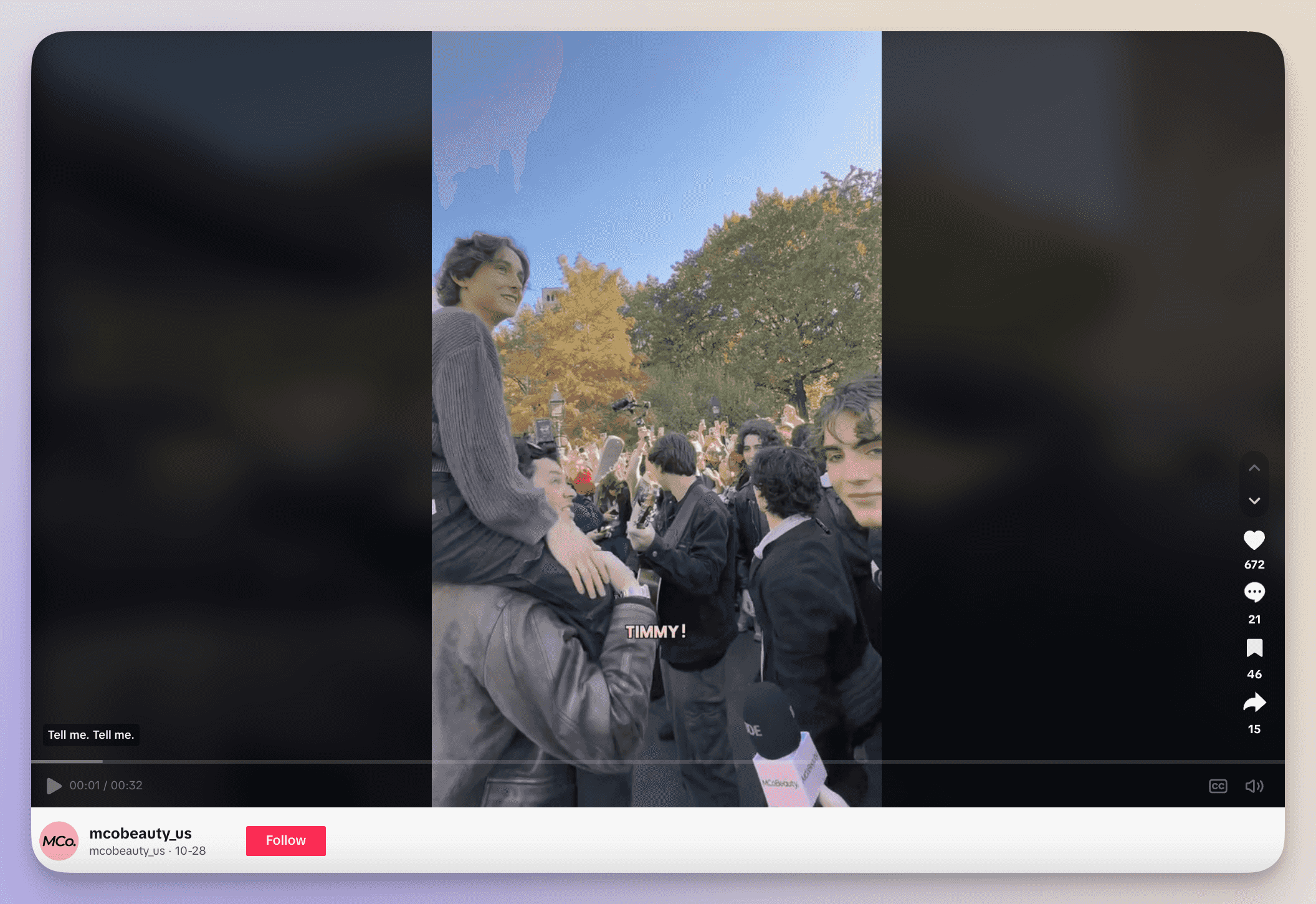
The strategy: MCoBeauty contacted influencer Cramer Ekholm, offering him his first brand deal.
They flew him to New York to participate in the contest, where he handed out 100+ makeup gifts, interviewed participants, and generated buzz at the event.
The brilliance? Most people engaging with Ekholm and MCoBeauty were interacting with the brand for the very first time.
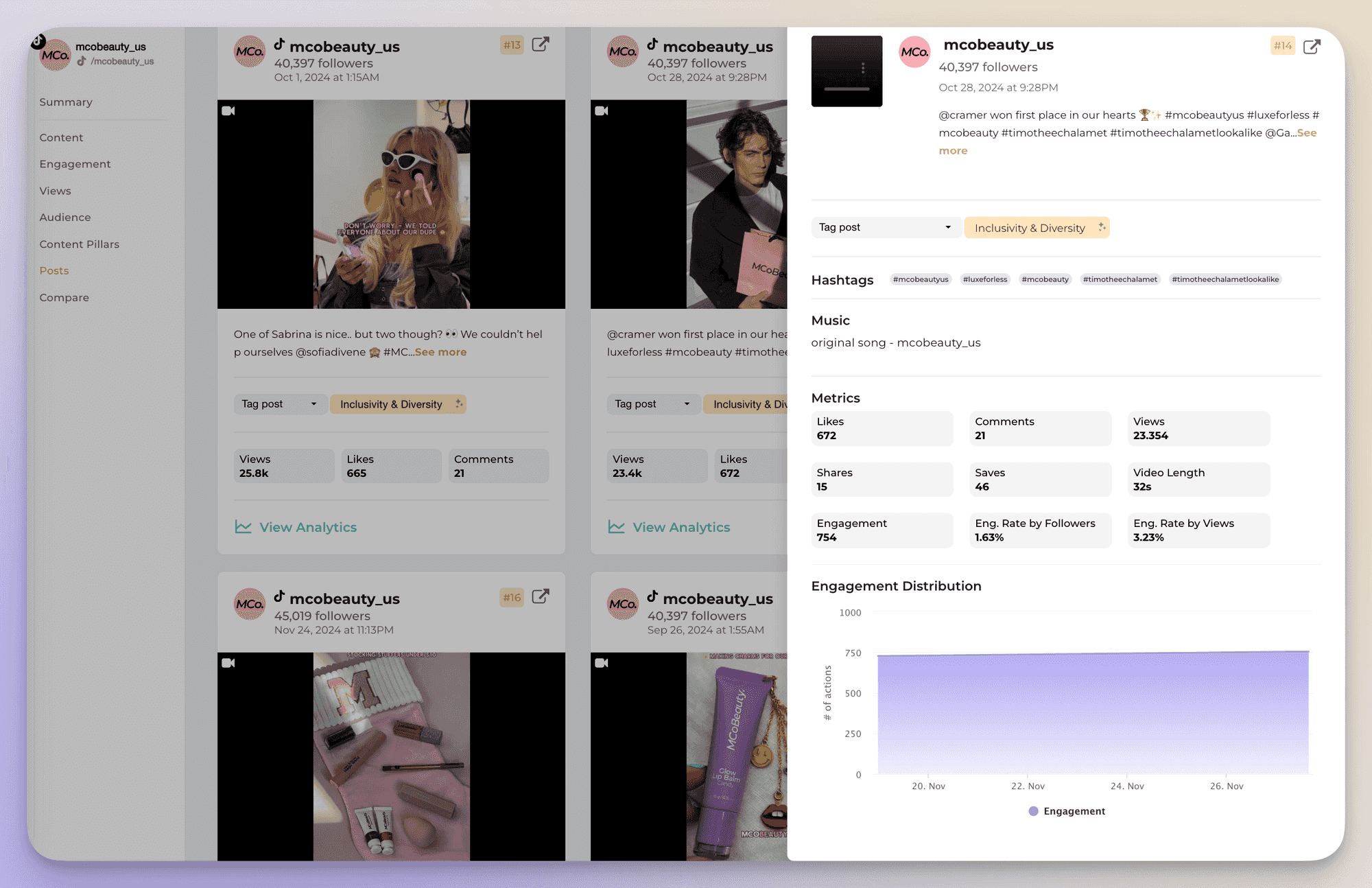
What were the results for MCoBeauty?
+57% TikTok follower growth in 30 days.
At the same time, the MCoBeauty post featuring Timothée Chalamet lookalike Cramer Ekholm garnered 23K views, with a solid 3.23% engagement rate, reflecting strong audience interest.
This marketing strategy proves that success doesn’t always mean forcing a viral moment—it’s about showing up at the right cultural moments.
Competitive analysis in the beauty & personal care industry
Beauty is loud. It’s chaotic. It moves at the speed of TikTok scrolls, not traditional “marketing cycles.” And honestly? That’s what makes competitive benchmarking in this space so weirdly fun. One day e.l.f is dropping an AI helicopter slapping a pimple patch on George Washington’s face, the next day Sol de Janeiro is out here making lip butter look like a snack you’re absolutely not supposed to eat (but kinda want to).
Trying to keep track of all this manually is how people end up with 200 screenshots on their desktop and no idea what any of them mean. A social media analytics tool like Socialinsider basically saves your sanity. Instead of “gut feeling” debates about what content style is trending, you actually see which posts shot up, which flopped, and which trends have already peaked because five competitors already burned through them last week.
You start to notice the stuff that’s not obvious at first glance, like the speed at which engagement piles up. Some brands explode in the first hour; others simmer for a day and then suddenly take off because someone stitched them on TikTok. Viral velocity becomes this little secret metric that tells you who has true momentum versus who got lucky once.
And the creativity spectrum in beauty is wild. Sensory marketing, AI spectacle, sustainability soft-sells, influencer stunts… they all look totally different in the feed, but when you see their numbers side by side, patterns start to click. You finally understand whether consumers are in the mood for “glazed donut energy” or “eco warrior refills only,” and whether your brand is matching the vibe or swimming upstream with content nobody asked for.
Influencers make the puzzle even messier—in a good way. Benchmarking shows whether creators are actually helping competitors or just gathering dust in a tagged post. You notice which brands rely heavily on influencer-led discovery and which outperform with brand-only content. Suddenly, that “random” MCoBeauty stunt makes more sense: the engagement spike wasn’t random at all, the cultural moment was simply too good to miss, and the data proves it.
The best part is when you zoom out. You start seeing quarter-over-quarter growth curves that tell you which brands are on a real trajectory, not just going viral once. Some brands are climbing steadily; others are basically plateaued in a cute but heartbreaking way. That context changes how you plan, because you’re no longer creating in isolation. You’re creating with a clear sense of what the beauty world is paying attention to, and what they’re ignoring.
Food & beverage
Food brands are the unhinged cousins of marketing. Mascots, memes, pink donuts, cats, side-eye, whatever—they’ll throw it at TikTok just to see if it sticks. And somehow? It often does.
This category doesn’t pretend to be polished or serious. It just wants attention, shareability, and the occasional “omg I need this now” moment. Competitors watch each other like hawks, because whoever catches the right trend at the right second basically wins the internet for 24 hours.
Here’s who nailed it.
#10. Domino’s turned up the fun for their Mac & Cheese launch
If you’re looking for TikTok video ideas to promote your brand, Domino’s provides a great example of online marketing.
Drawing inspiration from Duolingo’s mascot strategy, Domino’s created an adorable and quirky Mac & Cheese mascot, placing it in humorous, relatable, and unexpected situations that resonated with audiences.
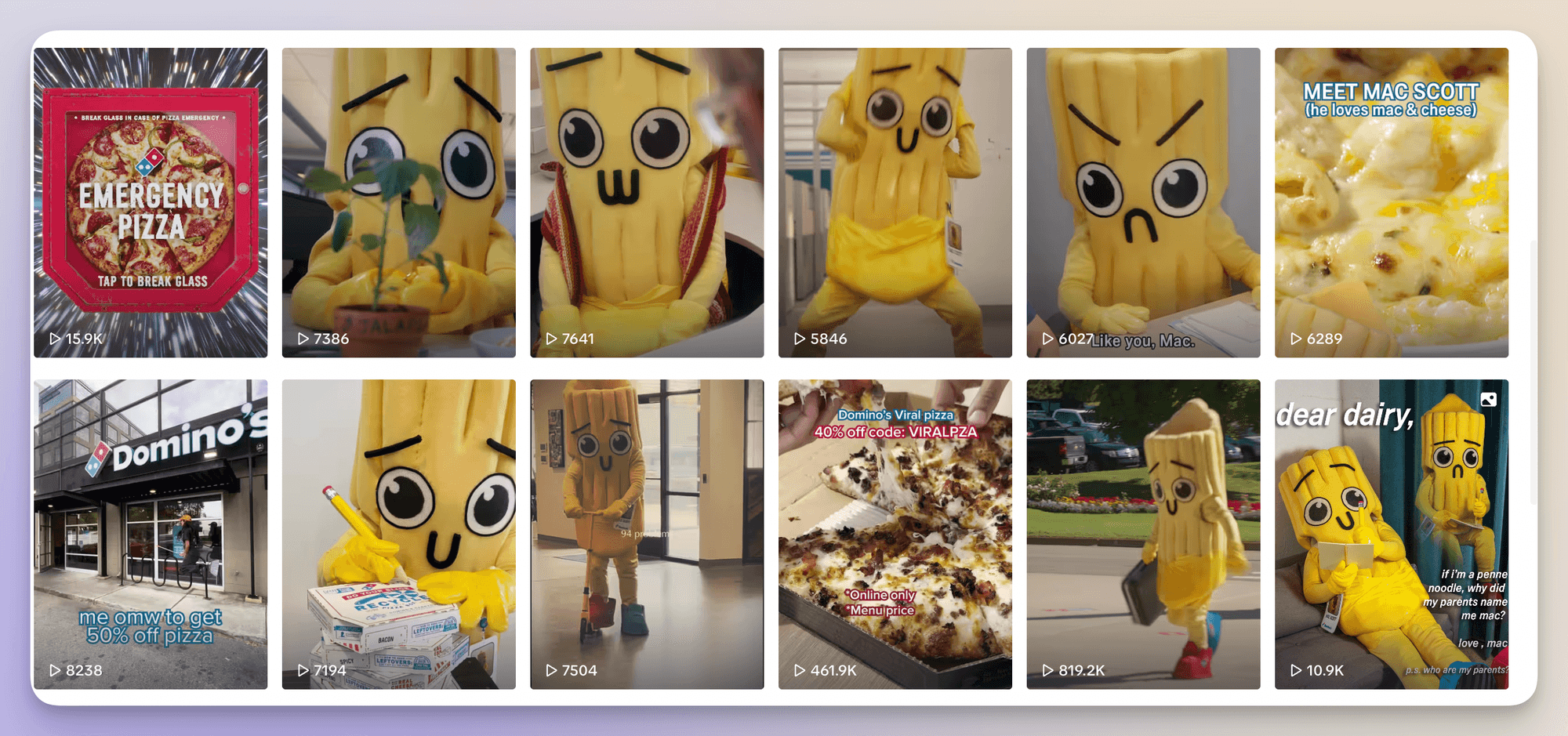
Their most popular TikTok video featuring the mascot garnered 818K views, 34K likes, 586 comments, 1,000+ shares, and 4,000+ saves, resulting in an engagement rate of 3.47% by followers and 4.94% by views.
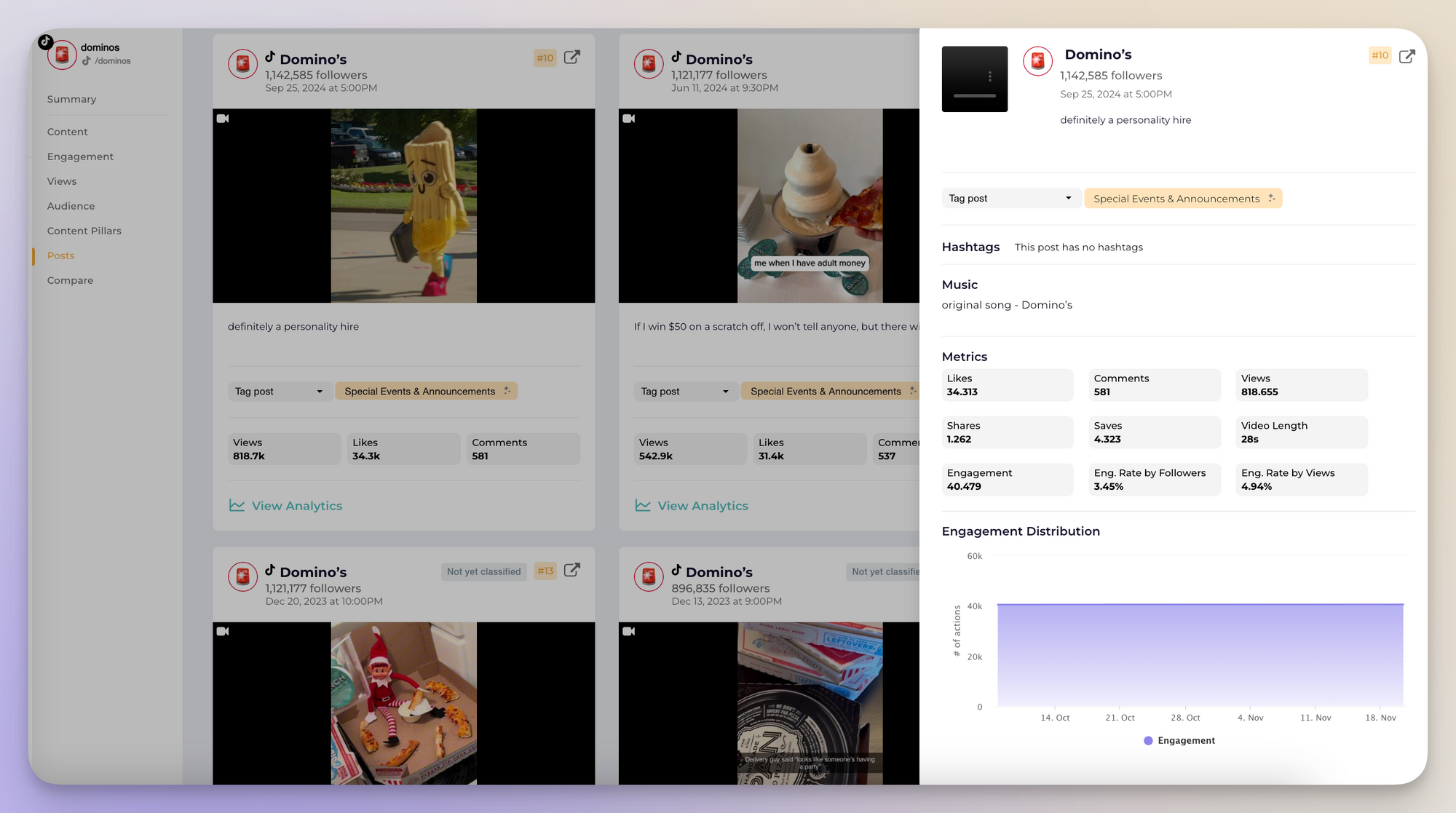
Domino’s successfully leveraged TikTok’s creative potential, showcasing how humor and personality can turn a product launch into a viral sensation.
Their mascot-driven campaign is a prime example of how to connect with audiences through entertaining and relatable content.
#11. Krispy Kreme tapped into the Barbie hype with a sweet twist
Every social media strategist knows that you need to hop on trends and cultural moments to maximize visibility.
A great example of social media advertising in this sense is Krispy Kreme, which launched a Barbie-themed donut collection to capitalize on the excitement surrounding the Barbie movie.
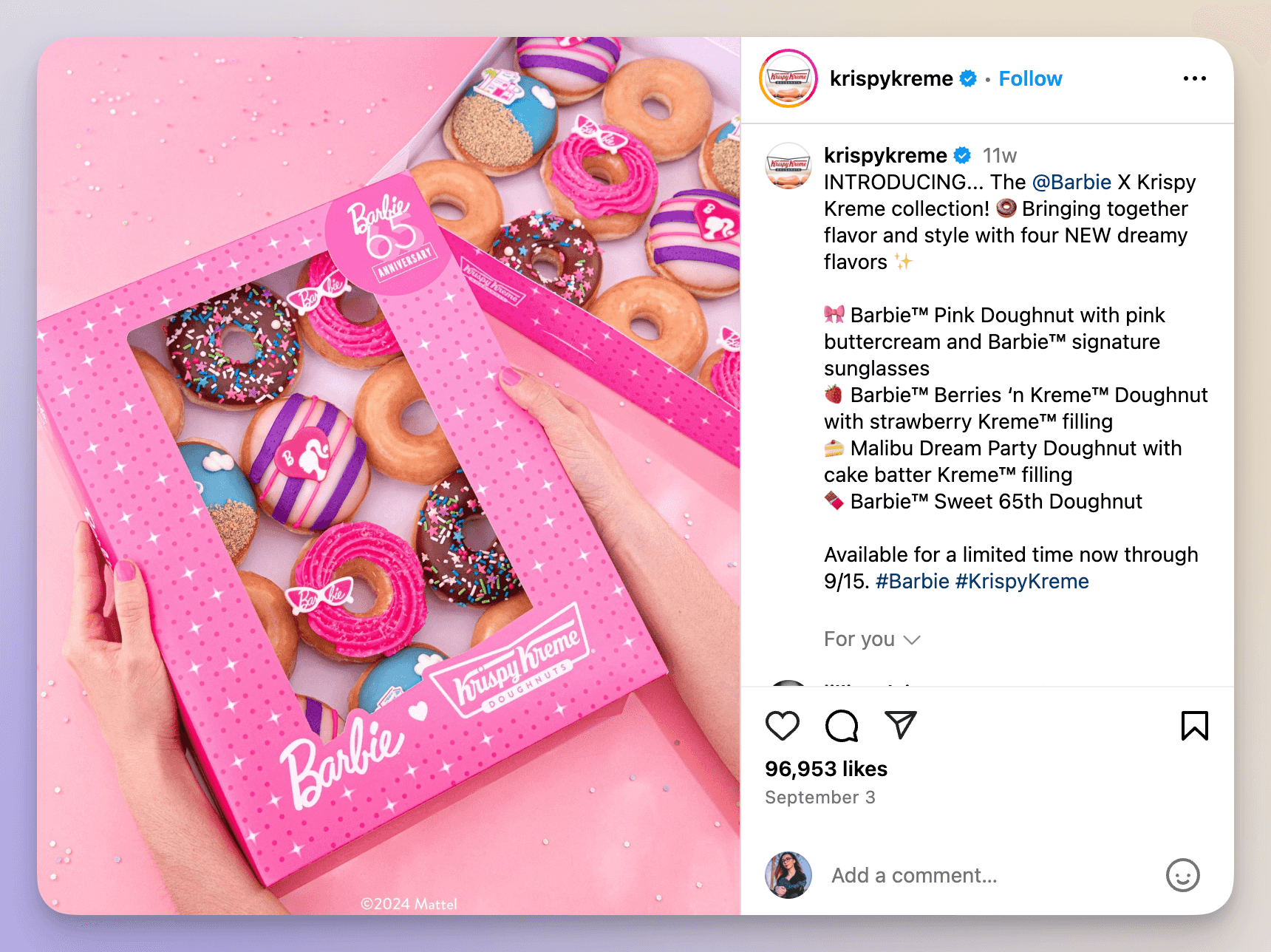
Their dedicated Instagram post featuring the dreamy pink collection achieved almost 97K likes, 1K+ comments, and an estimated reach of 487K accounts, with a total of 536K impressions and 98K engagements, resulting in an impressive social media engagement rate of 4.78%.
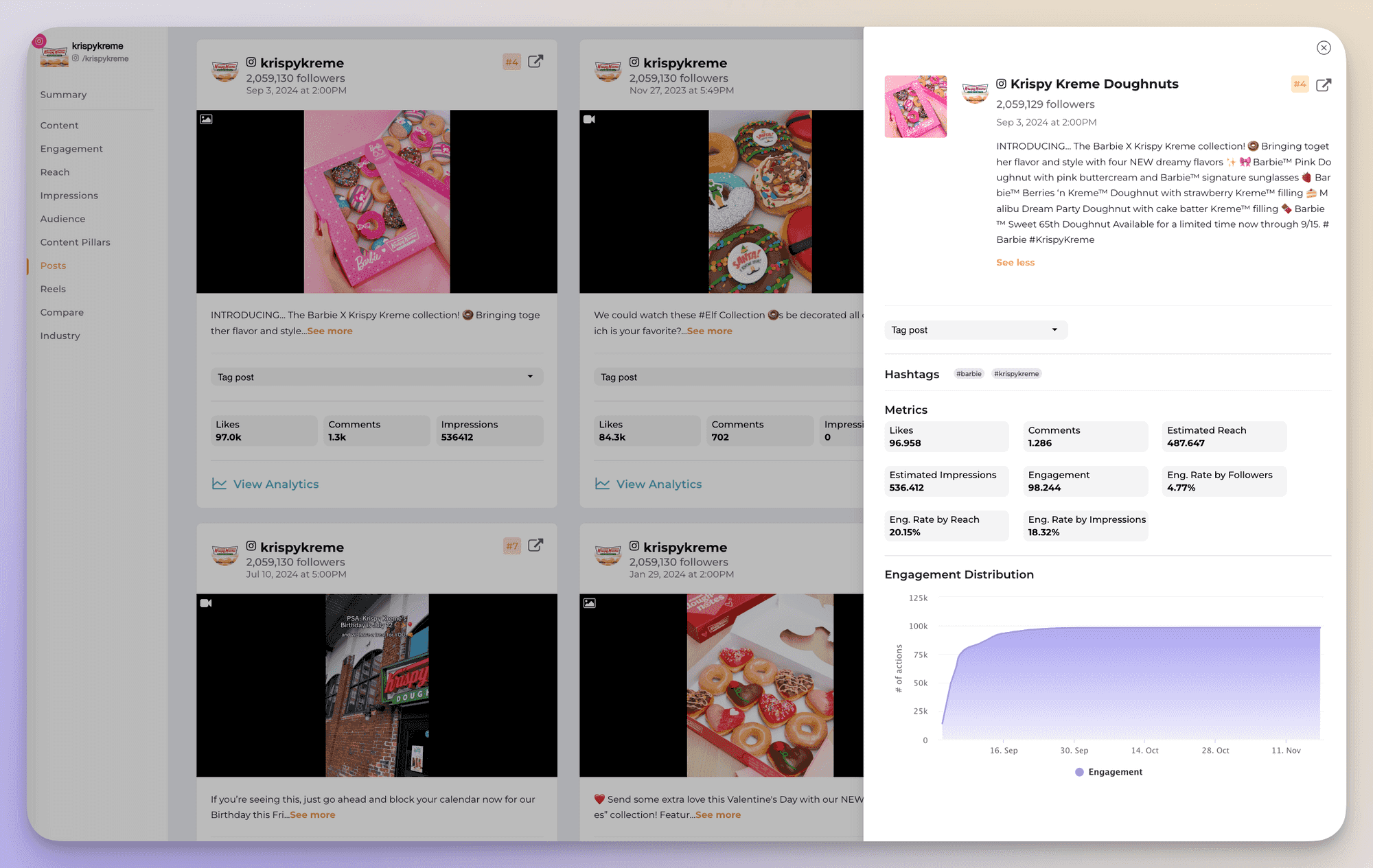
By seamlessly blending the nostalgic Barbie aesthetic with their signature donuts, Krispy Kreme turned a pop culture phenomenon into a visually stunning and engaging product campaign.
This effort perfectly demonstrates how brands can creatively leverage trends to connect with their audience while driving social media ROI.
#12. Poppi joined the “suspect...” trend
Companies that use social media marketing effectively know how to capitalize on viral social media trends.
Poppi, a rising soda brand, cleverly tapped into the popular “suspect” trend on TikTok, using humor and relatable office dynamics to create engaging content.
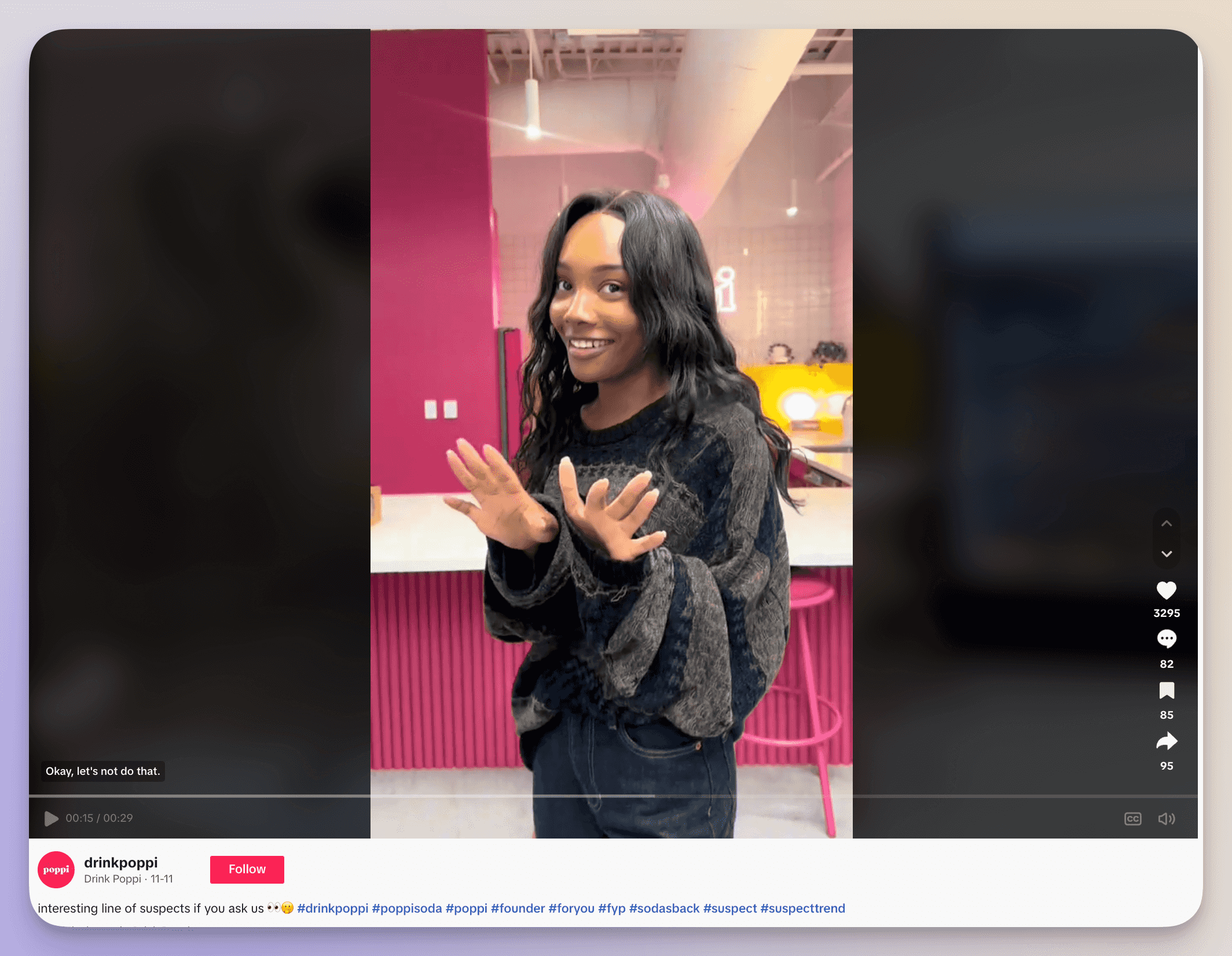
The video not only played into the relatable tension between creative marketing and corporate PR but also embraced a widely recognizable trend, ensuring its shareability and appeal to TikTok's trend-savvy audience.
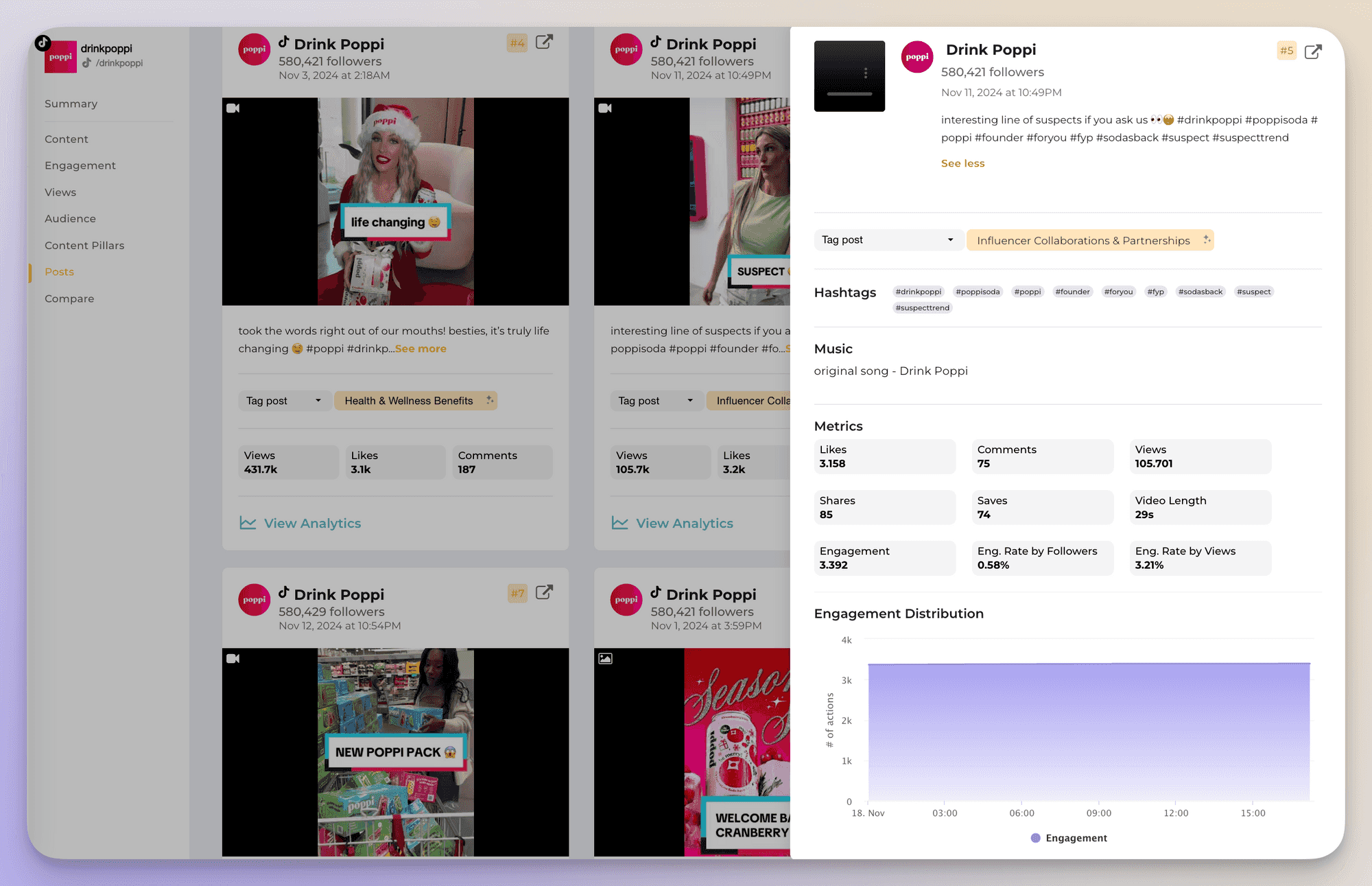
The TikTok post generated 105K views, 3K likes, and 75 comments, proving how staying attuned to social media culture can help brands foster engagement and brand visibility.
#13. SURREAL leveraged humor for brand clarity
One of the social media best practices is humor, and SURREAL’s LinkedIn campaigns perfectly illustrate this.
Faced with a mix-up where people mistook their cereal for cat food, SURREAL turned the situation into a hilarious and engaging opportunity.
One of the most memorable creative digital marketing examples is their post featuring a cat labeled “This is a cat” and their cereal box marked “This is not cat food (This is cereal).”
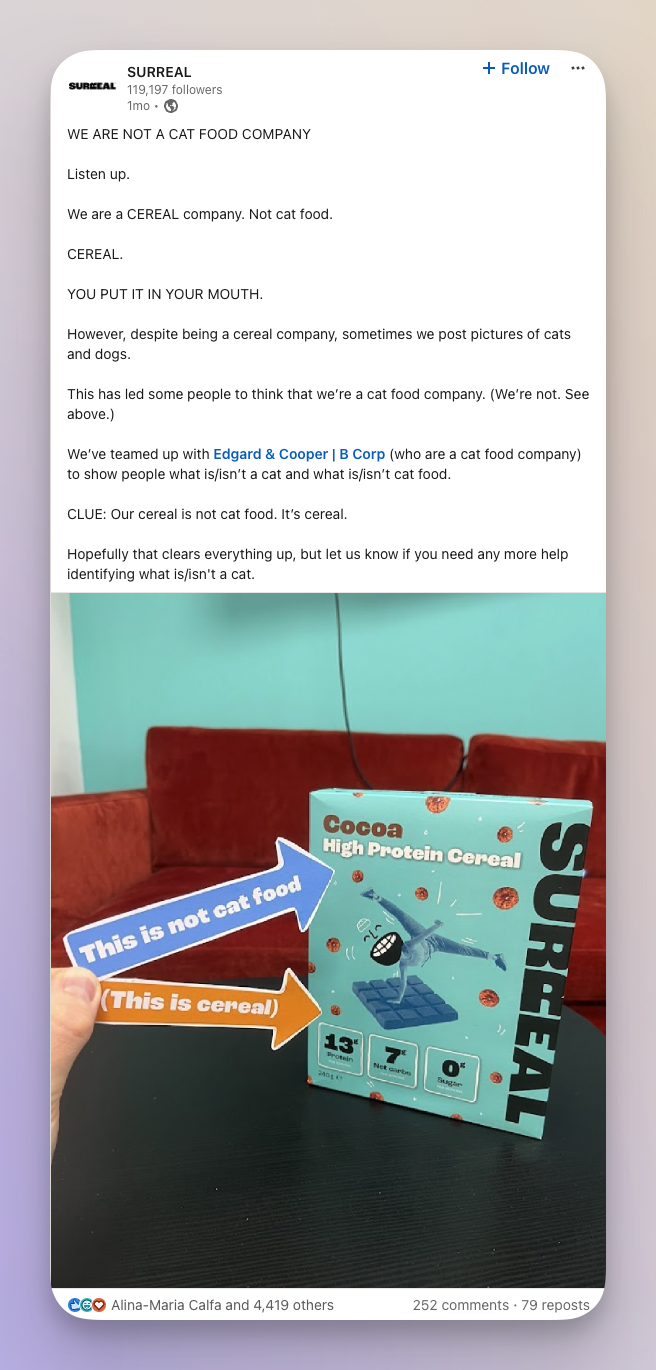
They even partnered with a cat food brand to drive the point home.
The campaign’s lighthearted tone, combined with clever visuals, sparked 4,420 reactions, 252 comments, and 79 reposts on LinkedIn.
This example highlights the impact of social media on businesses by showing how SURREAL used humor to clarify their product identity.
Moreover, it demonstrates how a creative social media strategy can drive awareness and strengthen customer connections effectively.
Competitive analysis in the food & beverage industry
Food brands play by their own rules. They’re scrappy, loud, unapologetically chaotic, and unbothered by “brand guidelines” if something is funny enough to post. Domino’s puts a Mac & Cheese mascot in a shopping cart and suddenly it’s pulling six-figure views. Poppi jumps on a meme about workplace “suspects,” and somehow it becomes their most relatable content of the month. And then there’s Krispy Kreme riding the Barbie wave like they were contractually obligated to wear pink.
Because the category moves this fast, competitive benchmarking turns into its own kind of detective work. Socialinsider cuts through the noise by showing exactly which trend-jumpers were early, which were late, and which managed to turn a fleeting meme into real engagement instead of a polite chuckle and a scroll-past. You start to see the difference between “we posted something funny” and “we posted something funny that actually worked.”
Humor is messy to analyze, but the data makes it make sense. Sometimes the joke hits because the timing was perfect; sometimes it’s because the brand has trained its audience to expect nonsense and cheer it on. Seeing competitors’ performance side-by-side makes these patterns embarrassingly obvious. That SURREAL cat-food mixup? The engagement didn’t just come from the joke; it came because the brand doubled down on it publicly, consistently, and with better punchlines than anyone expected.
And then there’s the rhythm of posting, which is very different here than in beauty or fashion. Food brands often rely on volume, especially on TikTok, posting multiple times a week (or day, if they’re really unhinged). Benchmarking makes it clear who’s winning because they’re consistently active, and who’s winning because they’re convincing people to save and share everything they post. Saves and shares matter a lot more in this category than brands like to admit; they indicate cravings, intent, maybe even a future order.
Zooming out is where the magic happens. Across a quarter, you see which moments drove follower bumps, which collaborations breathed new life into stagnant feeds, and which seasonal pushes actually paid off. FMCG brands have some of the most dramatic engagement swings, and with proper benchmarking, those swings stop feeling random.
Entertainment & media
Entertainment marketing is its own sport. The goal isn’t just to sell tickets or streams, it’s to take over the cultural conversation entirely. Or at least to make people argue about it in the comments.
These brands pull every lever available: fandoms, IP, nostalgia, cross-industry collabs, influencer chain reactions, skyscraper takeovers… subtlety is not the vibe here. When entertainment brands go big, everyone else scrambles to keep up.
#14. Disney’s Inside Out 2 blended social media and OOH
Using social media to advertise, Disney elevated the launch of Inside Out 2 by blending digital engagement with out-of-home activations.
The campaign featured immersive skyscraper projections and massive billboards while leveraging platforms like Facebook to directly connect with fans.
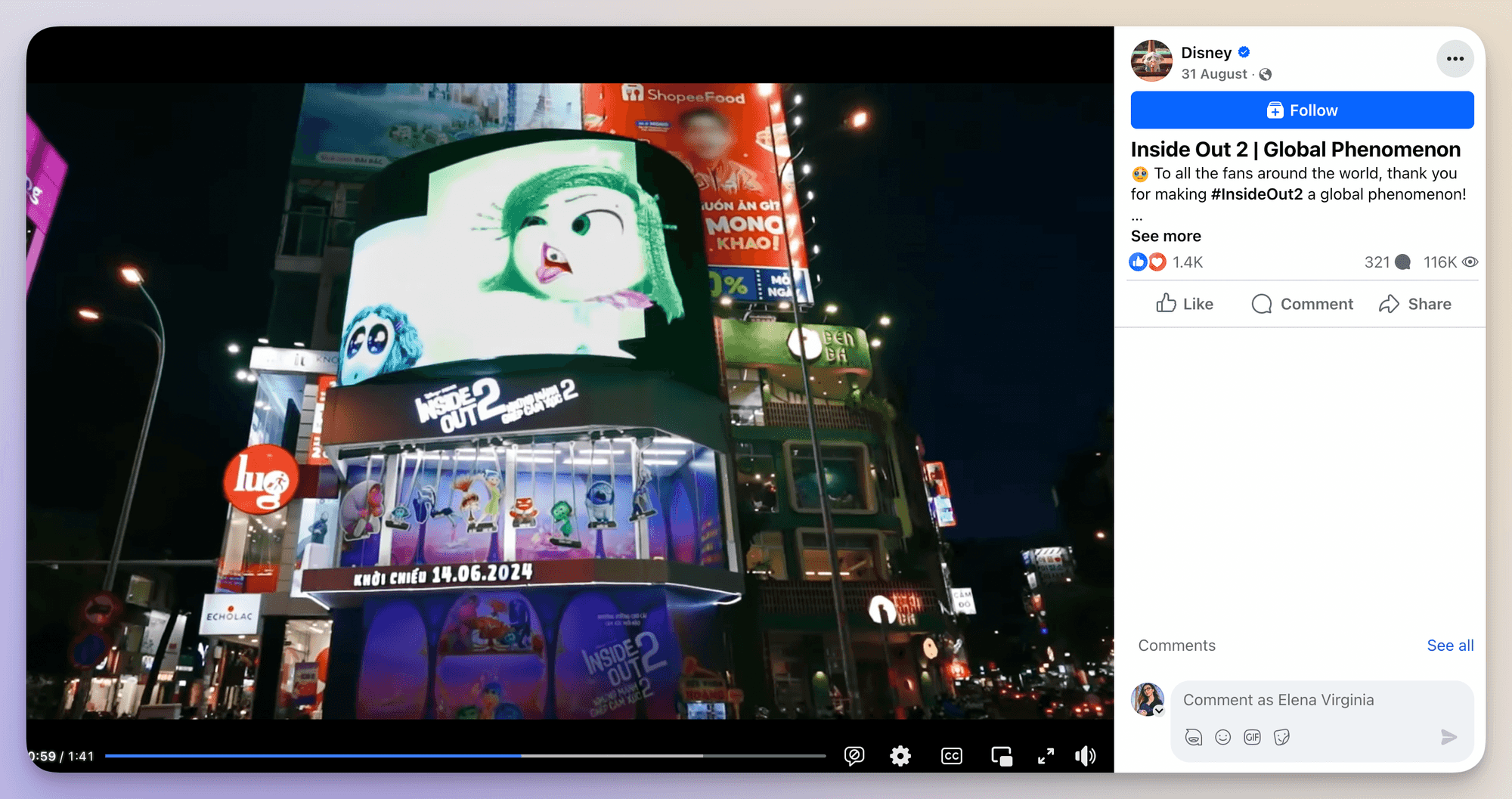
A standout Facebook post thanking audiences for turning the movie into a worldwide phenomenon generated 1.5K reactions, 323 comments, and 119 shares, reaching almost 88K people and achieving 88K impressions.
The post amplified fan excitement, while the OOH visuals brought the movie to life in cities worldwide.
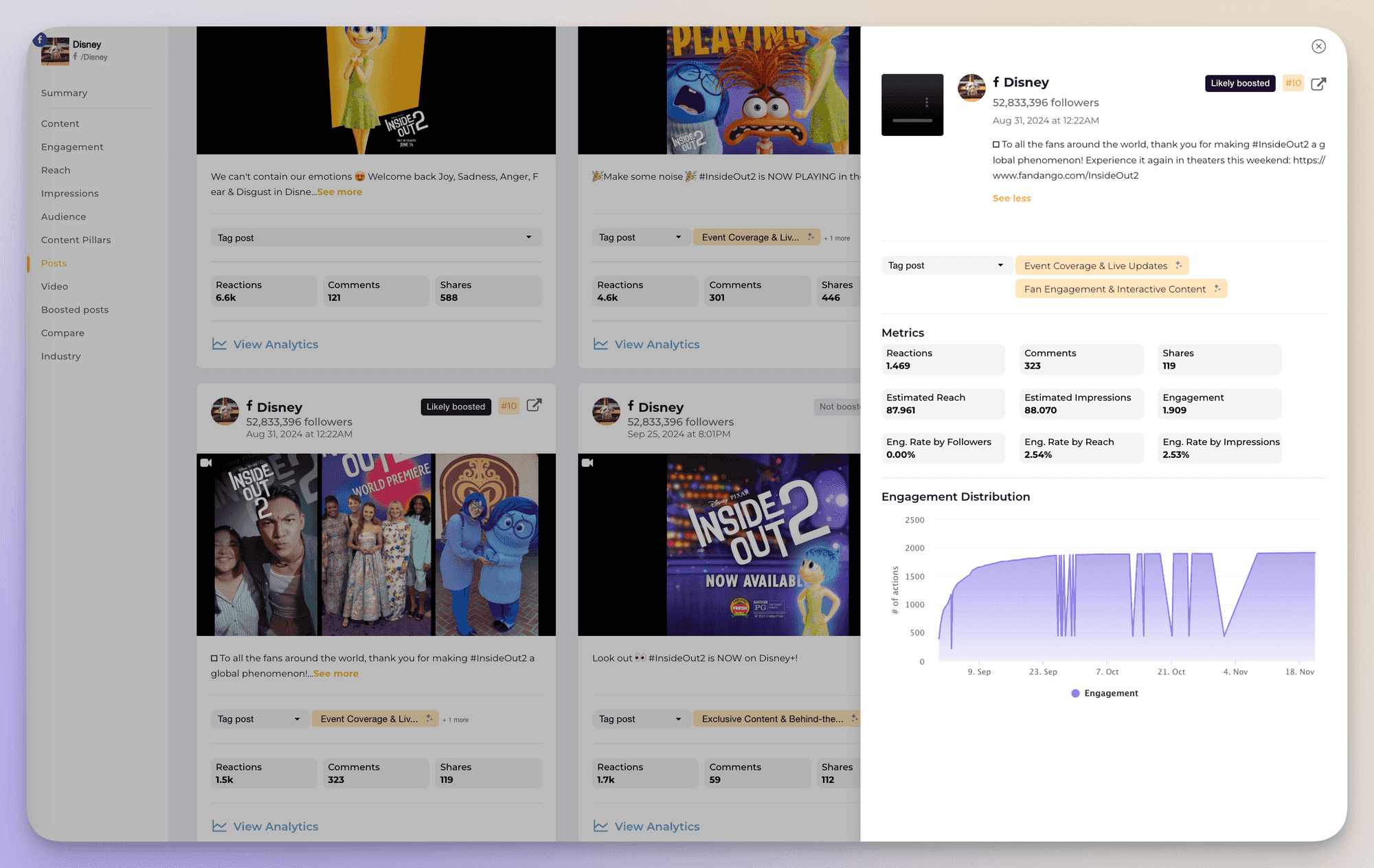
This strategy highlights Disney’s ability to seamlessly integrate social media actions alongside offline campaigns, turning a product launch into an unforgettable global experience.
#15. Wicked Movie boosts hype through cross-industry partnerships
The Wicked movie’s collaboration strategy is a masterclass in understanding audience behavior and bringing effective marketing ideas to life.
By partnering with diverse brands across beauty, fashion, travel, and lifestyle, Wicked seamlessly integrates its iconic green and pink branding into everyday consumer touchpoints.
From OPI’s enchanting nail polishes to Stanley tumblers and Crocs, each collaboration ensures the movie’s presence wherever fans might be.
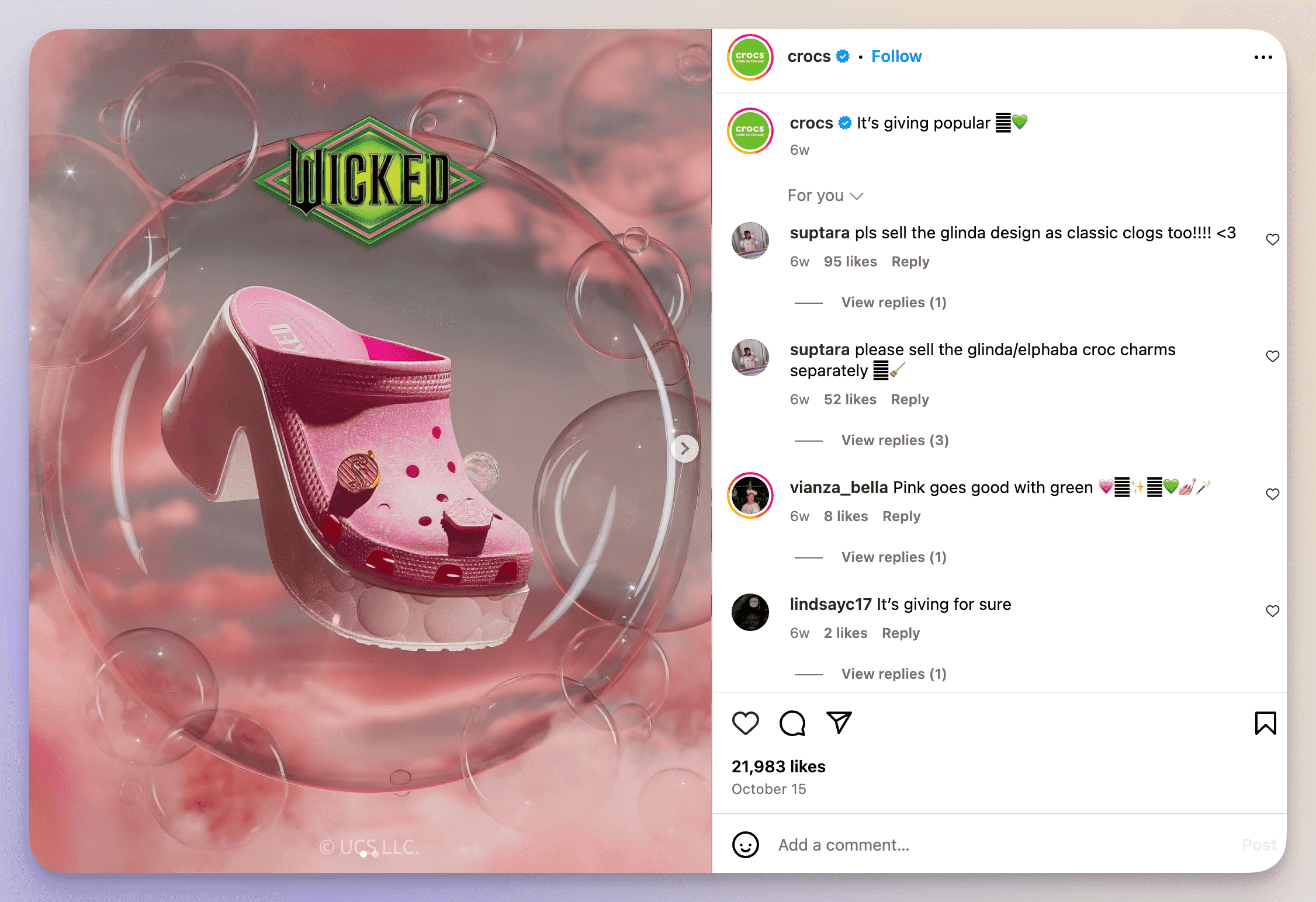
This omnipresence not only builds familiarity but also excites and engages audiences by offering tangible, branded products they can connect with.
A fan might spot Wicked-inspired green and pink nail polish at their salon, see a Stanley tumbler at the gym, and then scroll past R.E.M Beauty’s Elphaba-inspired eyeliner on Instagram—all reinforcing the movie’s relevance and aesthetic.
By appearing consistently across these touchpoints, Wicked deepens the emotional connection with its audience, strengthening brand awareness and ensuring top-of-mind recall.
It positions the film as more than just a movie—it becomes a lifestyle statement.
Essentially, this strategy shows that great marketing is about becoming a seamless part of everyday life.
#16. SheerLuxe won TikTok with employee-generated content
Among the companies with great social media, SheerLuxe stands out as a pioneer in how to create content for social media using employee-generated content.
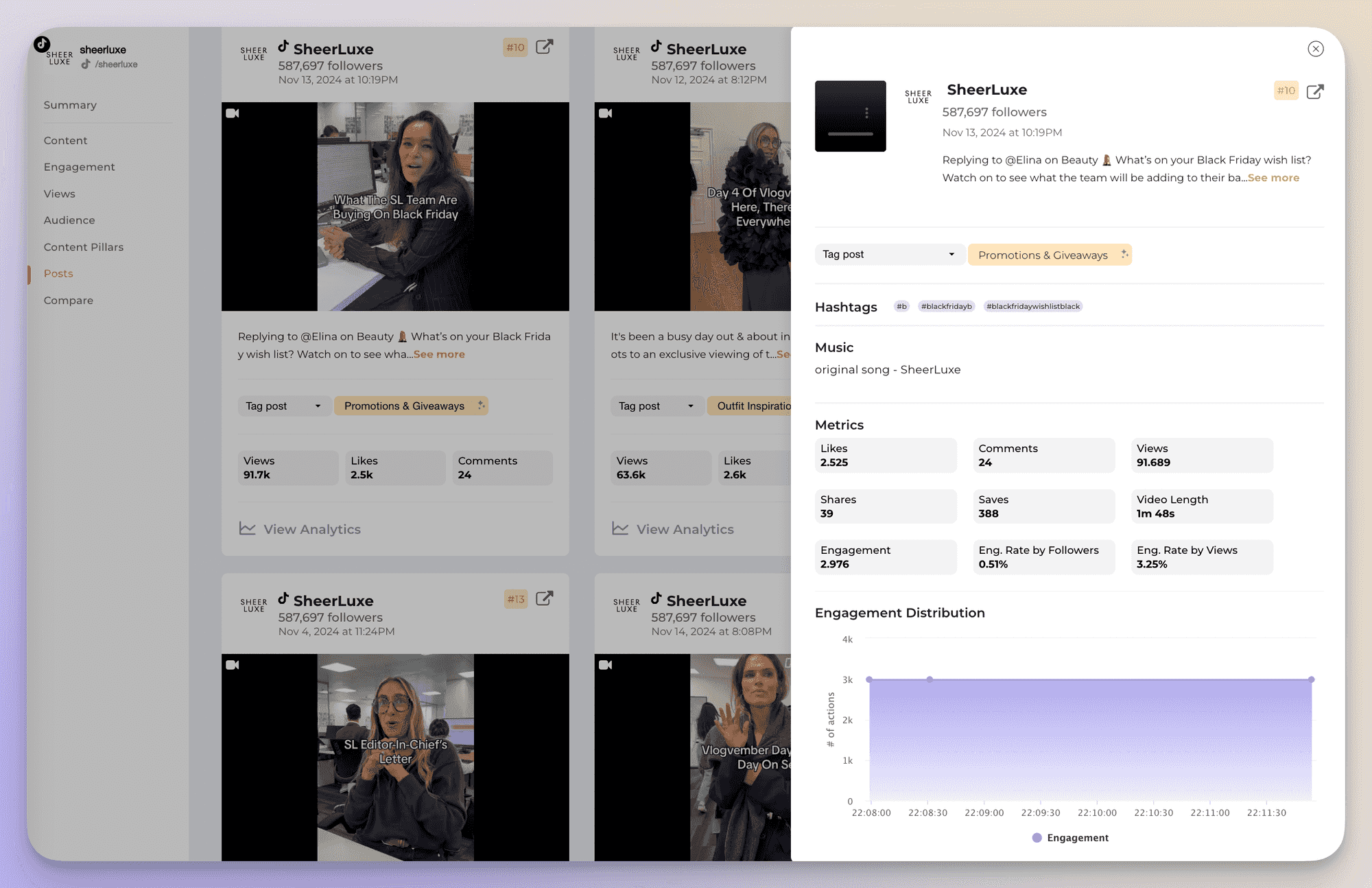
Digital fashion and lifestyle publication SheerLuxe has captivated over half a million fans on TikTok by simply going around their office and asking employees for their go-to products, favorite outfits, or lifestyle tips.
This casual and relatable approach has proven to be a goldmine for engagement, making EGC a cornerstone of their strategy.
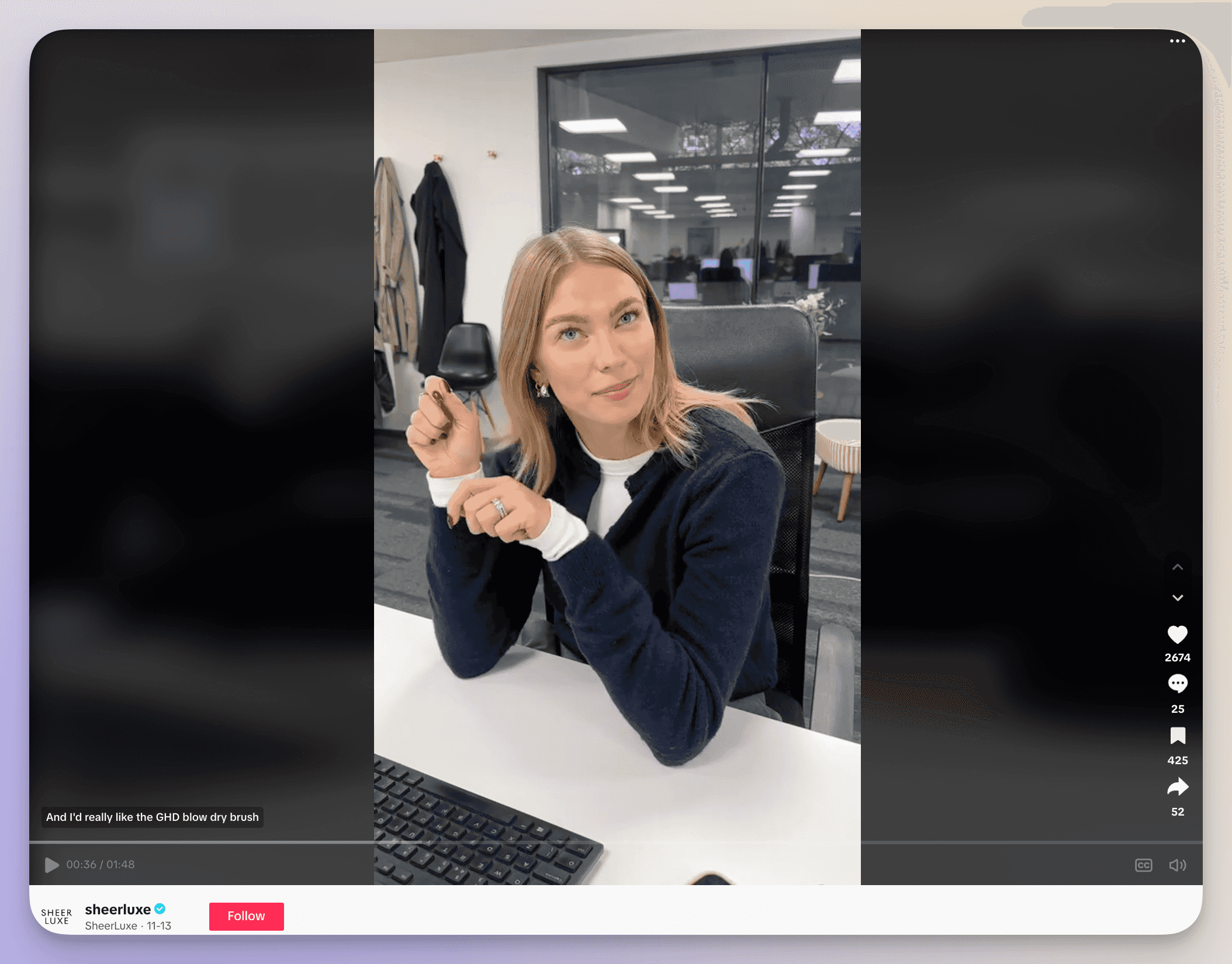
One of their best-performing TikTok posts in the last three months showcases their ability to blend authenticity with entertainment.
The post, in which the office girlies explain how to achieve the perfect ring stack, generated 91K views, 2.5K likes, and an impressive 3.25% engagement rate by views.
It’s a clear testament to how showing real employees with real recommendations resonates with audiences seeking authenticity in a world dominated by polished influencer content.
So, why does EGC work?
The answer lies in our era of authenticity.
While we follow influencers for lifestyle aspirations, audiences today crave relatability—normal people who mirror their own lives.
By letting employees step into the spotlight, SheerLuxe makes their content approachable, giving viewers a reason to connect with their brand on a human level.
So, remember, don’t sleep on EGC—it’s not just a trend; it’s the future of relatable content. For brands wondering how to achieve their social media goals in a creative way, SheerLuxe offers a simple formula: turn your office into a studio, empower your employees to share their perspectives, and let their unique personalities shine.
#17. Bratz tapped into nostalgia with Mean Girls
One of the most creative social campaigns examples in recent months is the collaboration between Bratz and Mean Girls.
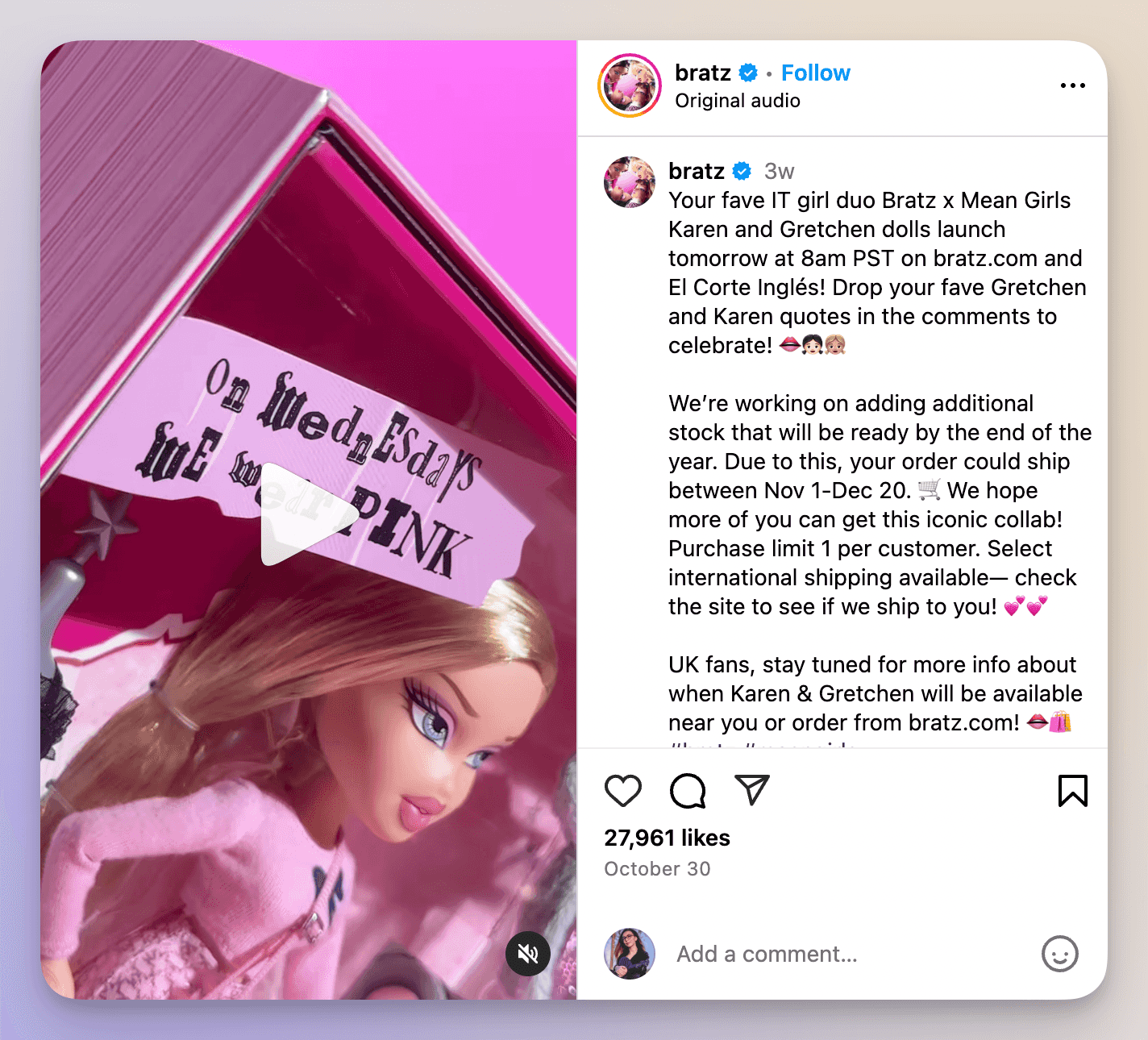
Capitalizing on the enduring nostalgia of the 2004 cult movie, Bratz launched a collection of dolls inspired by the iconic characters Karen and Gretchen, generating immense excitement among fans.
The campaign combined engaging visuals with pop culture references, encouraging followers to drop their favorite Mean Girls quotes in the comments.
This collaboration not only brought together two powerhouse brands but also achieved outstanding metrics.
Their post announcing the launch garnered 559K likes, 2.2K comments, 1.5M impressions, and an impressive 561K engagement.
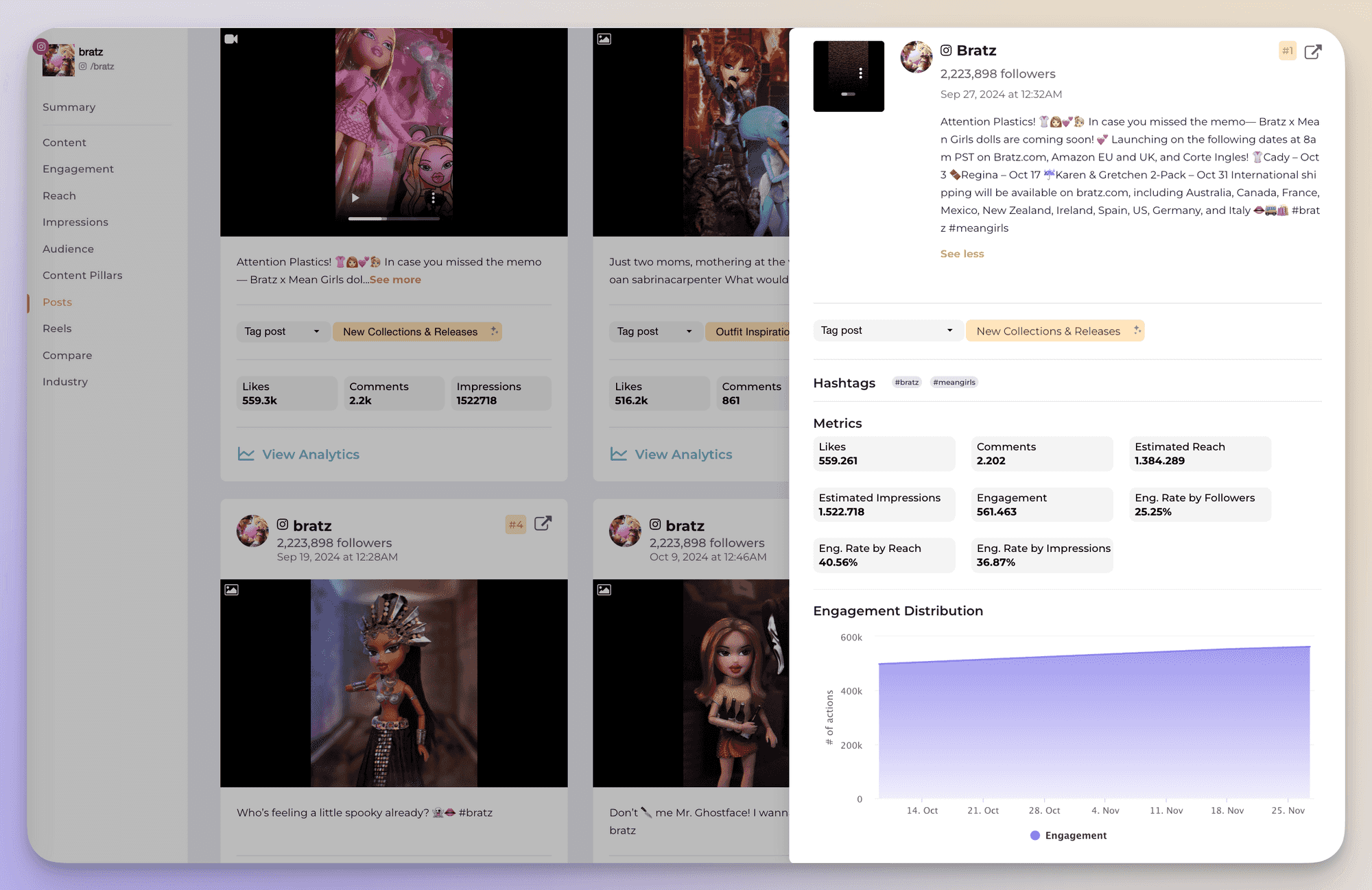
It ranks as one of their top 3 best-performing posts on Instagram in the last 3 months, showcasing the power of blending nostalgia with a well-executed product launch.
Competitive analysis in the entertainment & media industry
Entertainment brands don’t just “post content.” They orchestrate hype. They build worlds. They weaponize nostalgia, fandoms, leaks, duets, watch parties, billboards, influencer reactions, anything that gets people talking. When Disney and Wicked go all in, you feel it. When Bratz drops a Mean Girls collab, the timeline basically turns pink overnight. And SheerLuxe? They’re proof that you don’t need a blockbuster budget if you have charismatic employees who love talking to your audience.
Benchmarking in this category is less about raw numbers and more about heat. Who’s the moment? Who owns the conversation? Who’s everywhere you look even when you’re not looking for them? A platform like Socialinsider helps you quantify that heat so you’re not just relying on vibes or your personal For You Page, which, let’s be honest, is always biased.
Cross-industry partnerships are especially fun to track. Entertainment brands love attaching themselves to consumer products—nail polish, tumblers, Crocs, you name it. When you benchmark these collabs, you start seeing which ones actually moved needles and which ones were, well… cute. Some partnerships flood the feed; others barely make a ripple. Seeing impression and engagement surges right next to each other suddenly makes the winners impossible to ignore.
Then there’s nostalgia, the cheat code of this category. Bratz x Mean Girls works because entire generations have emotional muscle memory tied to both brands. Benchmarking shows just how powerful these nostalgia spikes are, especially when compared to regular posts.
And let’s not forget EGC. SheerLuxe proves that sometimes the simplest approach—just pointing a camera at your team—builds more trust and conversation than polished studio content. Benchmarking helps measure that authenticity factor in a way that actually sticks: repeat engagement, view retention, and the kind of comment sections people willingly write paragraphs in.
When you zoom out, entertainment benchmarking becomes almost addictive. You see which brands sustain hype through clever sequencing, which ones blow everything in the first week of launch, and which ones quietly build a cult following by posting consistently human, unfiltered content. Suddenly you’re not just watching the industry, you’re reading it.
Hospitality & travel industry
Travel brands live and die by imagination. Who can make strangers on the internet pause, sigh dramatically, and whisper “book it”? And in a category where everyone posts beautiful scenery, the real competition shows up in who can tell a story that feels like escape, or adventure, or childhood magic.
Airbnb didn’t just pick a lane; they built a tiny, plastic, nostalgia-fueled highway.
Let’s dive in.
#18. Airbnb used #PollyPocket to bring fictional locations to life
Another social media campaign worth mentioning is Airbnb’s #PollyPocket.This creative marketing move turned fictional nostalgia into real-world travel experiences.
Launched in August 2024, the campaign brought Polly Pocket-inspired destinations to life, allowing audiences to book accommodations modeled after these iconic miniature worlds.
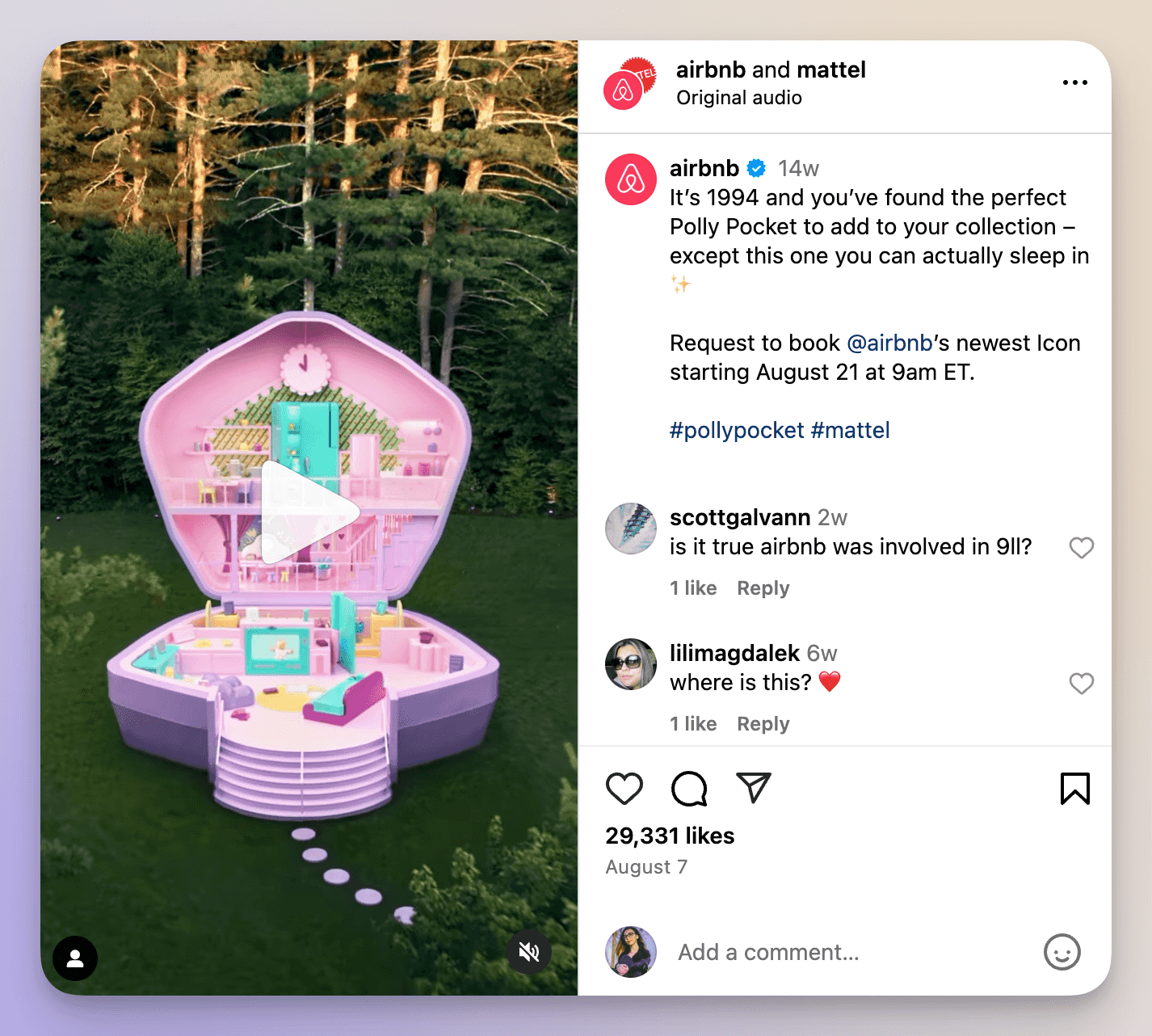
The campaign’s highlight post on Instagram achieved 29K likes, over 1K comments, and reached an estimated 424K accounts, with total impressions reaching 466K.
This translated into an engagement of 30K interactions, with a follower engagement rate of 0.52%.
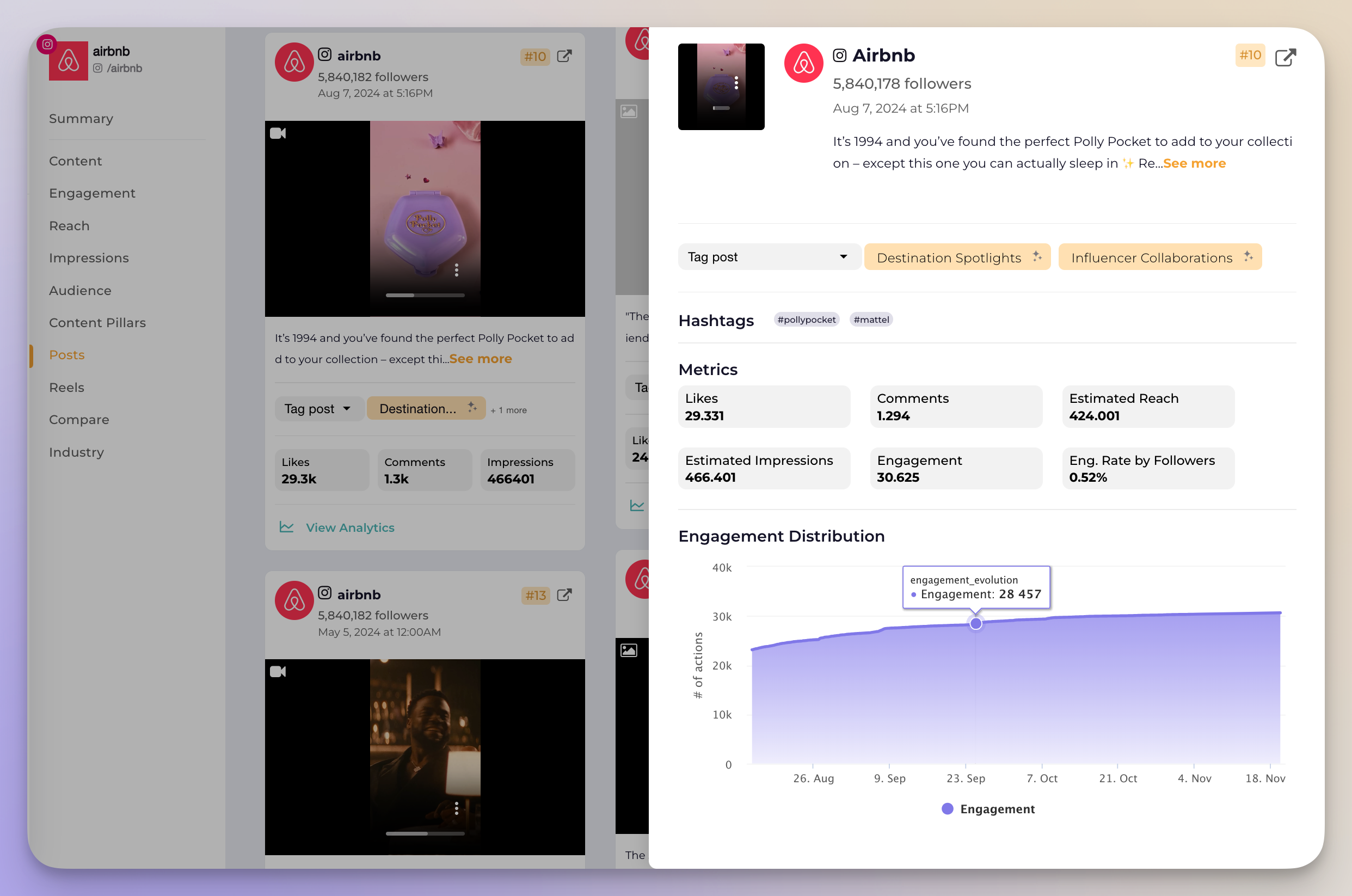
By blending nostalgia, creativity, and an immersive experience, Airbnb showcased one of the most memorable social marketing examples.
The Polly Pocket campaign not only captured the imagination of its audience but also highlighted Airbnb’s ability to turn unique and playful stays into reality, solidifying its position as the go-to platform for extraordinary travel experiences.
Competitive analysis in the hospitality industry
Travel is pure emotion. People follow travel brands not just to plan trips, but to daydream, escape, argue about their bucket lists, or pick their next “main character” moment. So when Airbnb drops something like a Polly Pocket-themed stay, it hits both the wanderlust crowd and the nostalgia crowd. Benchmarking in this category is about understanding how those emotional triggers behave across platforms.
Socialinsider makes this surprisingly easy to see. You notice right away whether immersive, fantasy-driven content (like miniature worlds you can actually sleep in) outperforms classic travel posts (sunsets, pools, cliffs, repeat). Spoiler: it usually does. You also see which competitors rely heavily on cinematic visuals versus those banking on story-driven hosts, local culture, or UGC from guests.
The saves metric becomes your best friend here. Likes are nice, comments are predictable, but saves tell you who’s inspiring real travel intent. When you stack competitors’ save rates side-by-side, you start seeing which brands have genuinely aspirational offerings and which ones are “pretty but forgettable.” It’s a humbling metric, in the best way.
Partnerships and IP-driven moments stand out too. Some travel brands play it safe with seasonal promos. Others, like Airbnb, blow open the category by tying accommodations to cultural icons. Benchmarking these moves reveals how often competitors tap into fandom culture, nostalgia, or entertainment tie-ins, and whether those efforts translate into measurable reach or just passive admiration.
When you zoom out, the long-term trends matter even more. Travel brands often grow in waves—a viral stay here, a seasonal push there, a sudden spike when a creator with millions posts their cottage tour. Benchmarking takes those waves and shows whether they’re adding up to something meaningful or just isolated blips. It becomes clear which brands are building a real gravitational pull, and which are still waiting for their moment.
Final thoughts
If there’s one thing all these campaigns prove, it’s that social media isn’t a vibe-based guessing game anymore, it’s a competitive sport. Brands aren’t just posting; they’re tracking, comparing, adjusting, learning, copying (shh!), and fighting for inches of cultural relevance.
You can’t “feel your way through” social in 2026. Not when your competitors are measuring everything, spotting patterns you missed, and pulling off ideas you swear you thought of first.
But the good news? The bar has never been lower and higher at the same time. You don’t need million-dollar productions. You don’t need a celebrity (though it helps). You don’t even need perfection. You just need clarity—who you’re up against, what they’re doing, and why it’s working.
Because once you know that?
The next standout campaign doesn’t feel impossible. It feels… kinda inevitable.
Anda Radulescu
Content writer & copywriter with a 5-year track record in digital marketing. Equal parts keen observer & committed go-getter. A proud cat mom with a passion for music & exploring the world.

Analyze your competitors in seconds
Track & analyze your competitors and get top social media metrics and more!
You might also like


Improve your social media strategy with Socialinsider!
Use in-depth data to measure your social accounts’ performance, analyze competitors, and gain insights to improve your strategy.