TikTok Influencer Analytics: How to Vet Creators Using Performance Data
Learn how to leverage TikTok influencer analytics to vet creators and build effective partnerships. Discover top metrics and insights to gather.


Choosing the right TikTok creator for your campaign takes more than scrolling through profiles, checking follower counts, and being impressed by a few viral videos.
Effective TikTok influencer analytics means evaluating audience quality, engagement patterns, and content alignment before committing your time, budget, and brand reputation to a partnership.
In this guide, I’ll show you how to use TikTok analytics and content analysis to make smarter influencer decisions. Let’s sort through steps, tools, and best practices.
Key takeaways
-
How to analyze TikTok influencers before partnering with them:
To choose the right TikTok influencer, you need to look past follower counts and understand how real their audience is, how consistently they perform, and whether their content and values genuinely align with your brand. -
What data and functionalities do you need for an effective TikTok influencer analysis? An effective TikTok influencer analysis relies on clear audience demographics, long-term performance data, authenticity checks, and practical reporting tools that help you connect creator activity to real marketing outcomes.
-
What are some top TikTok influencer analytics platforms? The best TikTok influencer analytics platforms are the ones that help you validate influencer claims with independent data. Soome good options, for different needs include: Socialinsider, HypeAuditor and Modash.
How to analyze TikTok influencers before partnering with them?
Finding the right TikTok creator is more science than inspiration. When you're investing in TikTok influencer marketing, you need a systematic approach to TikTok influencer analysis that goes beyond surface-level metrics.
As Teodora Paun, Talent Agent & Project Manager, told me in a short chat I had with her:
Anyone working in influencer marketing must be very connected to social media, especially when it comes to TikTok, which is such a dynamic platform. The analysis should have two components: numbers and credibility.
Here's how to track TikTok influencer performance before signing any partnership agreement.
Step 1: Evaluate follower quality and growth patterns
When you're analyzing a potential influencer, follower count alone won't tell you the full story. What matters more is how they gained those followers and whether that growth looks organic.
My advice? Look for steady, consistent growth rather than sudden spikes that might indicate purchased followers or viral one-hit wonders.
PS: A TikTok influencer analytics tool can help you visualize these patterns over time, making it easier to spot red flags.
Below, I'll show you how Socialinsider displays follower growth trends for a creator account, with a graph that shows both the total follower count and the net growth over time. I personally love this kind of visualization, as it helps me quickly identify whether an influencer has maintained steady audience growth or experienced unusual fluctuations.

The growth chart reveals periods of strong momentum alongside slower phases, which is typical for authentic creator accounts. What you want to watch out for are dramatic overnight jumps without corresponding content performance to explain them.
Step 2: Assess engagement rate consistency across content
Teodora raises an important point about why engagement metrics matter more than follower counts:
Reach and engagement are, in most cases, more important as they show how the influencers have managed to stay relevant to their audience. There are many cases of content creators with large following whose audiences no longer interact with their content.
This happens for various reasons, such as algorithm changes, inconsistent posting schedules, or shifts in content that no longer resonate. That's why TikTok influencer metrics tracking should include engagement distribution over time, not just a single snapshot.
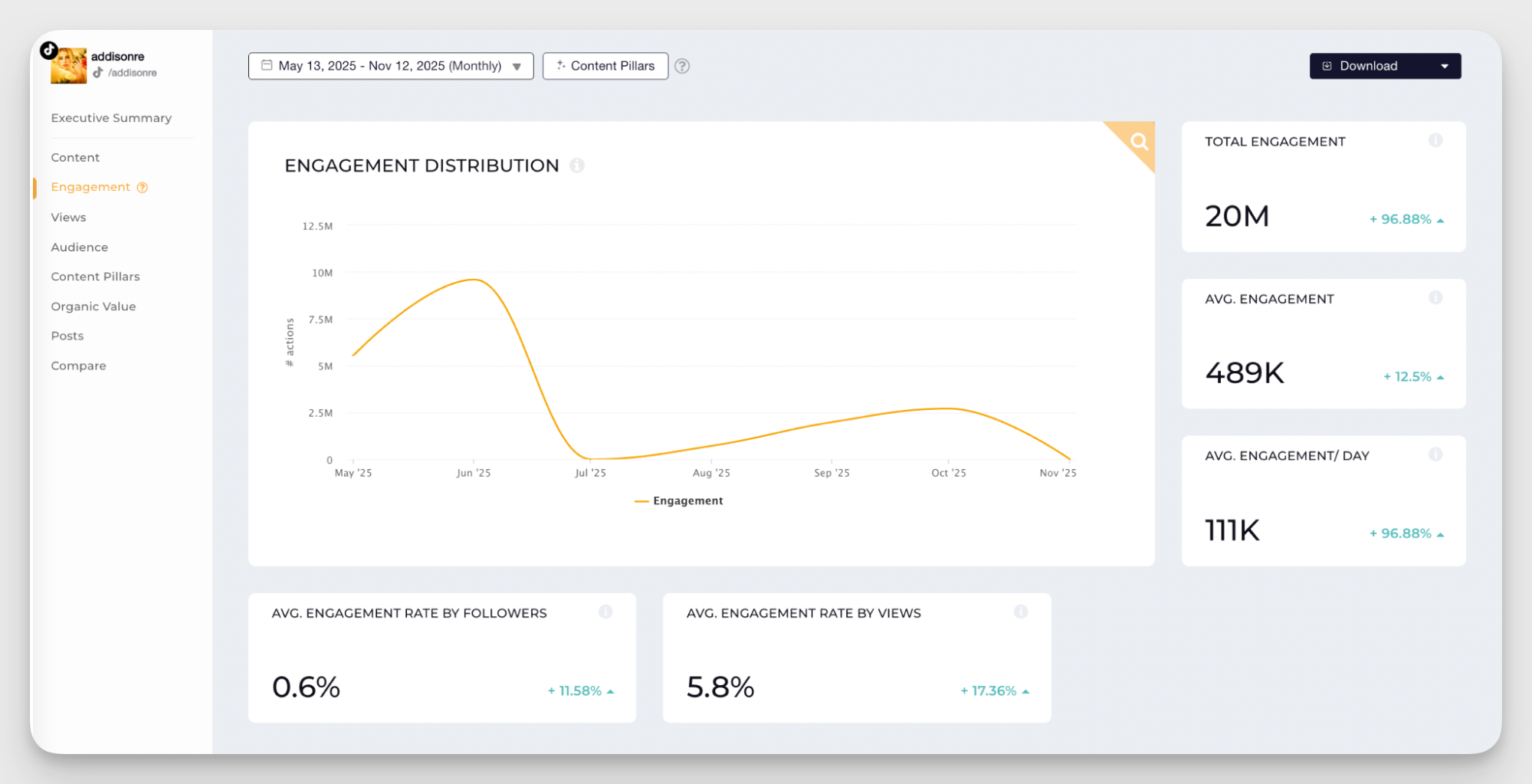
The Socialinsider dashboard above shows how you can monitor engagement patterns across several months. For example, this particular creator has strong total engagement with a healthy average engagement rate.
I would advise, when evaluating engagement, to consider both the engagement rate by followers and by views. On TikTok especially, these two metrics can tell different stories since the algorithm often pushes content far beyond a creator's existing follower base.
Step 3: Analyze audience demographics alignment with your target market
Even if an influencer has impressive numbers, those metrics mean little if their audience doesn't match your target customers. So, you need to understand who's actually watching and engaging with their content.
A solid influencer analytics platform will provide demographic breakdowns, including age ranges, gender distribution, and geographic locations. This audience analysis helps you answer questions like: Does this creator's audience match my target age group? Are they reaching the market segments I care about?
This alignment check prevents you from partnering with someone whose content you love but whose audience won't convert for your brand.
Step 4: Review content themes and brand alignment
You need to track TikTok influencer content to understand what themes they typically cover and whether their style fits your brand voice.
Teodora also emphasizes this important point:
It's important that the chosen influencer brings credibility to the campaign and aligns with the brand's market positioning and values. Otherwise, it can do a disservice to both sides."
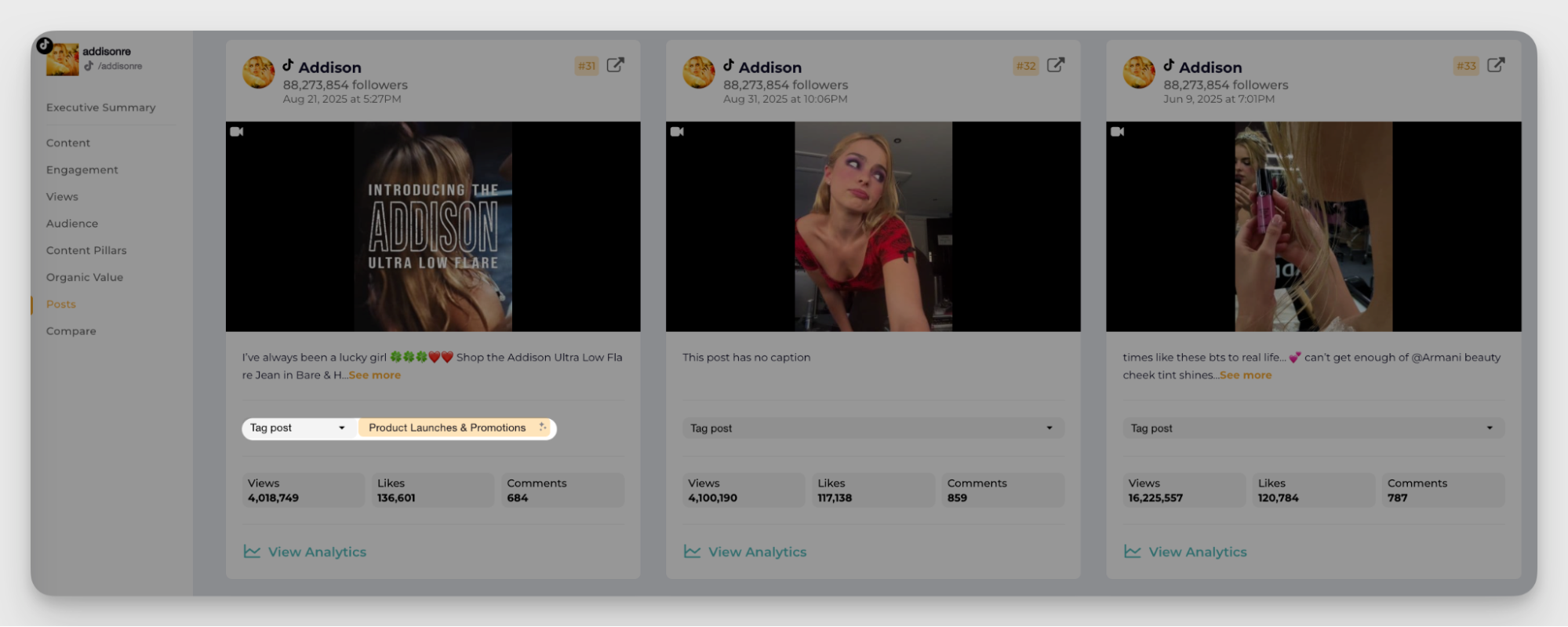
With Socialinsider, you can review individual posts and even tag content by themes or campaign types, like "Product Launches & Promotions", as shown in the example above. This TikTok influencer content tracking feature helps you categorize what a creator typically posts and see how different content types perform.
Looking at the posts view, you can compare metrics across individual videos to understand which content formats and themes generate the strongest response. This gives you insight into what kind of branded content might resonate with their audience.
Teodora makes a compelling case for occasional creative risks:
I believe in more disruptive partnerships with influencers from time to time—an unexpected association. But even then, I still analyze whether there's a match in tone of voice, the audience they speak to, or even the moment itself."

Step 5: Compare performance against industry benchmarks
Raw numbers without context can be misleading. An engagement rate that looks impressive might actually be below average for that creator's niche, while seemingly modest numbers might outperform the category.
This is where I find social media analysis and benchmarking valuable. They allow me to compare the influencer's metrics against industry standards and similar creators. Are they performing above or below what you'd expect for an account of their size and category?
Understanding how to calculate engagement rate consistently is also important here. Make sure you're comparing apples to apples when evaluating multiple potential partners.
Step 6: Estimate potential reach and engagement for branded content
Finally, you need historical data to project what results you might realistically expect from a partnership. Look at how the influencer's sponsored content has performed compared to their organic posts. In my experience, there's often a notable difference.
Consider factors like posting frequency, content format preferences, and trend participation.
As Teodora notes:
It's important for a brand to have 'reaction speed' to events, both online and offline.
An influencer who quickly capitalizes on trending moments might deliver better results than one with higher baseline metrics but slower content turnaround.
What data and functionalities do you need for an effective TikTok influencer analysis?
Choosing the right influencer marketing KPIs starts with understanding what data matters. Not every metric carries equal weight, and the features you need from an influencer analytics tool depend on what you're trying to achieve.
Teodora Paun breaks down the essentials:
Generally, the most important indicators are demographics (audience age, location, gender—when relevant), content data and insights (engagement, views, likes, saves, comments, shares), and consistency in posting.
In my experience, the following five factors are essential when evaluating TikTok influencer data analytics capabilities.
Audience authenticity and fake follower detection
First of all, you need confidence that an influencer's audience is real. Fake followers and engagement pods are a persistent problem across social platforms, including TikTok.
Here's what I'd recommend: look for an influencer analytics platform that can flag suspicious patterns, such as sudden follower spikes without corresponding content performance, engagement rates that seem too good to be true, or comment sections filled with generic responses.
While no tool can guarantee 100% accuracy in detecting fake followers, the right platform will give you enough signals to make informed decisions.
Demographic breakdowns that match your targeting needs
Your TikTok influencer analysis tool should provide clear demographic data, including age, gender, location, and, when possible, interests.
This social media data collection allows you to verify alignment between an influencer's actual audience and your target market. Someone might create content that seems perfect for your brand, but if their audience is the wrong age or lives in a location you’re not targeting, you’ll waste your budget.
Historical performance data and trend analysis
A single viral video doesn't make someone a reliable partner. You need access to historical data that shows how an influencer has performed over months, not just their best moments.
Effective TikTok influencer performance tracking includes metrics such as average views per post, engagement rate trends, posting frequency patterns, and shifts in performance over time.
Teodora also highlights an often-overlooked metric:
I also find average watch time (retention rate) insightful, both from past campaigns and overall, as it shows the influencer's ability to integrate the campaign or message and capture the audience's attention.
Campaign measurement and ROI tracking
For data-driven marketing decisions, you'll want the ability to connect influencer activity to broader business outcomes wherever possible.
As Teodora explains:
Although these metrics mainly show the awareness generated, I believe influencers can also drive sales at some point, but they primarily create visibility. From this perspective, it is difficult to track performance in advance and even right after: people might see the product on TikTok now and may decide to buy it a month later.
She also makes an important point about delayed attribution:
When faced with multiple options, the one they've already seen online, with its benefits and features, will feel familiar. On top of that comes the trust built in the influencer who promoted it.
Your influencer analytics tool should help you track both immediate metrics (views, engagement, click-throughs) and provide frameworks for understanding longer-term brand lift (tagging and monitoring specific campaign content, comparing performance across different partnerships, and measuring results against goals).
Export and reporting functionalities
Look for strong export capabilities that let you pull raw data for custom analysis, with built-in social media reporting features that help you create polished presentations effortlessly.
I prefer tools that offer flexibility, as some situations call for a quick executive summary, while others require complex data analyses. The ability to schedule automated social media reports also saves considerable time if you're managing multiple influencer relationships or running ongoing campaigns.
Beyond the numbers, Teodora emphasizes one factor that requires human judgment:
The influencer's image and reputation is something that requires individual research for an effective TikTok campaign.
What are some top TikTok influencer analytics platforms?
When you're looking for TikTok analytics tools, you'll find various options on the market. How do you choose?
I believe the best social media analytics platforms do two things well: they support competitive analysis and brand monitoring, while also providing the data depth you need for effective influencer analysis.
Before jumping into platform comparisons, Teodora Paun offers a critical reminder about where to start:
It's important to start from the campaign objective and the brand values. Very often, brands underestimate the importance of starting from these, not from the influencers' perspective, when they look for influencers who truly fit them. They get attracted by well-known names, numbers, and momentary hype, which later turn out not to 'score' for their campaign.
And don’t forget this important piece of advice:
The campaign needs to be created first, and only then should they choose the right influencers to create awareness around the product or service and amplify it.
With that foundation in place, here are some platforms that can support your TikTok influencer data analytics needs.
Socialinsider: for in-depth metrics and content pillar analysis
Socialinsider stands out for brands and agencies that need comprehensive performance data and industry benchmarks. The platform provides detailed engagement analysis, including engagement evolution over time, engagement rate calculated both by followers and by views, plus breakdowns of comments, shares, and saves.
For TikTok influencer metrics tracking, you get access to views data, top-performing posts identification, and audience insights that help you understand who's actually engaging with a creator's content.
One feature I find particularly useful for influencer analysis is content pillars. This lets you categorize and analyze performance by content theme, making it easier to understand what topics resonate most with an influencer's audience.
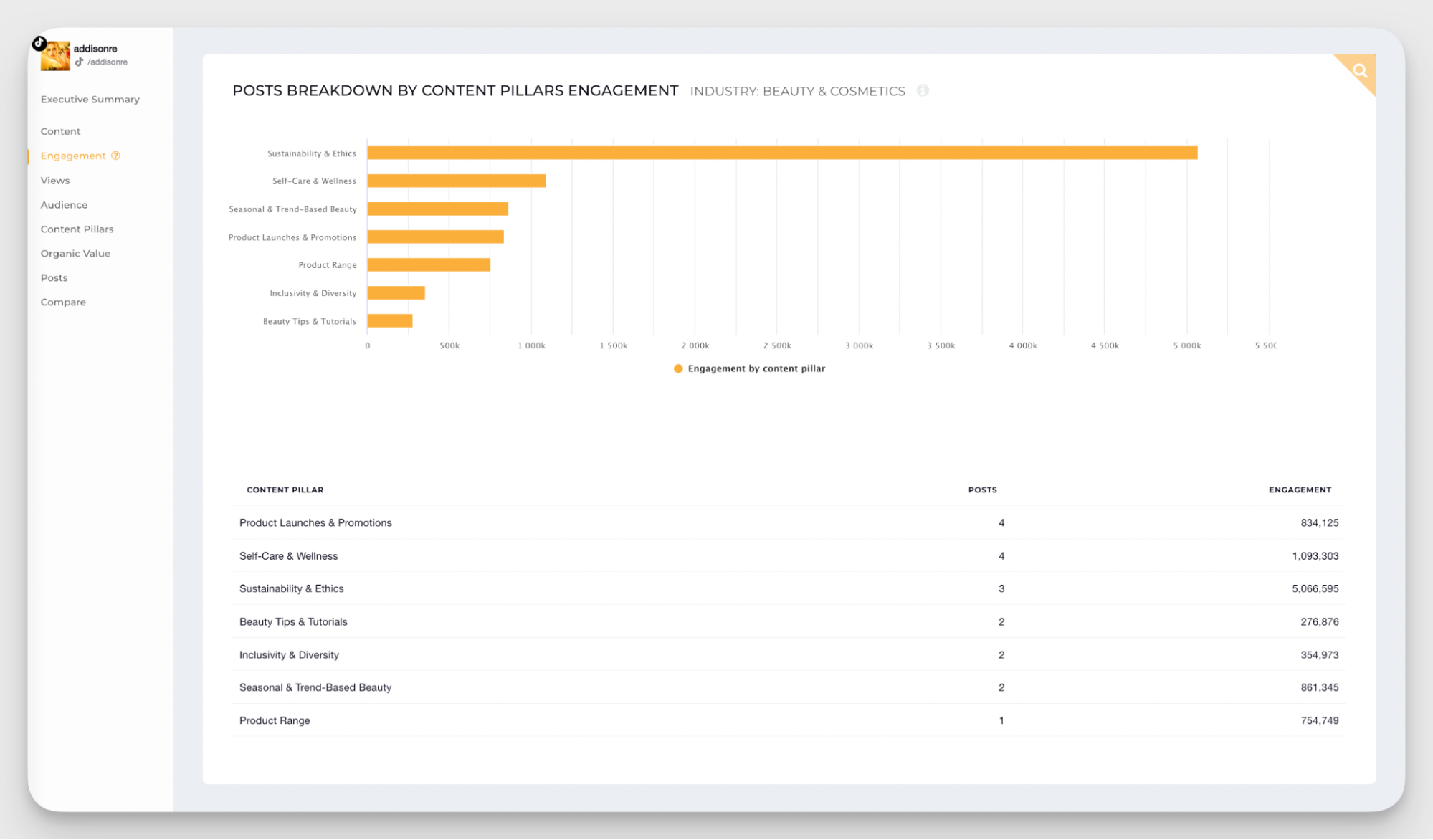
As you can see above, the content pillars breakdown shows engagement distribution across different content themes. Notice how certain pillars of the Beauty & Cosmetics industry, such as sustainability and wellness content, drive significantly higher engagement than others, even with fewer posts. This kind of insight helps you predict which content angles are most likely to perform well in branded partnerships.
The table below the chart shows the relationship between posting volume and engagement for each pillar, indicating that more posts don't always translate into more engagement. Some themes simply resonate more strongly with the audience.
Dávid Hric, Head of Invention at WPP Media, describes the platform's value: "Socialinsider provides a good foundation of being able to analyze at a high level the social space for a certain industry or certain competitive set or influencer set and adding on additional tools that you have."
This makes it well-suited for teams that need to analyze TikTok video performance across multiple creators or compare influencer candidates.
HypeAuditor: for audience authenticity analysis and campaign monitoring
HypeAuditor has built its reputation around fraud detection and audience quality scoring. If your primary concern is ensuring influencer audiences are genuine, this platform offers detailed authenticity metrics that flag suspicious follower patterns and engagement anomalies.
The platform also provides campaign monitoring features that let you track performance once partnerships are live, connecting your influencer investments to measurable outcomes.
Modash: for influencer discovery and campaign performance tracking
Modash combines discovery features with analytics, making it useful for teams that need to find new creator partners and evaluate their potential.
Teodora shares her experience with discovery platforms:
For me, the insights sent by the influencer are still a very important and reliable tool. Over time, however, I've also used Upfluence for international influencer campaigns and Modash. I usually use these platforms during the research phase, when the pool of influencers is very large. Once I narrow down the list, I reach out and request the information that's relevant for the brand or campaign I'm working on.
Using platforms for initial research, then validating with direct influencer data, reflects how experienced marketers work.
Final thoughts
Successful influencer partnerships start with solid data that informs your social media strategy. From evaluating follower growth patterns and engagement consistency to analyzing content themes and audience demographics, TikTok influencer analytics gives you the foundation for confident partnership decisions.
Start analyzing and finding perfect match creators by giving Socialinsider a try for free. With access to historic performance data, it’s easy to see how your potential partners actually perform and make better decisions.
FAQs on TikTok influencer analytics
Why does audience quality matter more than follower count?
When you're paying for influencer partnerships, you're really paying for access to an engaged, relevant audience, not just for people who clicked “follow” at some point. A creator with 50,000 highly engaged followers in your target demographic will almost always be a better choice than one with 500,000 disengaged or mismatched followers. This is why you should prioritize metrics like engagement rate, audience demographics, and follower authenticity over raw follower numbers.
How do you build influencer shortlists using data-driven criteria?
A data-driven approach keeps your selection process consistent and defensible when stakeholders ask why you chose certain creators over others. Start with your campaign goals and work backward to define the metrics that matter most. Create filters to eliminate creators who don't fit, and set requirements based on minimum engagement rates, audience location, age alignment, content themes etc. Finally, use influencer analytics tool to pull performance data and sort and compare candidates.
How do you create influencer performance scorecards?
Identify five to eight criteria that matter for your specific campaign. Include both quantitative factors, such as engagement rate, average views, and audience demographics, and qualitative factors like content quality, brand alignment, and collaboration history. Assign weights to each criterion based on your priorities and create a scoring system with clear definitions for each score. After each campaign, compare scores against actual results and adjust your criteria accordingly.
Sabina Varga
Content marketing expert with 15 years of experience in digital marketing. I dream of beach life but love the city as a multitasking mom juggling playgrounds, books, brunches, and travels.

Know what your competitors do — before your manager asks
Get instant social benchmarks & reports without manual work.
You might also like






Improve your social media strategy with Socialinsider!
Use in-depth data to measure your social accounts’ performance, analyze competitors, and gain insights to improve your strategy.