13 Types of Social Media Content to Try for Keeping Your Brand Aligned with the Trends
Discover the best types of social media content that can elevate your brand's visibility. Unlock strategies for effective engagement and growth.

When it comes to social media, I’ve learned that a one-size-fits-all approach just doesn’t cut it. Each platform has its own audience, trends, and content formats that drive the best results.
In this article, I’ll share my go-to ideas and proven strategies—breaking them down by platform to help you create engaging content, find the right formats, and deliver what actually works.
Whether you’re looking for inspiration or ready to optimize your content plan, I’ve got practical tips for every major network.
Key takeaways
-
Different social platforms require tailored content formats, with short-form video, carousels, polls, and long-form video leading today’s engagement.
-
More interactive and funs content types like memes, UGC, influencer collabs, guides, testimonials, and infographics help brands build trust, authority, and shareability.
-
Success on each platform comes from leaning into its strengths—visual storytelling on Instagram, community on Facebook, thought leadership on LinkedIn, real-time interaction on X, creativity on TikTok, and educational long-form content on YouTube.
Most engaging social media content formats nowadays
#1. Short-form video
Short-form video content refers to video posts with a length between 5 to 90 seconds and it is one of the most popular types of content.
Platforms like TikTok and Instagram are based on this type of content, and it’s no secret that short-form video has been king of content for a while now, due to its high retention and engagement rates.
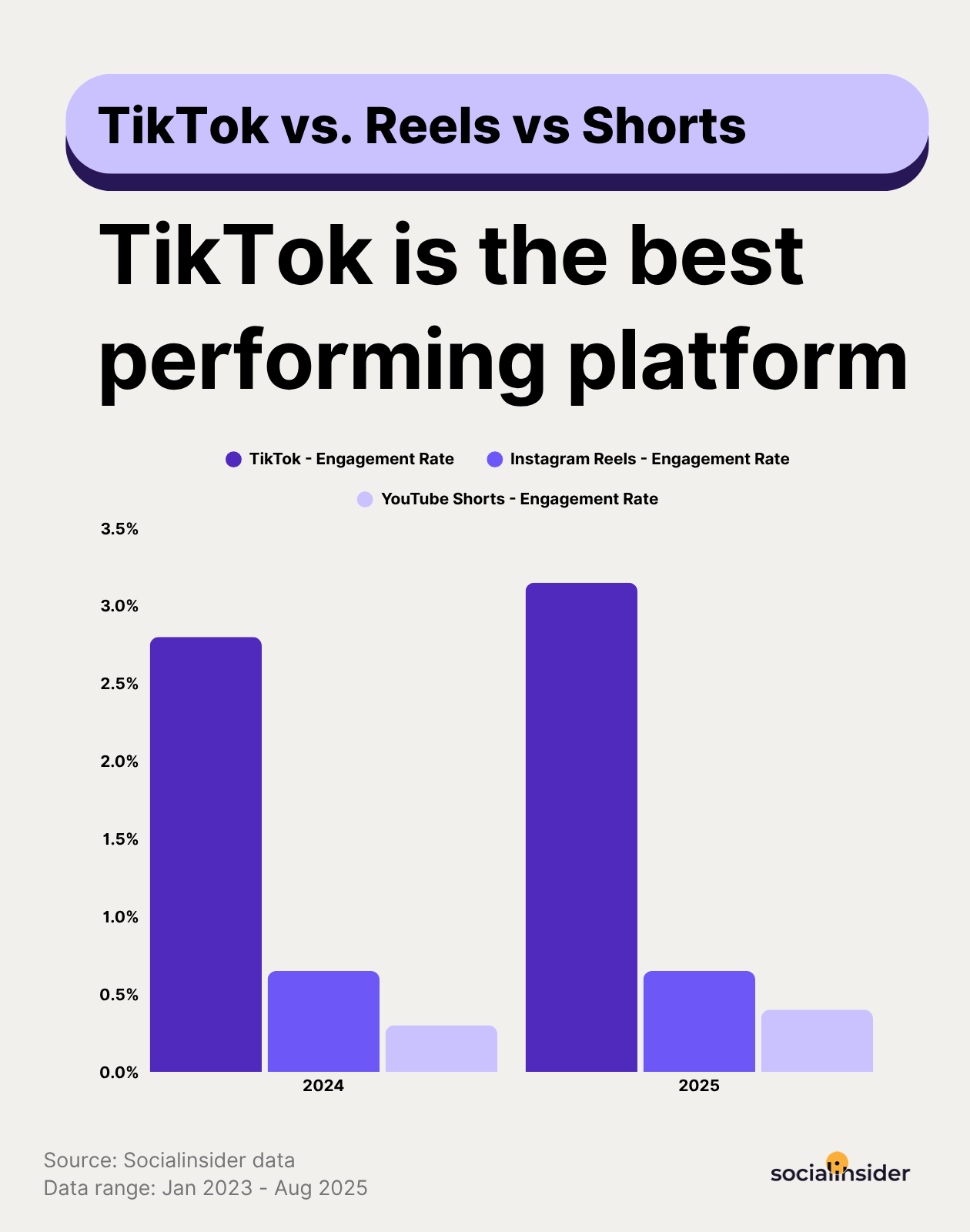
According to Socialinsider's short-form analysis, TikTok scores the highest engagement rates, and YouTube shorts the lowest.
Depending on what works best for your audience and what aligns with your brand tone of voice, there are multiple types of short-form video you can experiment with.
Here are some of my favorite types of short form social media video content:
- Inspirational/educational videos - how-tos, product tutorials, product features
- FAQs – responding to customer questions
- Funny videos with discrete brand placement
- Behind-the-scenes videos
- Teasers for upcoming events or releases
- Highlights of past events
Whatever you choose, make sure it reflects your brand’s originality and authenticity.
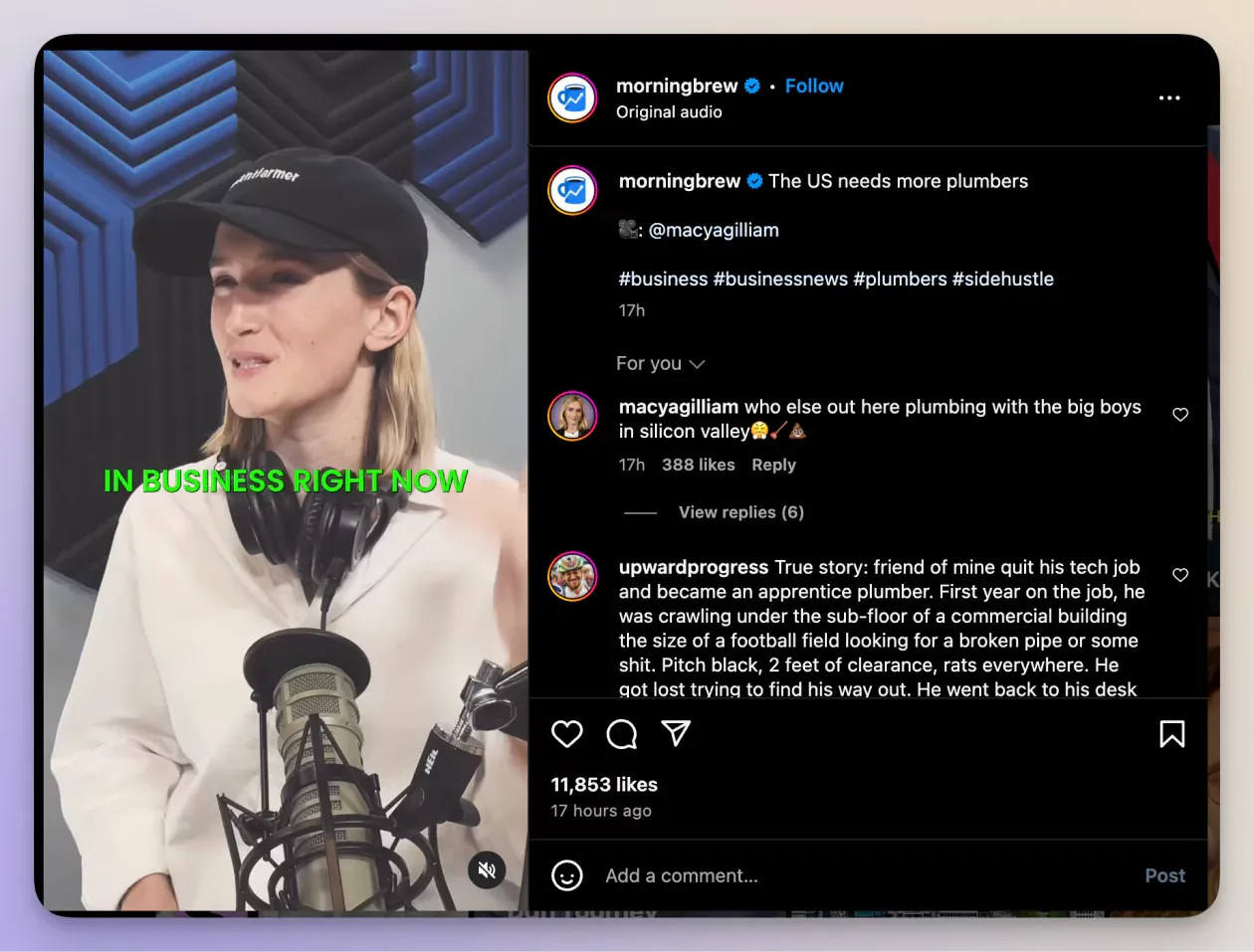
Take for example Morning Brew’s witty way of creating short-form news-related content that earned them over 1.4 million Instagram followers who share their sense of humor.
#2. Carousel / Multi-image posts
Today, carousels are omnipresent on platforms like Instagram, Linkedin, and Tiktok, and whether you are using them to show off infographics, product features, or re-create Tumblr aesthetics, carousels are one of the most popular social media content out there.
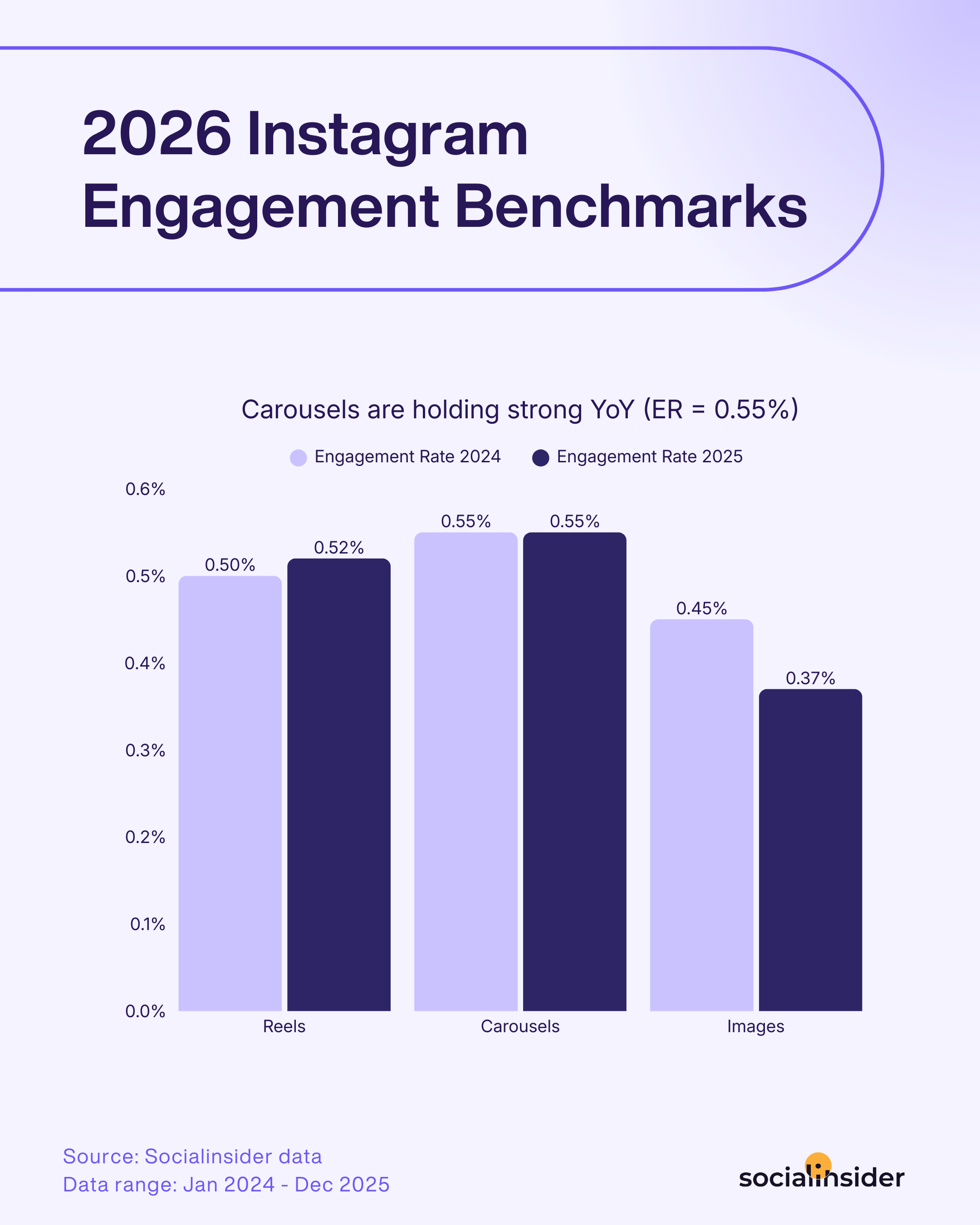
And actually, according to Socialinsider's social media benchmarks reports, this type of content is nowadays the most engaging format on Instagram, LinkedIn, and also Facebook.
Now, let’s take a closer look at some carousel social content examples you could try:
- How-tos and guides
- Product showcasing
- Highlight expertise or services
- Benchmarks and industry data
#3. Polls
Polls, surveys, question boxes, quizzes, could be considered one of the most engaging content format in social media.
If done right, audience participation is guaranteed. And besides getting the algorithm on your side, you can actually draw extremely valuable data out of these types of social posts.
And have I mentioned that on LinkedIn, for example, this social media post type actually scores the highest number of impressions on average?
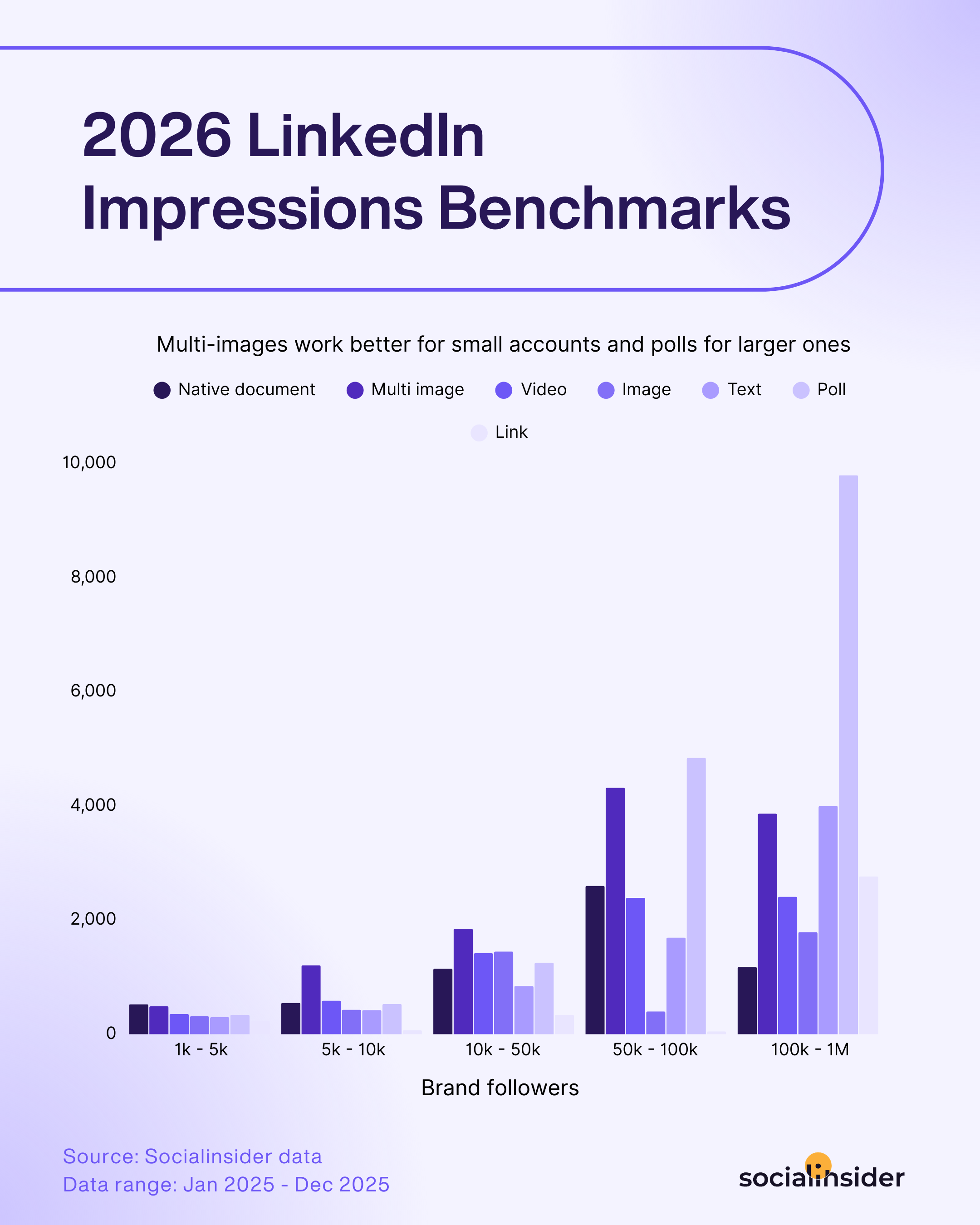
So, next time you are wondering what your audience deems as good social media content, create a pool or add a question box to your story, and let the audience tell you what they prefer.
#4. Long-form videos
Podcasts, interviews, vlogs, or even TikTok 10 min videos. Long live the long-form video!
It is one of the best social media content, due to its high value and multiple repurposing qualities.
Long-form video means creators and brands have more room to tell their stories, educate their audience, and nurture meaningful connections.
YouTube is still the king of long-form video, also due to its high SEO capacity, it is becoming the go-to platform for how-tos, entertainment, and reviews.
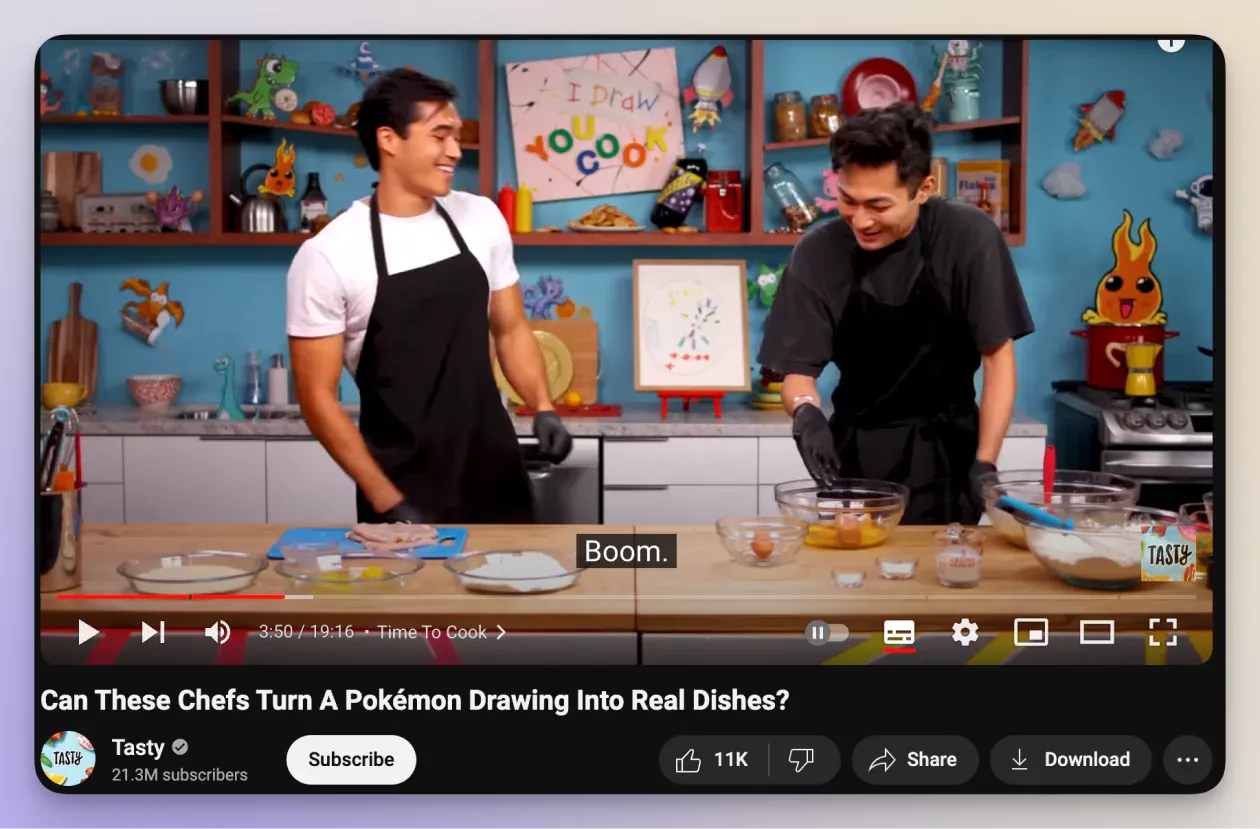
Tasty is a great example of how creative, viral long-form content on YouTube, targets audiences from all age categories.
#5. Text-based posts
Although most social media platforms are predominantly visual, there are still some social media channels that encourage good-old text-based content, also known as microblogging. I am talking X (Twitter), Linkedin, Threads.
The value?
Text-based social media content will always cover the most important aspects of sharing content:
- it can easily get the message through
- it is accessible, easy to upload, universal
- it adds SEO value, due to its high indexing rate.
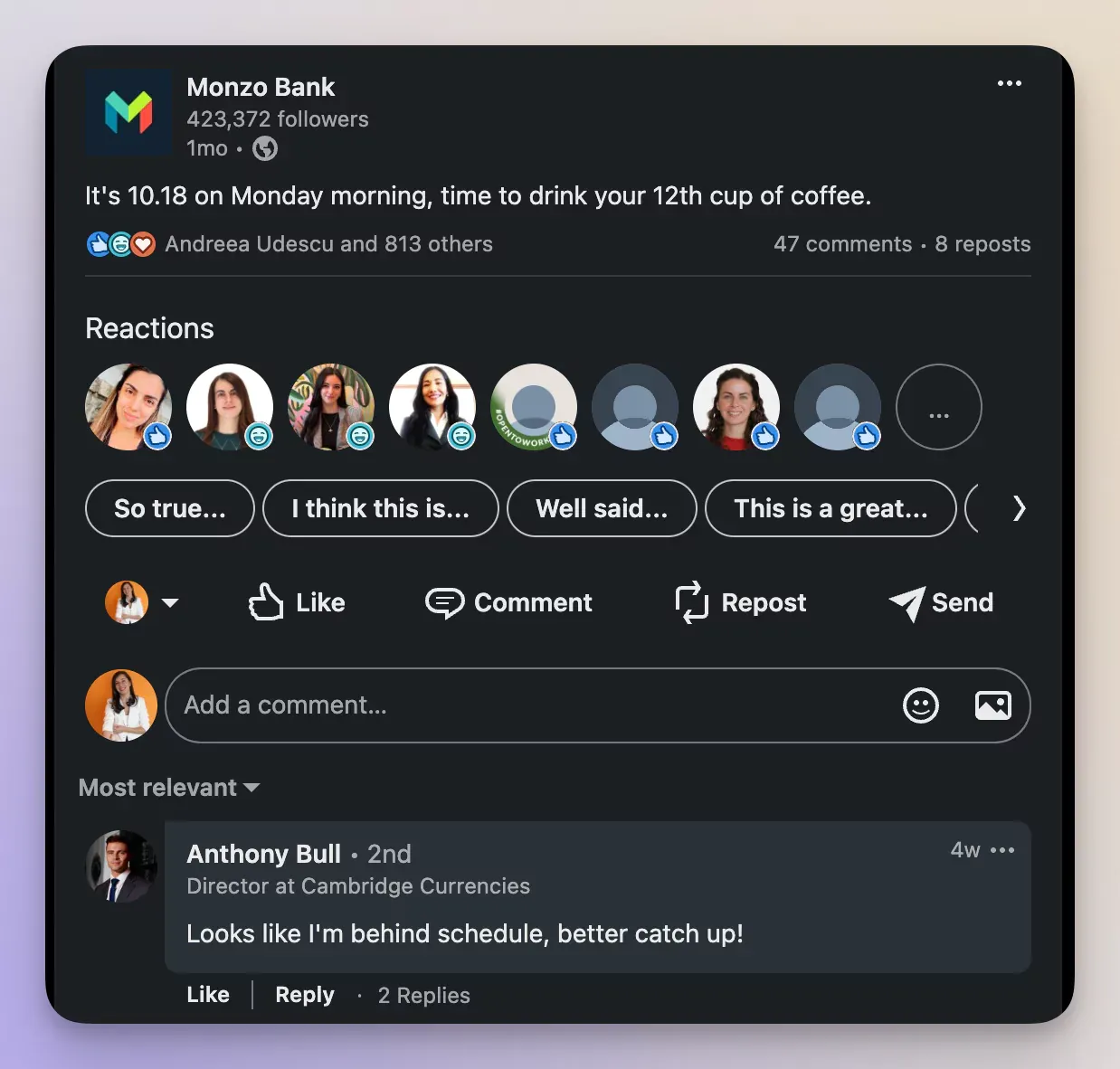
Businesses like Monzo Bank and Hubspot have dropped the other types of social media content, and kept it simple, with a majority of text-based content, especially on their LinkedIn pages
#6. Live videos
Whether it’s live streaming events on LinkedIn, live streaming Q&As on Youtube, live sessions on Instagram, game streaming on Twitch, or even live shopping on TikTok, the value of this type of social media content is incontestable.
Out of all content categories for social media, live video allows direct audience engagement, creates a sense of intimacy, facilitates partnerships with brands and influencers, and helps imprint a more memorable experience for the audience.
Additionally, live videos make for great social media content, once repurposed. Imagine how many short-form videos and posts you can take out of one hour of live streaming.
Popular types of social media content these days
#7. Memes
Memes have been around before the internet.
Yes, the term was first coined by Richard Dawkins in his 1976 book, “The Selfish Gene”. Taking linguistics Professor Kirby Conrod’s theory about memes and their self-replicating nature, one could argue that in order to aim for virality, any social media account has the right to try to create share-worthy memes.
Maybe they replicate, maybe they don’t.
The important thing is to give it a try, especially in today’s pop-culture era, where every event can be turned into a trending, ephemeral roast.
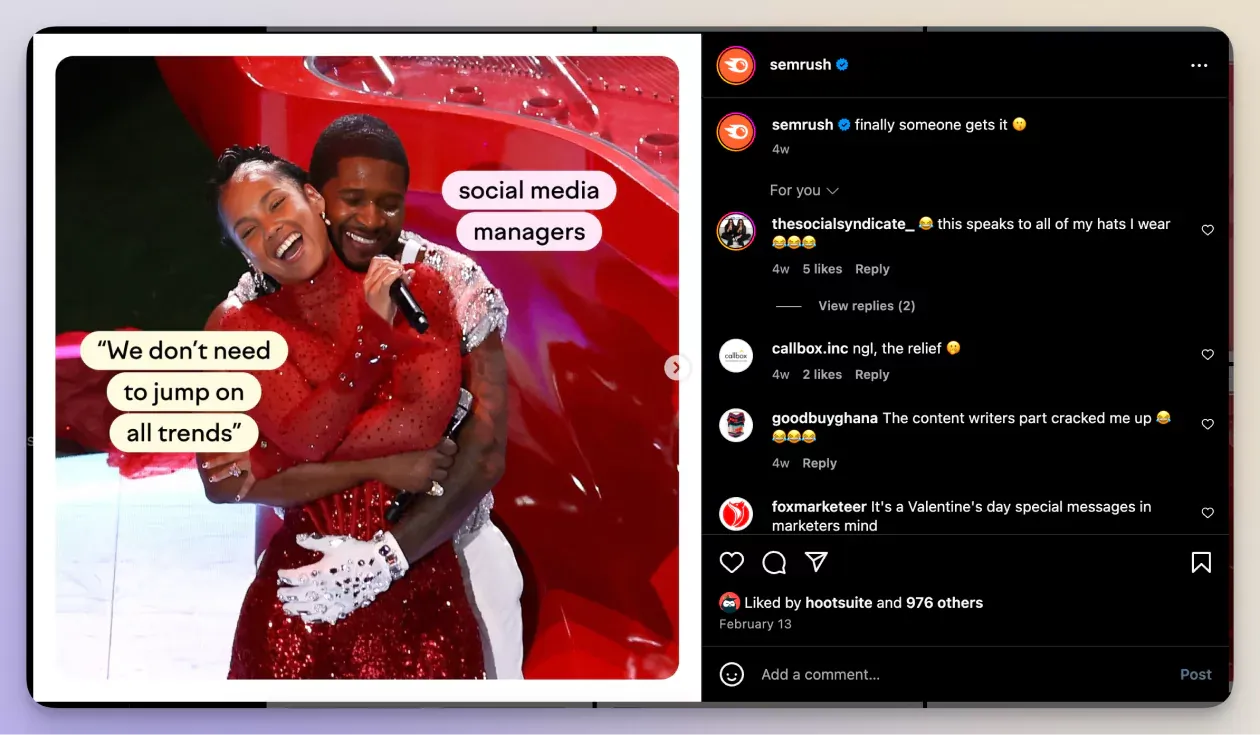
I think Semrush did a great job with their Usher and Alicia Keys Superbowl meme, directed at their target audience - marketing professionals.
#8. User-generated content
UGC is one of the most underrated types of social media posts, due to its authentic nature, it creates high value, with low investment.
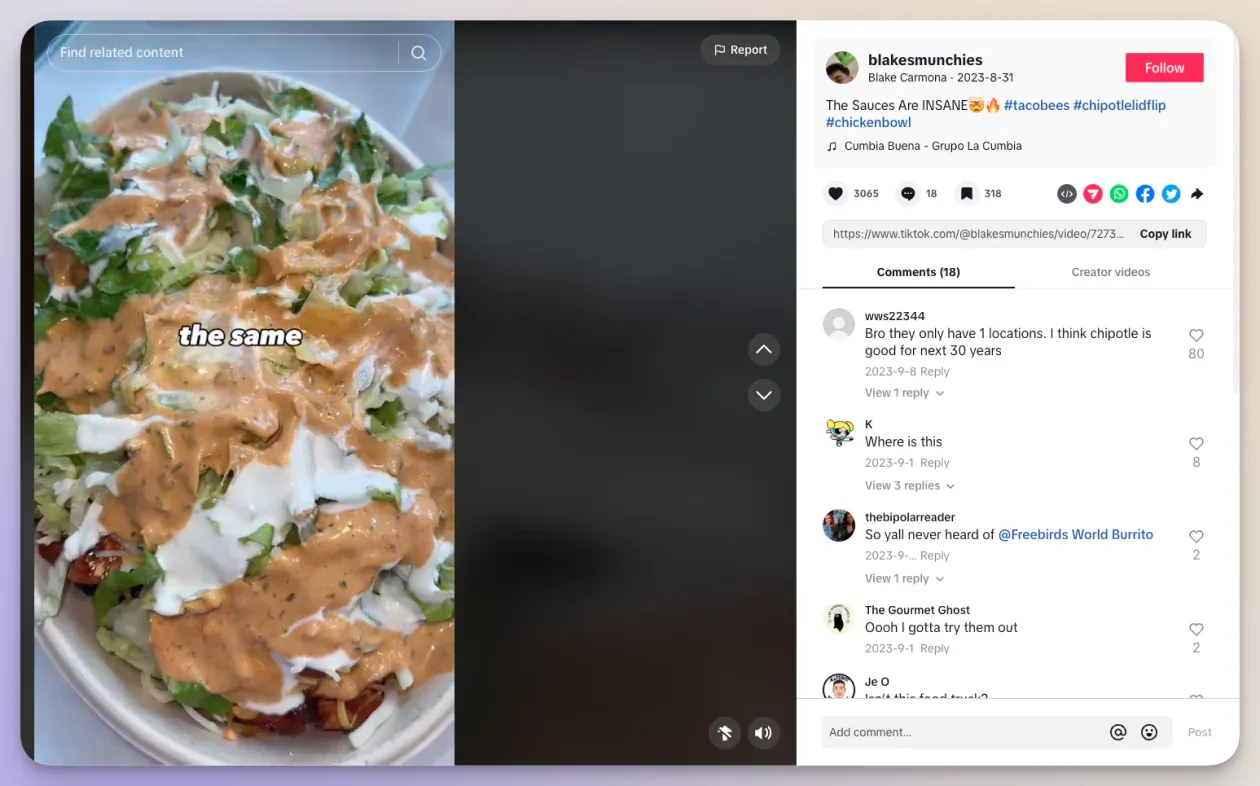
Take for example how Chipotle, known for its popularity among millennials and Gen Z, launched the #ChipotleLidFlip TikTok challenge in collaboration with popular content creator David Dobrik. The challenge went viral, resulting in hundreds of user-generated TikTok videos.
#9. Influencer collabs
If it were to take all the social media post types, we could say influencer collaborations have a category of their own. This type of social media content stands at the intersection of brand values and influencer creativity.
Working with an influencer can give other perspectives to your campaign, and access new audiences. The trick here is to find the right influencer for your brand.
This is why influencer identification is a crucial step in any content social media marketing.
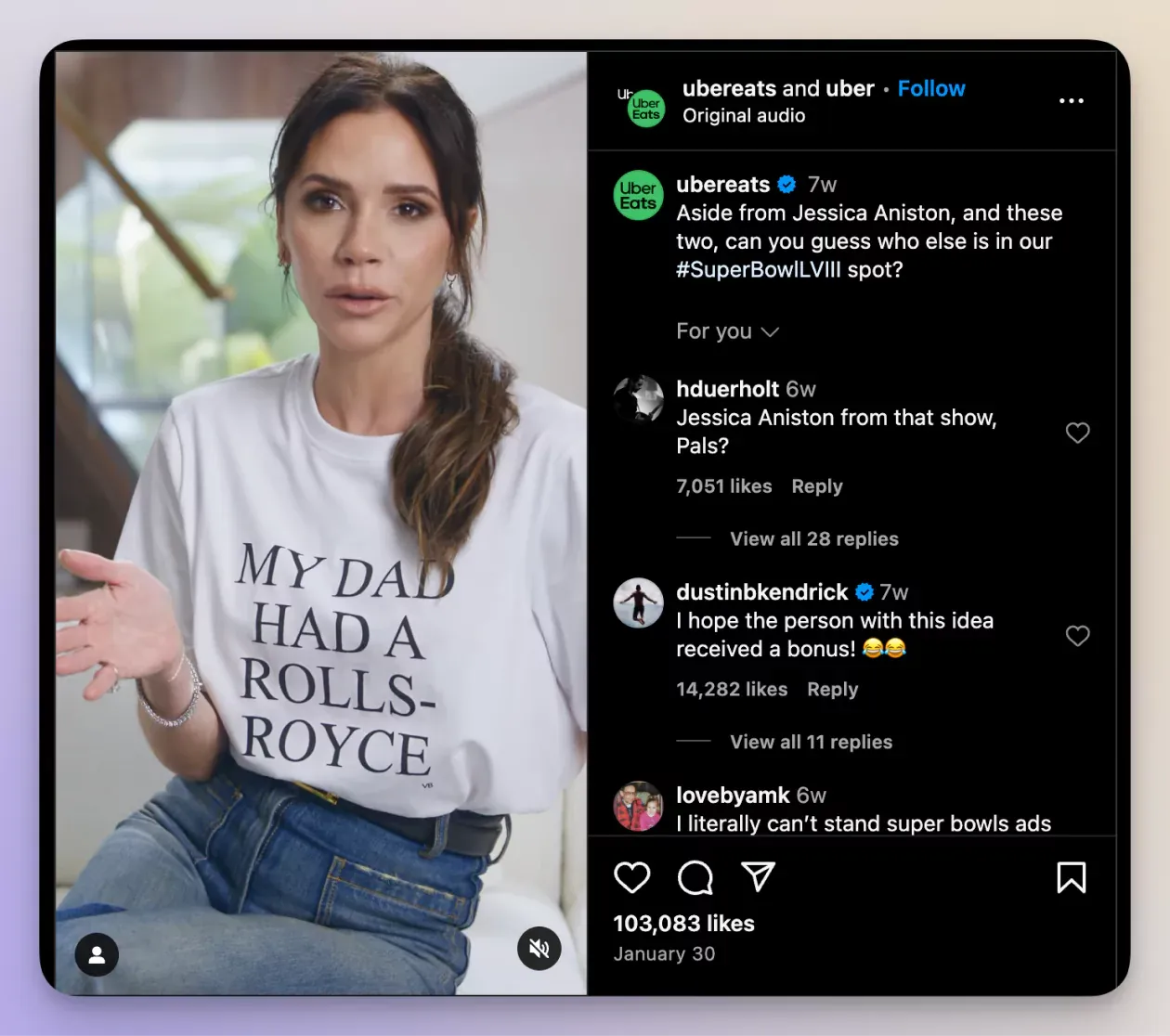
A great example of successful influencer collaboration is how Uber re-created the viral scene in the Beckam’s documentary to promote their Uber eats services. Clever and spicy.
#10. Guides
Guides are at the convergence of two different types of content for social media. Specifically infographics and carousels.
Moreover, social media guides are usually rooted in web article guides. Imagine transforming an in-depth educational guide into suitable content for social media marketing.
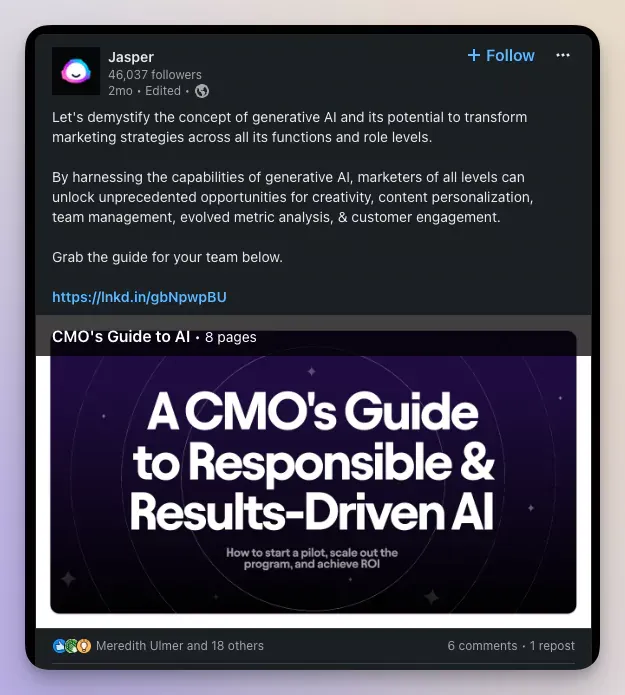
A great example is Jasper’s LinkedIn post titled “A CMO's Guide to Responsible & Results-Driven AI”. Due to its document format, the post acts as a teaser guide to the original article on their website.
#11. Customer testimonials
Testimonials are the social media’s form of official recommendations. If this is not in your social media strategy yet, you should open a Google Docs ASAP and start asking for testimonials.
Customer testimonials can be easily turned into social media posts - either image or video, using quotes or excerpts from the original testimonial.
Customer testimonials can be used to build trust through social proof for clients but also to assist employer branding.
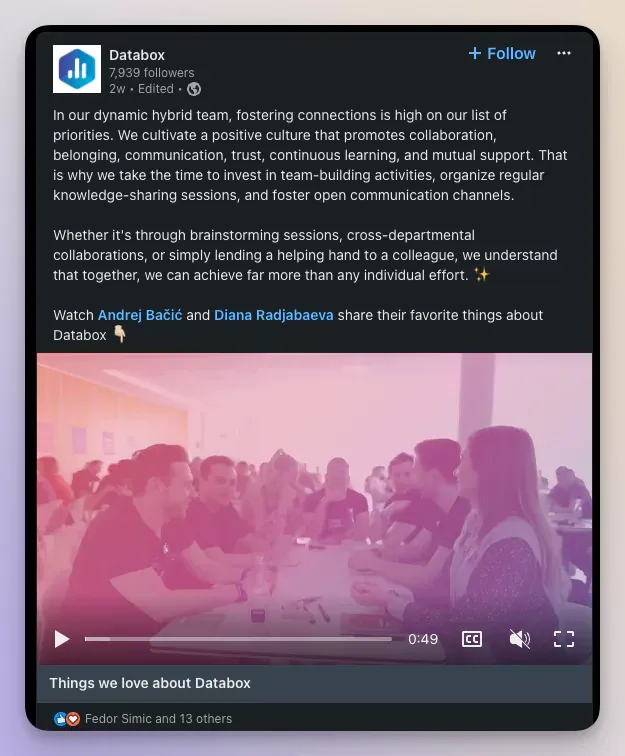
Check out how Databox created a visually rich, trustworthy interview-type post on LinkedIn, where they show their employees talking about the company culture and the benefits of working at together.
#12. Infographics
Infographics are visual representations of data or information. This type of social media content uses text, images, charts, and graphics to simplify and improve understanding of the topic.
Infographics are a great way to capture attention, prove expertise and hook audiences into reading more, on external sources, such as blogs, or landing pages.
#13. Industry research and findings
Sharing insights you have on your industry ads value not only to your clients but to all stakeholders. This is one of the best content types of social media for business, due to its ability to establish authority, foster trust, and encourage engagement.
Industry research and findings offer businesses a platform to demonstrate their expertise and insights into market trends, technological advancements, or consumer behavior.
By sharing such valuable information, companies can position themselves as thought leaders, making their brand more appealing to potential customers, partners, and investors.
This type of social media content encourages dialogue and interaction among the audience, increasing brand visibility and reinforcing customer loyalty.
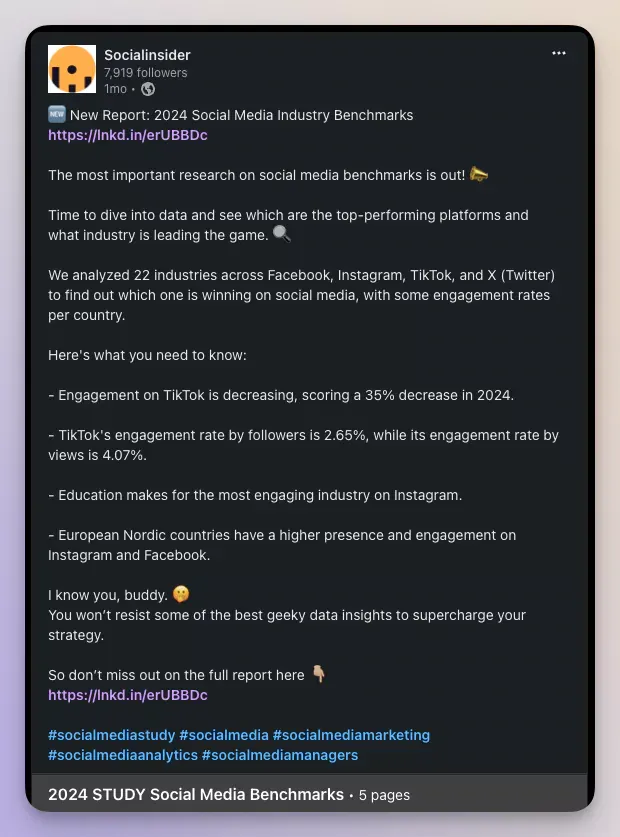
Here is an example of how sharing key findings, Socialinsider is contributing to their field's growth and ultimately to their own long-term success.
Types of content that work best on different platforms
When I want to make an impact on Instagram, I focus on visual storytelling. I know my audience expects eye-catching images, snappy videos, and content that feels authentic.
Reels are my go-to for short, engaging videos—perfect for catching attention and riding trends. I make the most of Stories for quick updates, behind-the-scenes glimpses, and polls to spark interactions.
Carousels help me tell step-by-step stories or showcase multiple products in one post. No matter the format, I keep my visuals strong and captions concise, always thinking about what’s trending to stay relevant.
On Facebook, I find that building a sense of community takes center stage. I craft longer-form updates when I want to encourage conversations, share insights, or explain a new project. Live video is where I go to interact in real time, answer questions, and let my audience see the human side of my brand.
For LinkedIn, I put my focus on thought leadership and sharing industry insights. I write posts that spark conversations about trends in my field or offer actionable advice for professionals like me.
Document carousels are a powerful way to break down complex ideas or report findings in a shareable format.
Because LinkedIn rewards helpful, value-driven content, I prioritize posts that educate, open discussions, or showcase expertise. Especially in B2B, I aim for content that starts genuine business dialogues.
Twitter/X
Twitter is all about real-time conversations, so I make a habit of joining trending topics, responding quickly, and sharing my thoughts as events unfold. Threads let me tell longer stories or dive deeper into a topic, keeping followers engaged from tweet to tweet.
When I want rapid engagement, I use polls to gather opinions or encourage participation. Newsjacking—commenting on news as it breaks—helps me stay relevant and grow my reach organically.
TikTok
If I want to succeed on TikTok, I lean into short-form, creative video. Viral challenges are often my entry point—they give me a chance to join global conversations and gain visibility fast. Music, effects, and clever editing make my content stand out. I watch what’s trending, then put my own spin on it, always aiming for videos that are fun, authentic, and easy to watch all the way through.
YouTube
When I use YouTube, I invest in quality, long-form content—think tutorials, deep dives, or storytelling that keeps viewers coming back. Playlists help me organize related videos, making it easy for subscribers to explore more of what I offer.
Educational and how-to content usually performs best for me, as audiences come to YouTube ready to learn or solve a problem. Shorts give me the opportunity to test new ideas or highlight key messages in under a minute.
How to find what content types drive engagement for your audience
With so many content types for social media to choose from, it is hard to figure out what works for your brand, without some trial and error.
But if you want to find what content types drive engagement for your audience, based on real data, consider using a social media analytics tool like Socialinsider to compare your brand’s relevant social media metrics, across all social media platforms.
The technique consists of tagging and grouping social media posts by content pillars and keywords.
Here’s how to do it in 5 simple steps:
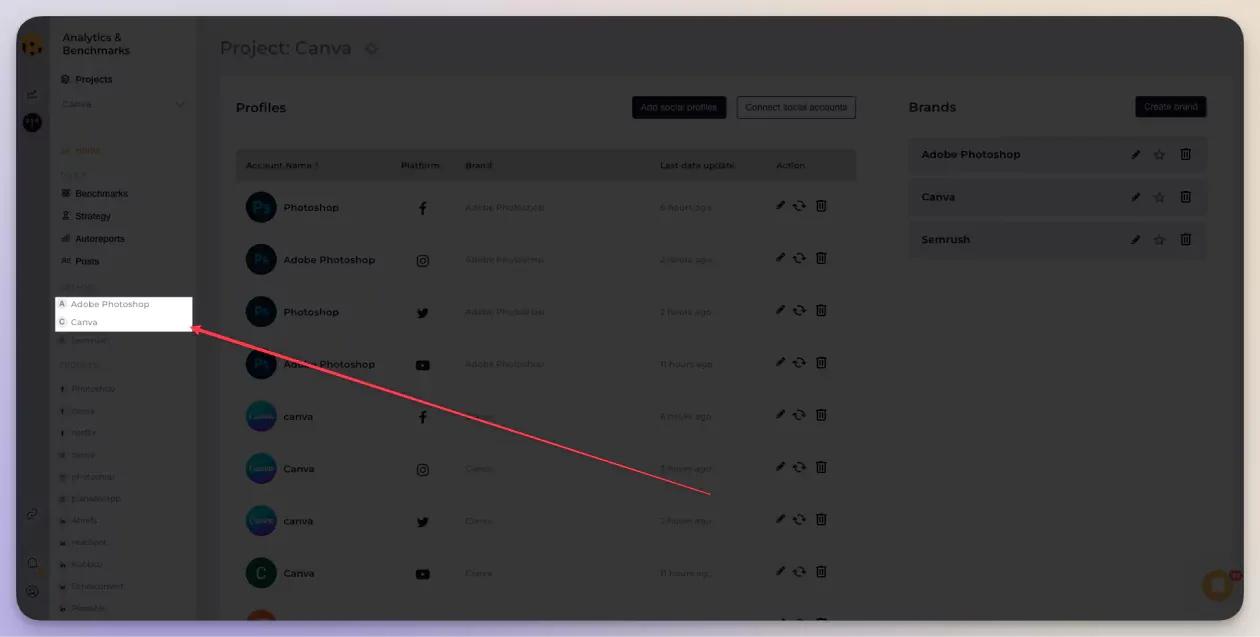
- Step 1: Start by conducting a cross-channel analysis to compare social media platforms
Add all the social media profiles for your brand.
I’ll use Canva for example.
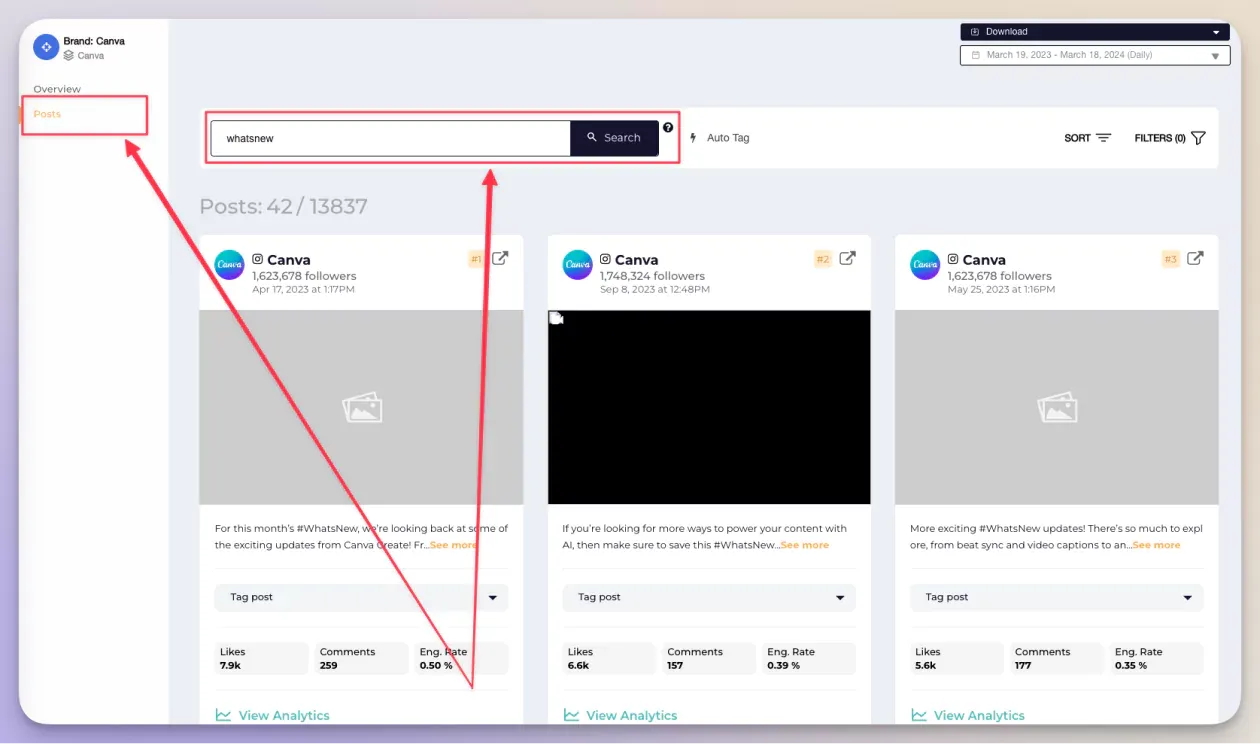
- Step 2: Select ‘Posts’ from the sidebar and search through posts by content pillars, keywords, or hashtags.
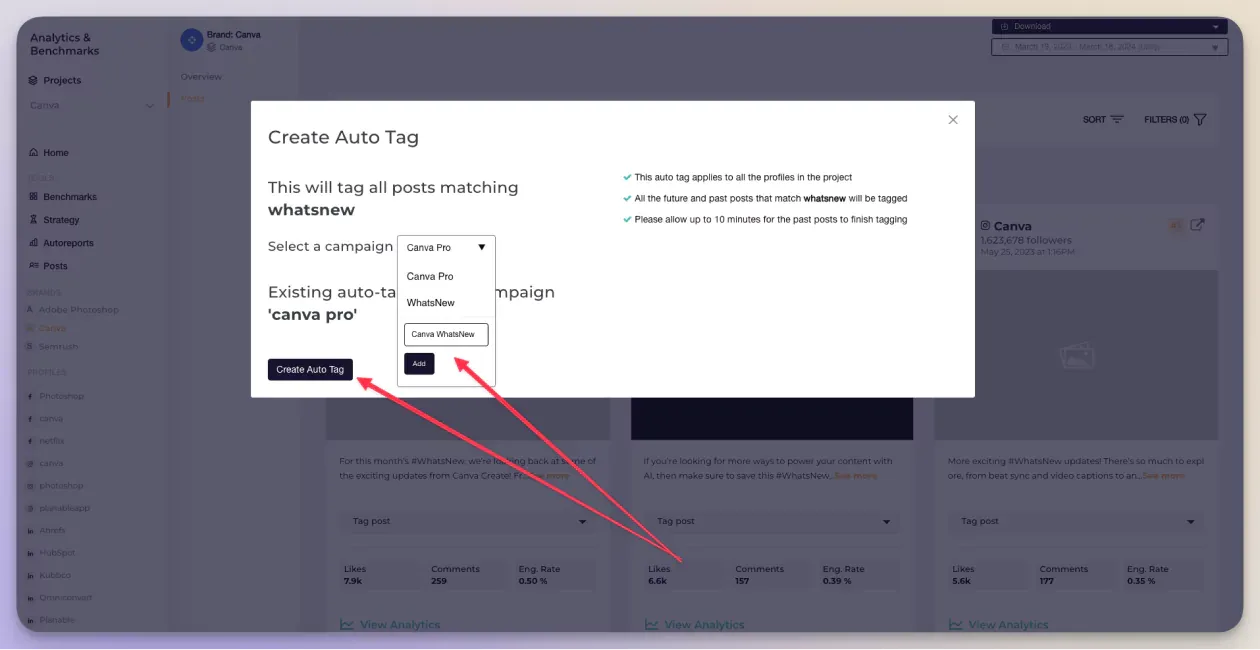
- Step 3: Click on Auto Tag to tag and group social media posts.
- Step 4: Analyze content pillars to understand which one drives more engagement for your brand.
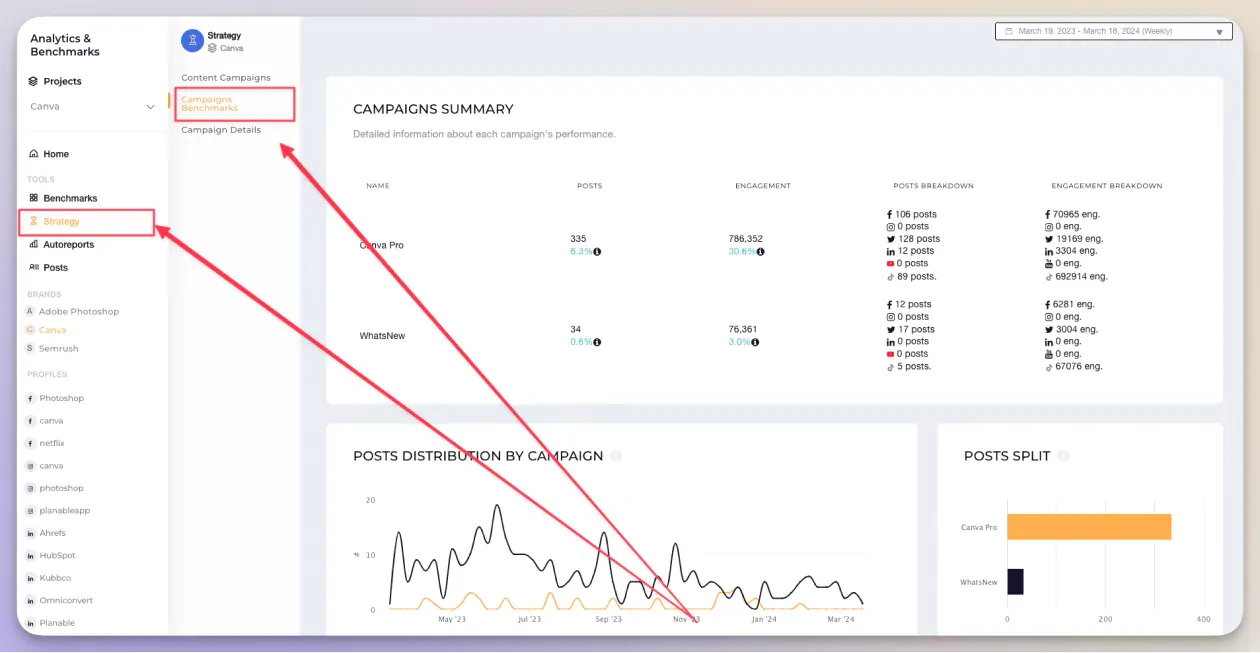
- Step 5: Analyze audience engagement with each content pillar to identify where the audience is most engaged.
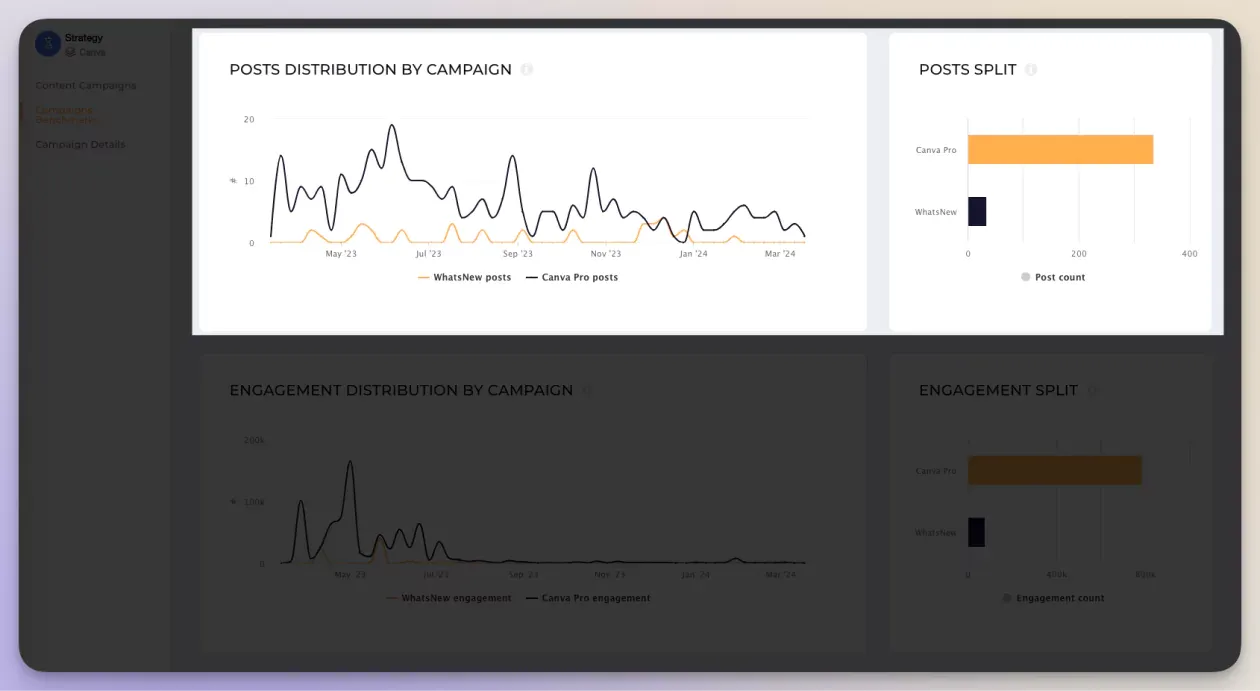
Here's what one of our clients, Augustin from Impremedia said about trying Socialinsider: "It helped us to adapt our design of some pieces on social media platforms to understand some topics that we were not covering. And at the same time to understand the amount of posts that we were doing on a daily basis."
And another one, Gabriel from Inteligencia Audiencia added: "It was easier for me to understand everything. It was very straightforward, the data I really needed, the visualizations I really needed. So I copy all the graphs [and] I pasted them in in my PowerPoint presentations, so I remember: ‘Okay, the data I really need for the clients, it's very very easy to grab."
Additionally, you can research data and social media industry trend reports to shape your marketing strategy and make informed decisions.
Final thoughts
With so many social media content categories to choose from, you are ready to tackle your brand’s monthly posting calendar.
But are you ready to strategically create an insights-based plan?
Now get up and get busy analyzing those essential social media analytics to skyrocket your next marketing campaign.
FAQs on social media content types
When is it best to use interactive content?
Interactive content is best used when you want to deepen audience engagement and spark real participation, not just passive viewing. I find it works especially well when:
- Launching a new product or campaign and want quick feedback or buzz—polls, quizzes, and Q&As invite immediate interaction.
- For building a stronger connections with your audience, like during live streams or AMAs where viewers can ask questions in real time.
- You're aiming to educate or onboard users, using interactive guides, sliders, or assessments to simplify complex info and keep people involved.
- You want to boost reach and visibility, since algorithms on platforms like Instagram, Facebook, and LinkedIn often favor content that generates comments, shares, and clicks.
- You're running contests or giveaways—asking for submissions, votes, or comments is a proven way to drive up engagement rates.
- You're looking to gather insights—surveys or question stickers reveal what my audience cares about, helping me shape future content.
Overall, the best time for interactive content is when I want to start conversations, collect opinions, or move beyond “likes” to active audience participation—especially during launches, campaigns, live events, or when fresh insights are needed.
Alexandra Papp
Creative Thinker | Content Writer | Sustainability Utopian. Passionate and versatile information scavenger. Funny and witty but also dead serious and determined. Asks a lot of uncomfortable questions.

Know what your competitors do — before your manager asks
Get instant social benchmarks & reports without manual work.


