Top 3 Keyhole Alternatives to Consider If You Need Competitive Benchmarking
Searching for Keyhole alternatives that provide competitive benchmarking? Discover effective options that meet your needs for improved performance reporting.


If you’re considering alternatives to Keyhole, it’s often because your current analytics setup isn’t giving you enough competitive context or strategic depth.
For many teams, the breaking point comes when basic social media analytics are no longer enough, especially when reporting lacks competitor benchmarks, cross-platform views, or clear performance context. Manual work such as screenshots, spreadsheets, and stitching data together across tools can further slow down reporting cycles and weaken stakeholder confidence.
That’s usually when social media managers begin looking for analytics-first platforms that go beyond listening and campaign tracking, and instead focus on competitive benchmarking, performance analysis, and scalable reporting.
In this article, I’ll explore where Keyhole fits into the analytics ecosystem, where it may fall short—particularly around competitive benchmarking—and how alternatives like Socialinsider help teams that need deeper competitor insights, multi-platform analytics, and automated reporting workflows.
Key takeaways
-
Keyhole vs Socialinsider: For features such as content analysis and organic performance measurement Socialinsider is a better choise, while Keyhole shines when it comes to campaign and influencer tracking.
-
Keyhole vs Brand24: While Keyhole outshines Brand24 in terms of hashtag tracking and campaign ROI measurement, the latter one is a top choice for brand discussions monitoring and influencer mapping.
-
Keyhole vs Awario: In this comparison, Keyhole is the best choice for crisis management speed and real-time performance insights. On the other hand, Awario is more suited for lead scoring and market research.
When should you consider exploring Keyhole analytics alternatives for your brand?
While Keyhole can be good at social listening and campaign monitoring, it may not be the best fit for every brand, especially if you rely on broad, multi-platform analytics or benchmarking.
Social media managers should consider Keyhole analytics alternatives in the following scenarios:
When you need industry insights
Keyhole doesn’t offer industry benchmarks or aggregated views across sectors, its analytics are limited to individual profiles and campaign snapshots. While you can compare competitors by entering brand usernames and selecting platforms, the scope is narrow and account-specific.
For teams who regularly produce client deliverables or leadership reports, this becomes limiting. You don’t get the cross-platform averages, category benchmarks, or brand-level rollups needed to present a full picture.
There’s also no way to dynamically group brand assets under a unified umbrella (for example, analyzing all of a brand’s Instagram, Facebook, and TikTok accounts together). This is essential for teams managing multiple markets or large brand portfolios.
Without cross-platform grouping or performance averages across industries, you’re left with disconnected data points instead of actionable trends, making it harder to spot gaps, support strategy conversations, or maintain credibility when reporting upwards.
If your social media analytics tool can’t deliver this level of strategic insight, it may be time to explore a more advanced solution.
When you need manual/automated content tagging
Keyhole supports both manual tagging and basic auto-tagging using keyword-based rules. This can help organize content by campaign or theme, but it remains relatively limited for teams managing a high volume of posts across platforms.
You can’t define advanced logic, tag based on engagement patterns, or build tag categories that span across platforms. Tags also can’t be applied in real time to new posts.
For teams who rely on tagging to build pillars, streamline reporting, or organize content across multiple brands, these limitations may create unnecessary manual work, especially when there’s a long-term content strategy or the reporting cycles are tight.
When you need to prove the value of your organic social media content
One of the most common challenges for marketing teams is demonstrating the business impact of organic content. While Keyhole provides social media metrics around reach, engagement, and influencer performance, it may fall short when it comes to tying those metrics back to conversions, customer journeys, or revenue.
If your stakeholders expect clear evidence of how organic social efforts contribute to broader marketing or sales goals, you’ll need analytics that go beyond the basic metrics and help connect the dots between content and outcomes. Below are the top 3 Keyhole alternatives on the market:
Keyhole vs Socialinsider—the best Keyhole alternative for competitor benchmarking
Socialinsider is a social media analytics and benchmarking tool built specifically for competitive performance analysis.
While Keyhole focuses primarily on social listening and basic social media monitoring, its analytics capabilities remain fairly surface-level.
Socialinsider, on the other hand, is designed for teams that need to benchmark performance against competitors, analyze content at scale, and understand how their results compare across industries, platforms, and content types—not just track mentions or hashtags.
This makes Socialinsider particularly relevant for teams transitioning away from Keyhole who are looking for:
- Dedicated competitor benchmarking tools
- More advanced analytics and reporting flexibility
- Automated insights across multiple platforms
- A clearer picture of how content and strategy perform relative to the market
Features overlap
Cross-channel social media analytics
While both tools allow you to monitor multiple social platforms, Socialinsider goes further by enabling brand creation where you can group all of the brand’s social media profiles (across Facebook, Instagram, LinkedIn, TikTok) under a single umbrella.
This shifts the focus from isolated channel metrics—where Keyhole typically operates—to brand-level and competitor-level performance analysis.
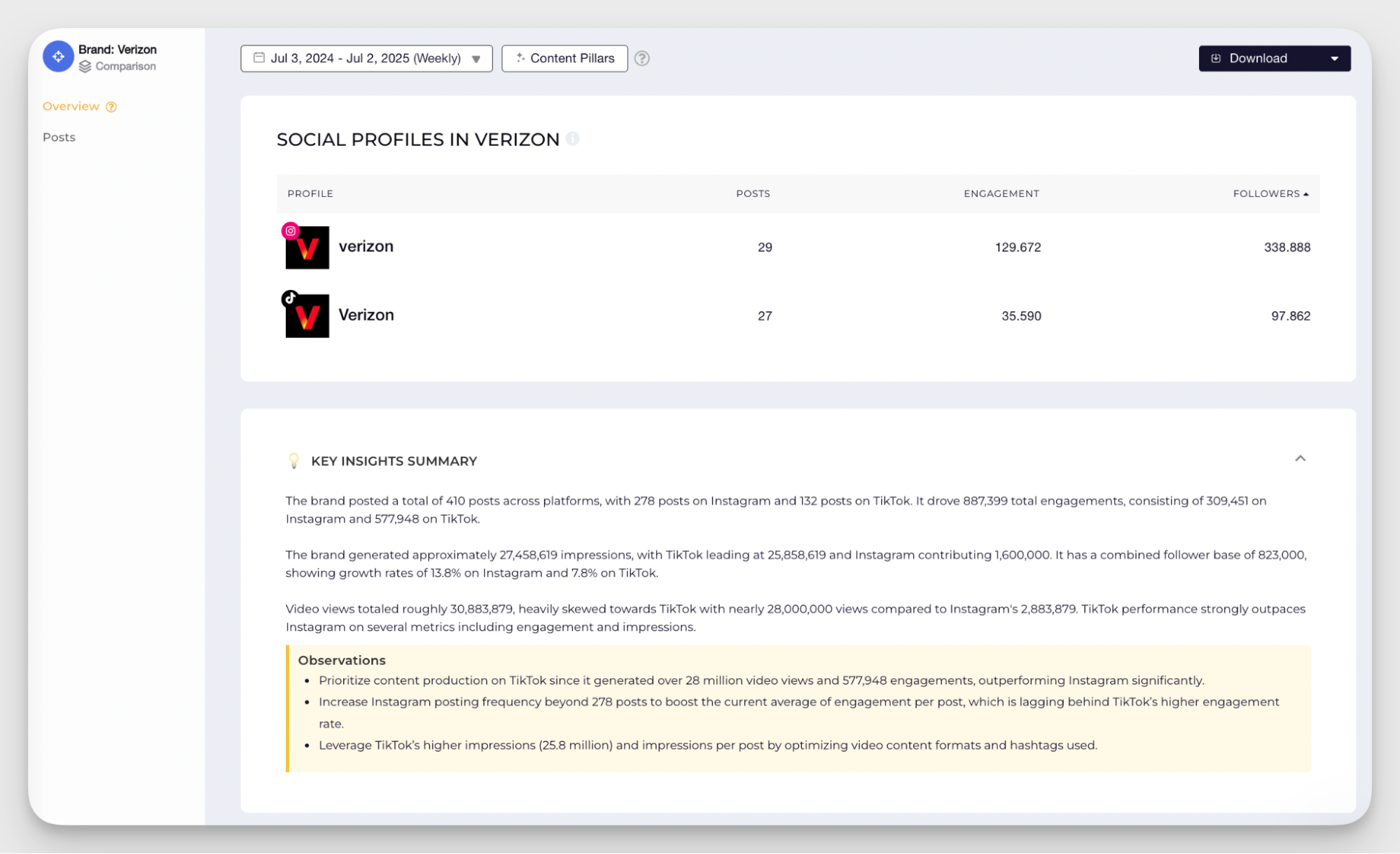
This gives you aggregated social media insights at the brand level rather than isolated metrics per channel. It’s especially helpful for teams producing executive reports or client deliverables where cross-platform summaries, trends, and benchmarks are essential.
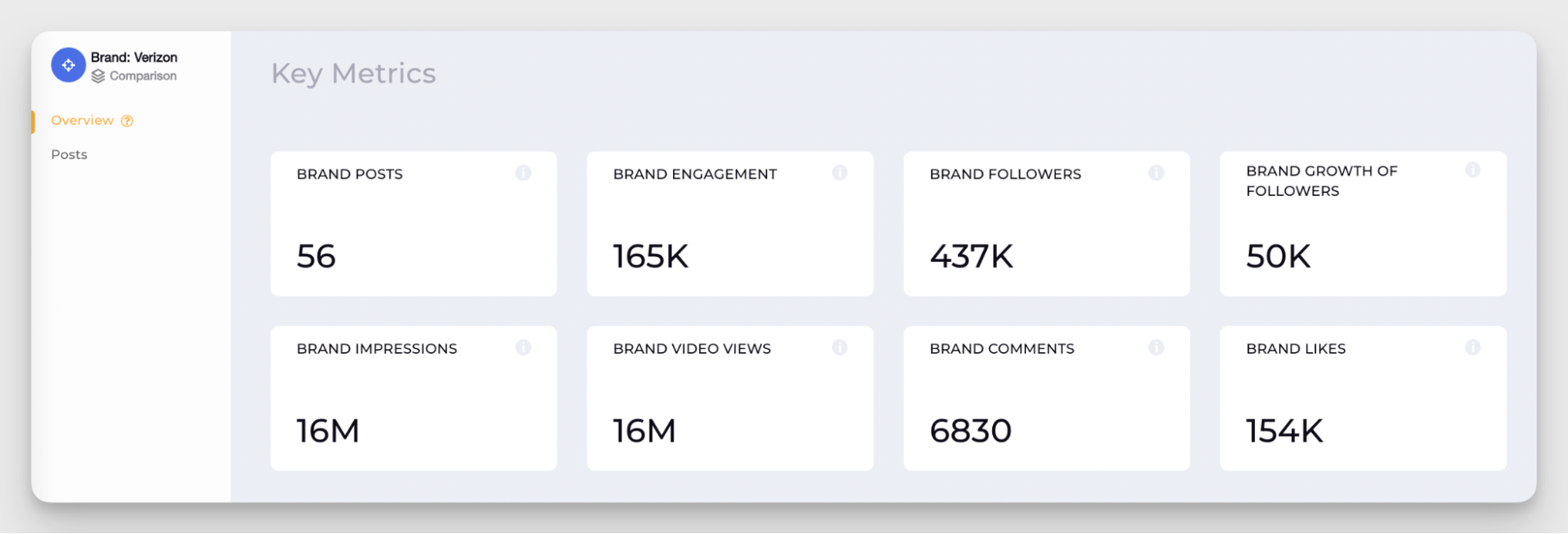
Social media performance reports
Keyhole lets you generate basic social media reports, but these are mostly centered on campaign performance and listening metrics.
Socialinsider stands out by offering analytics-driven, fully customizable, and automated reports built for ongoing performance tracking and competitive benchmarking.
Historical data
Keyhole offers historical data on request for Enterprise users. However, access depends on the platform—Twitter data goes back to 2015, while Instagram, Facebook, and YouTube data are more limited. TikTok is not supported at all.
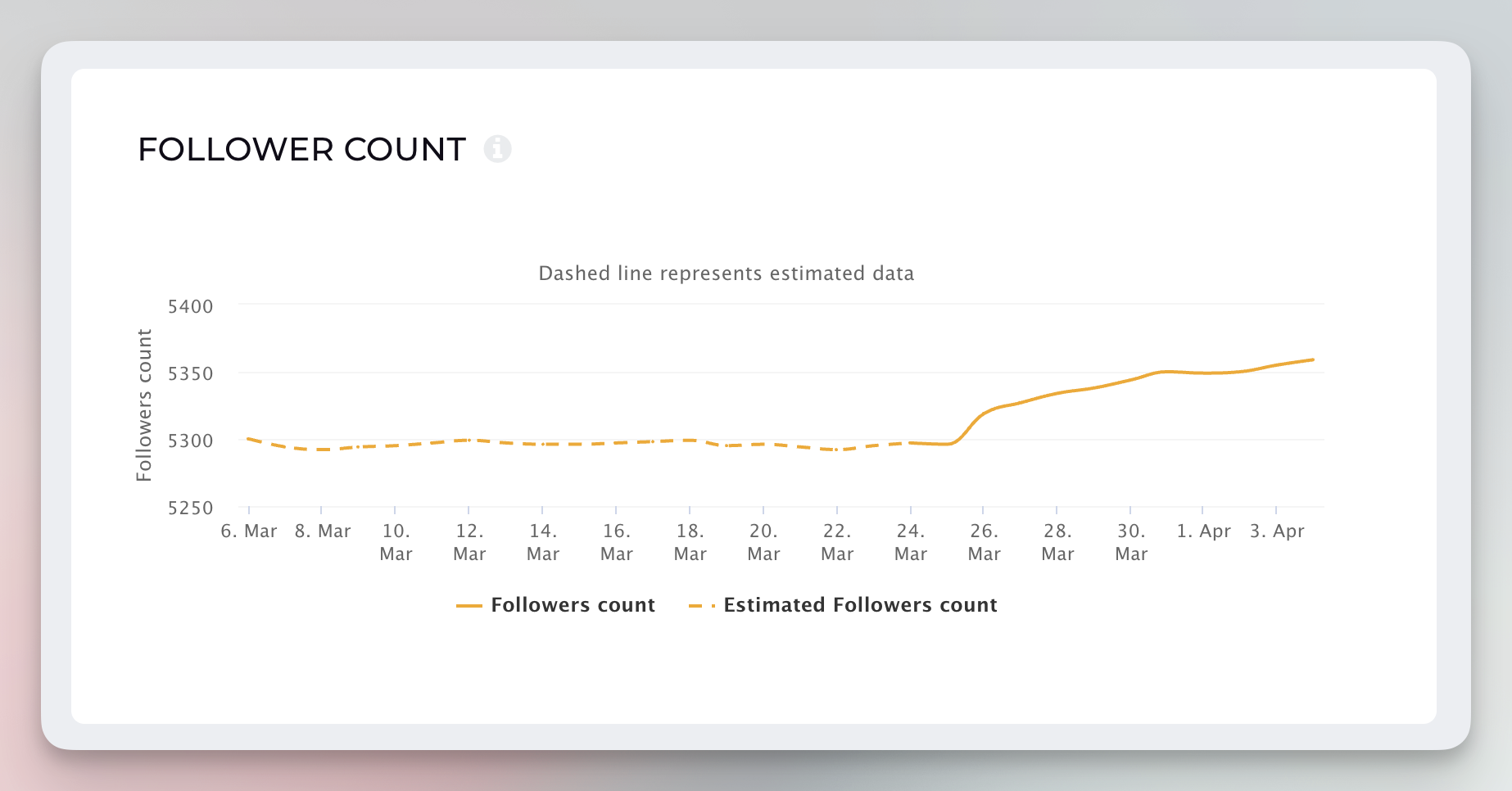
Socialinsider supports post-level historical tracking (with extended access available on request). It also provides estimated follower growth, which is normally limited through the platform’s APIs.
Competitive and industry analysis
Both platforms support competitor analysis, but they approach it very differently.
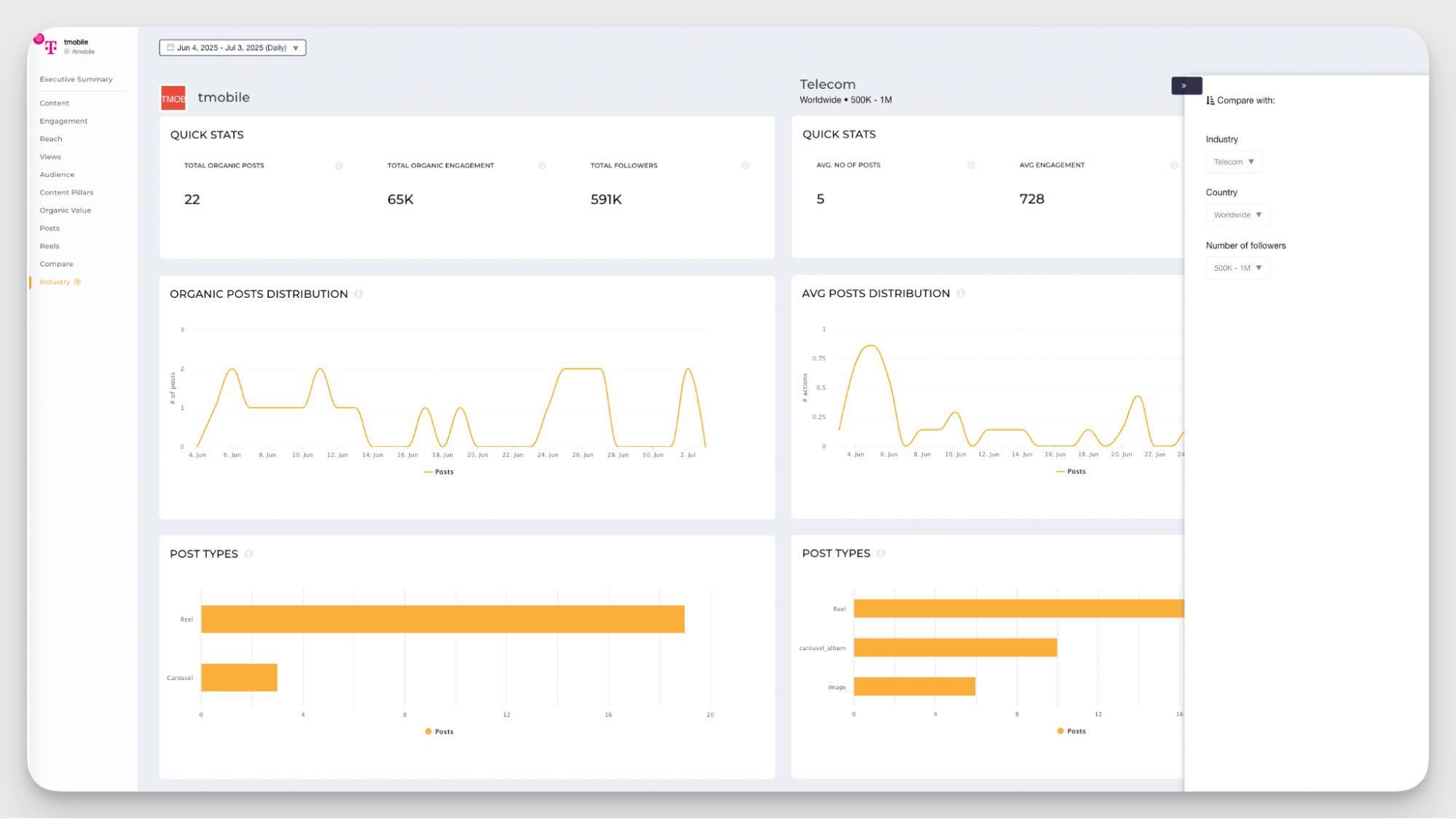
Keyhole allows side-by-side comparisons at a basic level, usually tied to campaigns or hashtags. Socialinsider adds strategic context by offering industry benchmarks, performance averages, and competitive baselines.
This allows teams to understand not just who performed better, but how performance compares to the broader market—a critical requirement for client reporting and leadership updates.
Where does Socialinsider shine?
Socialinsider’s biggest advantage over Keyhole lies in competitive benchmarking and analytics depth, especially for teams managing multiple brands, clients, or regions. Besides that, there are a few more key differentiators.
Socialinsider supports automated content tagging. So instead of manually tagging each post, you can set up automated rules to tag all current and future posts automatically. This helps large or multi-brand teams keep content organized without relying on manual work.
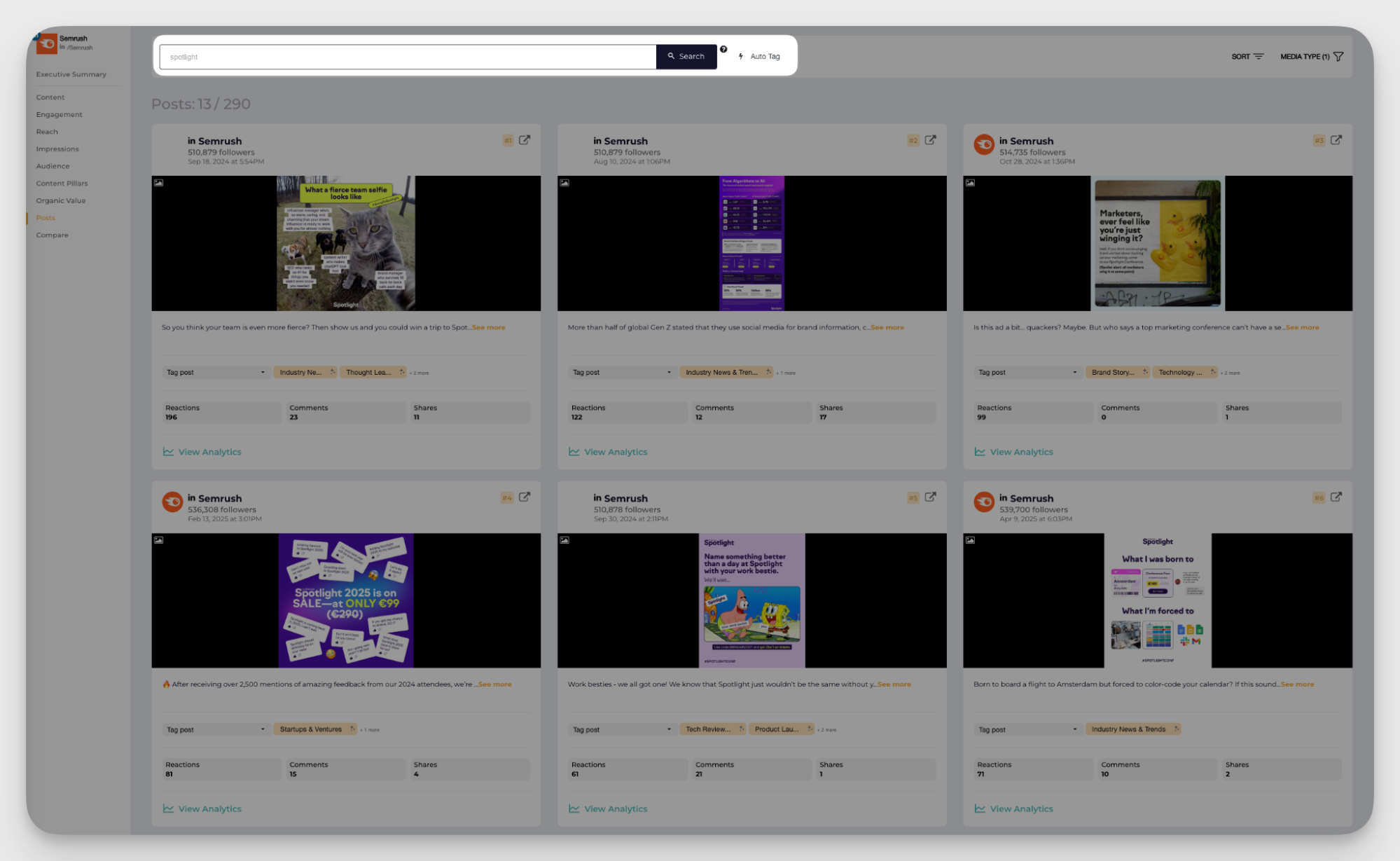
Content pillar analysis
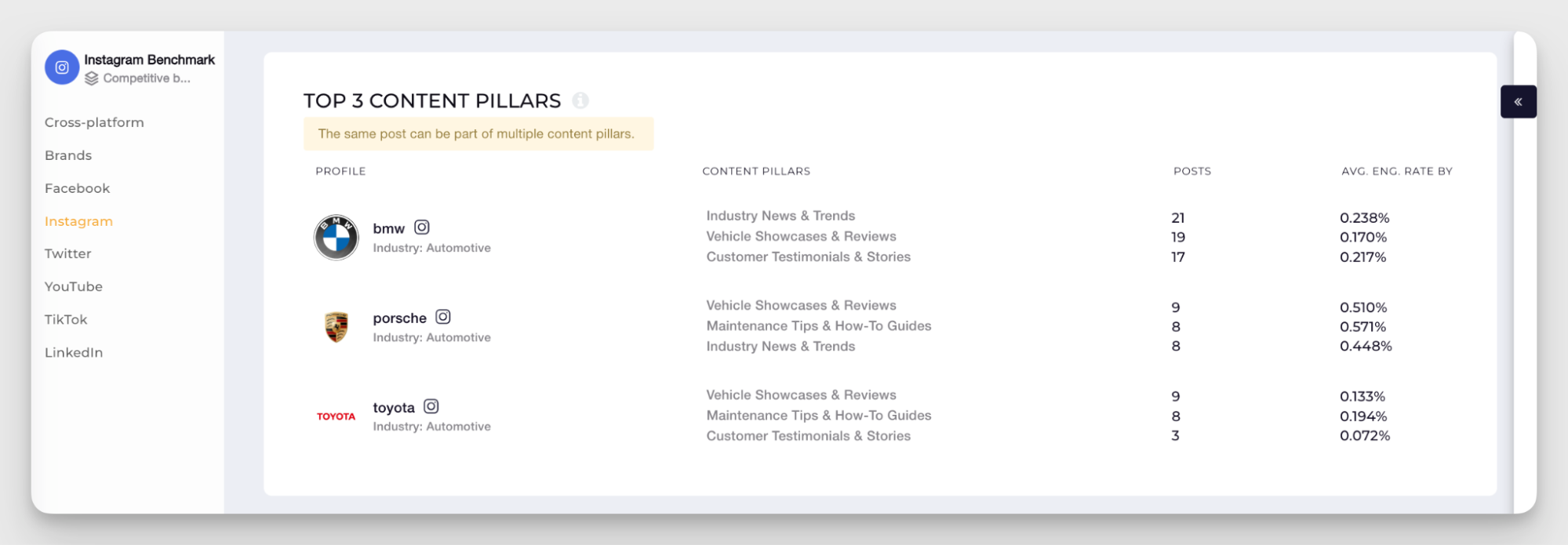
Once posts are tagged, you can group them under broader content pillars and analyze how each pillar performs–by tracking engagement trends, identifying top-performing themes, and benchmarking performance against competitors or industry averages.
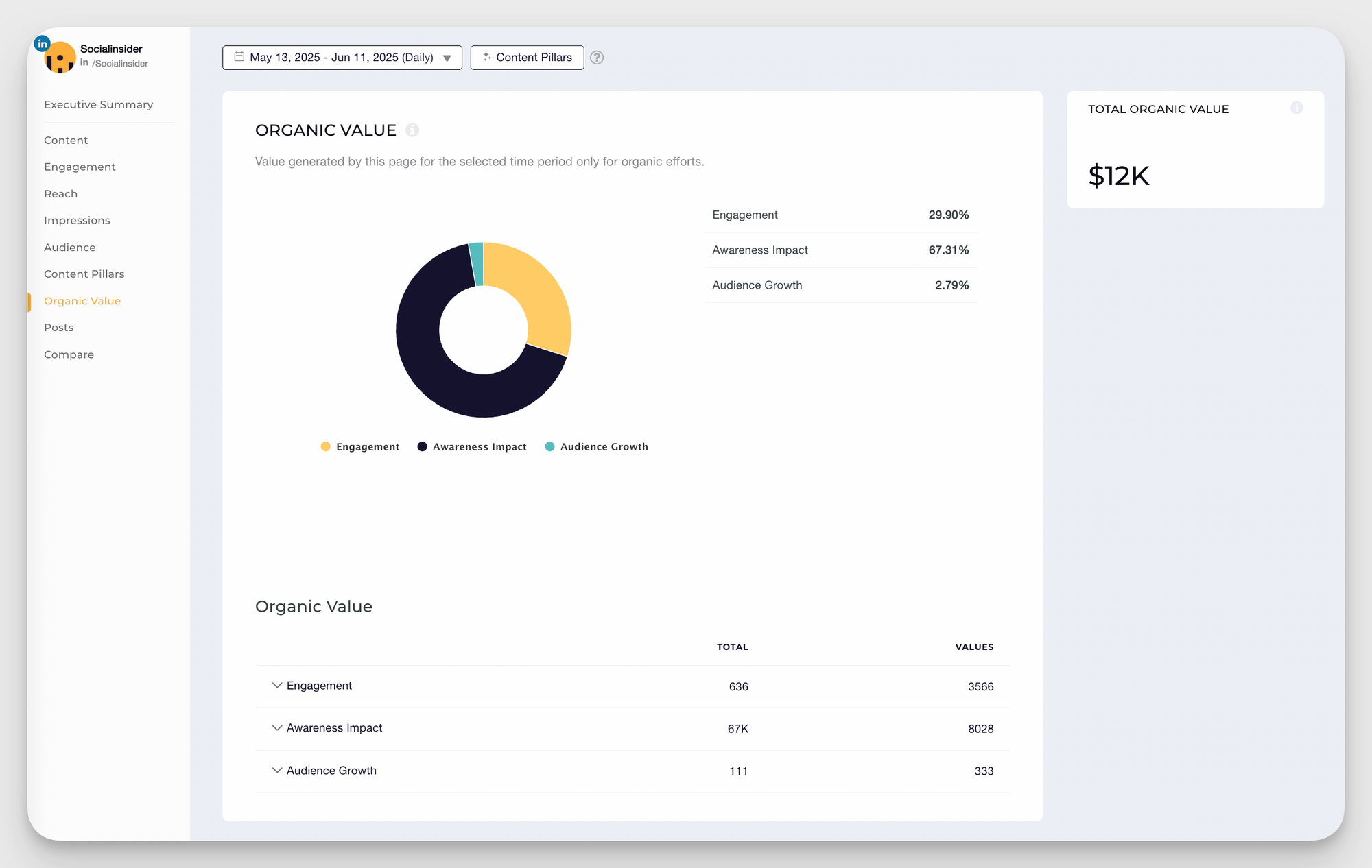
Organic value calculation
Socialinsider helps measure the impact of your organic (unpaid) social content by assigning a dollar value to engagement metrics such as likes, comments, shares, and reach.
The organic value reflects what it would have cost to generate the same results through paid ads, which can help brands estimate ROI without needing ad spend data. You can customize the values based on your own CPM, CPC, or industry benchmarks.
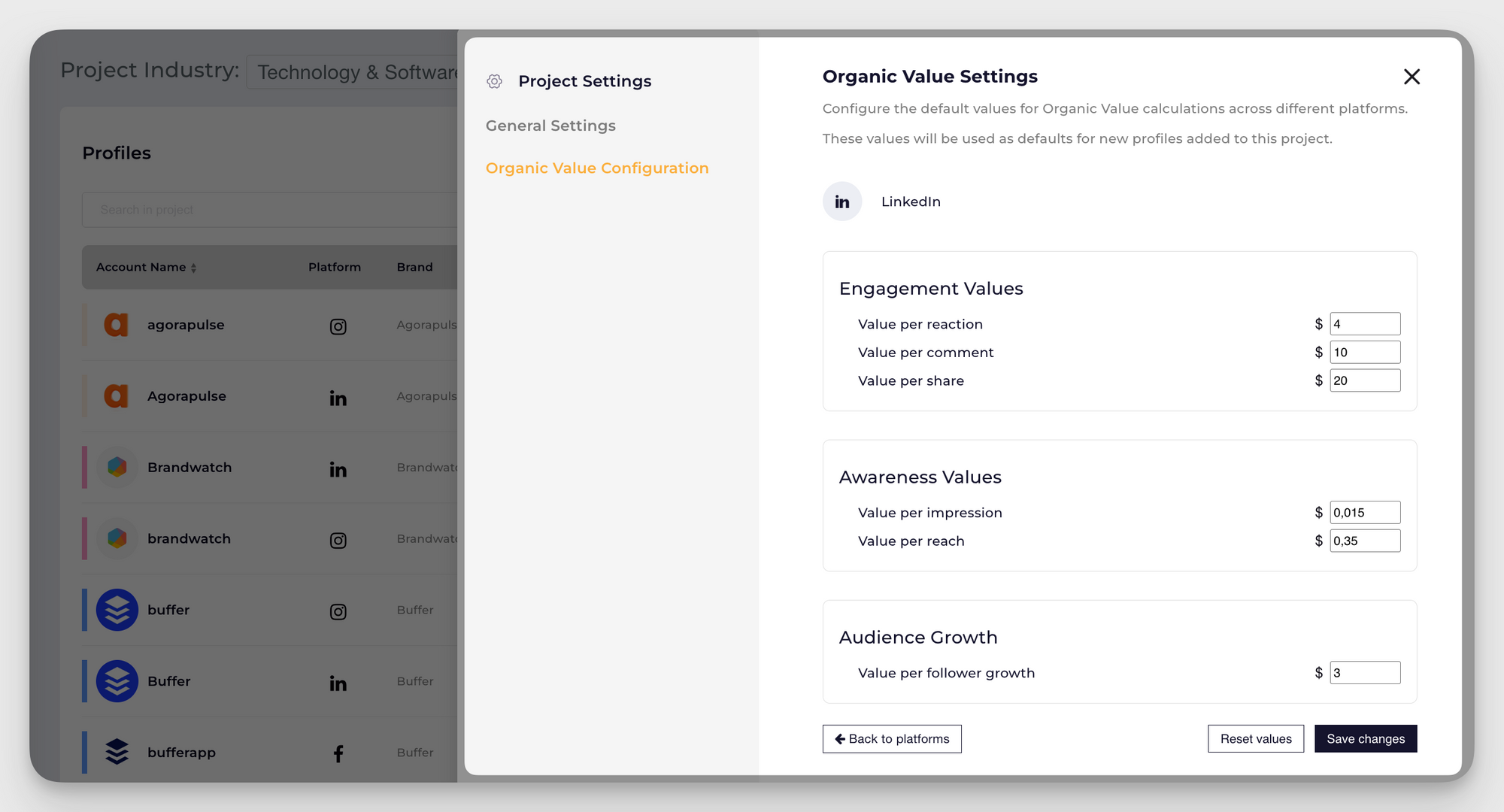
Here’s how to set it up:
- Go to Settings from the home dashboard.
- Click Organic Value Configuration.
- Choose the channels to include.
- Assign social media values to relevant data types (likes, shares, reach)
Where does Keyhole shine?
While Socialinsider leads in content and competitive analytics, Keyhole offers strong capabilities in:
- Hashtag tracking: You can identify trending hashtags and analyze hashtag performance over time.
- Influencer discovery: The feature is useful for finding and evaluating influencers across platforms.
- Campaign tracking: You can monitor campaigns using custom dashboards and real-time alerts.
Final verdict: Keyhole vs Socialinsider
If you’re looking for a tool to run detailed content analysis, track organic performance, and benchmark against competitors or industries—or if your current tools require too much manual reporting work—Socialinsider is the more efficient choice for filling those gaps.
Keyhole vs Brand24
Brand24 is a social listening and media monitoring tool designed to track online mentions across the web. Unlike Keyhole, which focuses on real-time campaign tracking and hashtag performance, Brand24 puts more focus on sentiment analysis, reputation management, and deep media insights. It’s ideal for brands looking to monitor brand health and detect crises early.
Let's take a look at their main feature overlaps, and what each one does better than the other.
Features overlap
- Multi-platform coverage: Both tools let you monitor key platforms like X (formerly Twitter), Reddit, TikTok, blogs, news sites, and web forums in real time. Facebook and Instagram monitoring is also available on both tools, but Brand24 requires connecting your own accounts to access brand mentions.
- Real-time mention tracking: You get real-time alerts whenever your brand, products, or tracked keywords are mentioned online. These alerts help you stay on top of conversations as they happen–whether it’s a customer complaint, a trending topic, or a PR issue.
- Sentiment analysis: Both tools provide sentiment tagging, but Brand24 allows users to override the tags and assign custom sentiments to each post for more accurate tracking.
Where does Brand24 shine
- Discussion monitoring: Brand24 can identify conversations where users are sharing product recommendations or sharing brand experiences. It gives you a chance to better understand what people think about your brand and how you can engage them.
- Automatic influencer ranking: Brand24 automatically ranks influencers using its proprietary influence score, a metric that evaluates users based on their overall popularity. This score is calculated using factors like engagement and follower counts.
- Influence mapping: The tool visually maps out networks of influential accounts discussing your brand or niche. So instead of starting your influencer discovery process from scratch, you can find potential brand ambassadors by tracking relevant industry conversations.
Where does Keyhole shine
- Hashtag campaign focus: Keyhole tracks hashtags in real time, detects trending topics early, and shows how your campaign is performing so you can optimize on the go.
- Visual content tracking: Using image and video recognition, Keyhole can track your branded visuals, like logos and product photos, across social media platforms.
- Campaign ROI measurement: The tool tracks metrics related to campaign performance, engagement, and estimated social media ROI.
Final verdict: Keyhole vs Brand24
If your top priority is deep social listening with full control over how mentions are tracked, tagged, and analyzed, Brand24 pulls ahead. Its flexibility in managing individual mentions, tracking discussion forums, and mapping influencer impact makes it ideal for marketers who need in-depth insights.
Keyhole vs Awario
Awario is a real-time social listening tool that monitors brand mentions across blogs, forums, news sites, and social media. It supports advanced Boolean search, giving users precise control over what should be tracked and what should be ignored. While Keyhole is built for campaign ROI and influencer tracking, Awario stands out for its flexible search logic and broader web coverage.
Let’s break down what features Keyhole and Awario have in common, and where they differ.
Features overlap
- Alert systems: Both tools offer customizable real-time alerts that notify you when a keyword, brand, or competitor is mentioned online.
- Influencer discovery: Both tools support influencer discovery, but they take different routes. Awario lets you search for influencers using specific keywords, topics, and locations. You can track their engagement levels and social media activity to evaluate influence over time.
Keyhole uses its influence score to automatically rank influencers based on reach, engagement, and popularity. It visually maps influencer networks, making it easier to spot micro, macro, and nano influencers who align with your campaign goals.
- Competitor monitoring: Both tools also allow users to track competitor brands, products, or campaigns.
Awario excels at granular monitoring and gives you a complete view of how your competitors are perceived in different corners of the internet. You can dig into sentiment trends, audience reactions, and emerging topics.
But Keyhole is better at side-by-side comparisons. It offers intuitive dashboards that let you benchmark your performance against competitors in real time, comparing metrics like sentiment, reach, and engagement.
Where Awario shines
- Source categorization: Awario automatically groups mentions by source type and tags them with relevance and authority scores. This helps teams prioritize high-value mentions and segment data without manual tagging.
- Lead scoring: The tool can also help you identify potential customers by analyzing their conversations on social media platforms. It detects users who are either asking for recommendations or expressing dissatisfaction with competing products–grouping these mentions in a separate feed. You can then engage with these high-intent prospects in the comments or slide into their DMs.
- Market position tracking: With competitor and brand monitoring, Awario helps teams visualize how their market position is evolving over time.
Where Keyhole shines
- Crisis management speed: Keyhole’s real-time alerts help brands detect both positive and negative mentions in real-time, especially useful during high-visibility moments like public announcements or media appearances. It enables brands to identify potential PR risks early, adjust messaging on the fly, and respond faster to customer concerns.
- Real-time performance monitoring: Keyhole can help you track live events and campaigns as they happen. You can monitor hashtag performance, audience engagement, and key metrics–all in real-time to make quick, data-driven decisions.
- User experience and accessibility: The tool has an intuitive interface designed specifically for marketers with easier setup, cleaner dashboards, and better mobile app functionality
Final Verdict: Keyhole vs Awario
If you need a tool for deeper social listening, market research, and lead generation, Awario is the stronger option thanks to its data categorization and lead scoring capabilities.
Final thoughts
Keyhole is a solid option for social listening, hashtag monitoring, and campaign-level tracking. However, its analytics capabilities remain fairly basic and are not designed for ongoing competitive benchmarking or deep performance analysis.
For teams whose reporting needs have evolved—especially those working with clients, leadership teams, or multiple brand assets brands—this often creates gaps in insight and additional manual work.
If you’re transitioning away from Keyhole and looking for:
- A clear way to benchmark your performance against competitors
- More robust analytics and customizable reporting
- Automated reports for clients or internal stakeholders
- A user-friendly interface focused on analytics rather than listening
Socialinsider offers a more strategic alternative.
It helps teams move beyond basic metrics by consolidating multi-platform data, providing meaningful benchmarks, and turning social media analytics into actionable competitive insights, without relying on spreadsheets or fragmented tools.
FAQs about Keyhole alternatives
Does Socialinsider show the performance of hashtags or keywords, such as reach, engagement, or trending positions?
Socialinsider provides analytics on hashtag performance within your owned posts. You can see which hashtags you’ve used, along with their associated metrics such as reach, engagement, and impressions. The platform helps identify your top-performing hashtags, but it does not track trending positions or monitor keywords/hashtags platform-wide. Hashtag analytics are limited to the data available from your connected and tracked profiles.
Can I compare my brand’s performance against competitors using keywords or hashtags?
Socialinsider allows you to compare your brand’s performance with competitors at the profile and post level, and you can analyze hashtag use and engagement on public posts for both your brand and competitors. However, dedicated keyword or hashtag comparison tools between brands are limited to the posts and metrics collected for each tracked profile. Comprehensive cross-profile keyword or hashtag benchmarking is not available as a standalone module.
Does Socialinsider allow benchmarking against multiple competitor pages at once?
Yes, Socialinsider allows you to benchmark your brand against multiple competitor pages simultaneously. You can add several competitor profiles to your project and view comparative analytics across all tracked profiles within your dashboard. This supports side-by-side analysis of metrics such as engagement, reach, follower growth, and content performance. The number of competitors you can add to a project depends on your subscription plan.
How do I analyze what content pillars or topics are working best for my competitors?
Socialinsider automatically categorizes posts into content pillars (topics) for both your brand and tracked competitor profiles. You can view analytics for each pillar, such as engagement, reach, and frequency, directly in the dashboard. This helps you identify which themes or topics drive the best results for competitors and adapt your strategy accordingly. You can also define your own content pillars (manually or automatically with the help of the auto-tagging feature).
Can I customize reports to include keyword or hashtag data?
Yes, Socialinsider allows you to customize reports and include available hashtag performance metrics for your owned and tracked competitor profiles. You can select specific data points—such as top-performing hashtags, engagement by hashtag, or post-by-post details—to be included in your PPT exports and scheduled reports, as long as this data has been collected for the relevant posts. We are planning to release custom and shareable dashboards in other formats soon.
What formats can I export data in?
Socialinsider offers data exports in multiple formats, including PDF, Excel (XLS), CSV, and PPT. This allows you to share presentations, perform further custom analysis, or integrate data with other tools as required.
Does Socialinsider provide historical data for hashtags, keywords, or posts?
Socialinsider provides historical data for posts for both owned and competitor accounts (depending on your subscription plan). Hashtag performance is only available at the post level.
Can I get both organic and paid performance data?
No, Socialinsider focuses on organic performance. One exception, however, is the performance of boosted posts on Facebook. Performance for ad campaigns is not available in Socialinsider at this time.
For Instagram business accounts, the Instagram API only allows retrieving data for organic posts, so this distinction is not possible at the moment.
How quickly can I get support or answers to technical questions?
Socialinsider offers support via live chat and email during business hours. Response times are typically fast, with most technical questions addressed within a few hours. Inquiries submitted outside business hours are answered at the earliest opportunity.
Can I add multiple team members or clients to the account for collaboration?
Yes, Socialinsider allows you to add multiple team members or clients to your account for collaboration. The number of team members you can add depends on your subscription plan.
Ritika Tiwari
Ritika Tiwari is a content writer and strategist with over 10 years of experience creating content for SaaS B2B brands. Outside of work, you’ll likely find her somewhere near the ocean.

Know what your competitors do — before your manager asks
Get instant social benchmarks & reports without manual work.
You might also like




Improve your social media strategy with Socialinsider!
Use in-depth data to measure your social accounts’ performance, analyze competitors, and gain insights to improve your strategy.