Social Media Trends and Predictions From Industry Experts for 2026
Discover the top social media trends that will dominate in 2026, together with tips on how to leverage them for your brand to gain momentum.

Lately, I’ve been paying close attention to the changes happening across platforms, and some patterns keep showing up again and again. The way people use social media is shifting, and with it, the expectations for brands are shifting too.
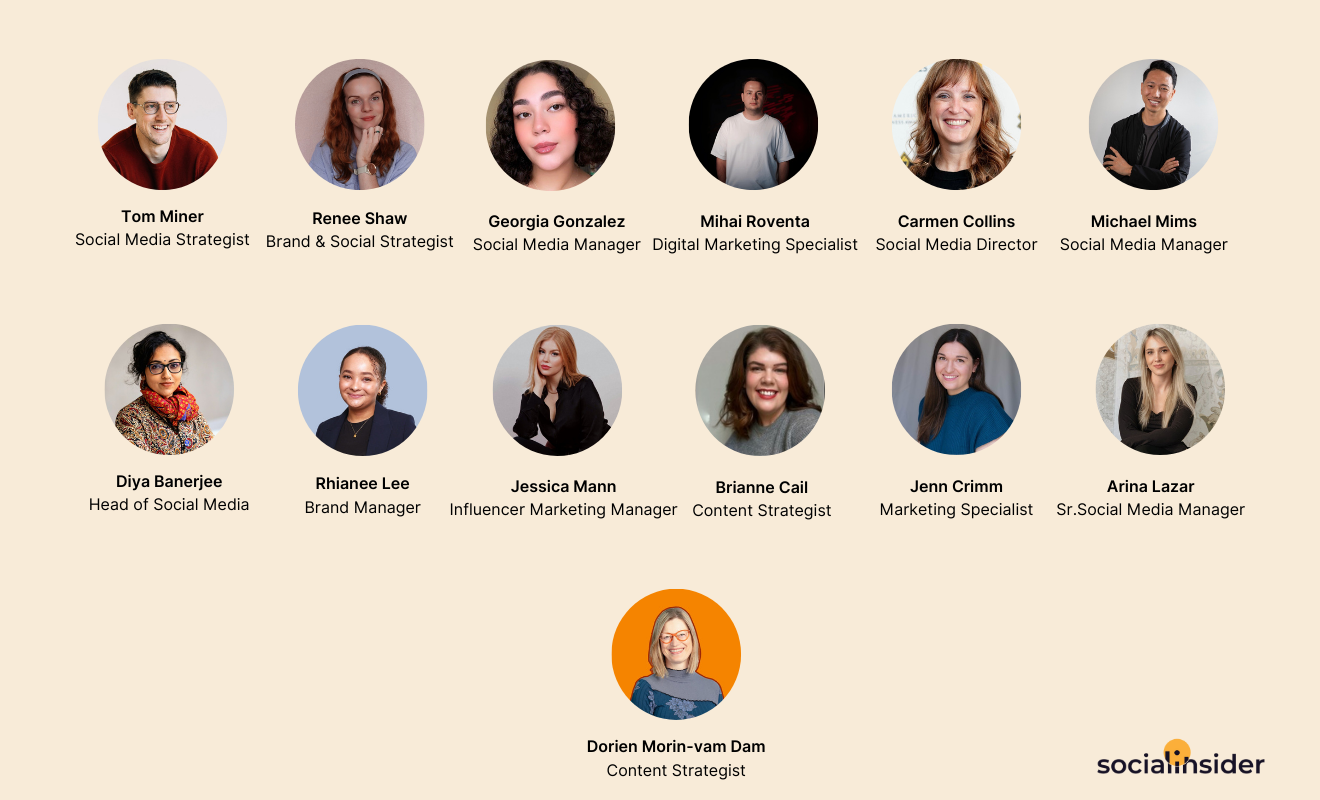
To understand what really matters right now, I looked at expert opinions and the signals coming from the industry. So, below you'll find the top 10 social media trends that stand out the most.
Key takeways
-
Social SEO: You’ll notice social feeds feeling more like discovery engines, where what you say and how you say it finally gets you found by the right people.
-
Private communities: Smaller, quieter spaces will become the true heartbeat of social, where belonging and trust feel more real than ever before.
-
AI as creative partner: AI will quietly power creativity behind the scenes, but it’s your personality and leadership that will make every idea land.
-
Transparency: Authenticity will become non-negotiable, as brands and creators open up about who they are and how they work—fostering deeper trust.
-
Storytelling & originality: Striking, memorable stories—rooted in your own genuine perspective—will outshine recycled trends and surface everywhere you look.
-
Human-led content & livestreaming: Audiences will crave direct, unfiltered moments with real people, making live and human-led content more magnetic than ever.
-
Retention metrics: You’ll care less about chasing viral spikes and more about the people who actually stick around and become part of your journey.
-
Behind-the-scenes & employee stories: The stories shared from behind the curtain, and from the people inside your brand, will be what makes audiences feel truly connected.
-
Humor: Lightness and laughter will finally return, as humor becomes the bridge that brings communities closer in an online world that needs it.
-
User-Generated Content: Real voices—fans, customers, creators—will shape brand narratives, with user content standing out as the internet’s most trustworthy currency.
#1. Social SEO: make your content discoverable
Social media is changing fast, and one of the biggest trends in social media marketing right now is the shift toward search-driven content.
People are no longer using social platforms only to scroll — they’re using them to search. Whether it’s tutorials on TikTok, product reviews on YouTube, or recommendations on Instagram, users increasingly treat social networks like search engines. This shift is one of the most important rising trends on social media, and it’s forcing brands to rethink how they create and optimize their content.
Instead of posting only for followers, marketers now need to post for discoverability.
That’s where social SEO comes in.
Optimizing captions, using relevant keywords, adding searchable text overlays, and structuring content so it can appear in platform search results are becoming essential skills for any team that wants to keep up with the latest social media marketing trends. If your content isn’t optimized to be found, it won’t matter how good it is — people simply won’t see it.
Industry experts are already seeing this change happen across platforms, as social networks invest more in search features and recommendation algorithms.
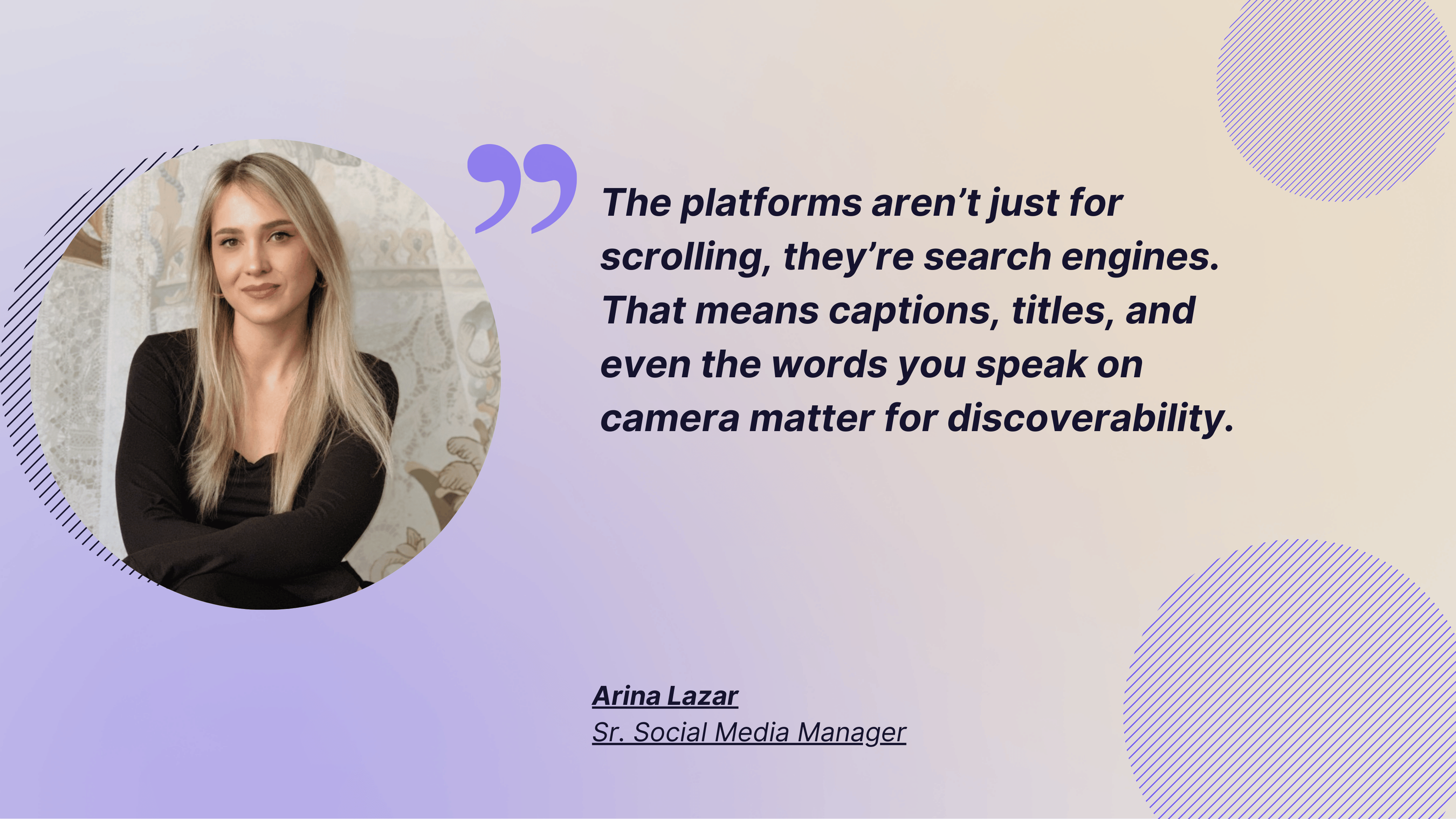
I’ve felt this shift starting in 2025, SEO in social media was already making waves, but 2026 is the year brands will fully lock it into their strategies. The platforms aren’t just for scrolling, they’re search engines. That means captions, titles, and even the words you speak on camera matter for discoverability. - Arina Lazar, Sr. Social Media Manager at ING
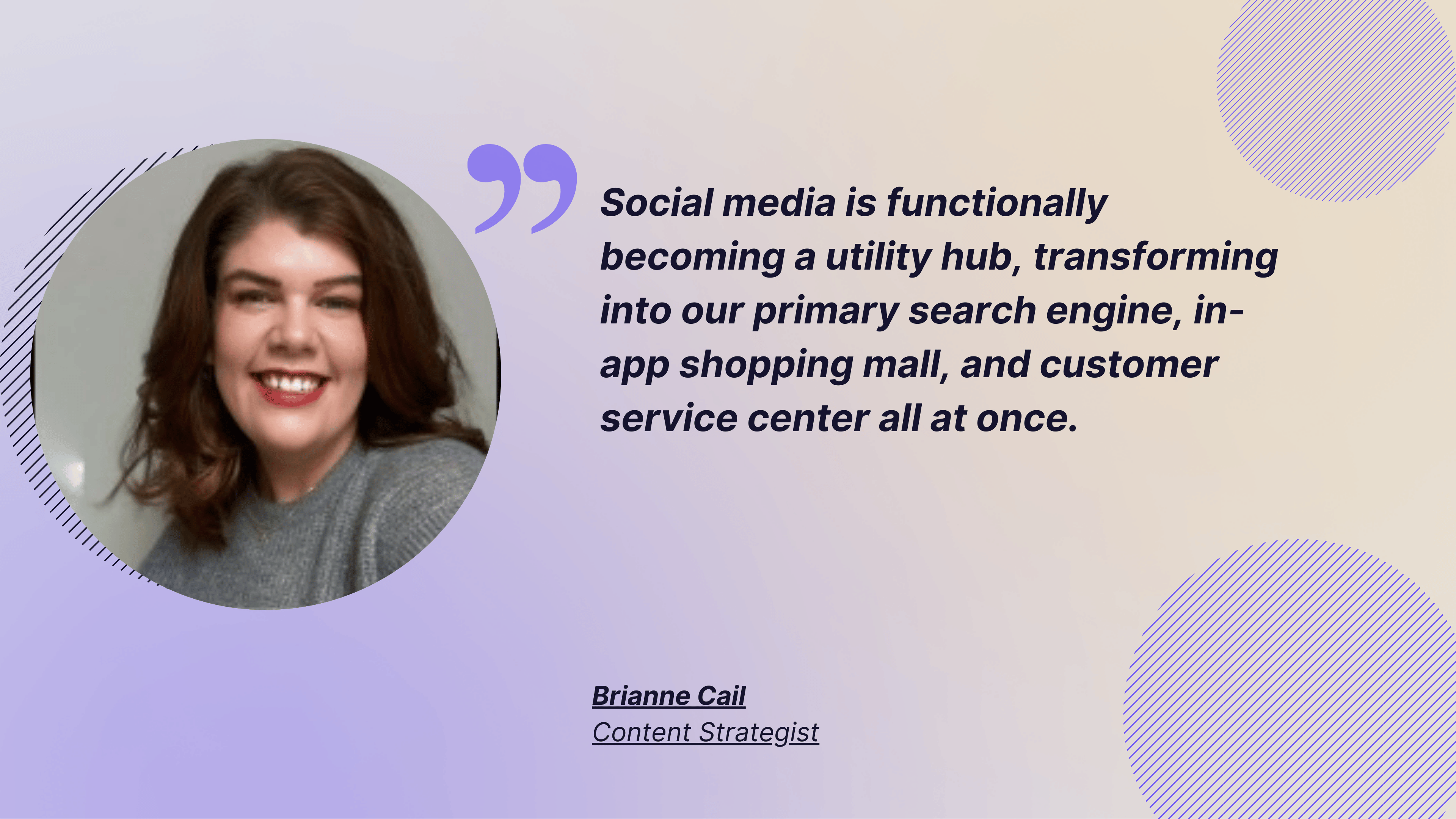
We've started to see it, but social media is functionally becoming a utility hub, transforming into our primary search engine, in-app shopping mall, and customer service center all at once, forcing creators to design every piece of content to sell, inform, or serve, blurring the line between content and commerce completely.
Ultimately, the creators and brands that will see some success when it comes to their online content are those who pivot from seeking viral reach (which, is truly never a strategy) to cultivating deep loyalty within their niche and who embrace adaptability as a way of helping their strategy, versus working against it. - Brianne Cail, Integrated Content & Channels Strategist at Mylo Tango
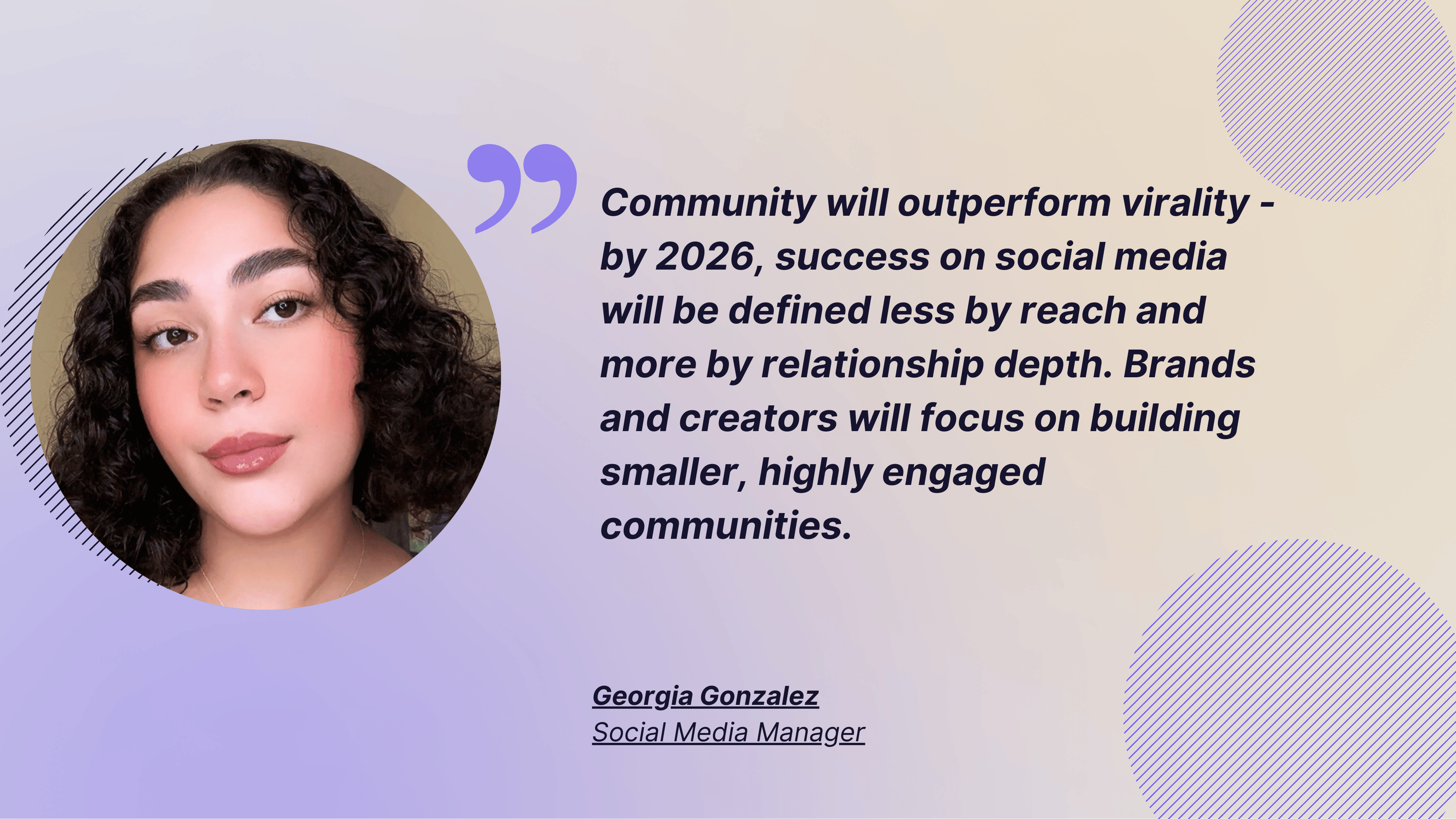
Search-driven social content will be non-negotiable - social platforms are now discovery engines. In 2026, creators and brands will need to intentionally optimize content for search using captions, on-screen text, spoken keywords, and accessibility features like alt text. The ability to create content that’s both engaging and searchable will be a major competitive advantage, especially on platforms like TikTok, Instagram, and LinkedIn. - Georgia Gonzalez, Social Media Manager at Penn State
#2. Private communities: build high-trust spaces that last
One of the most noticeable social media marketing trends right now is the shift from public reach to private interaction.
As algorithms become more unpredictable and organic visibility continues to fluctuate, brands are starting to focus less on chasing virality and more on building spaces where they can create real, long-term relationships with their audience. Private groups, gated communities, broadcast channels, and subscriber-only content are quickly becoming part of the major social trends right now, especially for brands that want stability instead of short-lived spikes in engagement.
This shift makes sense. Public feeds are crowded, attention is limited, and users are becoming more selective about what they interact with. In smaller, more controlled communities, conversations feel more personal, trust builds faster, and engagement tends to be much higher.
That’s why more companies are investing in Discord servers, private Facebook groups, Slack communities, close-friends lists, newsletters, and subscription-based content. These formats allow brands to stay connected with their most loyal audience, even when platform algorithms change.
For marketers, this means success will no longer be measured only by follower count or impressions. More and more, the focus will shift toward trust, retention, and meaningful interaction — signals that will define many of the next trends on social media.
Community will outperform virality - by 2026, success on social media will be defined less by reach and more by relationship depth. Brands and creators will focus on building smaller, highly engaged communities where conversations happen in comments, DMs, and shares. Georgia Gonzalez, Social Media Manager at Penn State
People crave belonging, and niche spaces are booming: private groups, broadcast channels, WhatsApp Channels. And we’ll see more and more brands step into these spaces to build authentic connections. It’s not about chasing reach anymore, it’s about creating spaces where your audience feels seen and connected. - Arina Lazar, Sr. Social Media Manager at ING
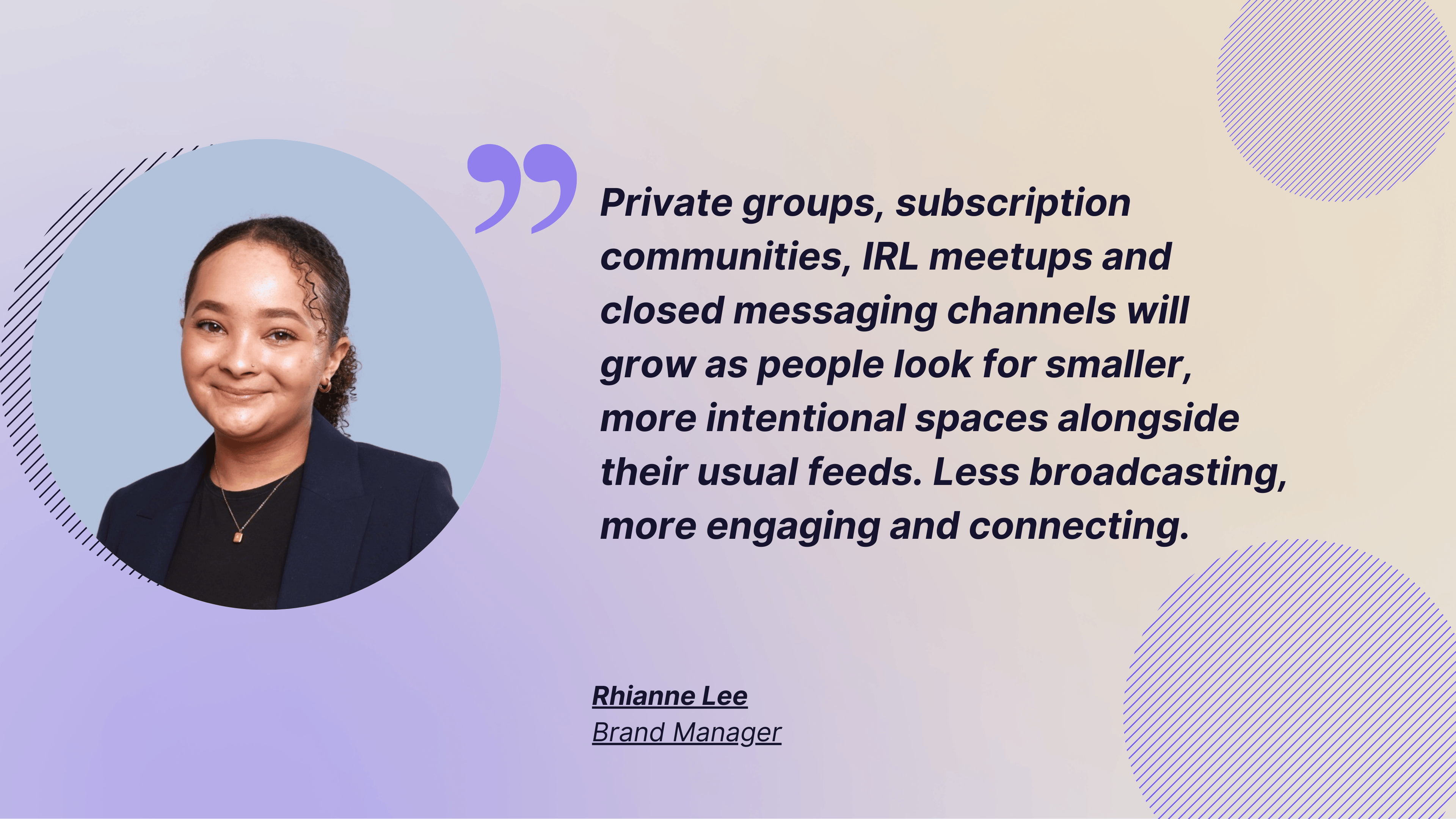
Private groups, subscription communities, IRL meetups and closed messaging channels will grow as people look for smaller, more intentional spaces alongside their usual feeds. Less broadcasting, more engaging and connecting. - Rhianne Lee, Personal Brand Manager at Amplify
#3. AI as a creative partner: amplify, don’t replace
Artificial intelligence is no longer just a buzzword — it’s one of the latest social media trends shaping how content is created, tested, and optimized.
Over the past year, AI tools have become part of the daily workflow for many social media teams. From generating captions and brainstorming ideas to editing videos and analyzing performance, AI is helping marketers move faster and experiment more. But one thing is becoming clear: the goal isn’t to replace creativity — it’s to amplify it.
Among the biggest trends in social media marketing, the brands that get the most value from AI are the ones that use it as a partner, not as a shortcut. Audiences can quickly tell when content feels generic or automated, which means human perspective, storytelling, and originality still matter more than ever.
At the same time, the pressure to produce more content across more platforms keeps growing. That’s why AI is becoming essential. It allows teams to scale their efforts without losing consistency, test more formats in less time, and adapt quickly to what’s new in social media.
The real opportunity isn’t in letting AI do everything. It’s in using it to remove friction, speed up execution, and make space for better ideas — something that will continue to influence the next wave of social media trends and predictions.
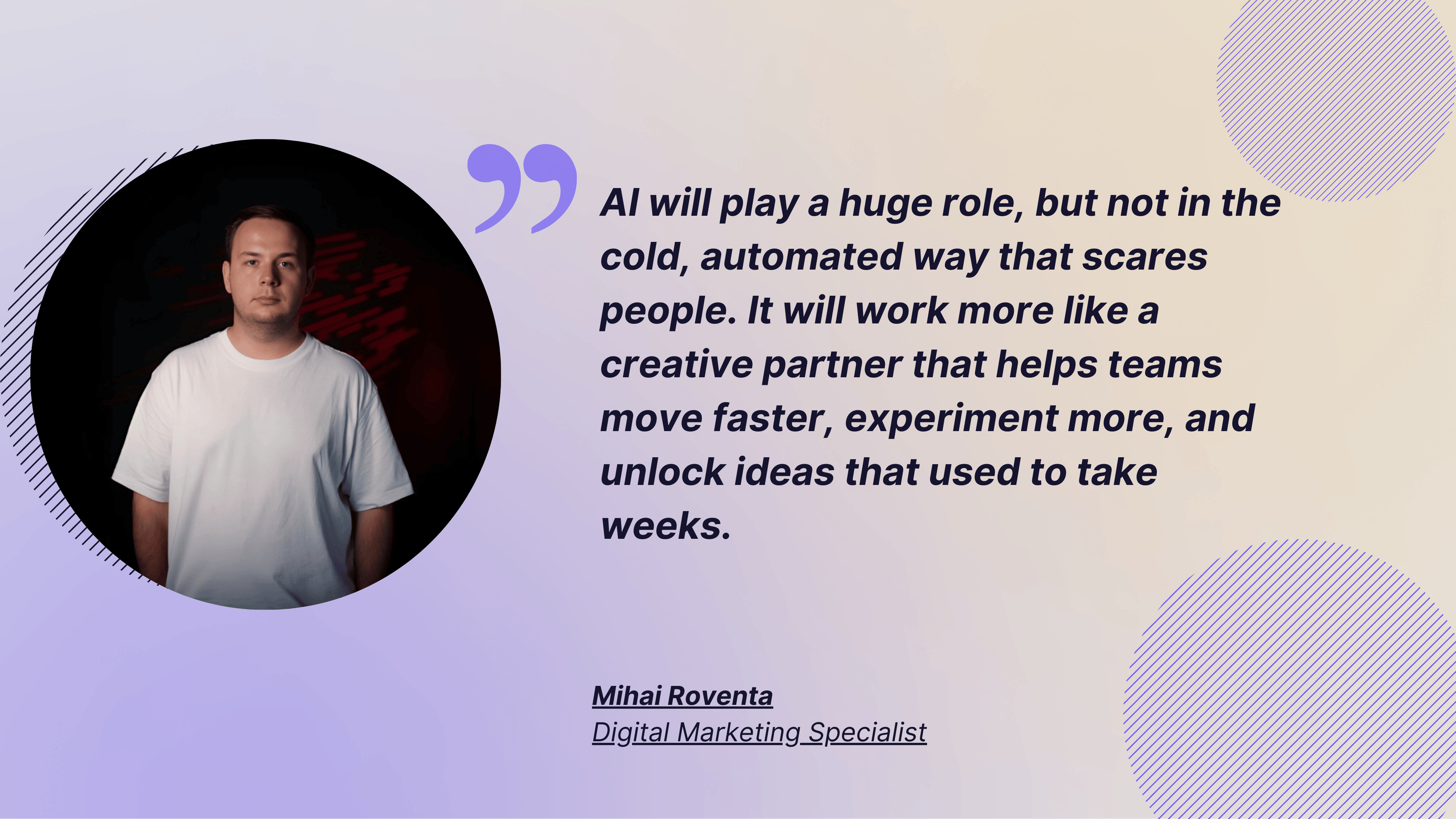
AI will play a huge role, but not in the cold, automated way that scares people. It will work more like a creative partner that helps teams move faster, experiment more, and unlock ideas that used to take weeks. The brands that will stand out are the ones that use AI to enhance their personality, not replace it. - Mihai Roventa, Digital Marketing Specialist
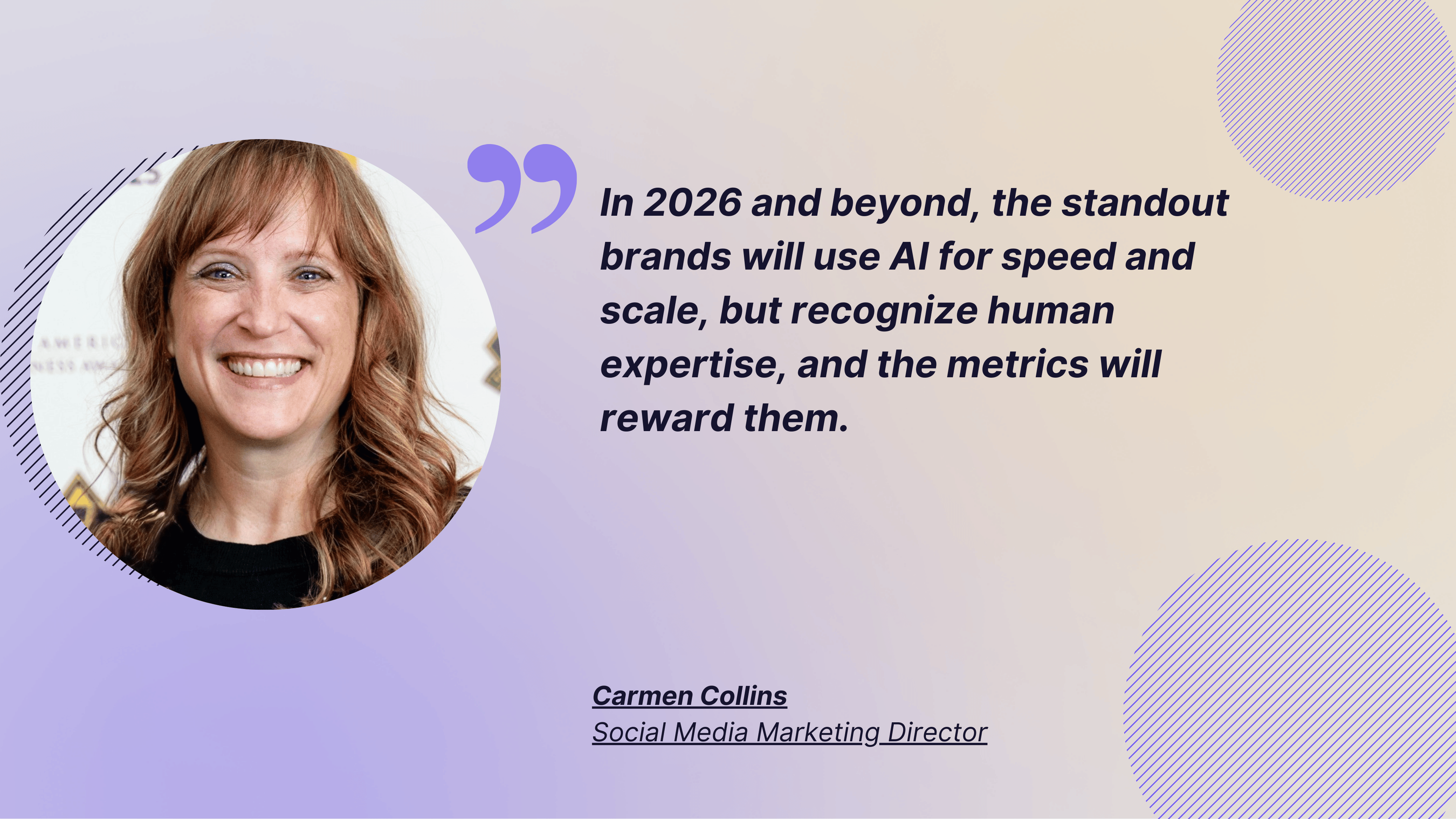
AI can crank out content, but it can't create context. Strategy and human editorial oversight remain important. Call it the "human signature" that makes it unmistakably unique to that brand. AI can now recognize AI, and humans are getting better at it too. In 2026 and beyond, the standout brands will use AI for speed and scale, but recognize human expertise, and the metrics will reward them. - Carmen Collins, Director of Social Media at Generac
#4. Transparency: build trust by letting your audience in
Among the latest social media trends, one shift stands out across almost every platform: audiences expect more transparency from the brands they follow.
Polished campaigns and perfectly curated feeds are no longer enough to build real connections. Users want to see what happens behind the scenes, how decisions are made, and who the people are behind the content. This growing demand for authenticity has turned transparency into one of the major social trends right now, especially as social media becomes more saturated and competitive.
Brands that openly share their process, challenges, and even mistakes often earn more trust than those that only show the final result. Whether it’s documenting how a product is made, explaining the strategy behind a campaign, or talking honestly about what didn’t work, this type of content makes companies feel more human — and that’s exactly what audiences respond to.
And maybe the most refreshing trend will be the push for transparency. Users are asking for clarity about data, algorithms and the real humans behind brand accounts. The brands that communicate honestly and show who they really are will naturally attract more trust. This is exactly the direction I’m taking with my team and the clients we work with, helping them build smarter, more human social media strategies that actually connect with their audiences. Mihai Roventa, Digital Marketing Specialist
#5. Storytelling & originality: share what only you can say
As content becomes easier to produce, originality is becoming one of the most valuable assets a brand can have.
Templates, trends, and viral formats still play an important role, but audiences are getting better at recognizing when content feels repetitive. That’s why storytelling is becoming one of the defining social media marketing trends right now. Brands that stand out are the ones that communicate a clear point of view, show personality, and create content that couldn’t belong to anyone else.
Instead of trying to copy what works for everyone, more marketers are investing in formats that reflect their own voice — whether that means sharing real experiences, building ongoing narratives, or developing recognizable content styles. These kinds of approaches take more effort, but they create stronger connections and make content easier to remember.
This shift toward originality is also one of the rising trends driven by the growing amount of content published every day. When users scroll through hundreds of posts, the ones that feel unique are the ones that stop the scroll.
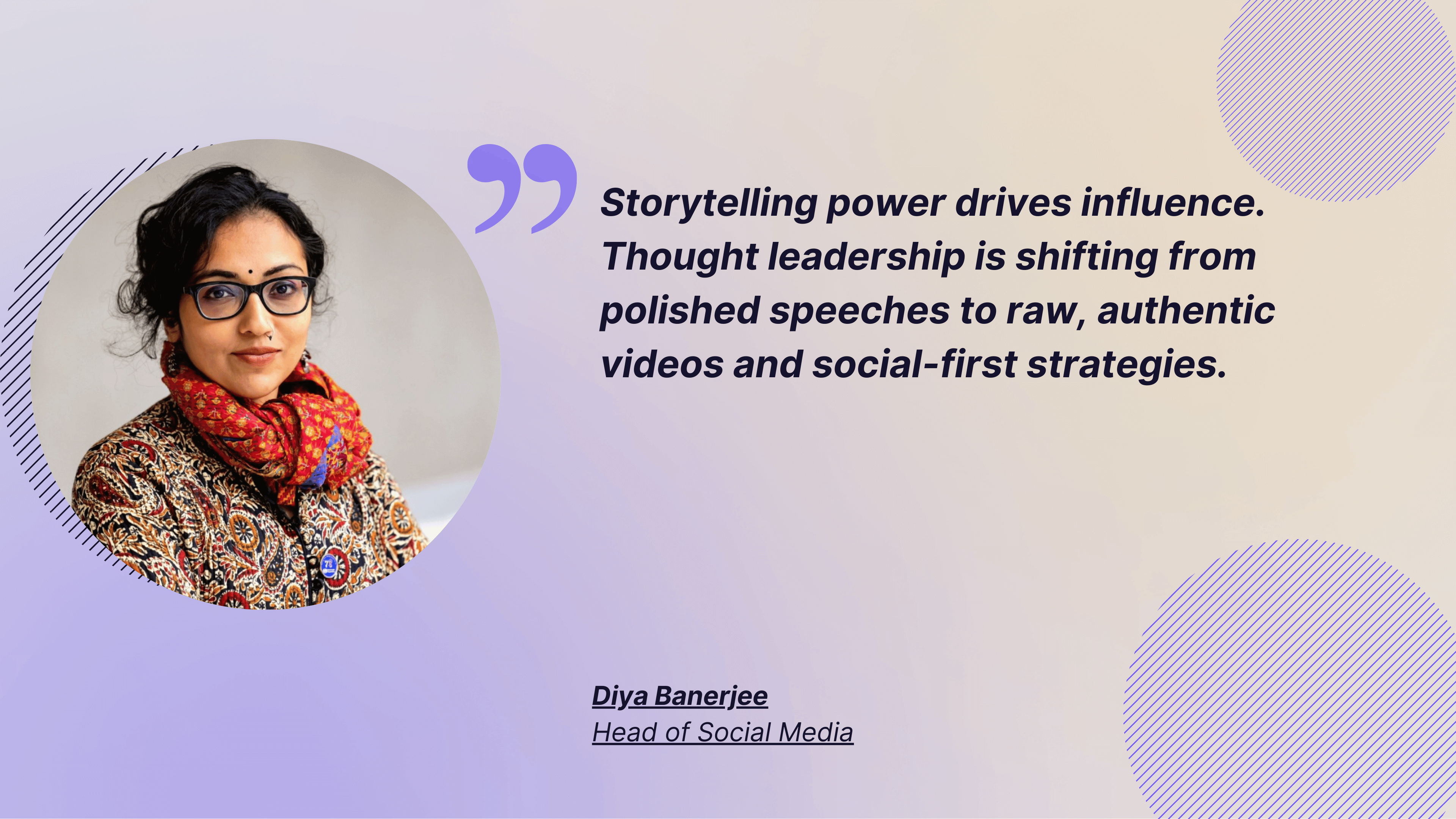
Storytelling power drives influence. Thought leadership is shifting from polished speeches to raw, authentic videos and social-first strategies. Young content advisors will play a pivotal role in guiding leaders to reimagine their presence, coaching them to be relatable, savvy, and genuinely engaged. But this cannot be a mere PR exercise; it must reflect a real commitment to connect with audiences and demonstrate care through action. - Diya Banerjee, Head of Social Media At WHO
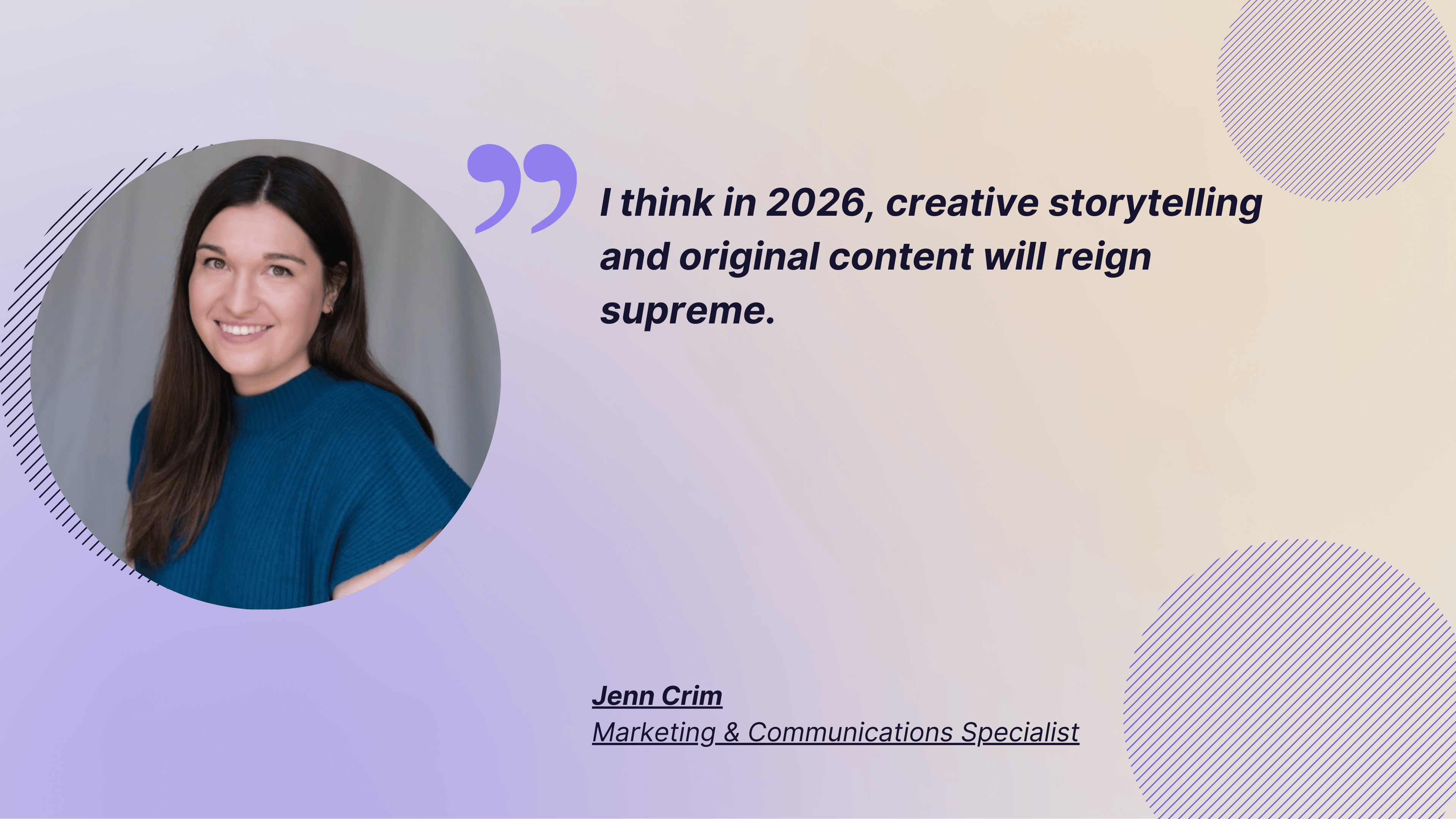
I think in 2026, creative storytelling and original content will reign supreme. We've seen trends start to feel "overdone" by brands (who else saw Taylor and Travis' engagement photos become memes for every brand?) and I think that this year we'll see a larger lean-in to the creativity, originality and brand building that have always been the backbone of social with less inclination to just jump on trends right out of the gate. - Jenn Crim,, Marketing & Communications Specialist at South Bend International Airport
#6. Human-led content & livestreaming: connect authentically and in real time
One of the latest social media trends making a strong comeback is content that feels immediate, personal, and real. As audiences grow more selective about what they engage with, highly produced posts are no longer enough on their own. People want to see the human side of brands — and they want to see it in real time.
That’s why human-led content and livestreaming are becoming key trends in social media marketing. Whether it’s live Q&As, behind-the-scenes sessions, product demos, or informal updates, real-time formats create a level of authenticity that edited content often can’t match. When people know something is happening live, they pay more attention, interact more, and feel more connected to the brand.
This shift is also driven by the growing need for trust. In a feed full of polished videos and AI-generated visuals, content that feels spontaneous and human stands out immediately. Brands that put real people in front of the camera — employees, founders, creators, or community members — often see stronger engagement than those relying only on graphics or scripted posts.
Many experts see this as one of the upcoming social media trends that will continue to grow as platforms invest more in live features, real-time interaction tools, and creator-style formats.
We’ll see more employee-led content, founder brands, expert opinions and personality-driven posts as audiences push back against AI-heavy content. - Rhianne Lee, Personal Brand Manager at Amplify
Looking ahead, this focus on real-time interaction is likely to shape several social media future trends, especially as audiences expect faster responses, more transparency, and more direct communication from the brands they follow.
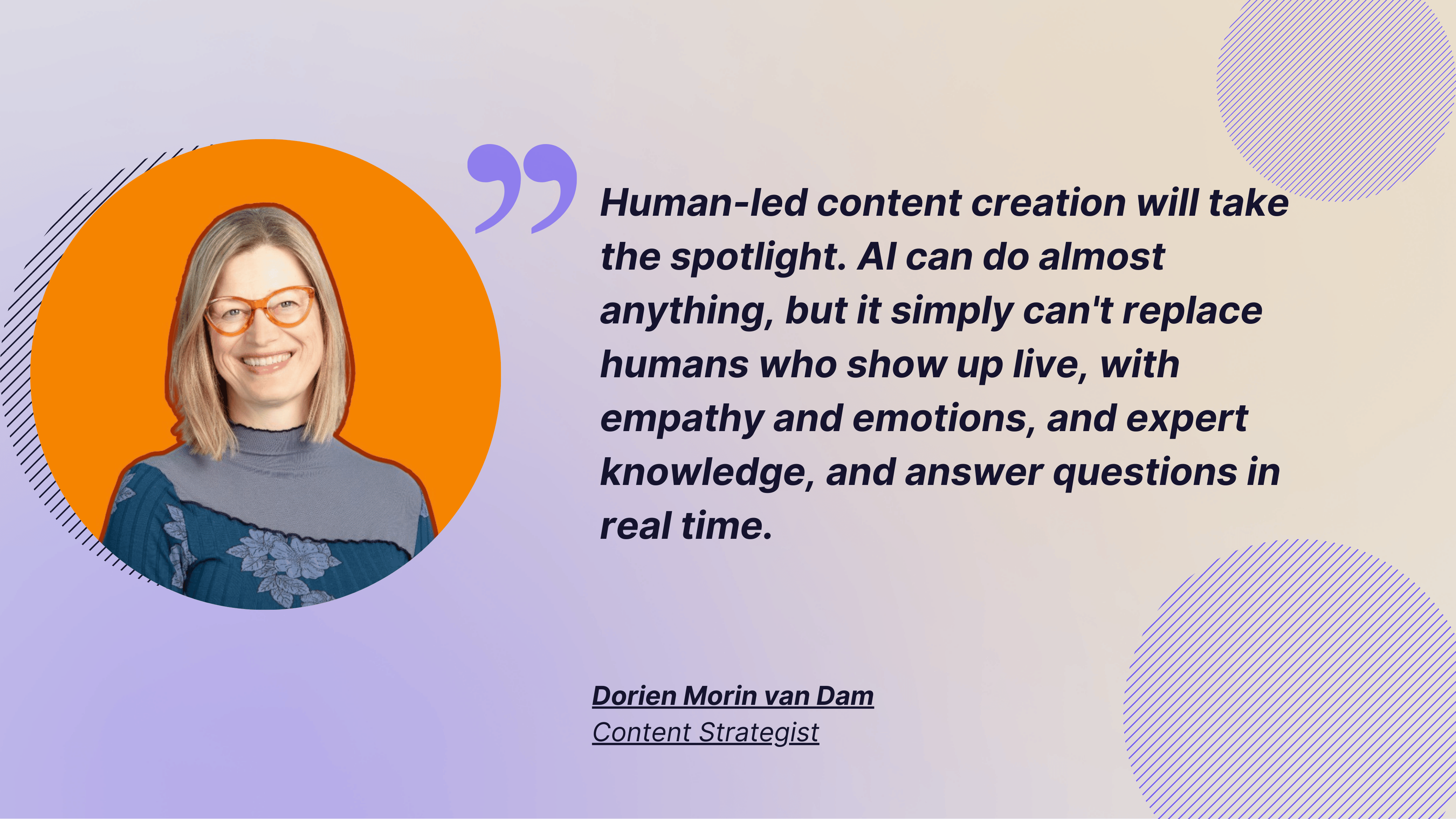
Human-led content creation will take the spotlight. Q4 of 2025 showed that AI-created content was nothing more than AI slop. To get away from this, brands will need to focus on bringing humans (back) into the picture and creating raw, human-centered content that speaks to humans, not bots. and Livestreaming is the last frontier. AI can do almost anything, but it simply can't replace humans who show up live, with empathy and emotions, and expert knowledge, and answer questions in real time. So for those brands that want to show up human, embrace livestreaming in 2026. - Dorien Morin van Dam, Content Strategist at More In Media
#7. Retention metrics: focus on long-term engagement over vanity numbers
One of the major social trends right now is the shift from chasing visibility to measuring real impact. For years, success on social media was often defined by likes, views, and follower counts. But as platforms evolve, those numbers alone no longer tell the full story.
More teams are starting to look at retention, watch time, saves, repeat interactions, and community growth instead of focusing only on reach. This change reflects broader trends on social media, where algorithms increasingly reward content that keeps people engaged over time, not just content that gets quick reactions.
Because of this, marketers are rethinking what performance really means. A post that reaches fewer people but keeps them watching longer can now be more valuable than one that goes viral for a day and disappears the next. These shifts are influencing how strategies are built, how campaigns are evaluated, and how success is reported internally.
Metrics like saves, meaningful comments, and repeat engagement will matter more than one-off viral moments. - Georgia Gonzalez, Social Media Manager at Penn State
Attention is no longer the metric. Retention is the filter. In 2026, creators will not be paid for views alone. Yes, there are still brands doing this but from my perspective, that approach is already outdated. When I’m optimizing campaigns, I treat raw reach as table stakes and use attention span metrics as the real qualifier.
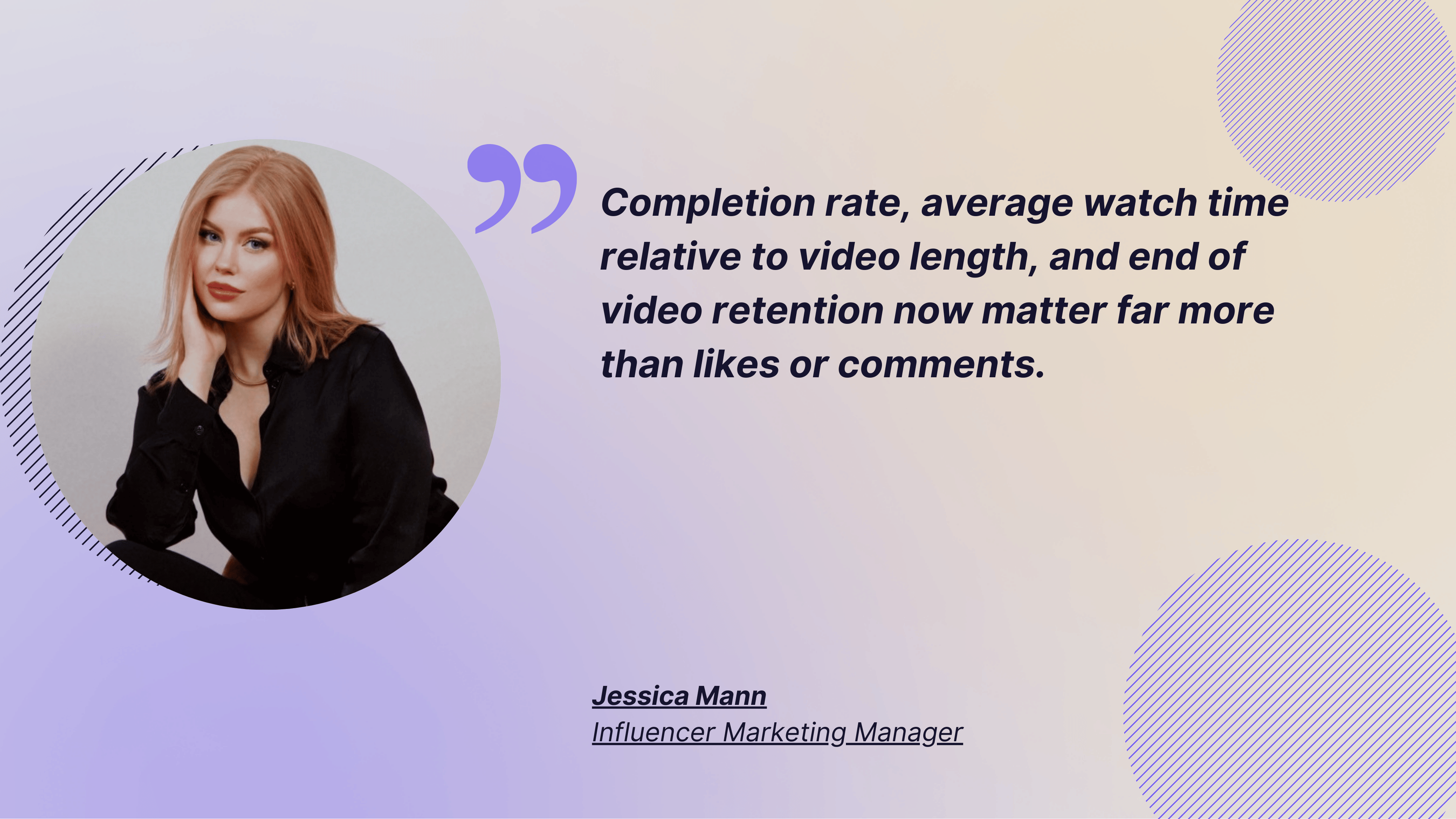
Completion rate, average watch time relative to video length, and end of video retention now matter far more than likes or comments. I want to be clear that there is nuance with this, since no single metric tells the full story.
The real value comes from using all available data to paint a narrative that explains what worked, what didn’t, and why. That’s how brands make smarter decisions around creator selection, platform choice, format, length, hooks, and even creative direction. Attention that doesn’t hold long enough to transfer meaning is no longer valuable, especially in an oversupplied creator market.- Jessica Mann, Influencer Marketing Manger and Campaign Strategist
#8. Behind-the-scenes & employee stories: reveal your real brand
Audiences are becoming more curious about how things actually work — who creates the products, who manages the accounts, and what happens behind the scenes before a post goes live. This shift is changing what performs well online and is quickly becoming one of the most visible trends on social media, especially for companies that want to build stronger emotional connections with their audience.
Behind-the-scenes content, employee stories, day-in-the-life videos, and informal updates often feel more relatable than traditional marketing posts. Instead of sounding like advertising, this type of content feels like a conversation, which makes people more likely to engage, comment, and share.
Many teams are also realizing that their employees can be some of their strongest voices online. Featuring team members, creators, or founders adds personality to the brand and makes content feel more authentic — something that continues to define current social media marketing trends.
As feeds become more crowded, content that feels real will stand out more and more, making this one of the newest trends likely to stay relevant as social platforms continue to reward authenticity over perfection.
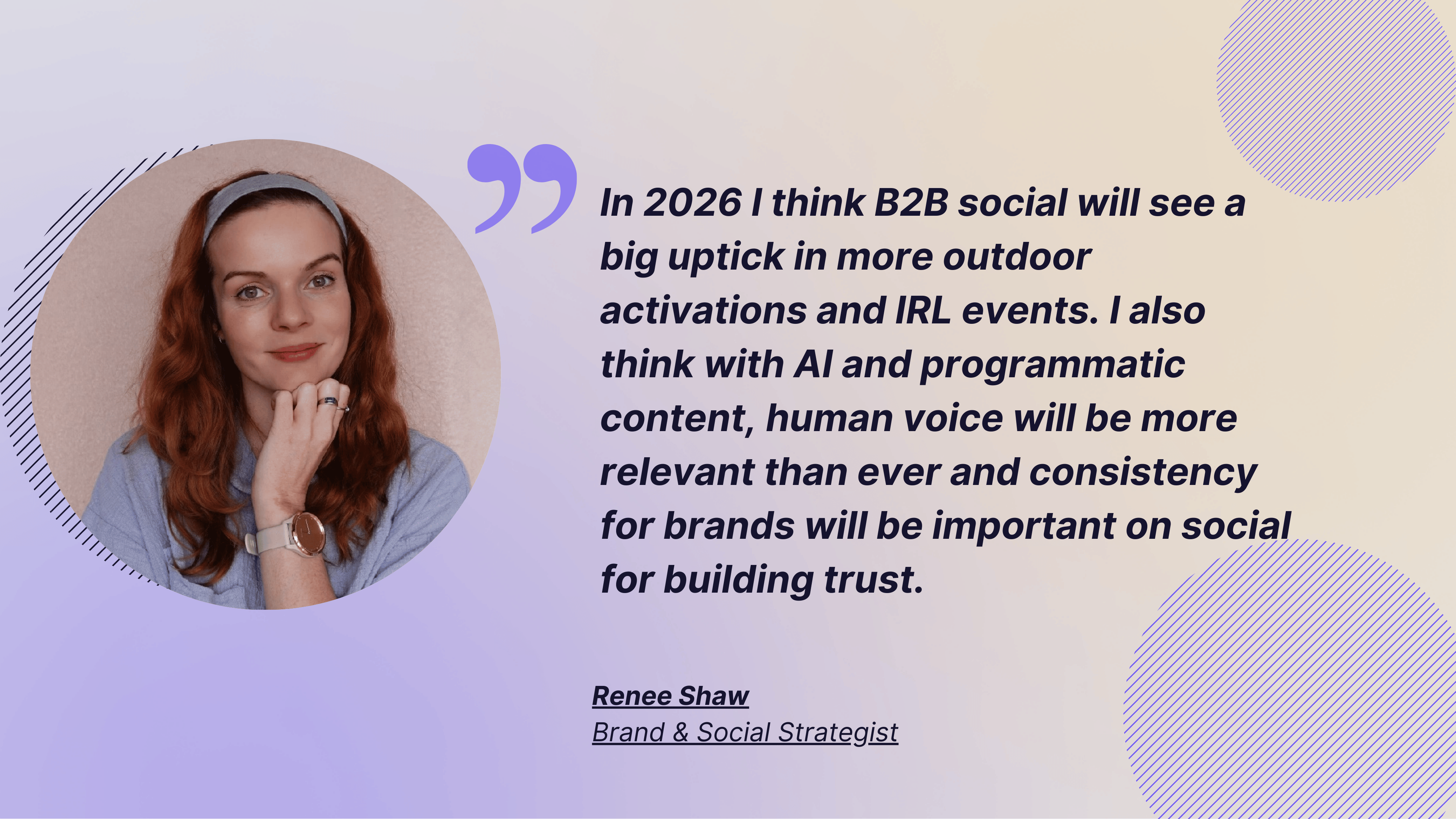
In 2026 I think B2B social will see a big uptick in more outdoor activations and IRL events. that being said, I think with AI and programmatic content, human voice will be more relevant than ever and consistency for brands will be important on social for building trust. - Renee Shaw, Brand & Social at tl;dv
Renee also tells that her bets are:
- more web series/ short form content with narratives
- documenting offline experiences/ more "BTS" from brands and individuals
- employee-generated content and programs will be huge
#9. Humor: use joy to stand out and spark real connections
If there’s one thing that defines many of the latest social media trends, it’s this: content that feels like advertising gets ignored, and content that feels like the internet gets shared.
Humor has become one of the clearest signals that a brand understands how social media actually works. Instead of sounding formal, more companies are experimenting with memes, playful replies, unexpected jokes, and posts that feel closer to creator content than to traditional marketing. What used to be risky is now becoming one of the strongest trends in social media marketing, especially on platforms where personality matters more than production quality.
This shift is happening because the culture of social media itself has changed. People don’t open apps looking for ads — they open them looking to be entertained, distracted, or surprised. When a brand manages to do that naturally, it earns attention in a way that polished campaigns often can’t.
That’s why humor is one of the fastest rising trends across TikTok, Instagram, LinkedIn, and even traditionally formal platforms. Posts that show self-awareness, react to trends, or make fun of everyday situations tend to travel further because they feel like part of the conversation, not an interruption.
At the same time, using humor well requires a clear understanding of the audience. The brands that succeed aren’t the ones trying to be funny all the time — they’re the ones that know when it fits, when to stay subtle, and when to lean into the tone of the platform.
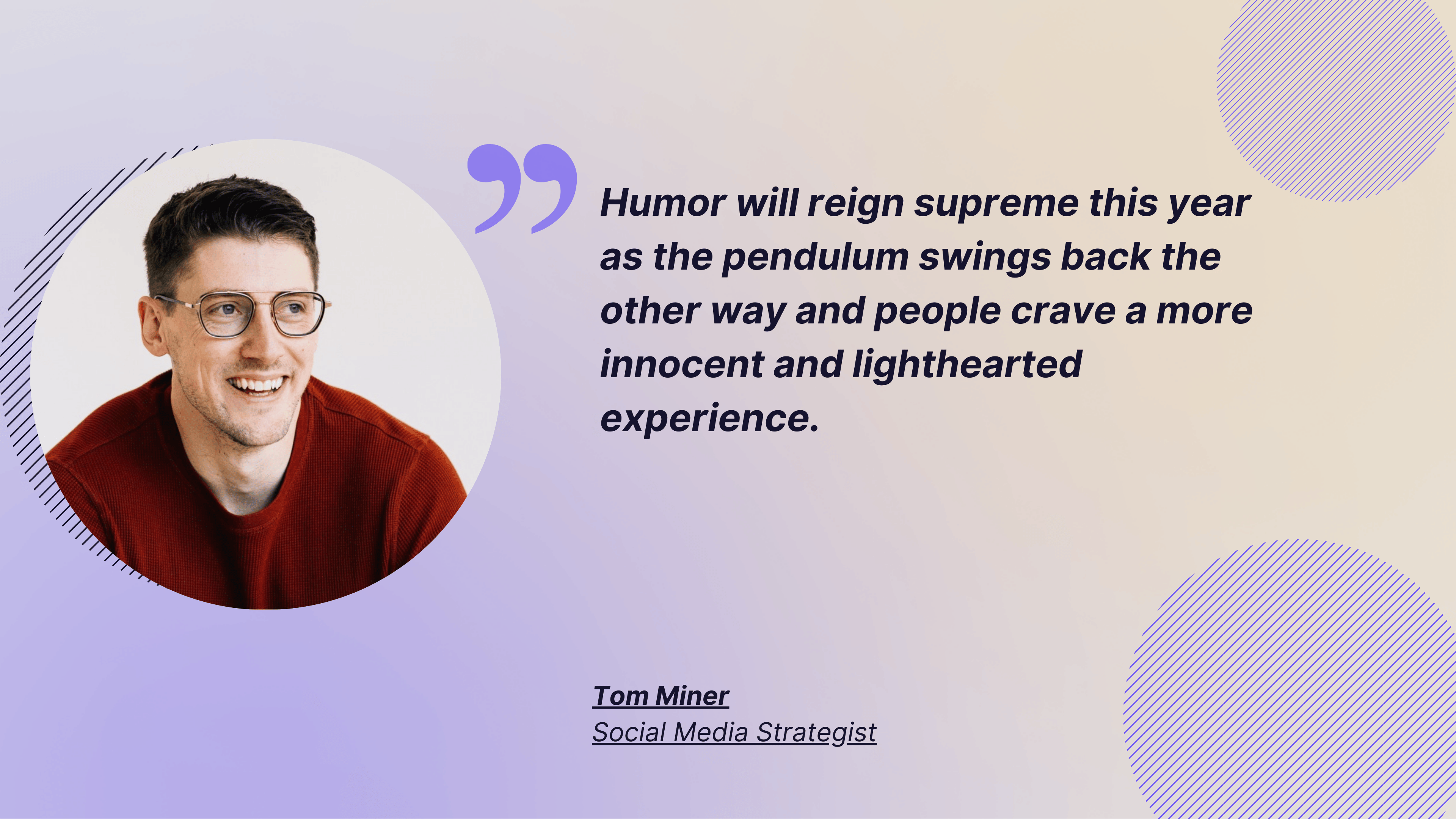
It will be a funny year on social as humor becomes the beating heart of the internet. Things have been tense, heavy, and often rageful on the internet the past few years. But humor will reign supreme this year as the pendulum swings back the other way and people crave a more innocent and lighthearted experience. This trend will also create more personally relevant experiences for social media users.
Across all age groups surveyed in a recent study by WARC and TikTok, humor was the top trait that makes content feel personally relevant. But it’s important to note that humor doesn't just mean recycling the same memes as everyone else.
And it's more than just being funny for the sake of being funny. Rather it’s about meeting an audience's needs because they find the content funny, which is a byproduct of their cultural conditioning (i.e., look to their online and IRL sub-communities to identify their sense of humor). - Tom Miner, Managing Partner & Social Media Strategist at Gold Miner Media
#10. User-generated content: invite genuine participation and advocacy
One of the most important upcoming social media trends is the growing shift from brand-created content to content created with the audience, not just for the audience.
User-generated content is not new, but the role it plays is changing. Instead of being a nice addition to a campaign, it’s becoming a core part of how brands build credibility online. In a space where people are exposed to thousands of posts every day, content shared by real users often feels more trustworthy than anything a brand can produce on its own.
This is why more companies are encouraging reviews, reposting customer stories, collaborating with creators, and designing campaigns that invite participation instead of just promotion. These types of formats naturally fit the current trends on social media, where authenticity, relatability, and community carry more weight than polished messaging.
User-generated content also works because it turns the audience into advocates. When people see others like them using a product, sharing an experience, or talking about a brand without being forced to, the message feels more credible. That trust is becoming one of the strongest drivers behind today’s social media marketing trends, especially as users grow more skeptical of traditional advertising.
At the same time, platforms themselves are encouraging this behavior. Features built around collaboration, remixing, duets, reposts, and community interaction make it easier than ever for users to become part of the content instead of just consuming it.
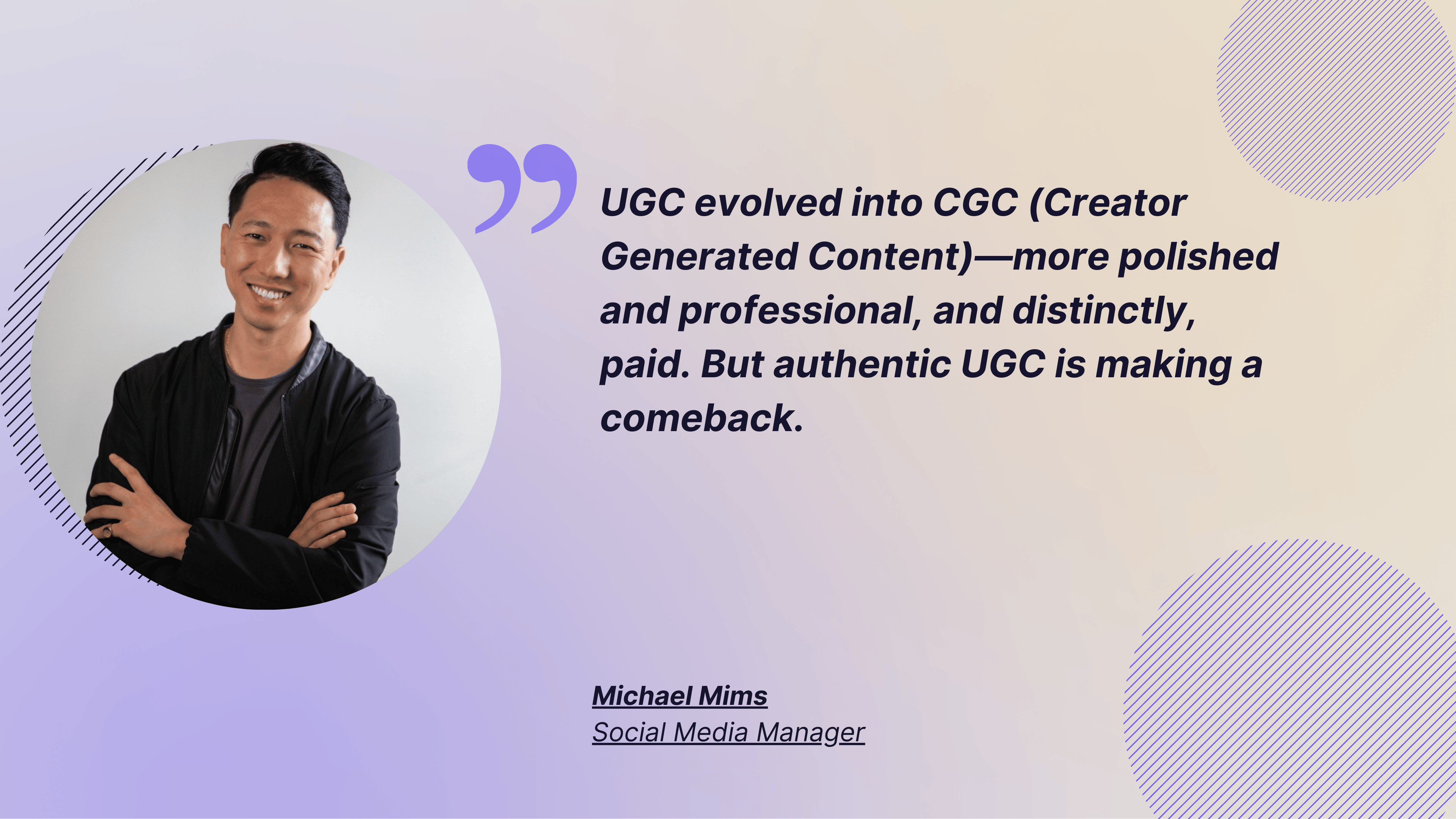
UGC evolved into CGC (Creator Generated Content)—more polished and professional, and distinctly, paid. But authentic UGC is making a comeback. - Michael Mims, Social Media Manager at Faith Driven Entrepreneur
Final thoughts
If there’s one thing these trends make clear, it’s that social media is moving away from noise and toward meaning.
Across all platforms, the same patterns keep showing up: people want content that feels real, conversations that feel human, and brands that understand how social media actually works today — not how it worked a few years ago. Many of the major social trends right now are less about new features and more about new expectations.
Audiences expect transparency.
They expect personality.
They expect participation.
And more than anything, they expect content that feels worth their time.
Elena Cucu
Content & SEO Manager @ Socialinsider with 8 years of experience in marketing. I like to describe myself as a social butterfly with a curious mind, passionate about dancing and psychology.

Know what your competitors do — before your manager asks
Get instant social benchmarks & reports without manual work.