AI Social Media Assistant: A Detailed Guide on How to Choose and Use One
Learn the 6 criteria for choosing the right AI social media assistant and how to use it to turn social data into daily strategic action.

An AI social media assistant helps you turn scattered post data, comments, and competitor signals into clear next steps. If your team is buried in reporting, content planning, or leadership updates, the payoff is simple: less manual work, faster decisions, and more confidence in the numbers.
So, in this guide, I'll break down how an AI social media assistant differs from a generic chatbot, how to choose one that supports your workflow instead of adding more noise, and how to use it for top-notch insights and strategy optimization.
Key takeaways
- An AI social media assistant streamlines content creation, reporting, competitive analysis, and planning by transforming data into actionable recommendations.
- An AI social media assistant helps marketers turn social data, content performance, and audience insights into faster, smarter decisions.
- The best AI social media assistant is one that delivers accurate insights, fits your workflow, supports your key platforms, and helps you act on data with confidence.
What is an AI social media assistant?
An AI social media assistant is software that helps you manage social media work faster by interpreting data, generating ideas, and surfacing the next best action. Shortly put, it is a helper that can summarize performance, suggest captions, identify what worked, and flag what needs attention. It is most useful when you need to move from raw information to a decision without spending hours digging through spreadsheets.
How it works in practice
An AI social media assistant usually follows a simple loop. It ingests data, looks for patterns, and then gives you a recommendation. For example, this can be applied to a reporting workflow, a content planning session, or a competitor review.
What it is not
An AI social media assistant is not just a scheduler, and it is not the same as a generic AI chatbot. A scheduler publishes content. A chatbot answers prompts. A social media assistant does both, but it also reads metrics, explains performance, and helps you decide what to do next.
What are the core capabilities of an AI social media assistant?
An AI social media assistant is strongest when it connects content, reporting, benchmarking, and planning in one workflow. The value is not in one flashy feature. The value is in how quickly the tool turns social media metrics into a decision you can act on.
Content support
An assistant can help generate caption ideas, rewrite hooks, repurpose a post for another platform, and suggest angles that fit your audience. That makes it useful when your team needs to publish more without watering down the brand voice.
A strong content assistant does not invent strategy from scratch. It works best when you give it examples of winning posts, your brand rules, and a clear goal. From there, it can suggest variations that save time and keep the work aligned with what already performs.

Reporting and analytics
An assistant can summarize what changed, what performed best, and what needs attention. That is especially useful when a manager needs a fast social media report for a weekly meeting or a leadership update. Social media reporting workflows get easier when the assistant turns long exports into a short narrative.
And I can't emphasize enough that the point is not just speed. The point is interpretation, just like in the example below.

Benchmarking and competitive intelligence
An assistant can also compare your performance against competitors and industry baselines. If you ask me, I'd say AI competitive benchmarking becomes really valuable when the AI helps you answer a better question than “Did this content pillar do well?”, but actually answer this instead “Did this post do well for this channel, compared to competitors?”

A great helper for such strategic insights is Socialinsider's AI-based industry content pillars feature. I see such an analysis being extremely helpful because it lets you gain a deeper understanding of the bigger picture, not just which post got the most likes. If a team sees that sustainability content, tutorials, or product education consistently outperform promotional posts, the next campaign can be built around that pattern.
Planning and repurposing
An assistant can take a top post and help you expand it into a thread, a reel script, a carousel outline, or a briefing note. That makes planning less reactive and more intentional. It also helps teams avoid publishing disconnected content that does not build on a clear message.
Pro tip: This can be easily done through Socialinsider's MCP, which lets you get your live Socialinsider data directly into your AI Assistant, unlocking a new level of highly performing optimization strategies.

AI Assistant Vs AI agent: what are the differences?
An AI assistant supports your work. An AI agent takes more autonomous action.
My advice? If your team needs clarity more than automation, start with an assistant. If your team already has strong processes and wants more automation, an agent may be the next step.
How to evaluate an AI social media assistant?
Personally, I'd say the best choice depends on the job you need to solve first. If your pain point is content, choose a tool that helps with drafting and repurposing. If your pain point is reporting, choose a tool that is strong on analytics. If your team needs both, look for a hybrid option that still keeps data quality high.
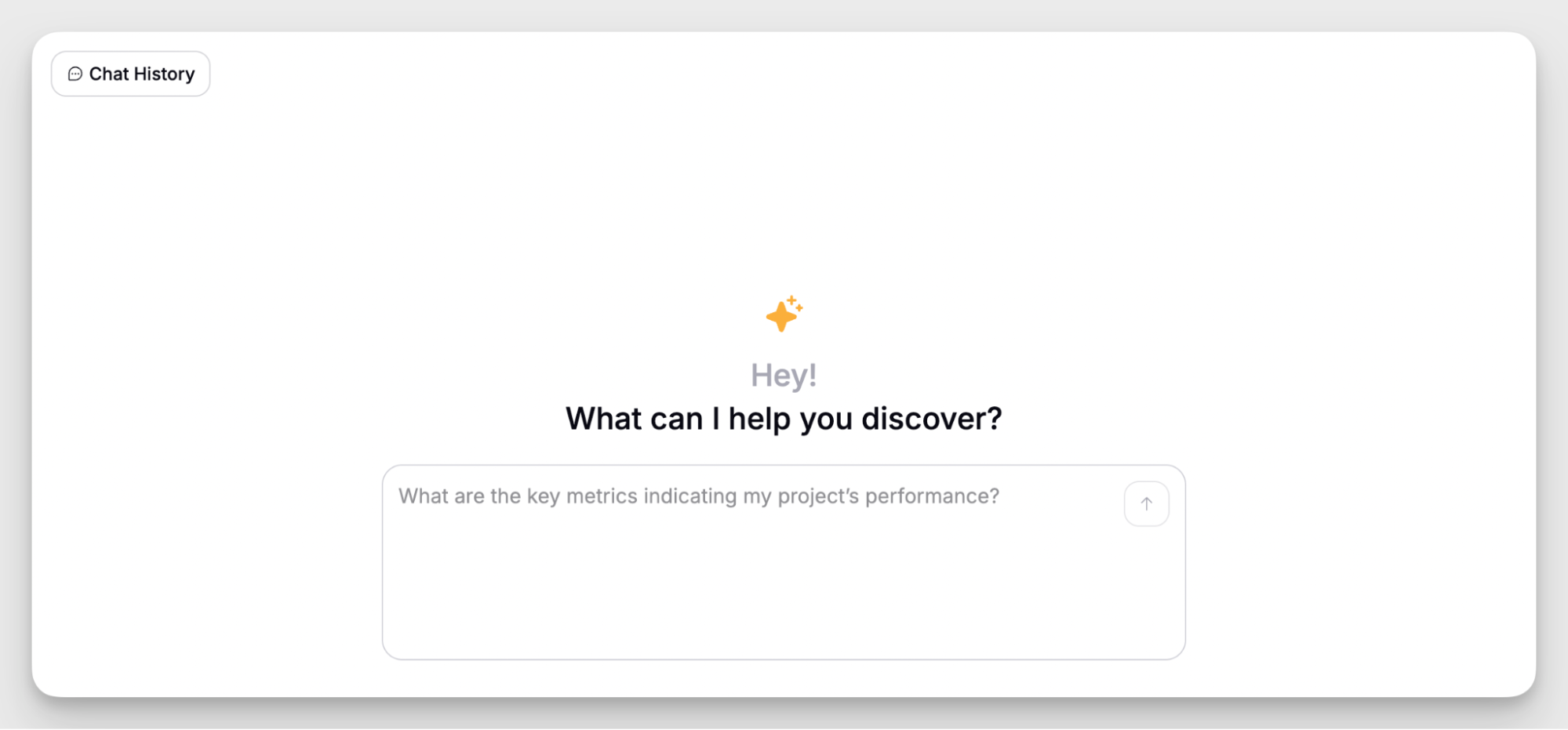
For example, Socialinsider's Assistant can be used to write captions for your next posts based on past performance data. But its strength is not its creative core, but rather the data analysis behind it.
Analytics depth
Ask whether the tool only summarizes numbers or actually interprets them. A useful assistant should connect the metric to the next decision, not just display a chart. That is the difference between looking busy and being strategic.
Platform coverage
Check whether the assistant supports the channels that actually matter for your business. For example, while Socialinsider covers TikTok and LinkedIn analytics within its AI Assistant, other platforms lack this data. And for brands being TikTok and LinkedIn-oriented, our simplified, but strong reporting features might outshine rather complex ones.
Data accuracy
Accuracy matters more than volume. The assistant should make it clear when a metric is actual data, estimated data, or a modeled insight. That distinction is especially important in benchmarking, where small differences can change the story. If the data source is unclear, the recommendation becomes harder to trust.
Customization
A good assistant should adapt to your KPIs, your reporting rhythm, and your audience. A social lead presenting to a board needs different output than a manager building a creative brief. The best tools let you shape the output around those needs instead of forcing one generic summary.
Integration with your workflow
Look for a tool that fits the way your team already works. If reports go into decks, exports should be easy. If leadership wants monthly summaries, automation should support that cadence. If content planning starts in a strategy doc, the assistant should be able to pull from that context.
Pricing and scalability
Start with the smallest setup that solves a real problem, then expand when the workflow proves its value.
Final Thoughts
The best AI social media assistant is the one that helps you move from data overload to confident action. By combining content support, analytics, benchmarking, and planning, an AI Assistant can reduce manual work, improve reporting efficiency, and uncover insights that drive stronger social media performance. The key is choosing a solution that aligns with your team's goals, integrates with existing workflows, and delivers reliable, actionable recommendations.
What are the benefits and limitations of using AI assistants on social media platforms?
The main benefits are speed, consistency, and easier reporting. The main limitations are context gaps, possible errors, and dependence on clean input data. AI assistants work best when they reduce manual work and help teams think faster. They work poorly when they are expected to replace strategy, nuance, or final editorial judgment.

Sabina Varga
Sabina Varga is a B2B content strategist with 15 years in digital marketing, helping brands turn social media data into stories that connect and strategies that grow.

Know what your competitors do — before your manager asks
Get instant social benchmarks & reports without manual work.