How to Increase TikTok Followers: 19 Proven Strategies
Discover 19 expert-proven strategies for increasing TikTok followers! Learn how to enhance your profile and engage your audience effectively.


I used to obsess over TikTok followers. Refresh. Refresh again. Nothing changed. Then I noticed something.
The creators growing fastest were not chasing TikTok metrics for the sake of it. They were chasing reactions. Comments. Saves. Shares. Actual conversations.
That flipped how I looked at TikTok. Followers stopped being the goal and became the side effect. When your videos make people stay, respond, or send them to a friend, TikTok does the rest for you.
In this guide, I will reveal those strategies to help you increase TikTok followers, along with real-life insights and examples from Alicia Jones, Head of Social at Creative Media, an agency that has been shaping marketing strategies for over 25 years.
Key takeaways
-
Profile optimization strategies to get more TikTok followers: Optimize your profile to instantly communicate who you help, why your content matters, and what new visitors will gain by following—using a clear bio, strong pinned videos, and a human, non-corporate tone.
-
Content creation strategies to get more TikTok followers: Create TikTok-native content built around strong hooks, repeatable high-performing series, trends, and unique brand angles that maximize retention, encourage repeat viewing, and give people a reason to follow.
-
Community strategies to get more TikTok followers: Actively engage with your audience and niche through comments, UGC, creator collaborations, and a recognizable brand voice to turn passive viewers into an invested, growing community.
-
Analytical strategies to get more TikTok followers: Use data to guide growth by benchmarking competitors, tracking follow sources, and identifying content patterns that consistently convert views and engagement into actual followers.
Why focus on follower growth on TikTok?
Who doesn’t like seeing their follower count go up? It feels good. It gives you that quiet confidence to say, “My TikTok strategy is working. People actually care.”
But follower growth on TikTok goes beyond validation. I have seen it matter for far more practical reasons. Here are four reasons why focusing on TikTok follower growth actually makes sense.
- It strengthens organic performance before you spend a dollar. A healthy follower base improves early engagement signals, which can reduce how much you need to rely on ads later.
- It helps your content get an algorithmic boost. A larger follower base increases the chances of quick likes, comments, and watch time. This strong early engagement tells TikTok’s algorithm your content resonates and deserves to be shown to new audiences.
- It attracts better collaboration opportunities. Partners, creators, and even internal teams take TikTok more seriously when the follower count grows strongly.
- It builds instant credibility with leadership. Followers are easy for executives to understand and track, which makes your progress hard to ignore. In competitive industries, follower growth also shows that you are keeping pace with peers and rivals.
19 ways to boost followers on TikTok
We have categorized follower growth strategies into five main categories to help you formulate a cohesive TikTok marketing strategy that brings growth.
Let’s explore how to get TikTok followers.
Profile optimization strategies to get more TikTok followers
1. Use the ‘Why follow you’ bio formula
Profile optimization is one of those things people skip because it feels basic. I used to do the same. Then I realized something simple. If someone lands on your profile and cannot answer “Why should I follow this account?” in three seconds, they leave.
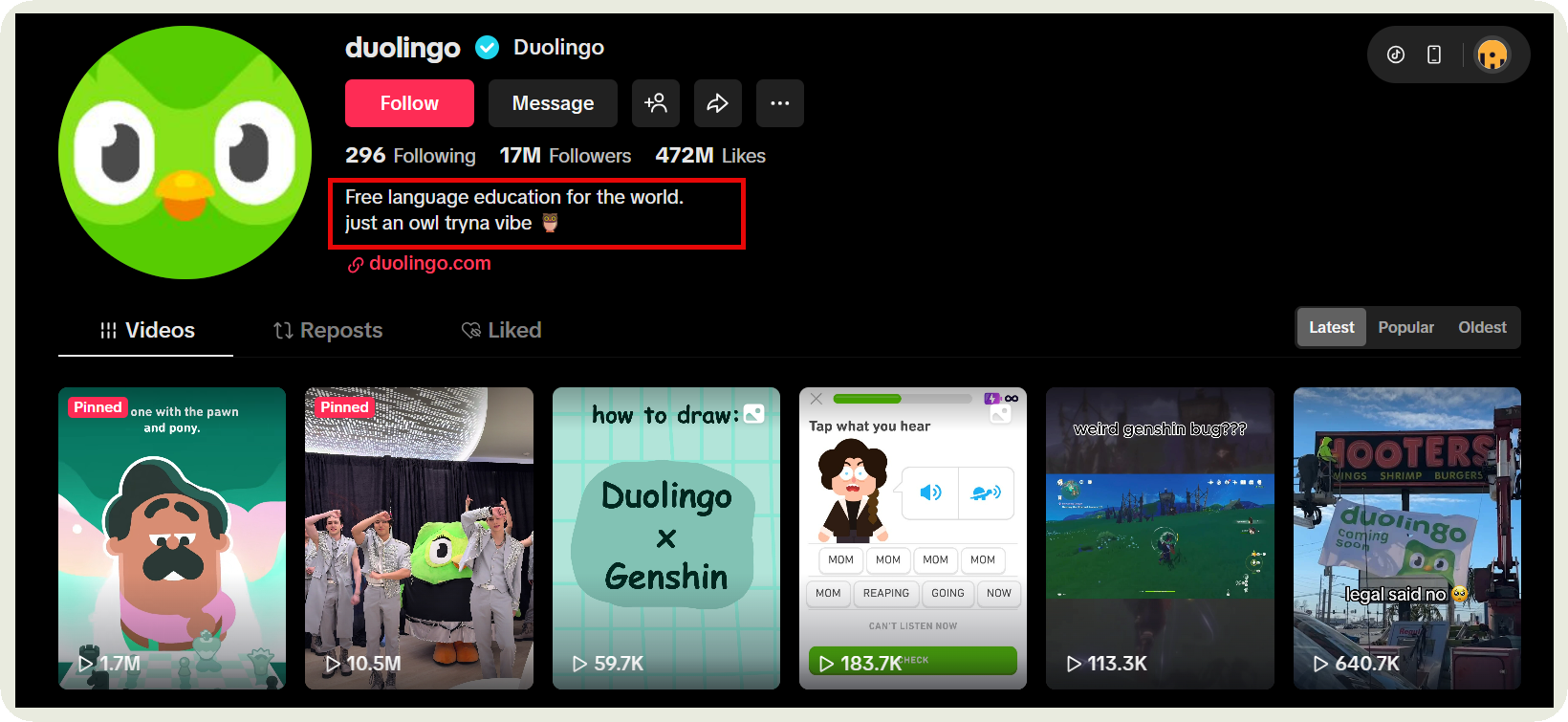
Your bio is doing most of that work. The easiest fix is using a clear ‘why follow you’ formula. Think ‘I help X do Y through Z’ or ‘Follow for + specific value.’ It sounds obvious, but it forces clarity.
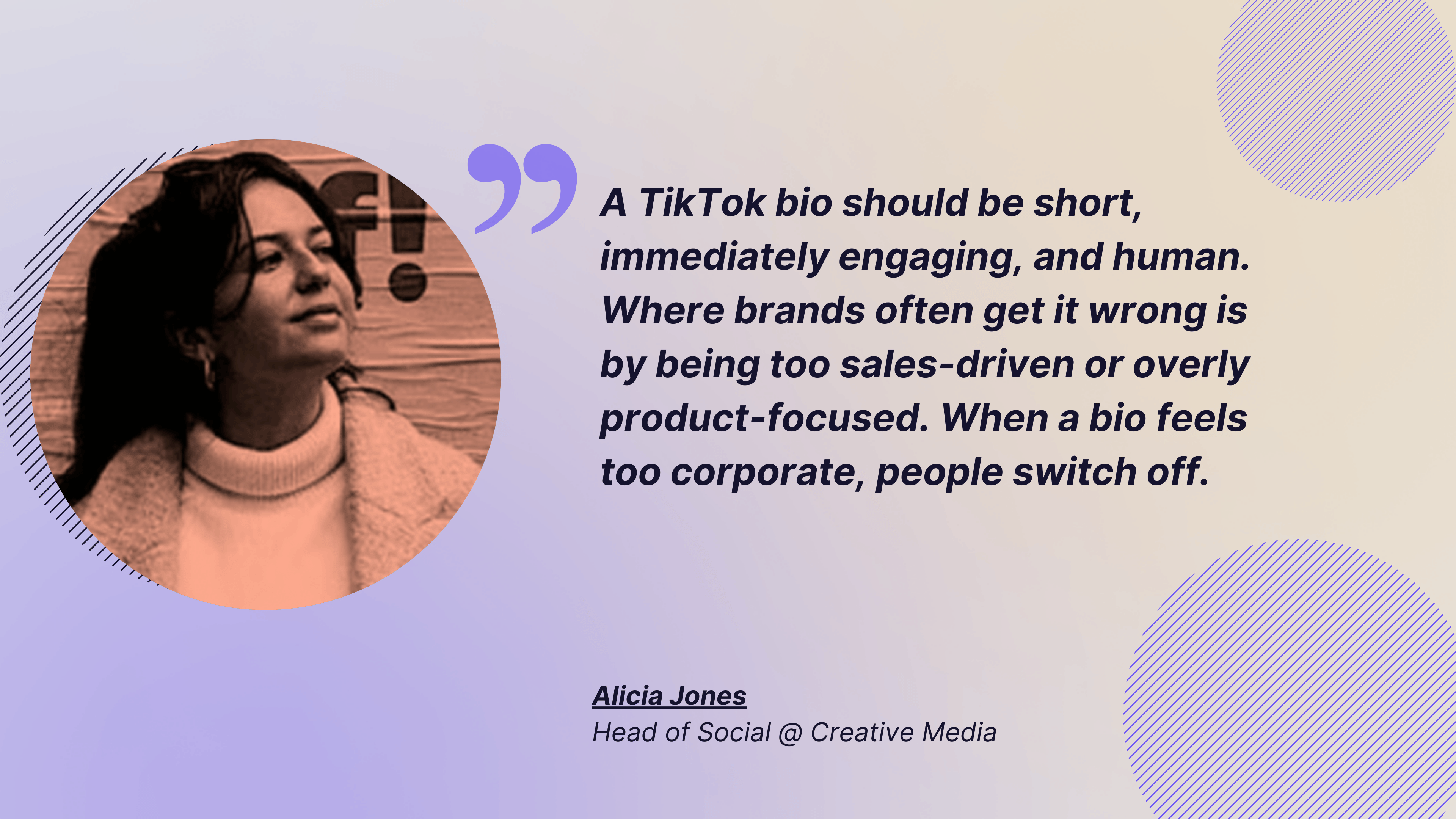
Alicia adds another important thing to this mix — don’t make it sound bland. She said –
A TikTok bio should be short, immediately engaging, and human. Where brands often get it wrong is by being too sales-driven or overly product-focused. When a bio feels too corporate, people switch off. TikTok is an incredibly intimate platform, so users want to feel like they’re interacting with a person, not a brand voice. When you keep the bio concise, inject a bit of personality, and have fun with it, you’re far more likely to turn profile visits into followers.
Here’s the perfect example of infusing the personality Alicia talks about.
2. Pin 2-3 videos that show your best content in your niche
Think of pinned videos as your highlight reel. When someone lands on your profile, these are the first things they see. That puts you in charge of the narrative people see first.
Pin two or three videos that represent the best work in your niche. Here are some ideas of what that content could be:
- A TikTok that performed exceptionally well. Here’s an example.
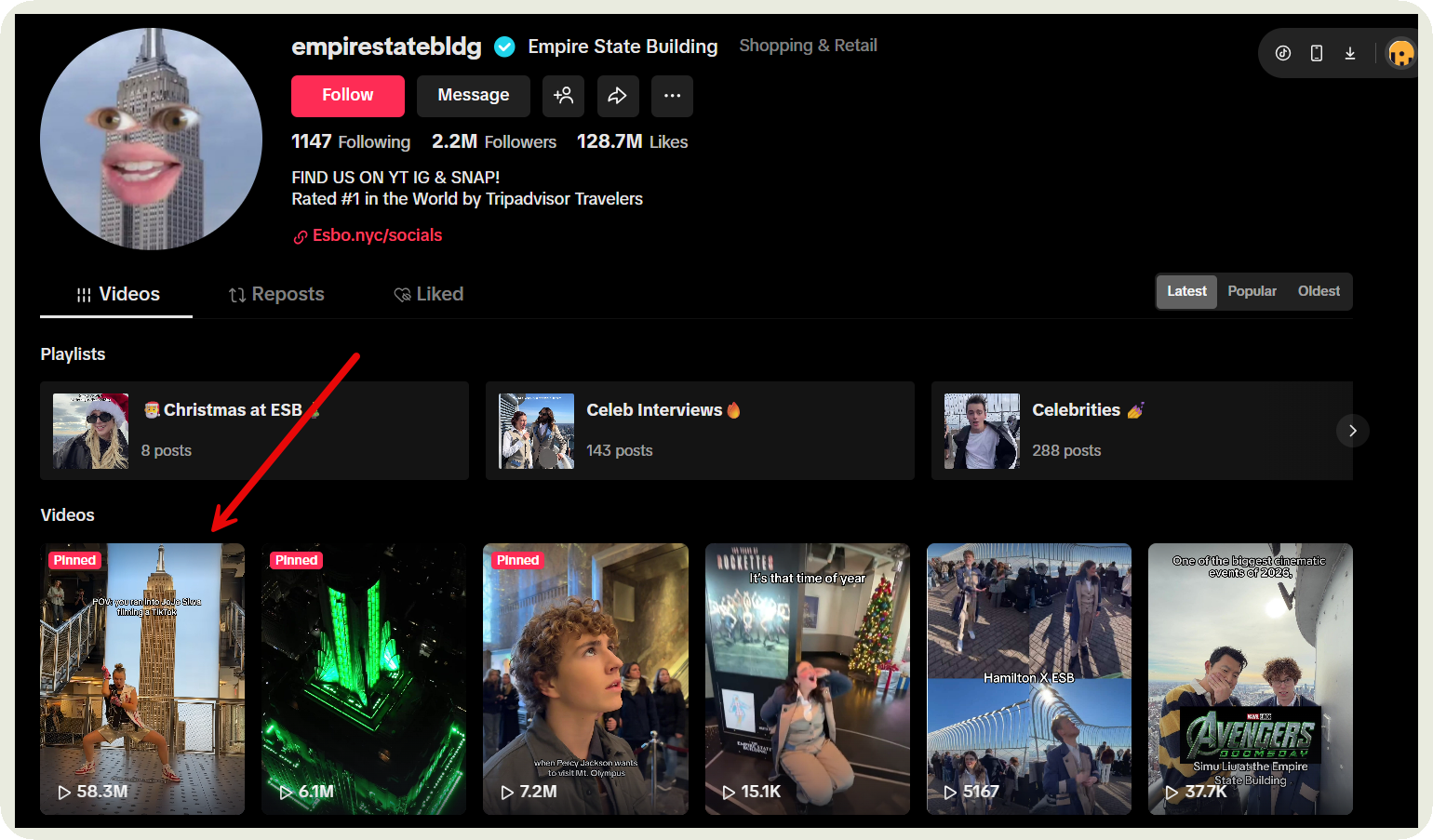
- One that delivers clear value.
- A video that explains who you are and why your content matters.
The truth is, most visitors will not scroll endlessly. They want proof, fast. Pinned videos give them instant confidence in the quality and consistency of your content.
I have noticed this works especially well when one pinned video answers a common question your audience has. It removes friction. Instead of wondering what they will get, they see it immediately.
Content creation strategies to get more TikTok followers
3. Focus on strong hooks
According to a study, when brands nail the hook, they see a 60% increase in total retention and a noticeable algorithm lift on TikTok and Meta.
Alicia talks about two hooks on social platforms. She said:
There are really two hooks to think about on TikTok. The first is the hook within the video itself. In the first five to ten seconds, you need something that immediately captures attention, because drop-off rates spike after that point. That hook could be a question, a strong setup, or a teaser that hints at what’s coming later in the video. The goal is to give viewers a reason to keep watching.
The second hook is in the caption. Most users won’t expand the text, so that first visible line needs to be compelling enough to stop the scroll and encourage them to read on if the caption is longer.
When asked about what kind of hooks get the most attention, Alicia said —
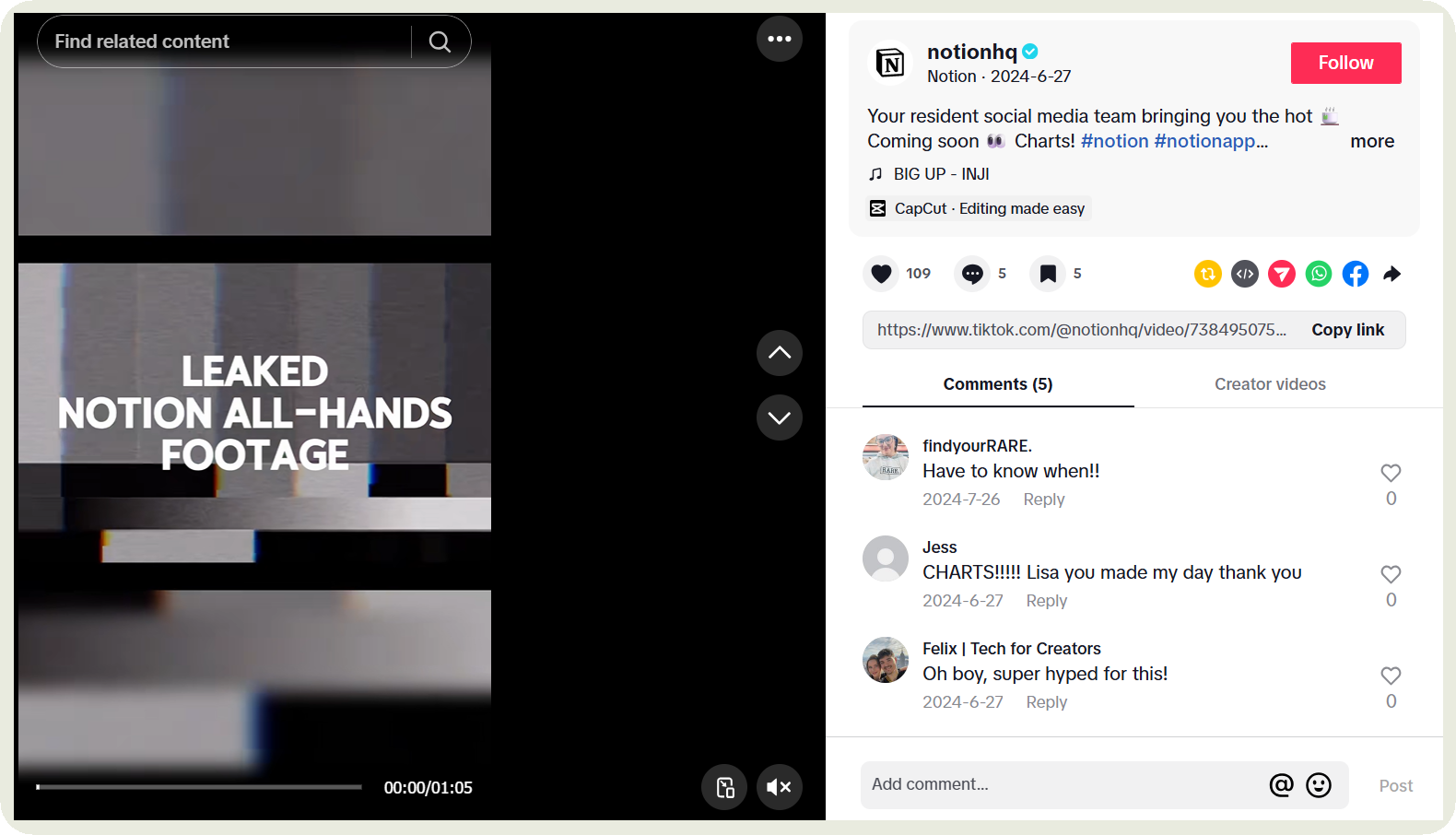
We’ve seen strong performance from videos that open with a quick glimpse of what happens later, almost a preview of the climax. For example, in a product launch, showing a brief snippet of the reveal before cutting back to the intro creates curiosity. Paired with an enticing opening frame or thumbnail, this kind of teaser makes people want to stick around to see what happens next.
Here’s something similar from Notion.
4. Create a content series for your highest-engaging content pillar
Notice a content pillar that sparks a rush of likes and comments? That is often the same pillar bringing in new followers for your TikTok.
I usually check this with Socialinsider’s content pillars feature.
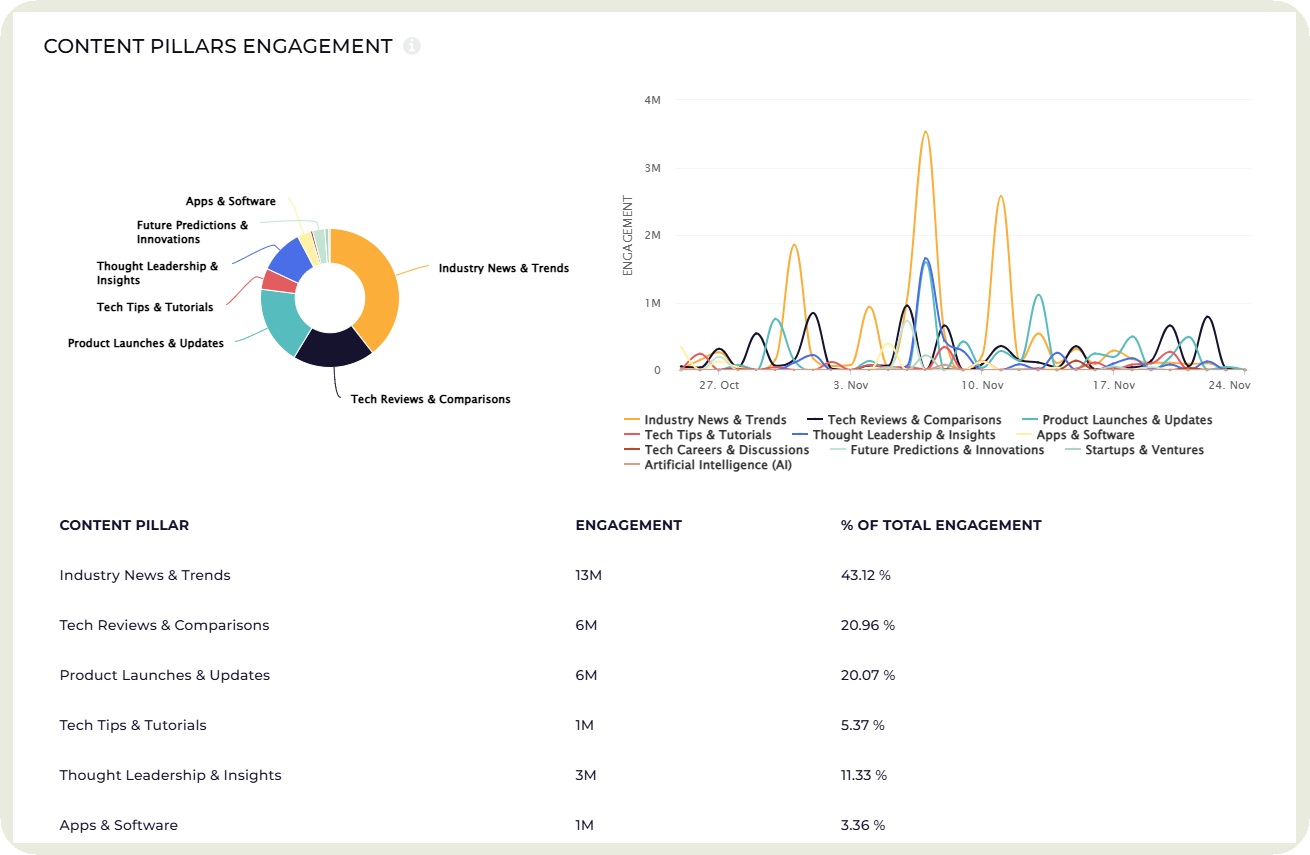
I then go deep into these pillars and identify the themes that consistently drive saves, comments, and watch time. These pillars are the best ones to be converted into a recurring series.
For example, if product tutorials perform best, turn them into something recurring like ‘Try This Feature Tuesday.’
Here’s an example from Canva.
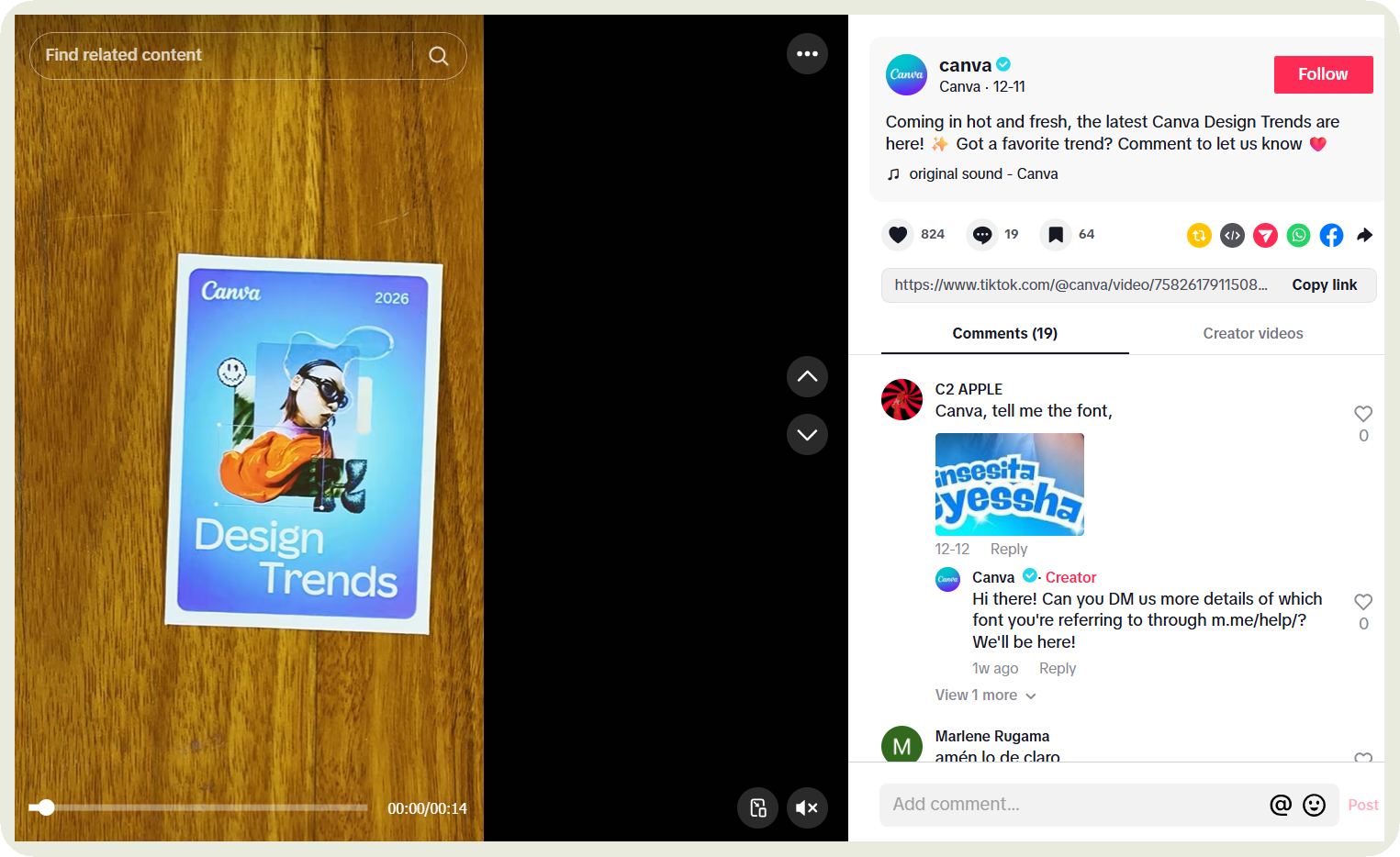
When talking about content pillars, Alicia said that irrespective of which pillar you choose, mould it to fit the TikTok style of things.
When we take on a new client, we’re very clear that not all of their audience exists on TikTok, and that TikTok is a very different environment from other platforms. So the first step is being explicit about who we’re actually speaking to on TikTok and tailoring the messaging accordingly.
TikTok is less corporate and less polished, and it works best when the tone feels person-to-person. Because of that, we adjust the tone of voice for TikTok within the boundaries of the existing brand pillars, making it more human, more conversational, and more playful.
Our goal is to create TikTok-specific content pillars that stay true to the brand, but are distinct enough to resonate with how people actually engage on the platform.
5. Bring something unique to your TikTok content
Think of the brands and creators you love on TikTok. Are they posting the same generic content? Not really.
You like following them because they bring something unique to the table. Maybe it’s a storytelling style, the tone they use, the animations, or just the way they convey things.
For example, I love how Shopify mixes humour in a way that feels natural to the brand.
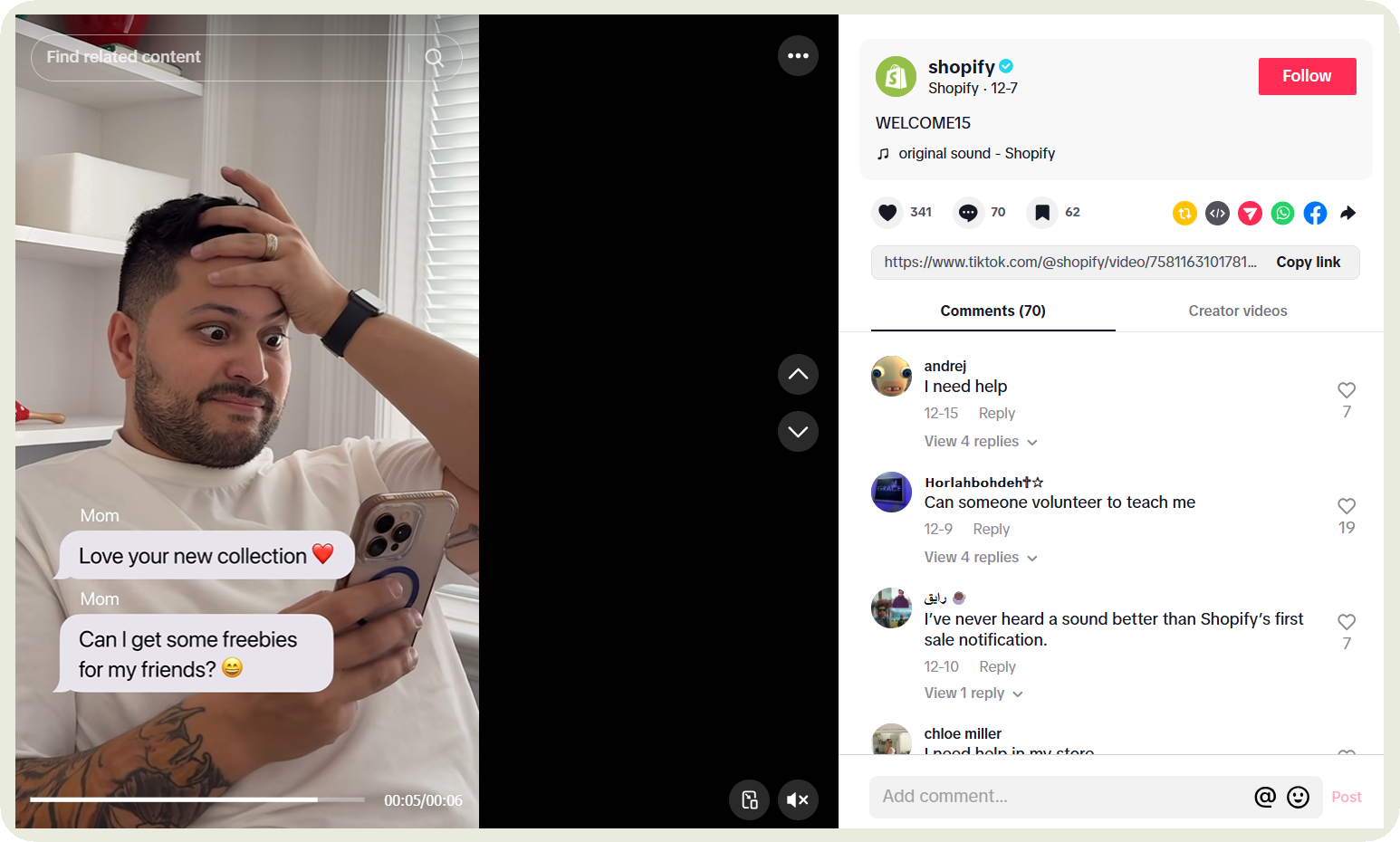
Here are some unique ideas you can try:
- Share personal stories: Share real stories people rarely see, like how you grew from 0 to 1M ARR or what almost didn’t work along the way.
- Document ongoing missions: Ongoing challenges like trying 30 new recipes in 30 days or rebuilding a feature from scratch give people a reason to come back tomorrow.
- Flip the usual advice on its head: Role reversal works especially well in crowded niches. Saying ‘Stop posting every day. Do this instead’ instantly earns attention and curiosity.
- Use humor to lower the barrier Even light, situational humor can make complex or saturated topics easier to follow and easier to share.
6. Use trending audio
Using trending music is one of the easiest ways to tap into built-in momentum on TikTok, especially when follower growth is the goal.
When you use a trending sound, your video is no longer starting from zero. You are attaching it to something people are already tapping, searching for, and scrolling through. That gives your content instant discoverability.
TikTok also tends to test videos with trending audio more aggressively in the early stage, which means more chances to land in front of new viewers.
Finding trending music is simple if you know where to look.
- Scroll your For You page and notice sounds that repeat across different creators. Check the small arrow icon next to audio to see how many videos are using it and how fast that number is climbing.
- You can also explore TikTok’s Creative Center to spot rising sounds before they peak.
When it comes to trending audio, Alicia made a great point: you don’t need to chase what’s trending across all of TikTok. Instead, the real opportunity lies in going deep into your niche and spotting the sounds your community is already engaging with. Hear it from her —
Keeping an ear to the ground in the specific community you’re targeting is crucial when it comes to using trending audio on TikTok. In one campaign, we analyzed what end users of a brand were already posting, specifically, the sounds and audios they were using.
We then built a series of posts around those audios, even though they weren’t trending across TikTok as a whole. One of those videos ended up reaching tens of millions of views. What made the difference wasn’t that the visual content was radically different from what we usually posted. It was that the sound was already trending within that niche and felt familiar to the community.
7. Lean in to trends
Trends are TikTok’s fast lane to follower growth, but only if you use them right.
When a trend takes off, people actively look for more content around it. But simply recreating a trend might just get you views. Adding your own spin is what drives follower growth. That twist could be your perspective, your niche context, or a format your target audience already recognizes.
Alicia also emphasized timing and relevance when selecting trends.
Timing and relevance are key. You need to react quickly, but only to trends that genuinely make sense for the brand and align with its messaging and guidelines. We also look at momentum: whether a trend is still pulling strong view counts today, or whether its peak was weeks ago. If the interest has already dropped off, it’s usually better to skip it and stay focused on spotting the next trend early.
But where do you find these trends?
Regular time on your For You page does the job. When you see the same format, sound, or joke popping up repeatedly, that is your cue.
Some trends are also seasonal, tied to holidays, events, or even moods like fall resets or year-end reflections. Here’s a Halloween trend example by Chipotle.
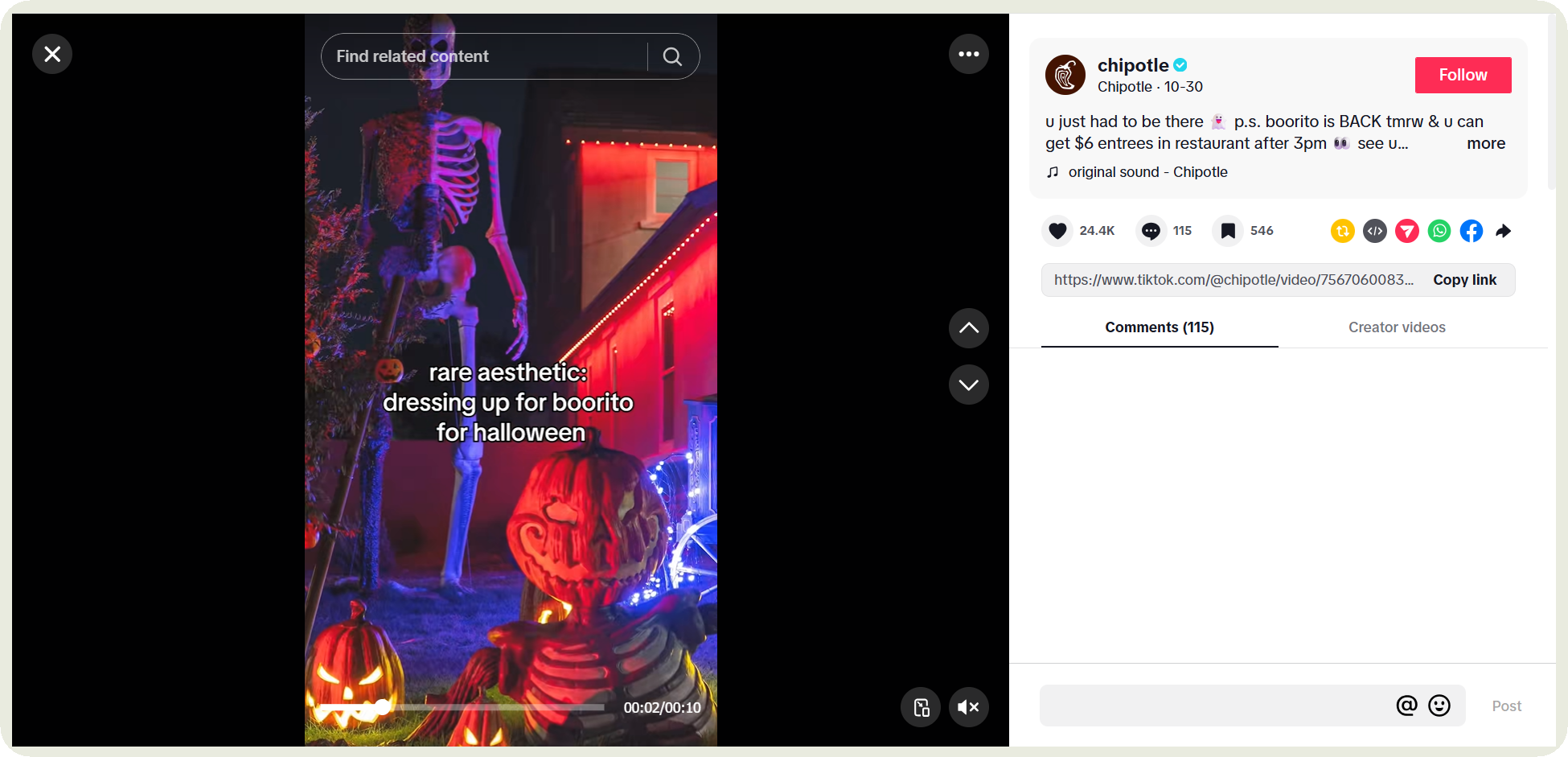
8. Start a fun challenge
Ever participated in a challenge or giveaway on TikTok because it looked fun?
You’re not the only one. According to recent research, TikTok’s branded hashtag challenges are highly effective, driving up engagement by as much as 40% or more, as users love to participate and share.
A good challenge gets other people creating content for you. Every time someone joins in, their video introduces your idea to a brand new audience. Viewers tap the sound, the hashtag, or the original video, and suddenly they are on your profile.
That is how follower growth starts to compound.
Alicia talked about recent challenges she observed on TikTok and said,
We’ve seen some really strong executions of contests and giveaways on TikTok recently, especially seasonal formats like ‘12 Days of Christmas’ campaigns. The best-performing ones often involve partnerships with influencers, celebrities, or micro-creators, which helps extend reach and credibility.
TikTok makes this easier with Duet and Stitch. I have noticed people participate more when they do not have to start from scratch.
A classic example is e.l.f. Cosmetics and its #EyesLipsFace challenge. By launching an original song and pairing it with a simple, creative prompt, the brand sparked what became one of the most viral TikTok challenge in U.S. history.
Before you create a challenge, go through what Alicia says is very important for brands —
In terms of entry mechanics, simpler tends to perform better. Actions like liking the post, tagging a friend, or sharing to Stories are usually the most effective. When entry requirements become too complex: following multiple accounts, commenting, creating content, and tagging, it increases drop-off and makes campaigns harder to manage and measure. Unless the prize is exceptionally valuable, most users won’t jump through that many hoops.
Also, ensure ensure everything complies with TikTok’s platform guidelines and approval processes. You want to make sure you’re playing by the rules and not risking issues further down the line.
Content optimization strategies to get more TikTok followers
9. Utilize hashtags
Hashtags do a lot more than boost reach. They tell TikTok exactly who your content is meant for.
When you use the right hashtags, you are helping the algorithm connect your video with people already interested in your niche.
I have learned the hard way that copying hashtags from big creators rarely works. Those tags are overcrowded, and your video gets buried fast. Instead, focus on niche and mid-volume hashtags where your content actually has a chance to stand out.
I also use Socialinsider to see which hashtags consistently drive engagement and prioritize them.
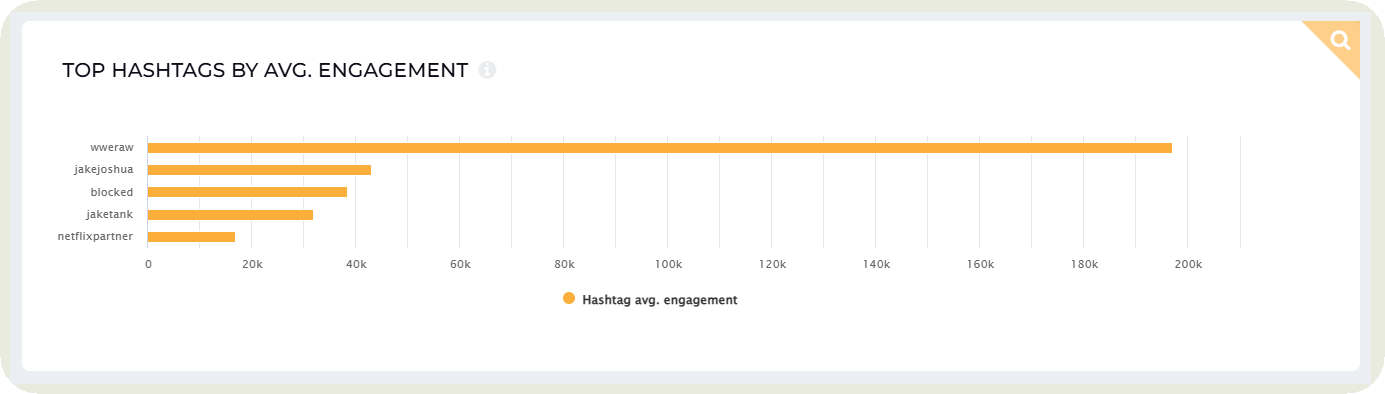
But as Alicia recommends, don’t overdo hashtags on TikTok. She said:
When it comes to hashtags, our approach is to use three to five at most, and to keep them highly niche. We only include hashtags when they naturally fit into the caption copy, rather than adding them at the end.
In our testing, content that uses too many hashtags, anything beyond five, tends to underperform. We suspect that’s because the algorithm may interpret excessive hashtags as spammy or less valuable.
10. Post at optimal times
If you’re aiming for follower growth, one thing is for sure — you need high engagement on your videos. More importantly, you need to reach your audience when they are online.
When you post while your audience is active, your content gets early views, likes, and comments. That early activity increases reach, which directly helps TikTok engagement and follower growth.
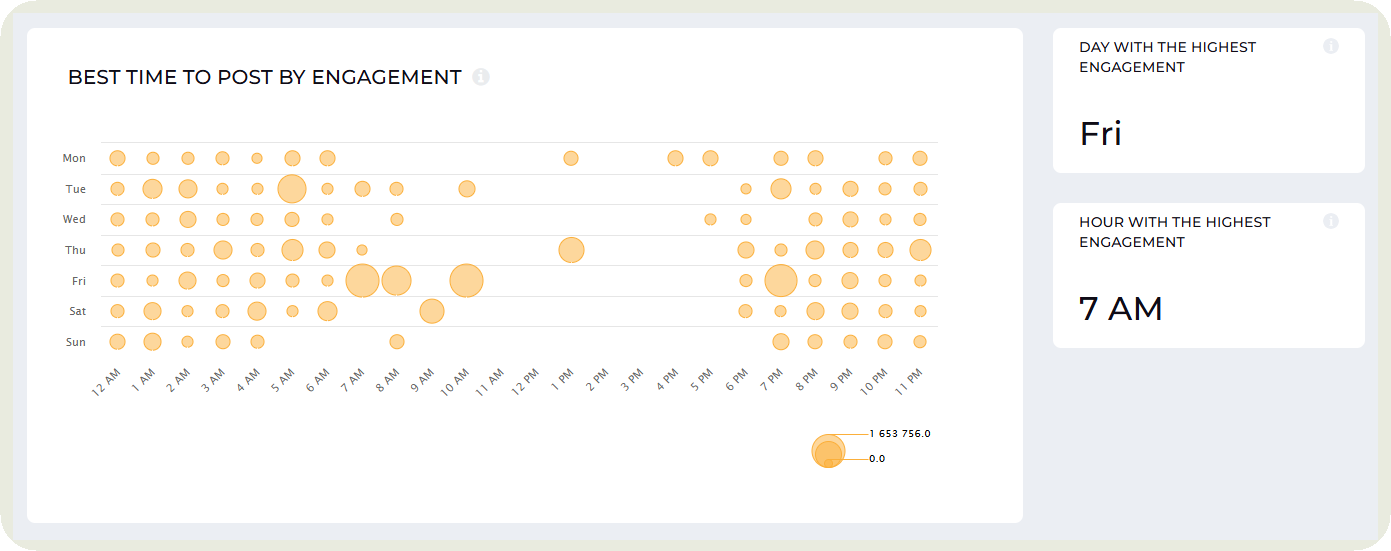
TikTok gives you this data inside its native analytics. You can see when your followers are most active and look for patterns across high-performing posts.
Or you can use third-party TikTok analytics tools like Socialinsider that suggest the best time to post each day based on historical engagement.
11. Focus on TikTok SEO
When you focus on TikTok SEO, you help the platform understand what your video is about and who should see it.
Using clear keywords in your captions, on-screen text, and even spoken dialogue makes your social media content discoverable to people actively searching for your topic. Those viewers are far more likely to follow because your content answers an existing need.
I usually start by checking TikTok’s search bar suggestions to see what people are already looking for. Then I pair my content with my niche-specific keywords.
Alicia recommends the same.
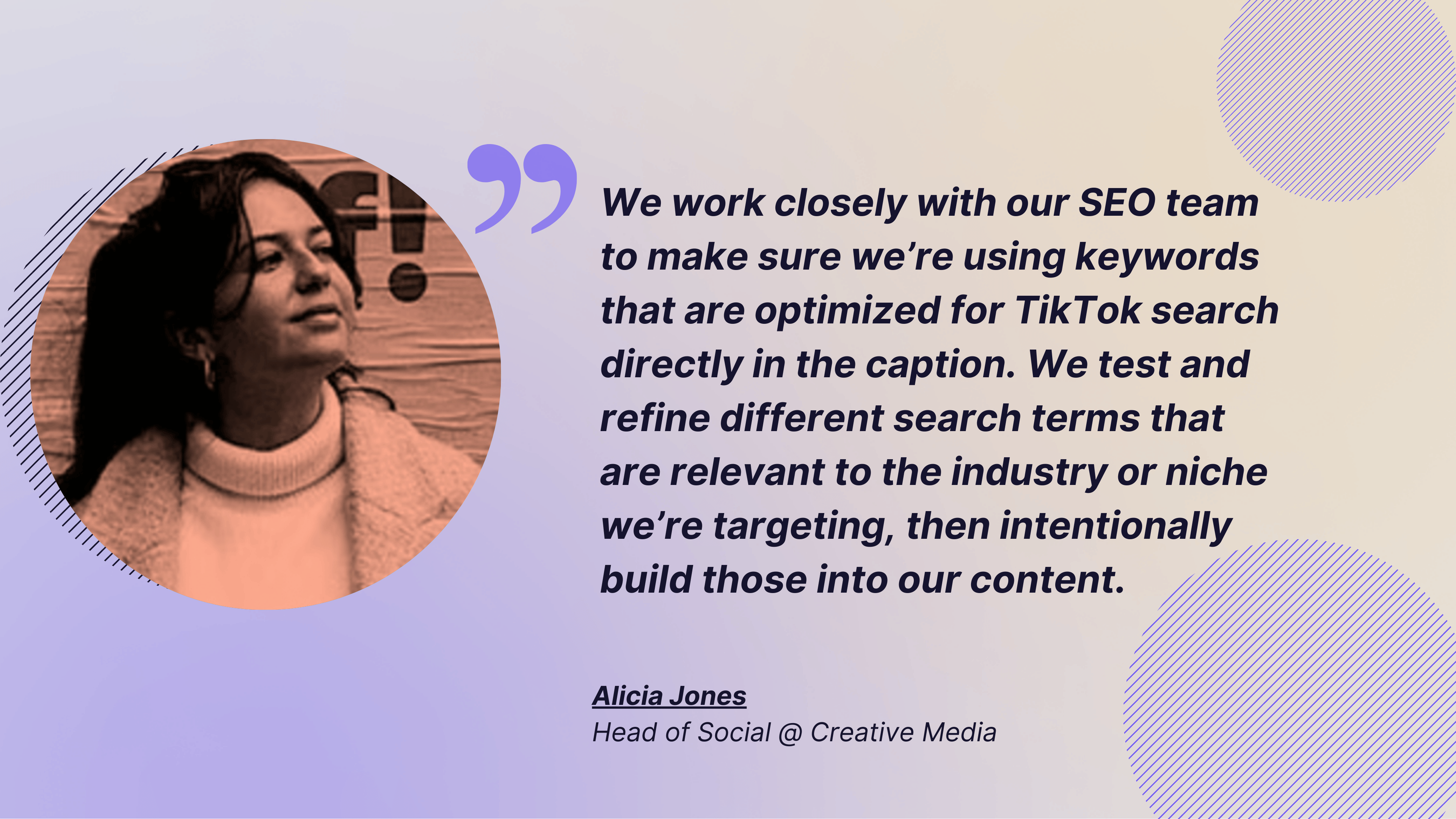
We work closely with our SEO team to make sure we’re using keywords that are optimized for TikTok search directly in the caption. We test and refine different search terms that are relevant to the industry or niche we’re targeting, then intentionally build those into our content. That way, when our target audience searches for those terms on TikTok, our videos are more likely to appear at the top of the search results and early in the scroll.
12. Use the ‘Pattern Shake’ every 2-3 seconds
On TikTok, attention drops quickly if the visual pattern stays the same for too long.
To counter this, introduce small variations every few seconds, such as a change in camera angle, a quick zoom, an on-screen caption, or a subtle color or background shift. These micro-changes help reset the viewer’s attention and prevent scrolling fatigue.
Here’s an example from Canva.
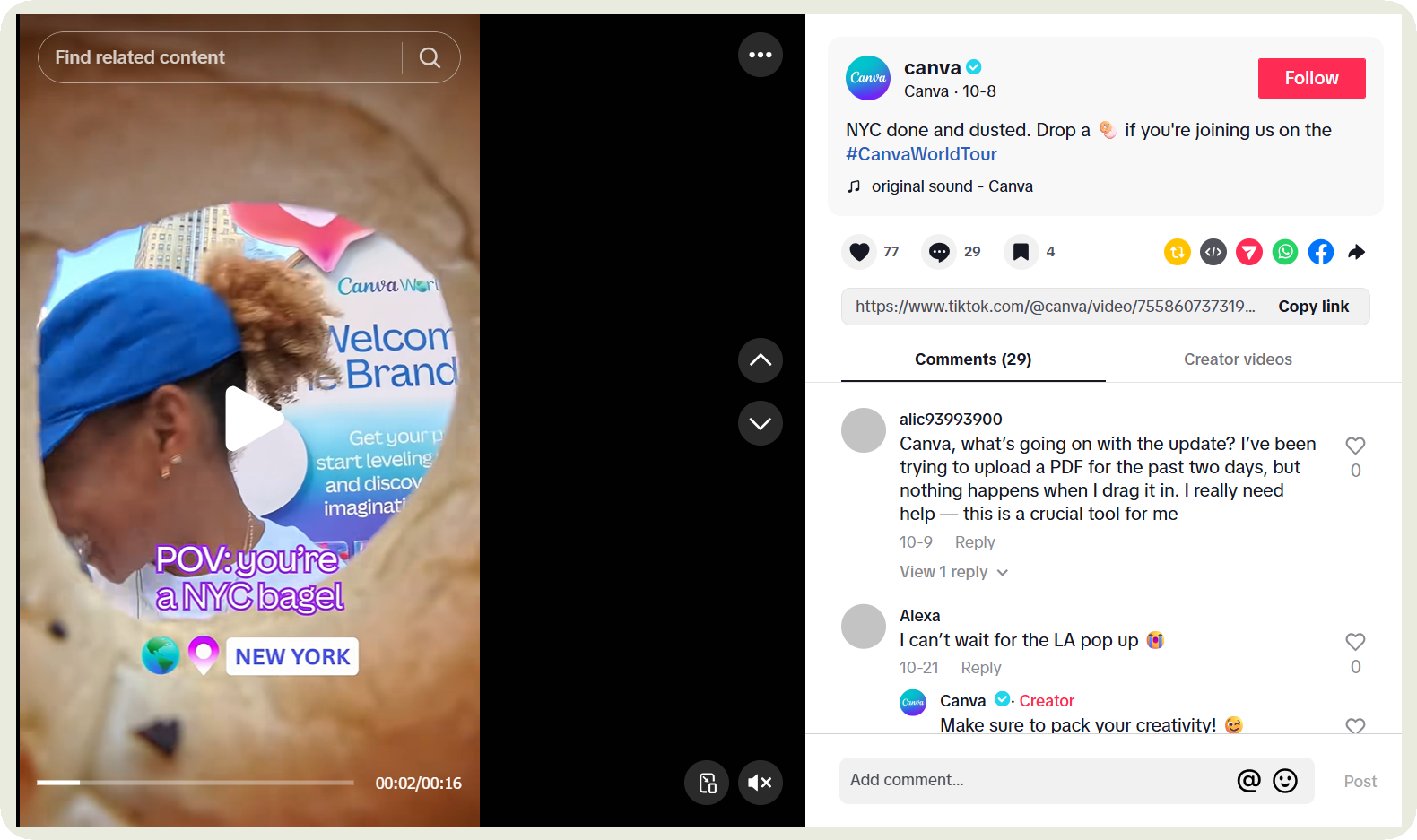
The result is higher attention density, meaning viewers stay engaged for longer. Stronger retention and watch time send positive signals to the algorithm, which increases the likelihood of your content being pushed further. This ultimately drives more reach and follower growth.
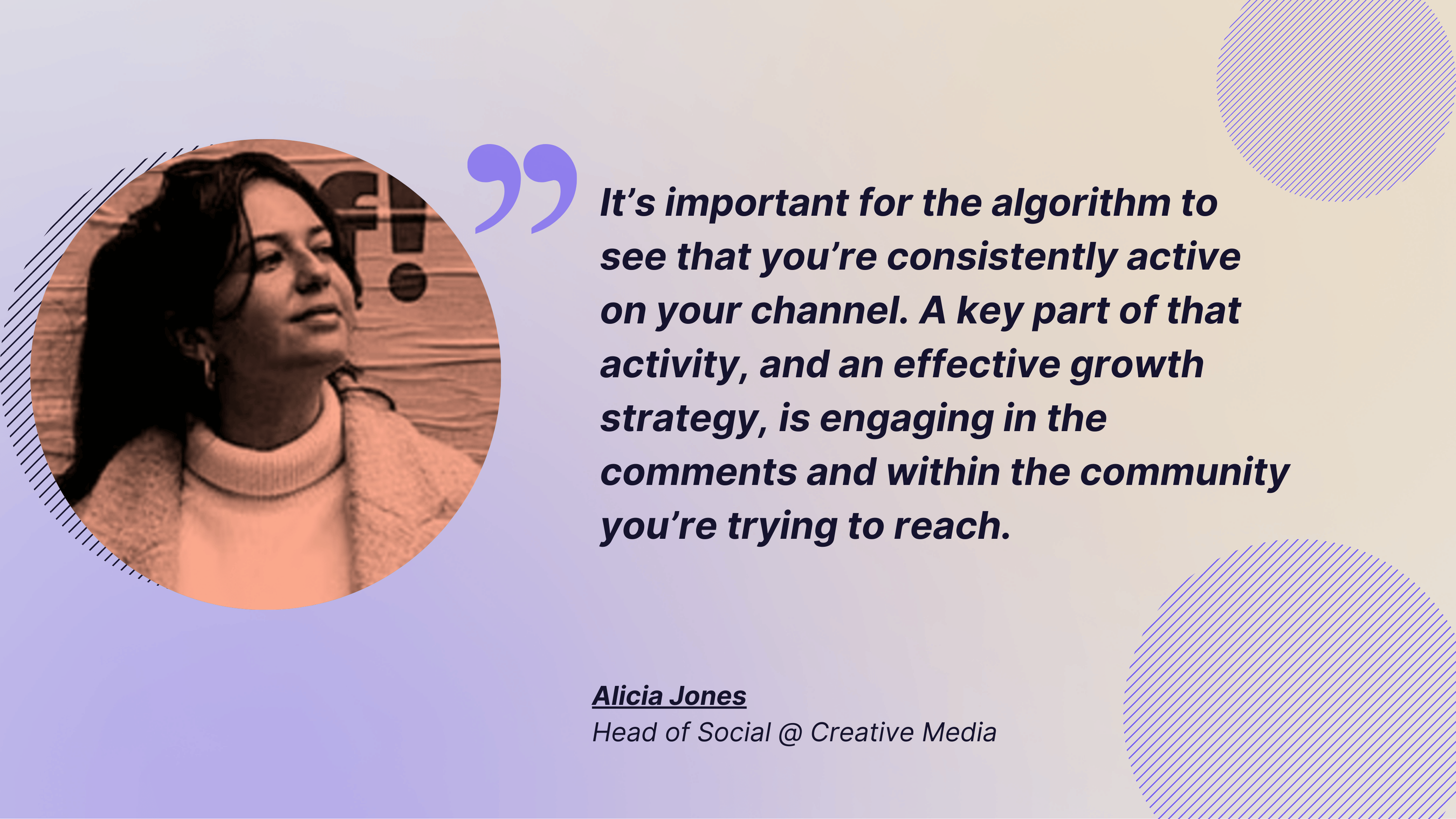
It’s important for the algorithm to see that you’re consistently active on your channel. A key part of that activity, and an effective growth strategy, is engaging in the comments and within the community you’re trying to reach. That means interacting with top posts in your niche, leaving thoughtful, engaging comments, liking and replying to comments, and responding to messages. All of this signals to the algorithm that you’re active and ready to engage, which in turn helps your content get pushed to a wider audience.
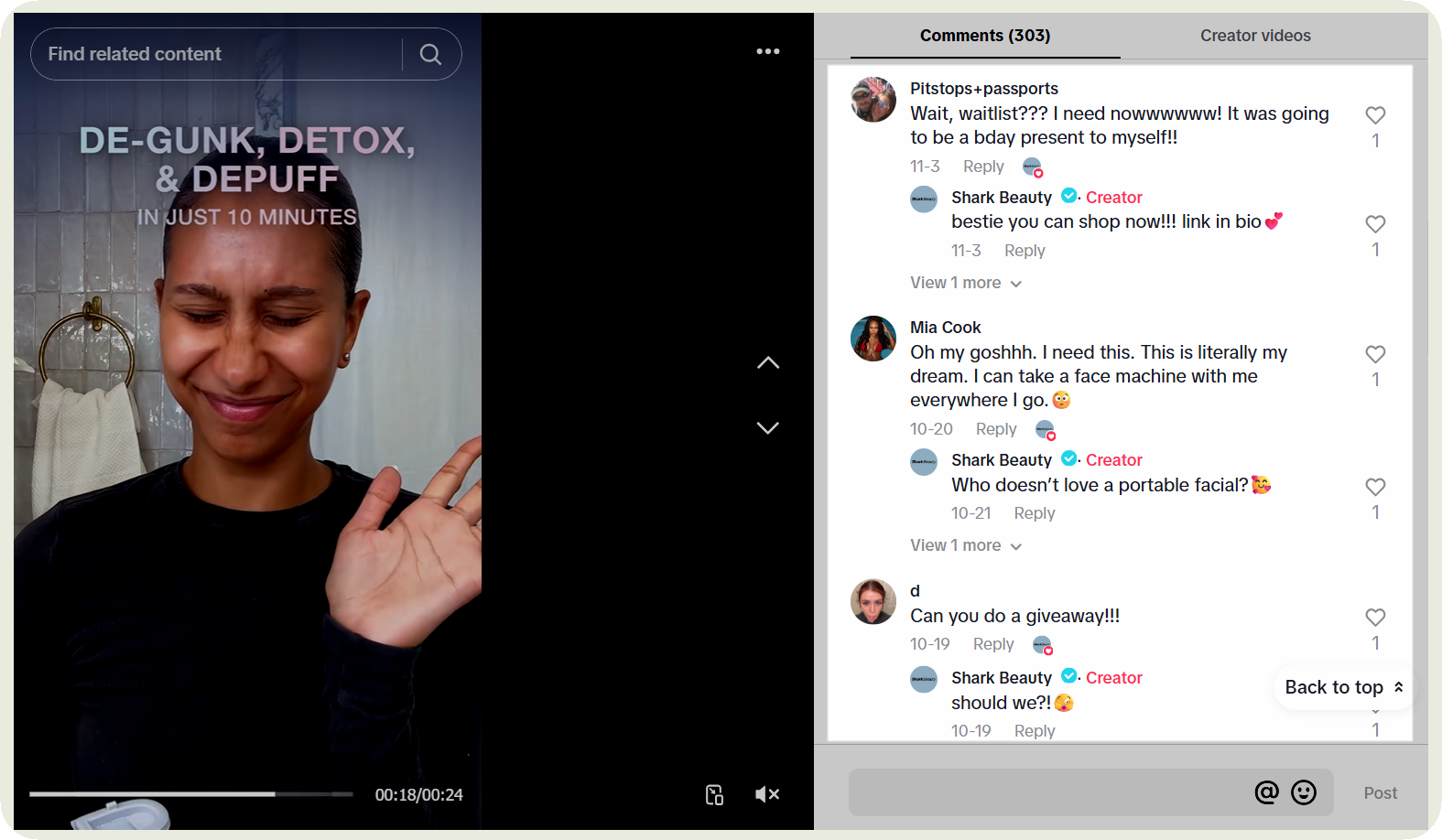
You can ask follow-up questions, pin the smartest comments, and turn top comments into future videos.
Shark Beauty is one brand I have seen being active in replying to comments.
Alicia also mentioned having healthy debates via TikTok videos and comments. She said,
We’ve seen strong results from content that opens up debate, even when it’s slightly provocative. While some brands worry about disagreement in the comments, healthy discourse actually drives engagement signals that benefit performance, encourages sharing, and sparks conversation within the community.
14. Share UGC
One of the quickest ways to build trust on TikTok is to stop making everything about yourself and let your audience speak.
Sharing user-generated content shows new visitors that real people already use, enjoy, and talk about your product. That instantly lowers skepticism. Instead of wondering if your brand is worth following, they see proof from people just like them.
UGC also makes your page feel alive. It signals that there is an actual community behind the content, not just a brand pushing messages.
I have noticed that when brands consistently reshare reviews, reactions, or everyday use cases, profile visitors linger longer. And the longer they stay, the more likely they are to follow.
15. Collaborate with TikTok creators and influencers
This is one of the best way to get followers on TikTok for your brand.
When two creators appear in the same video or connect through a duet or stitch, TikTok often cross-pollinates audiences. Your content starts getting recommended to people who already trust the other creator. That kind of reach is hard to achieve on your own.
Instead of going for just ‘big names’, Alicia recommends going for creators or influencers that are trusted by your audience.
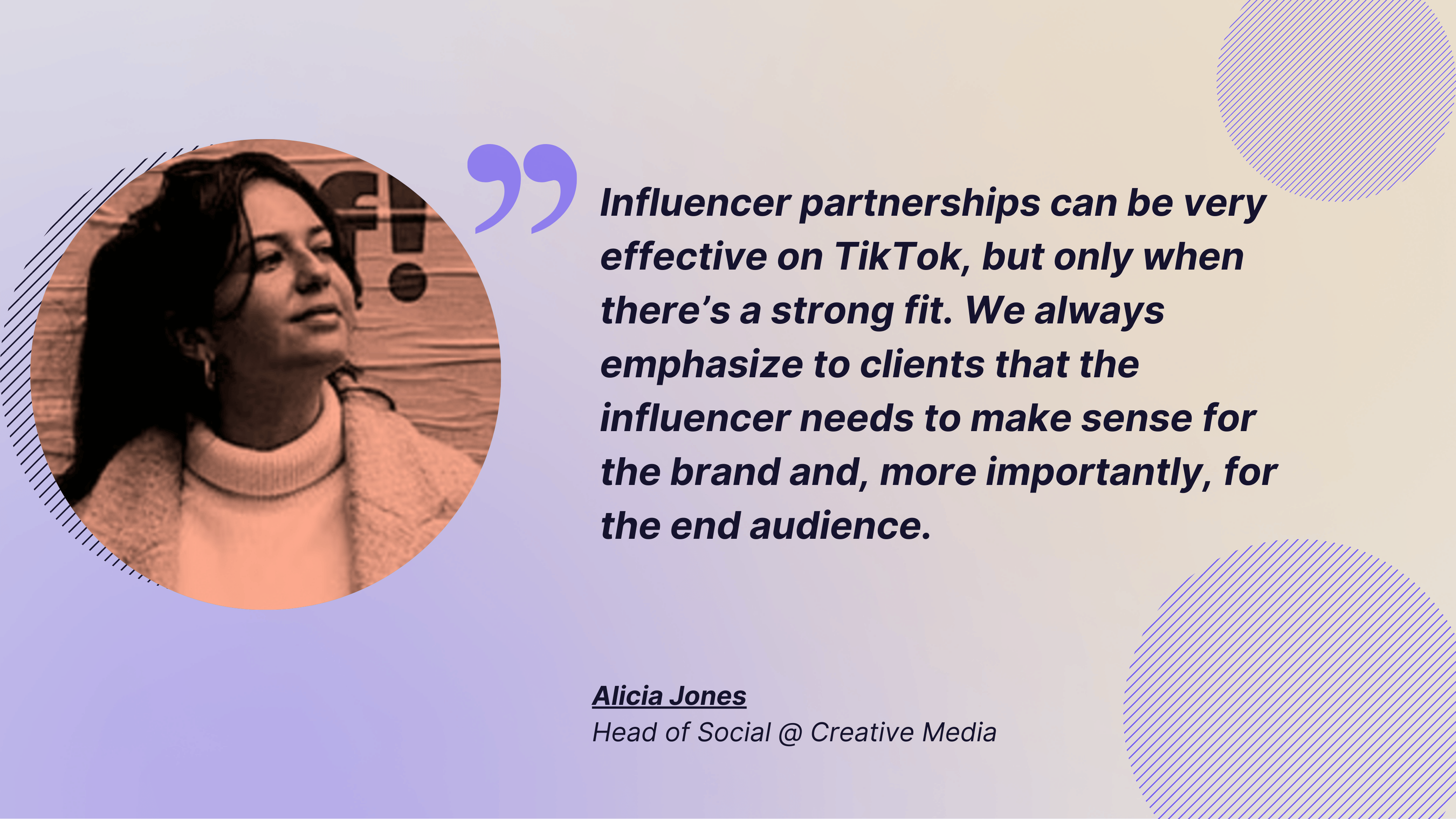
Influencer partnerships can be very effective on TikTok, but only when there’s a strong fit. We always emphasize to clients that the influencer needs to make sense for the brand and, more importantly, for the end audience. They also need to be genuinely trusted within their own community, otherwise you won’t see a meaningful return on the investment.
I have also seen micro and nano influencers work the best on TikTok. In fact, data says influencers with less than 15K followers on TikTok have an engagement rate of 18%, outpacing macro and mega influencers by a wide margin.
Even Alicia mentioned the same.
Working with very large influencers who have low engagement rates, or whose content is almost entirely sponsored, often limits impact. When creators promote everything, audiences are less likely to trust their recommendations.
In many cases, we recommend working with micro or smaller macro influencers—creators with smaller but highly engaged audiences who are selective about the partnerships they take on. Their followers genuinely value their opinions, and their recommendations carry real weight. From both a performance and cost-efficiency standpoint, partnering with two or three trusted niche creators is often far more effective than investing heavily in one large influencer with a massive but disengaged following.
16. Build a ‘Comment identity’ so people recognize you across TikTok
One underrated way to gain followers on TikTok is through the comments. I have seen how brands use this to their advantage and get a lot of attention.
Building a clear comment identity helps people recognize your voice across the platform. It could be witty, insightful, sarcastic, or brutally honest. The exact style matters less than sticking to it consistently.
When you leave strong comments on large creators’ videos in your niche, you show up in front of an already engaged audience.
If people like what you say, they naturally click your profile to see more. And the best part? This curiosity can turn into a follow before they even watch a video.
Analytical strategies to get more TikTok followers
17. Perform competitor analysis
When you study competitors in your niche, you start to see what your shared audience already responds to.
Which topics drive comments? Which formats get saved? Where engagement drops off?
These insights help you spot content gaps and decide how to position your voice so people choose to follow you instead of another brand.
I use Socialinsider’s Benchmarking feature to compare follower growth, engagement, and posting patterns side by side.
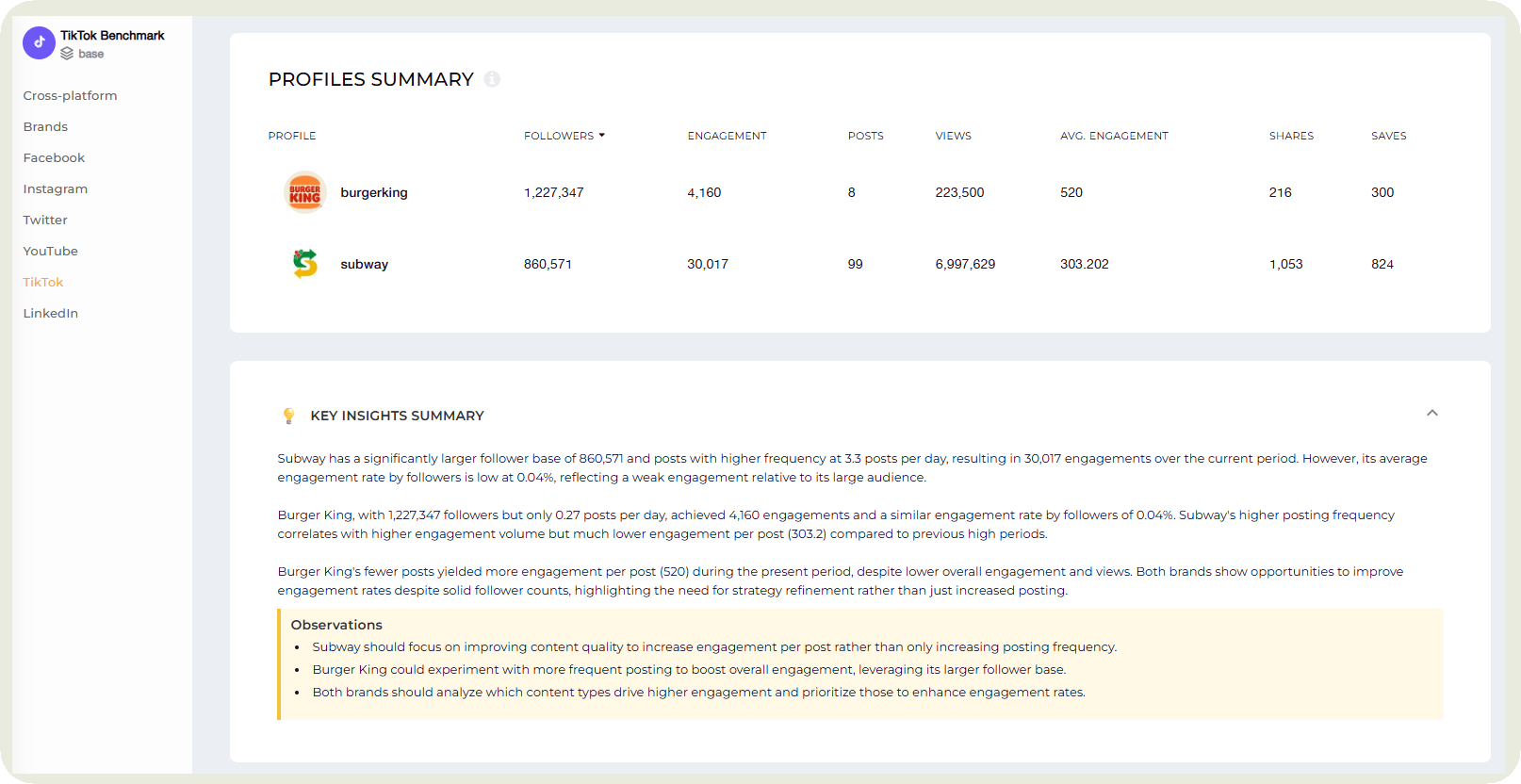
The tool also lets me go to individual competitors’ profiles and reverse engineer their content pillars, top-performing content, posting strategy, etc.
Here’s how Alicia goes about competitor analysis for her clients —
Competitor benchmarking is a core part of how we approach TikTok strategy. We look at both broader industry benchmarks and a defined set of direct competitors. On a regular basis, usually monthly, we track follower growth, monitor whether competitors have had any viral videos, and analyze what those videos were and why we think they performed well.
We also look at average monthly video views to understand overall momentum and visibility, and use that data to benchmark our own performance. This helps us stay grounded in what ‘good’ looks like within the category and identify opportunities to adjust our content strategy based on what’s resonating in the space.
18. Track where your follows come from: FYP vs. Search vs. Sound vs. Profile
Tracking where your followers come from helps you double down on what already works.
TikTok shows follow sources like For You Page, Search, Sound, and Profile. Here’s what they tell you.
- If ‘Follows from Search’ is high, double down on SEO-led videos with clear keywords in captions, on-screen text, and hooks.
- If ‘Follows from Sound’ is high, lean more into trending music and audio-led formats that boost discoverability.
- If ‘Follows from Profile’ is high, optimize your grid thumbnails and pinned videos to convert more profile visits into followers.
19. Analyze your content
Instead of looking at posts one by one, I zoom out and look for patterns.
Do shorter videos consistently outperform longer ones? Which formats drive the most follows, not just views? Sometimes a video with fewer views helps gain TikTok followers fast because the message is clearer or the value is stronger.
I like to look at follower growth alongside watch time, saves, and comments. That combination tells you what kind of content actually converts viewers into followers. Once you spot those trends, use them as guardrails for future content.
This does not mean repeating the same video over and over. It means repeating what works.
Final thoughts
There’s one thing that stands out clearly — If you want to boost TikTok followers, you need to do a few things well, consistently.
Start by understanding what actually brings people to your profile, then double down on those formats, topics, and hooks. Pay attention to when you post, how long people stay, and what makes them comment or share. Use that feedback to refine your next video instead of guessing.
These small tweaks add up quickly on TikTok. But remember to keep testing, reviewing, and adjusting as you go.
If you want to make this process easier, track your performance and patterns with Socialinsider, so follower growth becomes easy and data-driven.
FAQs on how to get more followers on TikTok
What are the common mistakes to avoid when trying to get followers on TikTok?
Common mistakes include ignoring trends, posting inconsistently, neglecting video quality, and failing to engage with the community. Additionally, not utilizing TikTok hashtags effectively or overlooking the importance of a compelling profile can hinder growth.
Why am I not gaining followers on TikTok despite posting regularly?
If you're not gaining followers despite regular posts, it might be due to a lack of engagement or content differentiation. Analyze your engagement rates and consider diversifying your content or refining your approach to better meet your audience's interests.
Nidhi Parikh
Nidhi Parikh is SaaS writer that believes scrolling through social media is research for work. When not working, find her binge watching the latest series or reading anything she can get her hands on.

Analyze your competitors in seconds
Track & analyze your competitors and get top social media metrics and more!
You might also like




Improve your social media strategy with Socialinsider!
Use in-depth data to measure your social accounts’ performance, analyze competitors, and gain insights to improve your strategy.