How to Calculate Follower Growth On Social Media: A Full Guide
Discover effective methods to calculate follower growth and analyze your growth strategies. Learn how to track your progress with our detailed guide.

Picture this. You’re prepping a monthly report and staring at your follower count, trying to figure out whether the number actually grew or just feels higher because you posted more.
The truth is, follower growth only makes sense when you calculate it properly. Raw numbers don’t tell you much but percentage growth and trends reveal a lot of insights.
Once I started tracking growth the right way, patterns jumped out. I could see which weeks led to a spike in follower growth, which campaigns stalled and where my social media marketing strategy genuinely moved the needle.
In this guide, I’ll walk you through how to calculate follower growth and use that data to guide your social media strategies.
Key takeaways
-
What is a good follower growth rate? A good follower growth rate isn’t one magic number—it depends on your niche, competitors, and past performance, and it’s strong when you’re beating benchmarks and attracting the right people.
-
Why follower growth matters: Follower growth shows how far your brand is spreading, how well your content resonates, how your campaigns perform, and it’s one of the clearest signals leaders look at to gauge momentum.
-
How to analyze follower growth: You can analyze follower growth by spotting what triggers spikes or slowdowns, checking which content brings in new people, comparing yourself with competitors, and looking for patterns in timing or posting habits.
-
What are some strategies that can be used to improve follower growth? You can boost follower growth by leaning into your top-performing content pillars, adjusting how often you post, partnering with creators who already reach your ideal audience, posting when your followers are most active, and hopping on trends that genuinely fit your brand.
What is follower growth?
Follower growth is the rate at which your audience increases over a specific period. It shows how many new people chose to follow your account compared to where you started.
Instead of looking only at raw follower numbers, follower growth helps you understand momentum.
I use this metric to see if my content, campaigns, or posting strategy is attracting new audiences consistently.
How to calculate follower growth rate with the standard formula
The standard way to calculate growth rate is:
Follower Growth Rate (%) = [(Ending Followers − Starting Followers) / Starting Followers] × 100
Where:
- Starting Followers = follower count at the beginning of the period
- Ending Followers = follower count at the end of the period
For instance, if you start the month with 2,000 followers and end with 2,500, you gained 500 new followers. Divide 500 by 2,000 and you get 0.25. Multiply by 100, and your follower growth rate is 25 percent.
Alternatively, you can use third-party analytics tools, such as Socialinsider, which have a follower growth rate calculator to automatically display this rate.
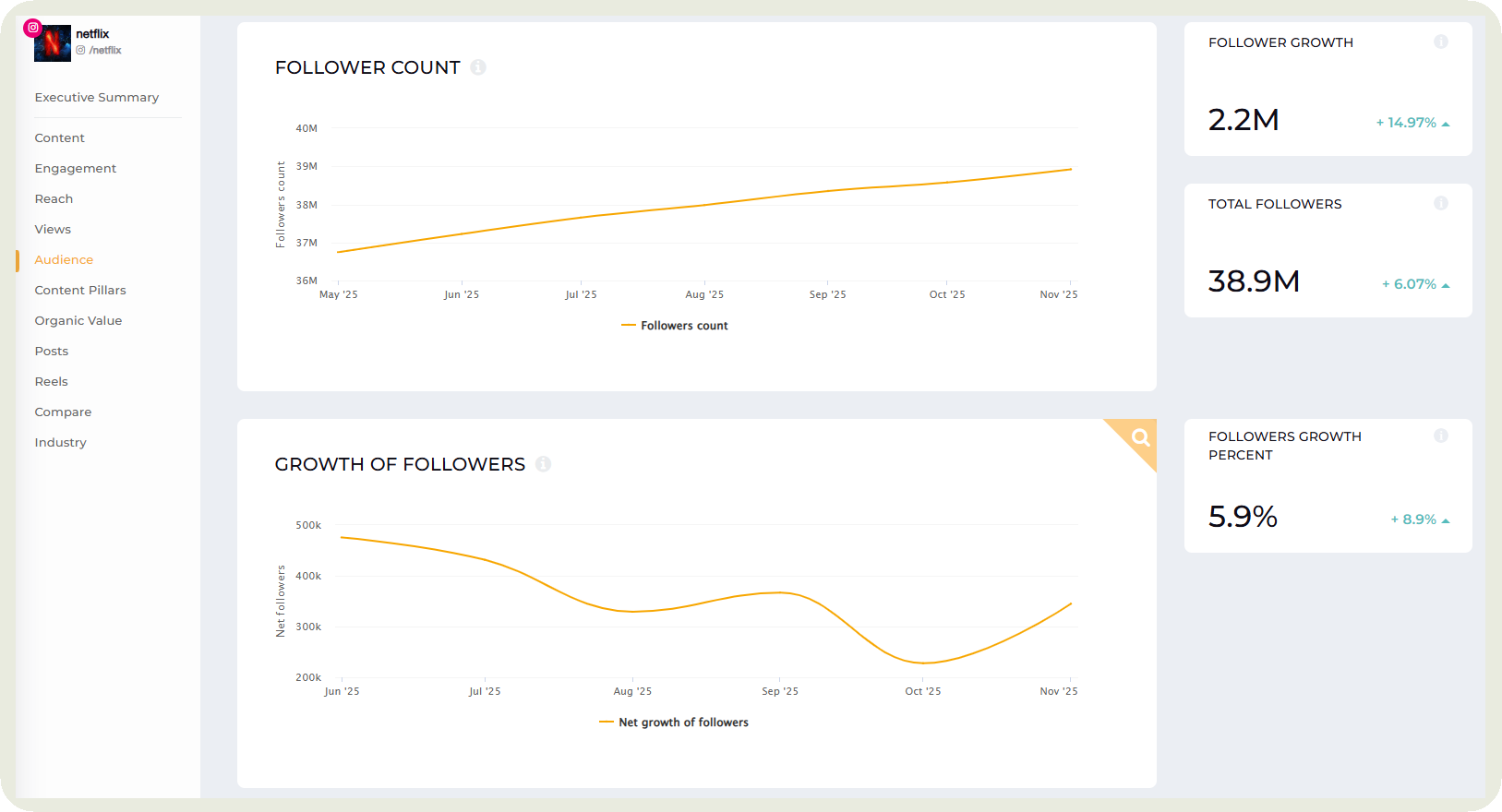
What is a good follower growth rate?
A ‘good’ follower growth rate is never one fixed number. It depends on your industry, your platform, your account size, and whether you’re in a rapid growth stage or a mature phase.
But here are some reliable ways I use to judge whether my growth is strong or needs work.
- Start with industry benchmarks. Tools like Socialinsider publish platform-specific benchmarks that show average growth rates across platforms. If your numbers beat those averages, you’re on solid ground. If you consistently fall below them, it’s a sign to refine your strategy.
- Compare to competitors. Track how fast similar brands are growing. If you’re gaining followers at a slower pace, it suggests your content mix or posting cadence might need a refresh.
- Look at your trend over time. A steady upward trend is a positive sign even if your monthly growth rate isn’t huge. Spikes followed by dips may signal inconsistent content performance.
- Evaluate growth quality. Growth isn’t just about speed. Check whether new followers engage, convert, or fit your target audience. A high growth rate filled with low-intent followers doesn’t do much for your business.
Why follower growth matters?
Tracking audience growth rate isn’t the same as monitoring a vanity metric. Here are five reasons why it matters.
It shows brand reach and expansion
Follower growth shows how far your brand is stretching beyond your current audience.
For example, when a skincare brand jumps from 10,000 to 12,500 followers during a UGC campaign, it signals that new people discovered the brand and cared enough to stick around.
Growth like that indicates that your visibility engines are working effectively. It could be a Reel that hit the algorithm sweet spot or a creator partnership that introduced you to a new segment. Steady increases prove your content is landing in new feeds.
Shows audience sentiment and content resonance
It reflects how people feel about your content in real-time.
Think of your favorite brand that gains thousands of followers the moment they drop behind-the-scenes clips of the team. That surge shows the content struck a chord.
When Instagram follower growth slows after repetitive posts, it hints that the audience wants something fresh on Instagram.
Tracking this helps you understand what people love and what they skim past. You can then optimize your content strategy based on these insights.
Forecasts account health
If your numbers rise steadily month after month, your social media strategy is moving in the right direction. When growth drops for two months in a row, it signals a slowdown.
Maybe your posting cadence slipped or your themes no longer hit. Watching this trend helps you fix issues before they spread to other metrics and KPIs.
Helps measure campaign performance
Follower growth reacts fast to campaigns, which makes it one of the easiest ways to measure impact.
For example, a fashion brand runs a creator collab and sees a 6 percent growth spike in seven days. That tells you the campaign attracted the right crowd. If another campaign barely moves your follower line, you know the message missed. Pair this with engagement and you get a clean picture of quality.
Strong campaigns bring new followers who interact. Weak campaigns create noise but no lasting audience.
Critical for client or leadership reporting
Follower growth is the number leadership actually pays attention to. It is simple, visual, and easy to justify.
If you report that your account gained 3,000 followers during a product launch, executives immediately connect that spike to brand momentum.
Agencies use this metric constantly. When a client sees social media follower growth rise after a refreshed content strategy, they feel the progress without digging into dashboards. It becomes a quick proof point that the brand is gaining traction.
What tools can you use to track follower growth?
You can either use native platform analytics to get this data or use third-party analytics tools. Here’s how to track growth in each.
Native analytics
If you want to get this data quickly and accurately, here’s a platform-specific guide for each one.
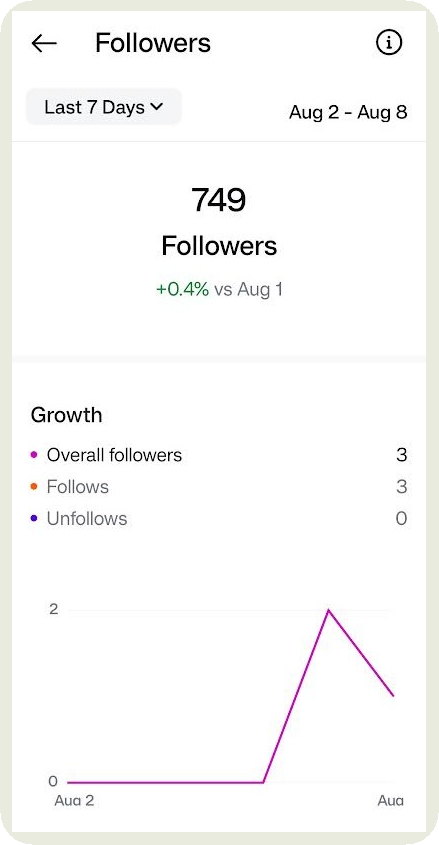
How to monitor Instagram follower growth
- Open Instagram Insights from your profile menu.
- Tap ‘Total Followers’ to view your follower analytics.
- Select a date range to compare follower changes.
- Note your starting and ending follower counts.
- Calculate your growth rate using the standard formula.
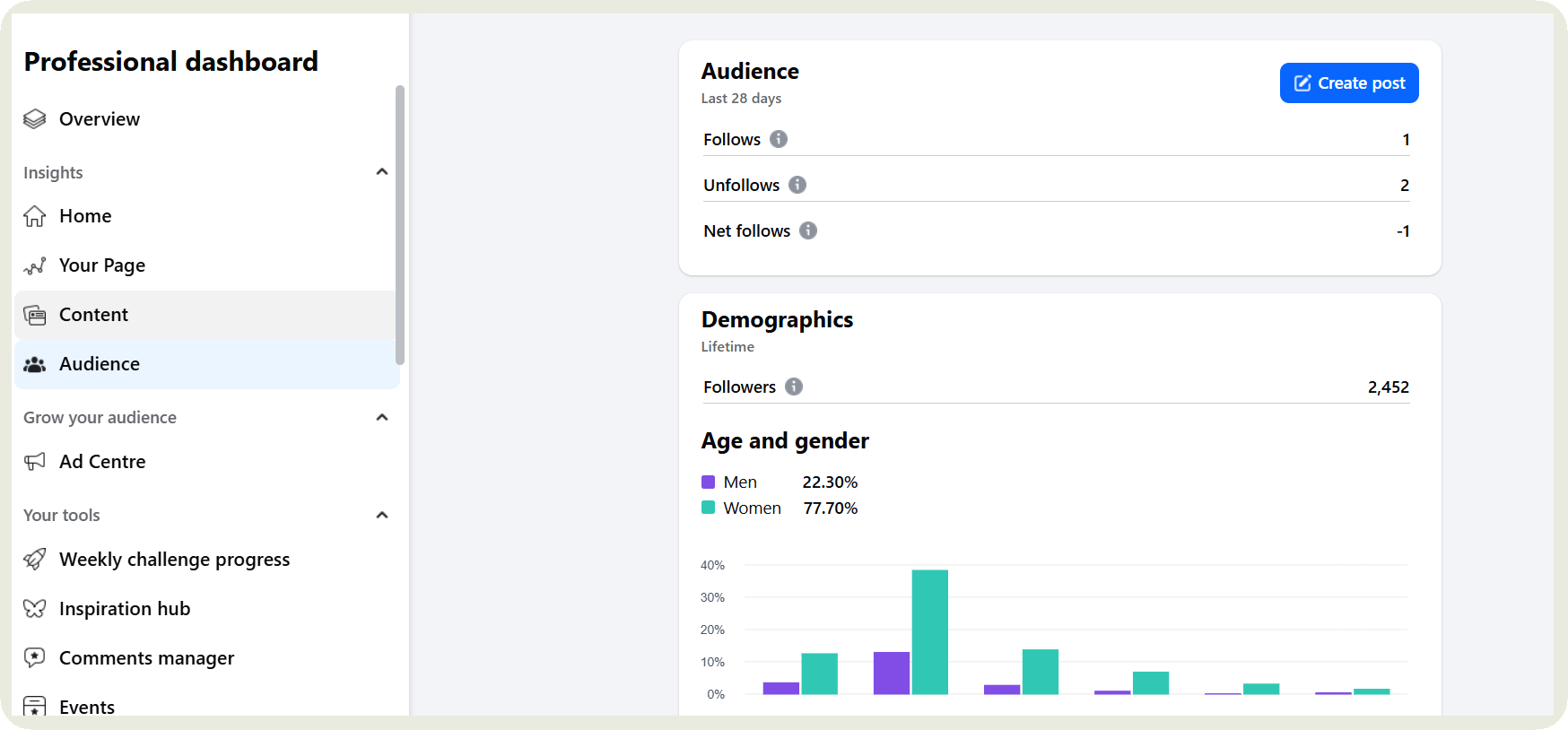
How to monitor Facebook follower growth
- Go to your Facebook Page and open Professional Dashboard.
- Click Insights to access your page analytics.
- Select the Audience tab to view follower and like trends.
- Choose a date range to compare follower changes over time.
- Note your starting and ending follower counts for the period.
- Use the growth formula to calculate your follower growth rate.
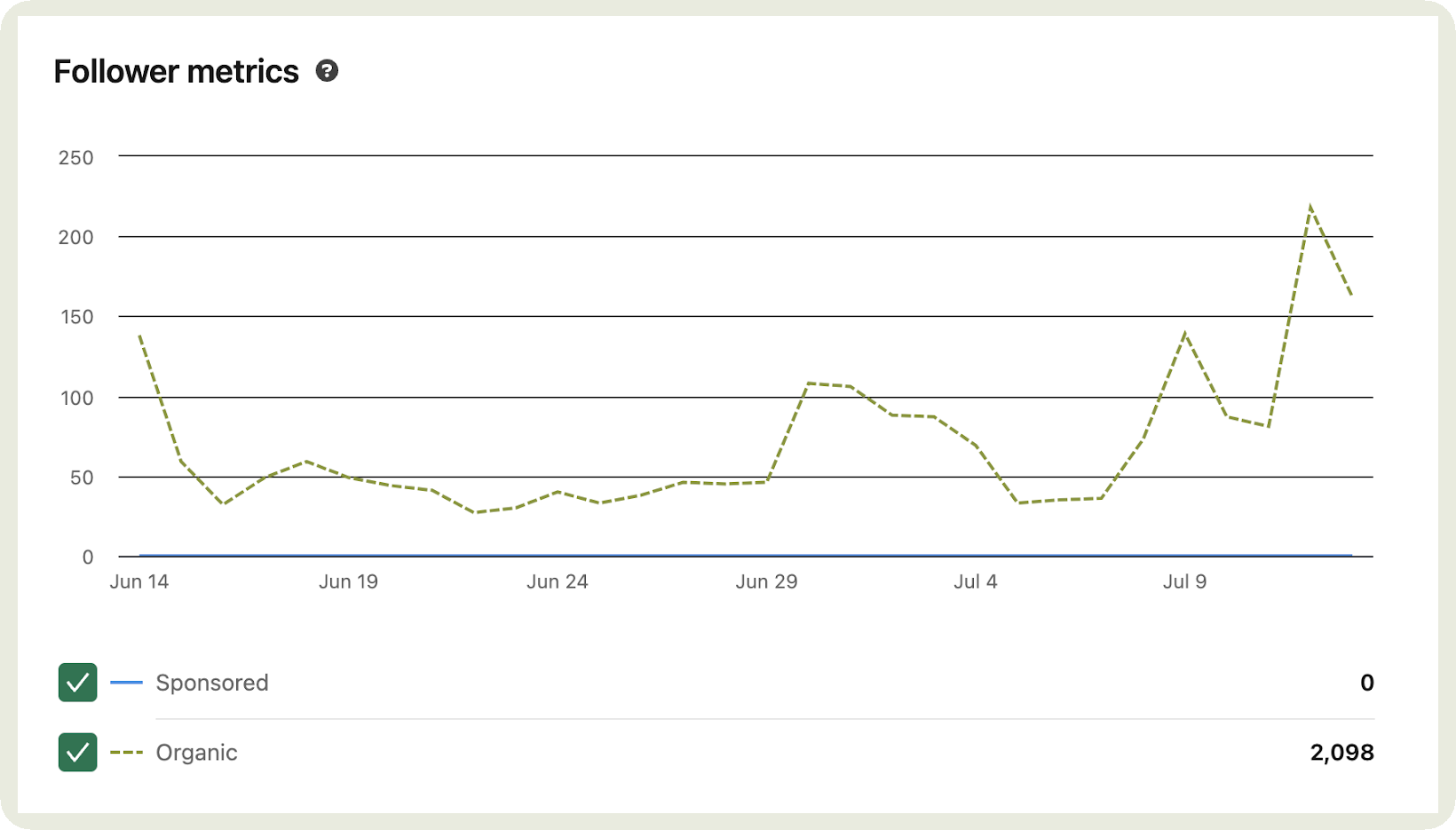
How to monitor LinkedIn follower growth
- Go to your LinkedIn Company Page and open Analytics.
- Select the Followers tab to view follower insights.
- Choose a date range to compare follower gains over time.
- Note your starting and ending follower counts.
- Use the follower growth formula to calculate your rate.
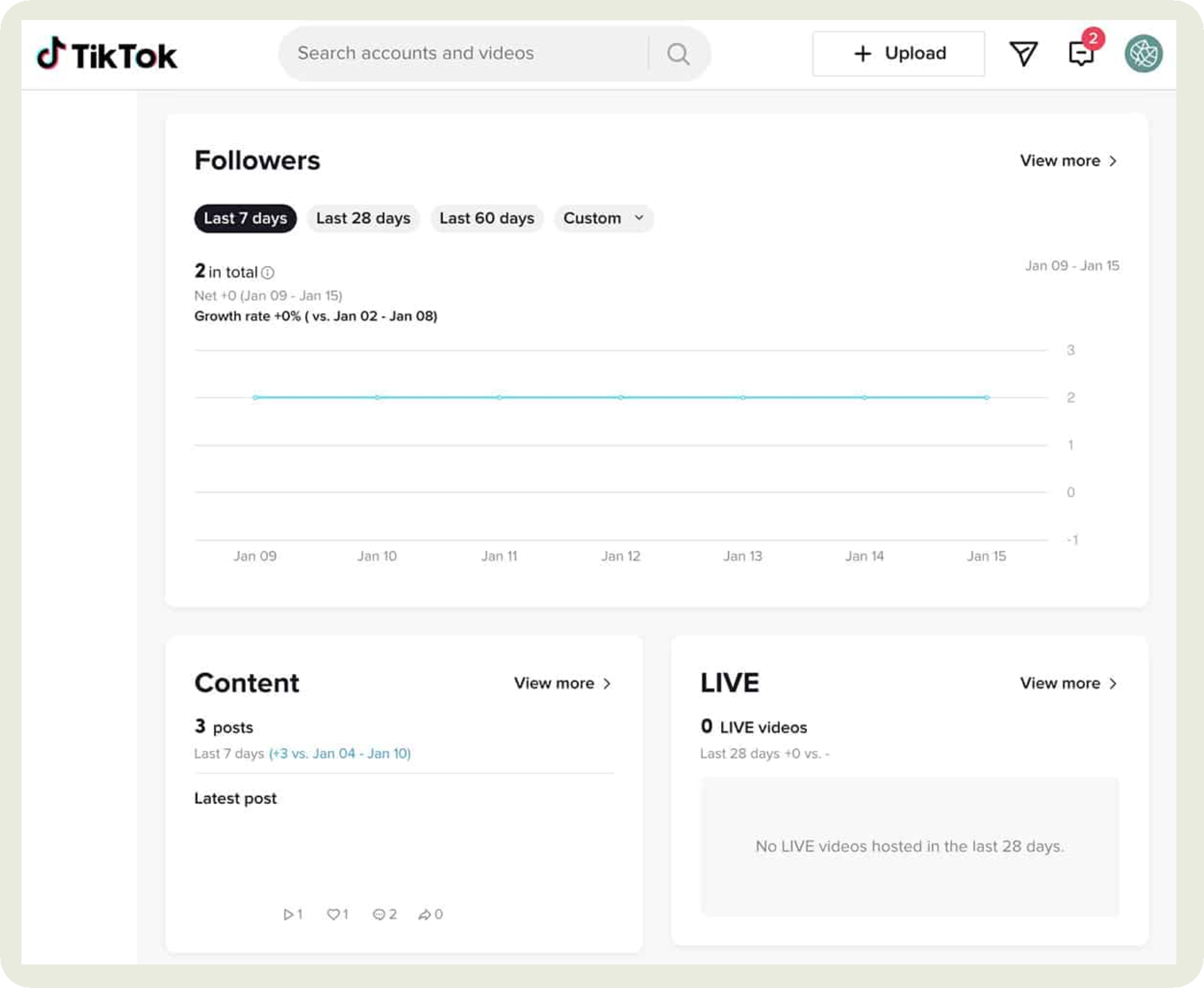
How to monitor TikTok follower growth
- Open Creator Tools and tap Analytics.
- Go to the Followers tab to track follower changes.
- Select a time range to compare growth
- Note your starting and ending follower counts.
- Calculate your growth rate using the standard formula.
Third-party analytics tools like Socialinsider
Third-party analytics tools make follower growth easier to track because they automate the entire process for you.
Instead of manually checking starting and ending follower counts, tools like Socialinsider pull your historical data, calculate the growth rate, and visualize trends instantly. I love how the tool provides estimated follower counts for previous time periods as well.
You can compare week over week, month over month, or even match campaign dates to see exactly when growth spiked. The tool automatically applies the standard formula [(Ending Followers – Starting Followers) / Starting Followers × 100], so you see growth percentages without doing the math.
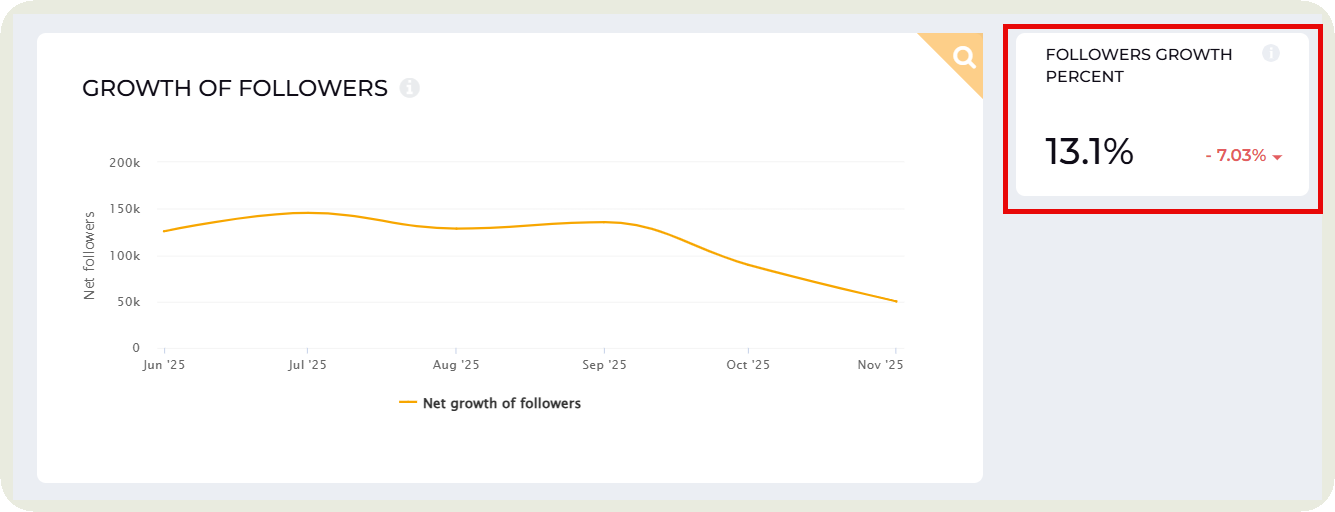
You also get context you can’t access natively. Socialinsider layers competitor data, industry benchmarks, and engagement patterns over your follower trends. This helps you see whether your growth is strong for your niche or just average.
You can even overlay posting frequency, top-performing posts, and content formats to understand what triggered follower increases.
How to analyze follower growth
Follower growth can reveal a lot if you know how to analyze it. Here are five ways to do that.
Check what caused spikes or flat growth
Follower spikes never happen by accident. There is always a trigger hiding in your content or timing.
Start by matching your growth chart with specific posts, campaigns, or external events. I use Socialinsider to click on the follower growth graph to show the posts that caused spikes.
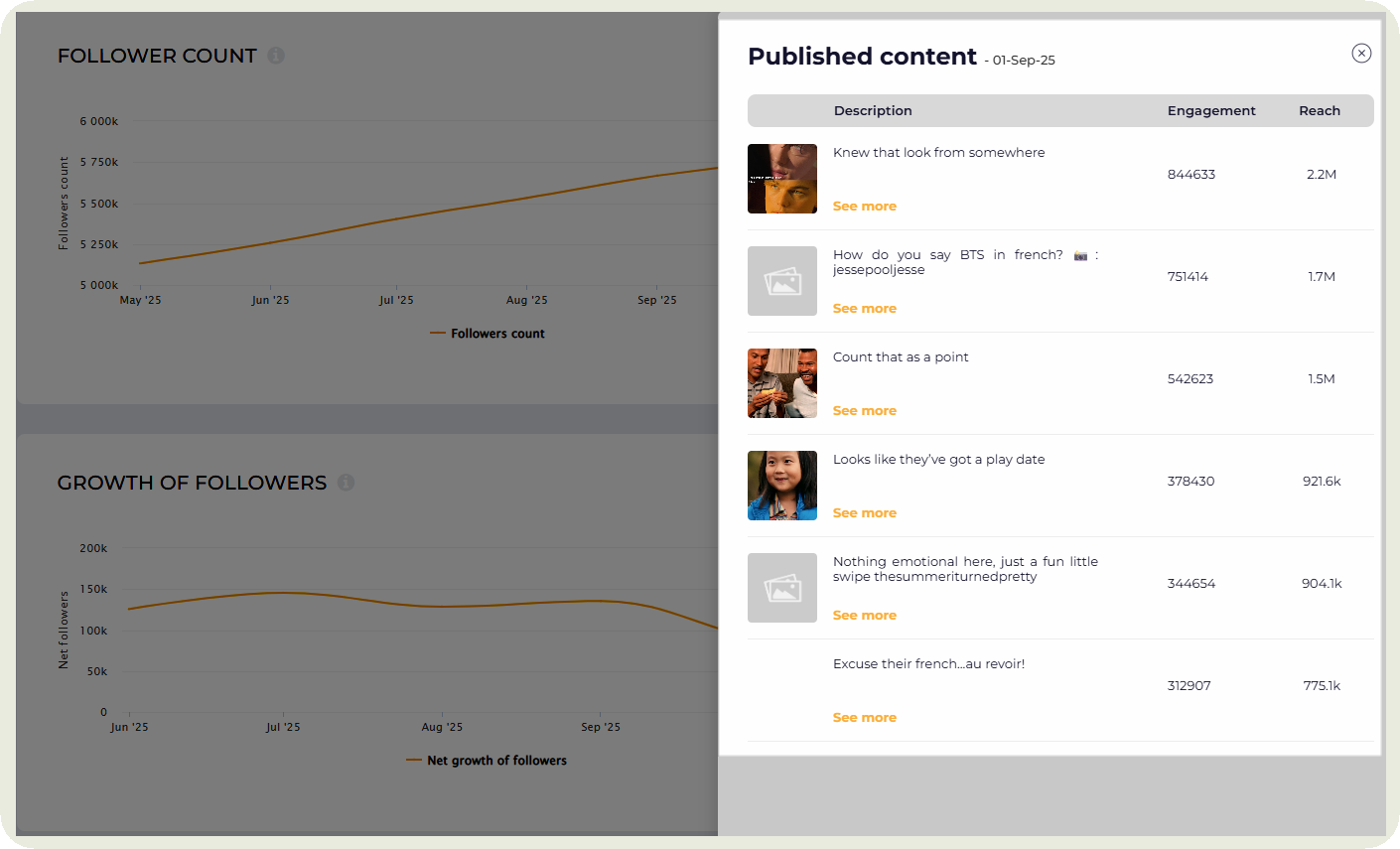
Maybe a behind-the-scenes reel doubled your usual reach. Maybe a creator reshared your content and sent new followers your way.
Similarly, flat growth tells a story too. It often shows that your content is repeating themes, missing relevance, or landing at the wrong time of day.
Dive into post-level analytics and look at formats, captions, hooks, and posting cadence. Identify what caused flat plateaus and try to avoid that.
Evaluate growth by content type
Do Reels bring new followers or do carousels do that for your brand?
Different content pulls different audiences, so break your follower growth down by format. Check which posts actually made people hit follow. For example, you might notice that while carousels attract saves, they bring fewer new followers.
Do the same for the creators or influencers you partner with. Some creators or team members naturally pull more attention. Track which faces or voices consistently bring a lot of followers for your brand. Encourage more collaborations with them moving forward.

Measure follower quality, not just quantity
A big follower spike feels great, but the real question is simple – Who actually followed you?
Quality followers engage, comment, save, and eventually buy. Low-quality followers inflate your numbers but never interact. Start by checking the engagement rate after a growth spike. If interactions rise along with followers, you attracted the right crowd. If engagement dips, you pulled in passive scrollers.
I also like to see audience demographics to check whether my new followers match my target market. If there’s a mismatch, I try to review which posts they came from. For example, a viral meme might have got in a huge influx of followers but zero qualified users. Always aim to prioritize quality signals over vanity lifts.
Benchmark against competitors
Your follower growth makes the most sense when you compare it with the brands competing for the same audience. Start by tracking their monthly growth percentage and stack it next to yours. If they grow at 4 percent and you are stuck at 1 percent, you know you are losing momentum.
You can get this data through the Benchmarks feature in Socialinsider. Just add your competitor profiles and get side-by-side comparisons of various metrics like follower growth.
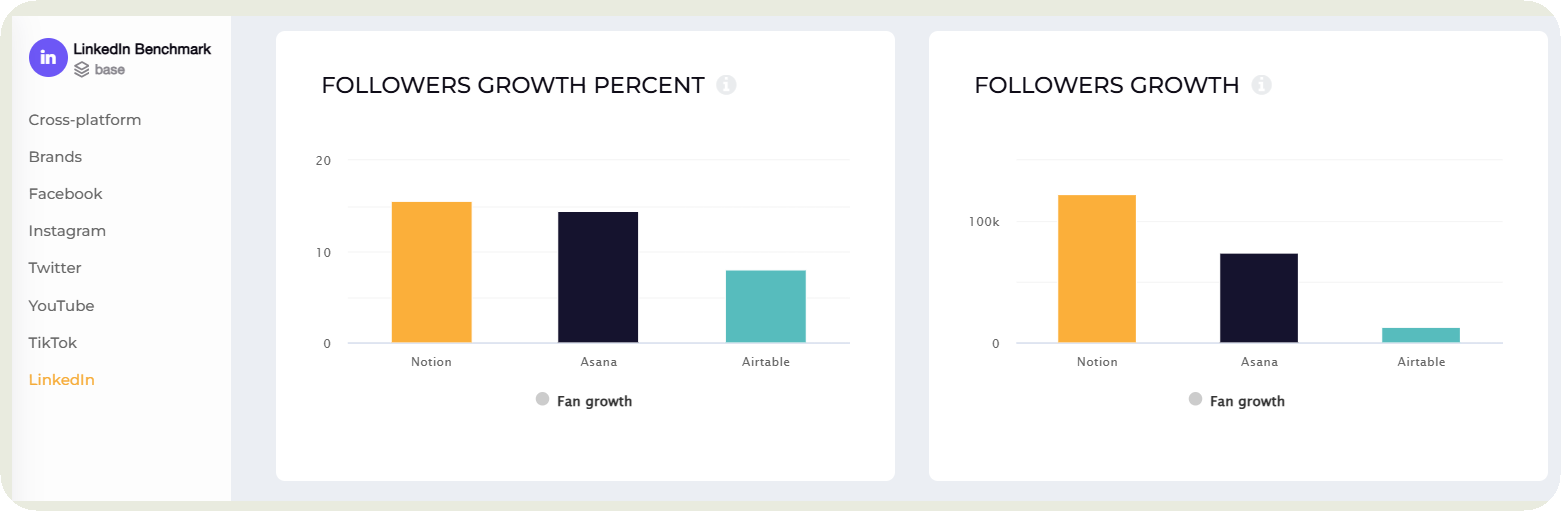
Look at what they posted during their spikes. Maybe a carousel series took off or a creator partnership pushed their reach. Study formats, topics, and timing. This will help you understand what the users in your niche resonate with. When you see what lifts their numbers, you can adjust your own strategy to outperform the landscape.
Run a correlation analysis
Don’t treat follower growth as something random. You can uncover patterns fast by running a simple correlation check.
Start with posting frequency. Look at weeks where you posted more and see if growth jumped. If your audience responds to consistency, the pattern will show. Then check timing. Match your growth spikes with specific days or time slots. You might find that Tuesday mornings pull in twice as many new followers as Friday evenings.
Add paid activity to the mix. If follower growth rises every time you run a boost, you know paid visibility helps accelerate discovery. The goal is to link actions with outcomes. When you understand what consistently triggers growth, you can scale those behaviors.
Strategies to improve follower growth
Looking for ways to bring that follower count up? Here are five tried-and-tested tips.
Prioritize high-performing content pillars
Some content pillars grow your audience without trying because they resonate with your audience preferences.
Start by identifying the pillars that consistently spark comments, saves, and shares. Those are your growth engines. Use Socialinsider to get this automatically.
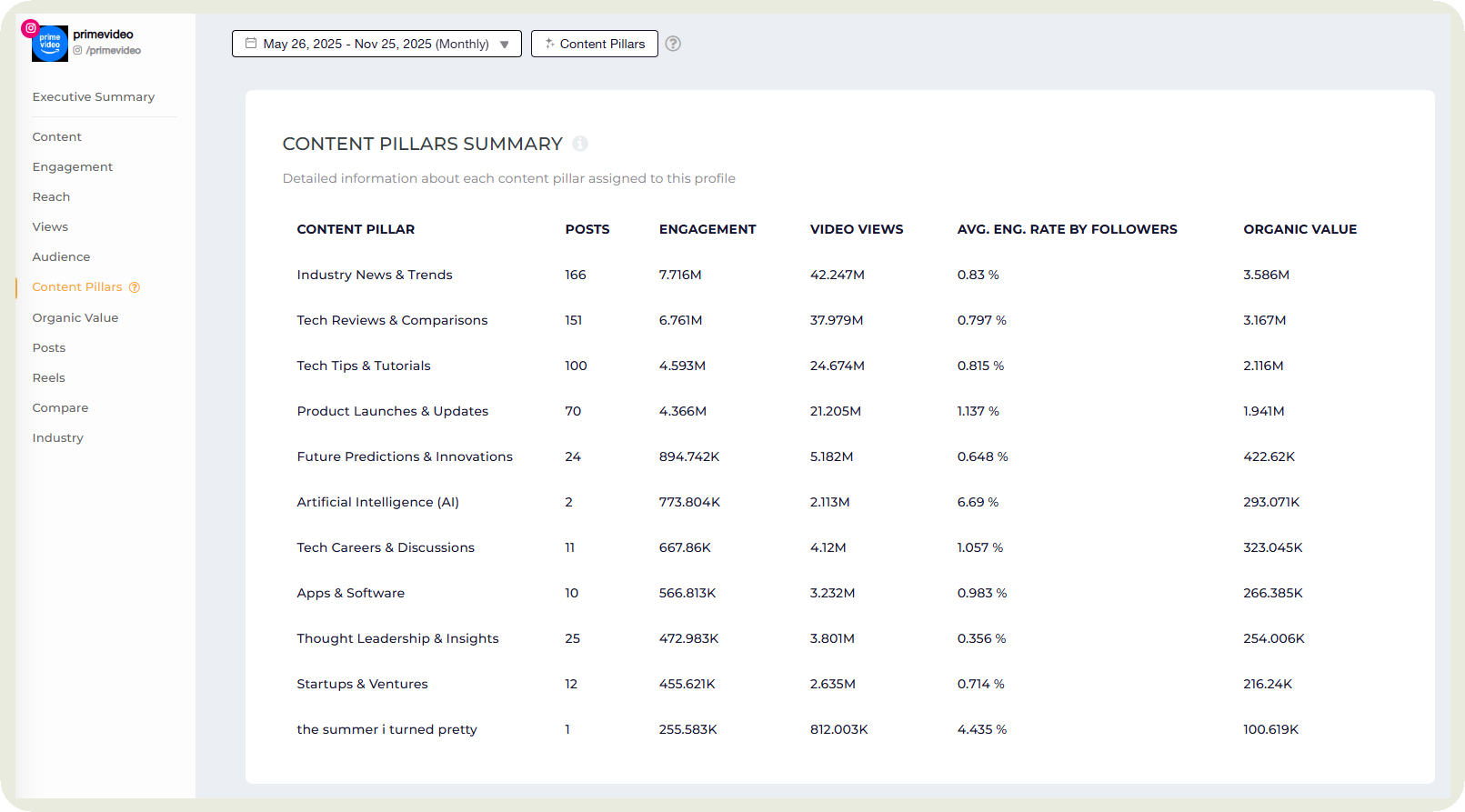
For example, if your behind-the-scenes clips or myth-busting posts always bring new followers, elevate them from ‘nice to have’ to core content.
At the same time, reduce the pillars that only fill space. Build a pillar mix where at least half of your weekly posts come from proven growth drivers.
Test posting frequency
More posts can drive more follower growth, but only if your audience can actually absorb the extra content. Start by raising frequency in small steps.
If you post three times a week, try four and watch how engagement reacts. A healthy signal looks like steady interactions and stable reach. A drop means you pushed too fast.
When I increase my frequency, I tend to mix formats to keep things light. Short reels, quick text posts, or simple carousels help stay consistent without draining my audience or even my team.
Remember, the goal is to stay present without feeling noisy.
Collaborate strategically
The fastest way to grow your followers is to tap into someone who has already earned the attention you want. Look for creators, experts, or brands whose audience overlaps with yours, then build collaborations that add real value.
For example, a fitness brand teaming up with a sports physiotherapist is a perfect example. Both audiences care about the same problem, so followers transfer naturally.
You can keep the collab simple. Co-create a reel. Host a joint live. Share a quick tip video together. Track the follower spike after each collaboration to see which partners convert best.
Post at peak times
Posting at peak times gives your content a head start. It lands in the feed when your audience is already active, scrolling, and ready to engage.
Check your Socialinsider analytics to see when your followers are engaging the most.
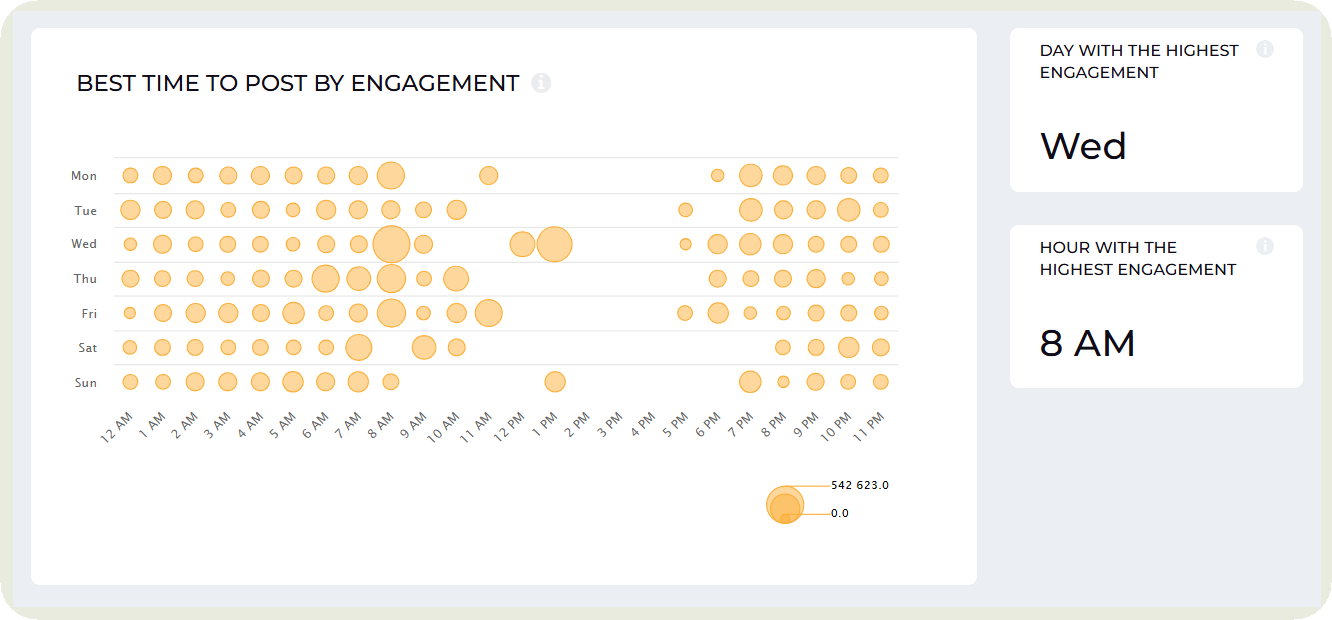
You might find that Wednesday mornings outperform Tuesday mornings by a mile.
When you post during high activity windows, your content collects early engagement, which pushes it into more feeds and increases your chances of gaining new followers. This is especially useful for reels, TikToks, or any format that relies on quick traction.
Participate in trends
Trends let you show up where the attention already is. The key is to join trends that fit your brand instead of jumping on everything that moves. If a sound, format, or meme aligns with your niche, adapt it fast before the momentum fades.
For example, here’s how Target hopped in to the Stranger Things last season hype.

They even launched one of the biggest retail-level collaborations for over 150 themed products including apparel, collectibles, and home-goods inspired by the show.
Final thoughts
Calculating follower growth gives you a clear view of what fuels your audience momentum.
Once you track your numbers properly, patterns start to reveal themselves. You see which posts triggered spikes, which weeks slowed down, and where your content genuinely pushed people to follow you. Use those signals to refine your pillars, timing, and posting cadence.
If you want a simple and quicker way to track follower growth and other metrics, get your 14-day free trial of Socialinsider.
FAQs on how to calculate follower growth?
How do you measure Instagram followers growth?
You measure Instagram follower growth by comparing your starting follower count to your ending count over a specific time period, then using the formula: (Ending Followers minus Starting Followers) divided by Starting Followers, multiplied by 100. Or you can use tools like Socialinsider to get this rate automatically for a specific period.
How long does it take to grow followers?
Follower growth has no fixed timeline because it depends on your niche, consistency, content quality, and how well you tap into trends or collaborations. Some accounts see steady gains within weeks, while others need months to build momentum. The fastest growth comes from consistent posting, strong hooks, and content that reaches beyond your current audience.
How often should I measure follower growth?
Measure follower growth at least once a week to catch early trends and once a month for a clearer strategic view. Weekly tracking helps you link spikes to specific posts. Monthly tracking shows whether your overall strategy is working. Combining both gives you a reliable picture of momentum without overanalyzing daily fluctuations.

Nidhi Parikh
Having worked with several brands in the social media space, Nidhi writes about all things social. With 13K followers on LinkedIn, she's always up for a chat about books or her next travel plan

Know what your competitors do — before your manager asks
Get instant social benchmarks & reports without manual work.