Brandwatch Alternatives: When You Need Enterprise Listening vs Social Performance Benchmarking
Uncover a strong list of Brandwatch alternatives: from social benchmarking tools to listening alternatives, discover tools that fit your needs and budget effectively.


Brandwatch is a common choice when teams look for social media insights. And for the right job, it hits the spot.
But what if the job is not exactly right? Brandwatch is built first and foremost for social listening. And if you need something besides that — say, social benchmarking and in-depth content analytics — Branchwatch leaves some gaps in your day-to-day work.
In this article, I’m not going to pick apart Brandwatch’s flaws. Instead, based on your workflow, I’ll help you decide whether you need a different listening tool, a strong analytics and benchmarking tool, or a combination of both for a bulletproof stack.
Because sometimes the right move isn’t replacing Brandwatch outright, but pairing it with tools that handle performance and benchmarking better.
Let’s break down the options.
Key takeaways
- Why would you want to look for a Brandwatch alternative? Teams don’t leave Brandwatch because it’s “bad,” but because it often doesn’t match their day-to-day workflows, priorities, or budget.
- Best Brandwatch alternatives for performance analytics and benchmarking If your real need is competitor benchmarking and channel performance reporting, you’re better off with a dedicated performance analytics platform, such as Socialinsider.
- Best Brandwatch alternatives for social listening: If you still need listening but Brandwatch feels too complex or expensive, switching to a lighter listening tool usually gives a better day-to-day setup.
Social listening vs. social performance analysis: are you solving the right problem?
To understand whether Brandwatch was the right tool for your work to begin with, we need to separate two fundamental concepts: social listening and social performance analysis.
Social listening looks outward. This is you analyzing what the world is saying about your brand. Your users, potential customers, competitors, journalists, and creators all have something to say about your brand. Social listening tools help you eavesdrop at scale so you can spot reputation risks, understand brand perception, and catch trends early.
Social performance analysis looks inward. It focuses on how your social media presence is doing. How are your accounts performing over time? Which content formats work best? How do you stack up against competitors or industry benchmarks? And where can you improve, based on actual performance data?
Two different problems, two different jobs. And, often, two different tools.
Why would you want to look for a Brandwatch alternative?
Most teams don’t move away from Brandwatch because it’s a bad product. They move away because Brandwatch doesn’t match how they work day to day and their daily tasks.
In practice, teams usually fall into one of three scenarios:
You still need social listening, but not from Brandwatch
Maybe Brandwatch feels too heavy, too expensive, or more enterprise-focused than what your team needs.
Many G2 users mention Brandwatch’s steep learning curve and needing “initial time and effort” just to get comfortable. Capterra mentions: “Brandwatch can be quite expensive, especially for small businesses.”
You still care about brand mentions and conversations, but you want something easier to use, more focused, or better aligned with your workflow.
You mostly need social media performance analysis
Everybody praises social listening and consumer intelligence, but for some teams, it’s just not a priority yet. And it’s alright.
In many cases, the real need is understanding how your content performs, how competitors compare, and whether your results are good in the context of your industry.
Brandwatch can support some of the day-to-day numbers, but performance analytics and competitive benchmarking aren’t its core strength. And if benchmarking and performance analysis are your true priority, compromising on a tool is doing you more harm than good.
You need both — to some extent
This is the most common scenario. You still want social listening for brand awareness and context, but you also need solid performance analysis and competitor benchmarking to guide content decisions and reporting.
In this setup, teams often keep a listening tool for conversations and add a dedicated performance platform, like Socialinsider, to cover benchmarking and analytics properly. Together, they form a tighter, more practical marketing stack.
So the decision usually comes down to this:
- If performance analytics and competitive benchmarking matter more than listening, switch from Brandwatch to a social media analytics and benchmarking tool.
- If listening still matters, but Brandwatch feels too heavy or expensive, switch from Brandwatch to a lighter or differently focused listening tool (and maybe pair it with a benchmarking platform for better insights)
How I chose the Brandwatch alternatives (the methodology)
Instead of creating a single “best alternatives” list, I grouped tools based on how teams use them.
This article covers two types of solutions:
- Complementary tools, like Socialinsider, that focus on social performance analysis and competitive benchmarking, and work well alongside social listening platforms.
- Social listening alternatives, for teams that still need listening but want something lighter, cheaper, or better suited to their workflow than Brandwatch
To keep the comparisons grounded, each tool was evaluated using the same practical criteria:
- data coverage (social networks, web, news)
- depth of listening vs analytics
- reporting and export options
- ease of use in day-to-day work
- pricing transparency
- team size and typical use case
From there, it’s about mixing and matching tools based on what your team needs.
Best Brandwatch alternatives at a glance
Best Brandwatch alternatives for benchmarking: for teams that prioritize performance insights
Socialinsider, the #1 alternative to Brandwatch for social benchmarking
Best for: teams that need powerful social media performance and benchmarking rather than social listening.
Socialinsider focuses on one job and does it well: social media performance analysis and competitive benchmarking. It helps you understand how your brand’s accounts are performing over time and how competitors are doing in comparison.
Competitor research is the spotlight of Socialinsider, and it shows everywhere: from key features to clear, stakeholder-ready reports.
When Socialinsider is a better solution than Brandwatch
Socialinsider is your best bet when your main question is:
“How are we doing compared to competitors, and what should we do with this data next?”
Despite focusing on competitor research, there are a lot of analytics parts of social media work that Socialinsider can help you automate.
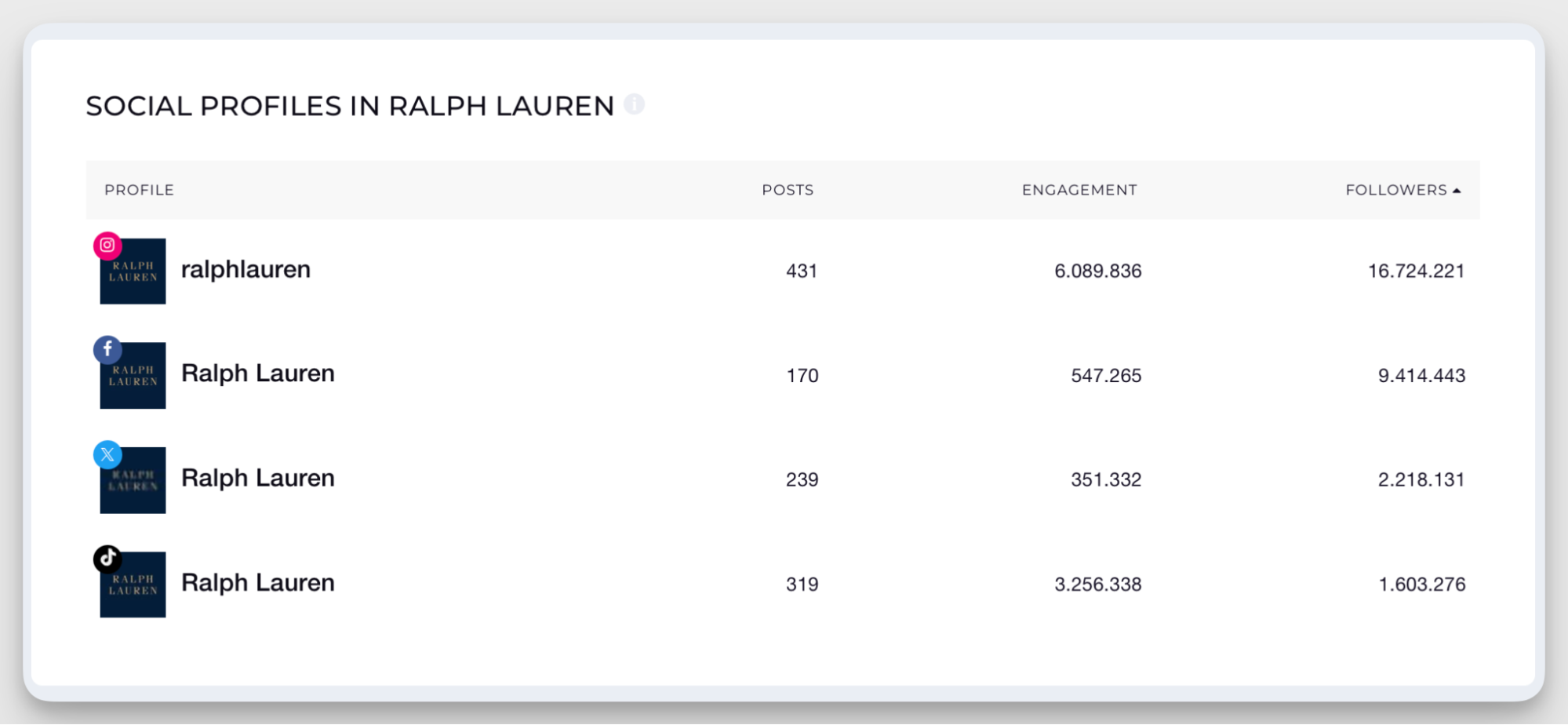
Teams use Socialinsider to track their own social profiles across platforms, benchmark performance against competitors or industry averages, and deep-dive into content-specific details to see where the results are coming from.
So, here’s what Socialinsider is ready to offer to you any day:
- Cross-platform performance analysis across major networks. This gives you a clear overview of the trend on each platform and helps re-evaluate your strategies and priorities.
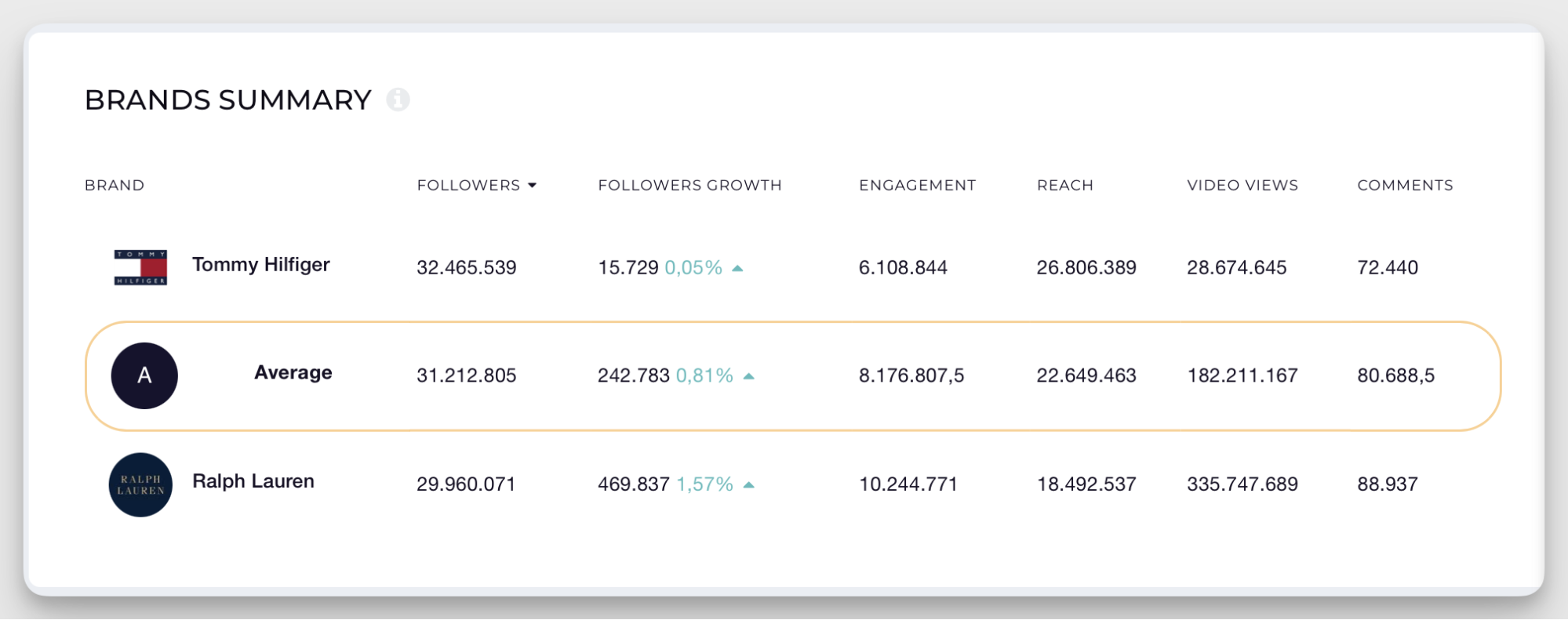
- Competitor and industry benchmarking that focuses on performance and what drives it instead of mention volume.
- Easy-to-follow, customizable reporting. Pretty self-explanatory and direct, it fits both the boardroom meeting and strategic brainstorm.
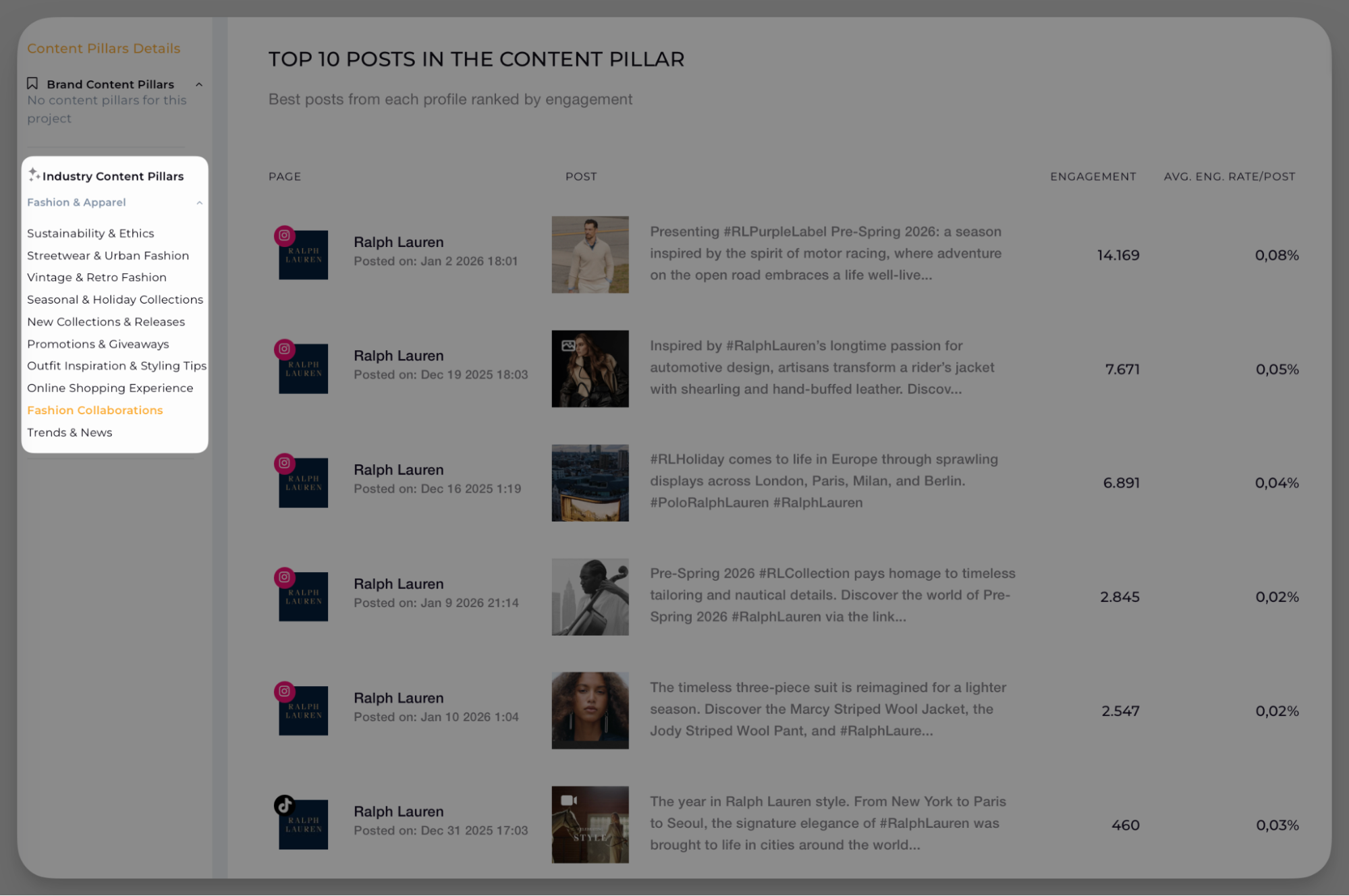
- Content tagging system and content pillars, so you can break performance down by themes, formats, and campaigns, and analyze bigger chunks of data.
What users say:
- “I like the competition analysis summary and suggestions that Socialinsider provides. The accuracy of the numbers is wonderful, and it gives me great support to plan my social media strategy and outperform the competition.” (G2)
- “I really appreciate how the platform doesn't require a social account connection to access in-depth stats, which was a deciding factor for me.” (G2)
Pricing: Socialinsider starts at $99/month, billed annually.
However, if you still need social listening and are looking for a Brandwatch alternative, here are some other suggestions you could use alongside Socialinsider.
Best all-in-one solutions for Brandwatch alternatives
Sprinklr
Best for: Large enterprises that want day-to-day social media management and performance insights under strict governance, with the option to scale into full consumer intelligence.
Compared to Brandwatch, Sprinklr Social puts more emphasis on centralization and execution and acts like a single source of truth. Enterprises choose it when they want one system that connects social media workflows, analytics, and collaboration across large, distributed teams.
Besides performance analysis and daily workflows, another suite, Sprinklr Insights, covers deeper consumer intelligence and large-scale listening.
Together, they make Sprinklr a broad, jack-of-all-trades platform. Benchmarking exists, too, but it stays high-level and is less nuanced than in dedicated tools (like Socialinsider).
Pricing: Sprinklr uses enterprise-level, quote-based pricing.
What users say:
- “Sprinklr Insights excels at gathering and analyzing data across multiple channels simultaneously, which gives us a really comprehensive view of brand sentiment and market trends.” (G2)
- “Setup can be complex and time-consuming; mixed reviews on support responsiveness. May be overkill (and too costly/complex) for small or mid-sized businesses.” (Capterra)
Sprout Social
Best for: PR, social, and comms teams that want listening tightly connected to publishing, content performance, and customer support.
Sprout Social might ring a bell to social media managers, because it’s often used as a social media tool for publishing, performance analysis, and engagement. Well, it also does social listening!
Compared to Brandwatch, Sprout doesn’t aim to support large-scale market research. Instead, it focuses on speed and day-to-day workflows. Sprout is a perfect fit if your team cares more about acting on conversations than analyzing them in-depth.
Users often describe Sprout as a workflow tool first and a listening tool second. PR and comms teams use it to monitor brand mentions, route issues, respond quickly, and report back. Social media teams rely on it to jump on trends, answer comments, and manage daily publishing.
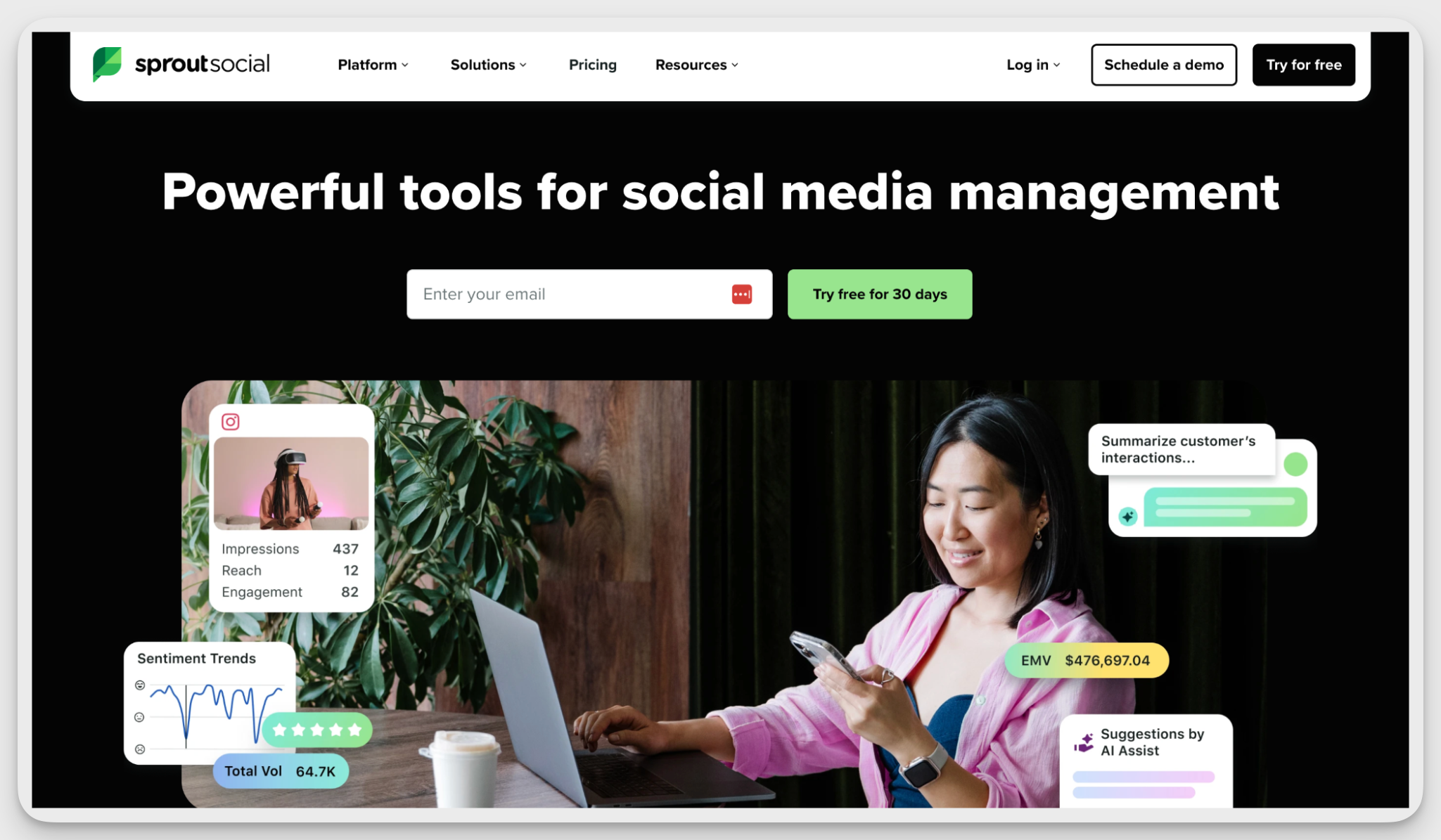
Pricing: Plans start at $199 per seat/month for Standard. Sprout sells listening as an add-on, and Enterprise pricing is custom. On G2, users often call out pricing friction around listening topics.
What users say:
- “I appreciate how Sprout Social consolidates numerous services into one platform, allowing us to easily manage all social media responses and inquiries.” (Capterra)
- “We’re using Sprout, and it fits all of the above criteria (including listening), but beware: it’s very spendy.” (Reddit)
Best Brandwatch alternatives for social listening: for teams replacing Brandwatch’s core strength
YouScan
Best for: Brand, insights, and innovation teams in consumer brands where UGC visuals matter (e.g., fashion, retail, food & beverage).
YouScan is your brand’s eyes online. The brand mention is not only a username tag — sometimes, it’s an accidental logo on a get-ready-with-me TikTok video. And YouScan can catch that.
Compared to Brandwatch, YouScan leans harder into trend discovery through visuals. Its Visual Insights can pick up brand presence in images by recognizing logos, objects, and scenes, even when people don’t tag you or mention you in text. That matters when your brand shows up in photos, Reels, and UGC more often than in captions.
YouScan doesn’t really allow you to quickly react to mentions or engage with them, so it’s not a strong fit for react-first social media teams. However, if you’re more on the analytical side of things, YouScan is a strong alternative to Brandwatch.
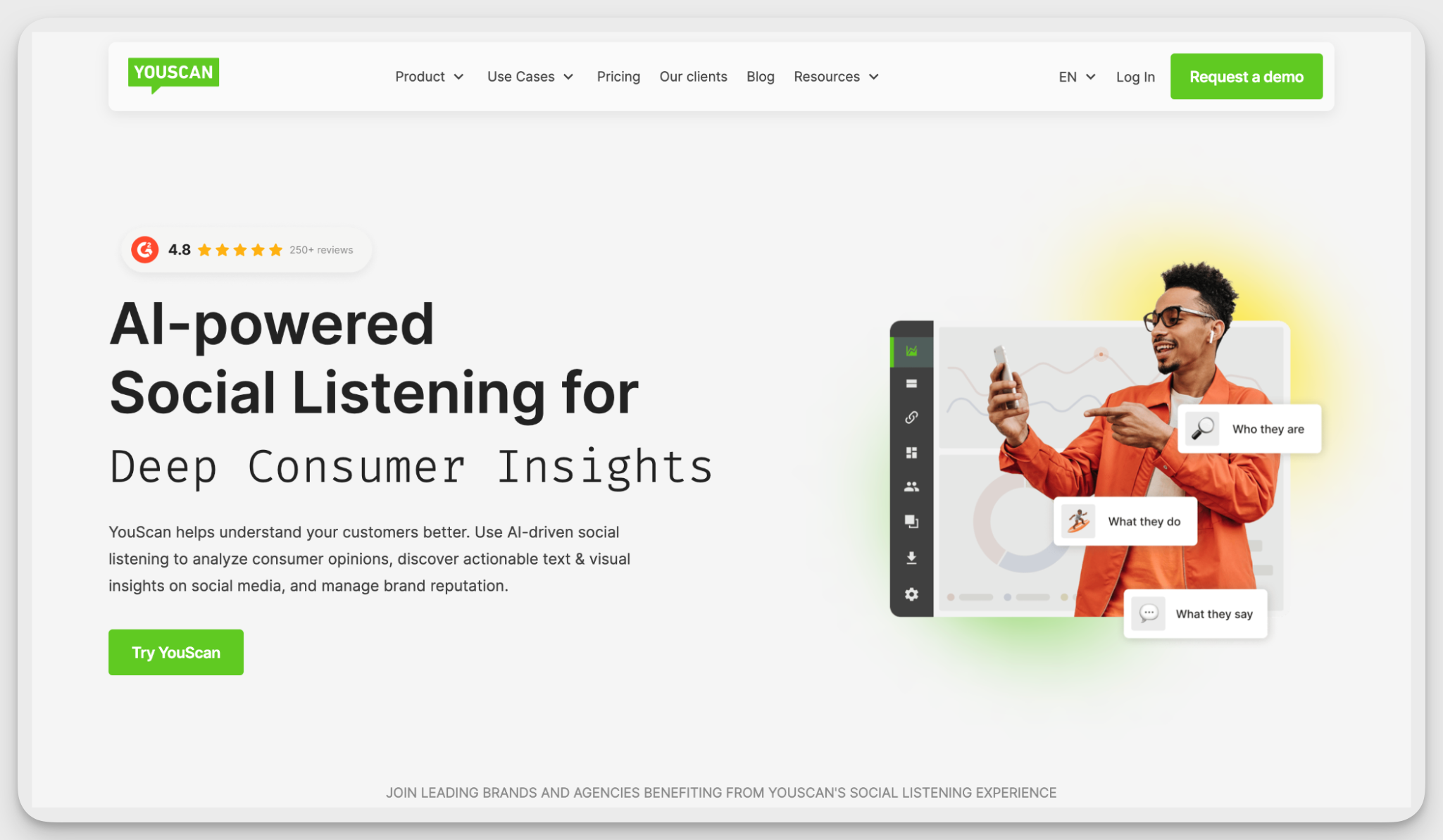
Pricing: YouScan starts at $499/month, billed annually. Visual Insights are included in the enterprise plan with a custom quote.
What users say:
- “I like YouScan because it gives a clear, real-time view of what people are saying about a brand online.” (G2)
- “The number of queries (in all plans) is very limited, which implies combining several projects into one query. This is not ideal for a medium or large operation, at least for agencies.” (G2)
Talkwalker
Best for: Insights and strategy teams that want to understand what’s gaining momentum in their market.
If some consumer intelligence tools are like mind-reading, Talkwalker is somewhat of a crystal ball. It works well when your main question is about what’s trending, how it’s connected, and what’s likely to matter next.
Compared to Brandwatch, Talkwalker leans more into trend intelligence and forecasting. It’s strong at showing how topics grow, spread, and intersect over time. You can use Talkwalker to follow trends, narratives, and sentiment shifts across markets to catch the wave even before it’s truly formed.
Talkwalker also supports high-level social benchmarking, mainly through share of voice, topic ownership, and brand comparison dashboards. You can see how your brand compares to competitors within a category, how visibility changes over time, and which players drive specific narratives.
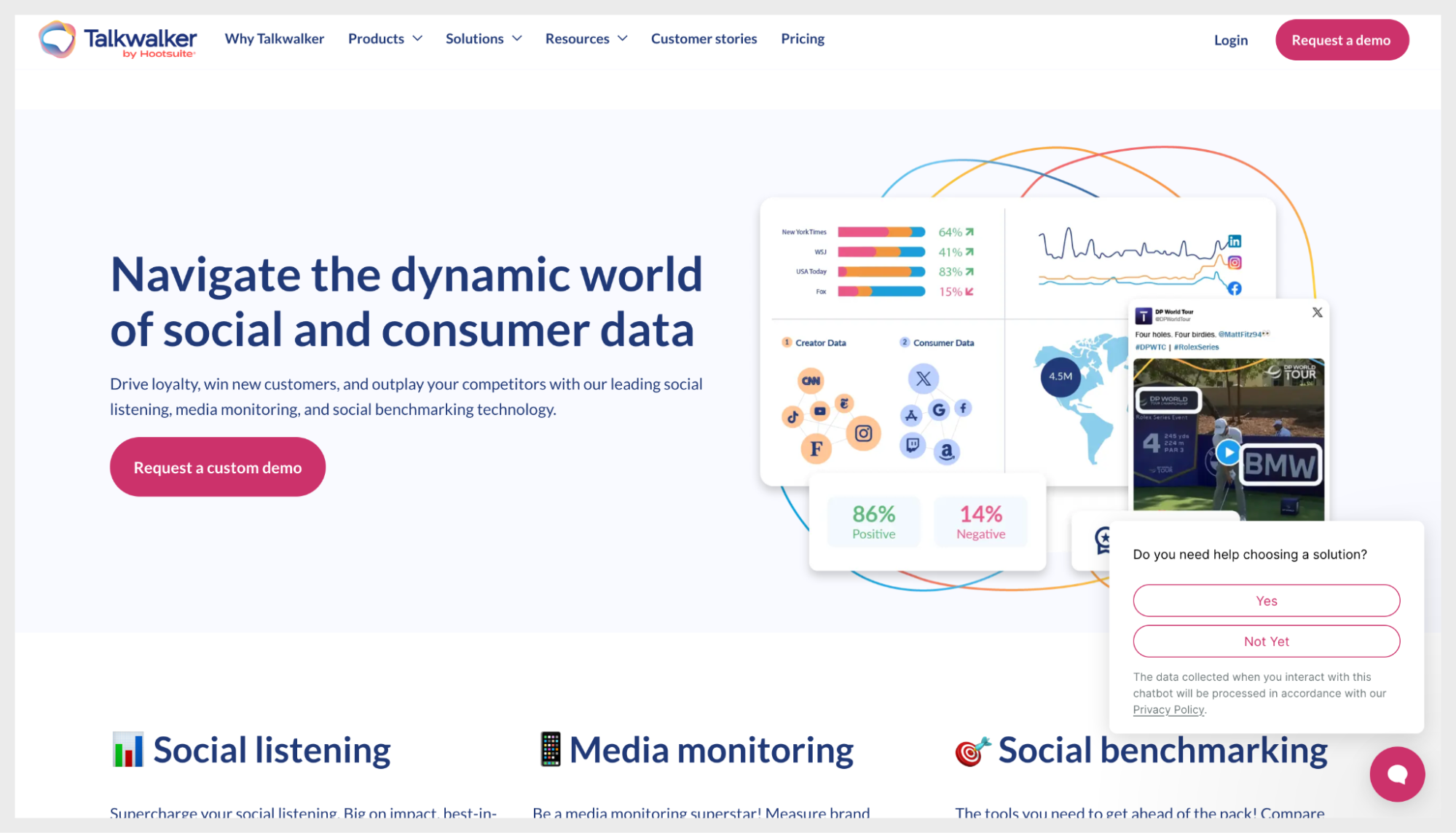
Pricing: Talkwalker offers quote-based pricing.
What users say:
- “Talkwalker helps our brand monitor trending topics and mentions across the web. Our social media team is able to quickly and seamlessly pull reports, look at dashboards, and keep informed.” (G2)
- “Because it’s a complex platform, it takes time to get comfortable, learn the system, and sort through the volume of information.” (G2)
Brand24
Best for: Small to mid-sized teams and growing brands that want to keep an eye on brand mentions without setting up an enterprise command center.
Brand24 does the basics well. You open it to answer simple questions: Who’s talking about us? Where? Is it positive or not?
You can use it to track real-time brand mentions across social media, blogs, forums, news sites, and the web. Brand24 also sends timely alerts when something’s spiking — good or bad.
One thing that Brand24 does exceptionally well is alerts and monitoring. If Synthesio or Brandwatch are more about long-term listening and pattern identification, Brand24 is a more immediate tool. It helps you catch the mentions and act on them in real time, which is a great help to proactive social media teams.
As a Brandwatch alternative, Brand24 makes sense when scale and complexity become a burden. Compared to Brandwatch, it’s faster to set up, easier to understand, and cheaper. You don’t need weeks of onboarding or complex queries to get value out of it.
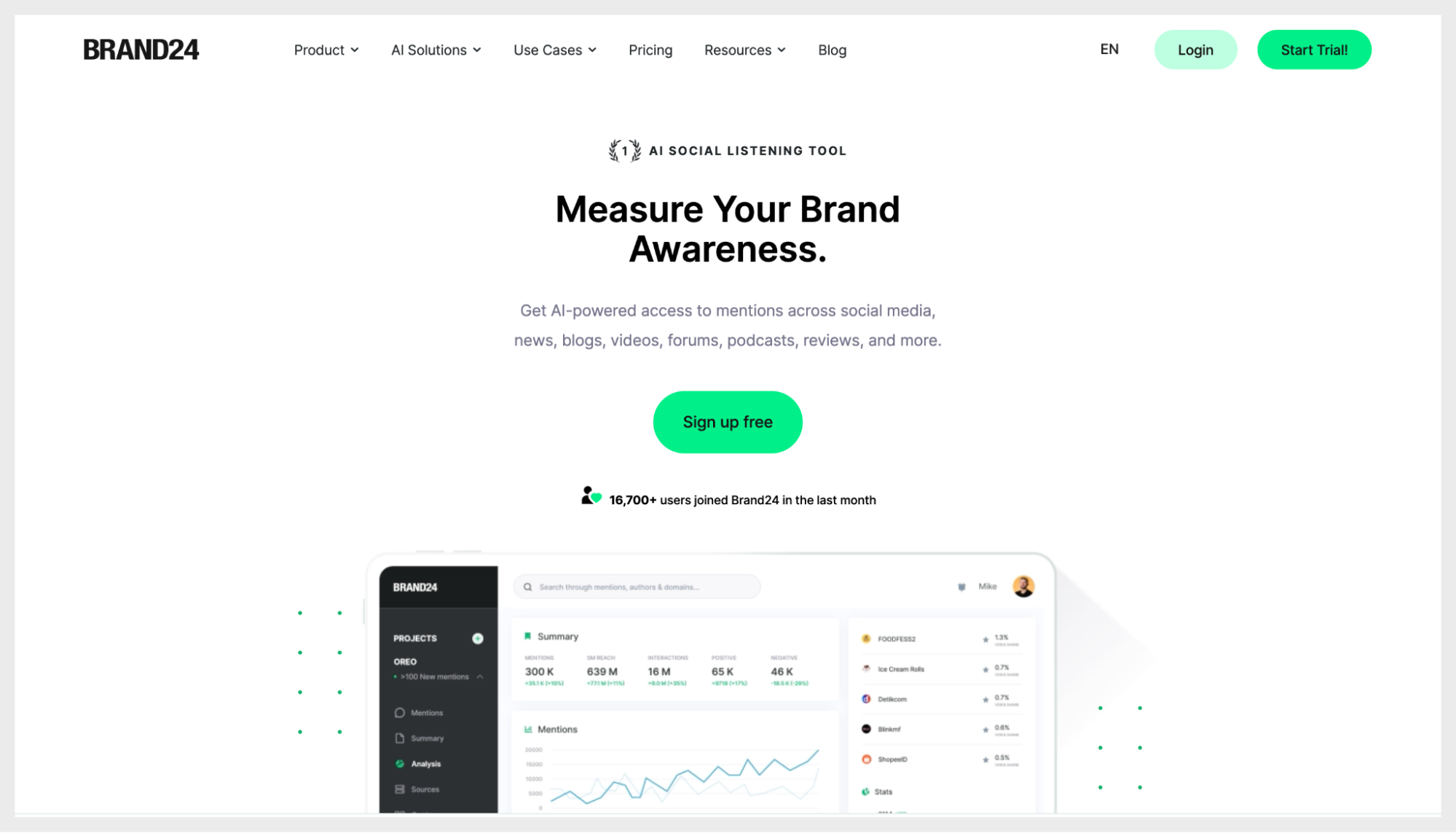
Pricing: Brand24 starts at $145/month, billed annually. This plan only allows tracking of 3 keywords, and the info updates every 12 hours. Their most popular plan — Pro, with 12 keywords and 40k mentions a month — costs $249/month, billed annually.
What users say:
- “Brand24 provides us with clear mentions, allowing our brand to appear in conversations we might otherwise miss. It also helps us compare with our competitors and respond to mentions.” (G2)
- “While the overall sentiment analysis is good, the accuracy of the automated sentiment scoring for complex/nuanced language in non-English languages sometimes requires manual correction.” (Capterra)
Agorapulse + Mention
Best for: Small teams and growing brands that want everyday social listening tightly connected to publishing, engagement, and inbox workflows.
Agorapulse is a social media management tool first, so think publishing, social inbox, and performance analytics. But some time ago, Agorapulse brought Mention into the picture.
Mention handles the listening side. It tracks brand mentions across social media, news, blogs, and the web, and it’s built for daily use rather than long-term research. You can bundle it with Agorapulse, which gives you monitoring and action in one place: spot a mention, then reply or escalate without switching tools.
As a Brandwatch alternative, this setup works when you don’t need enterprise-scale analysis. Compared to Brandwatch, Agorapulse + Mention is lighter, faster to adopt, and easier to live in every day.
You probably won’t be able to call these reports “customer intelligence” — more like mention clipping — but you’re definitely going to be a part of every conversation.
My personal go-to feature is Mention’s Boolean search. You can build custom queries with include/exclude and/or rules to filter out noise and focus only on relevant mentions. That’s especially useful if your brand name overlaps with common words, or if you want to track a specific product, campaign, or topic.
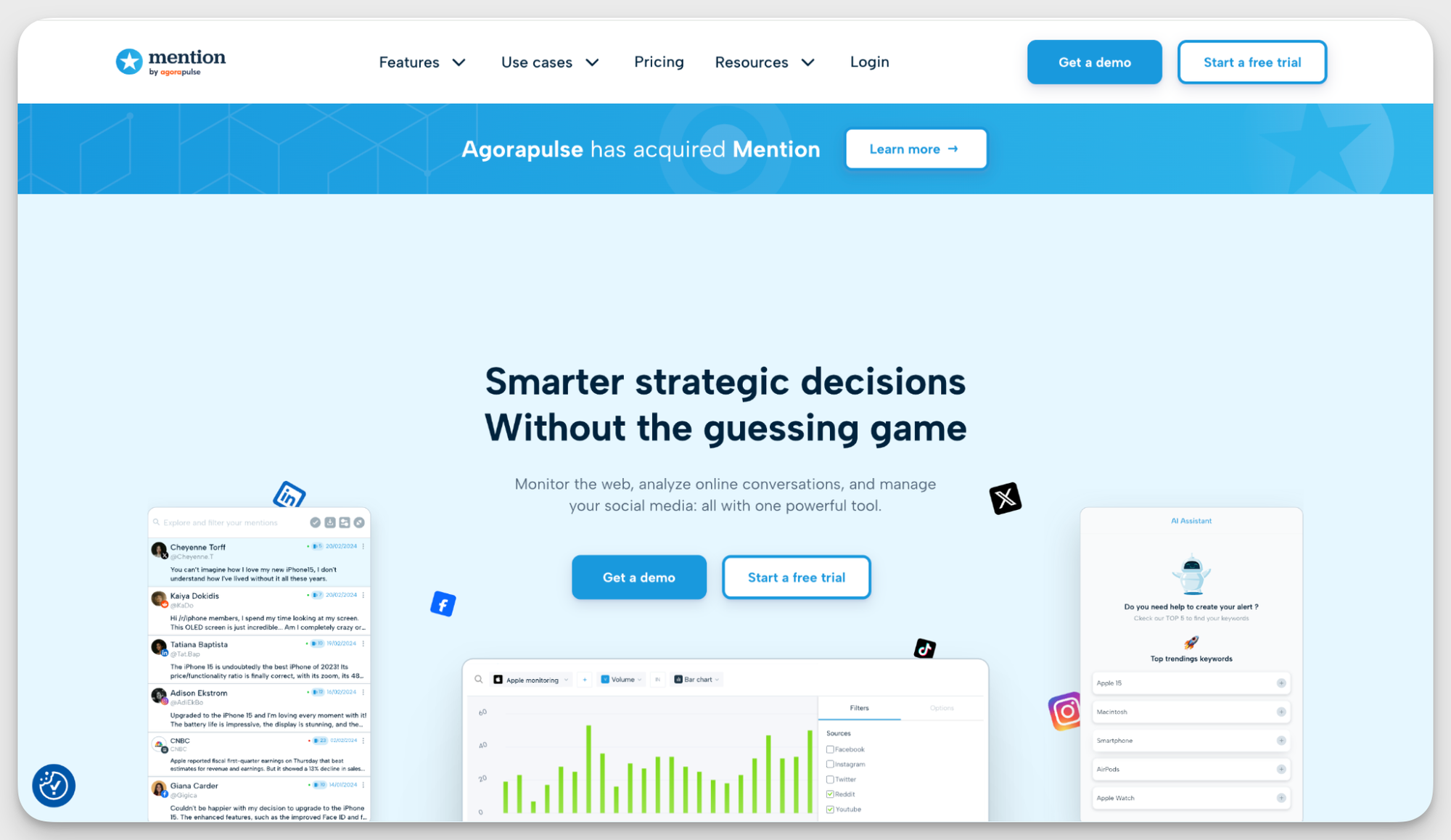
Pricing: Mention’s website states that plans start at $599, without clearly specifying the billing cadence. I suspect it’s a monthly payment. Mind that Mention is an add-on to Agorapulse, and Agora’s cheapest plan starts at $79/month, billed annually.
What users say:
- “Mention has the most comprehensive data resources; you can also classify your reports and feeds according to your needs.” (Capterra)
- “Alerts come in almost immediately when something is published. For PR, brand monitoring, or crisis situations, speed actually matters, and Mention does this part well without weird delays.” (G2)
Meltwater
Best for: Large organizations and PR teams that need social listening combined with traditional media monitoring, across markets and languages.
If social listening alone isn’t enough for you, and you also want to track press coverage, share of voice, and what journalists publish across the web and print, Meltwater is your tool.
Compared to Brandwatch, Meltwater leans toward PR and communications workflows, with media monitoring and reporting at the core. Users often highlight Meltwater’s broad coverage and tracking across multiple languages.
However, some mention that there’s a trade-off: the tool is massive and somewhat clunky with all the extra features it carries.
As a Brandwatch alternative, Meltwater makes the most sense when the buying center sits in PR or comms and wants media monitoring to be a daily habit.
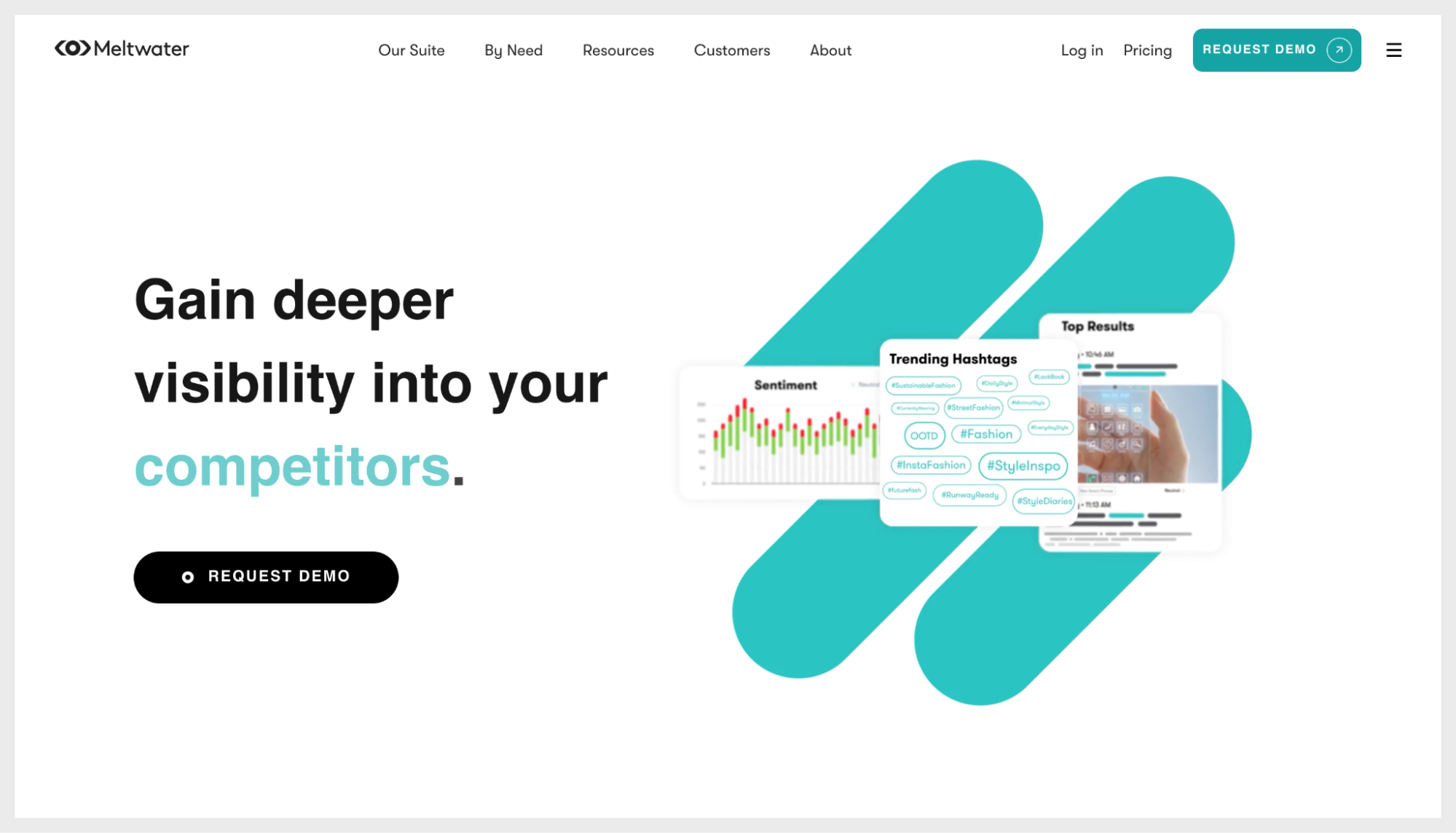
Pricing: Meltwater has custom pricing — you’ll have to have a demo and contact the sales team to get a quote. People on Reddit mention numbers like “about $12,000/user/yr.”
What users say:
- “Meltwater helps us stay up to date by removing all the manual aspects. I really like how it automates the searches and shows them in one place.” (G2)
- “A lot of tools in one place. I especially like the search features for writers. However, the navigation is very clunky. Setting up reports is also cumbersome and still requires a lot of refining once downloaded.” (G2)
Final thoughts
Brandwatch is not a bad tool. But sometimes, it’s just not the right one for your team.
Choose the tool that fits your tasks and budget. Sometimes, it means opting for a lighter option, like Mention or Brand24. Sometimes, it means refocusing on PR and choosing Meltwater.
Or maybe it’s choosing a performance day-to-day analytics tool like Socialinsider to improve your social media strategy through a content-first approach and competitor research. Try Socialinsider for free for 14 days — no strings attached.
FAQs on Brandwatch alternatives
What is the best Brandwatch alternative for competitor benchmarking?
For social media performance benchmarking, tools like Socialinsider are better suited than enterprise listening platforms. They focus on competitor comparisons, industry benchmarks, and reporting.
Is Brandwatch worth it for small teams?
Brandwatch can be overkill for small teams. If you are a small to mid-sized social media or PR team, opt for lighter tools like Brand24 or Mention by Agorapulse.
Can Socialinsider replace Brandwatch completely?
Socialinsider can replace Brandwatch if you don’t need social listening. If your work requires tracking brand mentions or public conversations, Socialinsider works best as a complementary tool.
Do I need both social listening and benchmarking tools?
Some teams do. If you need to understand public conversations and track social media performance, using two specialized tools often works better than forcing one platform to do both.
Kseniia Volodina
Content marketer with a background in journalism; digital nomad, and tech geek. In love with blogs, storytelling, strategies, and old-school Instagram. If it can be written, I probably wrote it.
Analyze your competitors in seconds
Track & analyze your competitors and get top social media metrics and more!
You might also like


Improve your social media strategy with Socialinsider!
Use in-depth data to measure your social accounts’ performance, analyze competitors, and gain insights to improve your strategy.