10 Best Practices for Benchmarking Social Media Competitors
Discover 10 best practices for benchmarking social media competitors, from choosing the right KPIs to analyzing content patterns and performance trends.


Are Reels working well in our industry? Do long captions perform better on Facebook? Which content pillars actually get people to stop scrolling?
These are the kinds of questions social media teams ask themselves every time they plan their social marketing strategy. You could spend months experimenting to find these answers. Or you could take a faster route by studying what competitors are already doing.
A quick look at competitor profiles can reveal a lot. You start noticing which formats appear again and again, which posts spark conversations, and which themes audiences respond to consistently.
To make this guide on competitor benchmarking as actionable as possible, I talked to Haley Correll, senior director of Content and Channel Strategy at American Red Cross. Let’s break down her insights.
Key takeaways
-
Start with the right benchmarking goal: Define a clear goal before benchmarking so you know which metrics and competitor behaviors actually matter for your analysis.
-
Choose the right competitors to benchmark against: Benchmark against a small mix of direct, indirect, and aspirational competitors with similar audience size to get meaningful and realistic insights.
-
Focus on the right competitor social media KPIs: Track only the metrics that support your goal, such as engagement rate, saves, shares, retention, or growth, instead of trying to analyze everything.
-
Normalize your data before making comparisons: Always compare normalized metrics like engagement rate, performance per post, and similar timeframes to avoid misleading conclusions from raw numbers.
-
Look at their content pillars and top-performing content: Analyze competitors’ recurring themes, formats, and best posts to understand what type of content actually drives their results.
-
Look for patterns, not one-off wins: Focus on consistent formats, topics, and posting systems over time instead of drawing conclusions from a single viral post.
-
Adjust for content volume vs performance: Evaluate how efficiently competitors perform by comparing engagement per post, not just total engagement or posting frequency.
-
Benchmark speed of experimentation: Pay attention to how quickly competitors test new formats, trends, and platform features, since fast experimentation often leads to faster growth.
-
Track narrative arcs across posts: Look at how competitors build ongoing series, themes, or storytelling across multiple posts to keep audiences engaged over time.
-
Build a consistent benchmarking system: Turn benchmarking into a regular workflow with automated data collection and recurring reviews so insights stay relevant as social media changes.
What is competitor benchmarking?
Competitor benchmarking is the process of comparing your social media performance directly against that of other brands in your industry. The goal is to understand where you stand and identify specific areas for improvement.
Instead of looking at your social media metrics in isolation, benchmarking places them side by side with competitors. You might compare engagement rates, follower growth, posting frequency, or content performance to see how your results measure up
For example, if competitors with a similar audience size are achieving higher engagement rates or faster follower growth, benchmarking helps you spot that difference early and investigate what might be driving it.
What’s the difference between competitor benchmarking and competitor analysis?
Competitor benchmarking and competitor analysis are often used interchangeably, but they serve different purposes.
Competitive analysis looks at the bigger picture of your market landscape. It examines how competitors operate across different areas of their business such as positioning, messaging, campaigns, product offerings, and marketing strategies. The goal is to understand who your competitors are, what they are doing, and how they compete in the market.
Competitor benchmarking, on the other hand, focuses on measurable performance indicators. It zooms in on specific metrics and compares your results directly with competitors to identify precise improvement opportunities.
10 best practices for competitor benchmarking on social media
1. Start with the right benchmarking goal
The quality of your competitor benchmarking often depends on one simple question: What exactly are you trying to learn?
Before I start comparing metrics or opening competitor dashboards, I like to pause and define the goal.
- Am I trying to understand why a competitor is growing faster?
- Do I want to see which content formats are driving engagement in our industry?
- Or am I looking for clues about which content pillars resonate most with our shared audience?
Clear goals make the benchmarking process far more useful.
For example, if the goal is growth, I focus on things like follower growth rate, posting consistency, and the types of posts that attract new audiences.
Haley also mentioned branching out to other metrics for comparison that might impact your main KPI. She gave an example that makes this clearer —
At a previous organization, the team believed their main problem was slow follower growth. The assumption was simple. If we could grow the audience faster, we would eventually catch up with the competitors we were tracking.
Once we started benchmarking those competitors more closely, we realized follower count wasn’t the real difference. The biggest gap was actually in save and share rates. Our competitors were publishing evergreen, educational content that people wanted to revisit or send to friends. Our team was posting timely content that performed well in the moment but was quickly forgotten.
That insight changed the conversation entirely. Instead of focusing solely on follower growth, we shifted to creating more valuable, evergreen content that audiences would save and share. Once the content strategy changed, follower growth improved naturally. It was a great reminder that benchmarking often reveals what is actually driving success.
2. Choose the right competitors to benchmark against
One of the fastest ways to get misleading insights from competitor benchmarking is by comparing yourself with the wrong brands.
When I start a benchmarking exercise, the first thing I do is decide which type of competitors I want to analyze.
Most of the time, you will encounter three types of competitors:
- Direct competitors: Brands offering a similar product or service to the same audience
- Indirect competitors: Brands solving a similar problem in a different way
- Content competitors: Accounts that compete for the same audience attention on social media
I find direct competitors to make the best benchmarking group because their goals, audiences, and positioning tend to be closest to yours.
Audience size also matters. Comparing your account with brands that have a similar follower count makes engagement and growth comparisons far more meaningful. A brand with 20K followers operates very differently from one with 2 million.
I still like to include one aspirational competitor in the mix. These are larger or more mature brands whose content strategy you admire. They often provide inspiration around storytelling, campaigns, and creative formats. For us at Socialinsider, we like to look at how Canva creates content.
Pro-tip: A small group works best here. Three to five competitors usually give you enough data to spot patterns without overwhelming the analysis.
3. Focus on the right competitor social media KPIs
Not every metric tells a useful story, and tracking too many numbers often creates more confusion than insight.
I usually start by asking a simple question: What am I trying to learn from this comparison?
Here’s how that helps:
- If the goal is audience growth: focus on metrics like follower growth rate and posting consistency.
- If the focus is engagement: look at engagement rate, comments, and shares to understand how audiences interact with content.
- If the goal is content performance: analyze average engagement per post and performance by format to see which types of posts resonate most.
Haley discussed the top 2-3 metrics she focuses on during competitor benchmarking.
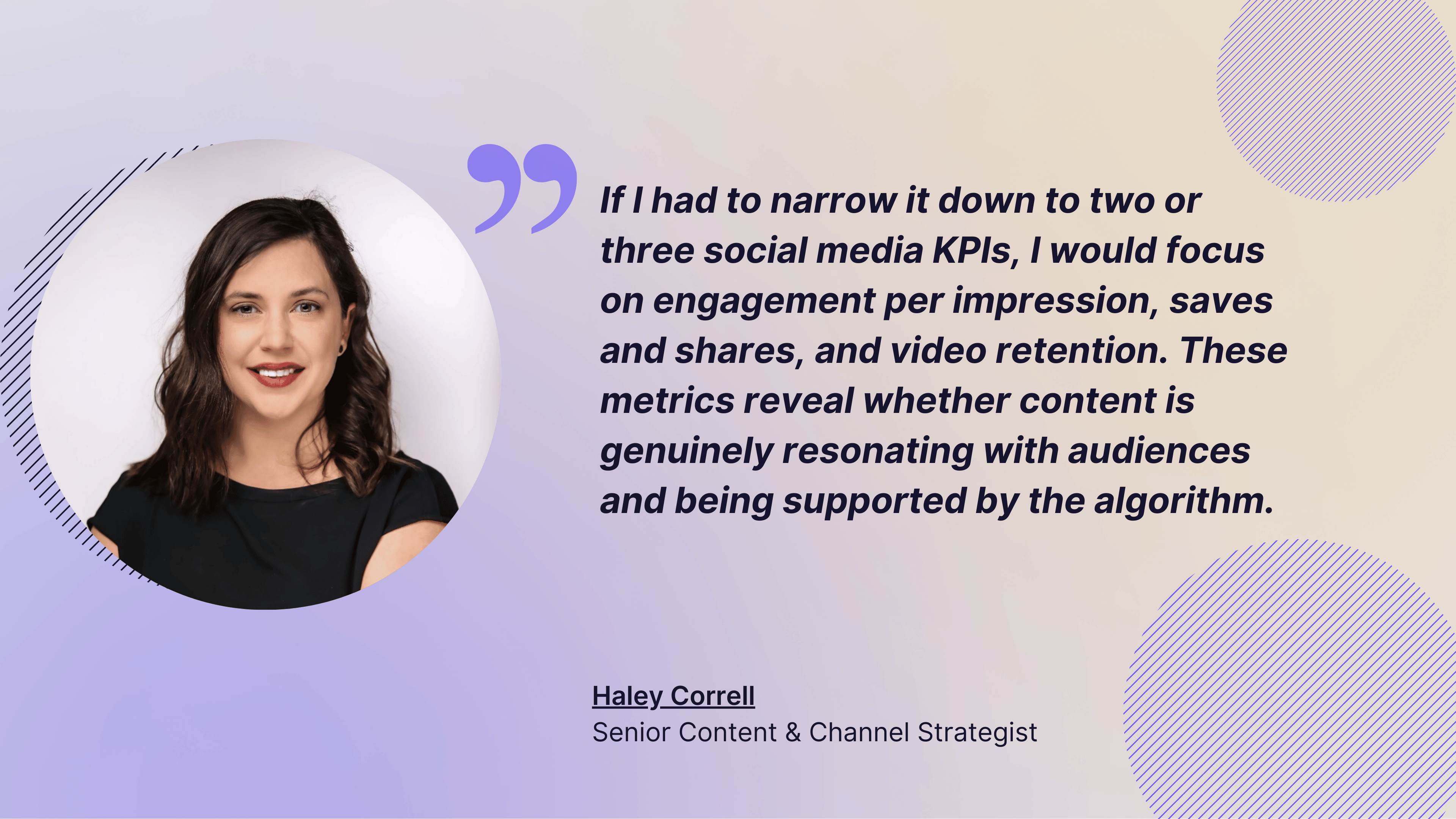
If I had to narrow it down to two or three social media KPIs, I would focus on engagement per impression, saves and shares, and video retention. These metrics reveal whether content is genuinely resonating with audiences and being supported by the algorithm. I find them far more insightful than things like total follower count or occasional viral posts.
Engagement per impression gives you a much clearer picture of how content performs relative to the reach it gets. I pay special attention to saves and shares because those behaviors signal real value.
For video content, retention is incredibly important. How long people actually stay and watch tells you whether the content is holding attention or losing viewers early.
This is also where having the right tool makes the process much easier. Instead of manually checking profiles and spreadsheets, competitor analysis tools like Socialinsider allow you to compare competitor metrics side by side through its Benchmarking feature.
You can quickly analyze metrics such as engagement rate, posting frequency, follower growth, and top-performing content across multiple competitors in one dashboard.
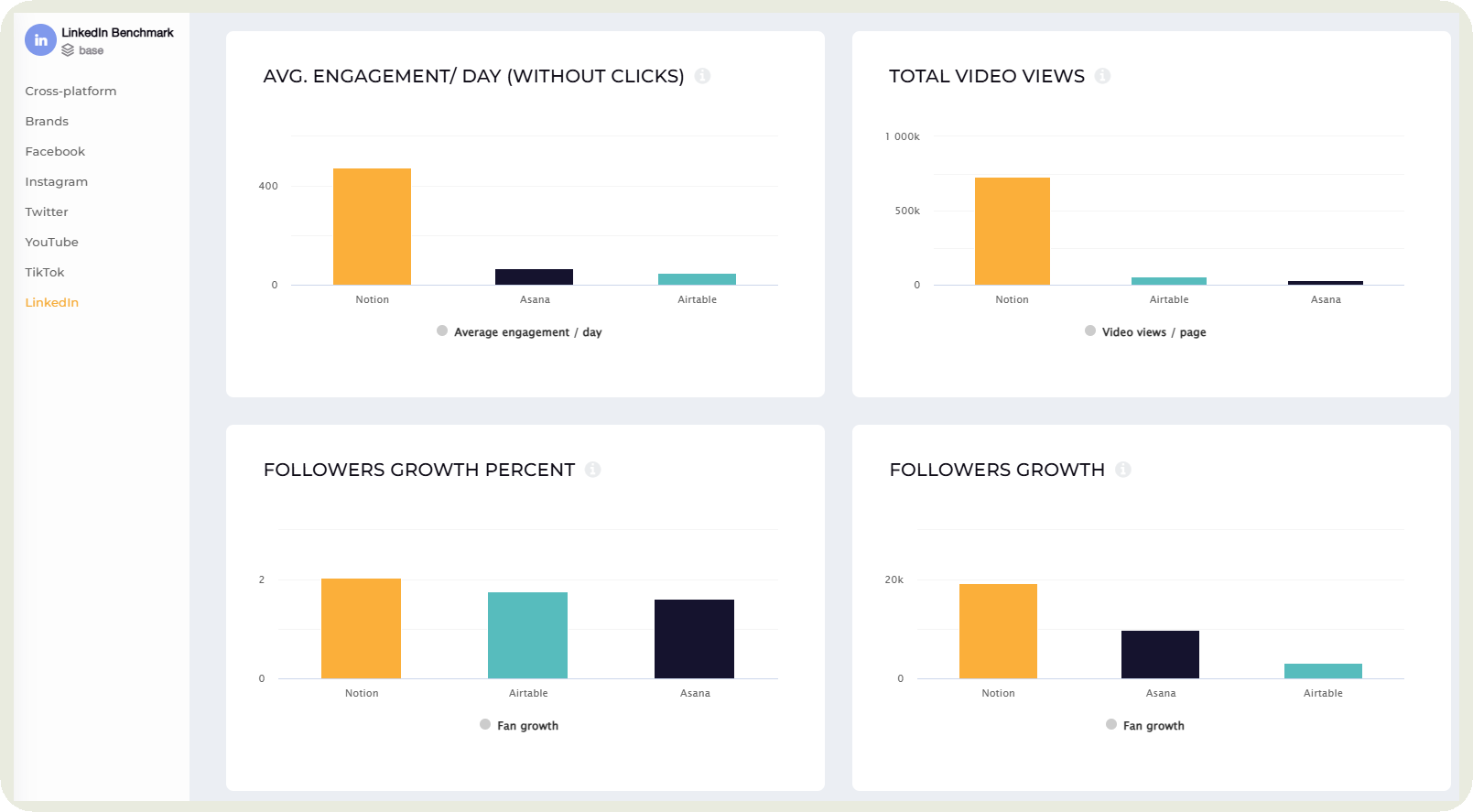
Seeing these metrics together makes patterns much easier to spot and helps you move from data to strategizing quickly.
4. Normalize your data before making comparisons
One of the easiest ways to draw the wrong conclusions from social media competitor benchmarking is by comparing raw numbers.
Haley also mentioned the same in our conversation. She said:
Raw numbers can be very misleading. For example, a brand posting 60 times a month will almost always generate more total engagement than a similar brand posting 12 times a month. That doesn’t automatically mean their content or strategy is better. They simply have more opportunities to accumulate engagement.
This is why normalization matters when comparing competitor performance.
I always try to level the playing field before interpreting the data. A few simple adjustments make comparisons far more meaningful:
- Compare engagement rate instead of total engagement. Engagement rate accounts for audience size and shows how actively followers interact with content.
- Adjust for follower size differences. Accounts with similar audience sizes usually provide the most reliable comparisons.
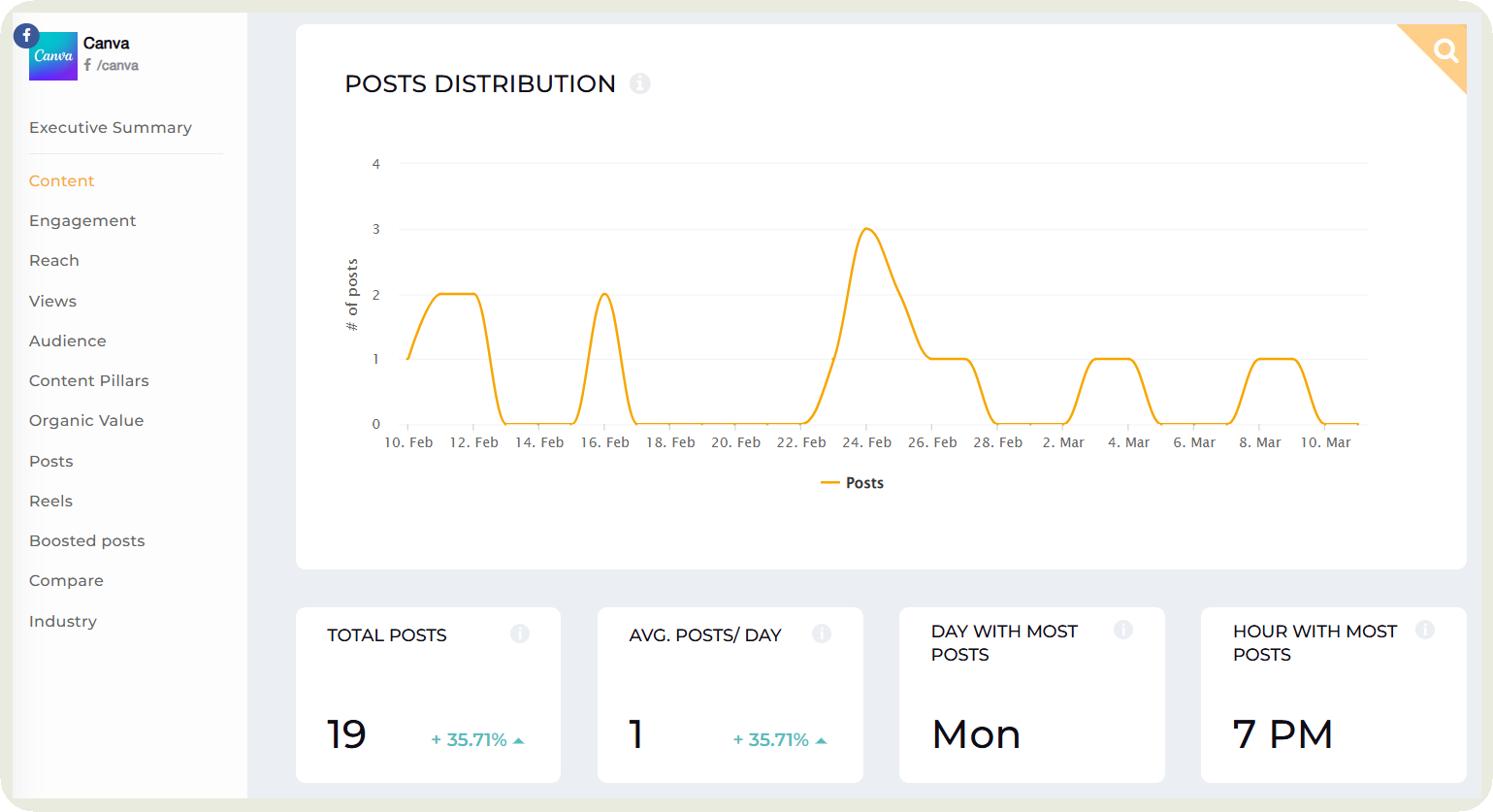
- Account for posting frequency. Brands posting five times a week will naturally accumulate more total engagement than those posting twice. Instead of manually checking this, I use Socialinsider to get this data.
- Avoid comparing accounts in completely different growth stages. A startup brand with 10K followers operates very differently from an established brand with hundreds of thousands.
Apart from this, Haley mentioned looking at the timeframes and normalizing trends over time:
Timeframes matter too. You might analyze a three-month period and notice a competitor outperforming everyone else. A closer look might reveal a single viral post that temporarily inflated their numbers. If you continue benchmarking over time, you can see whether that spike was a one-off moment or part of a consistent pattern.
5. Look at their content pillars and top-performing content
Numbers tell you how competitors are performing. Their content reveals why.
When I analyze competitors, I spend a lot of time looking at the themes they consistently post about. Most brands usually organize their content around a few recurring content pillars such as education, product tips, industry insights, or community stories.
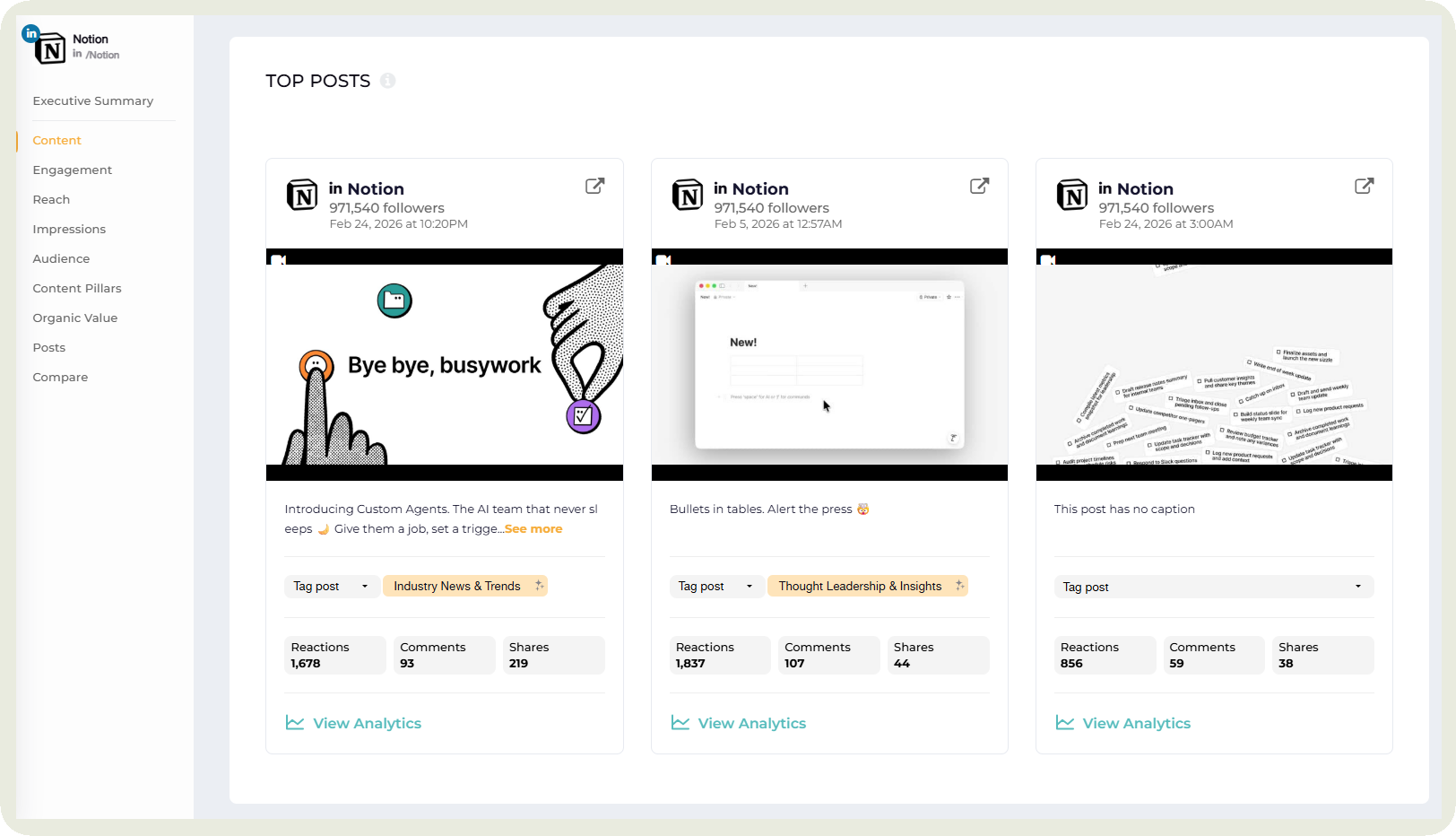
I turn to Socialinsider to see my competitor’s content pillars and the engagement they get from each of them.
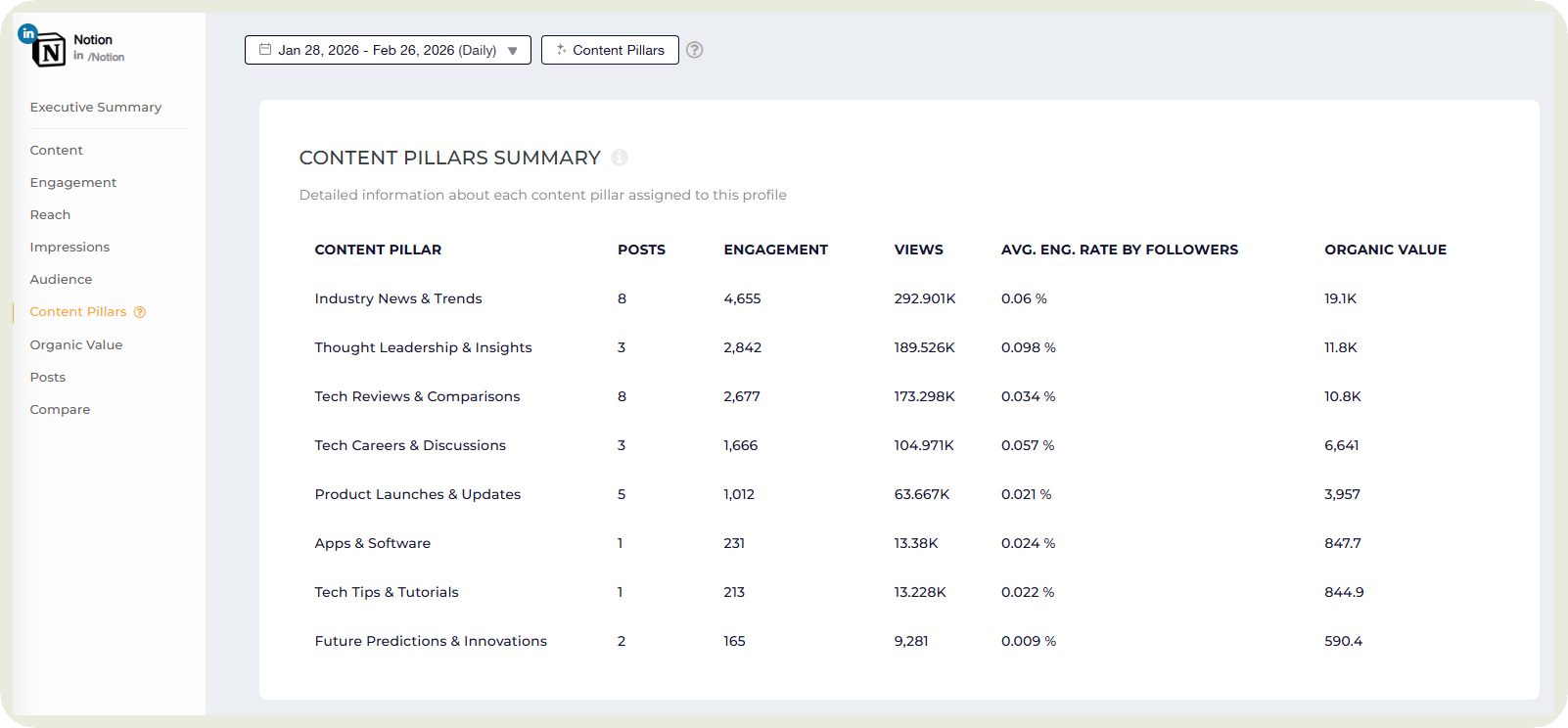
This is where interesting gaps often appear. A competitor might be investing heavily in educational content while another focuses on thought leadership or trend commentary. Spotting these patterns can help you identify opportunities your brand has not explored yet.
Next, I like to review their top-performing posts. These posts often reveal subtle elements that drive engagement. Sometimes it is the format, sometimes the hook, and sometimes the topic itself.
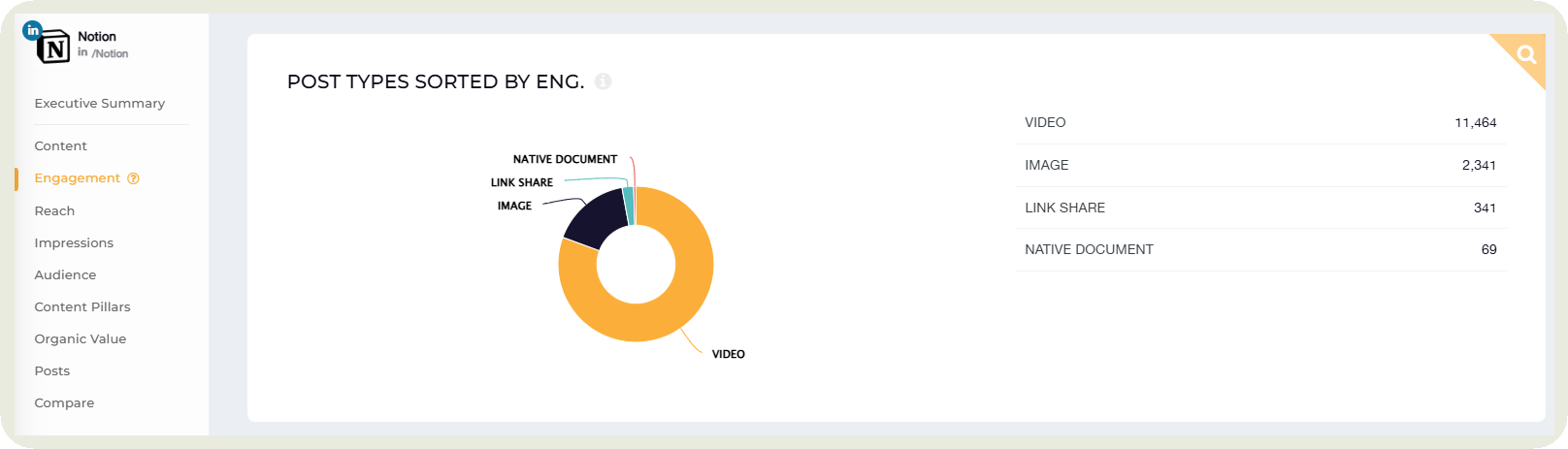
I also look at the content formats they prioritize and the formats that work best for their brand. This gives me insights into what formats my audience is interested in.
6. Look for patterns, not one-off wins
It’s easy to get distracted by a single post that goes viral. One competitor publishes a post that gets ten times their usual engagement and suddenly it looks like they have discovered the perfect formula.
In reality, one post rarely tells the full story.
When benchmarking competitors, I try to look for patterns that repeat over time. Consistent performance often reveals far more useful social media competitor insights than occasional spikes.
A few things I usually look for:
- Repeatable content formats that appear regularly in high-performing posts
- Hooks or caption styles that consistently attract attention
- Recurring topics that generate steady engagement from their audience
- Content series or formats that audiences seem to recognize and expect
Haley talked about how she does this at American Red Cross —
I usually start with the metrics, but the real insights come when I look beyond the numbers at the structure of the content strategy. I pay close attention to patterns in format and content systems. For example, what percentage of their content is video versus static posts? Are they running recurring series that show up every week? Are they collaborating with creators, or is most of the content brand-led? I also look at the tone and purpose of the content. Is it primarily educational, emotional, or promotional?
Over time, these patterns start to reveal how the brand approaches social media. The highest-performing accounts are rarely posting randomly. They tend to operate within repeatable frameworks where certain formats, themes, or series appear consistently.
I also use this practice to understand how competitors balance consistency and experimentation. Some brands maintain a few proven formats while testing new ideas occasionally. Others experiment more aggressively to discover what works. This also gives you an idea of what’s working in the industry overall.
7. Adjust for content volume vs performance
More posts do not automatically translate into better performance. Some brands publish content almost every day, while others post only a few times a week. Looking at total engagement alone can make high-volume accounts appear more successful than they actually are.
When benchmarking competitors, I like to look at how efficiently their content performs, not just how much they publish.
The first step is checking their posting frequency. A brand posting 20 times a month will naturally accumulate more likes and comments than one posting eight times. That difference becomes clearer when you compare performance at the post level.
A few ways to approach this:
- Compare performance per post instead of total engagement
- Look at the average engagement per post across competitors
- Identify competitors winning with fewer, higher-quality posts
Over time, this comparison helps you understand whether success in your industry comes from publishing more content or creating more impactful content.
8. Benchmark speed of experimentation
If there’s one thing all social strategists agree on, it’s this — social media platforms evolve quickly. New formats appear, algorithms shift, and audience preferences change.
While running a social media benchmarking analysis, it helps to observe how quickly they experiment with new ideas.
I often notice that the brands growing the fastest are not just posting consistently. They are constantly testing.
A new format appears on the platform and within weeks they are already experimenting with it. A trend starts gaining traction and they quickly adapt it to their own voice.
Haley talked about the same when we discussed social media trends analysis —
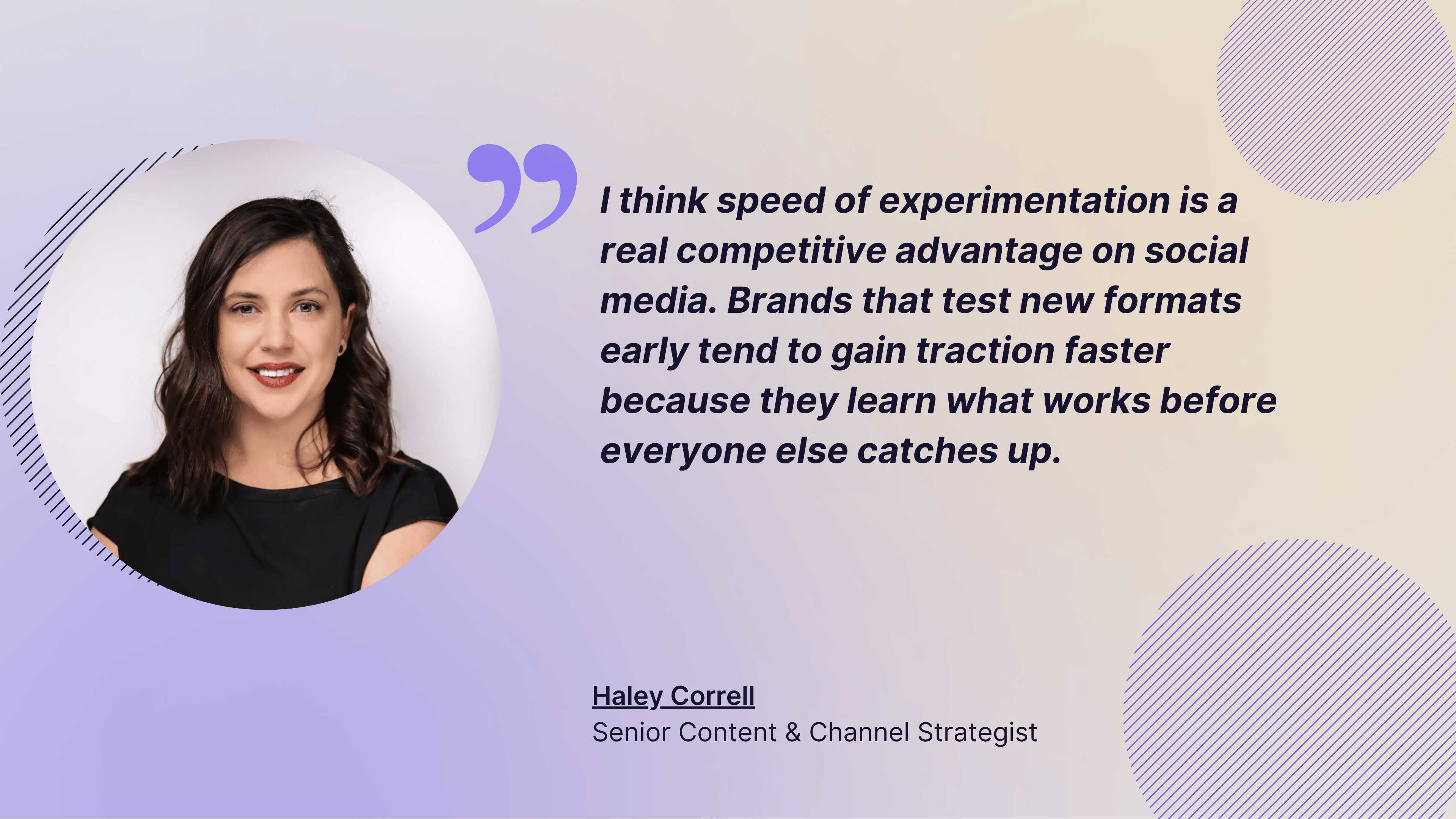
I think speed of experimentation is a real competitive advantage on social media. Brands that test new formats early tend to gain traction faster because they learn what works before everyone else catches up. We saw this firsthand when we adopted TikTok early. Being willing to test, fail quickly, and iterate helped us grow one of the largest nonprofit followings on the platform.
This is where it really helps to be an active user of the platform, not just a professional managing it. When you spend time on the platform as a participant, you start spotting trends and experiments much earlier.
One brand that comes to mind is Duolingo. Here’s an example of a Bridgerton trend they adopted.

A few signals to watch for when analyzing competitors:
- How quickly they adopt new formats or features introduced by the platform
- How frequently they test new content styles, hooks, or storytelling formats
- How responsive they are to platform trends or algorithm changes
This kind of analysis reveals which brands in your industry are early adopters and which ones prefer to play it safe.
Over time, speed of experimentation can become a competitive advantage. Brands that test more often tend to discover winning formats earlier and refine their content strategy faster.
9. Track narrative arcs across posts
I have seen that some of the most effective social media strategies are built around stories that unfold over time rather than individual posts.
That’s why when benchmarking competitors, I like to step back and look at their content over several weeks. This often reveals a bigger pattern. Many strong brands organize their content into recurring series, themes, or ongoing conversations that audiences begin to recognize.
You might notice competitors running things like:
- Weekly content series around a specific topic
- Educational posts that build on each other
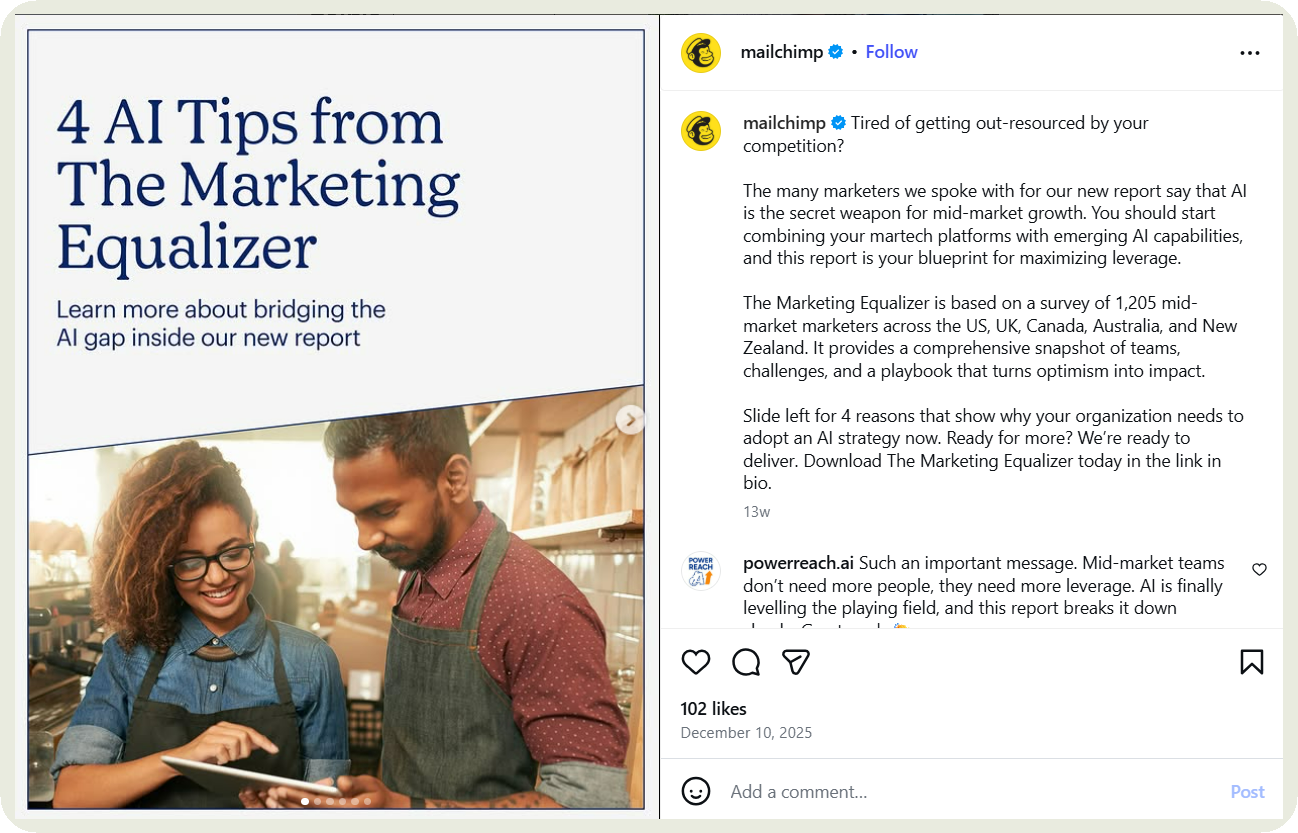
- Episodic storytelling across multiple posts

- Recurring themes that appear consistently in their content calendar
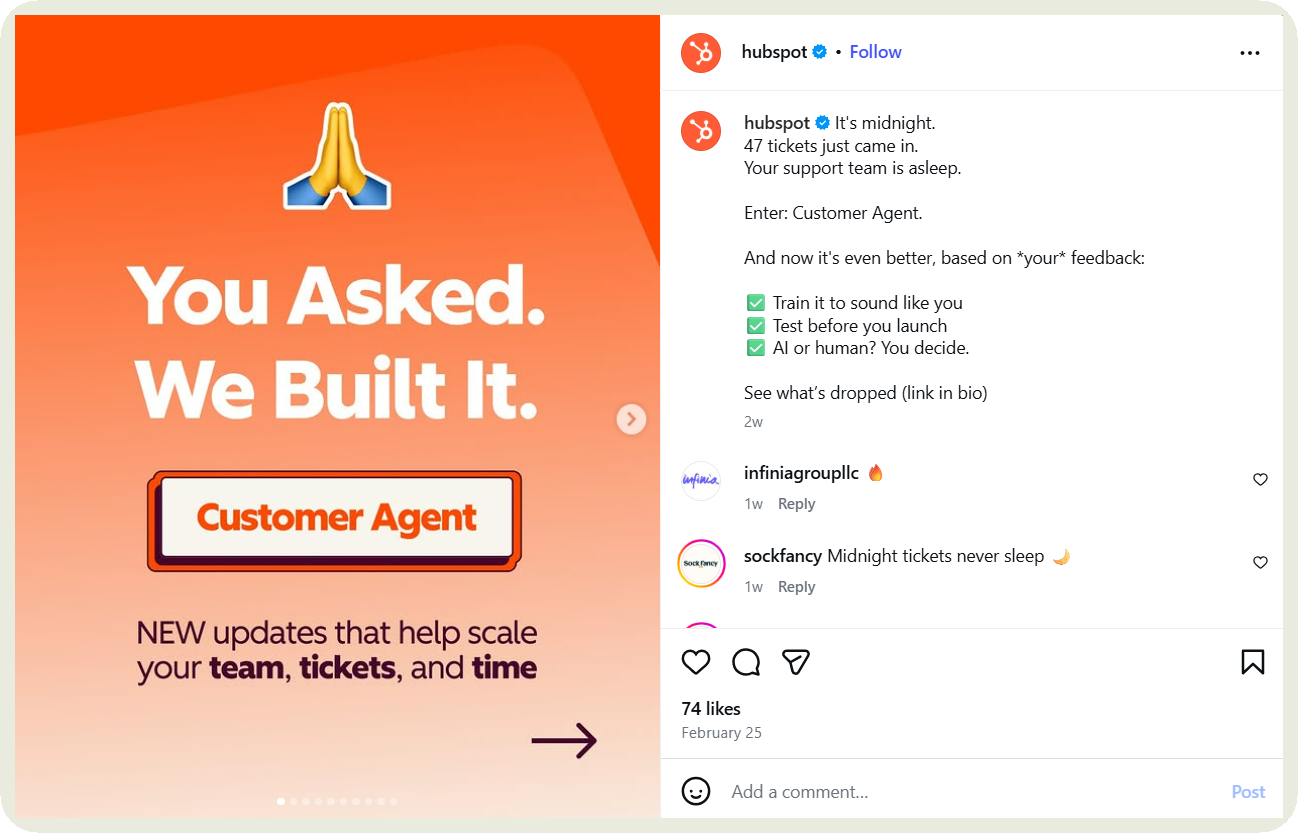
This kind of narrative structure helps brands create familiarity with their audience. People begin to expect certain posts and return to see the next installment.
Tracking these narrative arcs can also reveal how competitors keep audiences engaged over time. Some brands rely heavily on standalone posts, while others build momentum through ongoing storylines or content series.
10. Build a consistent benchmarking system
Competitive benchmarking social media works best when it becomes a regular part of your workflow, not something you do once during a social media strategy review.
Many teams run a competitor analysis at the beginning of the year and rarely revisit it. Social media moves far too quickly for that approach. Posting patterns change, new formats emerge, and competitors experiment constantly. A consistent benchmarking system helps you stay aware of those shifts.
I like to treat benchmarking as a simple routine rather than a large research project. This usually involves setting up a process that can be repeated regularly:
- Run a weekly or monthly benchmarking check to review competitor performance and emerging patterns
- Use dashboards to track key metrics such as engagement rate, follower growth, posting frequency, and top-performing content. I use Socialinsider to customize my dashboard to show all important metric comparisons.
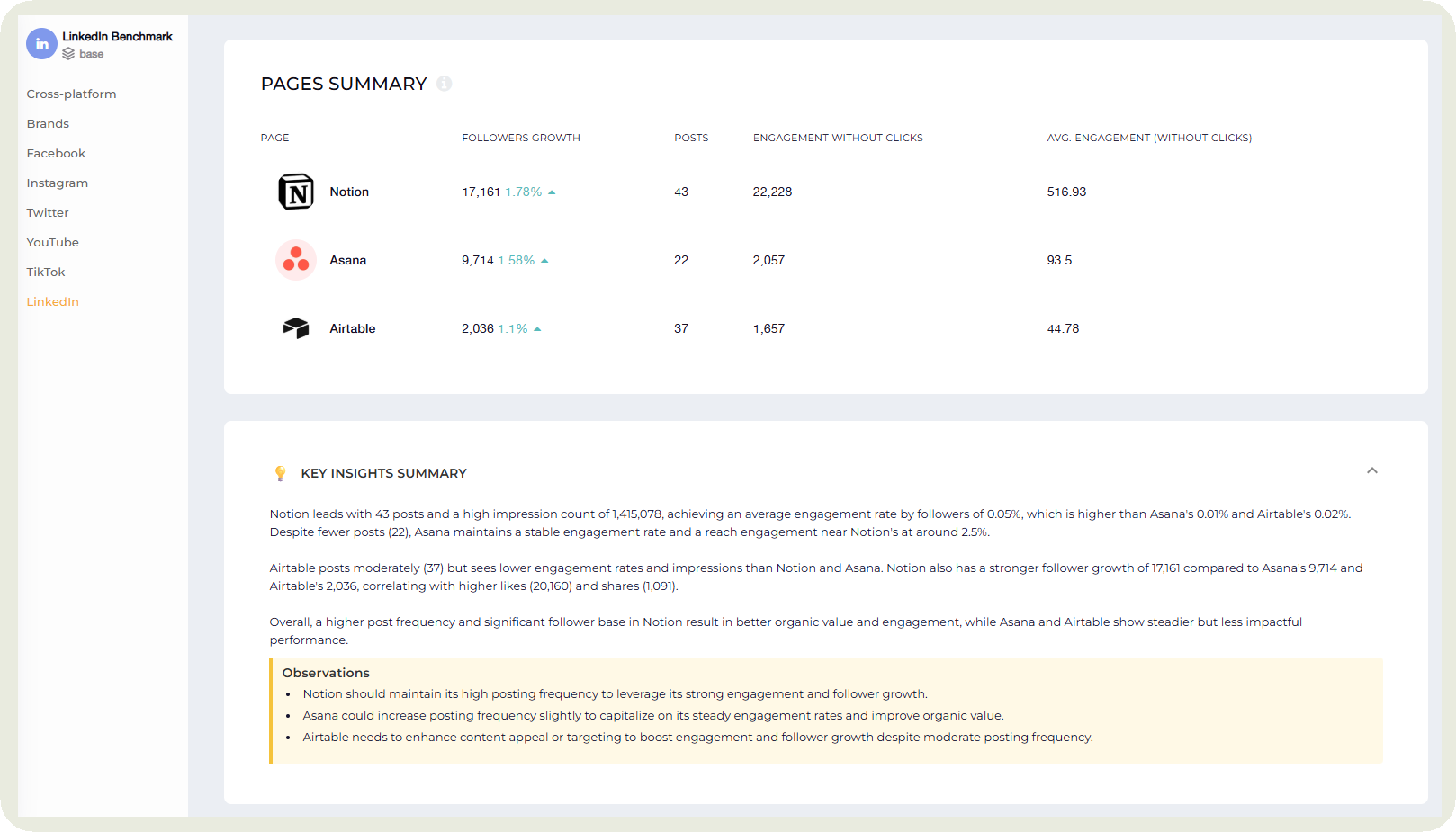
Automate data collection where possible so you spend more time analyzing insights instead of gathering numbers. Haley said:
Any part of the process that involves raw data should be automated. No one on your team should be manually pulling numbers from different platforms. That kind of work is unnecessary and drains time that could be used more strategically. Automate the collection of data and metrics, then focus your effort on interpreting the results. The real value comes from adding context to the numbers and turning them into insights that guide better decisions.
How to conduct competitor benchmarking with Socialinsider
Once you know what to look for when benchmarking competitors, the next step is running the analysis. Tools like Socialinsider simplify the process by organizing competitor data into a single benchmarking dashboard.
Here’s a quick step-by-step workflow you can follow:
- Add your profile and competitor profiles. Connect your brand’s social media accounts and add the competitors you want to benchmark.
- Navigate to the Benchmarks section. This dashboard displays key performance metrics for all selected profiles in one place, making side-by-side comparisons easy.
- Select the date range. Choose the time period you want to analyze.
- Select the platform and customize the dashboard. Pick the social platform you want to analyze, such as Instagram, Facebook, LinkedIn, or TikTok. You can then adjust the dashboard to focus on metrics like engagement rate, follower growth, posting frequency, or average engagement per post.
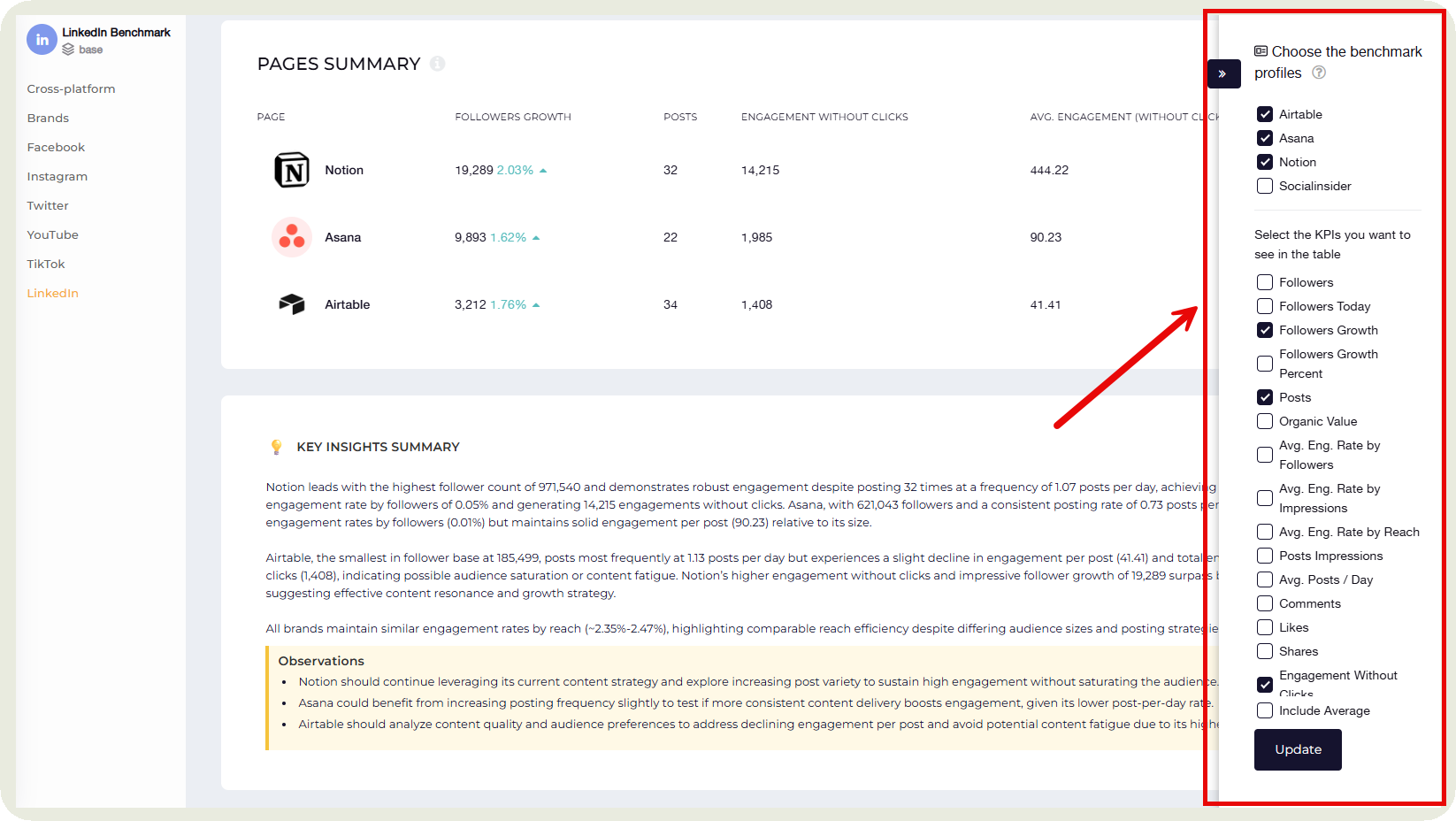
- Analyze high-level performance benchmarks. Start with an overview of key metrics to understand how each competitor performs relative to the others.
- Deep dive into individual competitor performance. Click on each competitor and review metrics like posting frequency, engagement rate trends, top-performing posts, and campaign performance to uncover the strategies driving results.
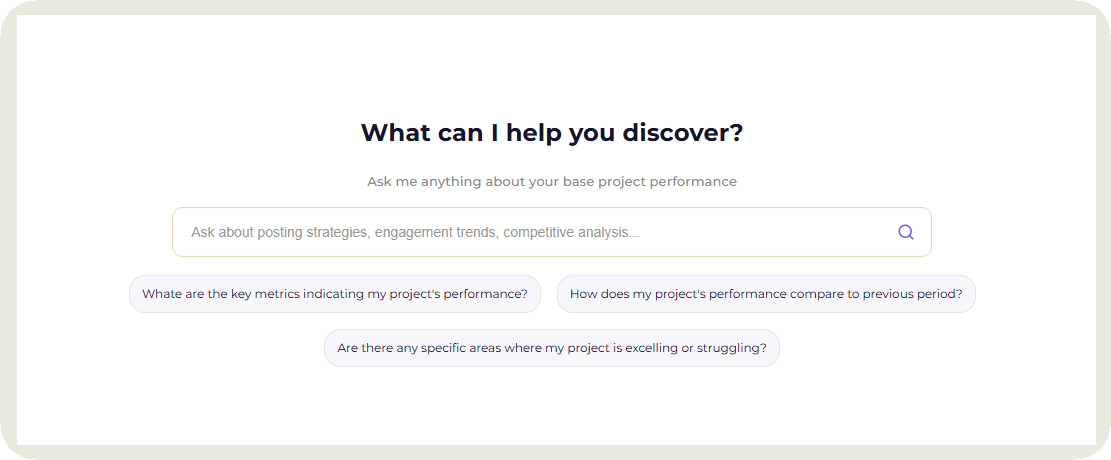
- Use the AI assistant for faster insights. Ask questions such as “How is my performance compared to competitor X?” or “What areas should I improve?” to quickly surface insights from the data.
Final thoughts
Competitor benchmarking becomes far more valuable when it turns into a habit rather than a report you create once and forget. I like to revisit competitor performance regularly, even if it is just a quick check every few weeks. Patterns start to appear when you do this consistently. A format keeps popping up in top posts. A competitor begins experimenting with a new series. A certain topic suddenly drives conversations across multiple brands.
To make tracking easier for your team, you can turn to competitor analysis tools like Socialinsider, which bring all the data together in one place. Try it out by subscribing to Socialinsider’s 14-day free trial.
Nidhi Parikh
Nidhi Parikh is SaaS writer that believes scrolling through social media is research for work. When not working, find her binge watching the latest series or reading anything she can get her hands on.

Analyze your competitors in seconds
Track & analyze your competitors and get top social media metrics and more!
You might also like


Improve your social media strategy with Socialinsider!
Use in-depth data to measure your social accounts’ performance, analyze competitors, and gain insights to improve your strategy.