The Super Bowl Social Media Experience: Brand Examples And Data Analysis To Fuel Your Inspiration
Super Bowl is more than a battle of football teams, it’s also a battle of brands. Let's see which brands won the Big Game in 2026.

If there’s one event each year that sends the marketing and advertising world into overdrive, it’s the Super Bowl. As brands gear up for the Big Game, the competition isn’t just on the field—it’s in every feed, story, and explainer video, as companies roll out their flashiest social media campaigns in hopes of going viral.
Super Bowl social media campaigns have become a cultural event in their own right, sparking massive spikes in follower growth, engagement, impressions, and brand mentions across every platform. It’s not only about delivering the best creative ideas, but also about capturing an audience that’s truly tuned in—eager to engage, share, and react whether they’re watching commercials on TV or scrolling through Instagram and TikTok.
So, who really won the Big Game on social this year? Let me break down for you which brands and strategies scored big during the Super Bowl 2026 social media showdown.
Key takeaways
-
Main strategies in Super Bowl social media marketing: The most effective Super Bowl social strategies combine celebrity pull, emotional storytelling, nostalgia, and humor to create content that feels entertaining first and promotional second.
-
Super Bowl social media data: top-performing brands ranked: Top-performing brands proved there’s no single winning formula, but those that aligned strong video content with the right platform strategy consistently outperformed in views, engagement, and growth.
-
Lessons learned from Super Bowl social media campaigns: Super Bowl success favors bold, high-quality video ideas that take creative risks and prioritize platform fit over sheer posting volume.
What is the Super Bowl?
The Super Bowl is the annual championship game of the National Football League (NFL) and is one of the most-watched sporting events in the United States and around the world
Beyond the game itself, the Super Bowl has become a worldwide cultural event, famous for its high-profile halftime show and its highly anticipated advertisements. For brands, the Super Bowl offers an unmatched opportunity to reach millions of viewers in a single moment, making it a prime focus for bold and creative marketing campaigns—both on television and across social media.
How does social media shape the Super Bowl experience?
Even though Super Bowl season is always a high-stakes challenge for marketers, I can’t help but look forward to it every year. It’s when brands unleash their most imaginative, mindblowing ideas. I love watching my feed fill up with clever, bold Super Bowl social media posts—each one trying to outshine the rest. It’s marketing at its most thrilling and inspiring, if you ask me.
While everyone tunes in for those legendary halftime ads, I’ve noticed that Super Bowl campaigns don’t just stop at a single show-stopping video anymore.
Thanks to social media, brands have a whole playground to work with—they can take their big creative ideas and reimagine them in a hundred different ways. Whether it’s behind-the-scenes footage, clever memes, interactive polls, or even playful banter with fans, the story keeps evolving long after the commercial ends.
Social media transforms the Super Bowl campaign from a one-time ad spot into an ongoing, multi-layered conversation that just keeps building excitement.
But how exactly do brands manage to stand out when everyone’s trying to capture the Internet’s attention at once? Let’s take a look at some of the main strategies that power the most engaging Super Bowl social media posts.
Main strategies in Super Bowl social media marketing
Celebrity endorsements
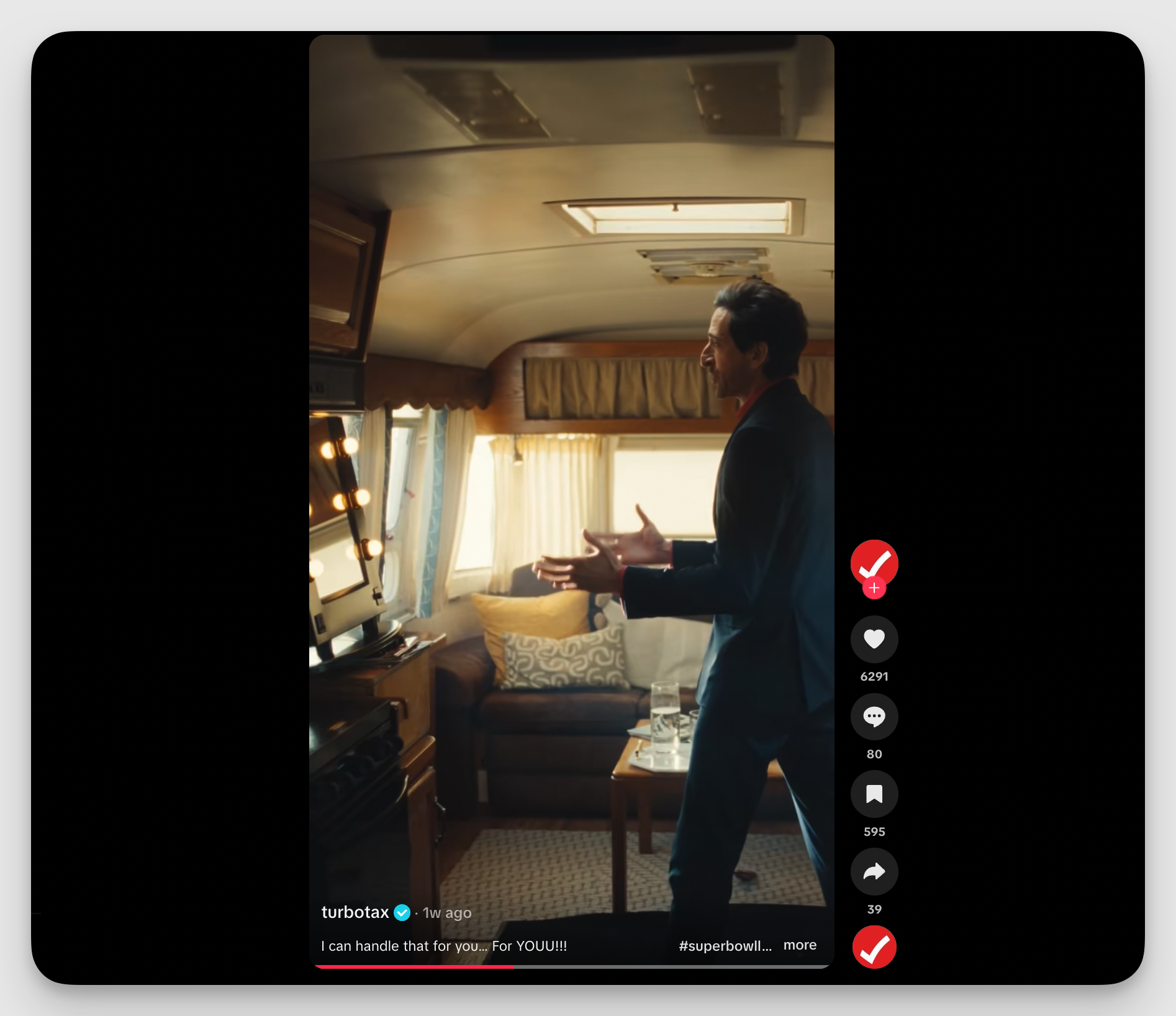
If there’s one thing I love about Super Bowl campaigns, it’s watching brands borrow a little star power to catch everyone’s attention. When I saw TurboTax’s celebrity-driven TikTok knew instantly it would make waves. These authentic influencer cameo moments never fail to get people talking.
Uber Eats took a similar route on Instagram making their brand feel not just relevant, but totally in the mix with what’s trending. For me, it always comes down to this: on Super Bowl Sunday, the right famous face turns a simple post into a viral conversation starter.
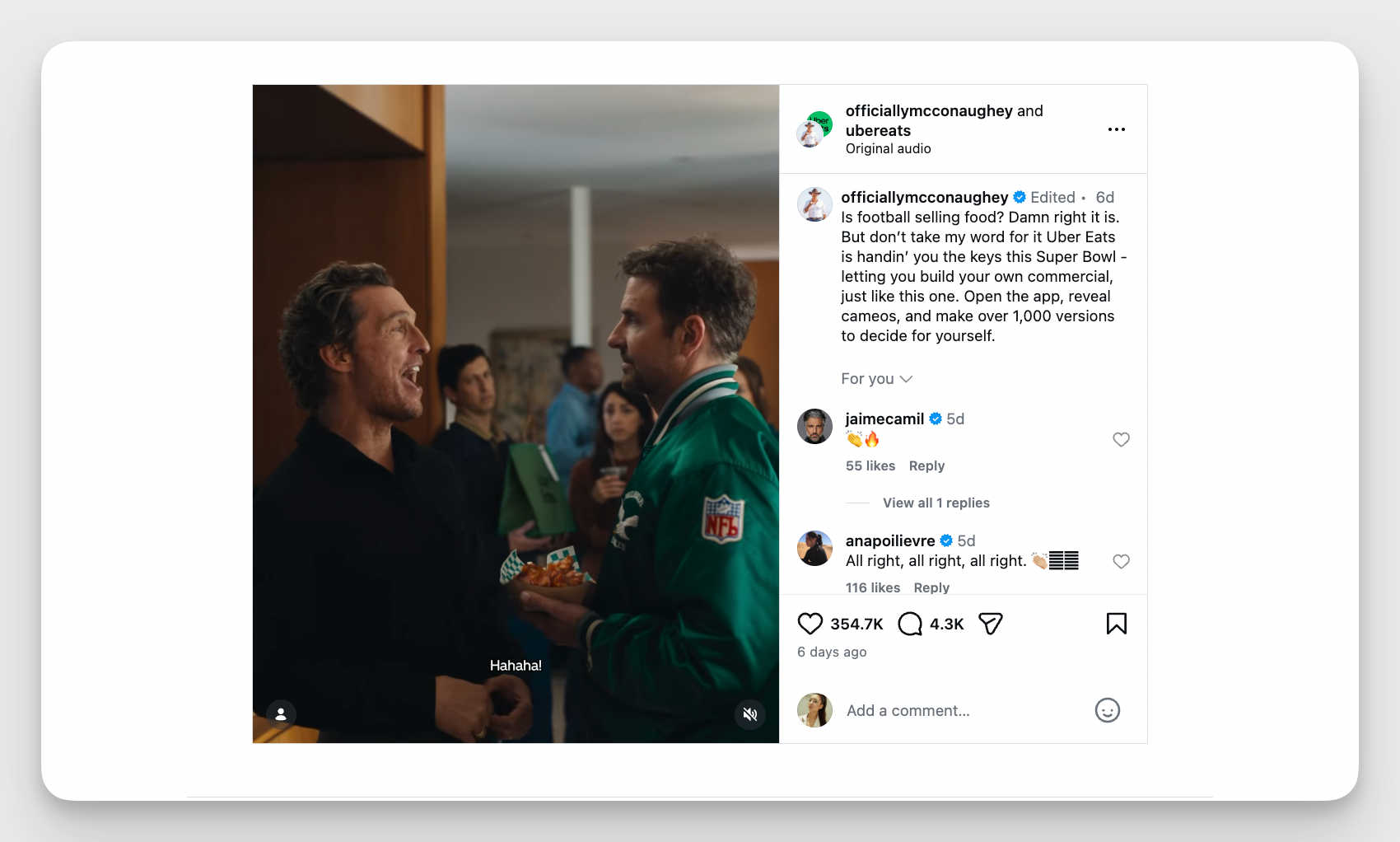
For me, it’s a reminder that celebrity partnerships—when they feel natural—are one of the smartest moves in a Super Bowl social media strategy.
Emphasis on storytelling
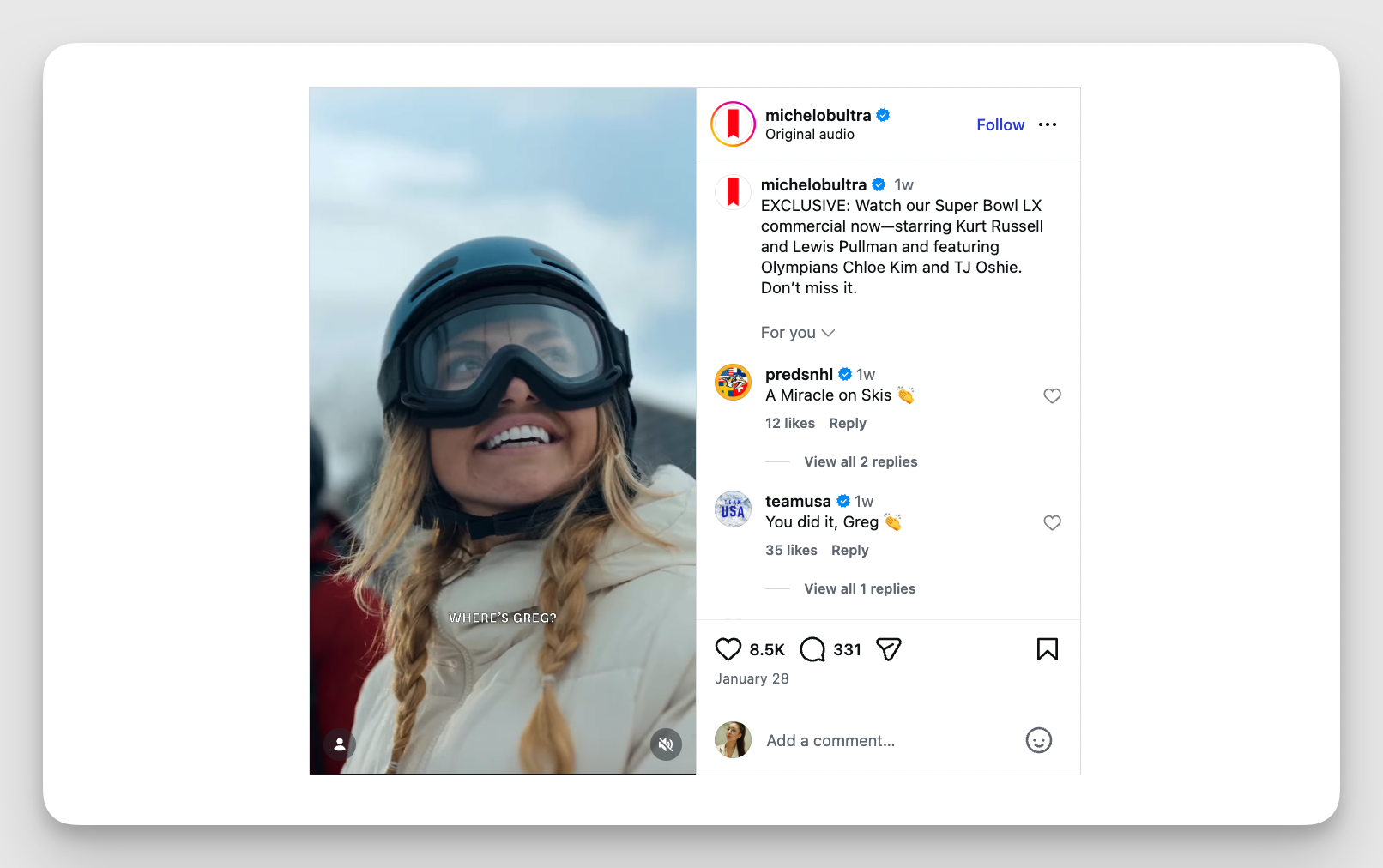
Some campaigns just stick with you because they tell a good story—one that makes you smile, relate, or even feel nostalgic. Michelob Ultra’s Super Bowl Instagram post, for example, is a perfect example: you get a story, not just a sales pitch.
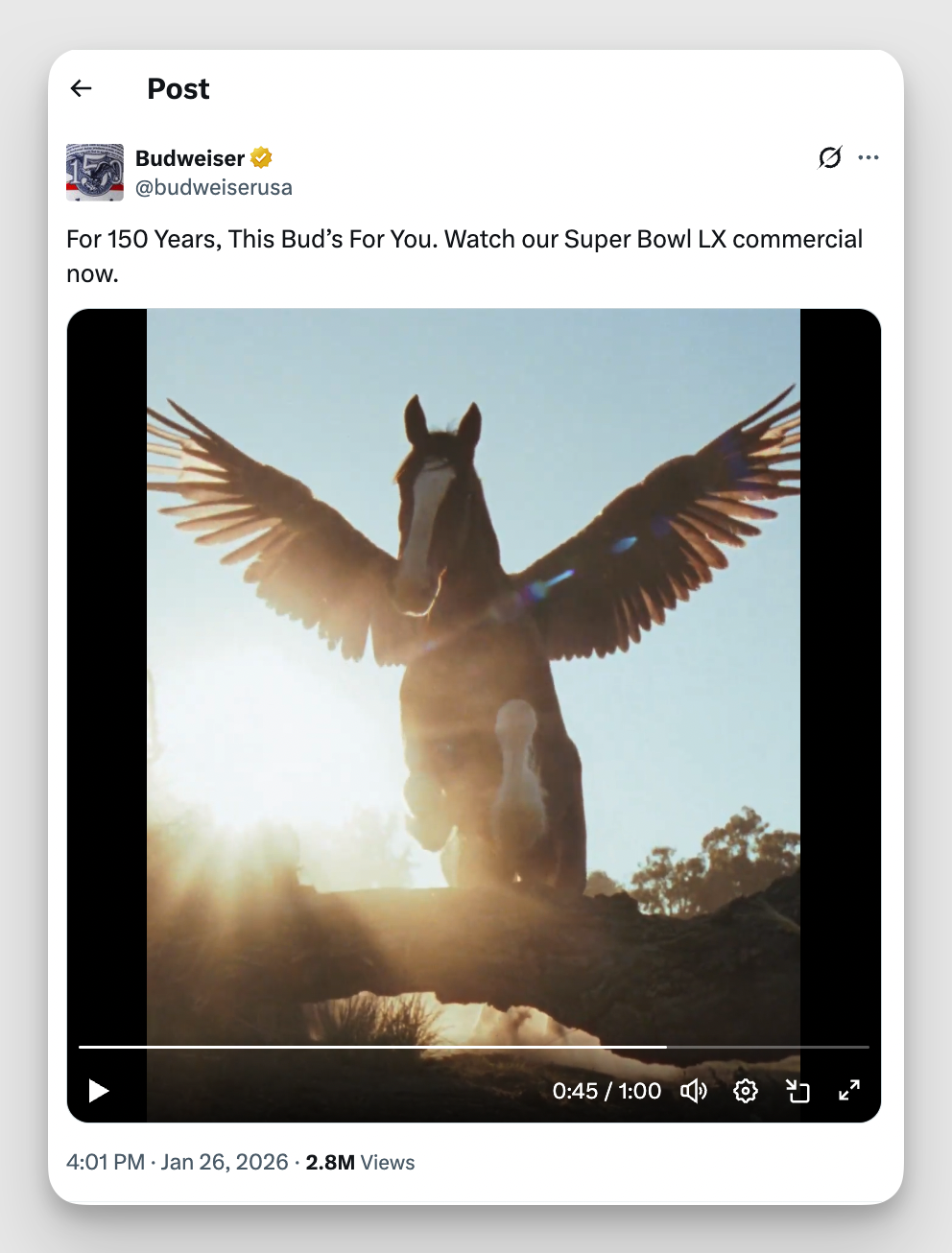
Another brand that took a similar approach on X is Budweiser, that leveraged emotion and heritage to remind everyone of its staying power.
When brands invest in authentic storytelling instead of just selling, they turn regular content into something memorable that truly connects.
Classics reinterpretation
One trend I’ve really enjoyed this year is seeing brands play with nostalgia and classic campaign themes—bringing old favorites into the now.
For example, Rocket Mortgage nailed this approach with their Facebook spot.
Instead of creating something totally new, they reimagined a familiar concept—giving it a clever, modern twist that instantly clicked with fans. For me, this kind of campaign is pure Super Bowl magic: it draws in longtime followers with a dose of nostalgia, but still feels fresh enough to get everyone sharing and talking.
When you reinterpret a classic just right, you remind people why they loved it in the first place—and you make sure your super bowl social media posts stand out from the crowd.
Use of humor
Humor continues to be one of the safest—and smartest—bets for Super Bowl social media. Pepsi leaned fully into this strategy with its 2026 Super Bowl campaign, using playful, self-aware humor to make the content instantly entertaining rather than overtly promotional.
What works here is timing and tone. The humor doesn’t try too hard to be viral—it simply matches the spirit of the moment. During the Super Bowl, audiences expect to be entertained, and brands that embrace humor often earn attention without forcing engagement.
For me, this is a great reminder that not every Super Bowl post needs to be emotional or cinematic. Sometimes, making people laugh is the most effective way to make a brand memorable—and share-worthy—on the biggest advertising day of the year.
Super Bowl social media data: top-performing brands ranked
Most active brands during Super Bowl 2026
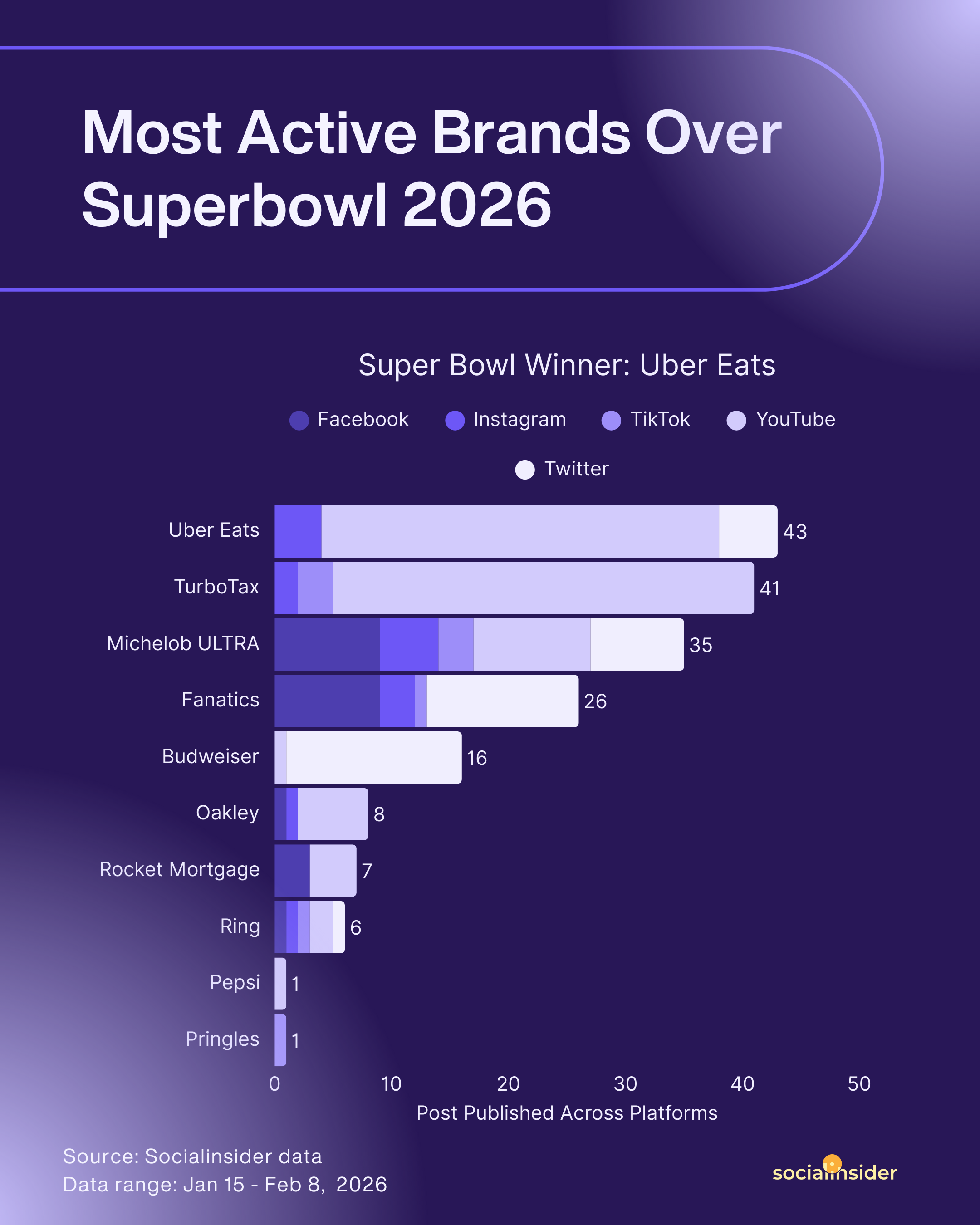
Every Super Bowl season, I’m always curious to see which brands truly commit to social—and this year, the differences in strategy were even more obvious. Some brands went all-in on volume and visibility, while others chose a lighter, more targeted presence.
Uber Eats clearly dominated the conversation through video. With a massive 34 posts on YouTube, paired with 4 Instagram posts and 5 tweets, their strategy leaned heavily into long-form storytelling and real-time buzz. It’s a strong example of how brands still see YouTube as the centerpiece of their Super Bowl campaigns.
TurboTax followed a similar video-first approach, doubling down on YouTube with 36 posts, while adding light support from Instagram (2 posts) and TikTok (3 posts). Once again, video proved to be the backbone of their Super Bowl social media strategy.
On the more balanced side, Michelob ULTRA stood out for its true omnichannel execution. With activity across Facebook (9 posts), Instagram (5), TikTok (3), YouTube (10), and Twitter (8), Michelob ULTRA maintained a steady presence everywhere their audience scrolls—showing consistency without overloading any single platform.
A few other brands made smart, platform-specific moves. Fanatics leaned into Twitter (13 posts) and Facebook (9 posts), likely capitalizing on real-time sports conversations, while Budweiser focused almost entirely on Twitter (15 posts), proving that even a single-platform strategy can work during a live event like the Super Bowl.
Meanwhile, brands like Rocket Mortgage, Oakley, and Ring opted for a lighter presence, choosing just a handful of posts across select platforms—enough to stay visible without going full throttle. And at the very minimalist end, Pepsi and Pringles made brief appearances with single uploads.
Overall, this year’s data shows that there’s no single winning formula for Super Bowl social media success—but brands that paired video volume with clear platform intent were the ones that truly stood out.
Top brands by views - Super Bowl 2026
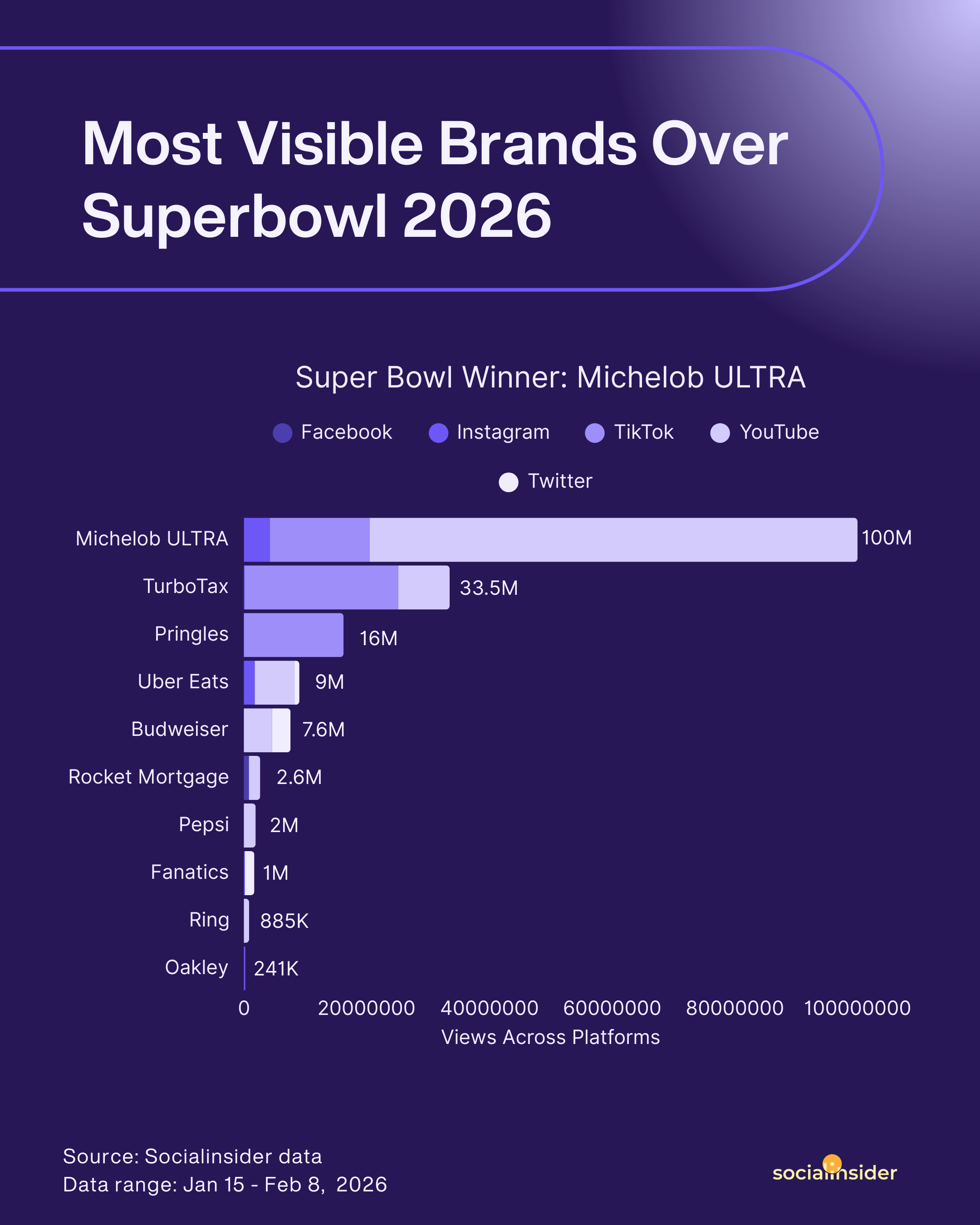
If there’s one thing this Super Bowl season made crystal clear, it’s that video didn’t just win—it dominated across platforms. Brands weren’t simply posting for visibility; they were investing in high-impact video moments designed to stop the scroll and rack up serious views.
While YouTube remained a key stage, the real story is how performance varied by platform. Michelob ULTRA emerged as the undisputed video heavyweight, pulling in an impressive 79.3M YouTube views, alongside 16.2M views on TikTok and over 4.1M on Instagram. That kind of multi-platform video reach shows what happens when a brand commits to scale and distribution.
At the same time, TurboTax proved that TikTok can rival YouTube when the content clicks. Their campaign generated a massive 25M TikTok views, paired with 8.3M on YouTube, reinforcing the idea that short-form video is no longer just support—it’s a primary Super Bowl channel.
Other brands followed with platform-specific wins. Pringles leaned entirely into TikTok and still managed to drive 16.2M views, while Uber Eats balanced strong Instagram video performance (1.7M views) with over 6.4M views on YouTube and solid traction on Twitter.
Even brands with fewer social posts showed how far a single strong video can go. Budweiser generated 4.6M YouTube views and 3M Twitter views, while Rocket Mortgage crossed 1.8M YouTube views with minimal platform spread. Meanwhile, Pepsi made a brief but impactful appearance, pulling in 1.9M YouTube views from a single upload.
For me, the takeaway is clear: Super Bowl social media success isn’t just about being present—it’s about placing your biggest creative bets on video and matching them to the right platform. Whether it’s long-form storytelling on YouTube or high-velocity reach on TikTok, brands that treated video as the main event—not an add-on—were the ones that truly captured attention at scale.
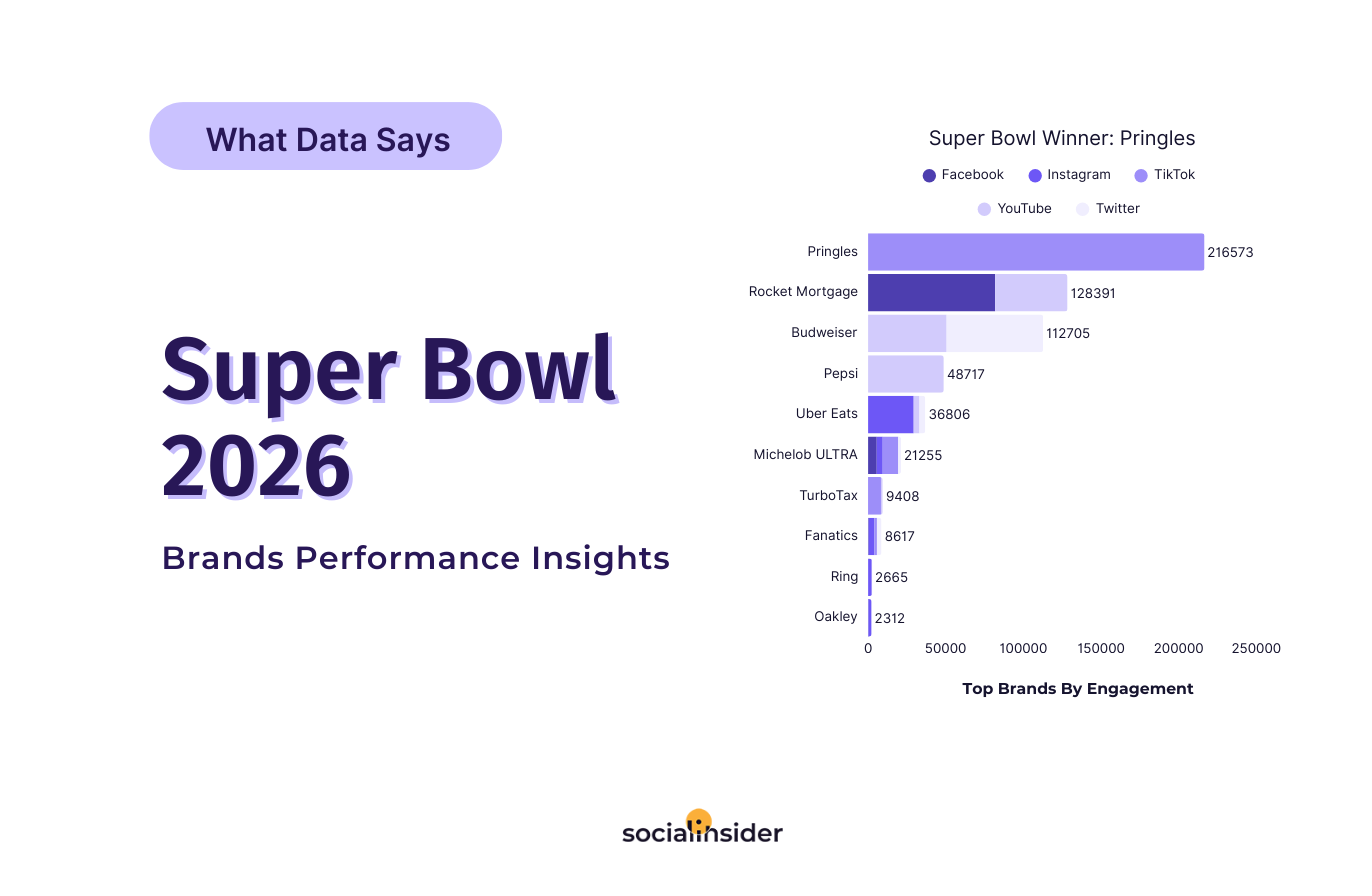
Top brands by engagement - Super Bowl 2026
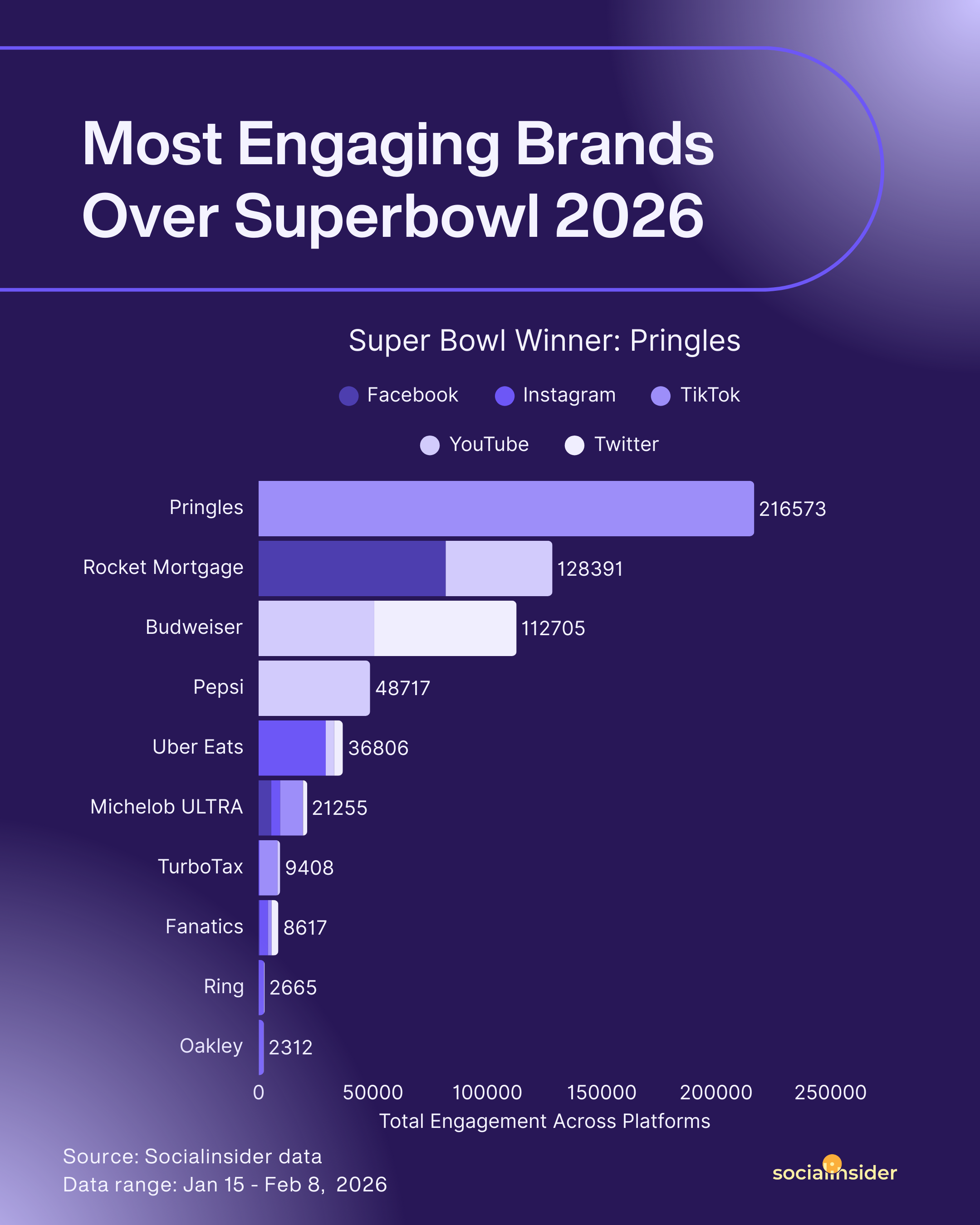
When I dug into this year’s Super Bowl social media engagement data, one winner is impossible to ignore: Pringles. With a massive 216.6K engagements on TikTok, they didn’t just lead the platform—they led the entire dataset. It’s the clearest example of how a single, well-executed TikTok-first moment can outperform broader, multi-platform strategies during Super Bowl week.
Right behind them, Rocket Mortgage proved that focus still pays off. Their campaign generated 81.7K engagements on Facebook and another 46.6K on YouTube, showing how a tightly concentrated strategy on high-attention platforms can drive serious interaction without flooding every channel.
Budweiser leaned into conversation-heavy platforms and saw strong results, especially on Twitter (62.1K engagements), alongside 50.5K on YouTube. It’s a reminder that Super Bowl engagement isn’t just about views—it’s also about real-time reactions, replies, and shares while the moment is happening.
Meanwhile, Pepsi delivered a solid YouTube performance, pulling in 48.7K engagements from a single platform. Even without a broader social footprint, the brand still managed to secure a meaningful share of attention through one strong video activation.
On the more distributed side, Michelob ULTRA showed steady engagement across multiple channels—Facebook (5.5K), Instagram (3.8K), and TikTok (9.9K)—reinforcing the value of consistency during a high-noise event, even if it doesn’t produce the biggest spikes.
Brands like Uber Eats, TurboTax, and Fanatics followed more selective engagement paths, finding traction primarily on Instagram and TikTok, while Oakley and Ring maintained a minimal but present social footprint.
What this mix makes clear is that Super Bowl engagement doesn’t follow a single blueprint. Some brands win by owning one platform completely, like Pringles, while others succeed by doubling down where their audience is already primed to engage, like Rocket Mortgage and Budweiser. During Super Bowl week, knowing where to play matters just as much as how loudly you show up.
Top brands by audience growth - Super Bowl 2026
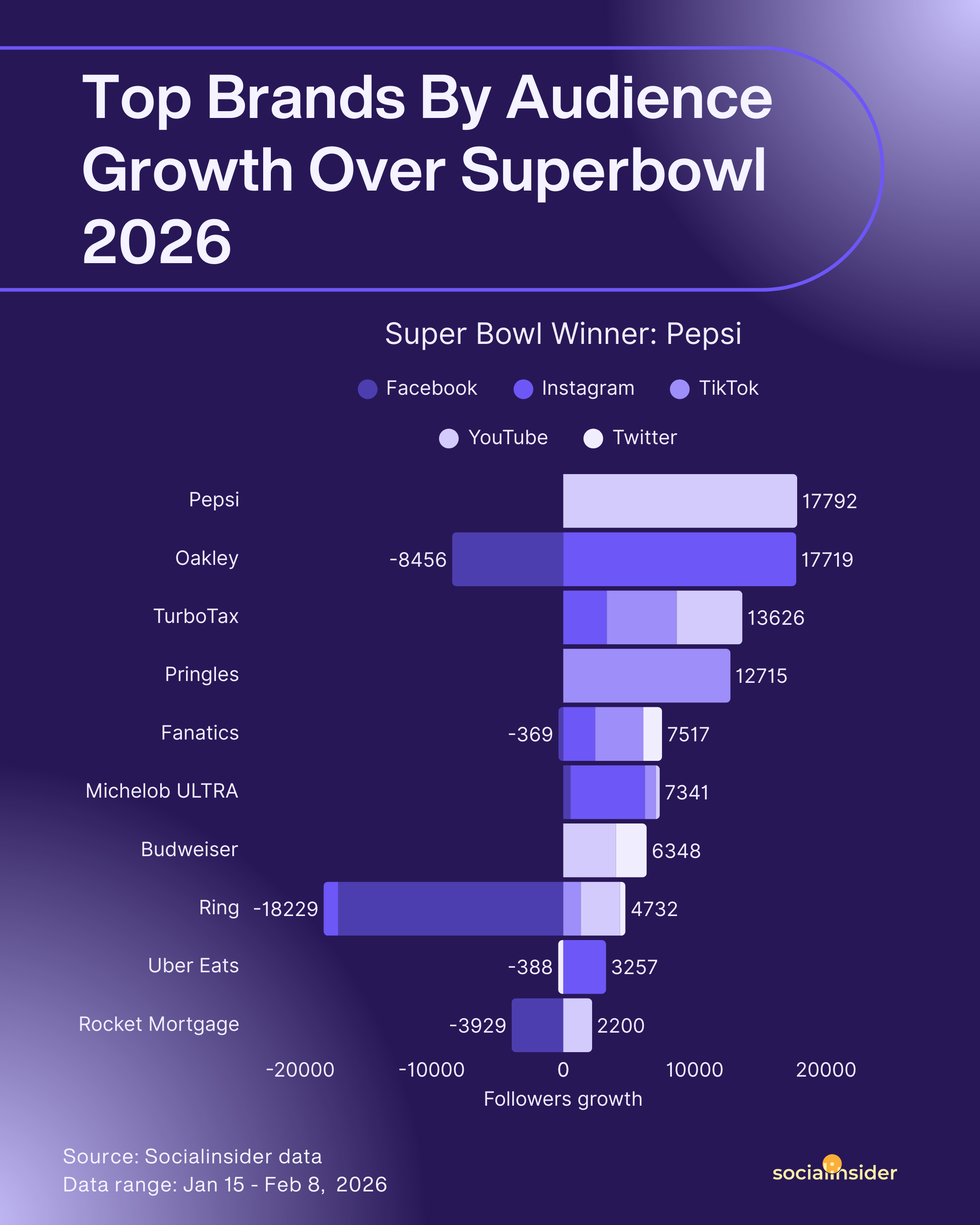
One of the things that always impresses me during Super Bowl season is just how quickly brands can grow their audiences when the creative truly lands. This year, Pepsi stood out as the strongest follower-growth performer overall, driven entirely by YouTube, where the brand gained nearly 17.8K new subscribers. It’s a clear signal that one standout Super Bowl video can still translate into long-term audience growth—without needing a constant stream of supporting posts.
A close contender was Oakley, which added 17.7K followers on Instagram, even while losing followers on Facebook. That contrast highlights an important nuance: Super Bowl growth isn’t universal across platforms—it’s highly dependent on where the creative resonates most.
TurboTax delivered one of the most balanced growth performances. They gained 5.3K followers on TikTok, 5K on YouTube, and 3.3K on Instagram, showing how a focused, multi-platform video strategy can steadily build momentum beyond the event itself.
TikTok also proved to be a powerful growth engine for Pringles, which picked up 12.7K new followers, while brands like Michelob ULTRA and Fanatics saw moderate but consistent gains across Instagram and TikTok.
At the same time, the data shows that Super Bowl exposure doesn’t guarantee growth. Ring and Rocket Mortgage experienced mixed results, reinforcing the idea that follower growth depends less on visibility—and more on platform-fit and creative relevance.
For me, this is the real takeaway: Super Bowl social media campaigns can absolutely fuel rapid audience growth, but only when the creative hits on the right platform. When that alignment is there, one cultural moment can turn into tens of thousands of new followers long after the game ends.
Lessons learn from Super Bowl social media campaigns
Every Super Bowl campaign leaves me with new ideas and a better sense of what really works in the world of social. After soaking up this year’s best (and boldest) efforts, here are the takeaways that stood out the most for me:
- Quality beats quantity: The posts and videos that truly landed weren’t necessarily the most frequent, but the ones that felt the most inspired, timely, and relevant.
- Taking creative risks pays off: Brands that dared to try new storytelling formats, bold humor, or unexpected collabs were the ones I found myself remembering (and talking about) long after the game.
- Video is king: Once again, a single, standout piece of video content—especially on YouTube—had more impact on reach and audience growth than dozens of standard posts scattered everywhere.
- Nostalgia and fresh twists both work: Whether tapping into something classic or giving an old idea a new spin, the best Super Bowl social media posts managed to blend familiarity with surprise.
How to analyze a specific campaign, such as the Super Bowl, with Socialinsider?
When I want in-depth insight into a campaign as dynamic as the Super Bowl, I rely on Socialinsider’s Query Builder and content pillar tagging features. Here’s how these tools help me get right to the metrics that matter:
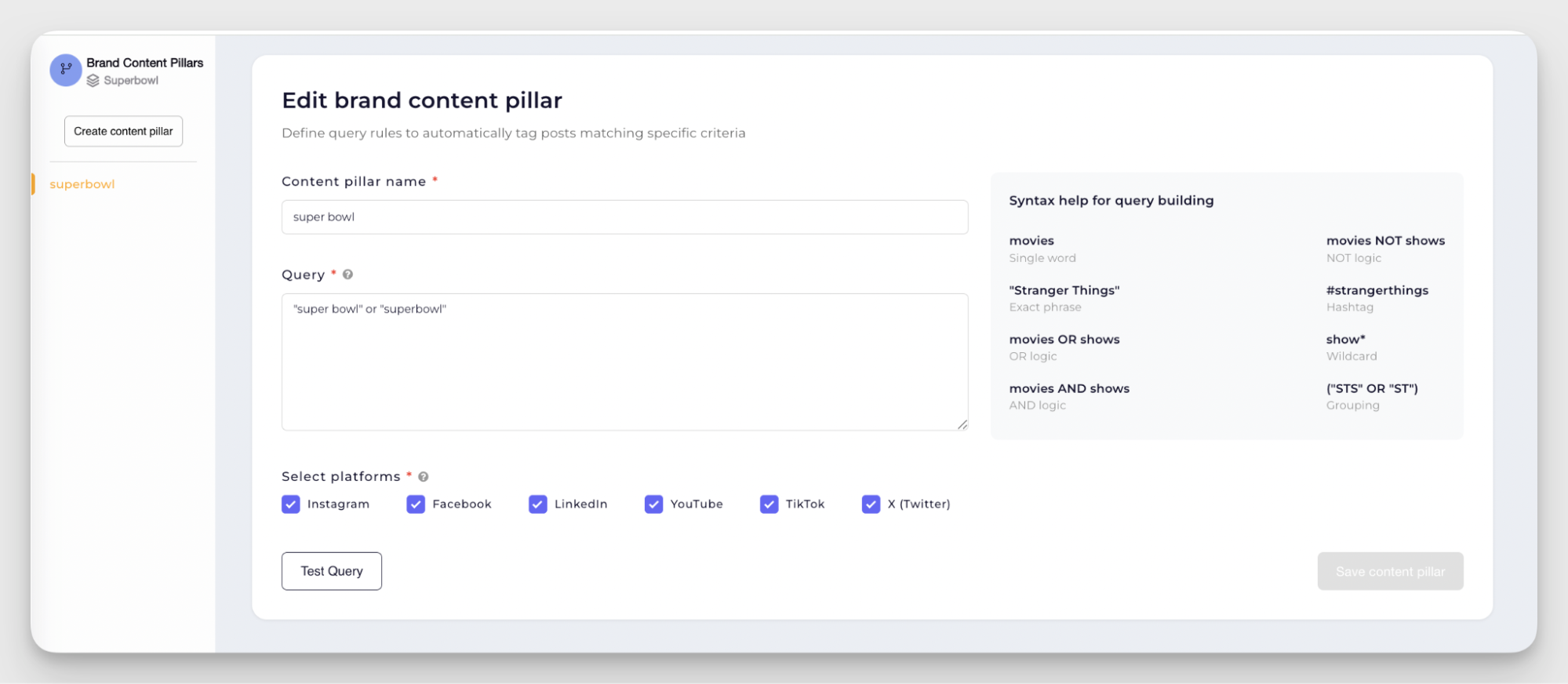
Socialinsider’s Query Builder lets me drill down into my social media data by creating custom content pillars using different queries, such as hashtags, or even keywords related to the campaign.
After that is created, I can not only see the individual performance of the posts belonging to that content pillar, but also get aggregated data to assess the campaign’s overall performance.
Methodology
For this Super Bowl Brands Performance Study, using Socialinsider, I analyzed social media posts between January 15 - February 8 2026 across major social media channels (Facebook, Instagram, TikTok, YouTube and X) to identify top-performing brands that participated in this event.
Elena Cucu
Content & SEO Manager @ Socialinsider with 8 years of experience in marketing. I like to describe myself as a social butterfly with a curious mind, passionate about dancing and psychology.

Analyze your competitors in seconds
Track & analyze your competitors and get top social media metrics and more!
You might also like


Improve your social media strategy with Socialinsider!
Use in-depth data to measure your social accounts’ performance, analyze competitors, and gain insights to improve your strategy.