Social Media Video Analytics: A Cross-Platform Framework for Reading Video Performance
Learn how to read social media video analytics across platforms, diagnose what's underperforming, and benchmark against competitors' videos.


Every reporting cycle, the same video metrics come back around — views, completion rate, watch time — and every cycle, it gets harder to say anything new about them. The numbers move a little, someone asks why, and the honest answer is often "not sure." After a few rounds of that, the report starts to feel like a formality: numbers get pulled, a chart gets built, nobody's really learning anything they didn't already know.
That's the part worth fixing. Strategic understanding is what separates average social media marketing from an outstanding presence, and it starts well past the point most reporting cycles stop looking.
Every platform will hand you a pile of video analytics, so the data is plenty. But what's still hard, and what most teams struggle with, is building a process for turning those numbers into a decision: repost this, kill that format, re-cut the hook. That's the gap I want to fill in with this article. Let's dive in
Key takeaways
- Video performance analysis requires interpreting why a metric like a 22% completion rate occurred rather than simply logging that it occurred, since the diagnosis is what determines what to change in the next video.
- The four-step framework for reading video analytics across platforms is establishing platform-specific baselines, comparing new videos against historical performance rather than industry averages, diagnosing whether underperformance stems from a hook, pacing, or distribution problem, and replicating the patterns behind the best-performing content.
- The three most common video performance problems are low completion rates caused by weak hooks in the first few seconds, high reach paired with low engagement caused by content that misses audience relevance, and inconsistent results across platforms caused by repurposing videos without re-editing them for how each platform's audience watches.
- Competitive video analytics benchmarking means analyzing competitors' publicly visible metrics, such as views, engagement, posting frequency, and format mix, without needing account access, in order to surface content gaps rather than to copy their exact numbers.
Why tracking video metrics isn't the same as understanding video performance?
Effective video analytics tracking implies figuring out why a video performed the way it did, not just logging that it did. There's a real difference between "this video got 40K views and a 22% completion rate" and "here's what that completion rate tells us to change next time." Most teams stop at the first one.
I get that sitting with a retention graph and asking uncomfortable questions — "is 22% actually fine for a 90-second Reel, or is that a hook problem, or was the drop-off about pacing, or was the topic just wrong for this audience?" is not the highlight of the job. Nobody wants to slow down and interrogate a number when there are four more videos to post this week. However, this is what's needed for your brand to shine in the future.
How to read video analytics across platforms — a strategic framework
I don't think there's a shortcut here, but there is an order that works. Set a baseline first. Compare new videos against that baseline, not against some blog post's idea of "good." Figure out what actually went wrong when something flops. Then, and only then, go repeat whatever's working. Skip step one and every later step is basically guessing.
Step 1: Establish your platform-specific benchmarks
A 35% completion rate on a 15-second TikTok and a 35% completion rate on a 10-minute YouTube video are not the same achievement — one means most people watched the whole thing, the other means most people bailed after three and a half minutes. Before you judge a single video, you need a number that's specific to your account, that platform, and roughly that content length. Industry benchmarks are fine for a gut check — am I in the right ballpark at all — but they shouldn't be the target you're optimizing toward.
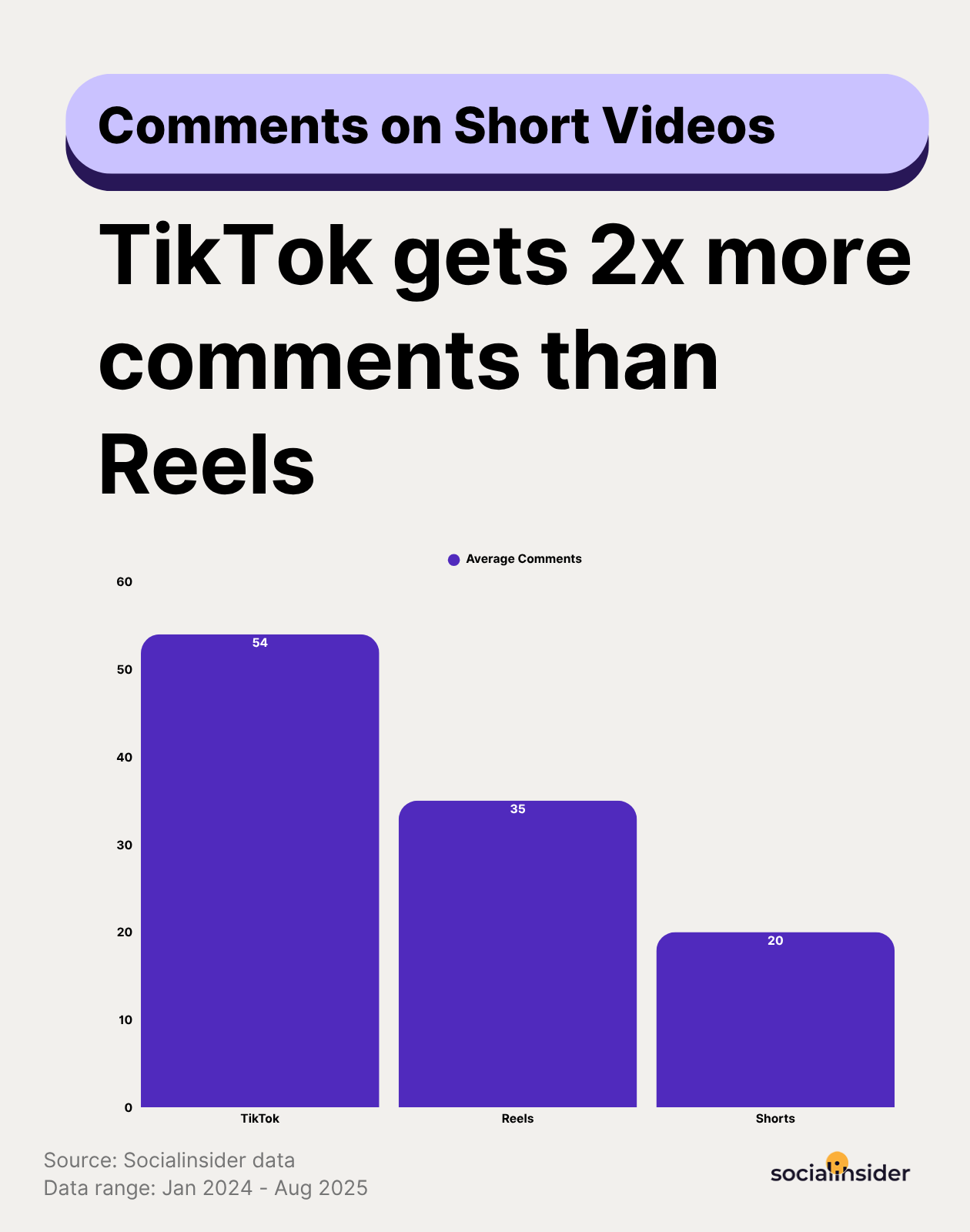
Step 2: Compare performance against your own historical data, not just industry averages
Once you have that baseline, judge every new video against it, not against a number some competitor's case study threw out. Because at the end of the day, the only honest comparison is a video against your own past videos of similar length — post a few 60-second clips, see which ones hold attention longer, and let that tell you something real about your specific audience.
This is also the argument for pulling in a longer data window than most native platforms give you. If your dashboard only shows the last 90 days, you can't tell whether last week's video actually flopped or whether your whole account has been drifting for months — you're missing the context either way.
Step 3: Diagnose underperformance — is it a hook, retention, or distribution problem?
When something underperforms, the instinct is to just post the next thing and hope. Worth resisting that for five minutes and actually looking at where it broke down:
A fast drop-off in the first few seconds is usually a hook problem — the video never got the chance to prove it was worth staying for. A slow bleed through the middle, especially clustered around one section, points to pacing or a part that's dragging. And reach that's just... low, with an otherwise clean retention graph, isn't a content problem at all — it's distribution. The people who did see it watched fine. There weren't enough of them.
Retention graphs aren't always clean, though. I've heard more than one person say they struggled to find a clear pattern in their own drop-off data — was it boredom, over-explaining, a topic that landed flat? Sometimes the more useful thing to look for isn't the dip, it's the flat stretch — the part of the graph that stays level instead of declining. That's where something actually held attention, and it's usually worth more of your time than obsessing over exactly where people left.
I would sometimes post our shorter videos on X and LinkedIn, but I always kept viewer intent in mind. People don’t really go to X to watch videos — we’d see retention just plummet, like only 1% making it past 30 seconds. But I wouldn’t get too discouraged. I’ve seen people post something like an eight-minute Loom demo of their product that barely got views, but the few who watched it sent DMs, became leads, and actually drove results. So while the views might look low, the value can still be high. - Thom Gibson, former social media strategist at Kit.
Step 4: Identify what's working and replicate the pattern
None of this matters if it doesn't change what you make next. Look across your videos, not just at one — which topics, formats, or CTA styles keep showing up in whatever's holding attention longest? A trick worth trying: take one long piece and cut it into two or three different versions — a full interview versus a single-speaker clip, say — and see which one people actually stick with. Whichever wins tells you something concrete about the format your audience wants, which beats guessing every time.
For example, using Socialinsider you can filter performance analysis by content type, then apply an additional layer, such as content pillars, to quickly identify do's and dont's for your next calendar.

How to diagnose common video performance problems
Most problems repeat. Here are the three I see most often.
Low completion rate — what it signals and how to fix it
Nine times out of ten, this traces back to the first few seconds. If people are leaving before the video's made its case, "make better content" is too vague to act on — tighten the hook, move the payoff earlier, cut the setup you don't need. It's also worth checking this against click-through rate. A low completion rate paired with a strong CTR usually means the thumbnail or title promised more than the video delivered.
High reach but low engagement — what's going wrong
This one's less about visibility and more about relevance. Plenty of people saw it; almost none of them reacted — no comments, no shares, no saves. That's different from a distribution issue, where the fix is timing or placement. Here the fix is the content itself: the topic wasn't compelling enough, or the format didn't match what that platform's audience actually wants from a video.
Strong performance on one platform but not others — repurposing mistakes
This is the one I see the most, and it's the most avoidable. A video that was built for one platform, then dropped as-is onto another, almost always underperforms — because the person watching is in a different headspace. Someone scrolling TikTok isn't watching the way someone browsing YouTube is; post the identical clip on both and you'll usually see the exact same content perform totally differently. The fix isn't to stop repurposing. It's to actually re-edit for how people watch on that specific platform instead of exporting the same file five times.
How to use competitive video analytics to benchmark your strategy
Your own history tells you if you're getting better. It doesn't tell you if "better" is actually good enough against the accounts you're competing with for attention.
Analyzing competitors' video performance without requiring account access
You don't need a login to someone else's account to see how their videos are doing. Views, engagement, posting frequency, format mix — all of that's visible publicly, and it's enough to see whether your video output is actually keeping pace with the accounts fighting for the same audience, without asking anyone's permission.
What competitor benchmarking reveals about content gaps
The point isn't to copy a competitor's numbers — it's to notice what their audience is responding to that yours hasn't tried. If one competitor keeps winning on a specific video format or topic angle, that's usually a gap in what you're covering, not a reason to imitate their exact content.
Tools for tracking video analytics across platforms
No single source gives you the full picture on its own.
Native analytics — YouTube Studio, TikTok's own dashboard, Meta Business Suite, LinkedIn's analytics tab — are still the fastest way to get raw video performance data straight from the source: views, watch time, retention graphs, traffic source breakdowns, all specific to that one platform.
Where native tools run out of road is exactly where a cross-platform video analytics dashboard picks up:
- History that goes back further than the platform allows. Most native tools cap how far you can look. Without a longer window, step 2 of the framework above — comparing against your own past performance — isn't really possible.

- Everything in one view. TikTok, Instagram, YouTube, LinkedIn, Facebook — side by side instead of five browser tabs and a shared spreadsheet nobody updates.
- Competitor visibility without needing their login. See how a competitor's video performance stacks up against yours on the same metrics.
- Reports that don't take an afternoon to build. Turn the numbers into something a client or an exec actually wants to read, instead of rebuilding the same chart every single reporting cycle.
Socialinsider's video analytics dashboard covers all that— while native analytics were never built to do it in the first place.
Final thoughts
The tracking part was never the hard part. Every platform gives you that for free. The hard part — and the part that actually changes your video strategy — is running those numbers through some kind of process: check them against your own history, figure out the real reason something underperformed, and see where you actually stand against the people you're competing with.
Elena Cucu
As Content & SEO Manager at Socialinsider, Elena Cucu helps social media leaders make sense of the numbers behind their performance. Featured in TechCrunch, TNW, and ReadWrite.

Know what your competitors do — before your manager asks
Get instant social benchmarks & reports without manual work.