Instagram Target Audience: How to Find and Reach Yours
A guide to finding your Instagram target audience: build precise personas, track KPIs by goal, and reach them through ads and organic strategies.


An Instagram target audience is the specific group you're building content and campaigns around, not just anyone who happens to see your posts. You already know that. The harder part is defining that group with enough precision that content decisions get easier, not just correct in theory.
That's what this guide is actually for. Not the basics of what a target audience for Instagram is, but the process for identifying yours with real precision, the KPIs worth tracking once you know who they are, and how to reach them through both paid targeting and organic tactics.
Key takeaways
- Identifying an Instagram target audience requires going beyond demographics to define behavior, content preferences, and platform habits through personas built specifically for Instagram rather than borrowed from general marketing.
- Researching an Instagram audience for content ideas combines three sources, account analytics, competitor content pillar comparisons, and direct audience feedback through polls and social listening, since no single source reveals the full picture on its own.
- Most Instagram audience targeting mistakes surface at scale, when persona work goes stale across multiple accounts, ad targeting runs on outdated assumptions, or engagement gets reported as one number instead of by type.
How to identify your target audience on Instagram
If you're wondering how to target your audience on Instagram effectively, this is where it actually starts: going past age and location into behavior, content patterns, and community alignment. If you're running this across a single brand account, you're doing this research yourself. If you're managing multiple accounts, whether that's several brand verticals or several client accounts as an agency, this is the framework to hand to whoever owns each account, so the output is comparable across all of them.
Here are the questions that framework should force someone to answer:
- Who are they, really? Go beyond demographics. What motivates them to open Instagram every day? Are they looking for style inspiration, productivity hacks, or entertainment?
- How do they consume content on Instagram? Not every audience engages the same way. General benchmarks show carousels often get the highest engagement, but your audience might prefer quick Reels or swipe through Stories instead. Spotting these tendencies early tells you what actually clicks with them.
- Why do they follow brands like yours? To discover new products? To join a lifestyle or aesthetic? To feel part of a community? This shapes the captions, visuals, and CTAs you use.
Identifying your target audience for Instagram is really about blending data and intuition. The result is that you move from talking to anyone who might buy to creating for specific personas who feel like you get them.
Build audience personas
Once you've done the groundwork, translate the insights into clear personas. This keeps your content strategy sharp and focused.
Primary vs. secondary audiences: your primary persona is the one most likely to engage and purchase. Secondary personas still matter; they can amplify reach, add credibility, or represent emerging opportunities. A beauty brand's primary persona might be Gen Z trendsetters, while a secondary persona could be millennial professionals looking for quick hacks.
Instagram-specific persona elements: unlike a standard marketing persona, you need traits specific to this platform:
- Preferred formats: Reels, carousels, or static posts.
- Engagement style: do they comment with opinions, or just save posts quietly?
- Platform habits: late-night scrollers, lunch-break browsers, or all-day lurkers?
Content triggers: capture what actually makes them engage. Do they binge educational carousels? Prefer aspirational visuals over detailed captions? Click links in bio quickly, or engage mostly within the app?
Takeaway: the more specific your personas are on Instagram-specific behavior, not just demographics, the less guessing you'll do when planning content. If you're overseeing more than one account, standardize the persona template across them, but never let the actual persona content get copy-pasted between accounts. Even similar brands rarely share an identical audience.
How to research your audience for content ideas
Once you've got a working definition of your audience, the next step is turning that into actual content decisions. Here's how I approach the research.
Deep dive into Instagram audience analytics
Start by getting a clear snapshot of who's engaging with your content.
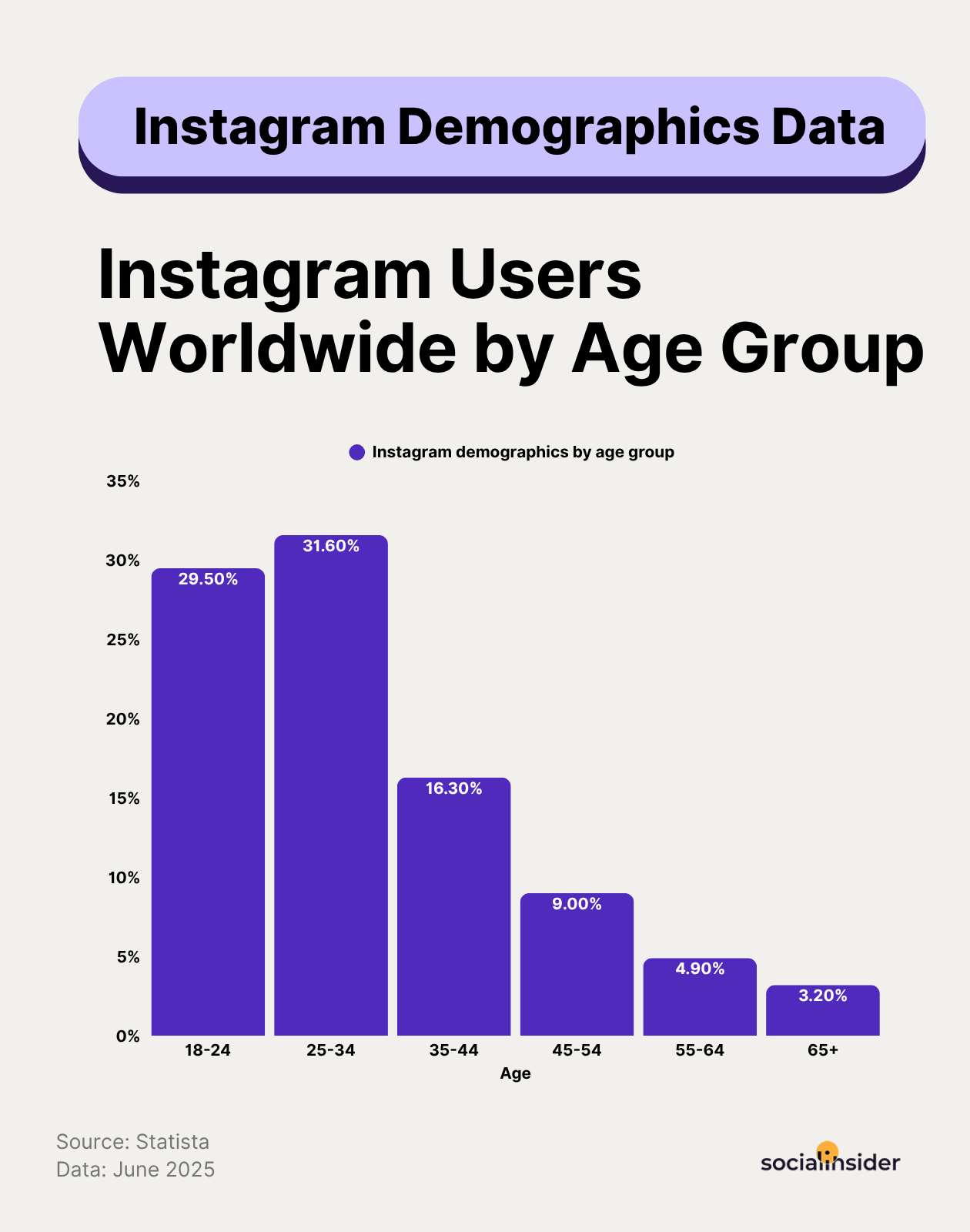
Instagram's audience skews notably young. More than 60% of users are under 35, which puts Instagram user age demographics well ahead of platforms like Facebook or LinkedIn in terms of skewing toward a younger, trend-driven crowd. That said, your own account's Instagram users demographics might look nothing like the platform average, which is exactly why checking your specific numbers matters more than the general stat.
Beyond demographics, look at content-level data:
- Identify your best-performing formats. Are followers responding to Reels more than carousels? Educational posts over entertainment?

- Discover your most engaging content pillars. Whether it's educational tips, industry insights, or product launches, seeing which themes resonate helps you sharpen your focus.

- Look at top posts by format. Reels might work best for culture content, while carousels excel at step-by-step guides. Understanding this lets you build a content calendar that's both diverse and deliberate, rather than diverse by accident.

Beyond demographic data, third-party tools like Socialinsider give you access to advanced analytics data to gain a better understanding of your audience's behavior and preferences.
Spy on your competitors' audiences
Monitoring competitor performance helps you spot trends, discover gaps, and adjust your strategy to capture attention where they might be falling short.
- Check the keywords and who's commenting. Are influencers, industry leaders, or specific follower types consistently engaging with their content?
- Compare content pillars. If two competitors both lean heavily into the same theme, but one is getting noticeably higher engagement, that's a signal worth studying and adapting, not copying outright. Socialinsider's AI-based industry content pillars feature speeds this up considerably, surfacing pillar-level comparisons across competitors automatically instead of you tagging and sorting posts by theme manually.

Ask your audience directly
Sometimes the fastest way to get insight is to just ask.
- Use question stickers and polls in Stories to let followers tell you directly what content, products, or tips they'd want to see.
- Track social listening signals, brand mentions, hashtags, tagged posts, and recurring questions in your DMs and comments. These often turn into your next educational post or FAQ series.
Takeaway: analytics tell you what's already working. Direct audience feedback tells you what to try next. You need both.
Instagram audience KPIs to track by goal
Different goals call for different metrics. Here's the breakdown by objective.
| Goal | Key metrics | What they tell you |
|---|---|---|
| Awareness | Profile visits, views, follower growth | Whether your content is reaching new people and sparking curiosity |
| Engagement | Engagement rate (by followers and reach), comments, shares, saves, Story link clicks, poll participation | Whether your existing audience is genuinely interacting, not just seeing your content |
| Conversion | CTR on Story links, Shopping Tag clicks, product page views, add-to-cart rate, purchase conversion rate, average order value | Whether your Instagram traffic is turning into real business outcomes |
A few notes worth calling out:
- Engagement rate should be split by followers vs. reach, so you know whether interaction is coming from your core audience or from new potential followers.
- Comments, shares, and saves each tell a different story. Comments show depth of interest, shares show your content is worth spreading, and saves show your audience finds real value in it.
- Purchase conversion rate is the clearest signal of ROI, since it shows how many people actually completed a purchase after clicking through from Instagram.
Takeaway: pick your primary KPI based on the goal of the campaign, not just whatever number is easiest to pull. A campaign built for awareness shouldn't be judged on conversion rate, and vice versa.
How to target your audience with Instagram ads
Organic reach alone rarely reaches everyone you want it to, which is where paid targeting becomes a direct lever rather than an afterthought.
- Interest and behavior targeting lets you reach users based on what they've engaged with, including people who've recently viewed products similar to yours. This is especially useful for reaching people with active purchase intent, not just a broad demographic match.
- Custom audiences let you retarget people who've already interacted with your content, visited your site, or engaged with your app, warm audiences that convert at a meaningfully higher rate than cold ones.
- Lookalike audiences let you expand reach to new users who share characteristics with your best existing customers, a fast way to scale past your current follower base without starting targeting from scratch.
- Story ads blend in with organic Stories (aside from the "Sponsored" tag), which tends to hold attention better than a standard feed ad interrupting a scroll.
Takeaway: paid targeting works best layered on top of what you already know about your audience from the research above, not as a substitute for it. The sharper your persona work, the sharper your ad targeting gets. As a rough allocation rule: if organic engagement is still climbing, keep paid spend focused on retargeting warm audiences rather than broad reach. Once organic plateaus despite strong content, that's the signal to shift more budget toward lookalike and interest-based expansion instead of pushing the same audience harder.
How to reach your target audience organically
Once you know who you're targeting, here's what should actually be happening across your accounts to reach them, whether you're executing it yourself or making sure a coordinator or agency partner is.
- Localize with geotagging. Geotagged posts and Stories show up in location-based searches, which is a straightforward way to reach people interested in a specific event or area. A festival or local event tag, for instance, puts your content in front of people already searching for that exact context.
- Balance educational, entertaining, and promotional content. This mix keeps your audience engaged without overwhelming them with constant sales messaging.
- Leverage user-generated content. Encouraging your audience to create content with your products builds trust and social proof more effectively than brand-only messaging.
- Partner with micro-influencers. Accounts with 1K to 100K followers often deliver more targeted reach and higher-trust recommendations than larger, more generic influencers.
- Cross-promote with complementary, non-competing accounts. Shared audiences with aligned brand values expand visibility for both sides without diluting either brand's identity.
Takeaway: organic and paid aren't competing tactics here. Hashtags and geotagging get you discovered, content and creators build trust, and ads accelerate reach once you know exactly who you're trying to move.
Common mistakes when targeting your Instagram audience
- Stopping at demographics. Age, gender, and location tell you almost nothing about what actually makes someone engage. Behavior and content preference matter more, and a team relying only on the demographics tab is doing surface-level work.
- Letting persona work go stale across a growing account roster. As you add accounts or team members, it's easy for audience definitions to get copy-pasted or left unreviewed. Build a recurring review into your process, not just a one-time exercise per account.
- Approving ad targeting without checking it against current persona data. It's common for a media buyer or agency partner to run targeting based on outdated assumptions about the audience. Make persona review part of your ad approval process, not a separate workstream.
- Reporting engagement as one number instead of by type. A comment, a share, and a save signal very different things, and rolling them into a single "engagement" figure hides which content is actually building trust versus just getting seen.
- Never re-checking your audience data after a platform or content shift. An audience you defined a year ago, or even one you defined before a major format shift like a move toward more Reels, may not reflect who's actually engaging with your account today.
Takeaway: most of these mistakes show up at scale, once you're managing more than one account or approving work from a team rather than doing it yourself. Build the review step into your process before that becomes a problem, not after.
Final thoughts
Finding your Instagram target audience isn't a one-time exercise. It's a habit of checking your own data, going past surface-level demographics, and adjusting as your audience's behavior shifts.
The teams that get real traction here aren't guessing. They're pairing audience research with the right KPIs, layering paid targeting on top of organic reach, and revisiting all of it regularly enough to catch what's changed.
FAQs on Instagram target audience
How often should we re-validate our Instagram target audience?
Quarterly at minimum, and immediately after any major platform algorithm change or a noticeable shift in engagement patterns. An audience profile built a year ago rarely holds up unchanged.
How to decide when to shift budget from organic to paid targeting?
When organic reach plateaus despite strong content performance, or when you need to reach a new segment faster than organic growth allows. Paid works best layered on existing audience research, not as a first resort.
What's a sign our current audience targeting has gone stale?
Engagement rate flattening while follower count still grows, or a widening gap between reach and actual interaction. Both suggest you're reaching people, just not the right people anymore.
Elena Cucu
As Content & SEO Manager at Socialinsider, Elena Cucu helps social media leaders make sense of the numbers behind their performance. Featured in TechCrunch, TNW, and ReadWrite.

Know what your competitors do — before your manager asks
Get instant social benchmarks & reports without manual work.