How to Master Cross-Platform Social Media Marketing - 10 Effective Strategies
Discover effective cross-platform social media marketing techniques. Boost your brand with tailored strategies for success.


It’s Monday morning. You open your social dashboards with coffee in hand and a hopeful mindset. Instagram wants Reels. LinkedIn wants insights. TikTok wants personality. X wants speed. Pinterest quietly wants consistency.
Your to-do list suddenly looks like five different jobs. Sound familiar?
Cross-platform social media marketing can feel like juggling a lot at once while trying to keep your brand voice clear and consistent.
Every channel has its own rules, yet your audience expects one seamless experience. That is where the real opportunity lives. When you get it right, your content reaches more people and works much harder for you.
To help you get cross-platform social media marketing right, I reached out to Ian Evans, who manages and grows tl;dv’s social media community of over 500,000 followers across TikTok, Instagram, and LinkedIn.
Key takeaways
-
What is cross-platform social media marketing? Cross-platform social media marketing means coordinating your brand message across multiple networks while adapting content, tone, and metrics to fit how audiences behave on each platform.
-
10 ways to get cross-platform social media marketing right: To get cross-platform marketing right, anchor everything to one clear objective, adapt content to platform behavior, maintain consistent branding, analyze performance holistically, and continuously refine your strategy based on data and experimentation.
-
Tools that support cross-platform social media marketing: Tools like Buffer and Socialinsider are essential for cross-platform marketing, helping teams centralize scheduling, customize content per platform, unify analytics, benchmark competitors, and turn multi-channel data into actionable insights.
-
Common mistakes in cross-platform social media marketing: The biggest cross-platform mistakes include copy-pasting content, chasing irrelevant trends, ignoring competitive and historical context, and comparing metrics without proper normalization.
What is cross-platform social media marketing?
Cross-platform social media marketing is the practice of planning, creating, publishing, and measuring content across multiple social networks in a coordinated way.
It means keeping your brand message consistent while tailoring the format, tone, and goals to match how people actually use each platform. The strategy connects your efforts, so every channel supports the same bigger objective.
What cross-platform social media marketing is not?
- Posting the exact same content on every platform
- Using identical captions everywhere
- Treating all platforms as if the audience behaves the same
- Measuring success with the same metrics across channels
- Publishing without adapting formats to each platform
Benefits of investing in a cross-platform social media marketing strategy
Most brands can’t afford to be on just one platform. That’s where cross-platform marketing becomes so important.
Here are four key reasons to invest in a comprehensive cross-platform marketing strategy.
- Build consistent brand recall across touchpoints: Your audience does not live on just one platform. They scroll Instagram in the morning, check LinkedIn during work, and fall into TikTok at night. Showing up consistently across these moments makes your brand feel familiar and trustworthy. Over time, that repeated exposure builds recognition, so when people finally need your product, you are already top of mind.
- Reduce dependency on a single platform: Algorithms change. Reach drops. Features disappear. Anyone who has worked in social media knows how quickly a platform can shift. A cross platform strategy spreads your risk so your growth does not depend on one channel behaving nicely. If one platform slows down, the others keep your momentum going.
- Improve content ROI through a smarter reuse: Creating content takes real time and effort, so squeezing more value out of every idea is a huge win. One strong idea can turn into a carousel, a short video, a thread, and a LinkedIn post.
- Get clearer performance insights with cross-platform analytics: When you look at performance across channels, patterns start to appear. You see what messages resonate, which formats perform best, and where your audience engages most. Those insights make your strategy sharper and your decisions easier, because you are no longer guessing what works.
10 ways to get cross-platform social media marketing right
Let’s take a look at 10 ways your business can plan an effective social media strategy across all your main platforms.
1. Anchor everything to one core objective
Whenever we start planning cross-platform campaigns, the first question I ask is: What is the one outcome we actually care about? Awareness, demand, leads, community growth.
Instead of picking everything to target at once, pick just one goal. One clear direction makes every decision easier.
Let’s say the goal is brand awareness. That single choice shapes how every platform shows up and how success is measured.
- How platforms support the goal: LinkedIn focuses on thought leadership and industry conversations. Instagram prioritizes reach through carousels and Reels. TikTok helps you reach entirely new audiences through short videos. X keeps your brand visible in daily conversations. While strategies may differ by platform, every effort on each platform aims to increase brand awareness.
- What content looks like: Educational posts, relatable tips, trend-based videos, and shareable insights that introduce your brand to new people.
- How success is measured: Reach, impressions, brand mentions, profile visits, and follower growth become the primary indicators of progress.
- How secondary metrics fit in: Engagement still matters, but as a signal that content is resonating and helping your message spread further.
2. Study audience behavior on each platform
Not every platform serves the same purpose in your audience’s day. People scroll, learn, connect, and discover in different ways depending on where they are. That is why understanding behavior is more valuable than simply being present everywhere.
Start by identifying where your audience is actually active. Look for signals like engagement patterns, content formats they interact with, and the types of conversations they join.
If you’re starting fresh, I recommend reviewing the core demographics of each platform. For example, TikTok and Instagram are dominated by younger audiences, whereas Facebook attracts a wider age range.
Next, understand the intent on each channel.
- On TikTok and Instagram, people are usually browsing and discovering.
- On LinkedIn, they are learning, researching, and networking.
- On X, they are keeping up with trends and conversations in real time.
This difference in mindset should shape both your content and expectations. A detailed thought leadership post may thrive on LinkedIn but feel out of place on TikTok. A short entertaining video might perform well on TikTok but get ignored on LinkedIn.
Ian talks about how audience familiarity also plays a role in how content is received —
On platforms where tl;dv has an established audience like LinkedIn, TikTok, and Instagram, we can make jokes about AI ruining the planet and how we hate tech companies. But on platforms where we’re less known, like YouTube, there is no established audience who understands our tone of voice or sense of humour. I remember one video being perfectly well-received on LinkedIn, Instagram, and TikTok, but when I uploaded it to Shorts it got comments like "This isn’t funny".
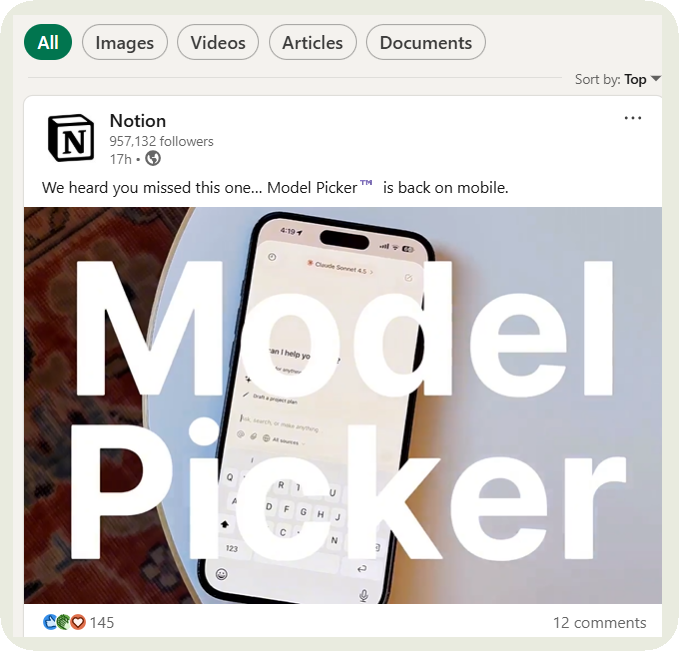
For example, Notion on LinkedIn is centered around product updates and new releases.
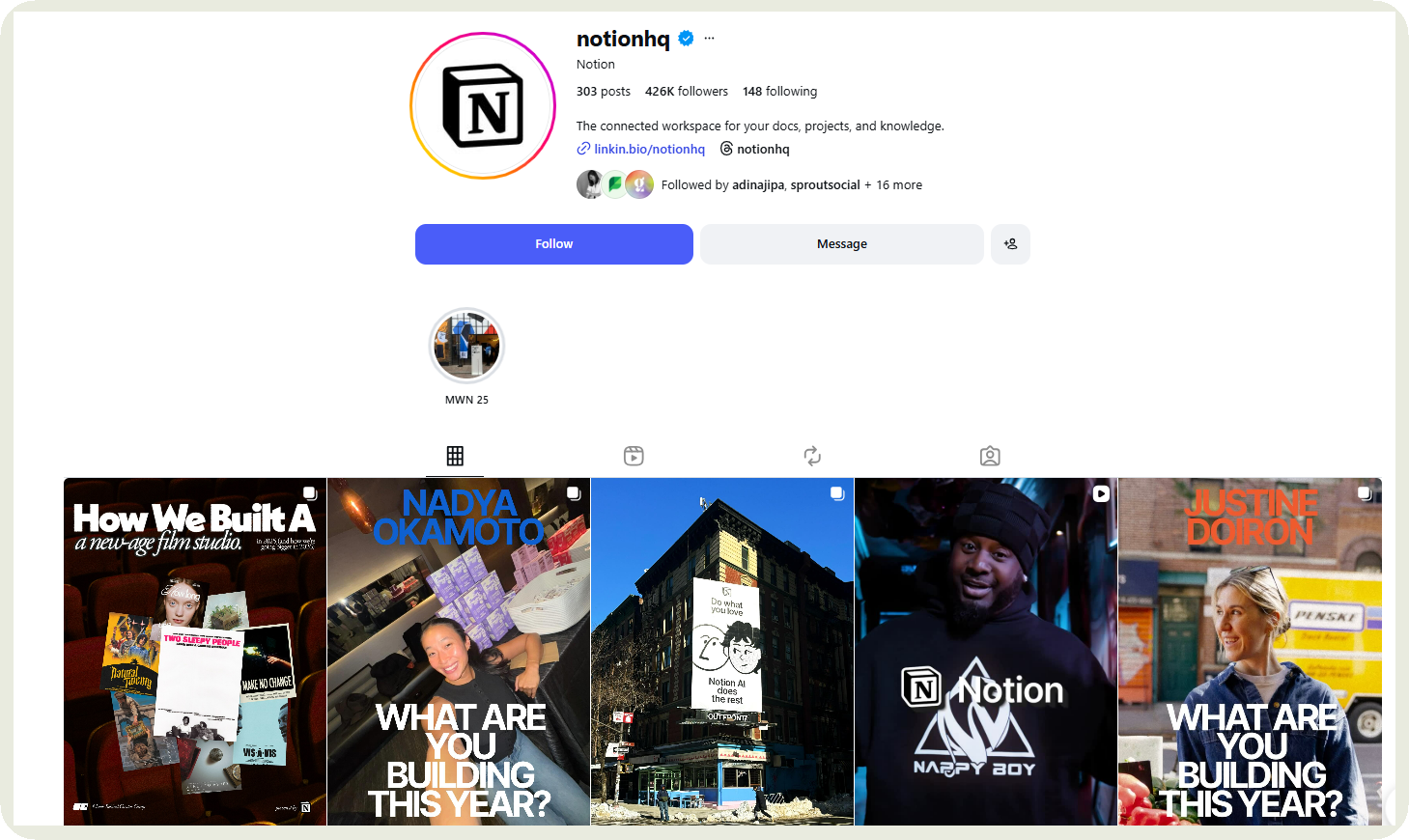
Notion on Instagram is centered around customer stories and quick visuals.
3. Keep branding consistent across platforms
Have you ever seen a post and instantly known the brand without seeing the username? That’s the power of consistent branding across platforms.
I want someone to recognize the brand instantly, even if they see it on a platform they do not usually follow us on.
The first step is defining clear messaging pillars that stay constant everywhere. These are the themes your brand repeatedly talks about. For example, education, industry insights, customer stories, or product tips. Platforms may change, but these pillars should not.
I also make sure our visual identity and voice feel familiar across channels. Colors, design style, and the way we write captions should feel like they belong to the same brand.
Ian talked about the same when he shared his thoughts on having a consistent brand identity —
Apart from the basic visual stuff, I like to keep text and colours as similar as possible. Which is why I always edit on a third party tool like CapCut and export it exactly the same to all platforms. I think the other part is your tone of voice. Whatever your brand’s personality, it can’t be completely different on Linkedin and then fun on Instagram. It needs to be similar, or you’ll never get people to follow you on multiple platforms.
For example, at Socialinsider, we follow the same brand tone, style, and color palette across platforms.
4. Design content to travel across platforms
Instead of creating separate ideas for every channel, I like to start with content that can naturally expand into multiple formats.
For example, building a content idea that can be broken into multiple formats and lengths.
Here’s how to go about it:
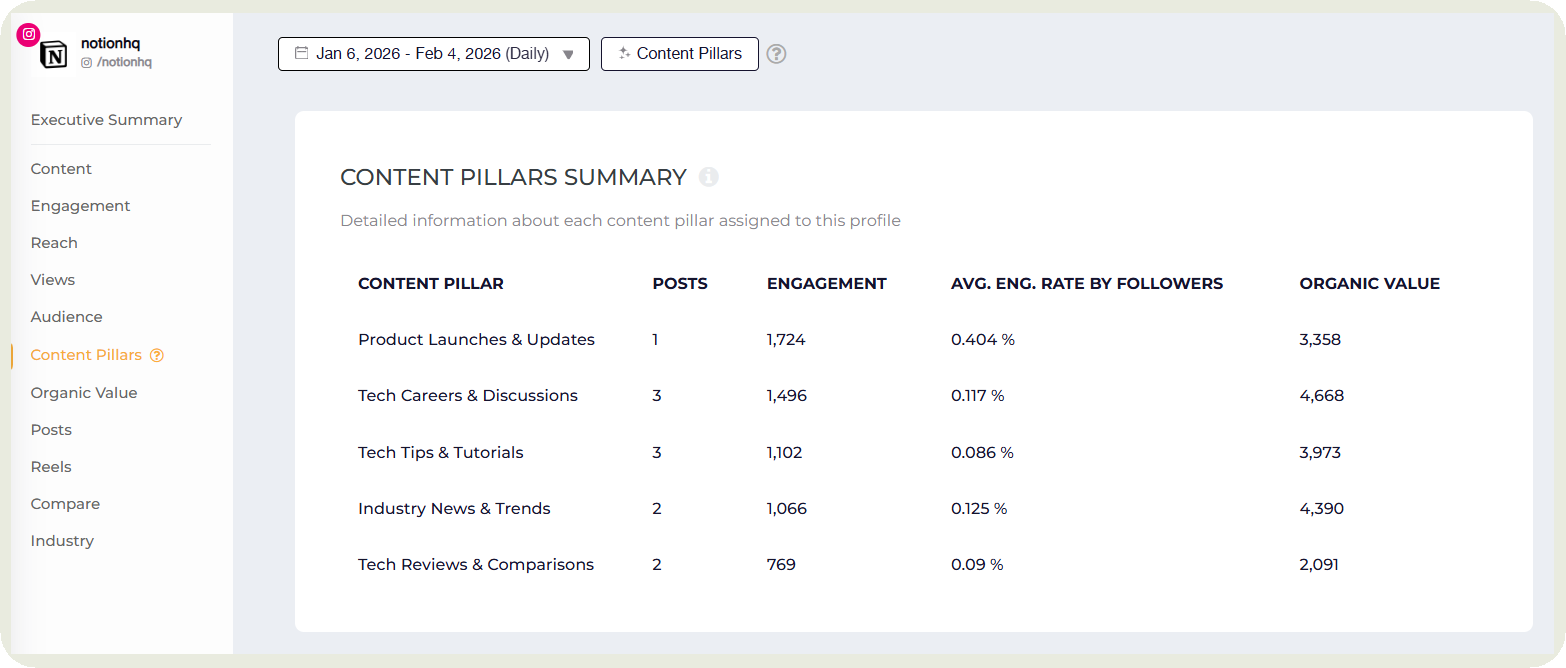
- Start by identifying the content pillars that perform best on your main platform. Which themes consistently get engagement, saves, shares, or comments? Those high-performing pillars are perfect candidates for cross-platform distribution.
I usually check this on Socialinsider.
Ian also talked about experimenting with a pillar on one platform and then expanding it to the others. He said —
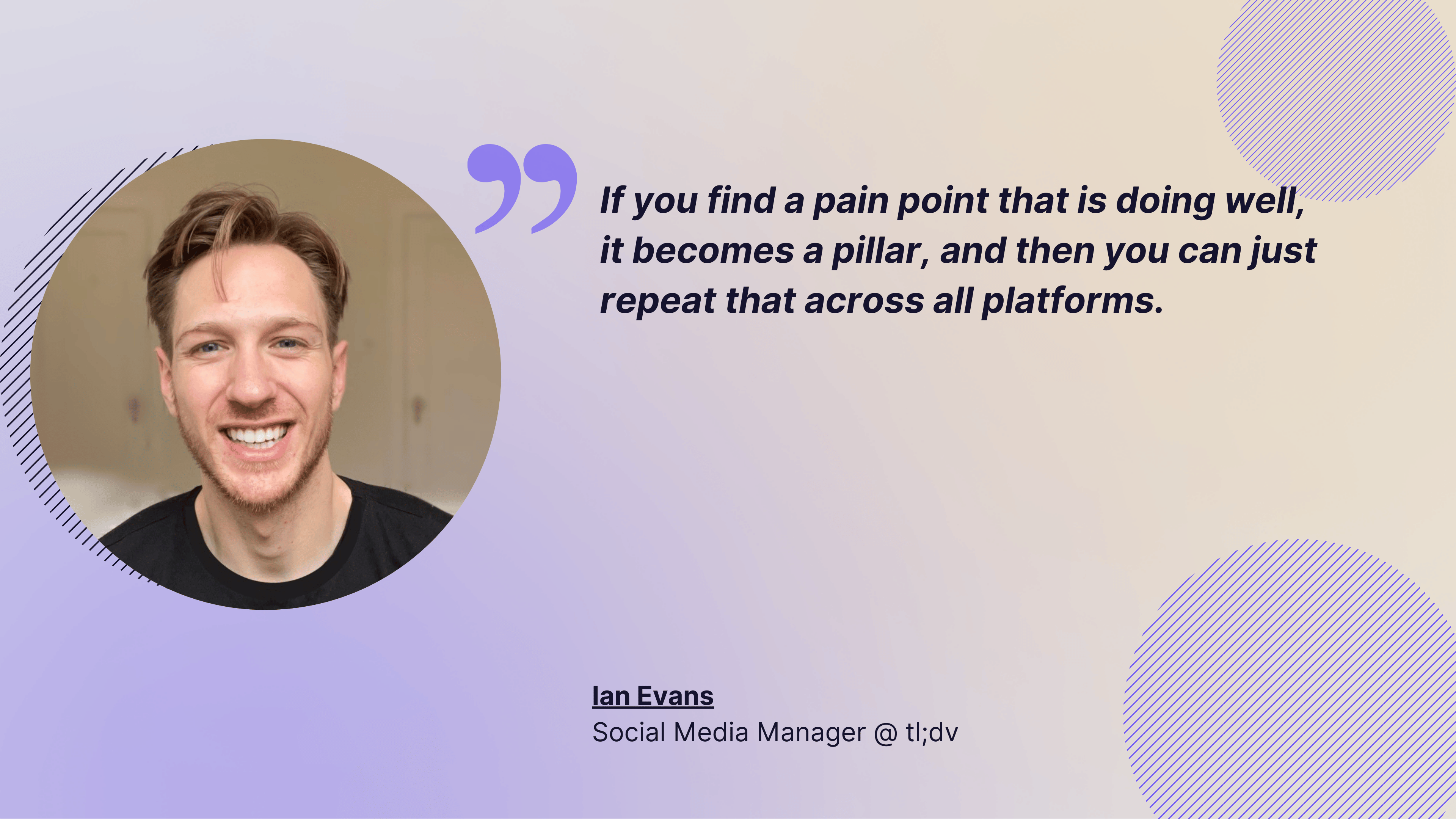
I do find that we focus most of our videos around a customer-specific pain point. (for example, the friction between a developer and a product manager). If you find a pain point is doing well it becomes a pillar and then you can just repeat that across all platforms. But we don’t seriously cross-post anything until we’ve tested it enough on one platform to know it really IS one of your pillars.
In the early days, we only posted on TikTok, and I took my best videos to Instagram. Now, 3+ years later, I can post to all 3 at once because the pillar is very defined.
- Next, ask a simple question during planning. How can this idea evolve for other platforms? This step works best when done at the ideation stage.
For instance, a product launch could feature an in-depth article on LinkedIn, an unboxing video on Instagram, and a fun behind-the-scenes skit on TikTok.
Step 5: Balance centralized planning with platform flexibility
Cross-platform marketing works best when there is one shared plan and enough freedom to adapt locally.
Imagine you are planning a big campaign around a new feature launch. The central plan defines the theme, key message, launch week timeline, and the main CTA. Everyone knows what the campaign is about and when it is happening.
Now the execution can flex by platform:
- LinkedIn might publish a product announcement post and a deeper educational carousel.
- Instagram could focus on quick feature highlights and visual walkthroughs.
- TikTok might jump on a relevant trend to showcase the feature in a more entertaining way.
- X could share quick updates, teasers, and join conversations around the launch.
The campaign stays consistent, but the execution adapts based on what works best on each platform.
Ian also talked about selecting platform/s based on what works for your brand. He said —
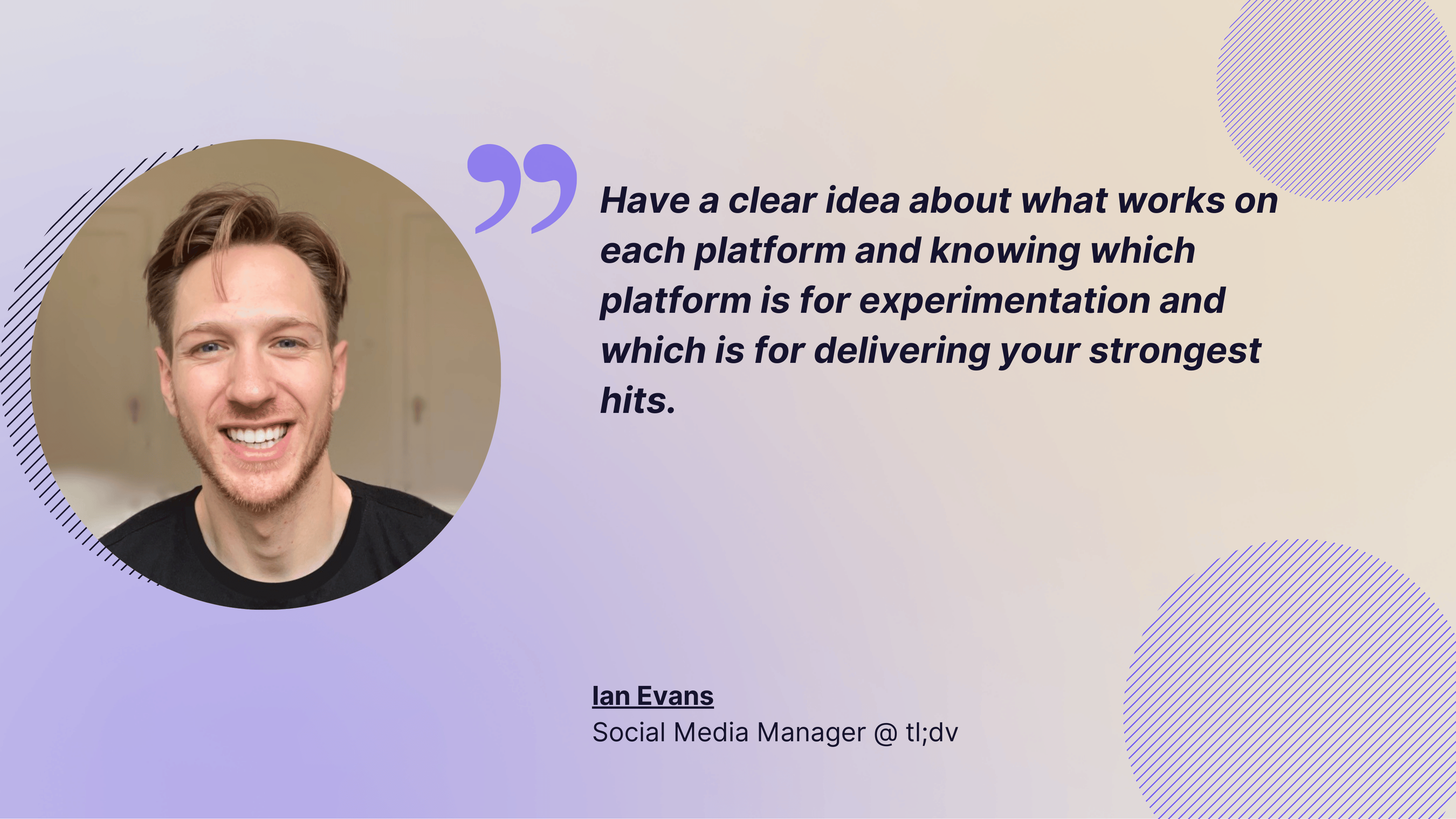
Have a clear idea about what works on each platform and knowing which platform is for experimentation and which is for delivering your strongest hits. For me TikTok will always be the place I want to post something I’m unsure about first because it feels the most exploratory and least niche-locked.
Teams can also experiment within this framework. If a TikTok format suddenly takes off, the platform owner can lean into it without waiting for a full strategy reset. That balance keeps your strategy aligned while still allowing room to move fast.
6. Analyze your campaigns across platforms
Not every campaign performs equally well everywhere. That is normal. The goal is to spot the patterns that do carry across platforms and use them to make future campaigns stronger.
When I analyze campaigns, I look for shared elements behind the wins. Was it the hook, the format, the topic, or the timing? The more campaigns you review this way, the easier it becomes to predict what will travel well.
I use the Query Builder feature in Socialinsider to analyze campaign performance across platforms. For example, I searched for all posts related to “Stranger Things” to get an idea of how that campaign/pillar performed for Netflix on different platforms
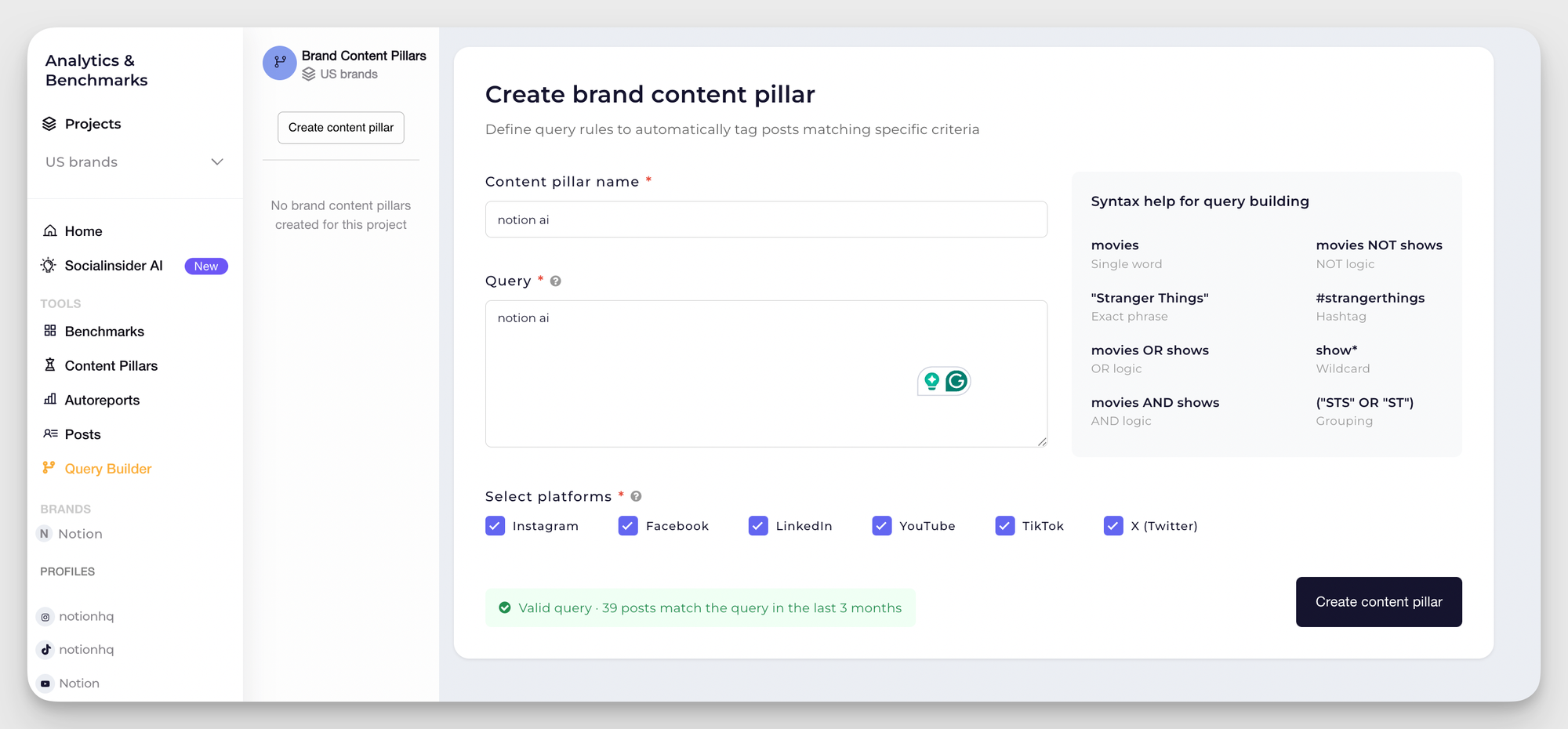
This kind of analysis helps answer practical questions:
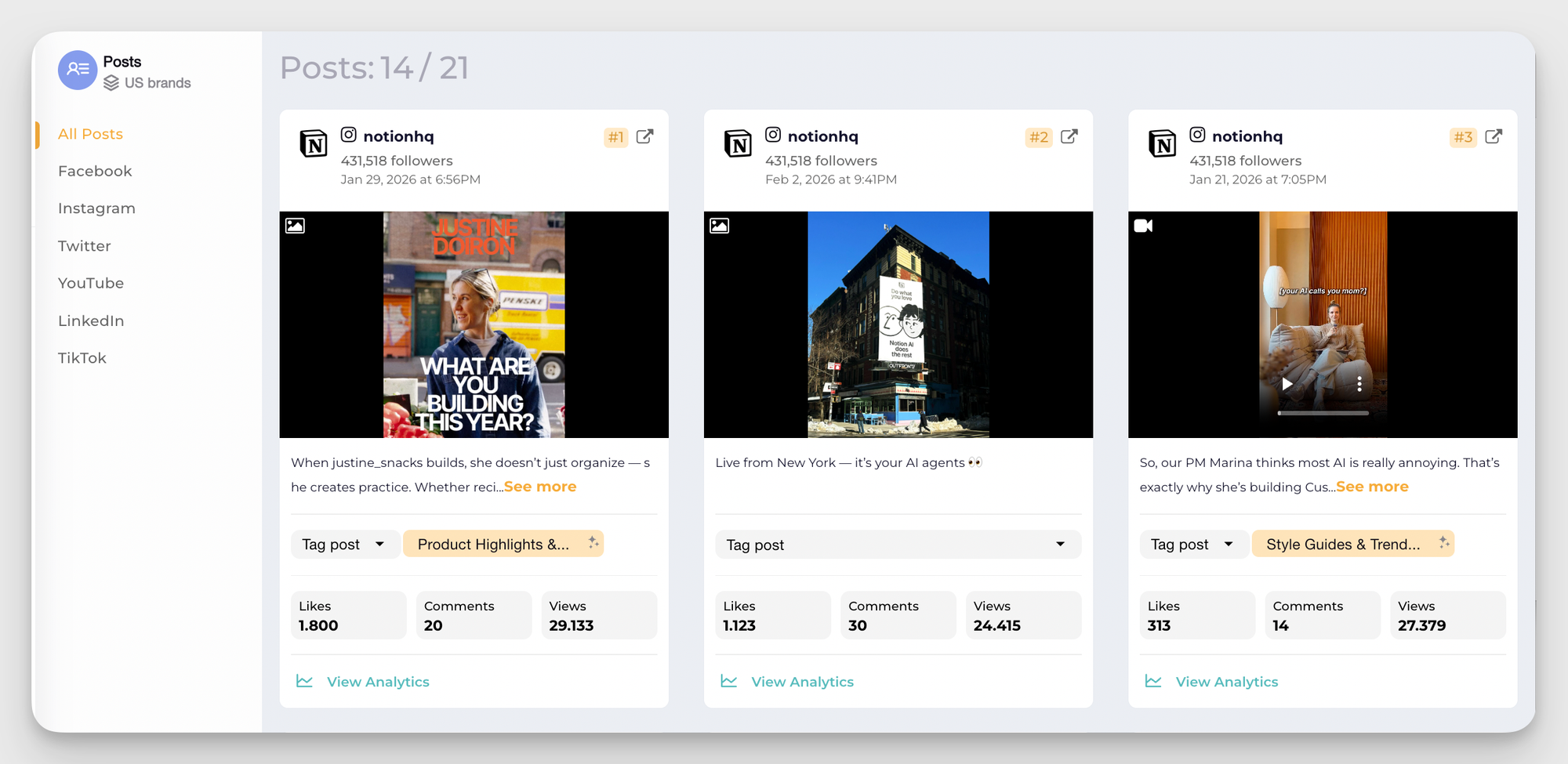
- Which posts drove the most engagement across platforms?
- Which formats worked best where?
- What messaging or visuals showed up repeatedly in top posts?
With these insights, you can carry the strongest elements forward and adapt them for the platforms you focus on most.
7. Keep a note of platform-specific algorithm changes
Social media algorithms keep changing now and then. If you don’t pay attention to what’s new, you might miss out on getting the most out of your key platforms.
Take Instagram prioritizing Reels as an example. Instead of blindly creating Reels, take a step back and first analyze what kind of video content your audience will resonate with.
Remember that algorithm shifts can affect more than formats. They can change posting frequency, ideal content length, hashtag use, or how quickly content loses visibility. Small changes in these areas can have a big impact on performance if you are not paying attention.
This is also where benchmarks become incredibly helpful. Regularly reviewing industry benchmarks and performance trends like Socialinsider 2026 benchmarks makes it easier to spot changes in reach, engagement, and growth before they become a problem.
For example, if engagement drops across an entire platform, it signals a bigger shift rather than a content issue.
I also like to treat algorithm updates as opportunities to experiment. Test new formats, adjust posting cadence, and track what improves performance.
8. Analyze your competitor’s cross-platform strategy
Have you ever wondered why a competitor seems to be everywhere and performing well on every platform?
Imagine opening their Instagram, LinkedIn, and TikTok profiles side by side. The content looks different on each platform, yet the brand still feels consistent. This means they are doing something right with their cross-platform strategy.
This is where competitor analysis becomes incredibly useful. I like to start with a side-by-side metric comparison to understand where competitors perform best. Competitor analysis tools like Socialinsider can help you here.
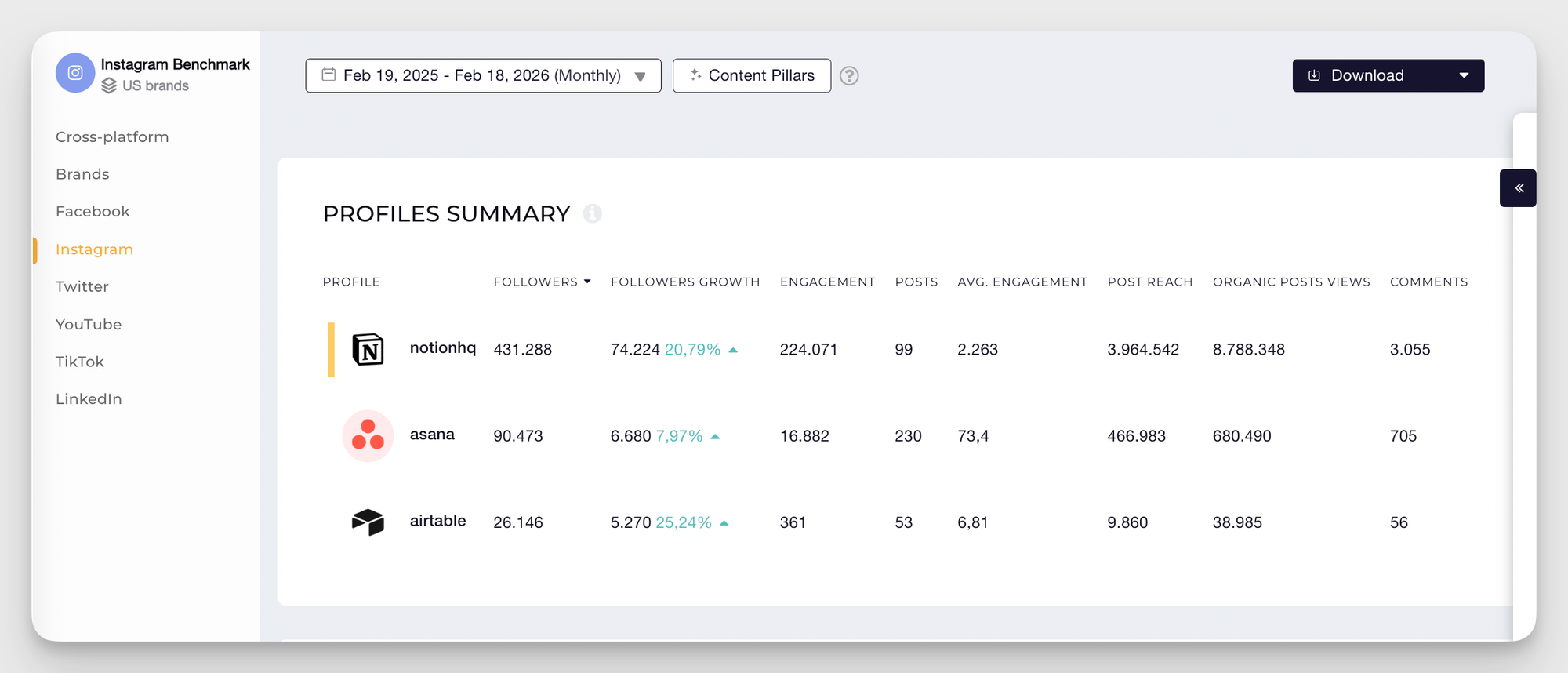
I also like the Key Insights section that shows you what each competitor is up to in a specific period and provides automated suggestions and recommendations.
You can even click on each competitor and run an individual competitor analysis that shows their top-performing content, platform performance, and key metrics.
I usually try to look for answers to questions like:
- What formats do they prioritize on each platform?
- Does their tone change between LinkedIn and TikTok?
- Which content pillars and posts consistently get the most engagement?
This process helps uncover ideas, gaps, and opportunities you can apply to your own cross-platform strategy.
9. Track your cross-platform social media analytics
If your strategy lives across multiple platforms, your analytics should too. Looking at each channel in isolation makes it hard to understand the full picture or explain results to leadership.
This is why I always recommend using unified reporting that brings data from every platform into one place. When performance from Instagram, TikTok, LinkedIn, Facebook, X, and YouTube sits side by side, patterns become much easier to spot.
With cross-platform analytics on Socialinsider, you can:
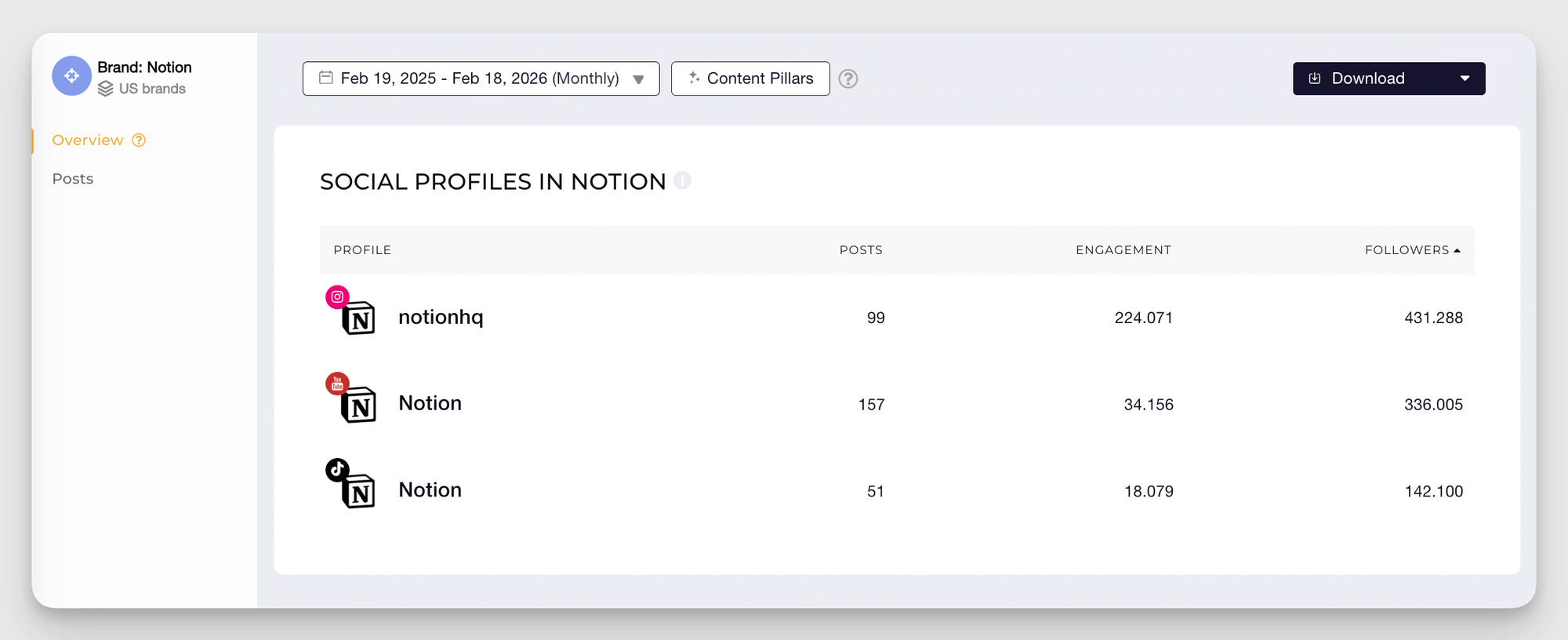
- See overall brand performance as well as channel-by-channel results
- Identify which platforms drive the strongest engagement and growth
- Compare campaigns across networks instead of reviewing them in silos
- Benchmark your brand against competitors across all platforms
This type of reporting is useful for both executive summaries and deep channel analysis. It helps you connect social media performance to broader business goals and clearly show where your strategy is working the hardest.
10. Review and refine strategy at set intervals
A cross-platform social media strategy is never a set-it-and-forget-it project. Platforms can change. Audience behavior can shift. And suddenly, what worked 3 months ago may no longer work.
I like to set a consistent cadence for cross-platform performance reviews, whether that is monthly or quarterly.
During these reviews, document the key learnings.
- Which platforms are driving the most impact?
- Which formats are consistently performing well?
- Which ideas did not land as expected?
The most important part is applying those insights to future planning. Every effort in your cross-platform social media marketing should benefit from what you learned from this step.
Tools that support cross-platform social media marketing
With a tech stack in place, it becomes easier to manage and analyze performance across social platforms. Here are two tools that will help you.
Scheduling and publishing tool — Buffer
I have used Buffer as a cross-platform publishing and scheduling tool, and it is built for simple, reliable content distribution.
You can plan posts for Instagram, LinkedIn, Facebook, TikTok, X, and Pinterest from one dashboard, then schedule them with a shared content calendar that keeps campaigns organized.
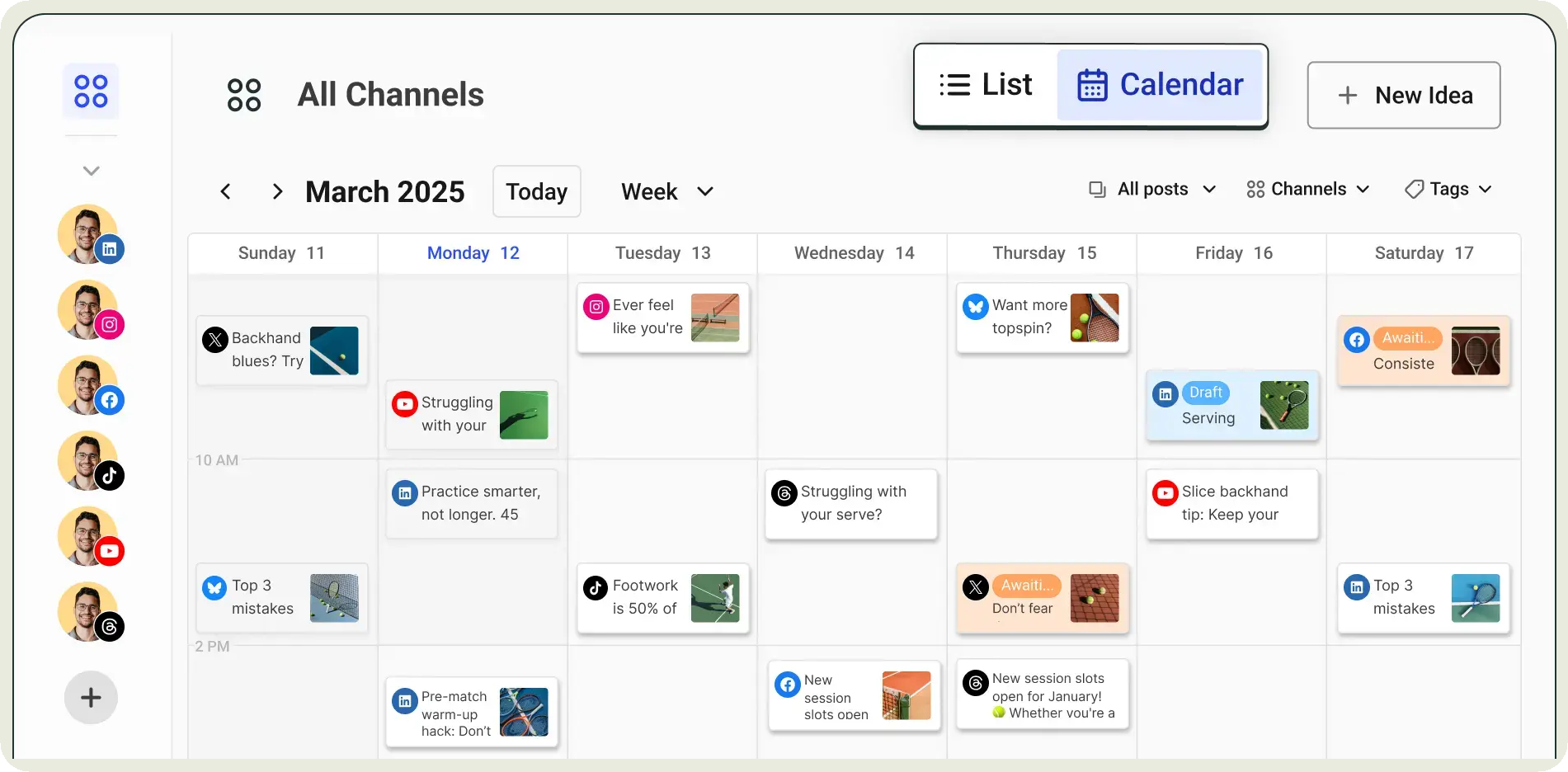
Want to post to all social media at once? The queue feature is especially useful for maintaining consistent posting without manual work every day.
I also like the approval workflows for teams and the ability to customize captions per platform instead of copy pasting the same post everywhere.
Analytics are straightforward and give a quick view of post performance, making it easy to adjust your schedule and timing based on real results.
Cross-platform analytics tool — Socialinsider
Socialinsider is built to help you understand how content performs across multiple social networks in one place. Instead of checking each platform separately, you get a unified view that makes patterns and trends much easier to spot.
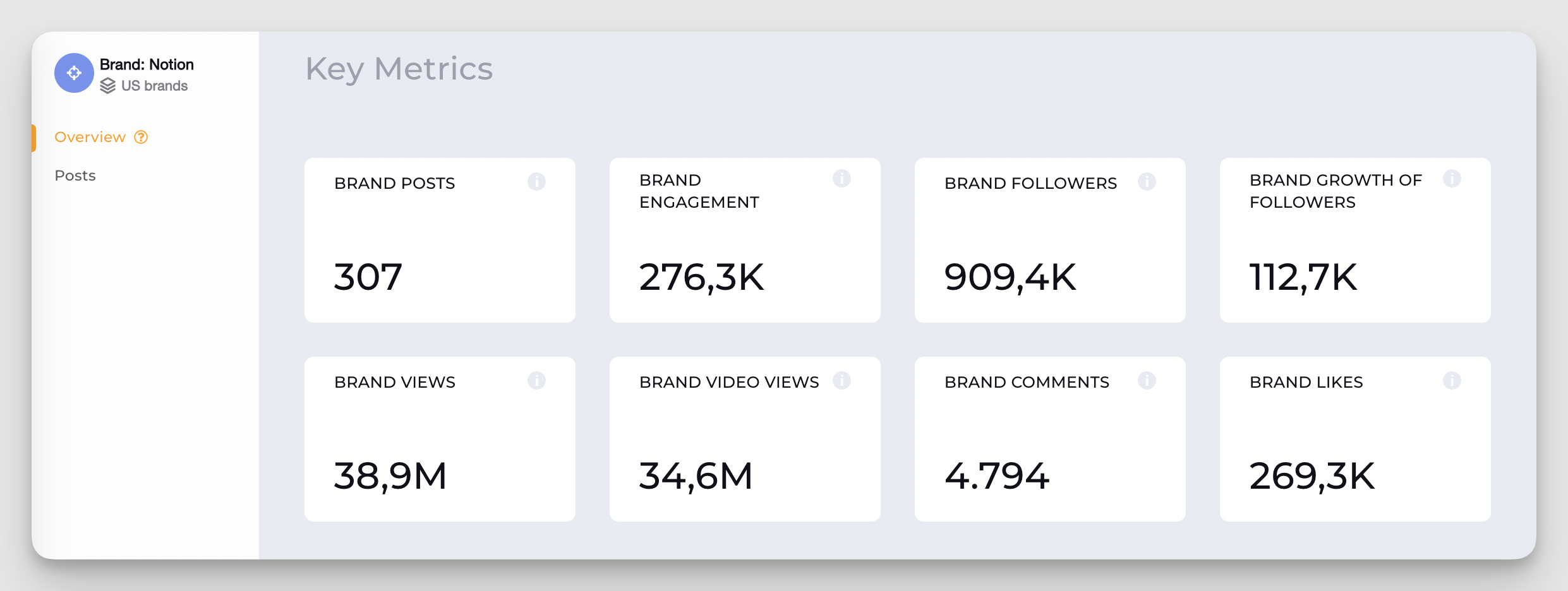
Features that are especially useful for cross-platform performance:
- Cross-platform analytics dashboard to compare performance across Instagram, TikTok, LinkedIn, Facebook, X, and YouTube
- Competitor benchmarking to see how your metrics stack up against others in your industry
- Campaign and content analysis to identify which formats, topics, and posts perform best across platforms
- Query Builder to analyze specific campaigns, keywords, or content themes across channels
- Executive ready reporting for both high level summaries and deep channel analysis
- AI assistant to quickly draw insights from your and competitor’s data
Common mistakes in cross-platform social media marketing
While investing in cross-platform social media marketing, here are four common mistakes you should avoid.
- Copy-pasting content everywhere: Posting the same caption, format, and creative across every platform ignores how audiences behave differently. What feels natural on LinkedIn may feel out of place on TikTok. Without adaptation, content often performs poorly and weakens overall brand perception.
At the same time, Ian also talked about how it’s important to maintain consistency in certain elements. One of them he mentioned was —
There’s no rule that you need to have a certain voice on a certain platform. Just because it’s Linkedin doesn’t mean it can’t be personal. Your tone of voice or sense of humour is exactly what SHOULD be consistent across the multiple platforms.
- Chasing viral moments on the wrong platform: Not every trend fits every audience. Jumping on viral formats without considering platform context or brand relevance can feel forced. This wastes time and distracts from content that actually supports long term goals.
- Ignoring historical and competitive context: Looking only at recent posts or isolated results makes it hard to spot patterns. Without historical data or competitor benchmarks, teams risk repeating mistakes or misjudging performance because they lack the bigger picture.
- Reporting without normalization: Comparing metrics across platforms without context leads to misleading conclusions. Engagement rates, reach, and growth behave differently on each network. Without normalizing data, reports can create confusion instead of clarity.
Final thoughts
If there is one thing you take from this, it is to start small and stay consistent. Pick one clear goal, look at where your audience already spends time, and build content that can move across platforms without starting from scratch every time.
Then keep checking what works and adjust as you go. You do not need a perfect system from day one. You just need a repeatable process that gets a little better each month.
And if you need a tool that can make analyzing cross-platform strategy easier, try out Socialinsider for free for 14 days.
Nidhi Parikh
Nidhi Parikh is SaaS writer that believes scrolling through social media is research for work. When not working, find her binge watching the latest series or reading anything she can get her hands on.

Analyze your competitors in seconds
Track & analyze your competitors and get top social media metrics and more!
You might also like




Improve your social media strategy with Socialinsider!
Use in-depth data to measure your social accounts’ performance, analyze competitors, and gain insights to improve your strategy.