How to Create Social Media Campaigns That Stand Out: A Detailed Framework
Learn how to create an effective social media campaign and elevate your brand. Discover how to connect with your audience and boost engagement.


There’s no shortage of social media advice out there—but when it comes to orchestrating campaigns that truly move the needle, you need more than surface tips and viral hacks. You need a mindset, a roadmap, and a toolkit designed for impact.
If you’re reading this, chances are you’re not looking for basics. You want to know how to create a social media campaign that’s structurally sound, strategically innovative, and built for real business results. You’ve probably had your fill of vague mantras—what you want is detailed, actionable guidance from someone who’s been on the hook for results, not just reach.
This deep-dive is exactly that: a step-by-step look at how advanced practitioners—those who treat social media campaign management as both an art and a science—research, plan, execute, and optimize campaigns that set benchmarks for the entire industry.
Key takeaways
- How to create an effective social media campaign? Start with deep audience insights, map creative content to each buyer stage, and use agile testing to connect strategy and execution for meaningful results.
- How to measure and evaluate the effectiveness of a social media campaign? Track advanced metrics tied to business goals—like engagement, conversion, and sentiment—and use actionable dashboards to continually optimize and demonstrate campaign impact.
What does the process of creating a social media campaign imply?
Running a truly impactful social media campaign means far more than posting content with a catchy hashtag. The process is methodical—built on layers of insight, strategic alignment, and creative orchestration. For top social media campaign management professionals, every successful initiative is rooted in a holistic and rigorous workflow, often involving:
- Rigorous research & audience segmentation: Defining who you want to reach (and why) based on real data—not assumptions.
- Creative ideation & content mapping: Aligning content formats with specific goals and customer journey stages.
- Channel selection: Evaluating platforms beyond surface-level trends, using industry performance, audience makeup, and campaign objectives.
- Strategic budget allocation: Treating your media spend not as a line item, but as a live, dynamic investment that responds to data signals and testing cycles.
- Timeline & project management excellence: Coordinating cross-functional teams, ensuring every asset, brief, and deadline is met with precision.
When you’re building and running a social media campaign strategy at the highest level, each of these steps is data-driven and repeatable—making the difference between mediocrity and breakout success.
How to create an effective social media campaign?
Start with research & audience segmentation
Let me share a hard truth: Every powerhouse social media campaign I’ve taken a part of started with this—obsessive research. Not the surface-level kind, but true, deep-dive curiosity about who I’m speaking to and what’s happening around them.
Here’s how I personally approach it—step by step:
I always start with social listening.
Before brainstorming a single hashtag or headline, I fire up my listening tools and tune in. What are people in my industry actually talking about this week? What irks them, delights them, sets them off? I set up alerts for my brand and—just as importantly—for competitors, industry phrases, and anything trending that could brush up against my audience’s world. Sometimes, the insights are humbling: the posts I thought would land simply wouldn’t have touched on what people are really fired up about.
Then, competitor benchmarking keeps me honest.
It’s easy (and dangerous) to get tunnel vision. To avoid that, I make it a ritual to peek under the hood of my competitors’ activity—who’s getting organic buzz? Which content gets shared, and which falls flat?
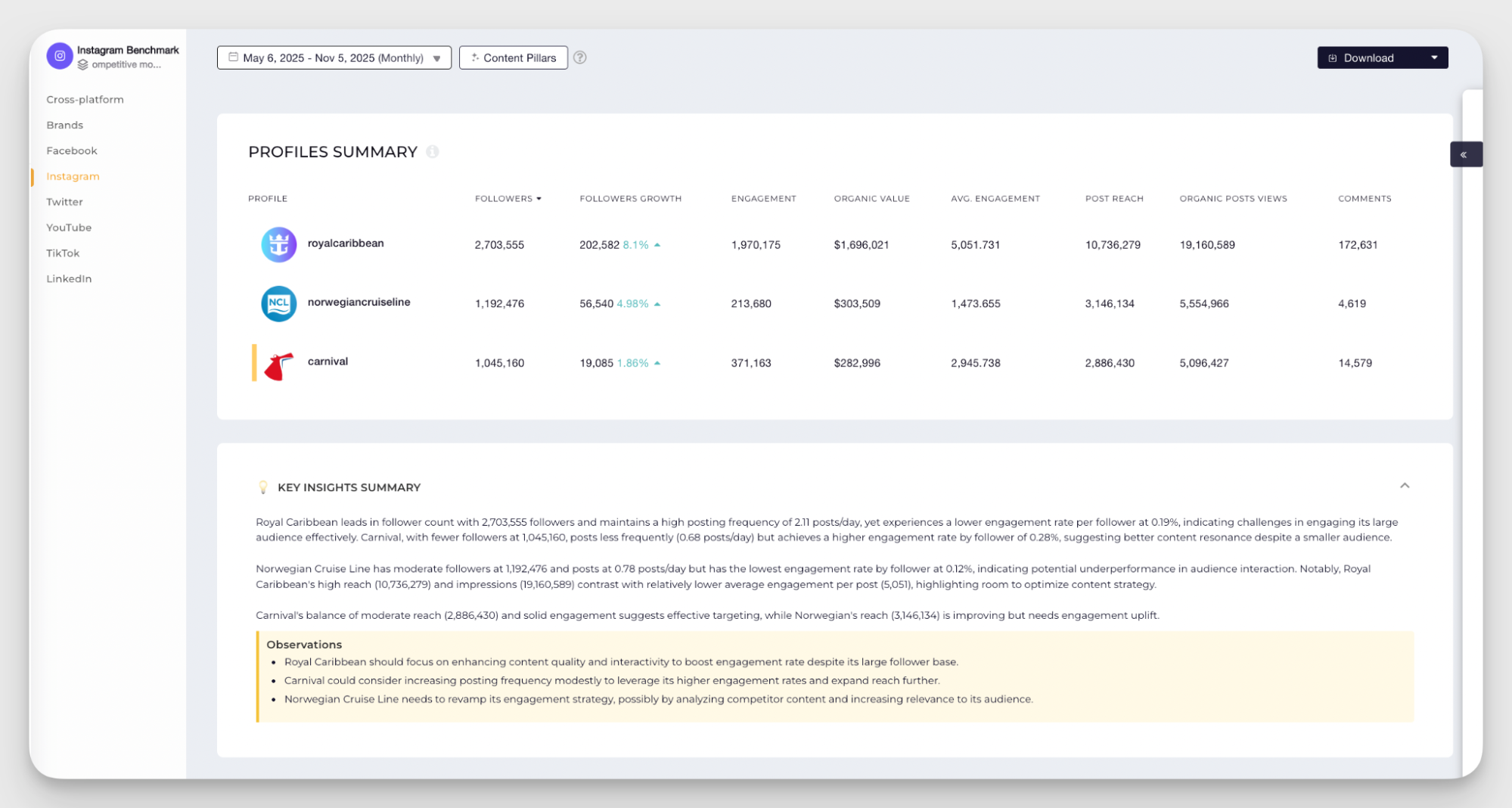
Tools like Socialinsider give me that granular readout: what platforms are working, which formats (stories, polls, memes) get traction, even the best posting windows. I’m always asking, “What’s missing here? Where could we zig while they zag?”
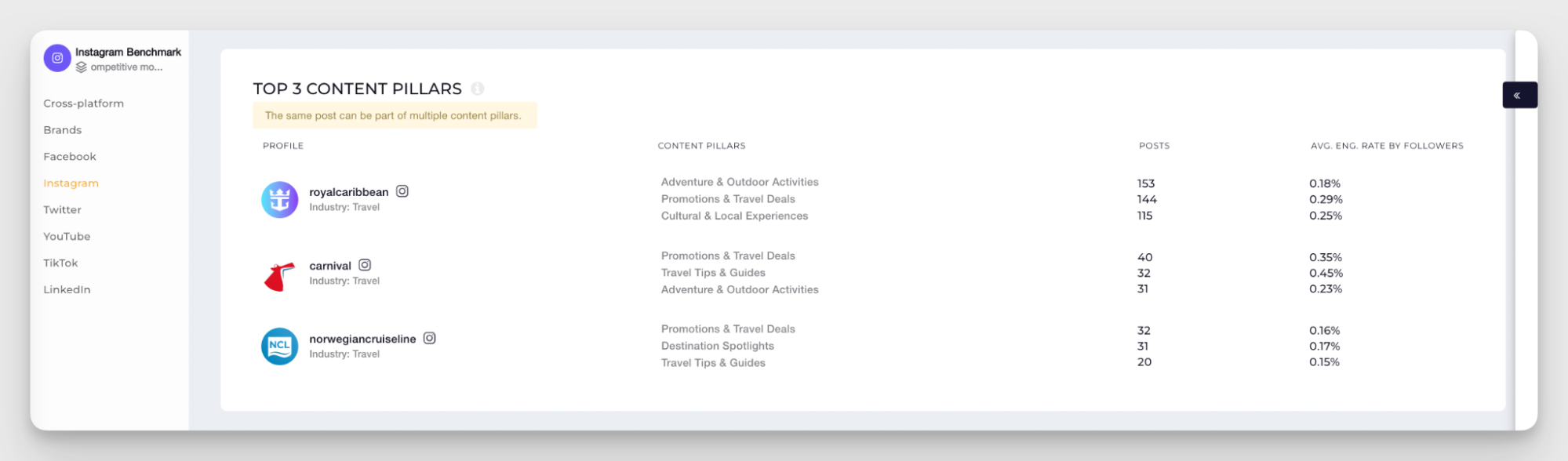
For example, one of our customers, Alfonso from Noxport, told us recently in a customer interview that the trigger for him for looking at social media analytics solutions, such as Socialinsider, was to get inspiration from competitors' successful content, to replicate strategies and to stay competitive in the industry - quickly react to competitor strategies, like raffles or ambassador campaigns. And guess what? Now that's a success!
Persona development is where the magic happens.
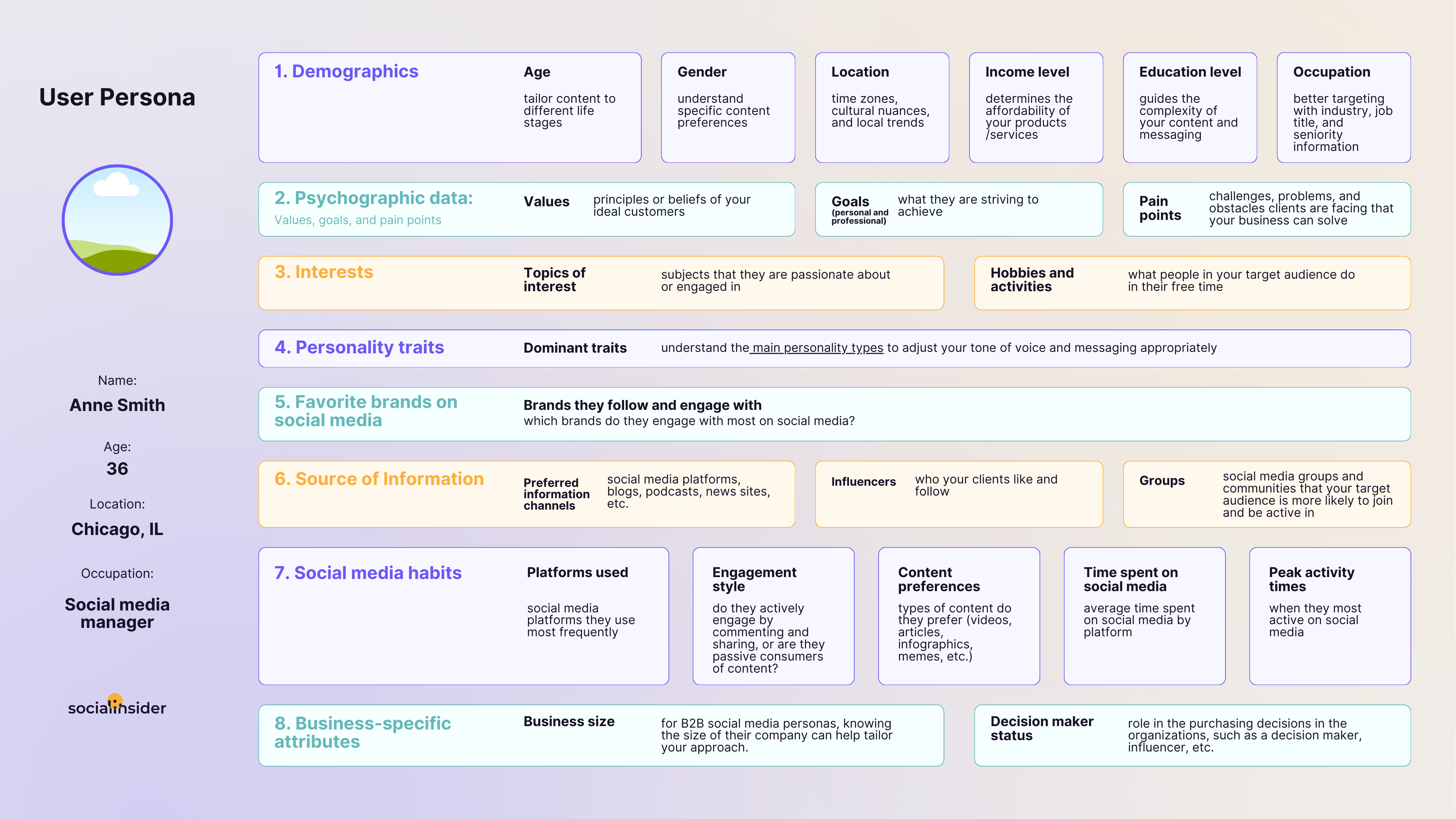
No—“millennial woman, 25–34, likes coffee” isn’t a persona. To get real, I blend platform analytics (what are people saving, clicking, sharing?) with what our CRM and sales teams know about actual customers. Sometimes, I’ll do quick interviews or surveys and ask point-blank: “What would make you click on a campaign like this?” The more nuance, the better—interests, habits, pain points, even what podcasts they’re into.
Below you'll find some data points I like to peek into when creating my campaign personas:
Move to creative ideation & content mapping
This is the part where strategy meets imagination—and where, frankly, some teams spin their wheels. I’ve learned that even the brightest creative sparks can fizzle without a structured approach to mapping content. Here’s how I (and high-performing teams I work with) ensure creative doesn’t just look good, but actually moves the needle.
Start with a map, not a menu.
Instead of throwing ideas at the wall, I step back to visualize the entire buyer journey—from first scroll to final conversion. I break the journey into stages: Awareness, Consideration, Decision, and Advocacy. Then I ask: “What do people need—emotionally and rationally—at each stage to move forward?”
I build a content matrix for every campaign,
Imagine a big whiteboard split into columns for audience segments and rows for buyer stages. I plot content types (videos, carousels, stories, polls, user-generated content) against each moment in the journey, identifying which format will drive the biggest impact.
- Awareness: Eye-catching short-form videos and visuals that stop the scroll, spark curiosity, and plant a memory.
- Consideration: Deeper storytelling—think carousels, infographics, short interviews, or mini masterclasses—focusing on how your offer solves a real-world problem.
- Decision: Clear, persuasive offers, unambiguous CTAs, and social proof (testimonials, UGC, before/after posts).
- Advocacy: Tools and prompts that invite people to contribute—“Share your story,” “Tag us with your results,” or incentive-based referral campaigns.
Creative alignment is my secret weapon.
It’s not just the “what,” but also the “why.” For every asset, I ask: “Is this meeting the needs we uncovered during research? Is this tailored for where people are mentally and emotionally?” When there’s a disconnect, I get out the virtual red pen and revise.
Frameworks keep the chaos in check
I often shortlist 2–3 creative concepts per key segment, then run them by stakeholders and—sometimes, for big campaigns—even real customers. Anything that feels forced, generic, or off-mission goes into the digital recycling bin.
Pro tip: Always account for platform nuances
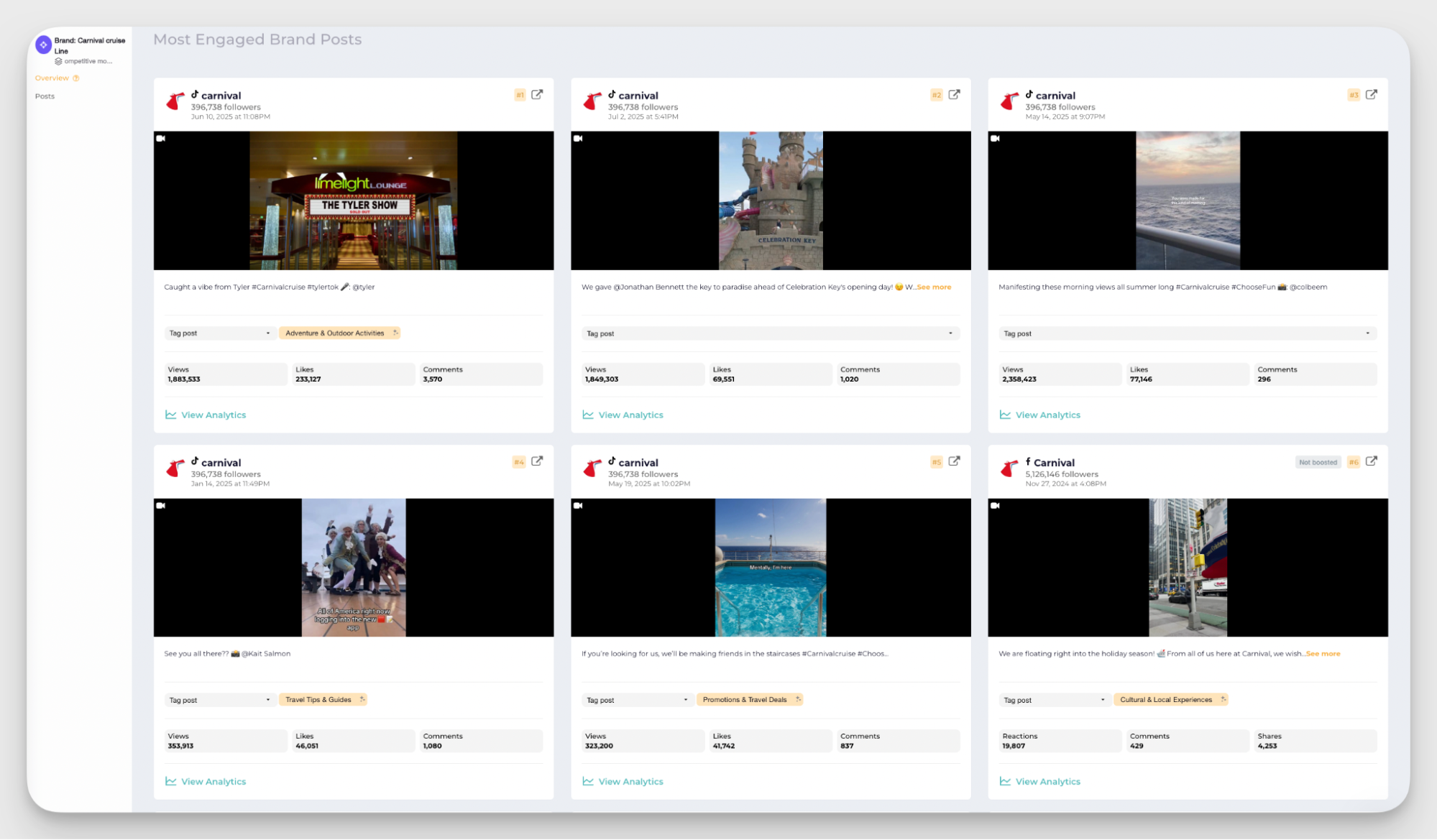
What kills on TikTok may underwhelm on LinkedIn. I design for the format and mood of each channel but ensure the core message remains consistent. If you’re building a social media campaign, test different facet ratios, video lengths, or carousel depths to see which align best with in-feed behaviors.
And just so you know, Socialinsider can help you quickly identify top-performing posts across platforms, so that you can spot really easy what works an what doesn't.
Before launching, storyboarding beats improv
For big pushes, I’ll literally sketch out the sequence—“Here’s what someone encounters on Day 1, Day 3, Day 5...” This helps ensure every piece works together, rather than shouting into the digital void.
Select the channels: deliver the right message in the right place
Now comes a question that separates good campaigners from strategic masterminds: Where should this campaign actually live? The answer isn’t “everywhere.” It’s about matchmaking—who you want to reach, what you want them to do, and where they actually hang out online.
Here’s how I figure it out:
I don’t default to what’s trendy—I let the data lead
You’d be surprised how often a platform that seems less “exciting” on the surface delivers outsize results, simply because it aligns perfectly with the target. I always start by lining up my campaign objectives and audience personas from my earlier research with current channel analytics. I look at:
- Where does our audience engage most consistently?
- On which platforms do they convert (not just like or comment)?
- What’s the “mood” of each network right now—is it primed for thought leadership, quick hits, or rich storytelling?
I build a tailored comparison matrix
For every major initiative, I draft a side-by-side platform matrix, weighing their strengths and weaknesses for the specific industry, audience, and campaign goal. For example:
Objective trumps “FOMO.”
If my campaign is all about employer branding in B2B SaaS, LinkedIn is my home field—not Instagram. Launching a viral contest targeting Gen Z in streetwear? TikTok is the playground.
Message fit matters—format is everything.
A longform video packed with career tips may not get love on TikTok but could thrive in a LinkedIn native post or a Facebook Watch feature. Meanwhile, bite-sized, meme-ready content makes Twitter/X and Stories shine.
In every campaign plan, I chart out:
- What’s the core goal per channel?
- What’s the primary and secondary audience segment here?
- Which content formats will travel furthest in this space?
Test small, then scale.
I’ll often allocate “test” budget across 2–3 platforms, closely monitor performance, and then double-down on the winner. Sometimes, the data surprises everyone—including me.
Allocate the budget
Here’s where campaign planning turns from dream to discipline. No matter how inventive the ideas, even the best social media campaigns can fail if resources are scattered, spent too thin, or locked into underperforming channels.
Over the years, I’ve discovered that mastering budget allocation isn’t just about “how much”—it’s about “why, where, and when” to invest for maximum impact.
Start from the objectives you have
Every campaign budget I work on starts from this one question: What’s the single most important result we need? Brand awareness, list-building, direct sales, or pipeline? Each goal comes with its own spend pattern. I break down the core funnel stages and map estimated costs to benchmark performance rates—using data from similar past campaigns and industry averages.
Test–learn–optimize: my non-negotiable cycle
Campaign budgeting isn’t “set it and forget it.” I structure every plan with short testing windows up front (72 hours to a week), where I closely watch CPM, CPC, and early conversion rates across each platform and creative set:
- If something is underperforming: Pause, analyze, and redistribute that chunk of the budget elsewhere.
- If something overperforms: Double-down, fast. Move funds from the “pivot pool” to maximize what’s working.
Orchestrate seamless execution with timeline creation and good project management:
This is the stage where well-intentioned plans can so easily get bogged down by delays, missed handoffs, or plain-old confusion.
Over the years, I’ve learned that project management is the silent engine behind any social media campaign strategy worthy of the name. It’s not just about schedules and checklists—it’s the art of orchestrating creative, analytics, media buying, and approval workflows so that every asset and action lands exactly when (and how) it should.
Here’s my real-world approach:
Kickoff with clarity—who does what, by when
I start every major campaign with a clear roadmap:
- Milestones: Key dates for concept approval, asset hand-off, QA, soft launch, and reporting.
- Roles: Who owns each deliverable (creative, copy, design, analytics, paid media)?
- Dependencies: What needs to happen first (audience list pulls, creative concepts, tracking pixel QA), and which tasks can run in parallel?
Build time buffers—expect the unexpected
No campaign has ever gone exactly as planned. That’s why I pad critical deadlines with a day (or three) for the inevitable late feedback, tech glitches, or surprise approval chains. I’d rather deliver early than apologize for delays.
Cross-functional check-ins
Weekly standups (or even short daily scrums during launch weeks) let me surface red flags and reassign resources before things go off the rails.
Bonus: advanced campaign execution tactics
This is where solid prep becomes real-world impact—the moment a campaign leaves the doc and takes over your audience’s feed.
Here’s how I approach sophisticated execution, ensuring high performance and sustained momentum.
Embrace multivariate testing (don’t just “set and forget”)
The biggest leaps in campaign performance I’ve seen rarely come from a “big idea” alone—they come from systematic experimentation. Instead of just running a simple A/B test, I’ll stack multiple creative variables side by side:
- Swap different headlines, visuals, and CTAs across target segments.
- Try various post formats (video vs. carousel, story vs. grid).
- Shuffle timing—see if weekdays or weekends deliver differently. Then, I analyze which combinations drive not just clicks or likes but true downstream impact (conversions, signups, shares). Running these “mini-battles” lets the data, not just opinions, shape the rollout.
Dial in targeting: beyond demographics
Custom audiences, lookalikes, retargeting—if you aren’t layering these tactics by now, you’re leaving results on the table.
Here’s how I like to build my target stacks:
- Custom audiences from mailing lists, CRM exports, or engaged site visitors.
- Lookalike audiences to scale success—mirroring the high-value users showing strong engagement or conversion.
- Retargeting for those who interacted but didn’t act—delivering message sequencing (“Saw the video? Now here’s the offer.”)
On top of that, I add behavioral triggers: targeting people who watched 50% of a video, saved a post, or bounced at checkout. The art is in combining precision with enough reach to let the creative breathe.
Creative Iteration: constantly raising the bar
Great campaigns aren’t static—they evolve. I always build in weekly “creative refresh” checkpoints.
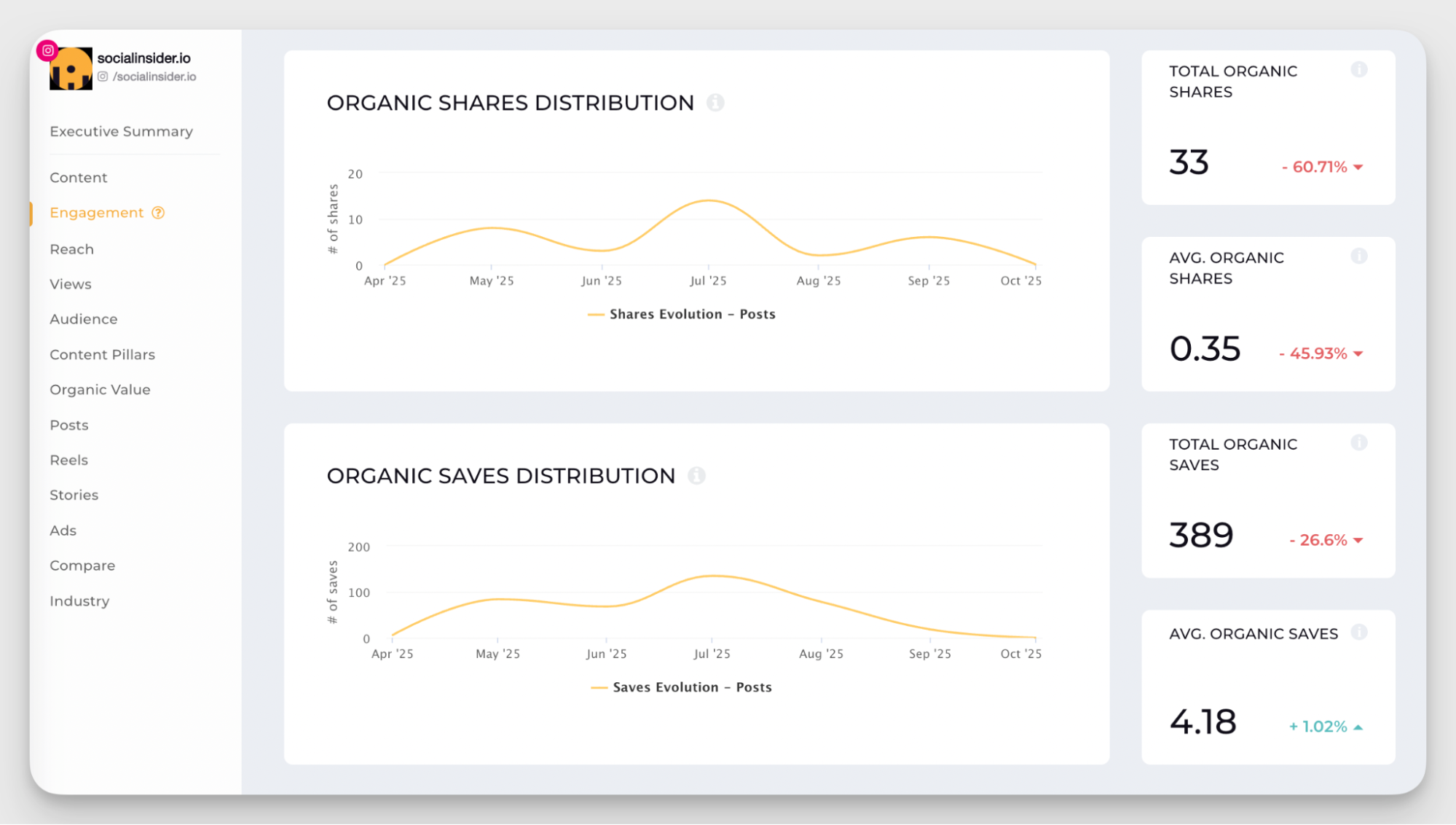
If initial assets start fatigue (engagement drops, comments slow), I introduce new variants: fresh images, updated copy, or featured UGC to keep things feeling organic and current. Winners become templates for new iterations; underperformers get swapped out fast.
How to measure and evaluate the effectiveness of a social media campaign?
Here’s the honest truth: If you don’t measure with sophistication, you’re flying blind. I treat analytics not as an afterthought, but as a real-time steering wheel for every social media marketing campaign.
Focus on advanced social metrics
When I want to show a campaign’s true value, I go well beyond surface metrics. Sure, impressions and likes matter—but the real story lives in a few key, expert-level numbers:
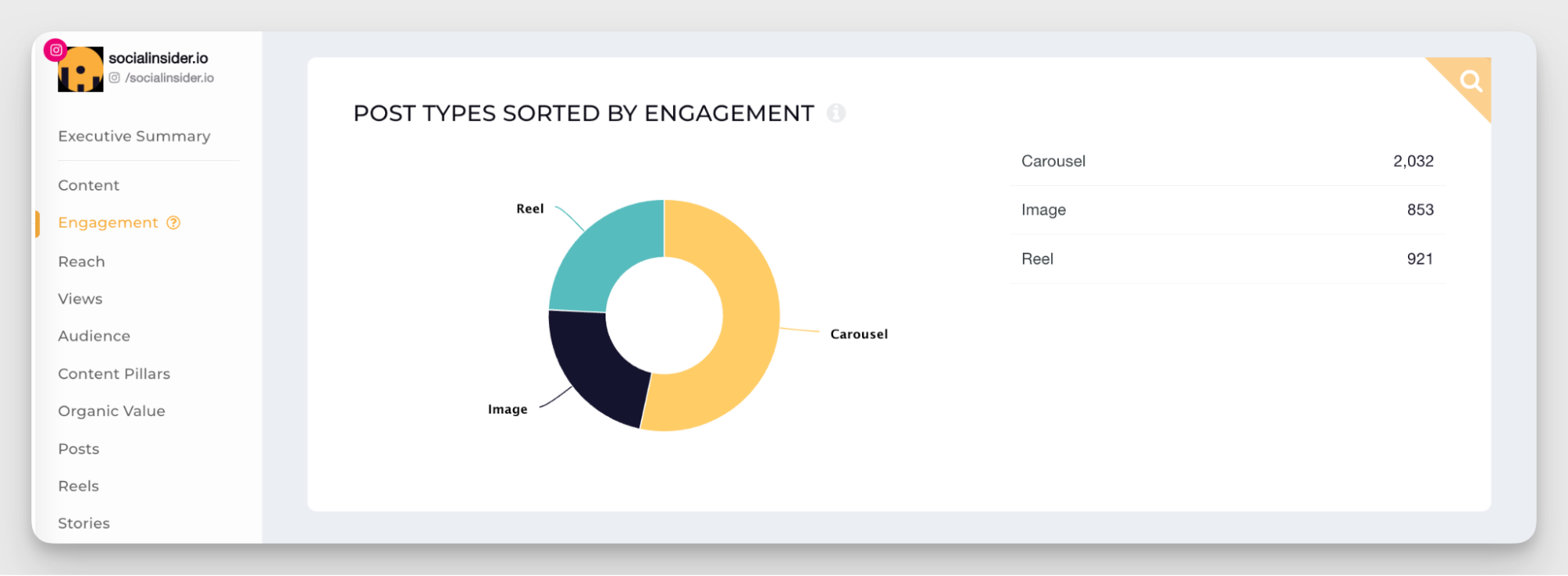
Engagement rate (the resonance test):
I calculate this as (likes + comments + shares) divided by total followers and reach ( because I like to see both versions). This tells me not just who saw, but who actually cared enough to act. I also drill into engagement by content type: Does video outperform static? Do Stories or carousels drive more meaningful interactions?
Conversion rate (the action test):
Every dollar spent on paid, and every organic push, needs to tie back to actions: signups, sales, downloads, or whatever your “hard currency” metric is. I set up tracking via UTM links, Facebook/Meta Pixel, and Google Analytics goals—all mapped back to campaign-specific dashboards.
Sentiment analysis (the mood test):
Using social listening platforms, I monitor not just volume but tone—are comments, tweets, and shares positive, neutral, or negative? Spikes in negative sentiment after a campaign drop are an early warning; positive surges predict long-tail advocacy or UGC waves.
Attribution Windows (the long-term impact test):
Rarely does someone click and buy immediately. That’s why I set up multiple attribution windows: 1-day, 7-day, 28-day, and even multi-touch models, so I can see which posts or ads contributed along the user’s path, not just the last click. This is pivotal for campaigns with longer consideration cycles.
Set up dashboards & reporting insights for C-Level stakeholders
Dashboards are non-negotiable in my workflow.
I build custom dashboards using Socialinsider, or even Google Data Studio, segmenting by campaign, platform, and funnel stage. Real-time visualizations keep both “makers” and “executives” in sync.
- For C-levels, I focus on what matters: cost per lead, cost per acquisition, pipeline or sales impact, and brand share of voice.
- Insights always tie back to KPIs: “This campaign didn’t just drive 10k likes…it lifted sales pipeline by 19%, with a 3.1% engagement rate outperforming industry benchmarks.”
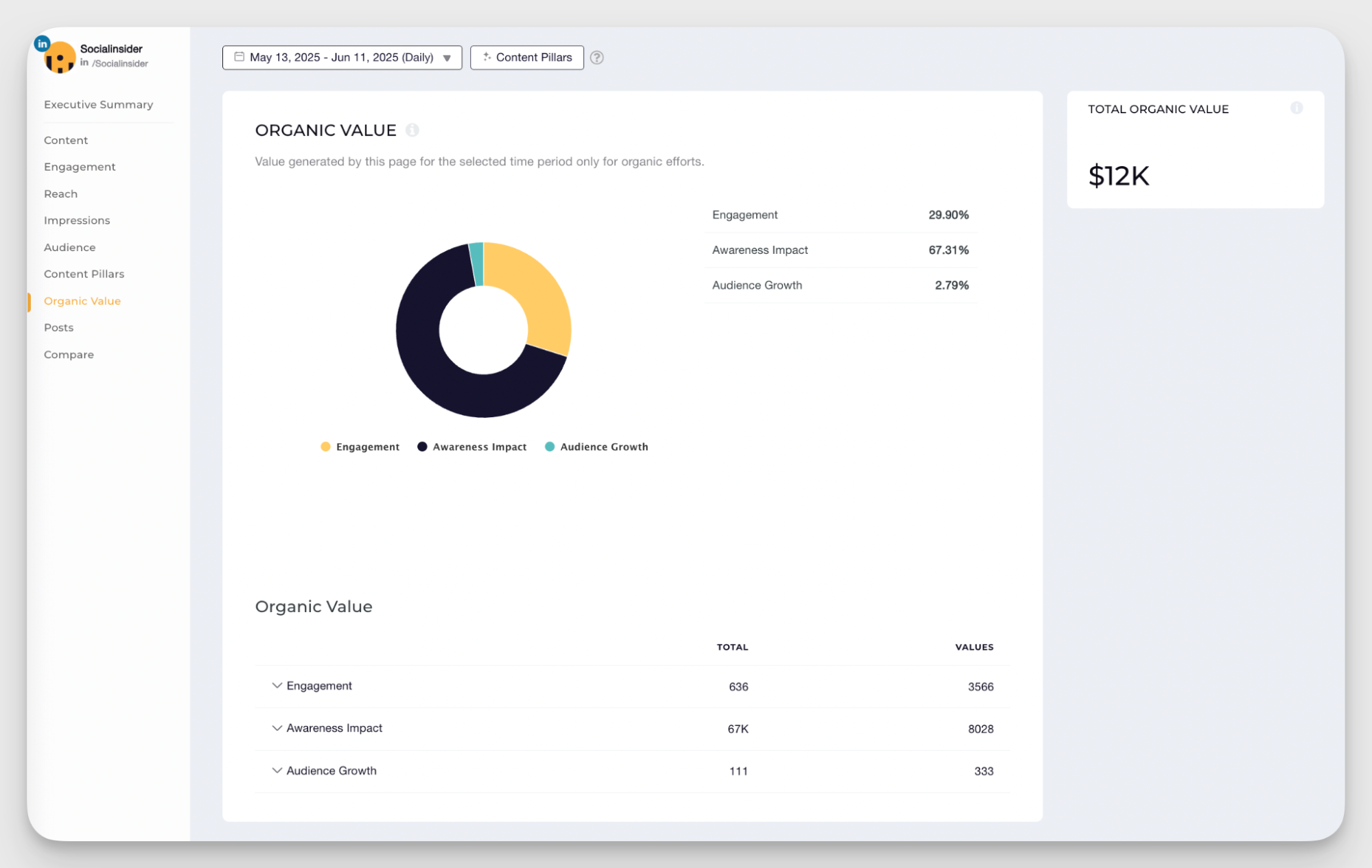
And because organic social plays a big role in community fostering, which is not only an easy-to-track objective, I always try to link social-specific metrics to business outcomes as well. For this, I use Socialinsider's Organic Value feature.
Leverage benchmarks
Benchmarks are context, not ceiling.
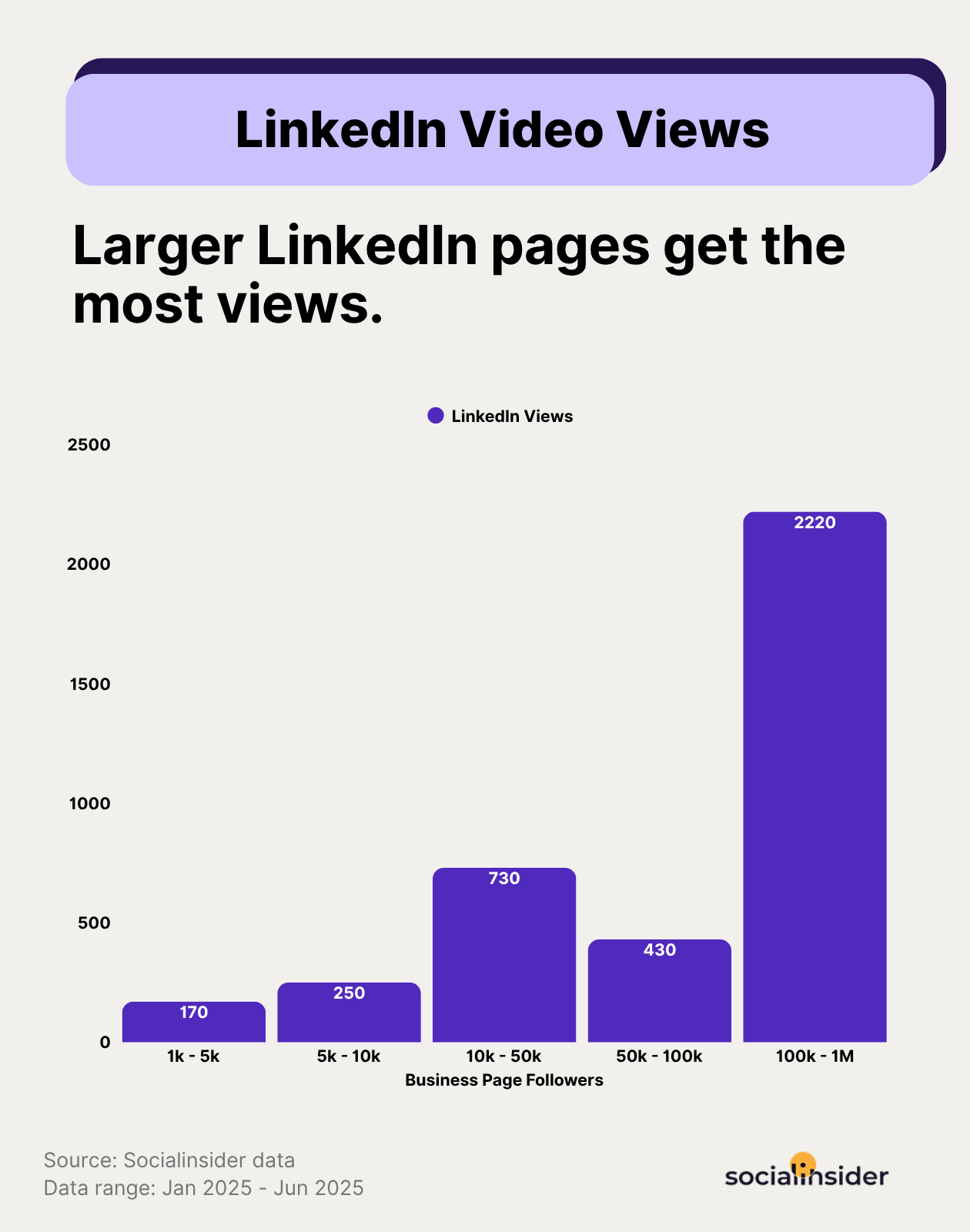
Every industry, platform, and audience has its own benchmarks for engagement, click-through rate, conversion rate, and sentiment. I always:
- Compare our results to both the industry average AND our past performance.
- Identify outliers—what crushed it, what underwhelmed, and why.
- Use benchmarks to identify patterns, but set goals based on stretch and learning, not comfort.
Final thoughts
Effective social media campaigns are never the result of guesswork—they’re built on a solid foundation of research, creative alignment, tactical testing, and a willingness to adapt.
By taking a structured approach—from segmentation to execution and analytics—you set your campaigns up for real, repeatable success. Even the best campaign strategy is only as powerful as its ability to evolve, so let your outcomes guide your next steps, refine your playbook with every iteration, and don’t be afraid to try something bold. With these principles as your foundation, you’re ready to build campaigns that connect, convert, and stand out in a crowded feed.
FAQs on social media campaigns
What are some examples of successful social media campaigns?
Spotify Wrapped: data + Sdtorytelling = viral delight
Every December, my feeds erupt with people sharing their Spotify Wrapped highlights. But it isn’t just about personalized playlists—it’s an annual masterclass in turning user data into a social event.
- Why it works: Spotify builds shareability in from the start. The visual recaps are mobile-optimized and quick to post—and every user basically volunteers to spread the brand organically.
- Key tactics to borrow: Find ways to let your audience own the story. Build in custom, one-tap sharing and UGC hooks as part of your social media campaign strategy.
- What I’d steal: Yearly, seasonal, or milestone-driven recaps or spotlights that reward users for participation. If you’re running a SaaS or community brand, consider a “year in review” as a regular campaign tentpole.
Barbie Movie Social Media Campaign (2023)
When the Barbie movie was gearing up for its 2023 release, Warner Bros. and Mattel rolled out a truly iconic, multi-platform social media campaign that turned a film launch into a global pop culture event.
- Why it worked: The campaign brilliantly combined teaser trailers, eye-catching posters, interactive AR filters, a “Barbie Selfie Generator,” and collaborations with influencers and brands (from Airbnb’s Barbie Dreamhouse to custom Crocs). #BarbieTheMovie consistently trended across Twitter, TikTok, and Instagram, while the creative team encouraged fans to generate their own Barbie memes, sparking huge waves of organic UGC.
- Key tactics to borrow: Launch a campaign with a strong, signature creative hook (the Barbie pink + “This Barbie is” meme), empower fans to participate and remix, integrate playful interactive elements (selfie generators, AR filters), and partner with unexpected brands for cross-industry lift.
- What I’d apply: Build anticipation through phased teasers, engineer easy-to-share assets that let your audience insert themselves into the campaign, and connect offline (themed pop-ups, co-branded real-world locations) with online buzz for maximal impact.
Charu Mitra Dubey
Content Marketing Lead at GetPhyllo with 6+ years of digital marketing experience. Founder of CopyStash, a weekly newsletter on marketing.

Analyze your competitors in seconds
Track & analyze your competitors and get top social media metrics and more!
You might also like



Improve your social media strategy with Socialinsider!
Use in-depth data to measure your social accounts’ performance, analyze competitors, and gain insights to improve your strategy.