Benchmark LinkedIn 2026
Scopri gli ultimi benchmark LinkedIn e ottieni insights su come ottimizzare la tua strategia per rafforzare la tua presenza su LinkedIn.

Se c’è una cosa che ho imparato lavorando nel tempo con i dati social media, è che restare rilevanti richiede un adeguamento costante. Il modo in cui le persone interagiscono con i contenuti continua a evolversi. Anche piccoli cambiamenti nel comportamento possono modificare la performance da un anno all’altro.
Ecco perché oggi avere successo su LinkedIn è più difficile e più strategico che mai. Per aiutarti a capire dove si trovano nuove opportunità, questo report sui benchmark di LinkedIn offre insights chiari su ciò che funziona in termini di engagement, impressions, abitudini di pubblicazione e crescita del pubblico.
Basati sull’analisi di 1,3 milioni di post aziendali su LinkedIn, questi benchmark di LinkedIn ti offrono la chiarezza e il contesto necessari per definire obiettivi consapevoli, affinare la tua content strategy e massimizzare il tuo impatto su LinkedIn in un panorama sempre più competitivo.
Sintesi esecutiva
- I post con più immagini generano più Likes su tutta la linea.
- I sondaggi ottengono performance migliori in termini di Impressions sulle pagine con più di 50k Followers.
- Le pagine LinkedIn più grandi generano il maggior numero di Video Views, ma su tutte le pagine LinkedIn le Views sono diminuite del 36% su base annua.
- Nel 2025, i brand hanno aumentato la frequenza di pubblicazione per i formati di contenuto visual-first.
- La crescita dell’audience su LinkedIn ha rallentato nel 2025, soprattutto per gli account più grandi.
Benchmark trimestrali di LinkedIn
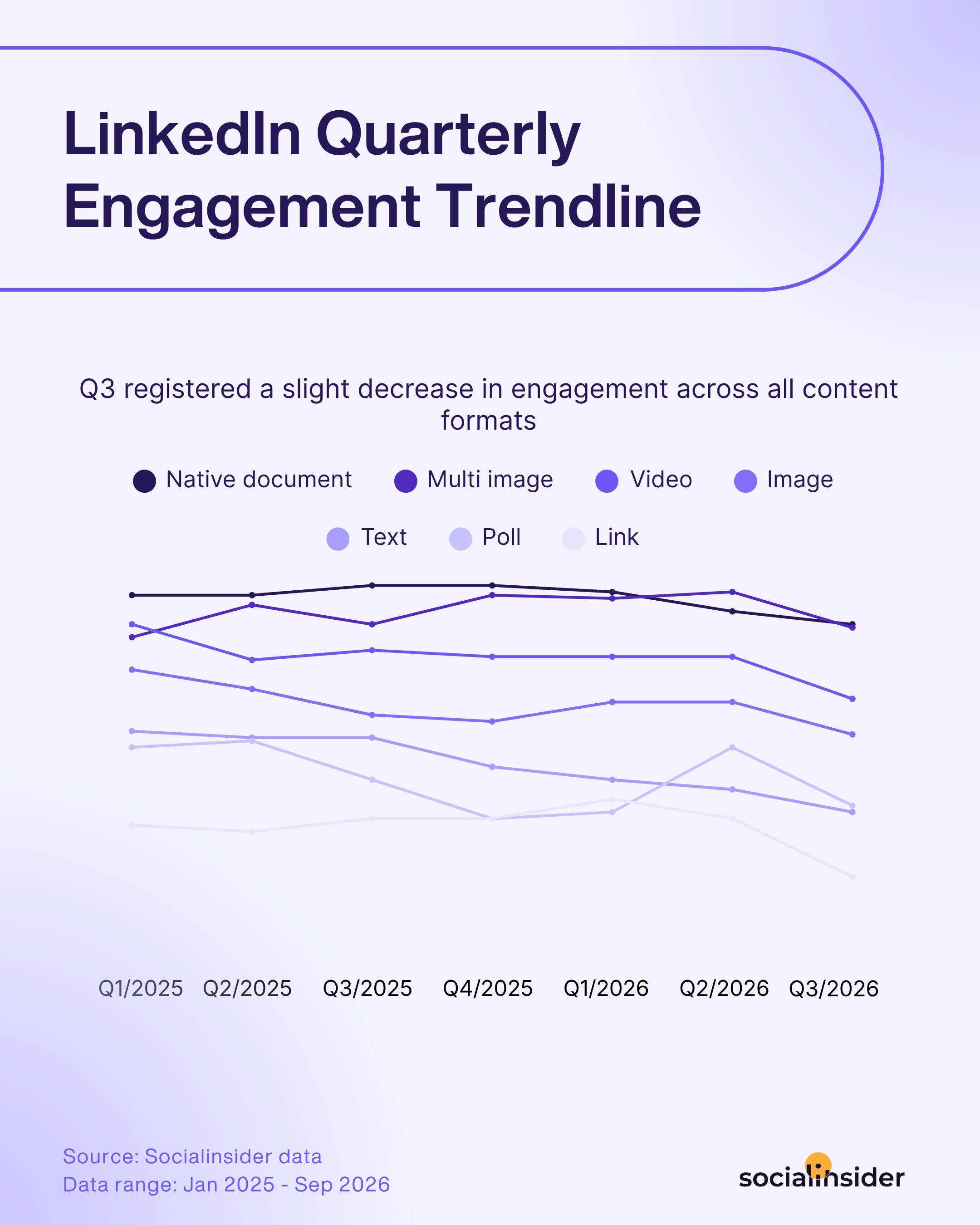
Nel complesso, durante la prima metà del 2026, l'engagement su LinkedIn è rimasto perlopiù stabile.
Analizzando i dati del Q2 2026, il panorama dell'engagement su LinkedIn è rimasto nel complesso abbastanza stabile. La maggior parte dei formati di contenuto ha registrato solo variazioni minime rispetto ai trimestri precedenti.
Da ormai diverso tempo, i documenti nativi e i post con più immagini superano costantemente ogni altro formato di contenuto su LinkedIn. Questo dimostra che gli utenti di LinkedIn interagiscono maggiormente con contenuti che raccontano una storia o offrono valore in modo più semplice e interattivo.
Che si tratti di caroselli educativi, framework passo dopo passo, insights di settore o esperienze personali suddivise in slide, gli utenti sembrano molto più propensi a interagire con contenuti che li invitano a fermarsi, scorrere e dedicare davvero del tempo a un post.
Ecco cosa hanno rivelato i dati sulle performance di ogni tipo di contenuto:
- Post con più immagini: Nel Q3 2026, questo formato di contenuti ha registrato un lieve calo dell'engagement, passando dal 6,60% del Q2 al 6,40%.
- Documenti nativi: Nel Q3 2026, il formato con il maggior engagement sulla piattaforma ha registrato un Engagement Rate medio del 6,40%.
- Post video: Dopo un significativo calo dell'Engagement Rate, i contenuti video registrano ora una media del 5,25%.
- Post con immagini: Tra i formati di contenuto che hanno registrato il calo più marcato dell'engagement nel Q3 2026, le immagini raggiungono ora una media del 4.70%.
- Post di testo: Seguendo lo stesso andamento negativo, il calo dell'engagement per i post di testo ha portato la media al 3.50% nel Q3 2026.
- Post con sondaggi: Su LinkedIn, i sondaggi hanno registrato il calo più marcato dell'engagement, passando dal 4.50% nel Q2 2026 al 3.60% nel Q3.
- Post con link: Questo formato continua a essere il meno performante su LinkedIn, con un engagement rate medio del 2.50%, inferiore anche al 3.40% del Q2.
Benchmark dell'engagement per impression su LinkedIn
Se c’è una cosa che ho notato lavorando nel mondo del marketing, è che nulla resta fermo a lungo. Le piattaforme che utilizziamo, e persino il modo in cui le persone interagiscono con i contenuti, sono in continua evoluzione.
Di tanto in tanto, le piattaforme social ci sorprendono con nuovi schemi e best practice, riscrivendo spesso le nostre idee su ciò che “funziona” per l’engagement.
Osservando i benchmark di engagement di LinkedIn di quest’anno, una tendenza appare particolarmente chiara: il pubblico cerca sostanza e profondità più che mai. Ma analizziamo una tendenza alla volta.
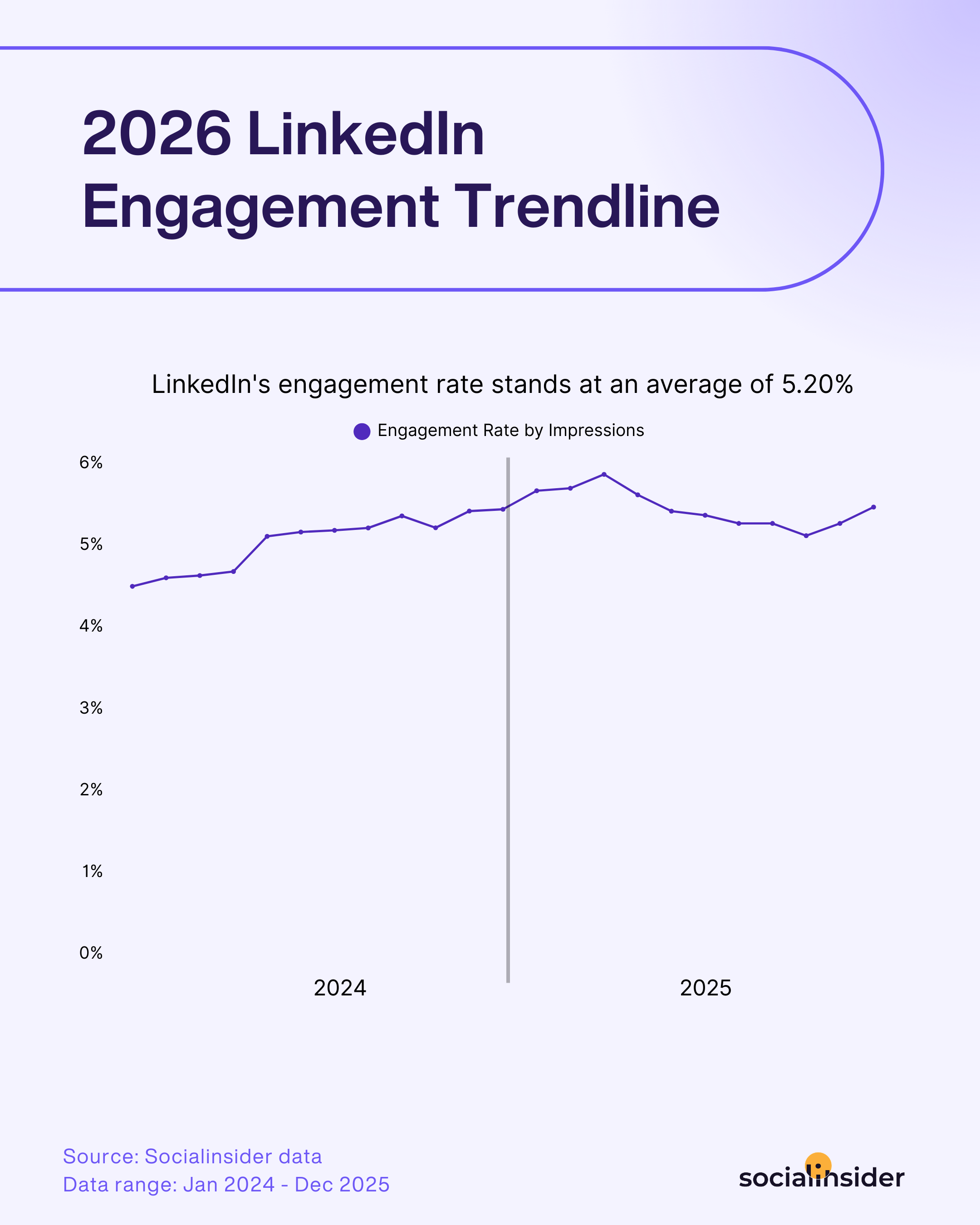
Per inquadrare il contesto, l’Engagement Rate complessivo di LinkedIn è attualmente in media del 5,20%, un utile punto di riferimento per capire quali formati e strategie superano la norma.
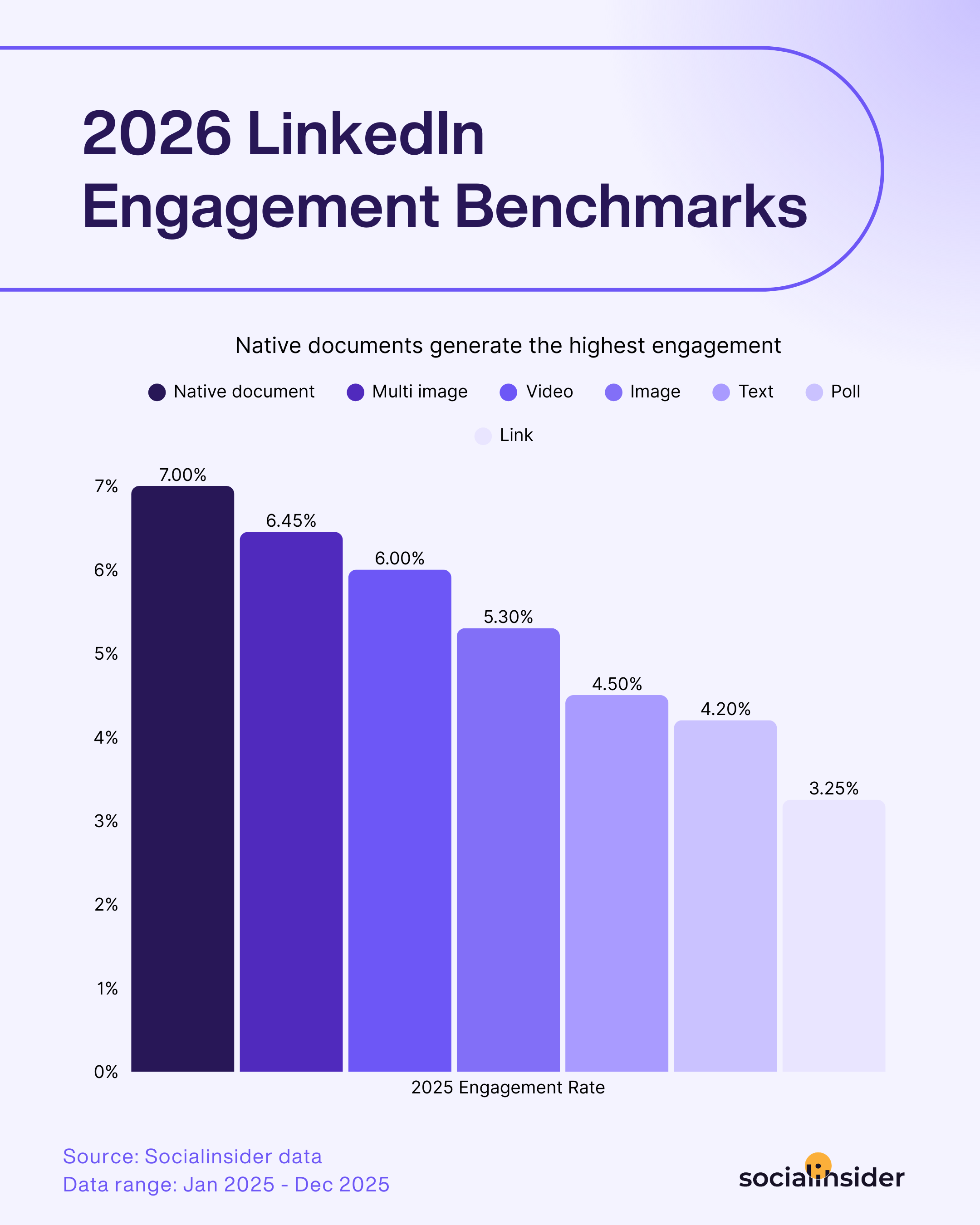
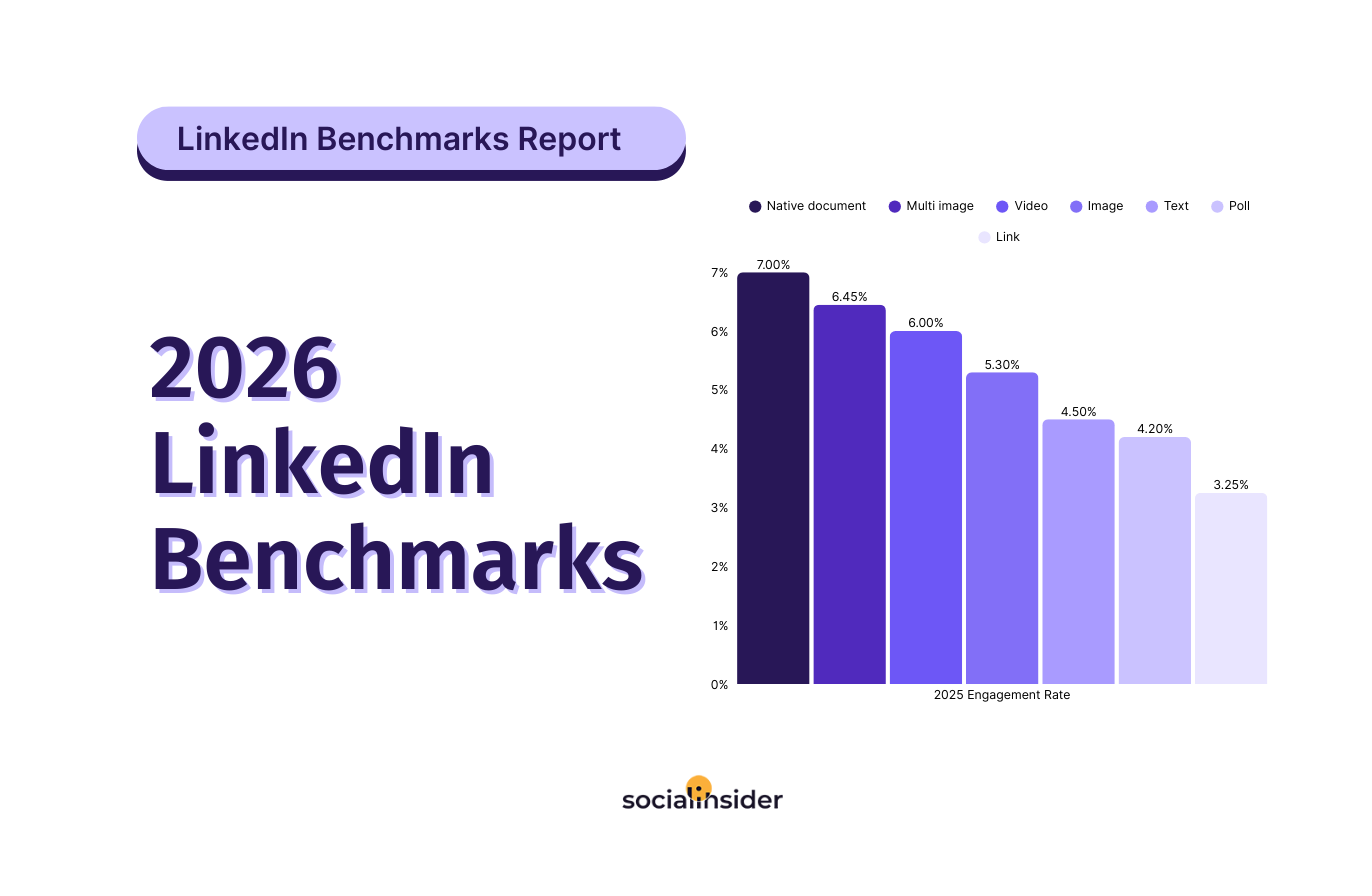
Analizzando il formato di contenuto con le migliori performance su LinkedIn, i documenti nativi hanno conquistato il primo posto, con un Engagement Rate medio su LinkedIn del 7.00% e un aumento del 14% YoY delle performance.
I post in formato documento funzionano bene perché offrono un «valore gratuito» su una piattaforma dove le persone vogliono davvero imparare. LinkedIn è una delle poche piattaforme social in cui il pubblico cerca concretamente spunti pratici (report, metodi, modelli ecc.) I documenti funzionano bene perché sono scaricabili. Le persone possono salvarli e utilizzarli in seguito (modelli, checklist, metodi). Inoltre, sono molto intuitivi. Il formato carousel facilita la consultazione. — Julia Holmqvist, Social Media Manager, Semrush
Qual è, quindi, il punto chiave? Gli utenti premiano i brand e i professionisti che dedicano tempo alla condivisione di risorse, ricerche e guide originali.
Inoltre, trovo particolarmente interessante vedere che l’Engagement Rate medio su LinkedIn aumenta anche per gli altri formati di contenuto, con video, immagini e persino semplici post di testo che suscitano più reazioni: rispettivamente del 7%, 9% e 12% in più.
Questo aumento dell’engagement su LinkedIn è dovuto alla costante evoluzione della piattaforma, che da spazio dedicato esclusivamente al networking professionale è diventata un ecosistema di contenuti più ampio, dove le persone imparano, discutono e costruiscono attivamente il proprio personal brand. Allo stesso tempo, sempre più creator e brand considerano LinkedIn un canale di pubblicazione primario e investono in storytelling nativo, video e Newsletter. Questo mantiene gli utenti sulla piattaforma e incoraggia interazioni più frequenti – Dylan Patel, Head of Social Media Management, Born Social
Tattiche strategiche per aumentare l’engagement su LinkedIn
- Orienta maggiormente la tua strategia verso i documenti nativi: Condividi aggiornamenti tempestivi, commenti sulle novità del settore o best practice emergenti per stimolare il dibattito e dimostrare la tua leadership di pensiero, spingendo più utenti a interagire con i tuoi contenuti.
- Metti in evidenza risultati concreti o casi di successo: Condividi testimonianze, case study o risultati di progetti per dimostrare l’impatto, creare fiducia e invitare gli altri a commentare o condividere le proprie esperienze.
- Sfrutta gli analytics per un successo duraturo: Monitora quali formati registrano un aumento dell’engagement del tuo pubblico e modifica di conseguenza il calendario dei contenuti per catturare il massimo interesse prima che le tendenze cambino di nuovo.
Un tipo di contenuto specifico che ho visto contribuire a un engagement più elevato su LinkedIn sono i post spontanei e non patinati, con un’atmosfera da dietro le quinte. Pubblichiamo clip orizzontali di 3-6 minuti, che di solito illustrano il processo mentale o il framework alla base del nostro approccio al lavoro. Credo che le persone abbiano bisogno di informazioni semplici e utili. Offrirle in modo chiaro, con post non impostati da thought leader, ha generato un engagement eccellente. — Ian Evans, Social Media Manager, tl;dv
La media dei Likes per post di LinkedIn
Una tendenza emerge chiaramente dai dati LinkedIn di Socialinsider di quest’anno: non esiste un approccio universale per stimolare un engagement significativo. Al contrario, la diversità dei formati dei contenuti resta fondamentale per massimizzare le tue performance in diversi tipi di interazione.
I brand non dovrebbero aver paura di riutilizzare costantemente i contenuti in più formati. In pratica, puoi prendere i tuoi video più popolari, i blog e qualsiasi altra idea per i social e condividerli nel formato documento/carosello. Naturalmente, non vuoi puntare tutto su un’unica soluzione, quindi continua a includere video, post solo testo e altri formati creativi nel tuo mix di contenuti. Inoltre, dovresti investire nella creazione di modelli per il formato documento/carosello, così da rendere più efficiente il processo di creazione. — Casey Smith, Senior Social Media Manager, Slack
E se approfondiamo per un attimo? Ecco cosa hanno rivelato i numeri.
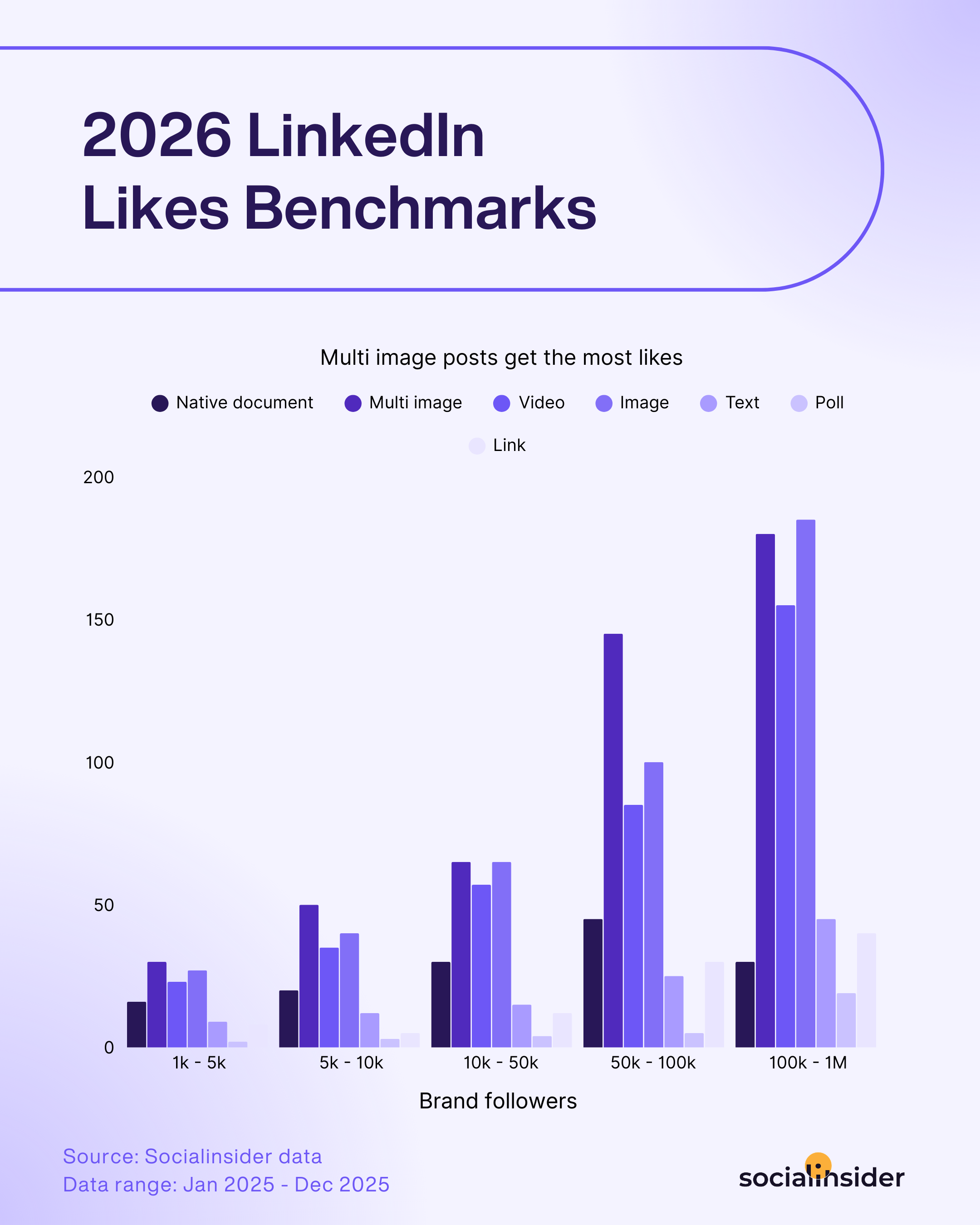
Dalle pagine di brand in crescita alle community consolidate, una cosa è chiara: se il tuo obiettivo è aumentare i Like, i post con più immagini sono la scelta migliore. Con l'aumento dei tuoi Followers su LinkedIn, l'efficacia di questo formato cresce ancora di più, rendendolo una scelta ideale per massimizzare le Interactions.
Penso che, in un'epoca dominata da contenuti video dinamici, i post con più immagini, o caroselli, riescano a coinvolgere il pubblico perché soddisfano una parte del cervello sempre alla ricerca di DI PIÙ. Le persone vogliono storytelling, contesto e ulteriori livelli di informazioni, non solo una singola immagine o un insight. I caroselli permettono di presentare i contenuti in modo interattivo e gratificante. Gli utenti possono scorrere e scoprire nuovi dettagli, elementi visivi o messaggi al proprio ritmo. Questo senso di scoperta li mantiene coinvolti più a lungo rispetto a un singolo post e incoraggia maggiori Interactions attraverso Like, salvataggi e commenti. — Ivy Mullins, Social Media Manager, Born Social
Tattiche strategiche per aumentare i tuoi Like su LinkedIn
- Usa elementi visivi e hook d’impatto: Inizia i tuoi post con immagini audaci o titoli accattivanti per catturare l’attenzione e spingere gli utenti a fermare lo scrolling e riconoscere i tuoi contenuti con un Like.
- Personalizza i tuoi messaggi: Usa un linguaggio o storie su misura, in linea con le sfide e gli interessi del tuo pubblico target. Renderai i tuoi post più coinvolgenti e stimolerai più interazioni.
- Riutilizza contenuti popolari: individua i post con le migliori performance del passato, aggiornali o remixali per renderli più rilevanti e ricondividili in nuovi formati per ottenere nuovo engagement senza partire da zero.
Meme! Chi dice che siano solo per Instagram? Ho visto sempre più persone (e anche brand) condividere su LinkedIn meme iper-specifici per il loro settore. Alle persone piace sentirsi “viste” nel proprio ambito e i meme sono un ottimo modo per creare connessioni. — Eileen Mary O’Connell, Senior Social Media Manager, Paramount
Impressions medie per post su LinkedIn
Abbiamo parlato di engagement, una metrica fondamentale per valutare le performance su LinkedIn. Ora passiamo all’altra metà importante della storia: impressions.
Metriche come le average impressions su LinkedIn rivelano quanto efficacemente i contenuti riescano a emergere e raggiungere gli utenti, fungendo da indicatore affidabile della visibilità del brand e della crescita del pubblico.
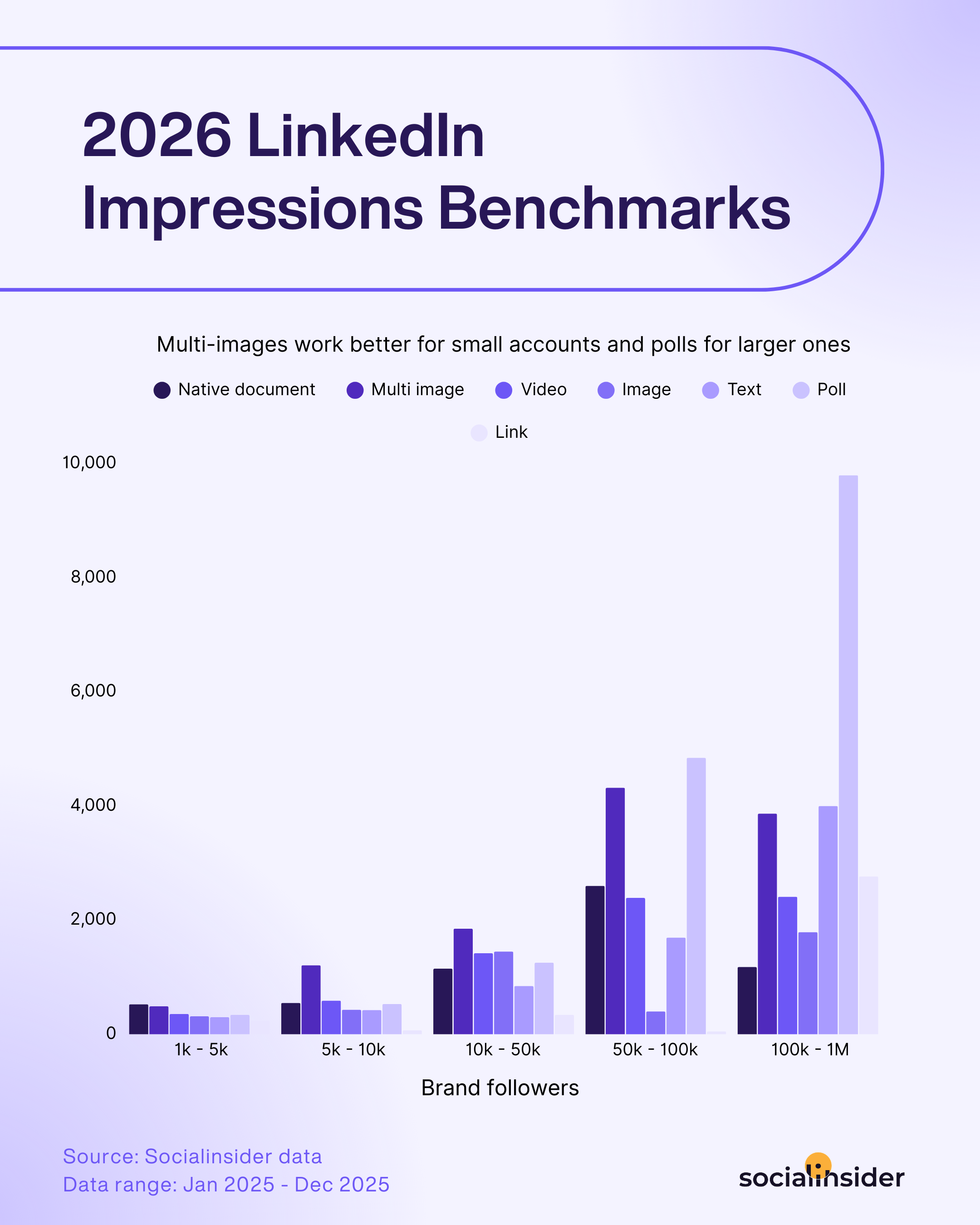
I benchmark di quest’anno mostrano chiaramente che il formato dei contenuti e le dimensioni della pagina vanno di pari passo. Per le pagine con fino a 50K Followers, i post con più immagini generano costantemente il maggior numero di LinkedIn impressions per post, rendendo questo tipo di post un’opzione altamente efficace per ampliare la reach nelle prime fasi della crescita della tua azienda.
I post multi-immagine funzionano bene perché aggiungono profondità alla storia e suscitano naturalmente curiosità. Proprio come sfogliare una rivista, un giornale o un libro, ogni slide invita l'utente a scoprire cosa viene dopo. Su LinkedIn, questo si adatta bene al modo in cui gli utenti navigano sulla piattaforma, spesso tra un'attività e l'altra o durante brevi pause. — Denisa Vlăduță, Senior Social Media Manager.
È interessante notare che una volta superati i 50K Followers, si verifica un cambiamento significativo: i sondaggi diventano il formato con le migliori performance per generare Impressions su larga scala. Questo cambiamento dimostra quanto sia importante rivedere le strategie relative ai format man mano che il tuo pubblico cresce.
Nella mia esperienza, i sondaggi funzionano meglio quando pongono una domanda a cui la maggior parte del tuo pubblico può rispondere. In altre parole, non voglio chiedere alle persone cosa pensano di un argomento di nicchia o di un prodotto che non è ancora ampiamente adottato. Crea invece sondaggi ispirati alle conversazioni organiche che hai già visto sul tuo brand, per quanto limitate. E valuta di usarli per raccogliere feedback dal pubblico, chiedendo cosa vorrebbe vedere da te. Usa questi insight per definire i tuoi prossimi contenuti. — Casey Smith, Senior Social Media Manager, Slack.
Strategie mirate per aumentare le Impressions su LinkedIn
- Diversifica i formati dei contenuti per aumentare la reach: alterna caroselli, sondaggi e video, perché i dati mostrano che alcuni formati funzionano meglio con audience di dimensioni diverse. Usare il formato giusto aiuta ad aumentare le Impressions.
- Tagga persone e aziende rilevanti: menziona in modo appropriato partner del settore, dipendenti e collaboratori nei tuoi post per aumentare la visibilità e incoraggiare le condivisioni da parte di network più ampi.
- Incoraggia l'engagement dei dipendenti: Attiva il tuo team per interagire con i tuoi post e amplificarne la portata: le reazioni e le condivisioni dei dipendenti possono estendere significativamente la reach di un post oltre i tuoi follower diretti.
La crescita del branding guidato dai fondatori sta incoraggiando i brand a valorizzare le reti personali dei propri dipendenti, che contribuiscono in modo significativo al loro ecosistema di contenuti. Mentre vediamo i leader condividere più apertamente la realtà della costruzione di carriere e aziende, la piattaforma è diventata naturalmente uno spazio in cui i professionisti di ogni settore si sentono liberi di raccontare i propri traguardi e le proprie esperienze. Mi aspetto che continueremo a vedere sempre più persone usare LinkedIn per condividere punti di vista in sintonia con un pubblico desideroso di impegnarsi nella crescita e nello sviluppo professionale. — Eunice Cancino, Social & Content Strategist
Visualizzazioni medie per video su LinkedIn
Dopo aver analizzato engagement e impressions, concentriamoci su un formato da sempre considerato una potenza sui social: i video. È vero che le pagine LinkedIn più grandi continuano ad attirare il maggior numero di video views, ma il dato più significativo di quest’anno è un cambiamento importante: le Views sono diminuite per pagine di ogni dimensione, con un calo medio del 36% su base annua.
LinkedIn non è una piattaforma incentrata sui video. Le persone non aprono LinkedIn per scorrere all'infinito come fanno su TikTok o Instagram. Non esistono un vero motore di scoperta o un FYP che spingano i video ben oltre la tua rete, quindi le dinamiche virali sono molto diverse. LinkedIn è stato creato per la condivisione di conoscenze professionali: Posts di testo, insights, documenti e modelli. È evidente che la piattaforma stia cercando di aggiungere più video, ma il prodotto e il comportamento degli utenti non sono ancora davvero pensati per questo. — Julia Holmqvist, Social Media Manager, Semrush
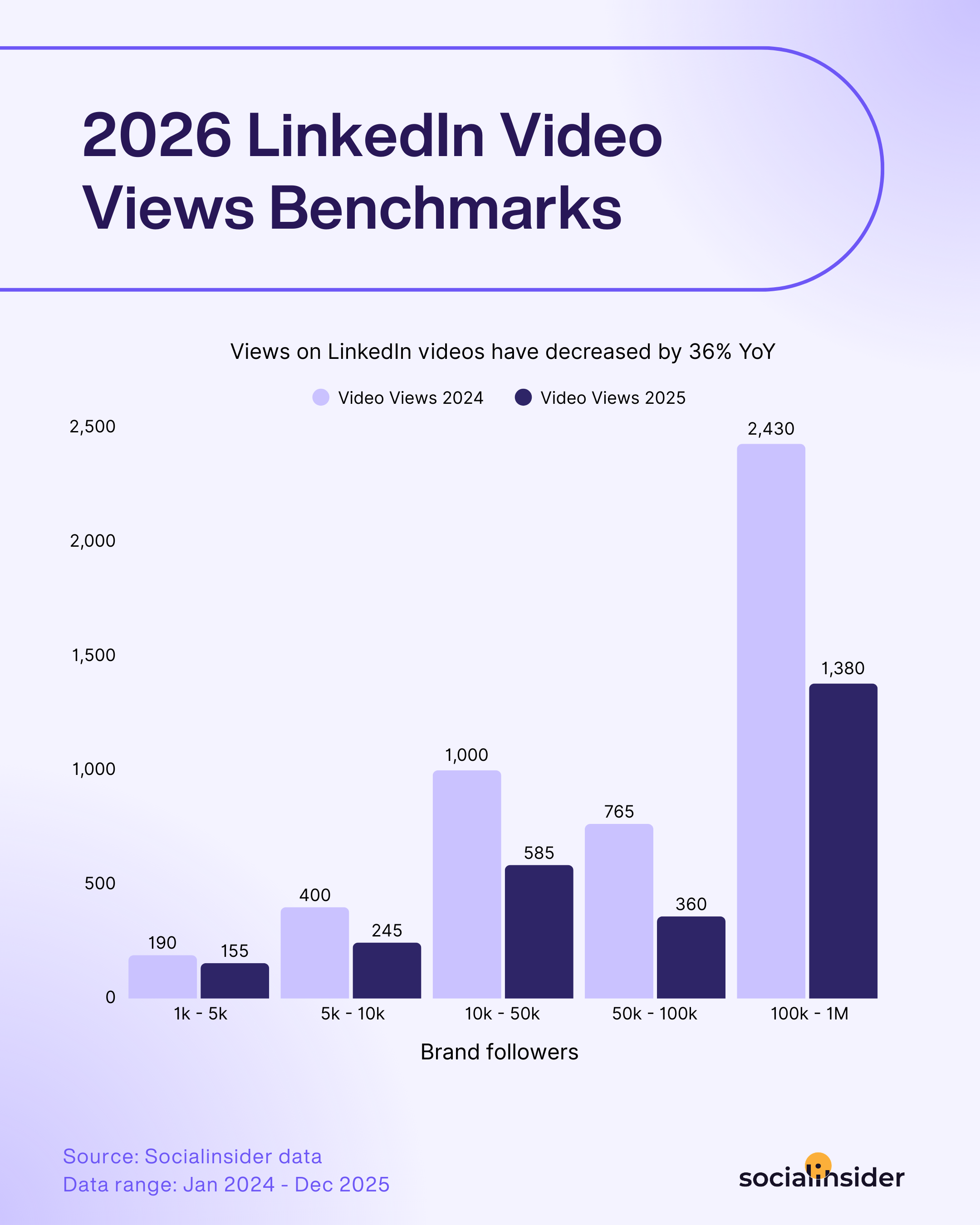
Cosa sta alimentando questa tendenza? La concorrenza crescente e il cambiamento delle abitudini degli utenti probabilmente influenzano molto le performance dei contenuti video, indipendentemente dalle dimensioni del pubblico.
Nel panorama attuale, sperimentare costantemente e adottare nuovi approcci creativi è più importante che mai. Diversificare i tuoi content pillars—e prestare molta attenzione a come cambiano gli interessi del tuo pubblico—può aiutarti a mantenere una strategia solida.
Tattiche strategiche per aumentare le tue visualizzazioni dei video su LinkedIn
- Accompagna il tuo video con un riepilogo del post descrittivo e orientato all'azione. Un testo di supporto efficace può aumentare la curiosità e invogliare gli utenti a cliccare su Riproduci.
- Inserisci sottotitoli e testo sullo schermo: Molti utenti guardano i video senza audio. Aggiungere sottotitoli e messaggi chiave rende i tuoi contenuti accessibili e coinvolgenti, aumentando i tassi di completamento.
- Usa i video per rispondere a domande di tendenza o ricorrenti: Affronta le sfide comuni del settore o i temi di attualità in formato video, posizionando il tuo brand come reattivo e autorevole.
Penso che il calo possa dipendere dal fatto che molti creator utilizzano esattamente gli stessi formati video che usano su altre piattaforme. Sebbene i video funzionino bene in generale, il pubblico di LinkedIn probabilmente si aspetta qualcosa di diverso.
Molti contenuti seguono la stessa struttura: hook, insight/valore e CTA. Sebbene questa formula possa funzionare, il mercato è sempre più saturo. Poiché spesso le persone visitano LinkedIn aspettandosi contenuti più professionali o distintivi, vedere gli stessi schemi che incontrano altrove potrebbe ridurre l'engagement. — Fernando J, Content Strategist senior
Benchmark della frequenza di pubblicazione su LinkedIn
Osservando i benchmark sulla frequenza di pubblicazione su LinkedIn, emerge un altro aspetto dei trend in evoluzione della piattaforma. Nel 2025, i brand hanno scelto deliberatamente di pubblicare più spesso, soprattutto per i formati incentrati sul visual.
I numeri raccontano una storia interessante: i post immagine e i video registrano l'aumento maggiore. La media mensile dei post immagine è passata da 5 a 7, mentre la frequenza dei video è raddoppiata, passando da 2 a 4 post al mese. Anche i documenti nativi hanno registrato una leggera crescita della presenza nei feed, raddoppiando in media rispetto all'anno precedente.
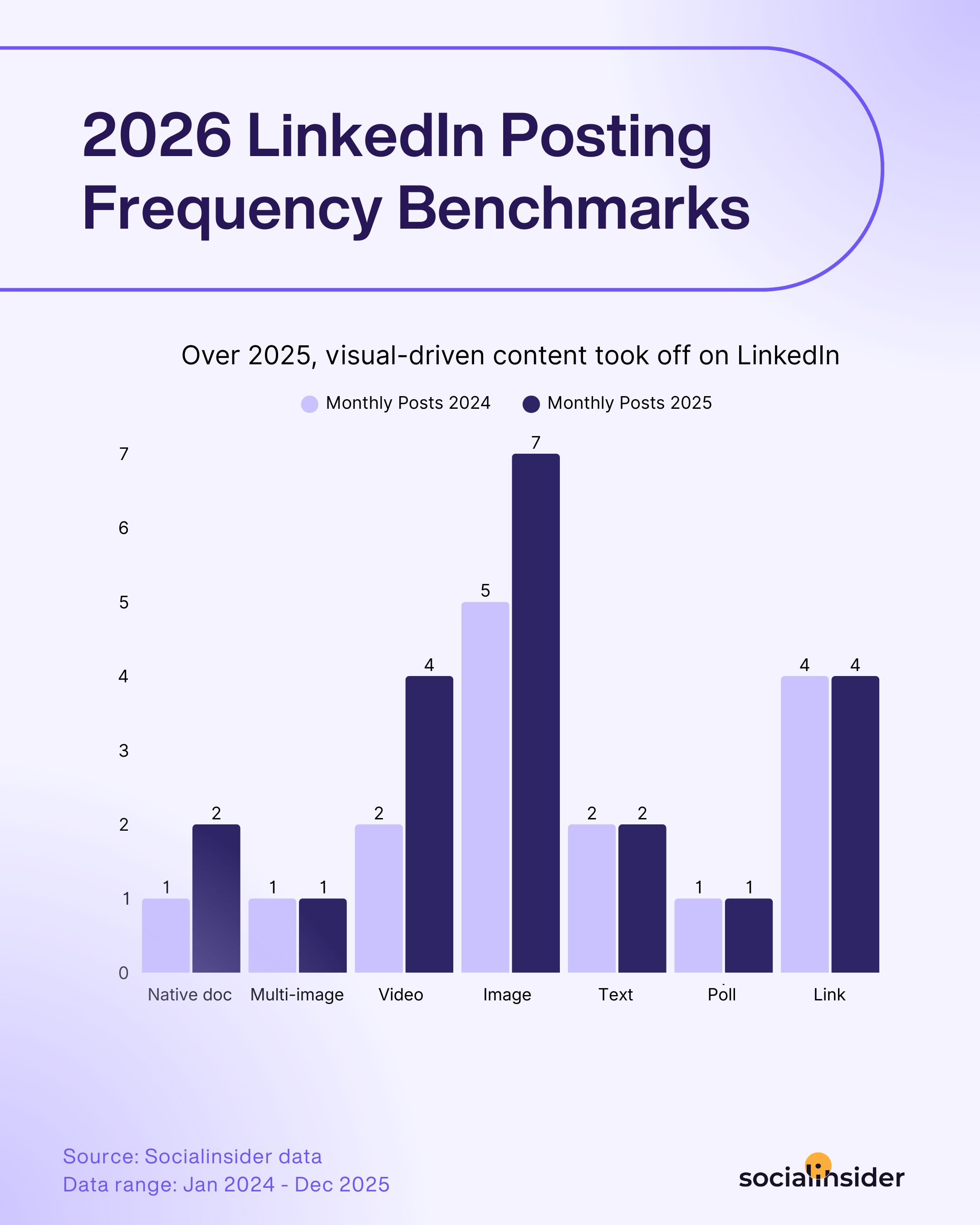
Se me lo chiedi, direi che questa tendenza evidenzia un cambiamento più ampio: i brand investono di più in formati che catturano rapidamente l'attenzione e incoraggiano gli utenti a interagire.
Tattiche strategiche per creare una content strategy LinkedIn ad alte performance
- Crea contenuti in batch in anticipo: Dedica giorni specifici ogni mese alla creazione e alla programmazione dei post. Sarà più facile mantenere una frequenza costante e più elevata, senza lo stress dell'ultimo minuto.
- Documenta i tuoi processi e template: Crea template per diversi tipi di post (annunci, consigli, storie dei clienti) e documenta le best practice. Così, chiunque nel tuo team potrà creare contenuti rapidamente.
- Gestisci una «banca delle idee»: Mantieni un documento condiviso centrale o una bacheca digitale dove chiunque possa aggiungere idee per potenziali post o ispirazioni quando emergono. Così potrai consultarle rapidamente e ridurre la pressione del brainstorming.
Benchmark della crescita dell’audience su LinkedIn
La crescita sta diventando sempre più difficile su tutte le piattaforme social, e LinkedIn non fa eccezione. Nel 2025, i tassi medi di crescita dei Followers su LinkedIn hanno rallentato sensibilmente per le pagine di ogni dimensione. Una tendenza particolarmente evidente tra gli account più grandi.
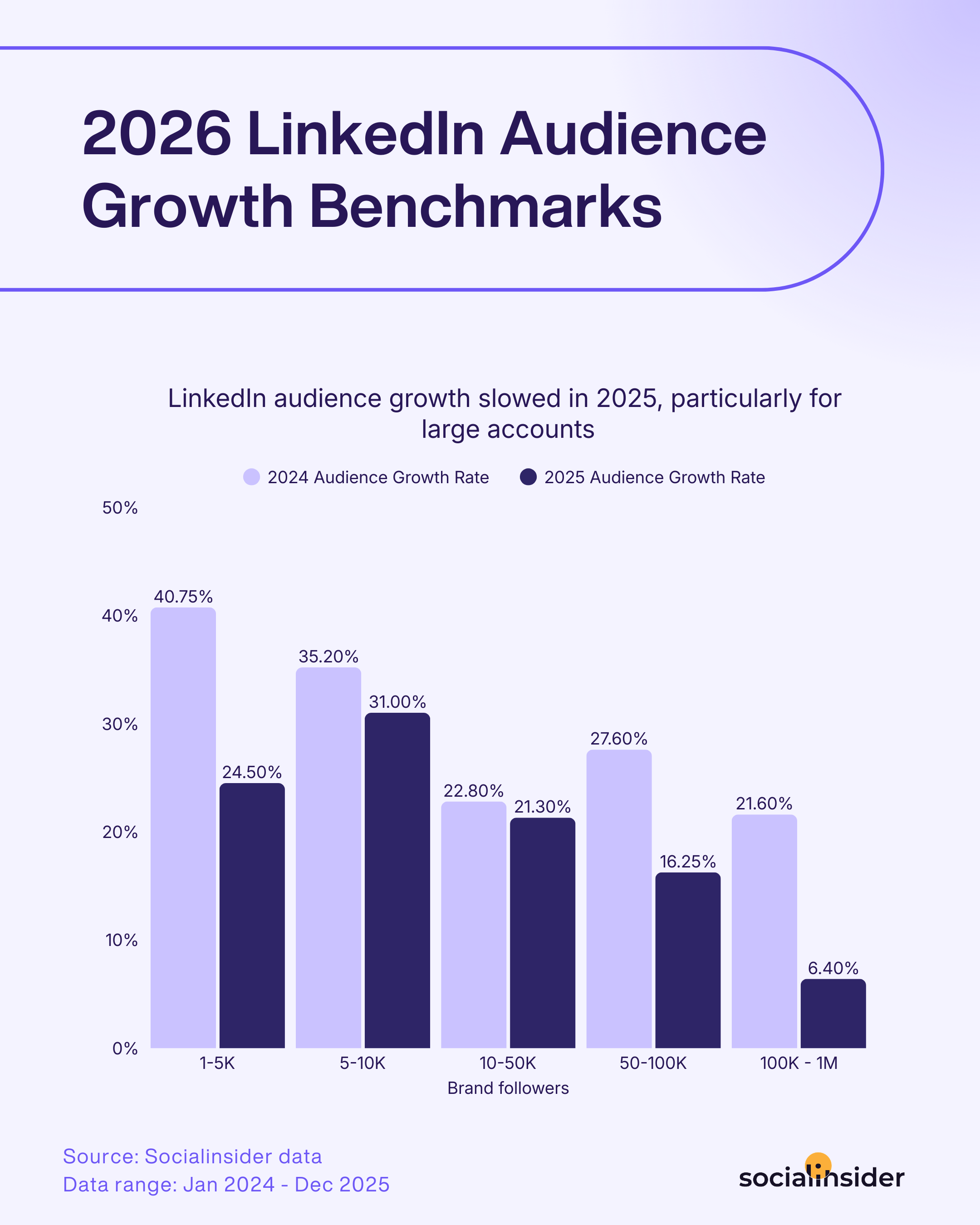
Sebbene le pagine più piccole (quelle con 1-5K Followers) abbiano registrato comunque un solido tasso medio di crescita del 24.5%, per gli account con 100K-1M Followers la crescita è rallentata drasticamente, arrivando ad appena il 6.4%.
Questo rallentamento è particolarmente evidente per le community più grandi e dimostra che ampliare un pubblico già consolidato richiede oggi più impegno e pensiero strategico che mai.
I brand che continuano ad avere successo e a mantenere un sano tasso di crescita su LinkedIn sono quelli che continuano ad adattarsi, analizzano i risultati e offrono contenuti in linea con gli interessi del proprio pubblico.
Attribuisco questo rallentamento al fatto che il tema della “carriera come contenuto” stia diventando sempre più normale sui principali canali social, con gli utenti che condividono i propri traguardi professionali, le proprie storie di carriera e i propri contenuti di thought leadership su piattaforme un tempo riservate ai momenti salienti della vita personale. La crescita dei contenuti generati dai dipendenti ha reso meno netti i confini tra ciò che è accettabile e ciò che è meglio evitare quando si pubblica sul luogo di lavoro. Il pubblico trova persino offerte di lavoro e viene assunto direttamente dalle proprie pagine Per te o dai Feed su piattaforme come TikTok e Instagram. Il monopolio di LinkedIn come punto di riferimento online per la carriera sta svanendo, perché conversazioni e opportunità professionali esistono anche sui principali colossi delle piattaforme social e gli utenti non devono più riversarsi su un'unica piattaforma. — Bronte Chandler, Associate Director di Social Media, Born Social.
Tattiche strategiche per far crescere il tuo pubblico su LinkedIn
- Lancia eventi LinkedIn Live o webinar specializzati: Organizza eventi esclusivi e interattivi (sessioni di domande e risposte, interviste, panel di settore) e promuovili ampiamente: i contenuti live attirano nuovi pubblici e incoraggiano chi non ti segue a connettersi.
- Collabora con professionisti del settore: Crea post co-branded, campagne congiunte o menzioni con brand o professionisti complementari. Presentatevi alle rispettive reti per una crescita organica dei Followers.
- Offri miniserie continuative o consigli di esperti: Avvia una serie educativa settimanale o bisettimanale con consigli pratici. Dai ai visitatori un motivo ricorrente per seguirti, così non perderanno la prossima puntata.
Metodologia
I risultati di questo studio si basano sull’analisi di 1,3 milioni di post su LinkedIn, raccolti da 16.645 pagine aziendali LinkedIn attive tra gennaio 2024 e dicembre 2025.
I formati di contenuto a cui si fa riferimento in questa analisi sono i seguenti:
- Documenti nativi: il tipo di post costituito da un PDF caricato direttamente su LinkedIn, simile a un carosello.
- Immagini multiple: il caricamento simultaneo di più foto, visualizzate come in un album.
- Post di testo: post di LinkedIn costituiti da un blocco di testo.
- Sondaggi: domande aperte alla votazione.
- Immagine: post che includono il caricamento di un'immagine.
- Video: post che includono il caricamento di un video.
Definiamo le metriche di LinkedIn come segue:
- Engagement Rate by Impressions: quante persone hanno interagito con i tuoi post su LinkedIn tra quelle che li hanno guardati più volte. Si calcola dividendo il tuo engagement per le Impressions e moltiplicando il risultato per 100. È la stessa formula utilizzata da LinkedIn.
- Le Impressions medie per post indicano il numero medio di Impressions ricevute da un post.
- Le Views medie per video indicano il numero medio di Views ottenute da un video.
- Numero medio di post al mese: quanti post pubblicano in media le pagine su LinkedIn.
NOTA: questo studio contiene dati del 2025, presentati come dati del 2026, perché al momento della pubblicazione non c'erano dati sufficienti per l'analisi, dato che l'anno era appena iniziato. Ecco perché pubblichiamo aggiornamenti trimestrali, man mano che l'anno procede e sono disponibili più dati.
Ottieni metriche approfondite sulle performance di LinkedIn
Esegui un’analisi approfondita di LinkedIn e ottieni idee strategiche per ottimizzare i contenuti!
Pronto a migliorare la tua social media strategy con insights in tempo reale?
Ottieni insights strategici, analizza la performance sui social su tutti i canali, confronta le metriche di periodi diversi e scarica i report in pochi secondi.